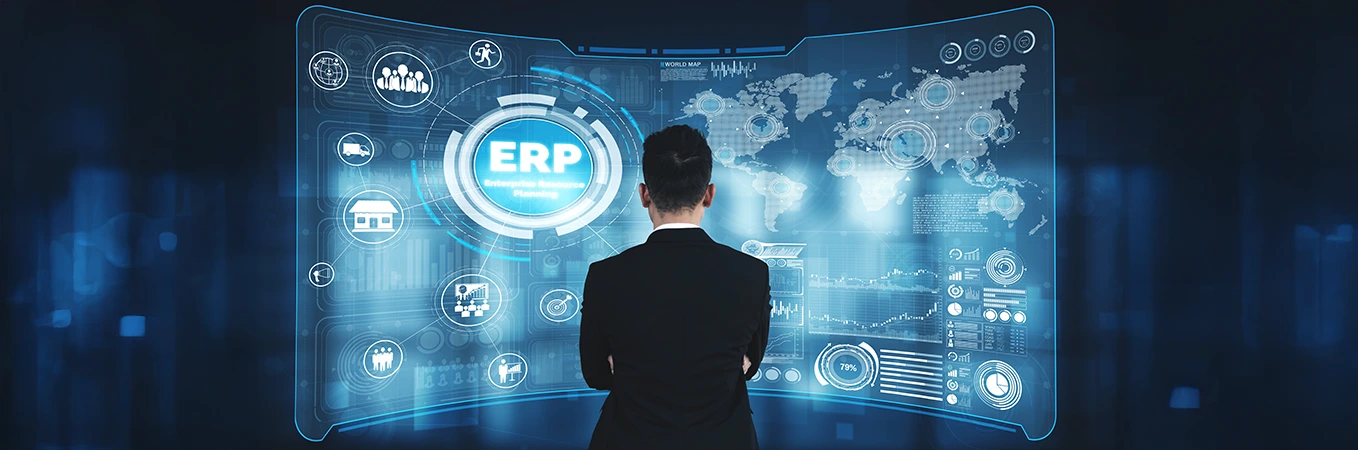
What is ERP? A Beginner's Guide to Enterprise Resource Planning
Read More →

×
Discover the essential Cloud ERP software features for 2026, including financial management, inventory control, CRM, HR, procurement, automation, AI-powered analytics, real-time reporting, mobile access, integrations, and advanced security. Explore the complete list of features businesses need to streamline operations, improve decision-making, and scale efficiently with cloud ERP software.
Businesses using ZYNO Books cut accounting time by 70% and stay 100% ZATCA-compliant — automatically.
Quick Answer: The most important cloud ERP software features include real-time dashboards, remote access, automatic updates, role-based security, scalability, centralized data, and third-party integrations. A modern cloud based ERP system allows businesses to access business data and workflows from different locations without maintaining traditional on-premise infrastructure. The right platform should also support secure access, flexible integrations, and scalable cloud ERP functionality as the business grows.
Businesses today need more than software that simply stores data. They need systems that connect finance, inventory, procurement, HR, sales, operations, and reporting in one place.
This is why cloud ERP has become an important option for businesses looking to modernize their operations.
Unlike traditional ERP systems that may require significant on-site infrastructure, a cloud ERP platform is hosted through cloud infrastructure and accessed through the internet.
But what exactly does cloud ERP include?
The answer goes beyond remote access.
Modern cloud ERP capabilities can include real-time reporting, automated updates, centralized data, role-based security, scalable infrastructure, mobile access, and integrations with other business applications.
This guide explains the key features of cloud ERP software and what businesses should evaluate before choosing a platform.
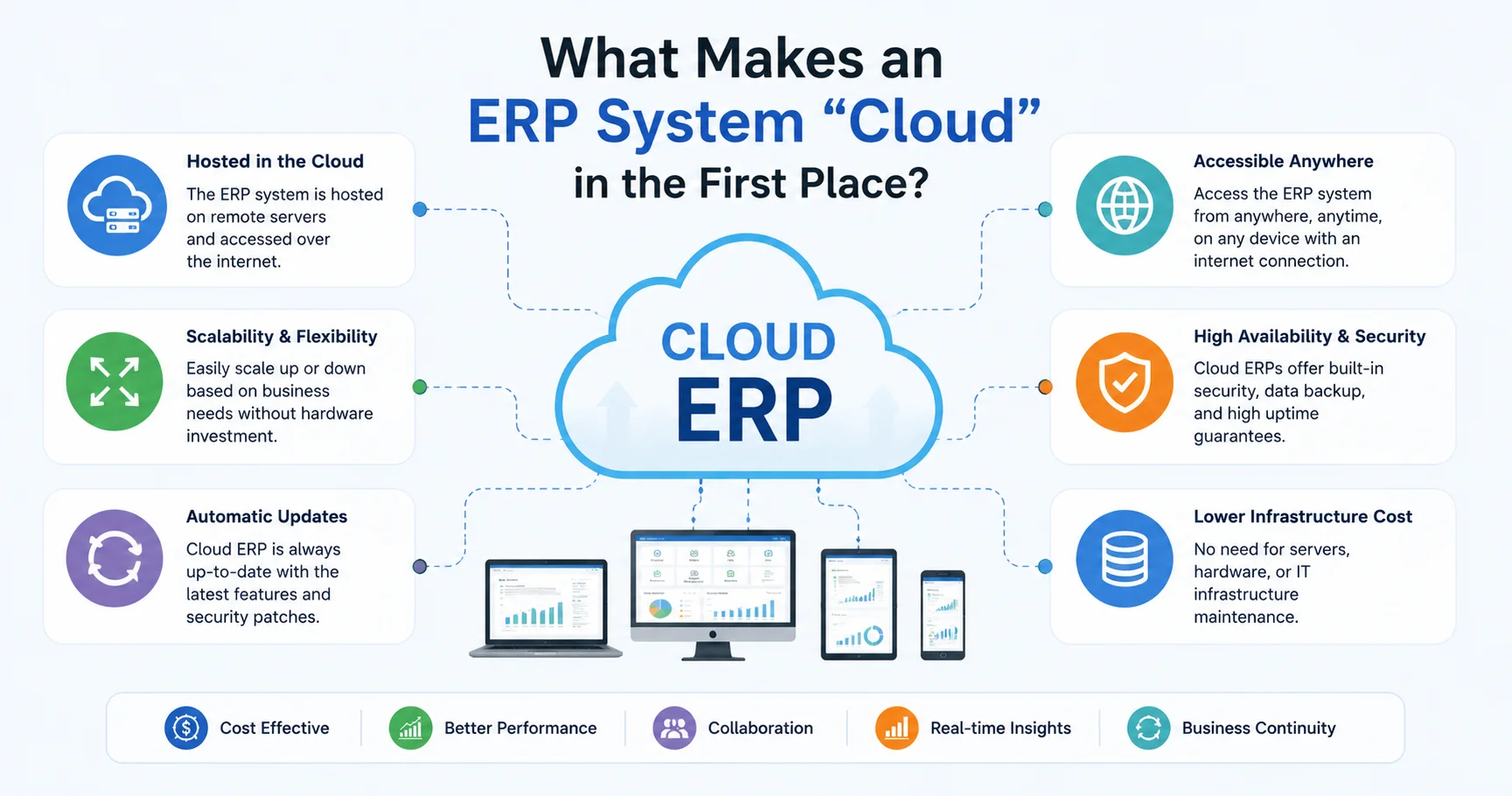
A cloud ERP system is an enterprise resource planning platform hosted through cloud infrastructure rather than being installed entirely on a company's own physical servers.
Users typically access the system through an internet connection.
A cloud ERP environment may provide:
The exact architecture can vary between vendors.
Some platforms may be delivered through public cloud infrastructure, while others may use private or hybrid cloud environments.
For businesses evaluating cloud deployment, a cloud-based ERP system can provide a centralized platform for managing business processes without requiring the company to maintain all ERP infrastructure internally.

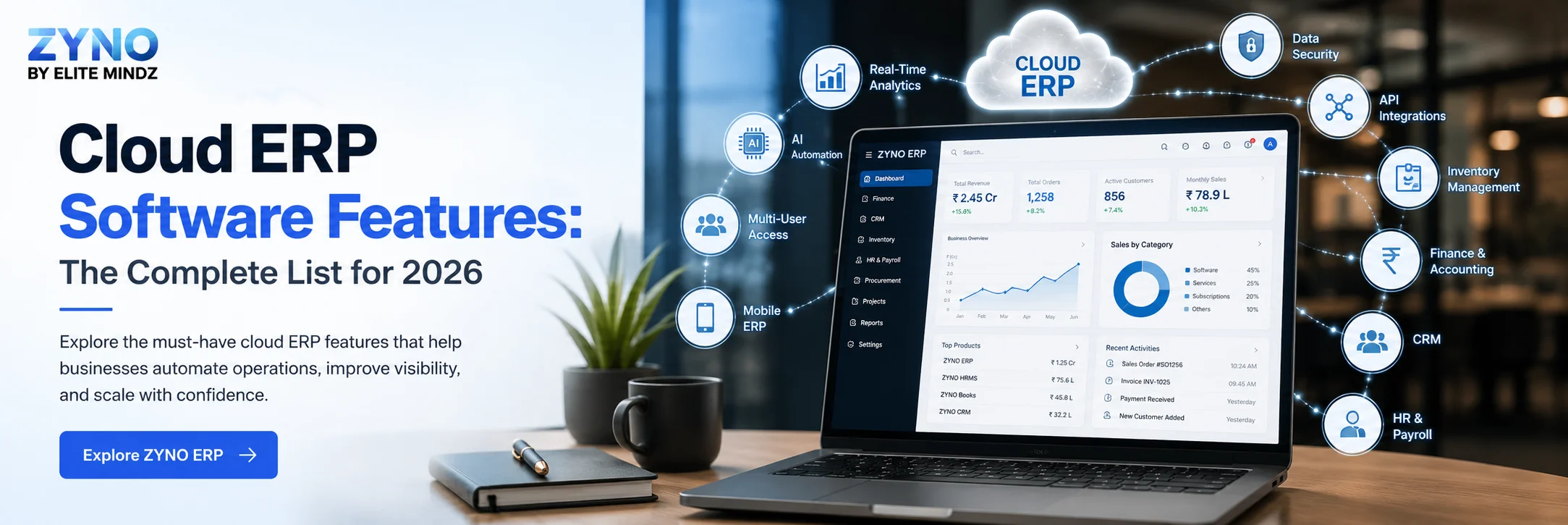
Modern Cloud ERP Software brings essential business operations together on a centralized, cloud-based platform. Core features typically include financial management, inventory management, procurement, human resources, CRM, sales automation, real-time reporting, business analytics, workflow automation, and secure remote access.
One of the most important cloud ERP software features is centralized, real-time access to business information.
Traditional business operations often involve data spread across multiple systems and departments.
This can make it difficult for management to understand current performance.
Cloud ERP dashboards can bring information together across areas such as:
Depending on the ERP platform, users may be able to view:
For a deeper discussion of the differences, benefits, and limitations, read our guide on cloud ERP vs traditional ERP.
When data is delayed, business decisions may be based on outdated information.
Real-time dashboards can help management:
For example, a business may be able to identify low inventory levels before they create a supply problem.
Similarly, finance teams can gain greater visibility into expenses and procurement spending.
One of the defining advantages of cloud ERP is the ability to access the system from different locations.
Users may be able to access ERP functionality through:
This can be particularly useful for:
A user may need to approve a purchase request while working outside the office.
Another employee may need to check inventory from a different location.
With a cloud ERP system, access is not necessarily limited to a specific physical office or company server.
Remote access can also support business continuity.
Employees can continue accessing important business information when:
However, access should always be controlled through proper authentication and security policies.
Traditional ERP environments may require organizations to manage:
With many cloud ERP platforms, infrastructure and software maintenance are managed by the provider.
This can simplify system administration.
Automatic updates may help businesses access:
However, businesses should still understand how updates are managed.
Before choosing a platform, ask:
Automatic updates are useful, but businesses should understand the vendor's update and maintenance process.
Security is an essential part of cloud ERP functionality.
Not every employee should have access to every type of business information.
For example:
Role-based access control allows organizations to define what different users can view or manage.
Security controls may include:
This helps reduce the risk of unauthorized access.
There is no universal answer.
Modern cloud ERP providers may offer advanced security through professionally managed infrastructure, monitoring, backups, and access controls.
However, security depends on:
A poorly configured cloud system may still create security risks.
Therefore, businesses should evaluate the vendor's security practices rather than assuming that cloud automatically means more secure.
One of the key benefits of a cloud based ERP system is scalability.
As a business grows, it may add:
Traditional systems may require additional hardware or infrastructure to support this growth.
Cloud infrastructure can often provide more flexible scalability.
Businesses may be able to expand their ERP usage without purchasing and maintaining additional physical servers.
A growing business should not need to replace its ERP system every time its operations expand.
A scalable cloud ERP platform should be able to support:
However, businesses should always evaluate the vendor's pricing model.
Some platforms may charge based on:
Therefore, scalability should be evaluated alongside total cost.
Modern businesses rarely use only one software system.
An organization may use:
This makes integrations an important part of cloud ERP capabilities.
Cloud ERP platforms may connect with other systems through:
A cloud ERP may connect with:
For example, a sales order generated in one system may be transferred to the ERP for fulfilment, inventory, and financial processing.
Before choosing a cloud ERP platform, evaluate:
The exact features depend on the platform and business requirements.
Many cloud ERP platforms may include modules for:
The most suitable platform depends on the business's industry and operational requirements.
Cloud ERP and traditional on-premise ERP solve similar business management problems, but the deployment models are different.
| Factor | Cloud ERP | Traditional On-Premise ERP |
|---|---|---|
| Infrastructure | Hosted through cloud infrastructure | Managed by the business |
| Access | Remote access through the internet | Often connected to internal infrastructure |
| Updates | Typically managed by the provider | Managed by the business or IT team |
| Hardware | Less on-site hardware required | Requires company infrastructure |
| Scalability | Generally more flexible | May require additional infrastructure |
| Maintenance | Often managed by the vendor | Managed internally or through service providers |
This is only a high-level overview.
Businesses comparing different deployment models can also explore cloud, on-premise, and hybrid ERP deployment options.
ZYNO ERP can help businesses centralize important business processes through a connected ERP environment.
Depending on business requirements, ERP functionality may support areas such as:
A cloud-based deployment can help organizations access business information from different locations while reducing dependence on locally managed infrastructure.
For businesses evaluating cloud ERP, the most important consideration is whether the platform supports their specific operational requirements.
The right system should provide a balance between:
Cloud ERP is not simply about moving existing software to the internet.
It is about creating a more accessible, scalable, and connected environment for managing business operations.
Before choosing a platform, businesses should evaluate the following factors.
Check whether the system supports the business functions you actually need.
Avoid selecting software based only on the number of features listed on a product page.
Ask about:
Make sure the platform can connect with your existing systems.
Review:
The platform should support future business growth.
Implementation and ongoing support can significantly influence the success of an ERP project.
Bring finance, procurement, inventory, HR, sales, operations, and reporting together with powerful cloud ERP software. Improve visibility, automate workflows, access real-time insights, and scale your business with a secure and flexible ERP platform.
Request a Free Demo Explore ZYNO ERP
The core cloud ERP software features include real-time access to business data, remote availability, automatic updates, centralized information, role-based security, integrations, and built-in scalability.
Modern cloud ERP can match or exceed on-premise security through professionally managed infrastructure and security controls, but actual security depends on the vendor, configuration, access policies, and implementation.
Yes. Cloud ERP platforms can often integrate with existing tools through APIs, connectors, and integration platforms. Common examples include accounting software, CRM systems, e-commerce platforms, HR systems, and warehouse management tools.
Cloud ERP can include finance, accounting, procurement, inventory, HR, manufacturing, reporting, workflow automation, dashboards, integrations, and other business management capabilities depending on the platform.
Yes. Cloud ERP can be suitable for small businesses that need centralized business management and want to avoid managing significant on-premise infrastructure. However, the solution should match the company's size, budget, and operational complexity.
Cloud ERP is an ERP system delivered through cloud infrastructure. SaaS ERP is generally delivered as a subscription-based software service managed by the provider. In practice, many modern cloud ERP platforms use a SaaS delivery model.
The most important key features of cloud ERP include real-time reporting, remote access, automatic updates, security controls, scalability, and integration capabilities.
However, features alone should not determine your decision.
Businesses should also evaluate:
A cloud ERP system should help the business operate more efficiently today while providing room to grow in the future.
The right platform is not necessarily the one with the longest feature list.
It is the one that provides the cloud ERP functionality your business actually needs, integrates with your existing systems, and can support your operational requirements as the organization expands
What is ERP? A Beginner's Guide to Enterprise Resource Planning
Read More →
Cloud ERP vs. On-Premise vs. Hybrid: Best ERP Model for 2025
Read More →How To Customize ERP Software Without Breaking The Bank?
Read More →
The Future of Manufacturing ERP in 2026 & Beyond
Read More →Best ERP Software in India: 2026 Edition
Read More →
AI in Manufacturing ERP: The Future of Smart Factories
Read More →
How ERP Transforms Inventory Management and Reduces Costs
Read More →
Inventory Management Software Features: The Complete 2026 Buying Guide
Read More →
Top 5 Ways Asset Management Software Can Save Your Business Money
Read More →
Why Smart Businesses Are Switching to Vendor Management Systems in 2025?
Read More →
Why Manufacturing Companies Need ERP Software
Read More →
Cloud ERP vs. Traditional ERP: Which is Right for You?
Read More →
ERP for Small Business: Is It Worth the Investment?
Read More →
How to Calculate ERP ROI and Why It's Worth the Investment
Read More →
Top 10 ERP Software Companies in India 2026 Updated List (Complete Guide)
Read More →
ERP Implementation Mistakes to Avoid in 2025
Read More →
Cloud ERP vs Edge Computing: What's Right for Modern Manufacturing?
Read More →
The Future of ERP Software and the Role of Generative AI
Read More →
Digital Twin Technology & ERP: Real-Time Insights for Smarter Manufacturing
Read More →
Scalable ERP Solutions Designed for Modern Enterprises
Read More →
ERP and IoT Integration: Smart Factory Vision
Read More →Best ERP Software for Manufacturing Businesses in India
Read More →Top 10 Best Manufacturing ERP Software in India (2026)
Read More →
Best ERP Software for Manufacturing Industries in Ethiopia (2026)
Read More →
Best School ERP Software Providers in UAE (2025 Edition)
Read More →
Best School ERP Software for 2025: Guide for Educational Institutions
Read More →
Top 10 ERP Software Solutions for Nigerian Manufacturers (2025 Edition)
Read More →
Best ERP Systems for Scalable Retail and POS Integration
Read More →
Top 10 Cloud-Based Manufacturing ERP Solutions in Africa (2025 Edition)
Read More →
Top 10 Cloud-Based Manufacturing ERP in UAE
Read More →
Top 10 Cloud-Based Manufacturing ERP Software in Nigeria (2026 Edition)
Read More →
Top 10 School ERP Software Companies in Kenya (2025)
Read More →
Best School ERP Software Providers in Nigeria (2025)
Read More →
Top Cloud-Based Manufacturing ERP in Zimbabwe (2025)
Read More →
Best ERP Software in U.K
Read More →
Top 10 ERP Software Developers in the U.K. (2025)
Read More →
Best ERP Software Providers in France (2025)
Read More →
Best ERP Software Companies in Germany : A Comprehensive Guide
Read More →
Top 10 ERP Software Development Companies in Qatar
Read More →
10 Best ERP Providers in Germany - 2026 Updated List
Read More →
Best ERP Software Firms in Saudi Arabia (2025)
Read More →
Best ERP Service Providers in Indonesia for SMEs and Large Enterprises
Read More →
Top 10 Cloud-Based Manufacturing ERP Systems in Egypt for Modern Factories
Read More →
Top ERP Solutions in the USA 2025: Streamline Your Business with ZYNO ERP
Read More →
Top ERP Solutions in Qatar for Businesses of All Sizes
Read More →Top Manufacturing ERP Software in India 2026 ZYNO Manufacturing ERP
Read More →How Manufacturing Companies Reduce Production Delays Using ERP Automation
Read More →Why Legal Firms Need ERP to Manage Cases, Billing & Compliance
Read More →What Is ERP And How Does It Work
Read More →
How ERP Systems Are Evolving in 2026: What Businesses Need to Know
Read More →
Best ERP Software in India: 2025 Edition
Read More →
Top 10 ERP Software Companies in Delhi NCR
Read More →
How Manufacturing ERP Software Improves Demand Forecasting
Read More →
Top 10 Best School Management Software in India
Read More →Manufacturing & Wholesale ERP in Qatar: Complete Industry Guide 2026
Read More →Cloud ERP Software in Qatar: Why Businesses Are Moving in 2026
Read More →Is ERP a Procurement Software? Key Differences, Benefits & What to Choose
Read More →What Is Production Planning and Control? Definition, Objectives & Functions
Read More →
Garment Inventory Software: Features, Providers & Buying Guide (2026)
Read More →
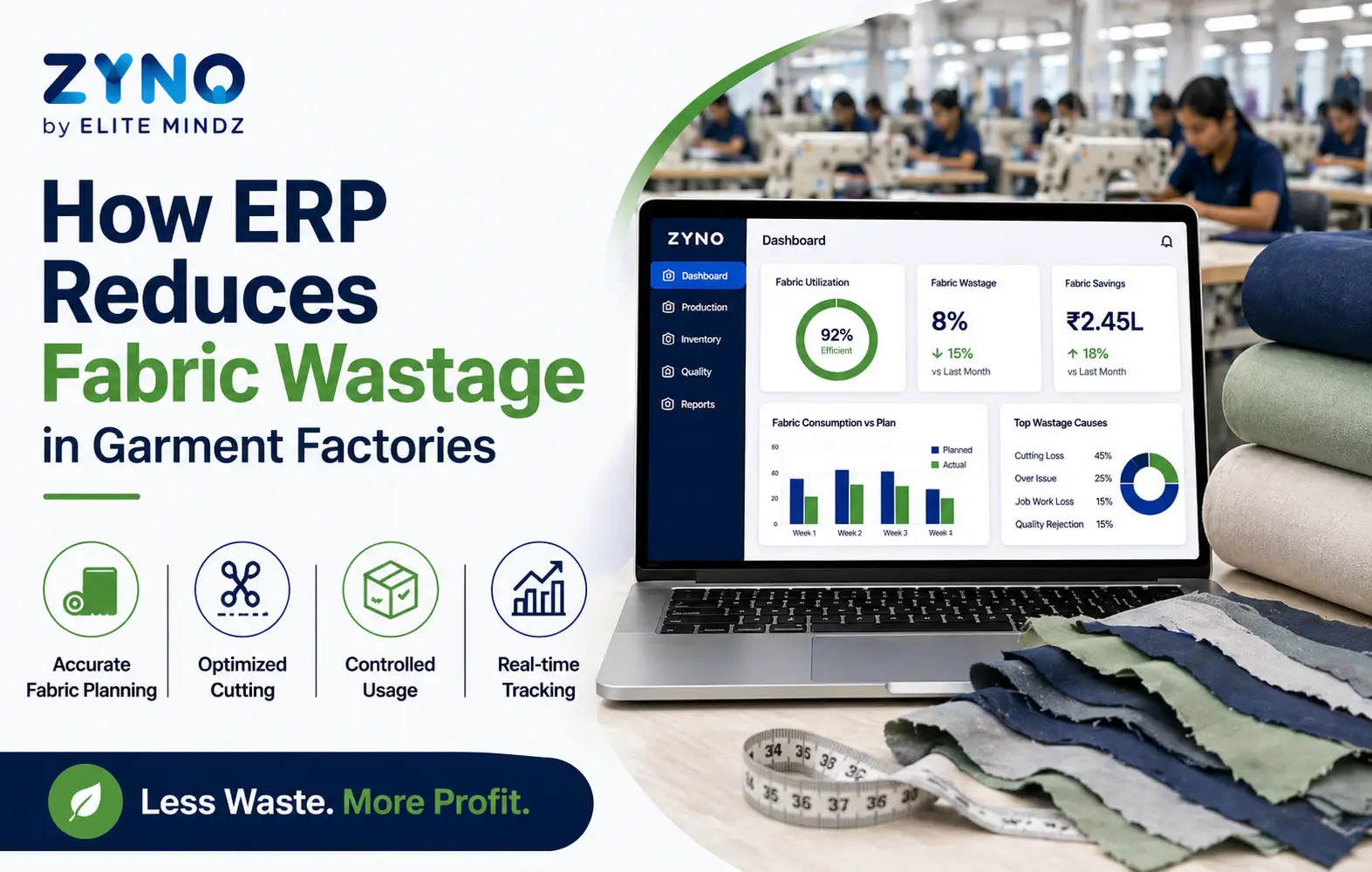
How ERP Reduces Fabric Wastage in Garment Factories
Read More →
Why the Garment Industry Needs a Specialized ERP
Read More →
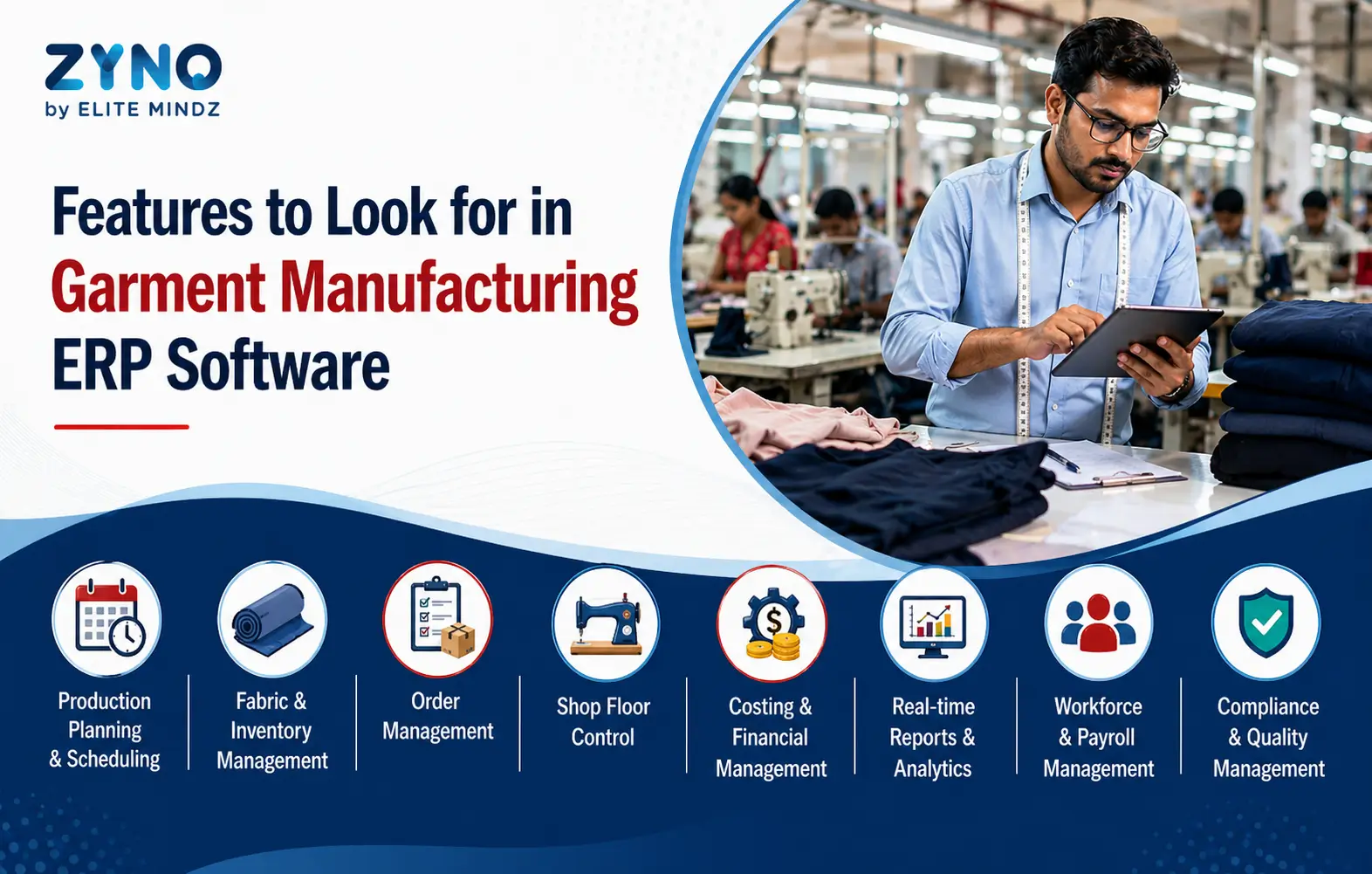
Features to Look for in Garment Manufacturing ERP Software
Read More →
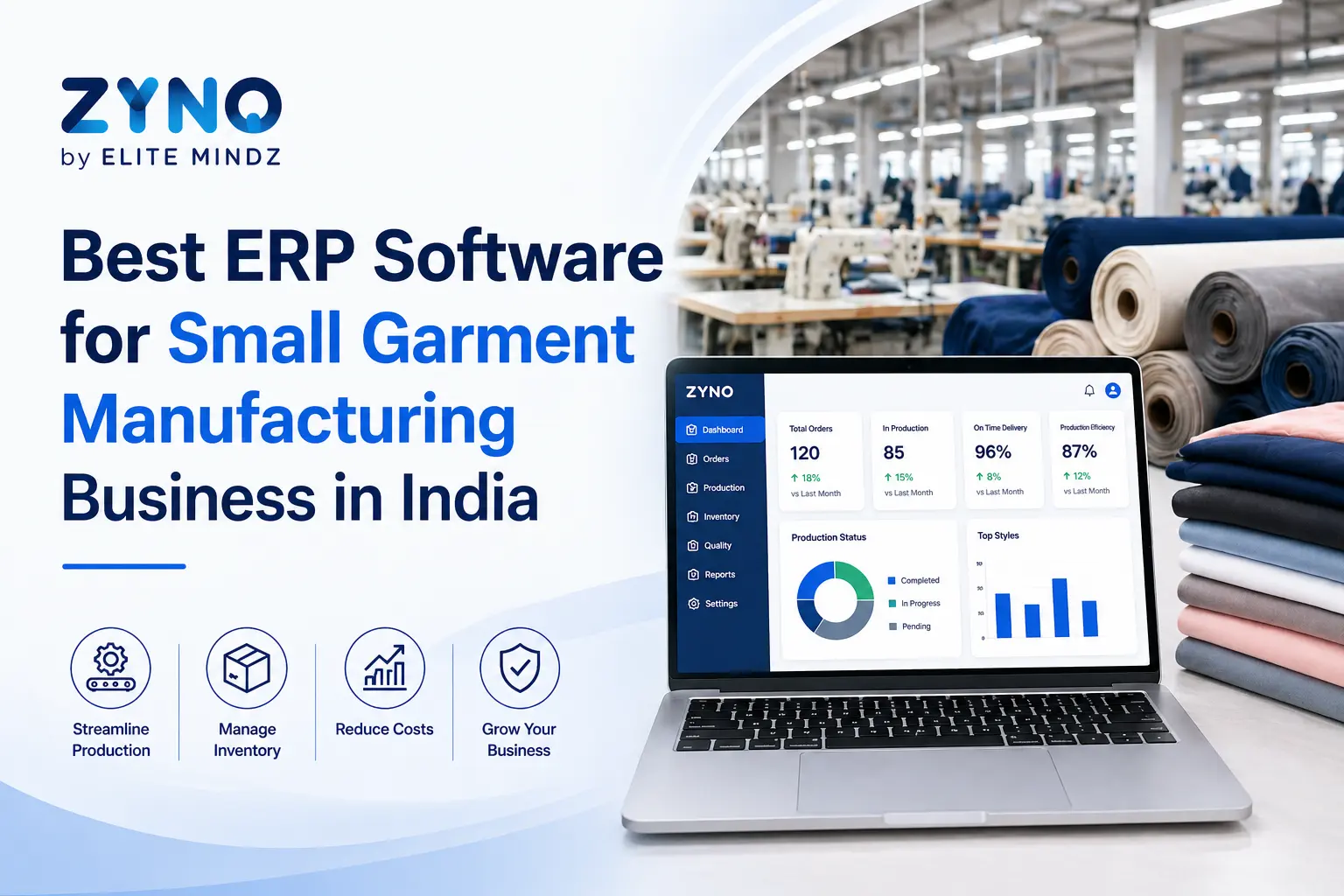
Best ERP Software for Small Garment Manufacturing Business in India
Read More →
The Real Problems Holding Back Small Garment Manufacturers in India
Read More →Garment Manufacturing ERP Software in India: Best Options, Features & Complete Guide 2026
Read More →
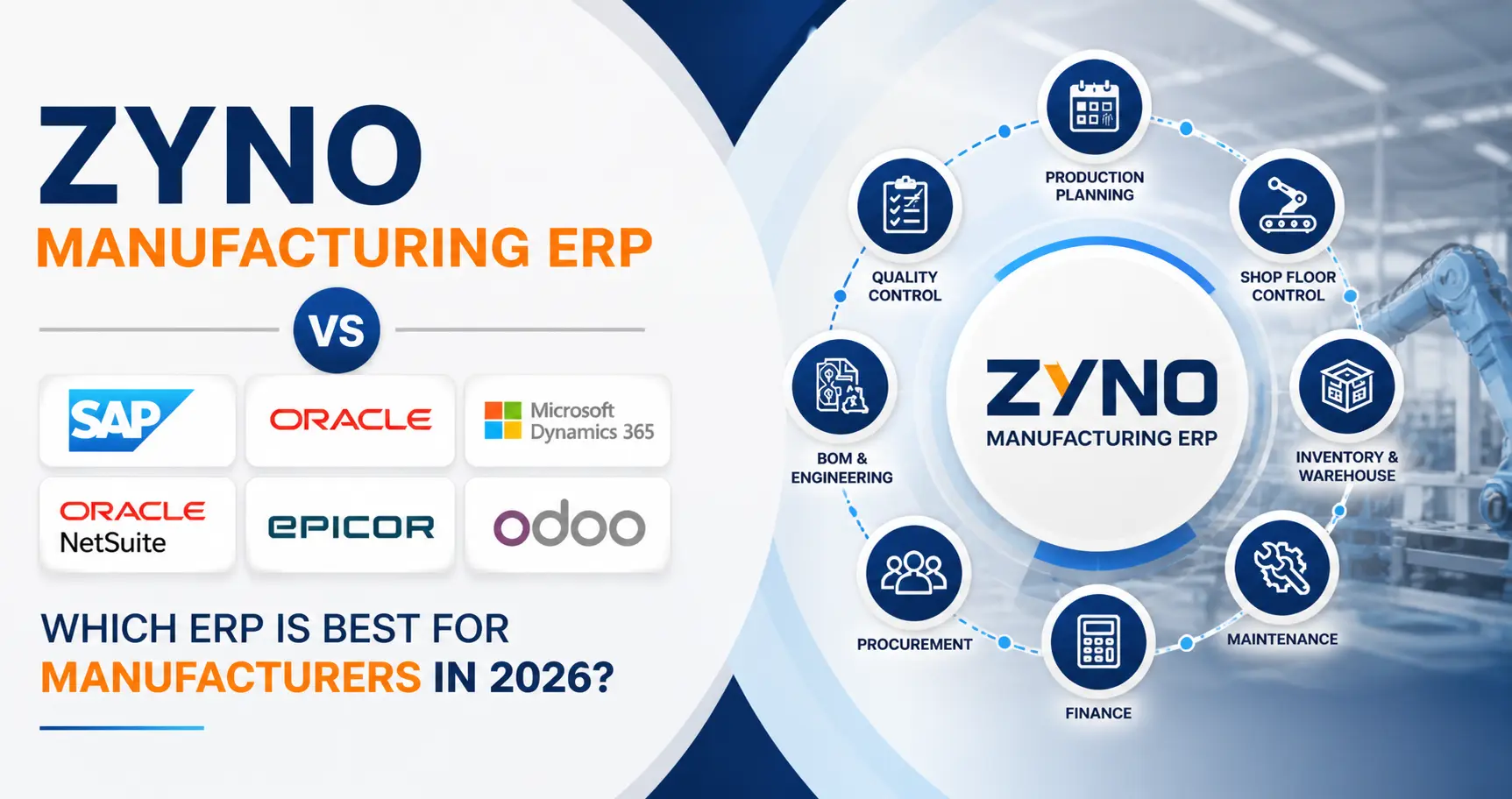
Which ERP is Best for Manufacturers in 2026?
Read More →
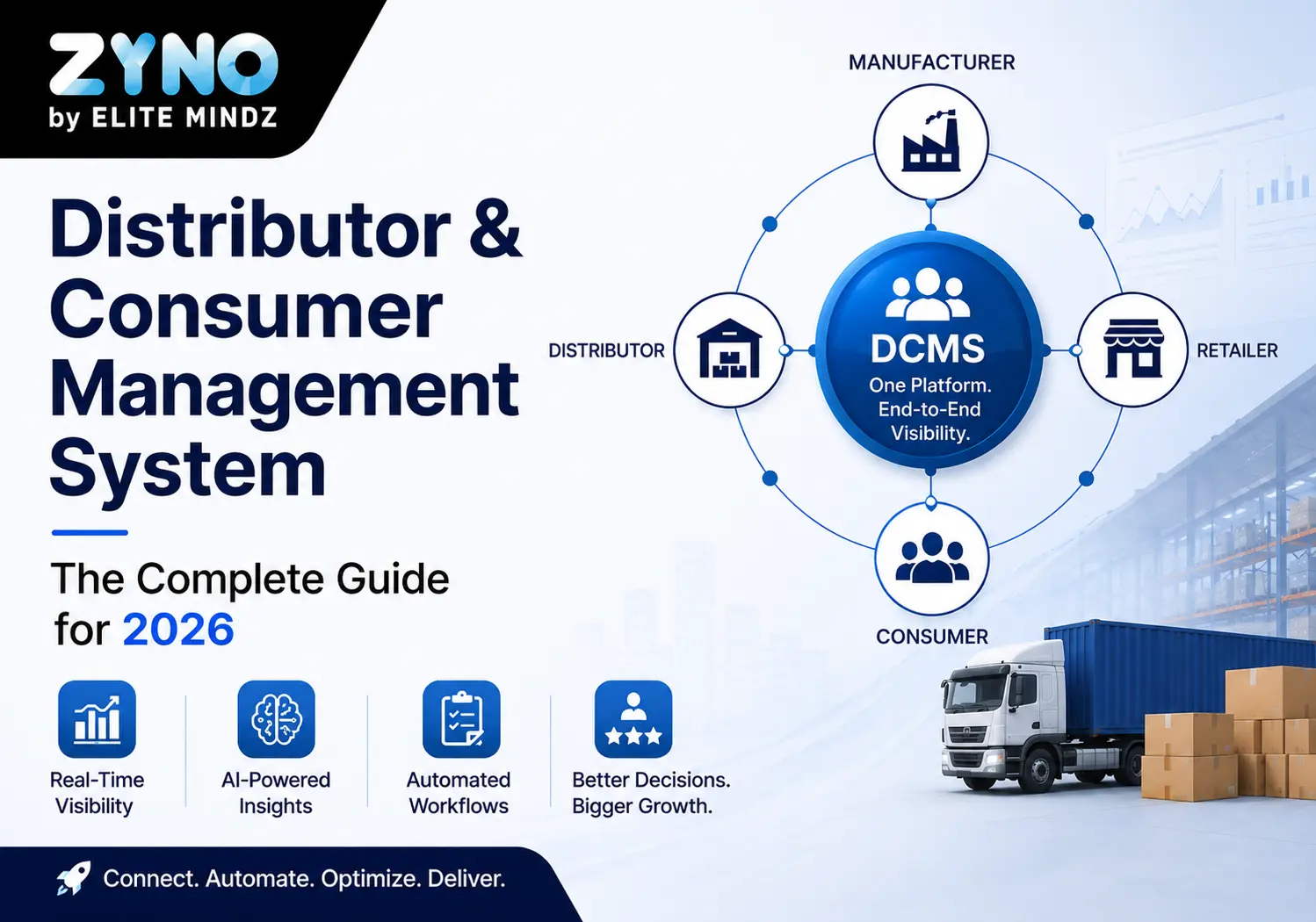
Distributor & Consumer Management System: The Complete Guide for 2026
Read More →
Best Pharma ERP Software in India 2026 – Features, Compliance & Buying Guide
Read More →
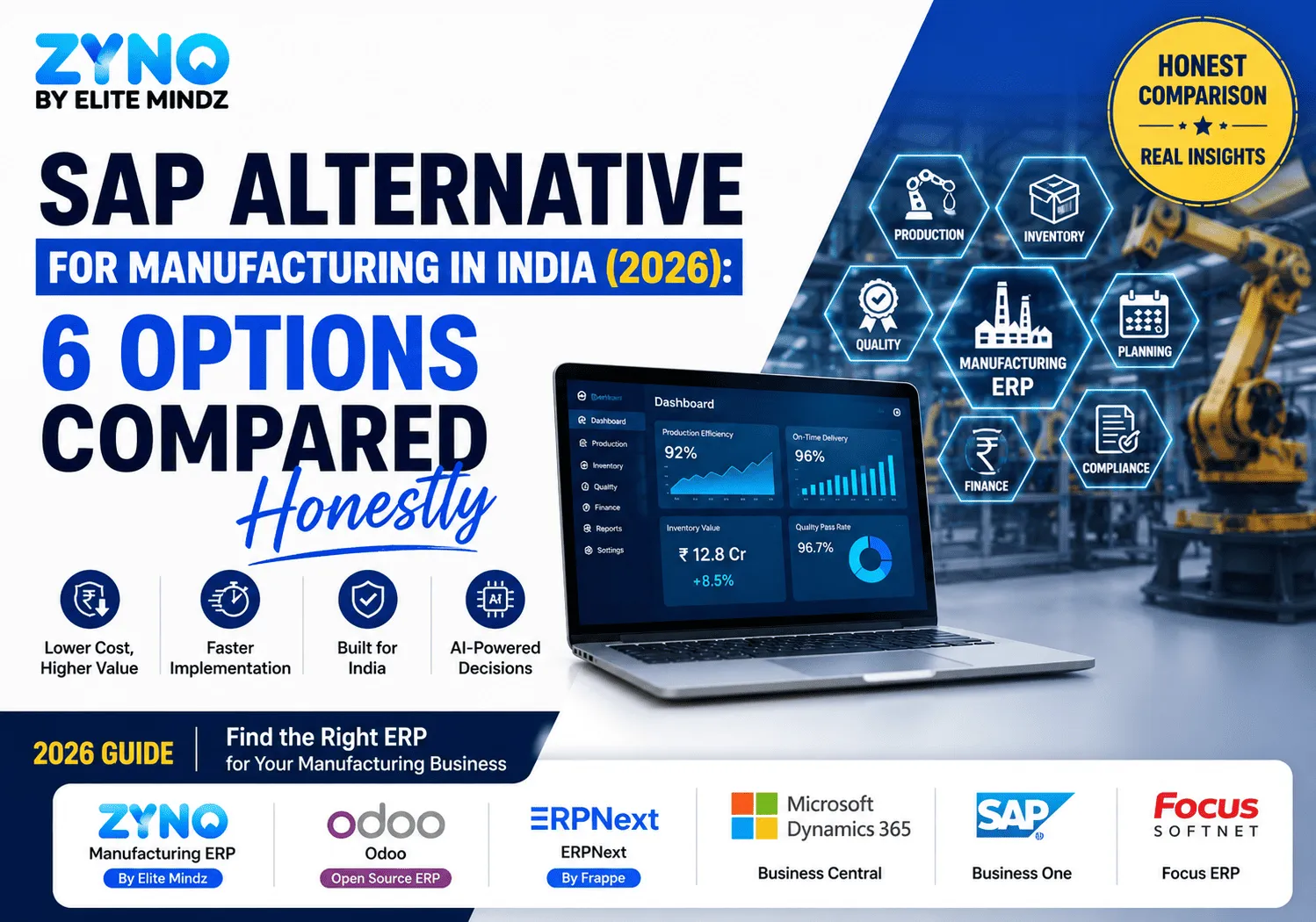
SAP Alternative for Manufacturing in India (2026): 6 Options Compared Honestly
Read More →
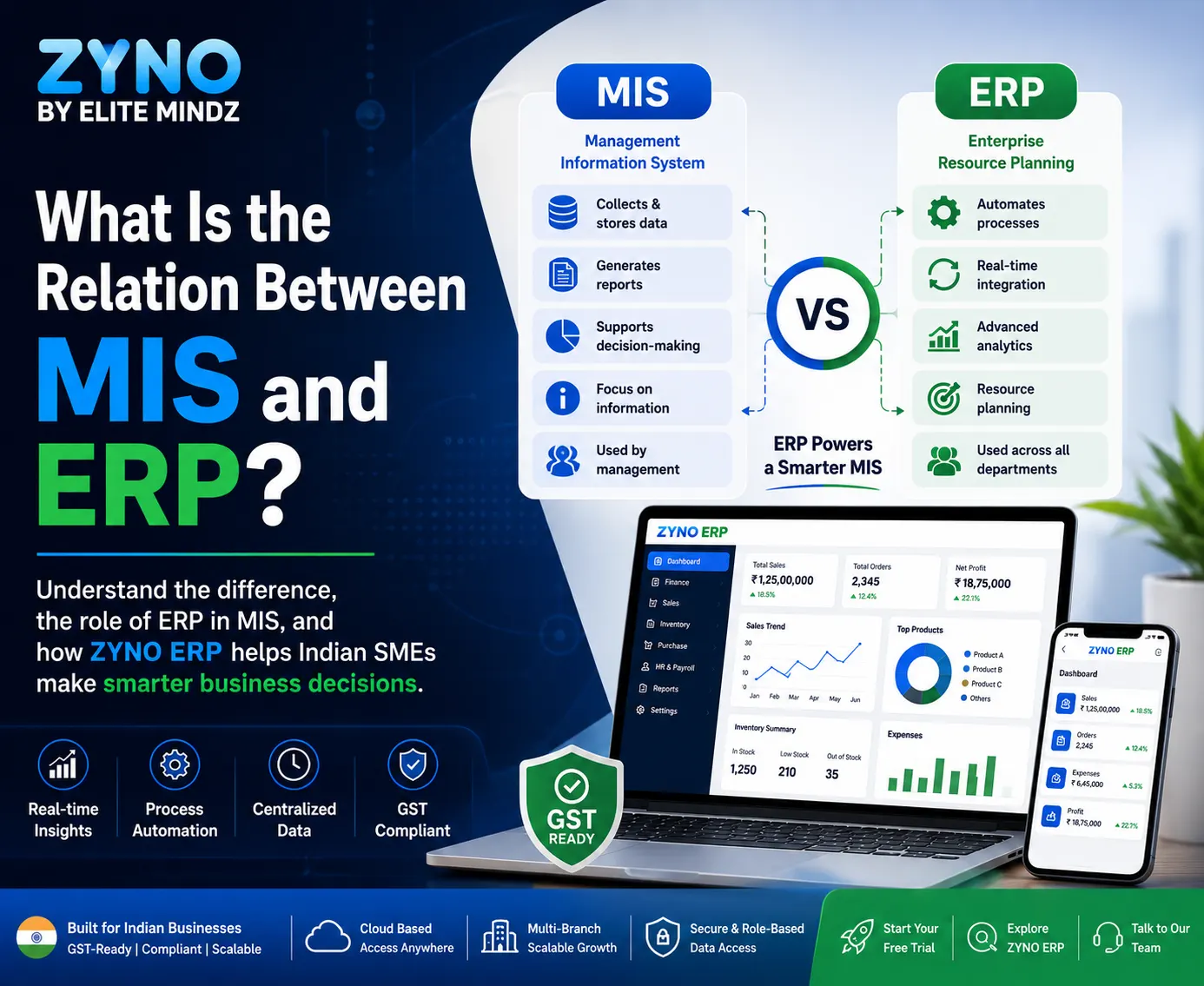
What Is the Relation Between MIS and Enterprise Resource Planning?
Read More →
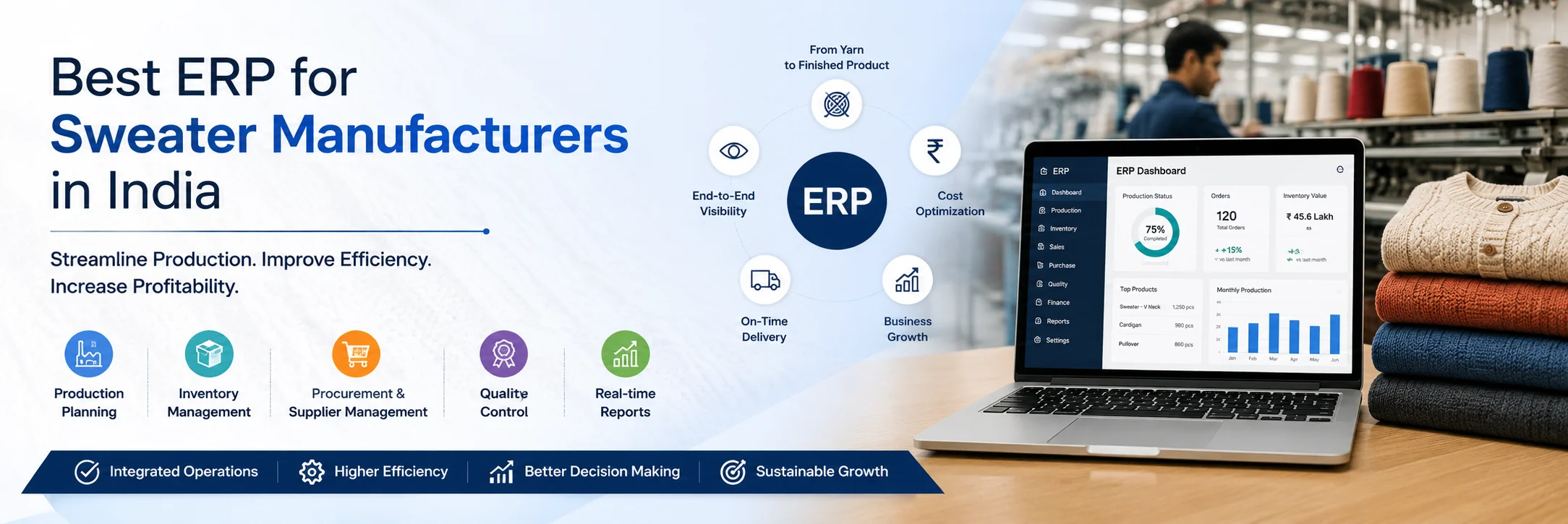
Best ERP for Sweater Manufacturers in India
Read More →
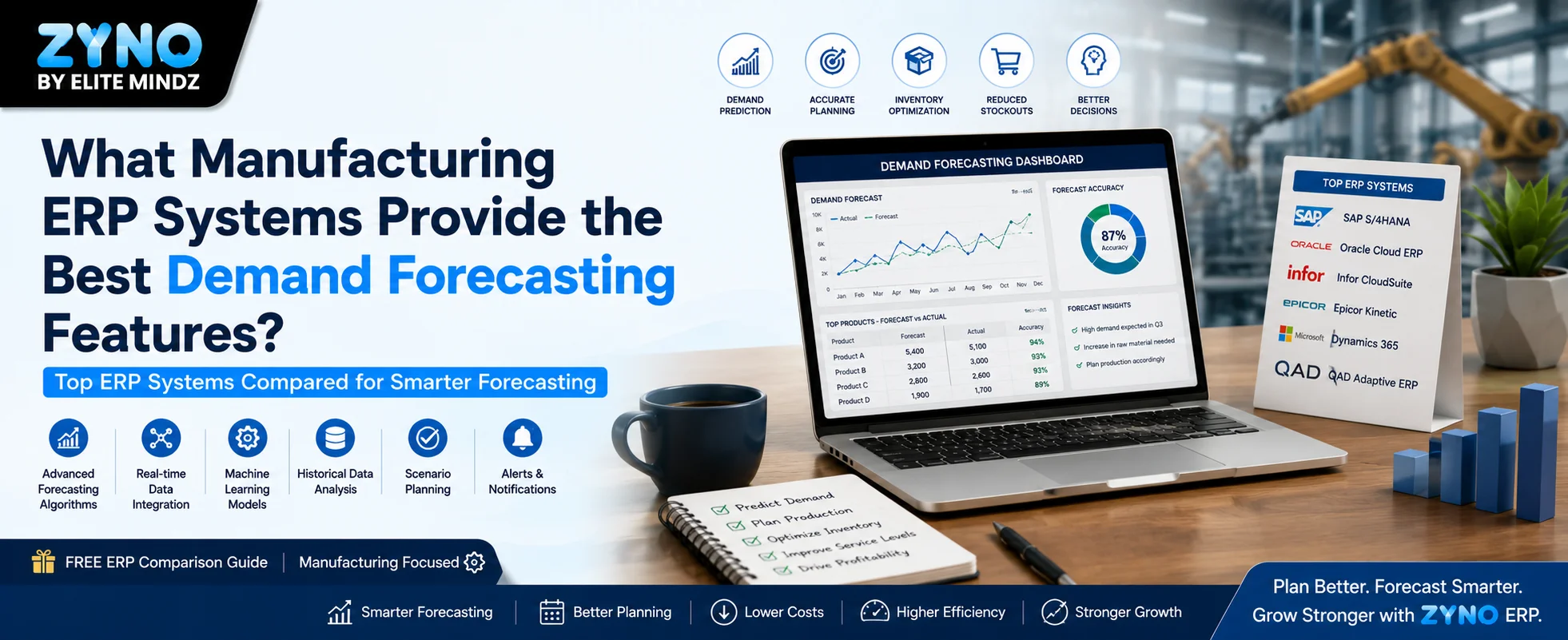
What Manufacturing ERP Systems Provide the Best Demand Forecasting Features?
Read More →
Which ERP Software Provides the Best Demand Forecasting for Manufacturers?
Read More →
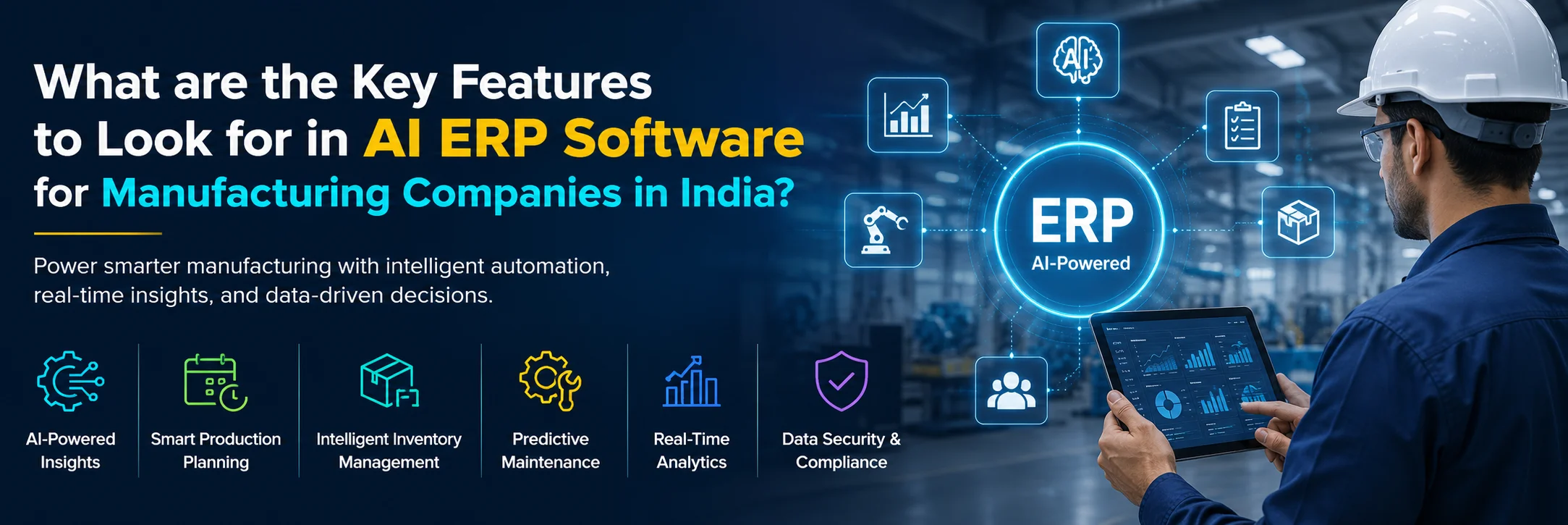
What are the key features to look for in AI ERP software for manufacturing companies in India?
Read More →
How does AI-powered ERP software improve production planning and inventory management in manufacturing?
Read More →
Which AI ERP platforms are best suited for small and mid-sized manufacturing businesses in India?
Read More →
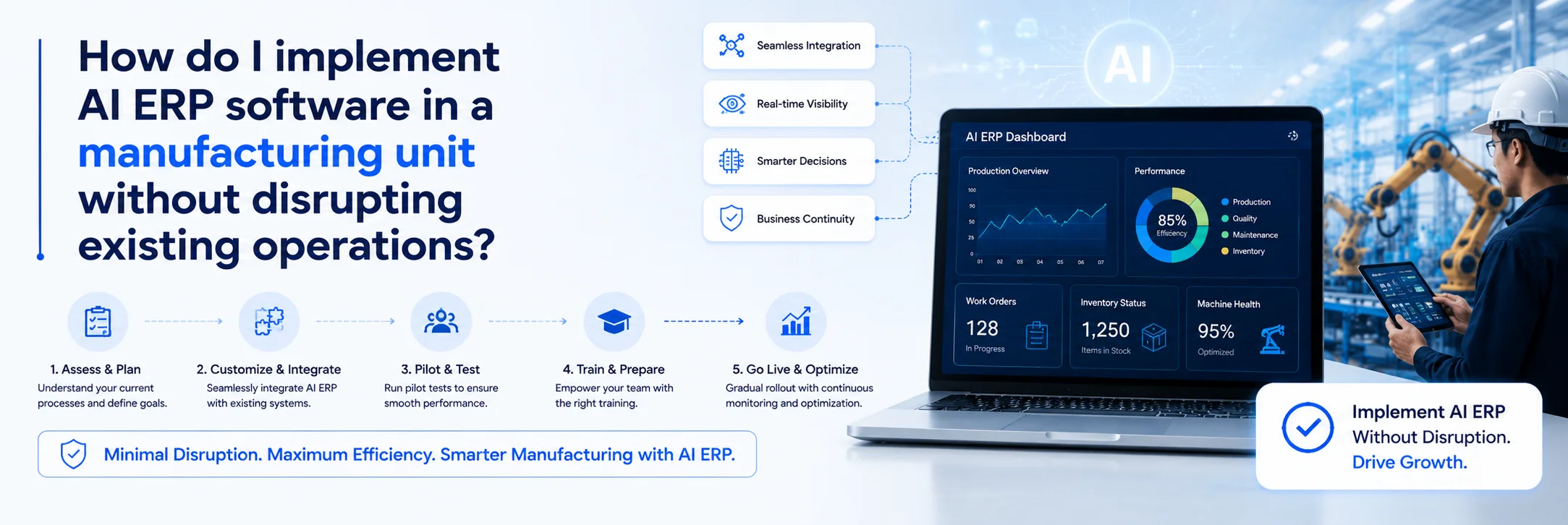
How do I implement AI ERP software in a manufacturing unit without disrupting existing operations?
Read More →
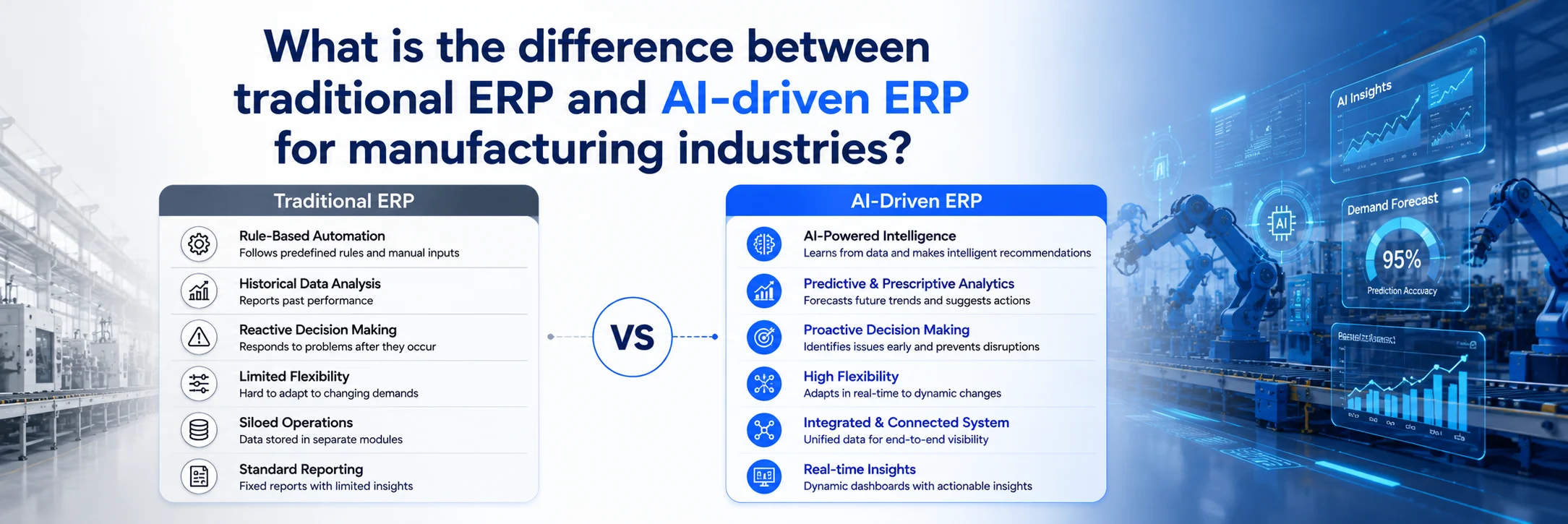
What is the difference between traditional ERP and AI-driven ERP for manufacturing industries?
Read More →
AI-Powered Smart ERP Software: The Complete Guide for Modern Enterprises
Read More →
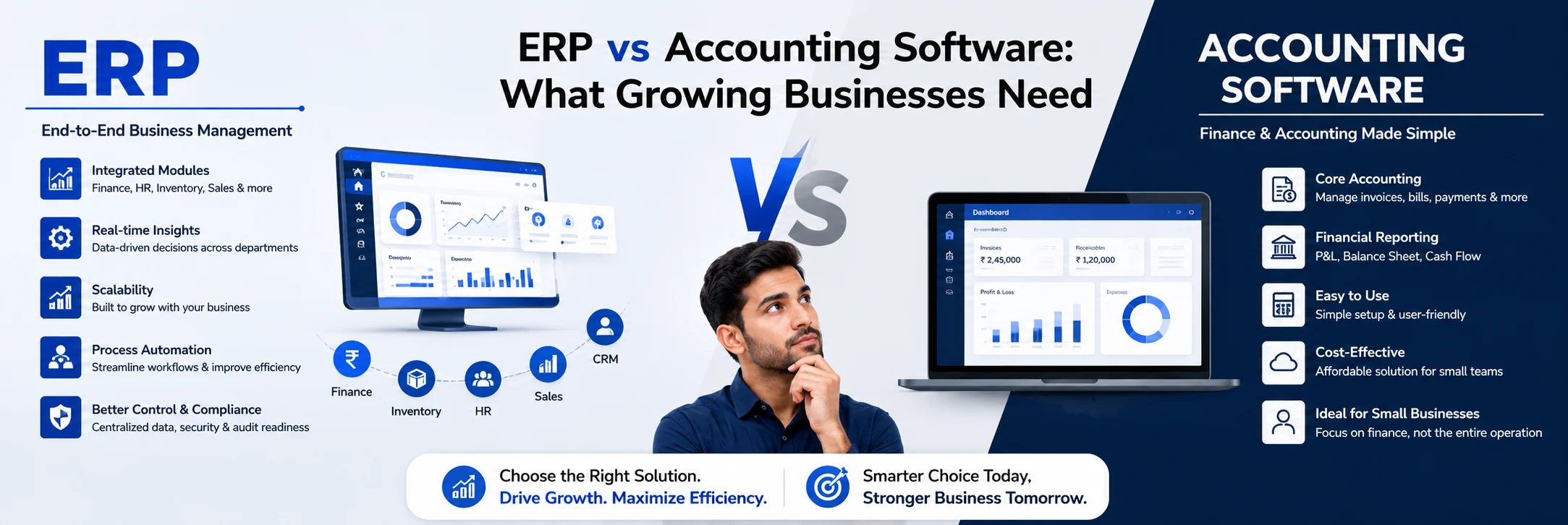
ERP vs Accounting Software: What Growing Businesses Need
Read More →
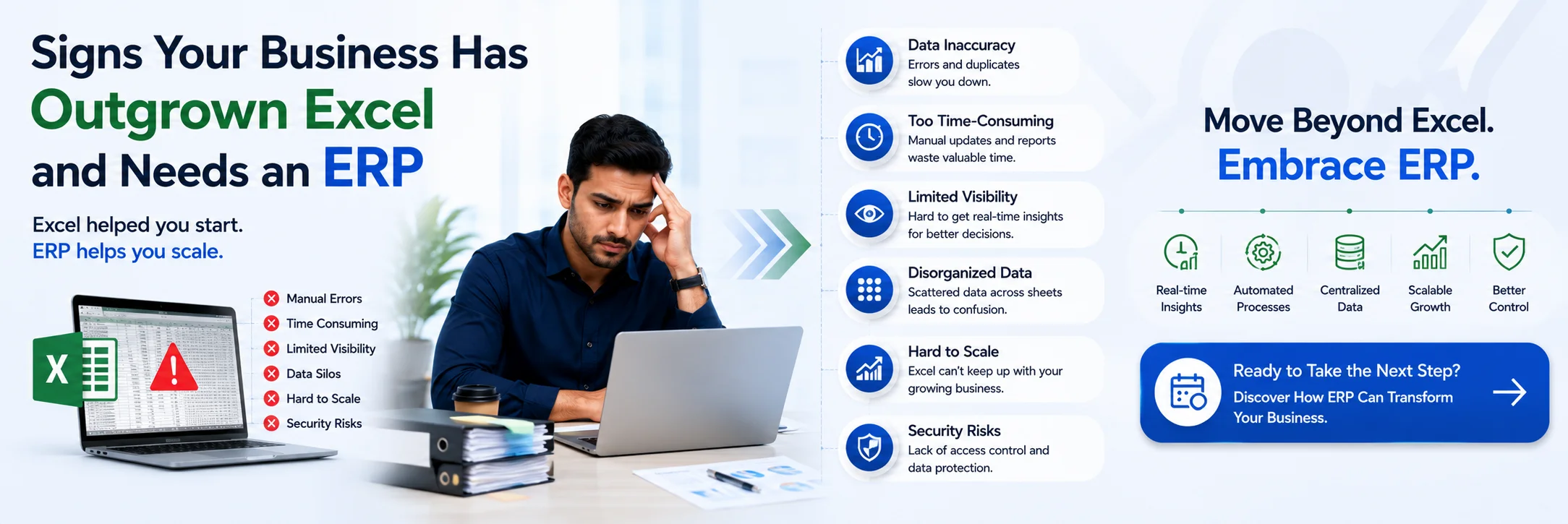
Signs Your Business Has Outgrown Excel and Needs an ERP
Read More →
How to Index HR Records from an ERP System for a Chatbot?
Read More →
What is the Best Software for Retail Garment Shop?
Read More →
Manufacturing Software for the Textile and Garment Industry?
Read More →
Best ERP Software for Manufacturing Companies in India?
Read More →
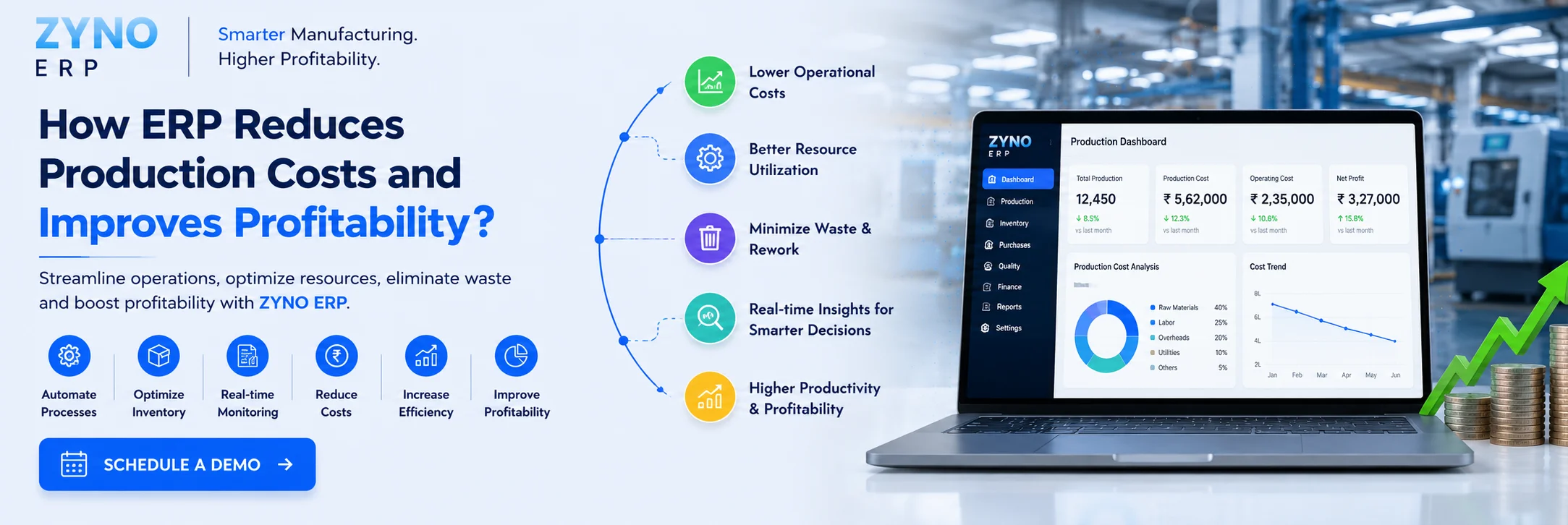
How ERP Reduces Production Costs and Improves Profitability?
Read More →
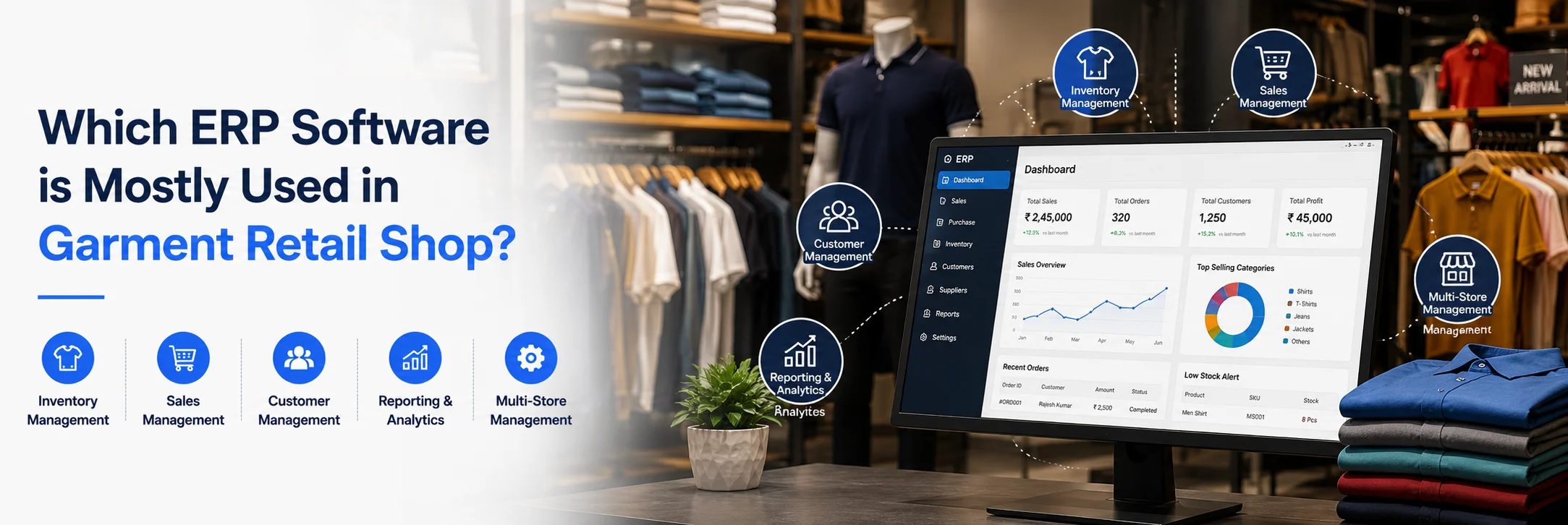
Which ERP Software is Mostly Used in Garment Retail Shop?
Read More →
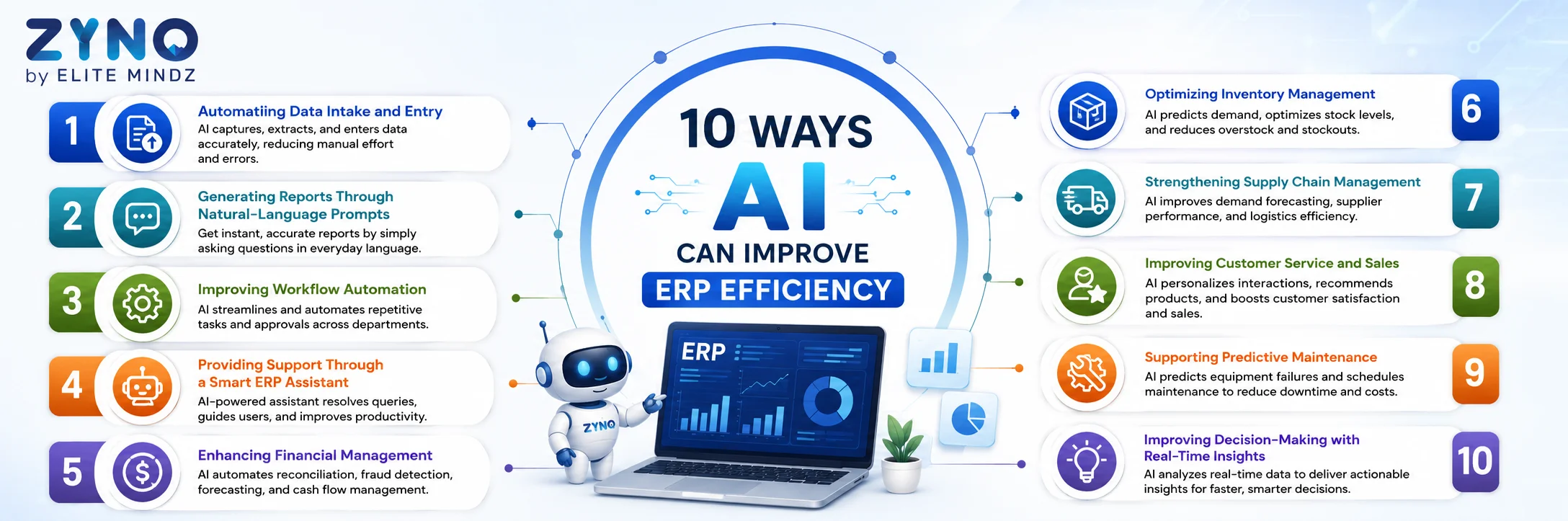
10 Ways AI Can Improve ERP Efficiency
Read More →
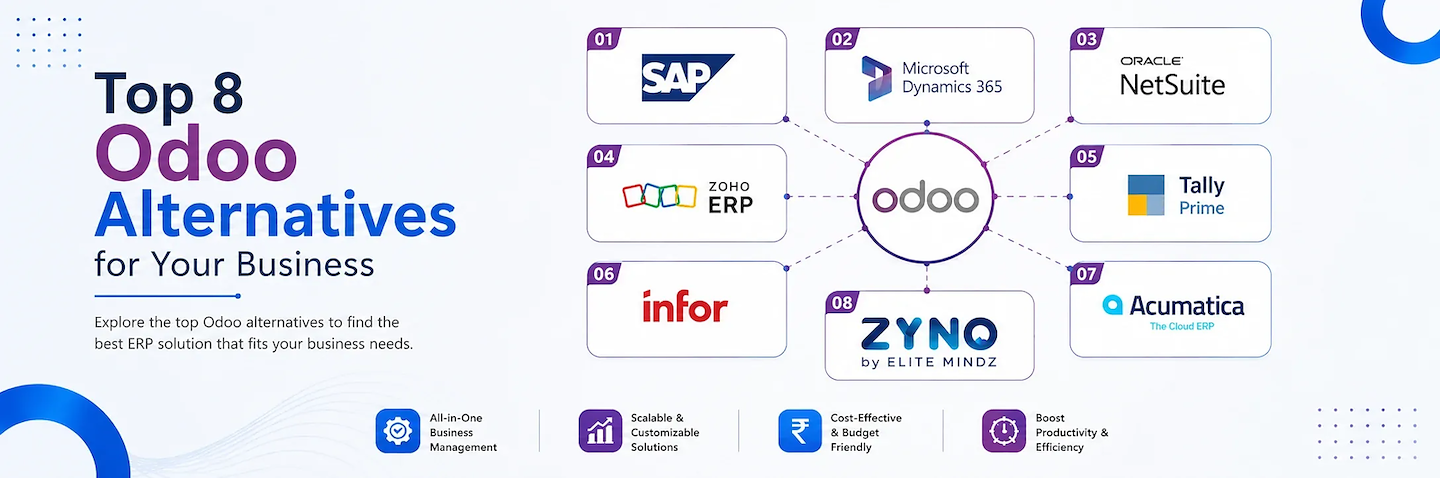
Top 8 Odoo Alternatives for Your Business
Read More →
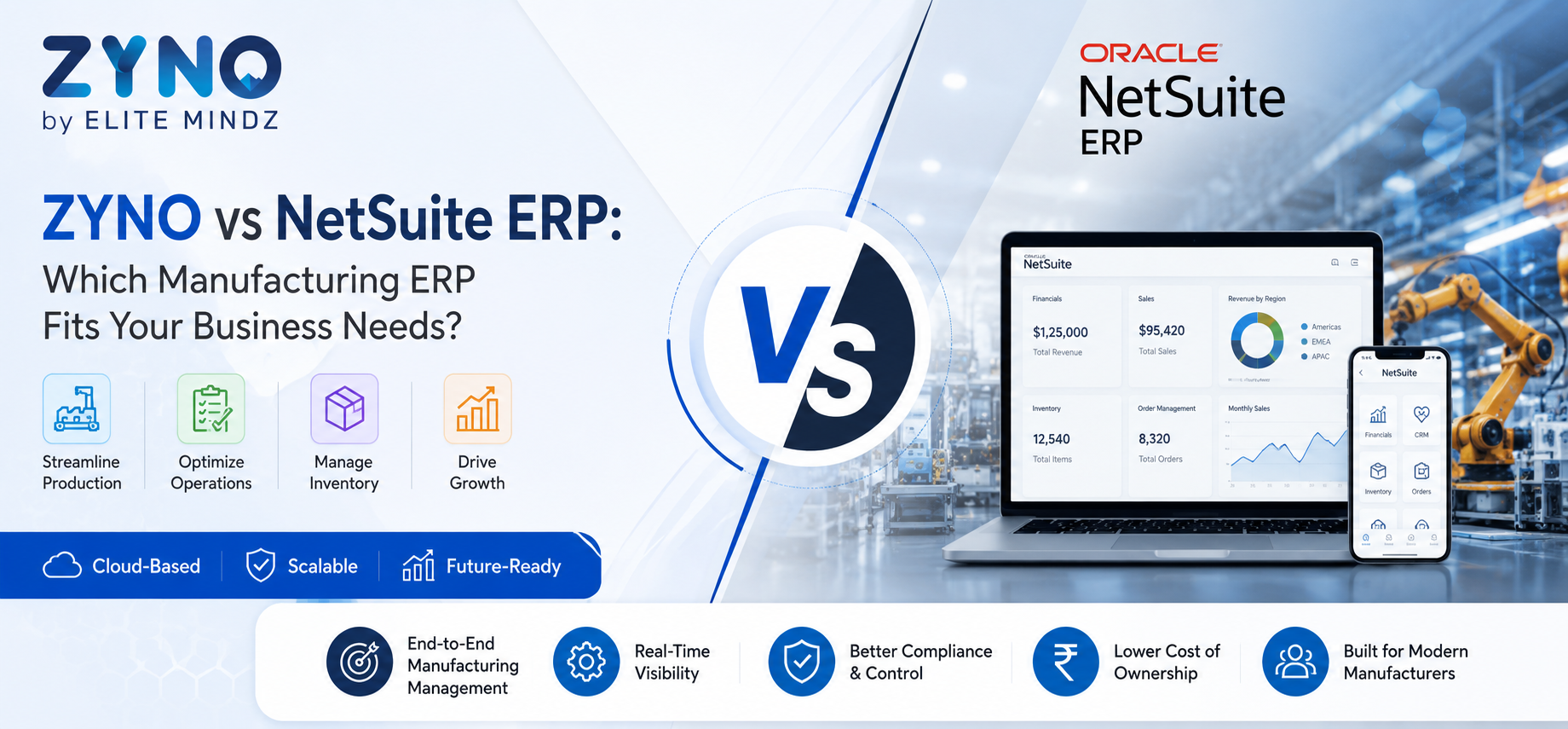
ZYNO vs NetSuite ERP: Which Manufacturing ERP Fits Your Business Needs?
Read More →
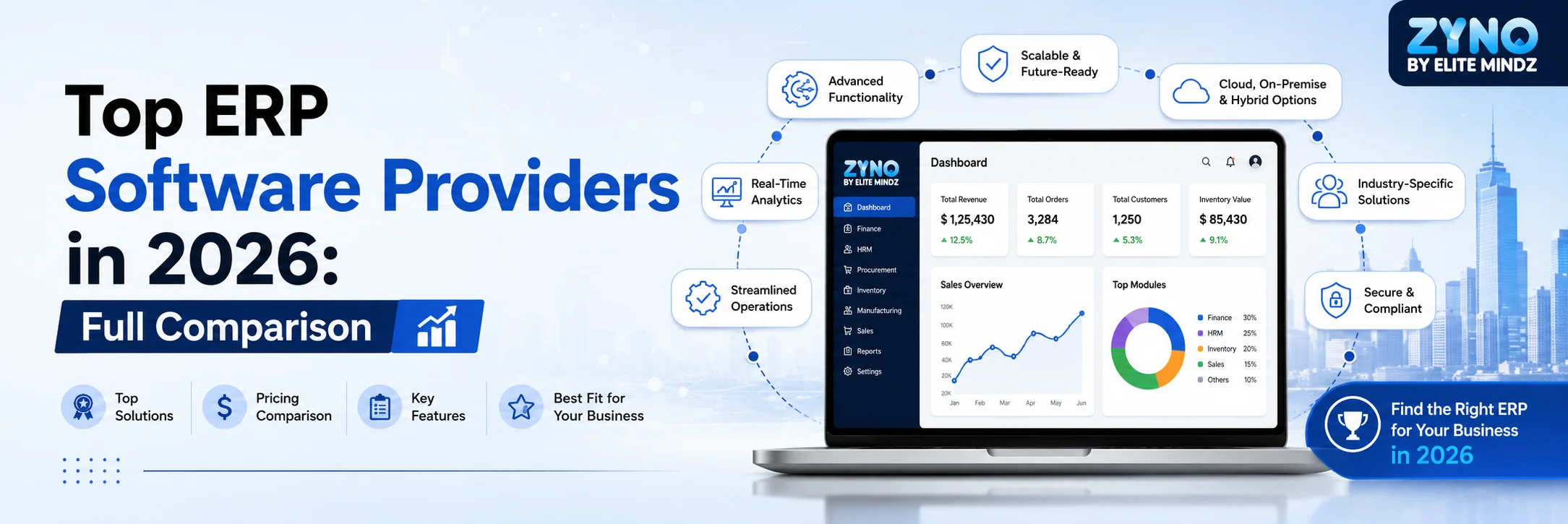
Top ERP Software Providers in 2026: Full Comparison
Read More →
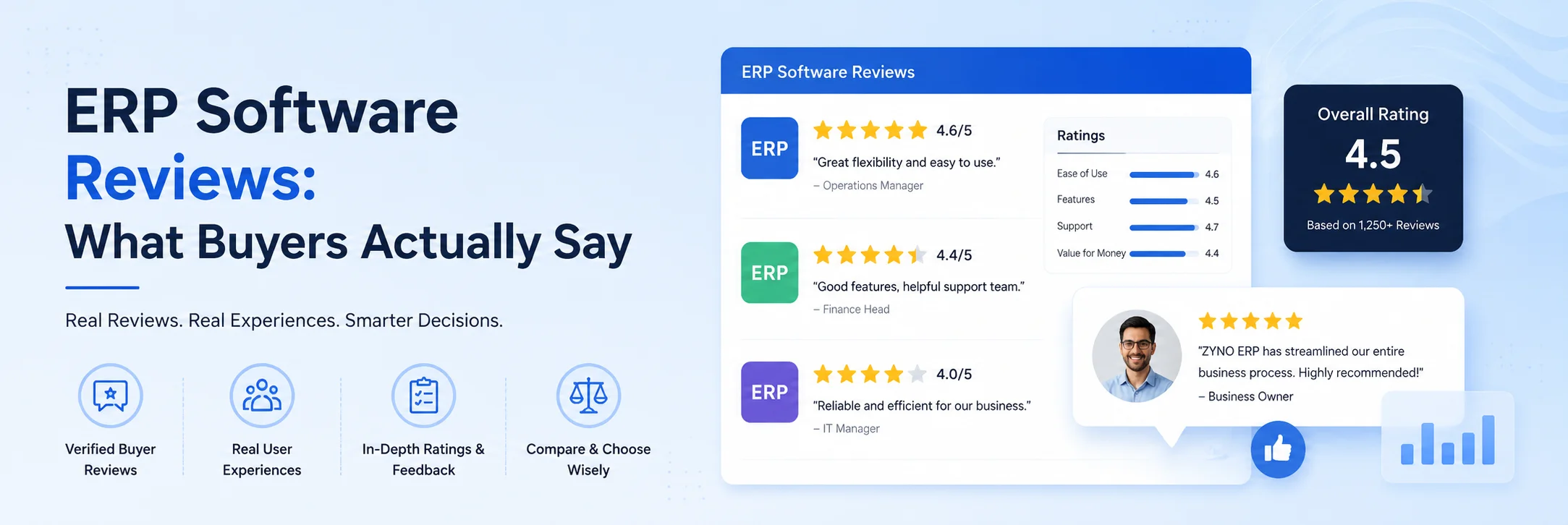
ERP Software Reviews: What Buyers Actually Say in 2026
Read More →
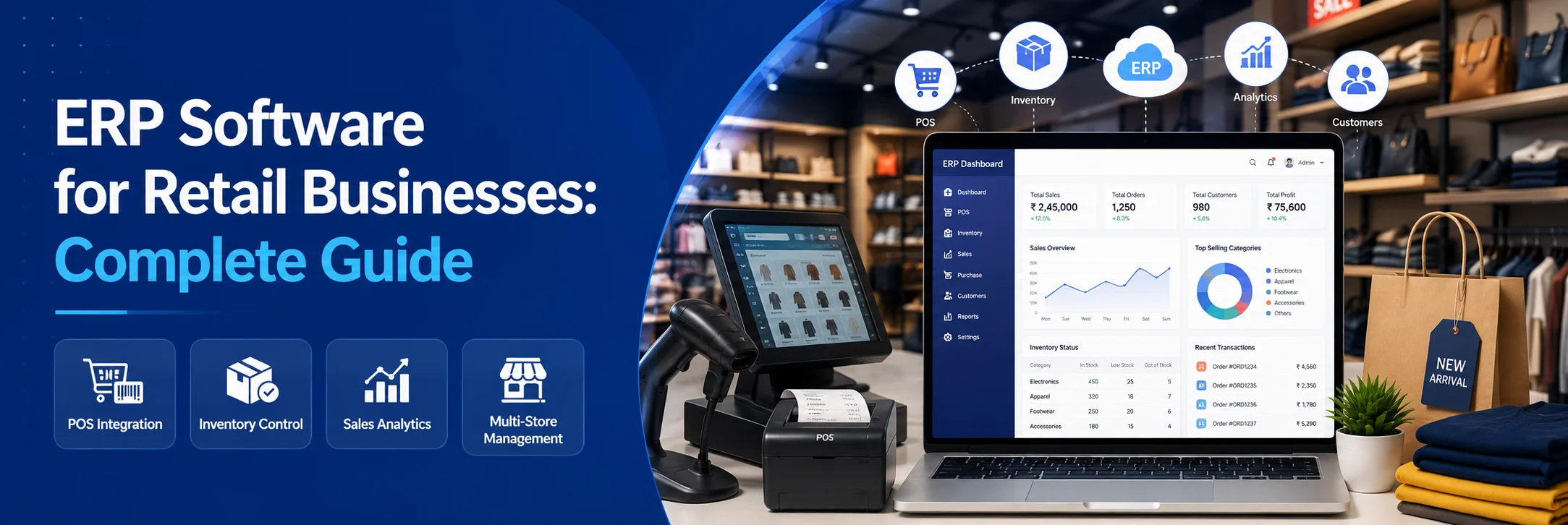
ERP Software for Retail Businesses: Complete Guide
Read More →
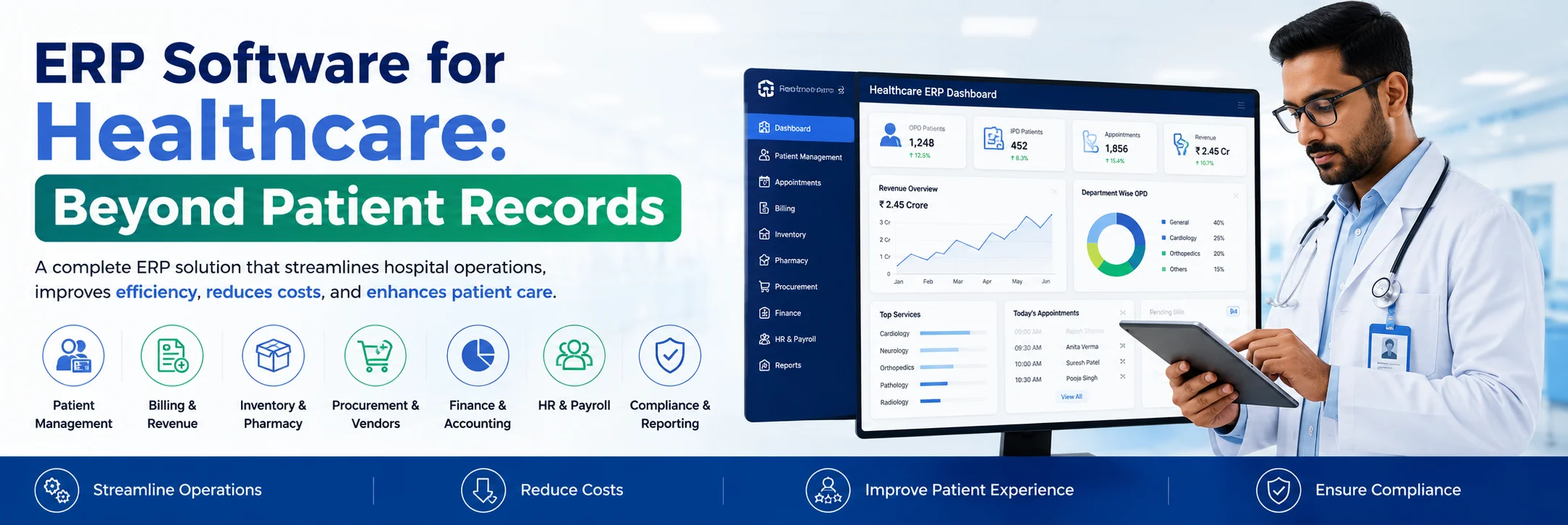
ERP Software for Healthcare: Beyond Patient Records
Read More →
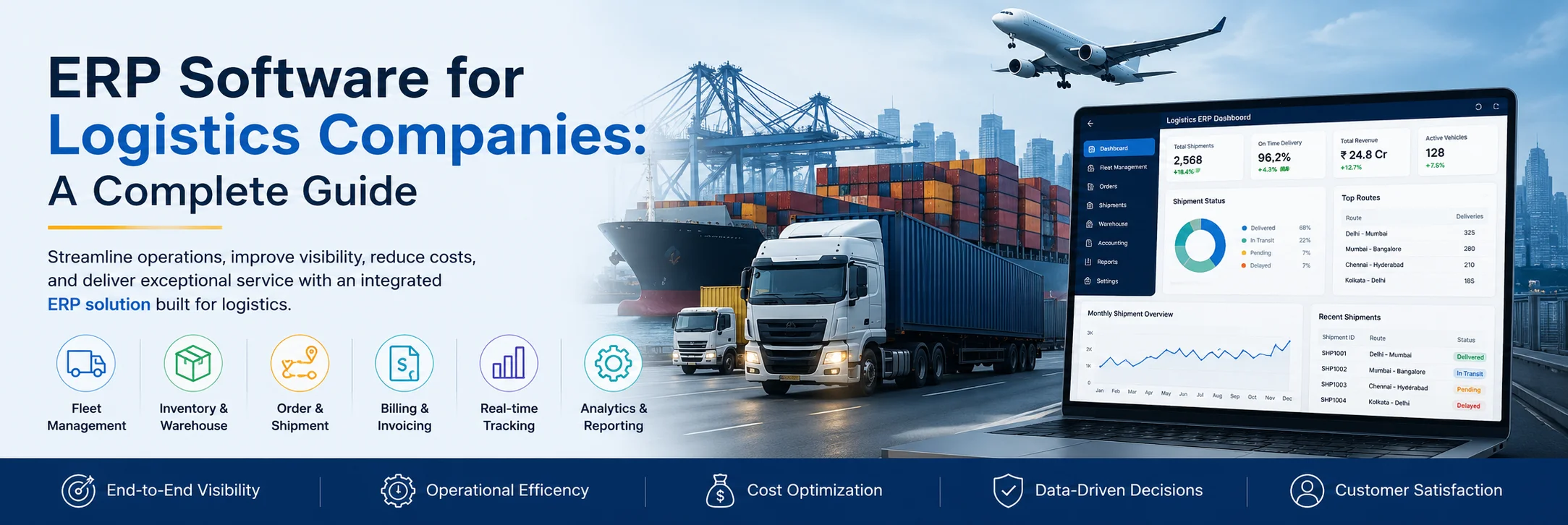
ERP Software for Logistics Companies: A Complete Guide
Read More →
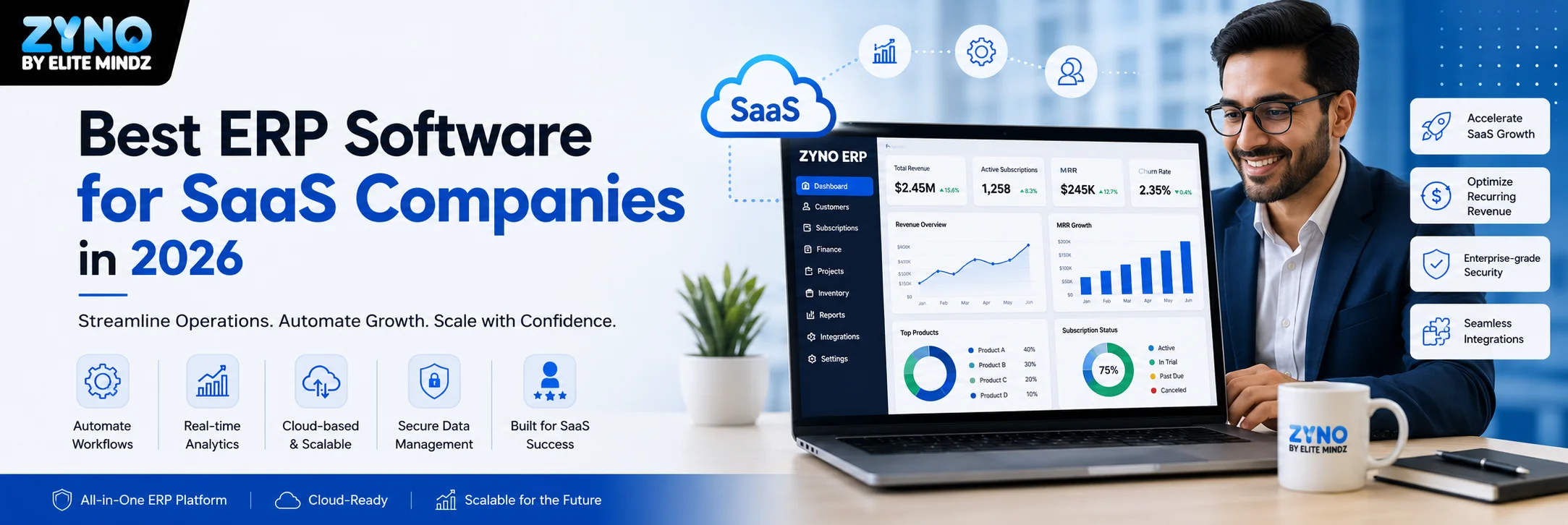
Best ERP Software for SaaS Companies in 2026
Read More →
Cloud ERP Software Features: The Complete List for 2026
Read More →Partner with ZYNO by Elite Mindz to revolutionize how your business works. Fill out the form, and we’ll reach out with AI-powered solutions made just for you.
We use browser cookies to ensure you get the best experience on our website. Learn more
The form was submitted successfully!
ZYNO Digital
Fueling Smarter Digital Growth
ZYNO Digital fuels smarter digital growth through data-driven marketing, creative storytelling, and performance strategies that boost visibility, engagement, and measurable business outcomes across global platforms.
ZYNO Tech
Engineering the Future of IT
ZYNO Tech delivers cutting-edge IT solutions — including web, mobile, and digital transformation services — helping businesses scale efficiently, innovate faster, and stay ahead in a connected world.
ZYNO AI
AI Built for Business Growth
ZYNO AI harnesses the power of artificial intelligence to automate processes, enhance decision-making, and deliver predictive insights — driving innovation, agility, and measurable business growth.
ZYNO by Elite Mindz
Your Partner in the AI-Powered Future
ZYNO by Elite Mindz offers AI-powered products and services that unify operations, boost productivity, and drive digital transformation — helping businesses scale smarter and innovate faster.
* In just 2 mins you'll get a response
* Your idea is 100% protected by our Non-Disclosure Agreement