Why Cloud-Based AI HIMS is Transforming the Future of Indian Healthcare
Read More →

×
Managing patient data digitally simplifies healthcare operations. Read this complete guide to understand what a Patient Information Management System is, its top 10 benefits, core features, traditional vs. digital comparisons, implementation best practices, and how integrated HIMS solutions streamline clinical and administrative workflows.
Businesses using ZYNO Books cut accounting time by 70% and stay 100% ZATCA-compliant — automatically.
Healthcare organizations manage enormous amounts of patient information every day. From basic demographic details and appointment history to medical records, diagnoses, prescriptions, laboratory reports, billing information, and treatment plans, patient data is at the center of almost every healthcare process.
Traditionally, much of this information was recorded and managed through paper files, spreadsheets, and disconnected systems. While these methods may work for smaller healthcare facilities, they can become difficult to manage as patient volumes and healthcare operations grow.
This is where Patient Information Management Systems can make a significant difference.
A patient information management system provides healthcare organizations with a structured digital environment for collecting, storing, organizing, accessing, and managing patient information. When integrated with other healthcare applications, it can connect patient data with appointments, clinical workflows, laboratory services, pharmacy operations, billing, and hospital administration.
In this article, we explore the benefits of patient information management systems, their key features, how they improve healthcare operations, and why they are becoming increasingly important for modern hospitals and clinics.
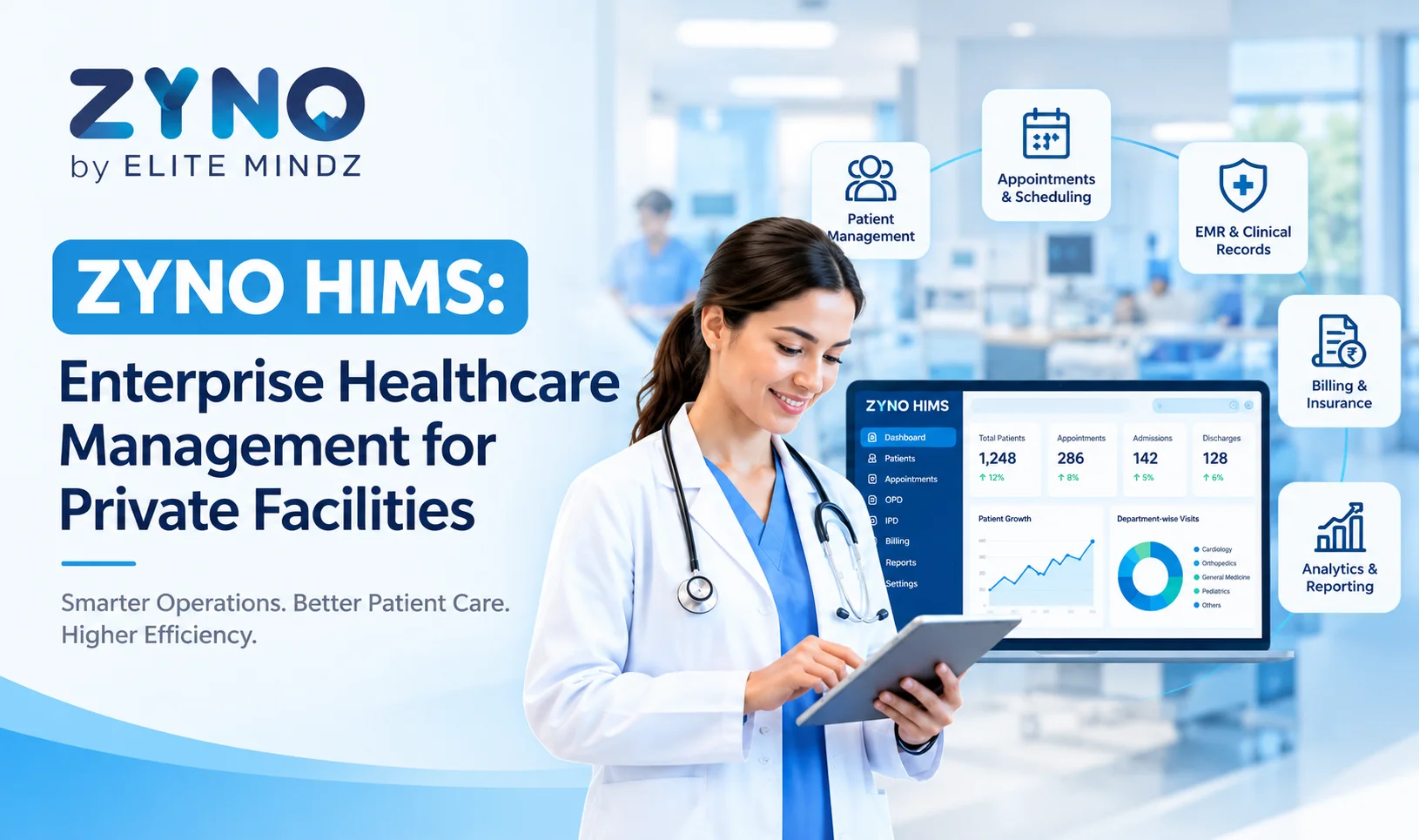
Discover how ZYNO HIMS helps hospitals and clinics centralize patient records, appointments, EMR, billing, diagnostics, pharmacy, and follow-up care on one connected platform.
A Patient Information Management System (PIMS) is a digital healthcare solution designed to manage and organize patient-related information throughout the healthcare journey.
Depending on the platform and healthcare organization's requirements, a patient information management system may store and manage:
Instead of storing this information across different paper files or disconnected applications, healthcare providers can use a centralized digital system.
This makes patient information easier for authorized healthcare professionals to find, update, and use when required.
Patient information is one of the most valuable resources within a healthcare organization.
Doctors need accurate medical histories to support clinical decisions. Nurses need relevant patient information to provide care. Laboratories need correct patient details to associate test results with the right individual.
Pharmacies need prescription information to dispense medicines correctly. Administrators need patient and operational data for reporting and management.
When patient information is fragmented, outdated, duplicated, or difficult to access, healthcare workflows can become slower and more complicated.
A patient information management system helps create a more organized approach to managing this information.
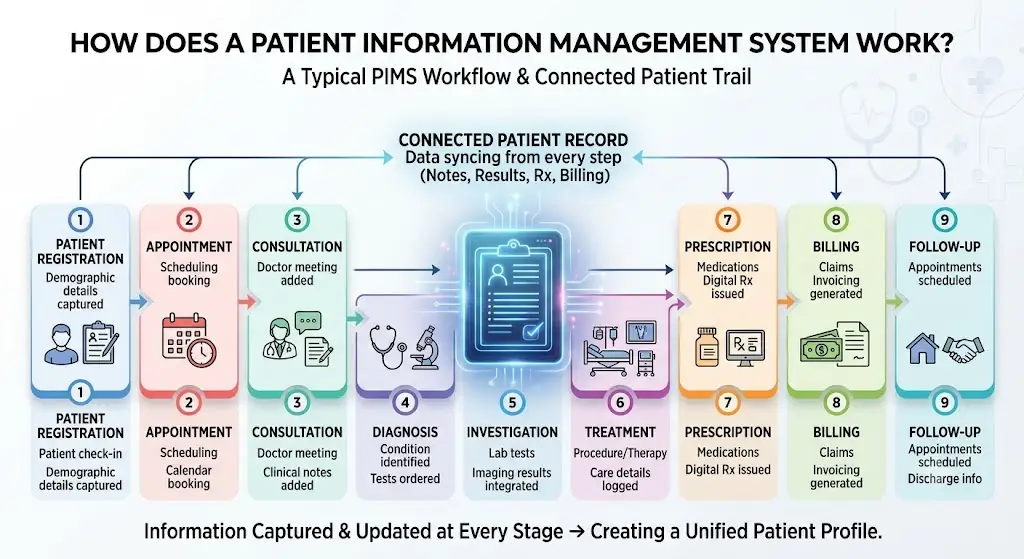
A typical patient information management workflow can look like this:

Patient Registration → Appointment → Consultation → Diagnosis → Investigation → Treatment → Prescription → Billing → Follow-up
Patient information can be captured and updated at different stages of this journey.
For example, when a patient registers at a hospital, their demographic information can be entered into the system. During a consultation, the doctor can add clinical notes, diagnoses, and prescriptions. Laboratory results can then be associated with the same patient record.
This creates a connected patient information trail rather than forcing every department to maintain separate records.
One of the most important benefits is centralized data management.
Without a digital system, patient information may exist in multiple places. A patient's registration details may be in one file, laboratory reports in another, prescriptions in another, and billing information somewhere else.
A centralized system brings relevant patient information together.
Authorized users can access information from a single platform according to their roles and permissions.
This can reduce information fragmentation and make healthcare workflows more organized.
Healthcare professionals often need patient information quickly.
Searching through physical files can take time, especially in hospitals with large patient volumes.
Digital patient information systems allow authorized users to search for records using information such as:
Faster access can help healthcare professionals spend less time searching for information and more time focusing on patient-related activities.
Manual data entry and repeated documentation can increase the possibility of errors.
For example, patient information may be entered differently by different departments, creating duplicate or inconsistent records.
A centralized patient information system can reduce unnecessary duplication by maintaining a common patient record.
Validation rules, standardized fields, and structured workflows can further support data accuracy.
Patients often interact with multiple departments during their healthcare journey.
A patient may visit an outpatient department, undergo laboratory testing, receive medication from the pharmacy, and return for a follow-up consultation.
If each department works with disconnected information, coordination can become difficult.
An integrated patient information system can help connect these interactions.
Healthcare professionals can access relevant information based on their role, allowing departments to work with a more complete picture of the patient's healthcare journey.
Paper-based healthcare processes require physical forms, files, printing, storage, and manual documentation.
As patient numbers increase, the amount of paperwork can become difficult to manage.
Digital patient information management can reduce dependence on physical documents by allowing healthcare organizations to store and manage information electronically.
This can also reduce the physical space required for record storage.
Patient information management affects more than clinical processes.
Administrative teams may use patient data for registration, appointment scheduling, billing, reporting, and other activities.
When these processes are connected digitally, information can move more efficiently between departments.
For example, patient registration information can be reused for appointments and billing rather than being entered repeatedly.
This reduces repetitive work and can improve overall operational efficiency.
Healthcare organizations handle sensitive patient information, making data security extremely important.
Modern healthcare information systems can implement features such as:
These controls can help organizations limit access to patient information based on user responsibilities.
However, software alone does not guarantee security. Healthcare organizations also need appropriate policies, staff training, infrastructure, and compliance practices.
Digital patient information creates structured data that can be used for reporting and analysis.
Healthcare administrators can generate reports related to areas such as:
These insights can support operational planning and resource allocation.
For example, if a hospital identifies consistently high patient volumes in a particular department, management can use that information to review staffing and scheduling requirements.
Patients increasingly expect healthcare services to be convenient and organized.
Digital registration, appointment scheduling, faster access to records, electronic communication, and streamlined billing can help reduce unnecessary waiting and repetitive paperwork.
A well-designed patient information management system can therefore contribute to a smoother patient journey.
The goal is not simply to digitize records but to use patient information to make healthcare interactions more coordinated.
As hospitals and clinics grow, their patient information requirements grow with them.
A small facility may initially manage records using basic tools, but increasing patient volumes can make manual processes difficult to maintain.
A scalable patient information management system can support growing numbers of patients, users, departments, and transactions.
This makes digital patient information management an important foundation for healthcare organizations planning long-term growth.
A modern patient information management system may include several features designed to support different healthcare workflows.
The system can capture and manage patient demographic and contact information.
Healthcare staff can quickly locate patient records using identifiers such as patient ID, name, or phone number.
Doctors and authorized healthcare professionals can access relevant historical patient information.
The system can support appointment scheduling, rescheduling, cancellations, and doctor availability.
Healthcare professionals can record diagnoses, clinical notes, treatment information, and prescriptions.
Patient records can be connected with laboratory orders and test results.
Prescription and medication information can be connected with pharmacy workflows.
Patient services can be connected with billing and payment processes.
Healthcare administrators can generate reports from patient and operational data.
Users can receive access based on their responsibilities, helping control who can view or modify specific information.
For hospitals and clinics looking to move beyond standalone patient record software, an integrated Hospital Information Management System (HIMS) can provide broader functionality.
ZYNO HIMS brings patient management together with other healthcare workflows such as EMR, EHR, clinic management, appointment scheduling, pharmacy management, laboratory management, and billing.
This type of integration can be useful because patient information rarely exists in isolation.
For example, a patient's appointment can lead to a consultation, which may result in a laboratory investigation or prescription. The patient's pharmacy activity and billing information may then become part of the broader healthcare workflow.
By connecting these processes within a centralized healthcare environment, ZYNO HIMS can help healthcare organizations reduce disconnected workflows and improve visibility across departments.
For hospitals that want to build a more digitally connected patient journey, an integrated HIMS approach can be more effective than relying on multiple independent applications.
The difference between traditional and digital patient information management can be significant.
|
Traditional Patient Records |
Digital Patient Information Management |
|
Paper-based records |
Electronic records |
|
Manual searching |
Digital search |
|
Physical storage |
Centralized digital storage |
|
Higher risk of misplaced files |
Structured record management |
|
Repeated data entry |
Reusable patient information |
|
Difficult information sharing |
Controlled digital access |
|
Manual reporting |
Automated/digital reports |
|
Limited visibility |
Better information visibility |
Digital systems do not eliminate every healthcare challenge, but they can significantly improve how information is organized and accessed.
Although the benefits are substantial, implementing a patient information management system requires careful planning.
Hospitals with years of paper records or legacy systems may need to migrate historical information into the new platform.
Healthcare professionals and administrative staff need training to use the system effectively.
Organizations must establish appropriate policies and technical controls to protect patient information.
Healthcare organizations may already use laboratory, pharmacy, billing, accounting, or other systems. Integrating these applications can require technical planning.
Employees may initially be comfortable with existing processes. Successful implementation therefore requires communication, training, support, and gradual adoption.
Healthcare organizations should consider several factors before implementing a patient information system.
Identify the departments, workflows, and patient information that need to be managed.
Where possible, choose software that can connect patient information with appointments, EMR, pharmacy, laboratory, billing, and other relevant workflows.
Evaluate authentication, authorization, backups, audit trails, data protection, and other security capabilities.
Provide practical training based on the responsibilities of different users.
Organizations can prioritize critical processes before expanding the system to additional departments.
After implementation, regularly review system usage, data quality, workflow efficiency, and staff feedback.
Discover how ZYNO HIMS helps hospitals and clinics manage patient records, appointments, EMR, billing, pharmacy, diagnostics, and more from one connected platform.
Explore ZYNO HIMS →Patient information management will continue to evolve as healthcare technology advances.
Artificial intelligence can help analyze large volumes of healthcare information and support administrative and clinical workflows.
Cloud technologies can make healthcare applications more accessible and scalable, while interoperability can help different healthcare systems exchange information more effectively.
Patient portals and mobile applications may also give patients greater access to appointments, reports, prescriptions, and other healthcare information.
Another important trend is the movement toward connected healthcare ecosystems where patient information can flow securely between relevant systems rather than remaining isolated within individual departments.
The future is therefore moving toward intelligent, connected, secure, and patient-centric information management.
Patient information is at the heart of modern healthcare.
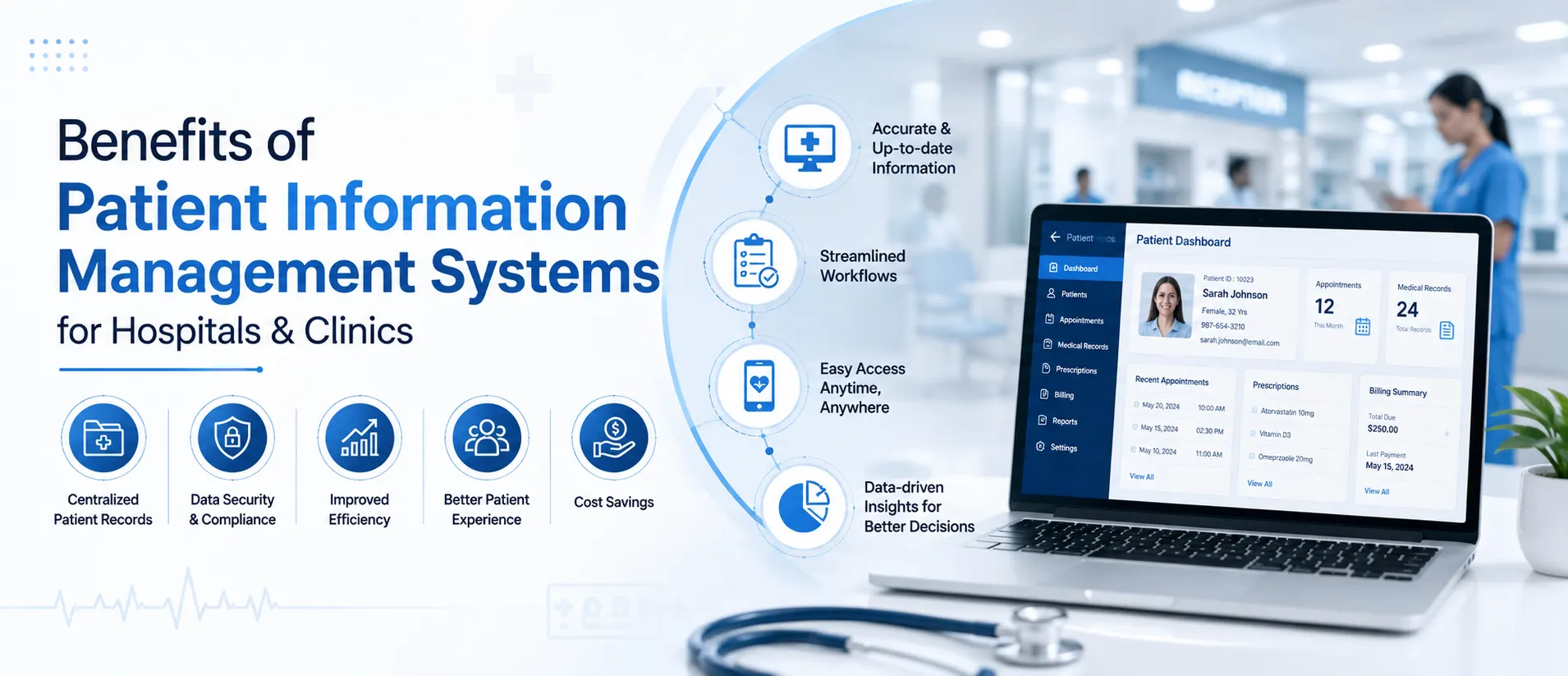
A Patient Information Management System helps healthcare organizations organize, store, access, and manage patient data throughout the healthcare journey.
The major benefits include:
However, the real value of patient information management comes from integrating patient data with the broader healthcare ecosystem.
By connecting patient management with EMR, EHR, appointments, laboratory, pharmacy, billing, and other hospital workflows, healthcare organizations can create a more coordinated digital environment.
Solutions such as ZYNO HIMS can help hospitals and clinics move toward this integrated approach, providing a centralized platform for managing multiple healthcare processes while keeping patient information at the center of the workflow.
As healthcare continues to become more digital, effective patient information management will remain an important foundation for delivering efficient, connected, and patient-focused care.
A Patient Information Management System is software that helps healthcare organizations collect, store, organize, access, and manage patient-related information digitally.
The main benefits include centralized patient records, faster information access, improved data accuracy, better coordination, reduced paperwork, improved efficiency, stronger access control, and better reporting.
It makes relevant patient information easier for authorized healthcare professionals to access and can connect patient data with appointments, clinical workflows, laboratory services, pharmacy, and billing.
Not always. An EMR primarily focuses on electronic medical records and clinical information, while a patient information management system can cover a broader range of patient-related administrative and healthcare information. The exact functionality depends on the software.
Digital systems can use authentication, role-based access, permissions, audit trails, backups, and other security controls to help protect patient information. Organizations must also implement appropriate policies and security practices.
Yes. Depending on the platform, patient information systems can integrate with laboratory, pharmacy, billing, appointment, EMR, EHR, and other healthcare applications.
Yes. A Hospital Information Management System can manage patient information while also connecting it with other hospital processes such as appointments, EMR, pharmacy, laboratory, billing, and administration.
ZYNO HIMS provides an integrated healthcare management environment that includes patient management along with EMR, EHR, clinic management, appointments, pharmacy, laboratory, billing, and other healthcare workflows. This can help hospitals and clinics manage patient information within a connected digital ecosystem.
Why Cloud-Based AI HIMS is Transforming the Future of Indian Healthcare
Read More →The Complete ZYNO HIMS Guide for Modern Healthcare Management
Read More →How a Hospital Management System Improves Healthcare Operations
Read More →
Cloud vs Offline Hospital Management Systems: What Should Your Hospital Choose
Read More →What Is a Hospital Information System (HIS)? Features, Benefits & Complete Guide
Read More →How HIMS Software Improves Patient Care and Hospital Efficiency
Read More →How Is Hospital Software Transforming Patient Data Management in Modern Healthcare
Read More →
HIMS Software in Kenya: The Complete Guide for Hospitals & Clinics (2026)
Read More →
Top 10 KareXpert HIMS Alternatives & Competitors in 2026
Read More →
What is a Clinic Management System and How Does It Improve Patient Care?
Read More →
Top Challenges in Pharmacy Management and How to Overcome Them
Read More →
Top 10 Hospital Management Challenges and How ZYNO HIMS Solves Them
Read More →
Why Modern Clinics Are Switching to EMR Systems
Read More →
Top Reasons Why You Should Use Electronic Health Records System
Read More →
A Complete Guide to Choosing the Right Hospital Management Software
Read More →
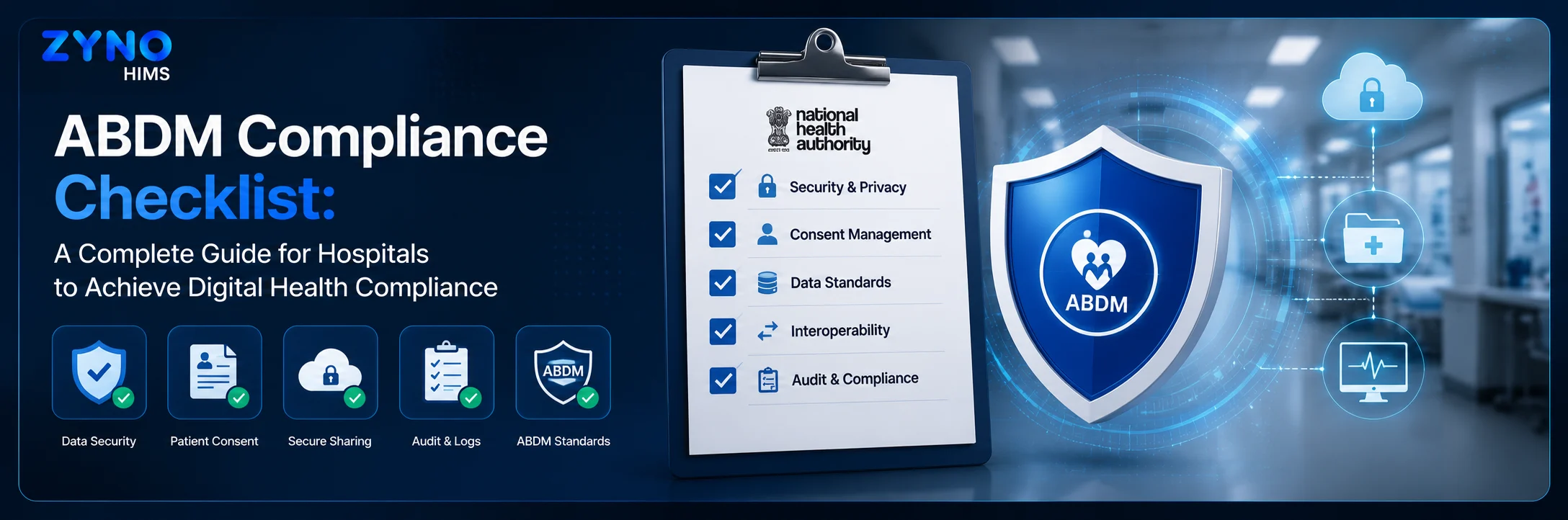
ABDM Compliance Checklist: A Complete Guide for Hospitals to Achieve Digital Health Compliance
Read More →
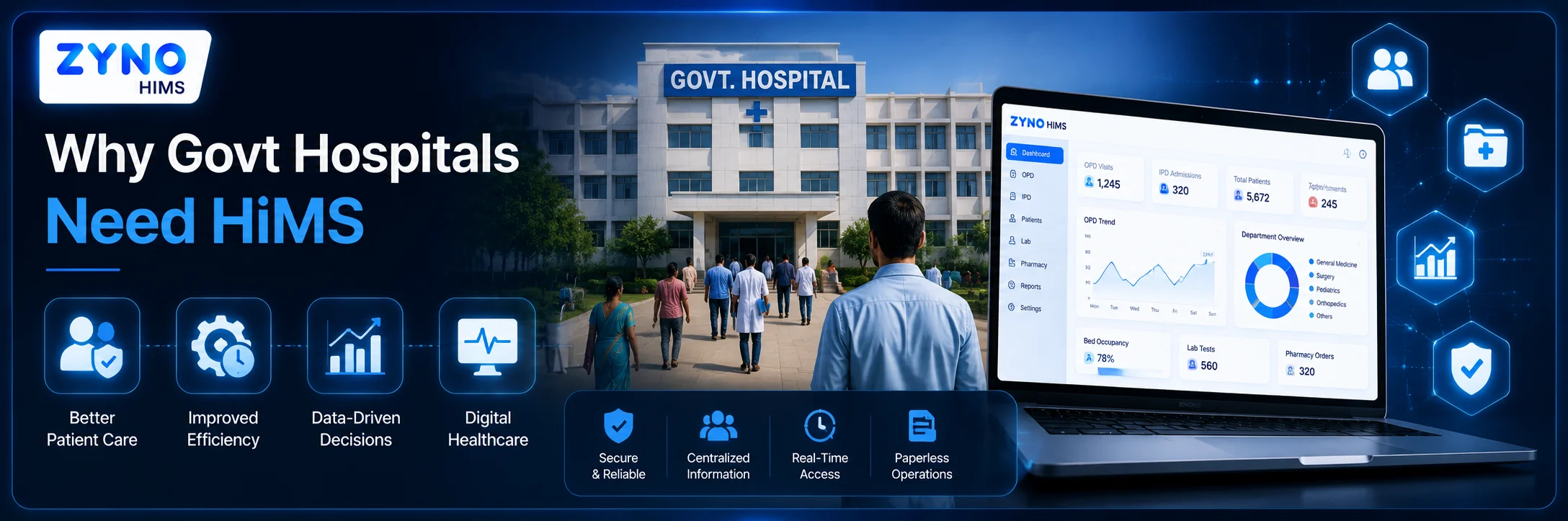
Why Govt Hospitals Need HIMS: Improving Patient Care, Efficiency, and Digital Healthcare
Read More →
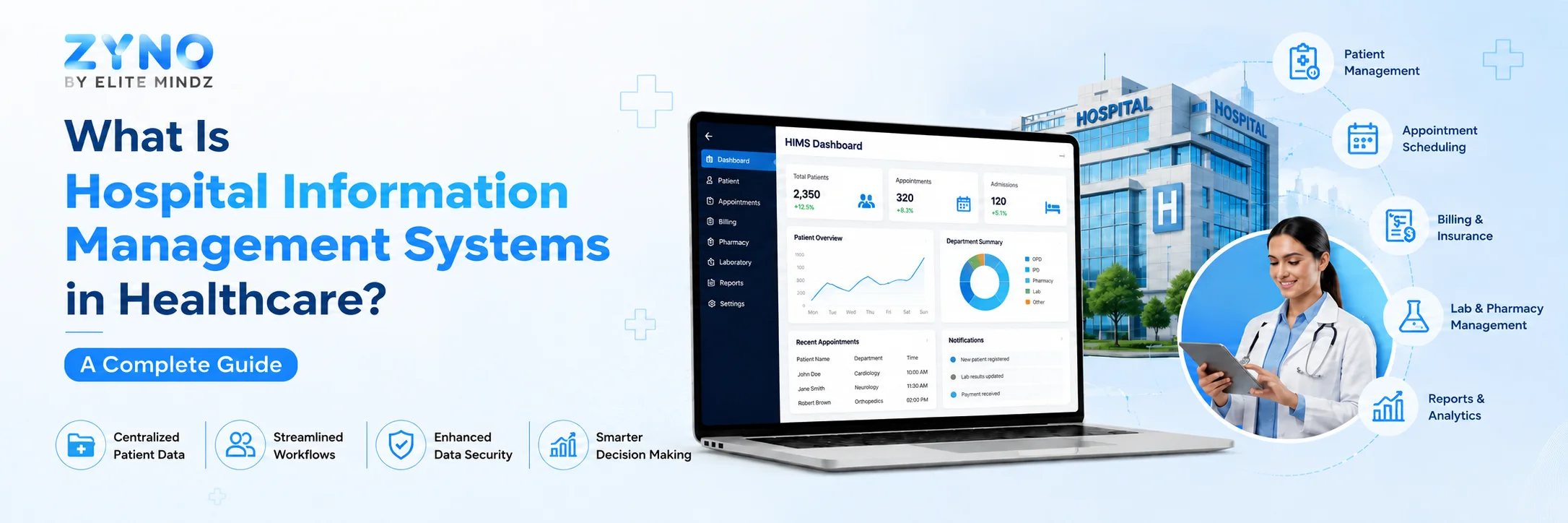
What Is Hospital Information Management Systems in Healthcare? A Complete Guide
Read More →
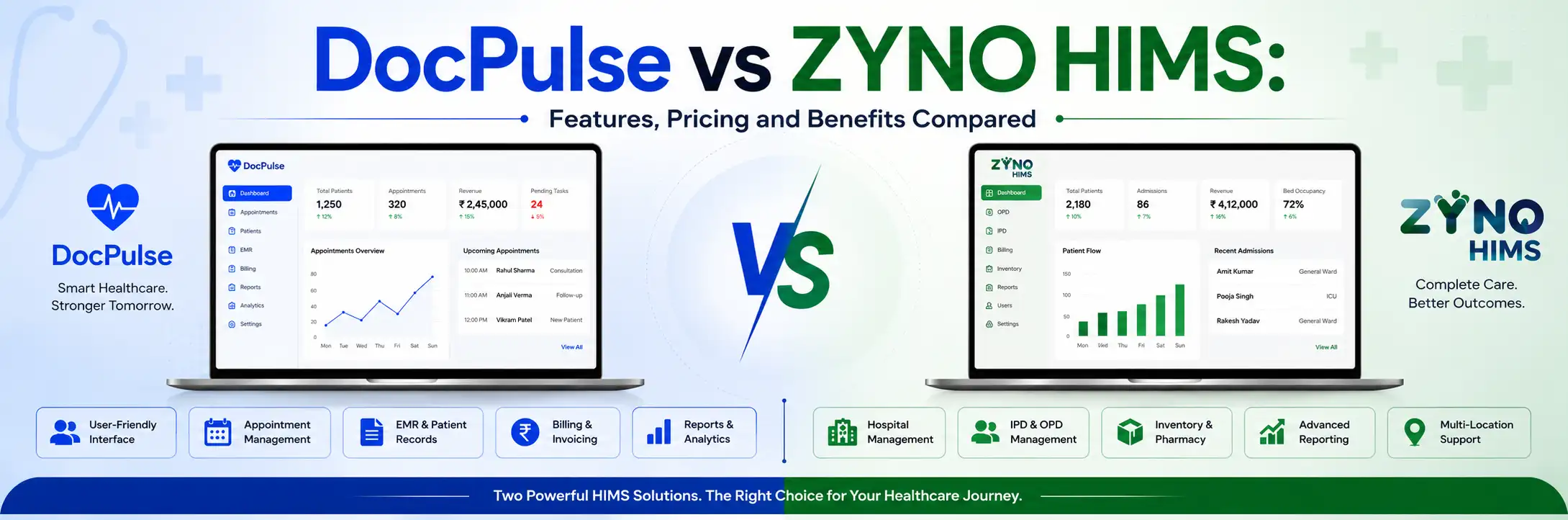
DocPulse vs ZYNO HIMS (2026): Why ZYNO HIMS Is the Smarter Hospital Management Choice
Read More →
MocDoc vs ZYNO HIMS: Which Hospital Management Software Is Better in 2026?
Read More →
Caresoft vs ZYNO HIMS: Complete HIMS Comparison for Hospitals
Read More →
Best PMJAY-Compliant HIMS Software in India (2026): Complete Guide for Hospitals
Read More →
Medical Report Analyzer Software: How AI Makes Medical Reports Easy to Understand
Read More →
How to Choose a Hospital Management System
Read More →
AI in HIMS: 10 Practical Ways Artificial Intelligence is Transforming Hospital Management
Read More →
Best Hospital Management Software for Private Clinics in Kenya
Read More →
Hospital Management Software in Japan: What Healthcare Providers Need in 2026
Read More →
Pharmacy Management Software for Kenyan Pharmacies: Features That Matter
Read More →
DHA and MOH Compliance for Hospital Software in the UAE
Read More →
Top 10 Hospital Management Software in India 2026: Features, Pros, Cons & Pricing
Read More →
OPD vs IPD: Difference Between OPD and IPD, Services & Complete Guide
Read More →
Pharmacy Inventory Management: Methods, Inventory Control & Best Practices
Read More →
What Is a Pharmacy Information System (PIS)? Features, Benefits & How It Improves Pharmacy Management
Read More →
How Do You Check Inventory in a Pharmacy?
Read More →
What’s the Difference Between EHR and EMR? Key Differences, Benefits & Guide
Read More →
What is Radiology Information System? Features & Benefits
Read More →
What Is Digital Healthcare? Benefits, Examples & Future
Read More →
Healthcare Supply Chain Management Benefits
Read More →
Benefits of Patient Information Management Systems for Hospitals & Clinics
Read More →Partner with ZYNO by Elite Mindz to revolutionize how your business works. Fill out the form, and we’ll reach out with AI-powered solutions made just for you.
We use browser cookies to ensure you get the best experience on our website. Learn more
The form was submitted successfully!