Why Cloud-Based AI HIMS is Transforming the Future of Indian Healthcare
Read More →

×
The top 10 hospital management software companies in Qatar provide solutions for patient management, hospital operations, billing, EMR, pharmacy, laboratory management, reporting, and healthcare workflow automation.
Businesses using ZYNO Books cut accounting time by 70% and stay 100% ZATCA-compliant — automatically.
Qatar's healthcare sector is accelerating its digital transformation, with hospitals increasingly adopting technology to connect clinical, administrative, financial, and operational workflows. The National Health Strategy 2024–2030 identifies digital enablement, data-driven decision-making, process efficiency, and AI as important priorities for the healthcare system.
This shift is moving hospitals beyond basic electronic records and billing. Modern hospital management software in Qatar is expected to support EMR, OPD, IPD, pharmacy, laboratory, radiology, billing, insurance, inventory, reporting, and other workflows through a connected platform.
Qatar also holds hospitals to a clear compliance standard. Hospital management software here has to work within rules set by the Ministry of Public Health (MOPH), the Department of Healthcare Professions (DHP), Qatar's compulsory health insurance law, and the Personal Data Privacy Protection Law (PDPPL), not around them
This guide explores 10 hospital management software companies in Qatar and the capabilities hospitals should evaluate before selecting a provider.
This list compares 10 hospital management software companies based on their key features, capabilities, and suitability for different healthcare organizations in Qatar.
Oracle Health is one of the major enterprise healthcare technology platforms relevant to large-scale healthcare environments.
Its healthcare portfolio includes electronic health records and connected clinical workflows. Oracle Cerner has also had a significant presence in Qatar's healthcare ecosystem. Hamad Medical Corporation's clinical information system is based on Oracle Cerner, and in 2023 Qatar Biobank integrated with the Oracle Cerner EHR used at HMC.
This integration connected clinical and administrative information and supported access to patient data for research activities.
Key areas to consider:
Best fit: Large healthcare organizations with complex clinical and enterprise requirements.
If the goal is to move beyond a conventional hospital management system, ZYNO HIMS takes an AI-first approach.
ZYNO HIMS is positioned as a connected Healthcare OS that brings clinical, administrative, financial, and operational workflows onto one platform. Its capabilities include EMR, EHR, OPD, IPD, billing, pharmacy, laboratory, radiology, OT management, HR and payroll, insurance and TPA workflows, telemedicine, and MIS dashboards.
But the key difference is the interaction layer.
ZYNO HIMS includes Prompt-Based HIMS, allowing users to interact with hospital information through natural-language prompts.
For example:
“Show today's OPD billing summary.”
Or:
“Draft a discharge summary for Bed 14.”
The platform also includes OCR-powered medical report reading, designed to extract information from prescriptions, laboratory reports, discharge summaries, invoices, and other documents.
AI-driven capabilities extend into areas such as workflow automation, appointment management, clinical documentation, resource planning, and hospital analytics.
The result is a shift from simply storing hospital data to making that data easier to access and act upon.
Streamline patient management, appointments, billing, pharmacy, laboratory workflows, EMR, reporting, and hospital operations with one intelligent hospital management software platform.
Request a Free Demo Explore ZYNO HIMSKey areas to consider:
Best fit: Hospitals, clinics, and healthcare networks looking for a connected, AI-enabled approach to hospital management.
Want to see how it works? [Book a Free ZYNO HIMS Demo →]
InterSystems TrakCare is a unified healthcare information system connecting clinical, administrative, and financial workflows. Its capabilities include EMR, patient administration, medication management, laboratory workflows, revenue cycle management, and interoperability. Its Qatar presence makes it relevant for organizations comparing hospital management software companies in Qatar. TrakCare is suited to healthcare organizations seeking an integrated enterprise health information system with connected clinical and operational workflows.
Key areas: EMR, patient administration, medication management, laboratory, revenue cycle, interoperability.
MEDAS offers a web-based Hospital Information Management System designed for hospitals of different sizes. Its platform supports inpatient and outpatient management, emergency workflows, bed management, EMR, operation theatre management, and departmental processes. For organizations evaluating hospital management system providers in Qatar, MEDAS is relevant for its regional healthcare focus and GCC experience. It can suit hospitals seeking broad HIMS functionality and real-time information sharing across departments.
Key areas: Inpatient, OPD, emergency, EMR, bed management, OT, hospital operations.
Health Cluster provides healthcare information system solutions for healthcare organizations, including Qatar-focused offerings. Its platform covers EMR, patient management, pharmacy, laboratory workflows, telemedicine, and interoperability. For organizations researching hospital management software Qatar options, its focus on cloud-based healthcare management and Arabic and English workflows can be relevant. The platform is suited to clinics and healthcare organizations looking for connected digital healthcare workflows.
Key areas: EMR, patient management, pharmacy, laboratory, telemedicine, cloud deployment.
Cloudpital provides Hospital Information Management software designed to connect hospital departments through a centralized platform. Its capabilities include patient records, clinical workflows, hospital transactions, operational information, and mobile accessibility. For healthcare organizations comparing hospital management software companies in Qatar, centralized data management can help connect registration, clinical, billing, pharmacy, and other workflows. Cloudpital can suit hospitals looking for integrated hospital information management with accessible operational data.
Key areas: HIMS, patient records, clinical workflows, integration, mobile access, reporting.
Adroit eHospital is an integrated hospital management platform covering clinical, administrative, operational, and financial workflows. Its functionality includes patient registration, appointments, OPD, IPD, EMR, billing, diagnostics, pharmacy, OT, HR, and reporting. Organizations evaluating hospital management system providers in Qatar can consider its broad, modular approach. It can be suitable for hospitals seeking a comprehensive HIMS that supports multiple departments through a connected digital platform.
Key areas: OPD, IPD, EMR, billing, pharmacy, diagnostics, OT, reporting.
Hcare by Al Khidma Systems is a healthcare management platform built around Odoo technology for hospitals and clinics. Its capabilities include patient records, prescriptions, nursing, diagnostics, discharge management, and invoicing. For organizations comparing hospital management software companies in Qatar, its Qatar presence and ERP-style architecture may be relevant. Hcare can suit healthcare businesses seeking flexible healthcare software with centralized data and customizable workflows.
Key areas: EMR, patient management, diagnostics, nursing, invoicing, discharge management.
Philips is a broader healthcare technology provider rather than a conventional HIMS vendor. Its portfolio includes clinical informatics, enterprise imaging, digital pathology, patient monitoring, connected care, and cloud healthcare solutions. Hospitals evaluating hospital management software Qatar options may consider Philips when their technology strategy extends beyond core administration into clinical and diagnostic systems. Its solutions can complement a central HIMS through connected clinical workflows and interoperability.
Key areas: Clinical informatics, imaging, digital pathology, patient monitoring, interoperability.
Siemens Healthineers is a healthcare technology provider offering solutions across medical imaging, diagnostics, digital health, and AI-enabled clinical technologies. Rather than functioning solely as a conventional HIMS provider, its solutions can complement hospital information systems through specialized clinical and diagnostic capabilities. For organizations comparing hospital management system providers in Qatar, Siemens Healthineers may be relevant when imaging, diagnostics, AI, and connected healthcare technology are key priorities.
Key areas: Medical imaging, digital health, AI diagnostics, clinical data, imaging integration.
Before comparing hospital management system providers in Qatar, it helps to define what a modern hospital actually needs.
A robust HIMS should connect the patient journey from registration and appointments to consultation, diagnostics, pharmacy, billing, discharge, and follow-up. It should also give administrators visibility into operations, revenue, inventory, staff, and resources.
When evaluating software, consider these factors:
With these criteria in mind, let's look at the major options.
Selecting a HIMS in Qatar isn't only a features decision — it's a compliance decision. Here's the regulatory landscape every hospital, clinic, or healthcare network should understand before choosing a provider.
Ministry of Public Health (MOPH)
MOPH is Qatar's primary healthcare regulator. It sets facility licensing standards, clinical governance expectations, and the overarching digital health direction for the country through the National Health Strategy 2024–2030.
Any HIMS deployed in Qatar should be built to support MOPH's reporting, documentation, and quality-of-care requirements out of the box.
Department of Healthcare Professions (DHP)
Operating under MOPH, the DHP regulates individual healthcare practitioners and defines the roles, responsibilities, and authorities of Medical Directors within private healthcare facilities.
DHP circulars place clear expectations on facilities around patient records and documentation, safe clinical practices, and resource management. A HIMS should give Medical Directors the audit trails and reporting they need to demonstrate this oversight during DHP inspections.
Law No. 22 of 2021 and Resolution No. 8 of 2022
This law introduced Qatar's compulsory health insurance system for expatriates and visitors, along with a health card system for certain resident categories. Its Executive Regulations cover registration, insurer and provider obligations, health insurance premiums and policies, utilisation controls, and — critically — the confidentiality of patient data and information. Any HIMS handling insurance claims or billing workflows in Qatar needs to align with these confidentiality and utilisation-control provisions.
Personal Data Privacy Protection Law — Law No. 13 of 2016 (PDPPL)
The PDPPL is Qatar's national data protection law, applying across all sectors — including healthcare. It governs how patient data is collected, processed, stored, and shared, and gives special protection to sensitive data categories, which explicitly include health information. Under the PDPPL, organizations must:
Enforcement sits with the NDPO, part of the National Cyber Security Agency (NCSA), which has actively investigated and ruled on non-compliance cases in recent years.
National Cyber Security Agency (NCSA) / Q-CERT
Beyond data privacy, the NCSA sets cybersecurity expectations for any organization processing sensitive data — patient records included. In practice, this means hospitals in Qatar are expected to maintain role-based access controls, audit trails for every patient record access, secure data storage and transmission, and formal incident reporting procedures for breaches.
Bring patient records, appointments, billing, pharmacy, laboratory, inventory, EMR, reporting, and hospital workflows together with an intelligent Hospital Management System designed for modern healthcare organizations.
Book a Free Demo Explore ZYNO HIMSA software demo can look impressive. The real test begins when the system has to handle your hospital's everyday workload.
Before signing a contract, ask vendors these questions:
Look beyond registration and billing. Check OPD, IPD, EMR, pharmacy, laboratory, radiology, OT, discharge, insurance, and follow-up workflows.
Disconnected systems create duplicate entry and information gaps. Ask how data moves between departments.
Discuss migration, data mapping, historical records, backups, and implementation timelines before deployment.
Ask about APIs, interoperability standards, laboratory systems, PACS, payment gateways, insurance platforms, and other systems your hospital already uses.
Don't settle for an “AI-powered” label. Ask for a live demonstration. Can the system automate a real workflow? Can users retrieve information through natural-language prompts? Can it read documents? Can it generate useful reports?
Review access controls, audit trails, encryption, backups, disaster recovery, and data governance policies.
Training, technical support, customization, upgrades, integrations, and ongoing optimization can significantly affect the long-term value of a HIMS.
Ready to modernize your hospital operations? Book a free demo of ZYNO HIMS today.
Hospital management software is a digital platform used to manage clinical, administrative, financial, and operational activities across a healthcare organization. Depending on the system, it may include EMR, appointments, OPD, IPD, billing, pharmacy, laboratory, radiology, inventory, HR, insurance, and reporting.
The terms are often used interchangeably. HIMS generally refers to a Hospital Information Management System, while HIS commonly means Hospital Information System. The exact terminology varies between vendors and healthcare organizations.
There is no single standard price. Cost can depend on hospital size, number of users, modules, deployment model, integrations, customization, migration requirements, implementation, and support. Enterprise healthcare software is usually priced according to the organization's requirements.
Yes. Modern systems can integrate with laboratory, radiology, pharmacy, insurance, payment, patient engagement, and other healthcare platforms. However, the available integrations depend on the specific vendor, technical architecture, standards, and implementation requirements.
Cloud deployment can provide easier accessibility, centralized updates, scalability, and reduced dependence on local infrastructure.
However, hospitals should evaluate security, data governance, connectivity, backup, disaster recovery, regulatory requirements, and service-level agreements before choosing a deployment model.
Traditional HIMS primarily digitizes and organizes hospital workflows. AI-powered HIMS can add capabilities such as natural-language interaction, document reading, intelligent automation, predictive insights, workflow recommendations, and AI-assisted reporting. The actual capabilities vary by platform and should be evaluated through demonstrations.
AI-Powered ERP & Digital Transformation Solutions for the Middle East | ZYNO
Best Hospital Management Software in Middle East | ZYNO HIMS
Sneha Singh
Senior Content Marketing Specialist | 8+ Years of Experience
Senior Content Marketing Specialist | 8+ Years of Experience Sneha Singh has over 8 years of experience creating B2B SaaS and enterprise software content. She specializes in CRM, HRMS, POS, HIMS, ERP, and AI-powered business solutions.
Why Cloud-Based AI HIMS is Transforming the Future of Indian Healthcare
Read More →The Complete ZYNO HIMS Guide for Modern Healthcare Management
Read More →How a Hospital Management System Improves Healthcare Operations
Read More →
Cloud vs Offline Hospital Management Systems: What Should Your Hospital Choose
Read More →What Is a Hospital Information System (HIS)? Features, Benefits & Complete Guide
Read More →How HIMS Software Improves Patient Care and Hospital Efficiency
Read More →How Is Hospital Software Transforming Patient Data Management in Modern Healthcare
Read More →
HIMS Software in Kenya: The Complete Guide for Hospitals & Clinics (2026)
Read More →
Top 10 KareXpert HIMS Alternatives & Competitors in 2026
Read More →
What is a Clinic Management System and How Does It Improve Patient Care?
Read More →
Top Challenges in Pharmacy Management and How to Overcome Them
Read More →
Top 10 Hospital Management Challenges and How ZYNO HIMS Solves Them
Read More →
Why Modern Clinics Are Switching to EMR Systems
Read More →
Top Reasons Why You Should Use Electronic Health Records System
Read More →
A Complete Guide to Choosing the Right Hospital Management Software
Read More →
ABDM Compliance Checklist: A Complete Guide for Hospitals to Achieve Digital Health Compliance
Read More →
Why Govt Hospitals Need HIMS: Improving Patient Care, Efficiency, and Digital Healthcare
Read More →
What Is Hospital Information Management Systems in Healthcare? A Complete Guide
Read More →
DocPulse vs ZYNO HIMS (2026): Why ZYNO HIMS Is the Smarter Hospital Management Choice
Read More →
MocDoc vs ZYNO HIMS: Which Hospital Management Software Is Better in 2026?
Read More →
Caresoft vs ZYNO HIMS: Complete HIMS Comparison for Hospitals
Read More →
Best PMJAY-Compliant HIMS Software in India (2026): Complete Guide for Hospitals
Read More →
Medical Report Analyzer Software: How AI Makes Medical Reports Easy to Understand
Read More →
How to Choose a Hospital Management System
Read More →
AI in HIMS: 10 Practical Ways Artificial Intelligence is Transforming Hospital Management
Read More →
Best Hospital Management Software for Private Clinics in Kenya
Read More →
Hospital Management Software in Japan: What Healthcare Providers Need in 2026
Read More →
Pharmacy Management Software for Kenyan Pharmacies: Features That Matter
Read More →
DHA and MOH Compliance for Hospital Software in the UAE
Read More →
Top 10 Hospital Management Software in India 2026: Features, Pros, Cons & Pricing
Read More →
OPD vs IPD: Difference Between OPD and IPD, Services & Complete Guide
Read More →
Pharmacy Inventory Management: Methods, Inventory Control & Best Practices
Read More →
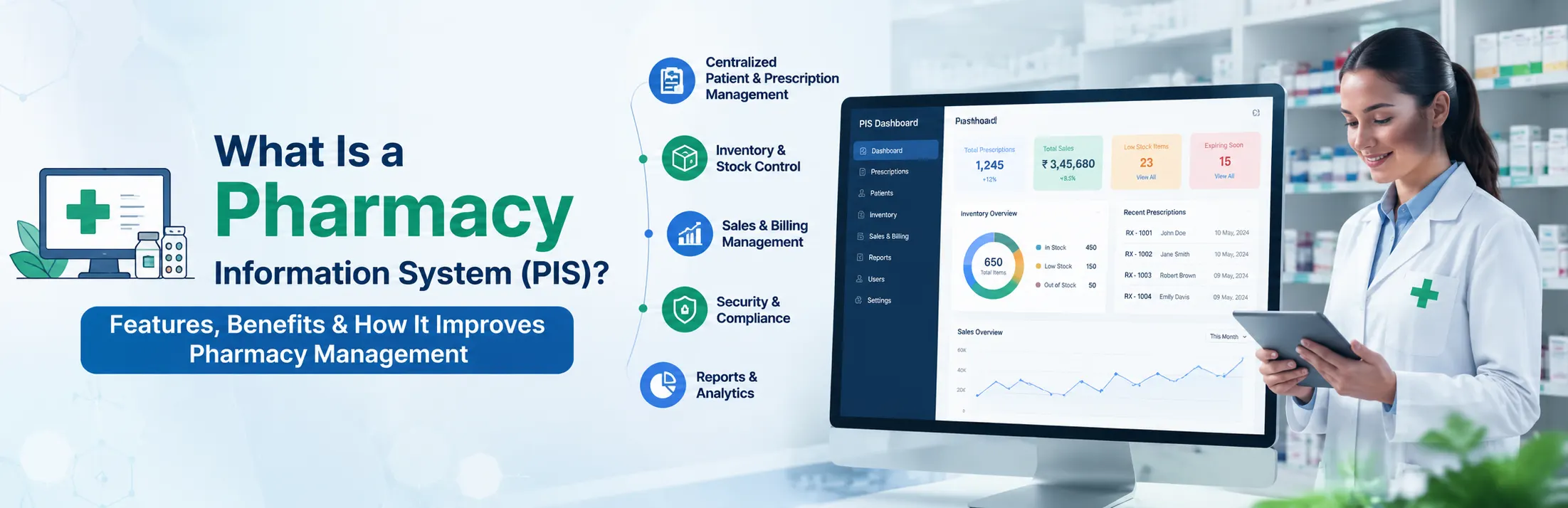
What Is a Pharmacy Information System (PIS)? Features, Benefits & How It Improves Pharmacy Management
Read More →
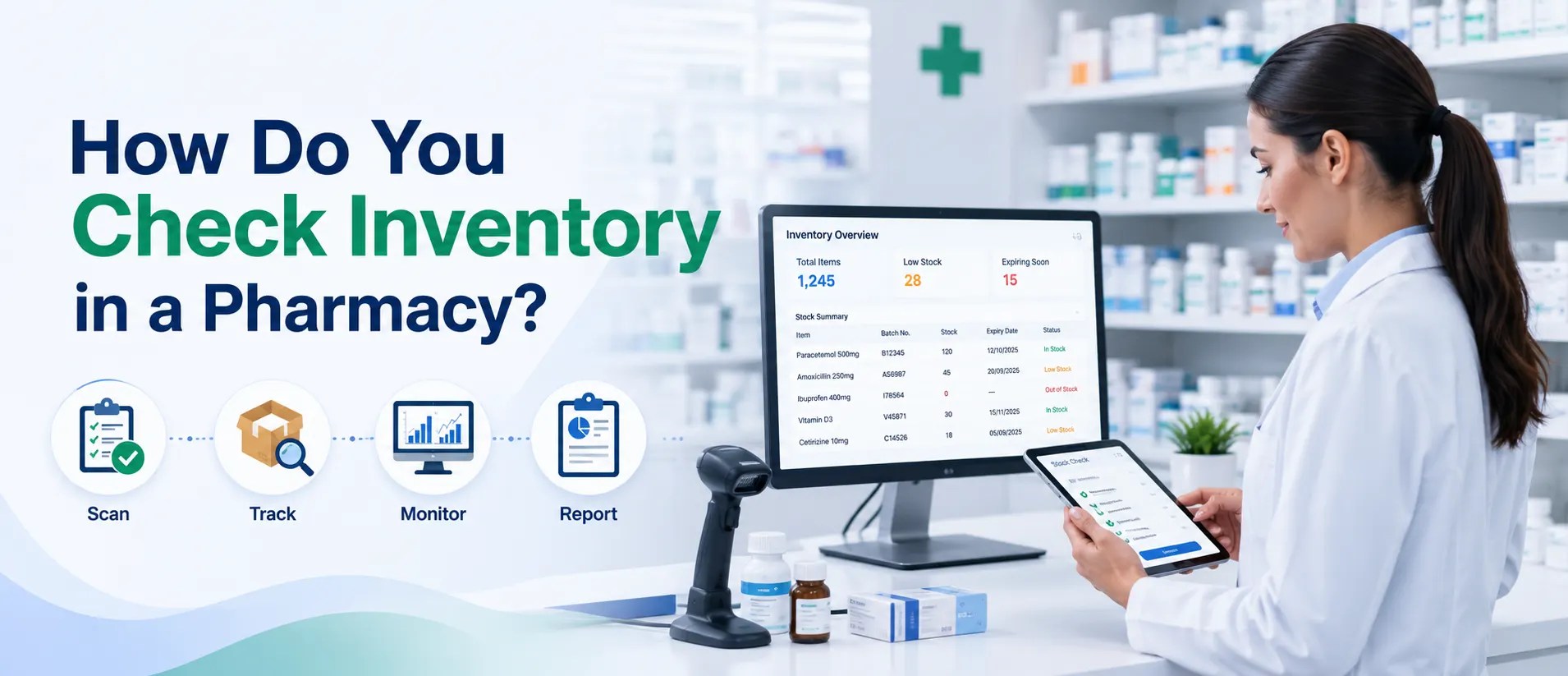
How Do You Check Inventory in a Pharmacy?
Read More →
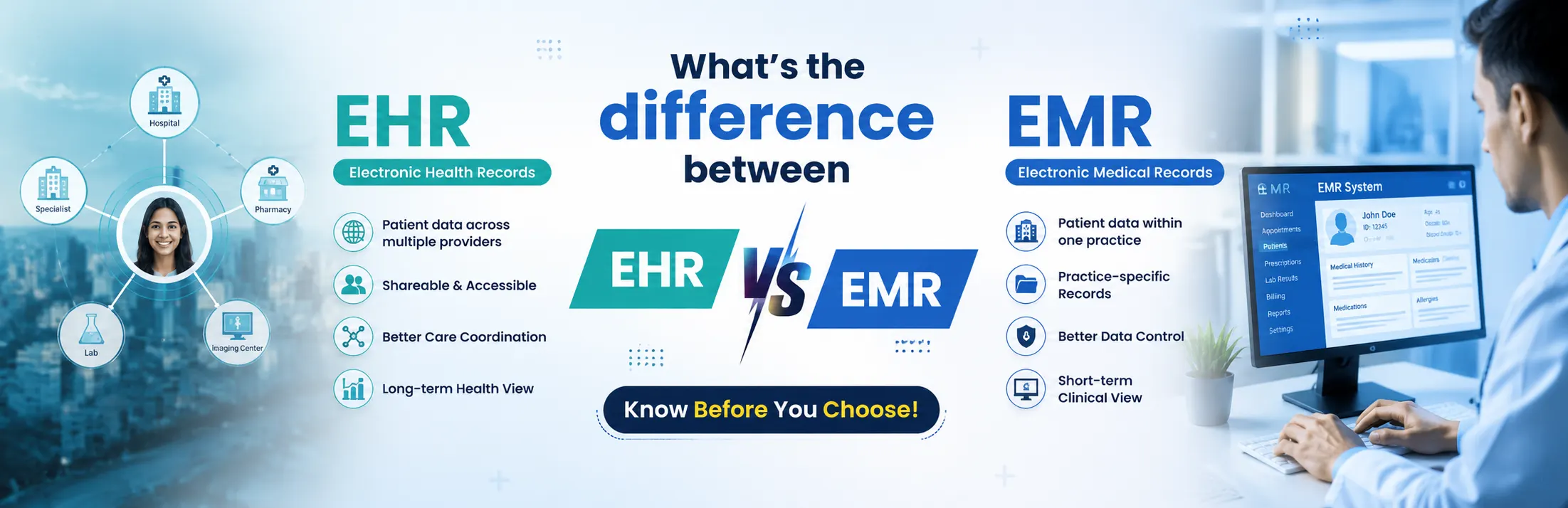
What’s the Difference Between EHR and EMR? Key Differences, Benefits & Guide
Read More →
What is Radiology Information System? Features & Benefits
Read More →
What Is Digital Healthcare? Benefits, Examples & Future
Read More →
Healthcare Supply Chain Management Benefits
Read More →
Benefits of Patient Information Management Systems for Hospitals & Clinics
Read More →
What Is the Difference Between PACS, DICOM, RIS & CIS?
Read More →
Best Hospital Billing Software in India 2026: Top 10 Medical Billing Solutions
Read More →
Top Features of Hospital Billing Software in India
Read More →
Best Cloud-Based Hospital Inventory Management Software in 2026: Top 10 Solutions
Read More →
Which Hospital Management Software in India Is Suitable for Newly Established Hospitals?
Read More →
Medical Diagnostic Software: What It Is, How It Works & Top 5 Players in 2026
Read More →
10 Best Patient Management Software in 2026
Read More →
Hospital Management Software for Multispecialty Hospitals: A Complete Guide
Read More →
Top 10 Multi-Location Hospital Management Software in India
Read More →
Top 10 Hospital Management Software Companies in Qatar
Read More →Partner with ZYNO by Elite Mindz to revolutionize how your business works. Fill out the form, and we’ll reach out with AI-powered solutions made just for you.
We use browser cookies to ensure you get the best experience on our website. Learn more
The form was submitted successfully!