Why Cloud-Based AI HIMS is Transforming the Future of Indian Healthcare
Read More →

×
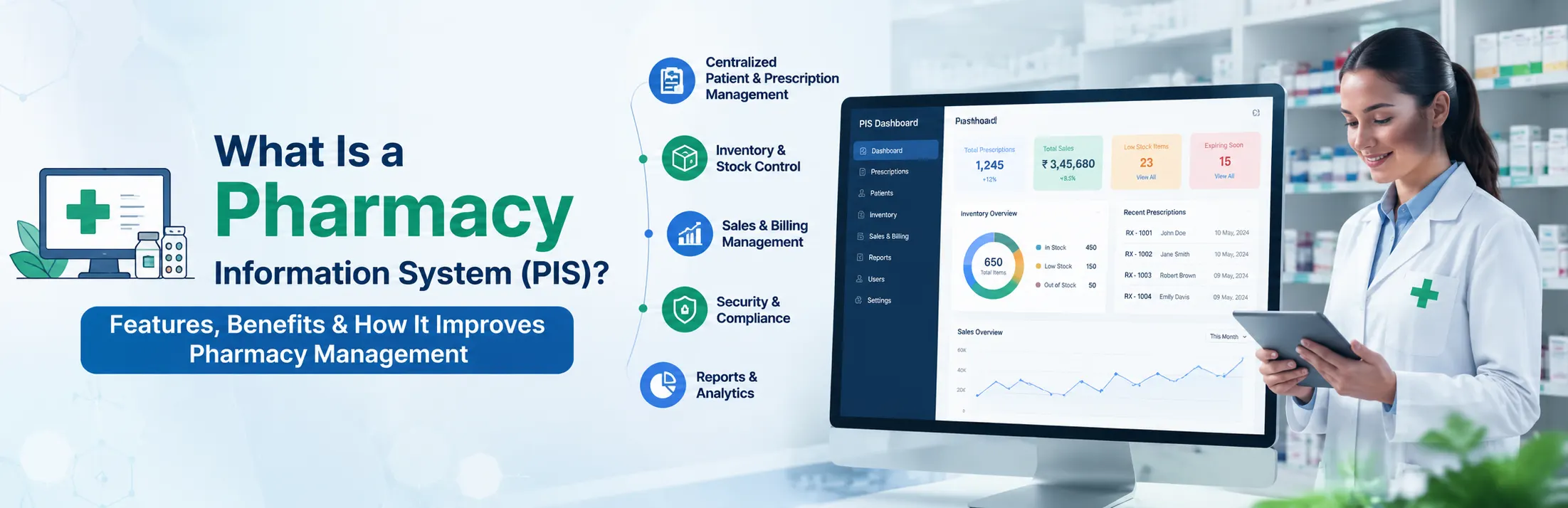
Discover what a Pharmacy Information System (PIS) is, its key features, benefits, inventory and billing capabilities, essential integrations, and how ZYNO HIMS can help hospitals streamline pharmacy management and improve patient care.
Businesses using ZYNO Books cut accounting time by 70% and stay 100% ZATCA-compliant — automatically.
A hospital pharmacy is one of the busiest, most pressure-heavy corners of any healthcare facility. Prescriptions come in non-stop, medicines have to go out the door correctly and on time, inventory has to be tracked down to the last strip, and billing has to be accurate all at once. When these tasks are still being handled on paper or across scattered spreadsheets, it doesn't take long for cracks to show: stock shortages, medicines expiring quietly on a shelf, billing mismatches, prescription delays, and workflows that eat up far more staff time than they should.
This is exactly the gap a Pharmacy Information System (PIS) is built to close.
At its core, a Pharmacy Information System is a digital platform that brings pharmacy operations prescriptions, medication records, inventory, billing, and reporting onto one centralized system. It supports both inpatient and outpatient pharmacy workflows, and when it's done well, it gives hospitals real visibility into how the pharmacy is actually performing, not just a record of what happened after the fact.
The bigger shift happening in healthcare right now is connectivity. A modern pharmacy system doesn't sit in isolation it talks to the hospital management system, EMR/EHR platforms, billing software, and other clinical applications, so information moves between departments instead of being typed in three separate times by three separate people.
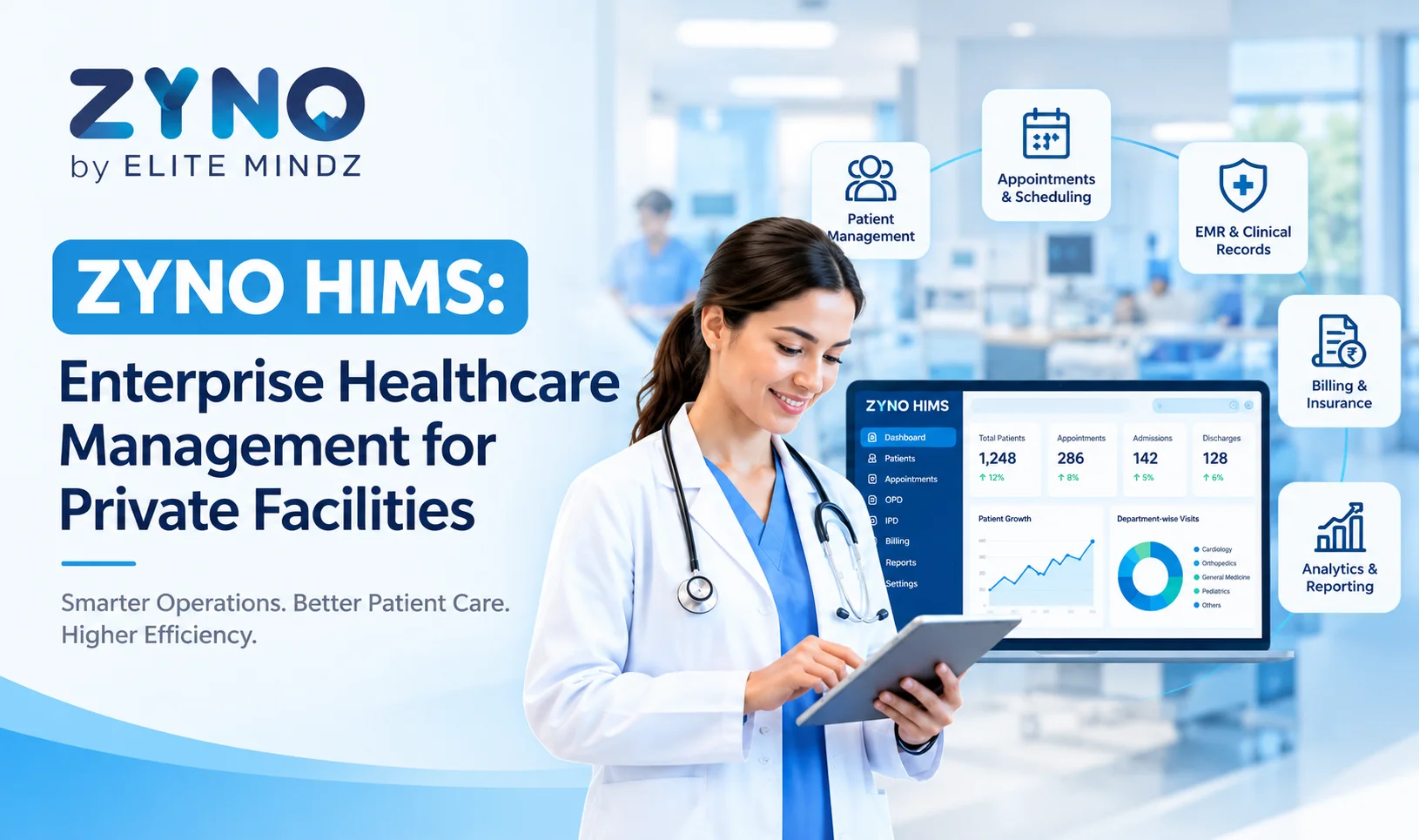
For hospitals that want to modernize in a serious way, an integrated platform like ZYNO HIMS is built precisely for this connecting pharmacy workflows with the rest of hospital and workforce management rather than treating pharmacy as its own island.
If your hospital is still running pharmacy workflows through disconnected systems or manual processes, it's worth exploring what an integrated digital solution can do. Explore ZYNO HIMS and see how connected healthcare and workforce management can improve efficiency, visibility, and patient experience across your hospital.
Put simply, a Pharmacy Information System (PIS) is software that records, organizes, and processes everything related to pharmacy operations and medications. Day to day, that means helping pharmacists and hospital teams manage:
Instead of juggling separate registers for prescriptions, stock counts, billing, and patient histories, a PIS pulls all of it into one digital workspace. Done properly, this kind of system supports patient tracking, faster decision-making, smarter reordering, cleaner reporting, streamlined billing, and better quality assurance across both inpatient and outpatient pharmacy counters.
For hospitals, the payoff is less time spent on repetitive admin work and faster access to the information pharmacy teams actually need in the moment.
Traditional pharmacy operations often run on paper records, spreadsheets, and manual stock checks. That can limp along when patient volumes are low but as the number of patients and medicines grows, doing this manually becomes a genuine liability.
Some of the most common pain points include:
A Pharmacy Information System tackles these problems by automating the routine, repetitive parts of the job and keeping everything important in one searchable digital system. The result is a pharmacy that runs in an organized, predictable way freeing pharmacists to spend more time on patients and less on paperwork.

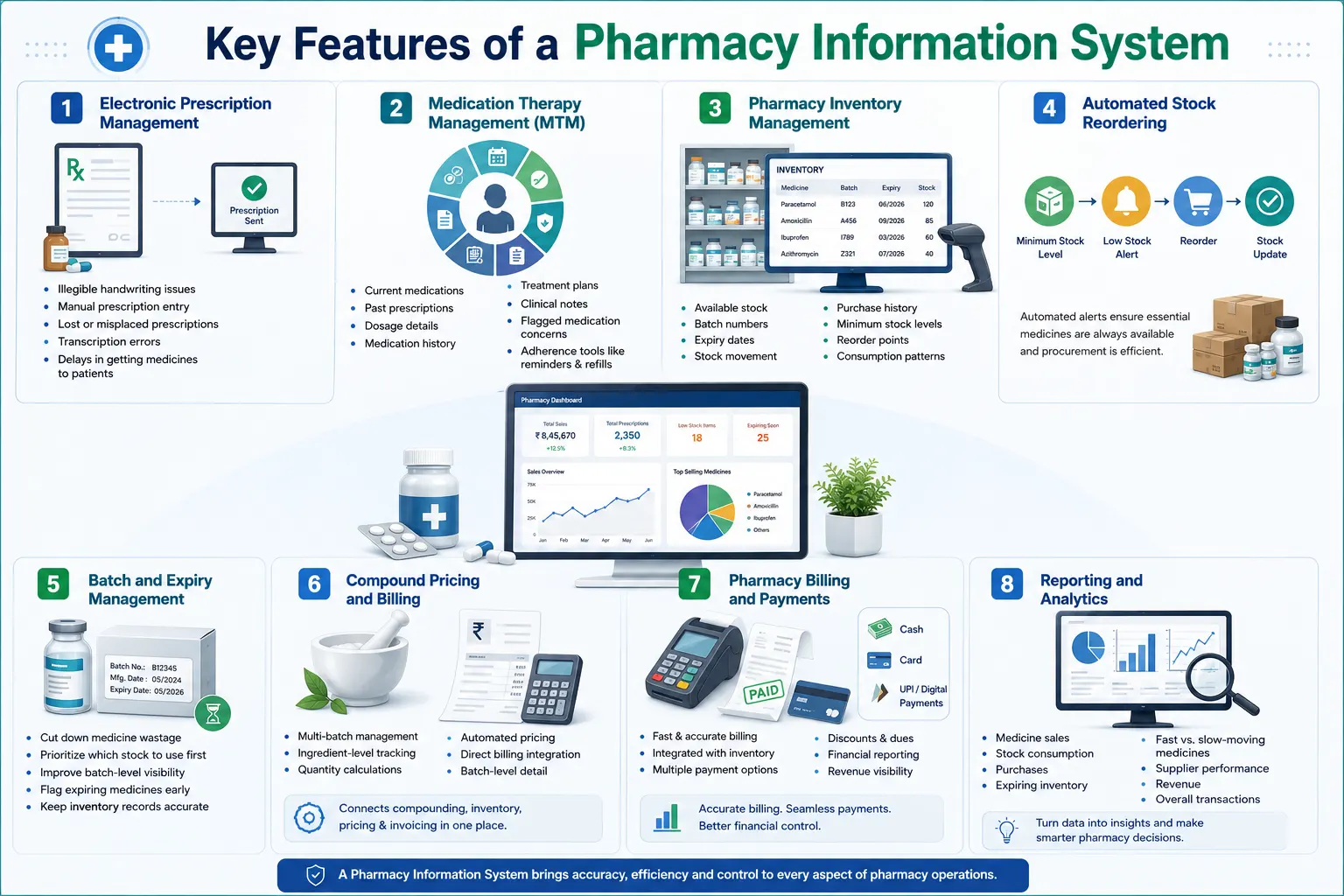
E-prescribing lets doctors and authorized healthcare staff create and send prescriptions digitally, straight to the pharmacy no handwriting involved.
That one shift alone helps cut down on:
Electronic transmission removes a lot of the paper-based friction and the human error that tends to come with it. For hospitals, wiring e-prescriptions directly into pharmacy workflows makes the whole patient journey noticeably smoother.
MTM is about helping patients use their medicines correctly and safely and a PIS supports this by organizing the information pharmacists and doctors need to review treatment properly. That typically includes:
Good systems also support adherence tools like reminders and refill schedules. When doctors and pharmacists both have access to the same up-to-date picture, they can spot medication-related issues earlier and coordinate care more effectively.
Inventory is arguably the single most important function a pharmacy system handles. A hospital pharmacy might be managing hundreds of medicines across different brands, batches, and expiry timelines and manual tracking simply can't keep up at that scale.
A solid PIS tracks:
Detailed stock logs, expiry tracking, reorder alerts, automated ordering, and inventory reports are the backbone of any serious pharmacy management software. With clear visibility into inventory, pharmacy managers can spot slow-moving stock, avoid unnecessary overstocking, and make sure critical medicines never quietly run out.
Running out of essential medicines isn't just an inconvenience it directly affects patient care. A PIS solves this by using preset minimum stock or reorder thresholds to trigger alerts automatically.
The flow typically looks like this:
Minimum Stock Level → Low Stock Alert → Reorder → Stock Update
Instead of manually checking every single item, staff get flagged only when something actually needs attention making procurement far more efficient.
Medicine expiry is a quiet but serious problem for pharmacies. Without proper tracking, expired stock can sit unnoticed, leading to wasted money and real safety risk.
A digital pharmacy system logs expiry dates and batch details so staff can flag items nearing expiry before it becomes a problem. This helps:
Pharmacies that handle compounded medications need more than basic billing they need a system that connects compounding, inventory, pricing, and invoicing in one place. That typically includes:
Scale integration, multi-batch compounding, and automated compound pricing round out what a comprehensive pharmacy management system should be able to do.
Billing needs to be fast, accurate, and tightly connected to inventory. A well-integrated system automatically reflects dispensed medicines in the billing record and updates stock at the same time no separate manual step required.
Modern pharmacy platforms also support multiple payment workflows, including digital payments and customizable financial reporting, giving administrators clear visibility into:
Every pharmacy transaction generates data and that data is genuinely useful when it's turned into insight. A PIS can generate reports on:
These reports give hospital administrators the kind of visibility they need to make smarter purchasing and inventory decisions, instead of guessing based on gut feel.
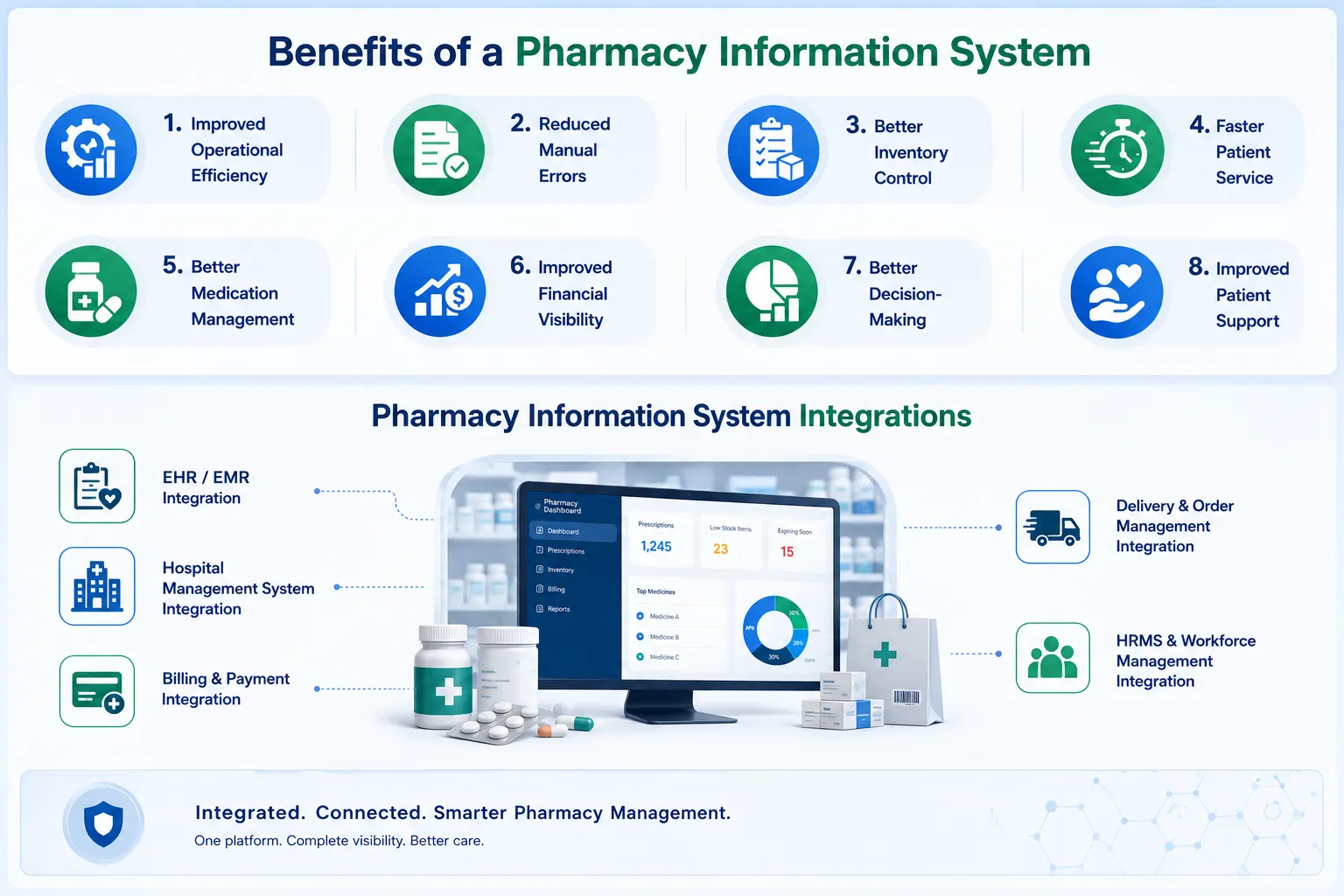
A Pharmacy Information System helps hospitals and pharmacies streamline daily operations, improve accuracy, manage inventory efficiently, and deliver faster, more reliable patient services. Key benefits include:

1. Improved Operational Efficiency — Automation cuts down repetitive paperwork and manual data entry, so staff can process prescriptions, manage stock, generate bills, and pull reports much faster.
2. Reduced Manual Errors — Digital workflows reduce mistakes tied to manual prescription entry, inventory math, and billing. Technology doesn't replace professional judgment, but it does give pharmacists cleaner, more reliable information to work from.
3. Better Inventory Control — Real-time stock visibility means fewer stock-outs, less overstocking, and less medicine going to waste.
4. Faster Patient Service — When prescriptions, inventory, and billing are all connected, orders move faster — which means shorter wait times and a better overall pharmacy experience.
5. Better Medication Management — Centralized medication records give doctors and pharmacists a clear, shared view of prescription and treatment history, which supports better coordination.
6. Improved Financial Visibility — Integrated billing makes it far easier for administrators to track sales, spot discrepancies, and catch revenue leakage early.
7. Better Decision-Making — Reports and analytics reveal trends in consumption, purchasing, and revenue — supporting decisions backed by data instead of memory.
8. Improved Patient Support — When routine admin work is automated, pharmacists simply have more time and headspace to focus on patients.
A PIS becomes exponentially more valuable when it's connected to the rest of the hospital's digital ecosystem.
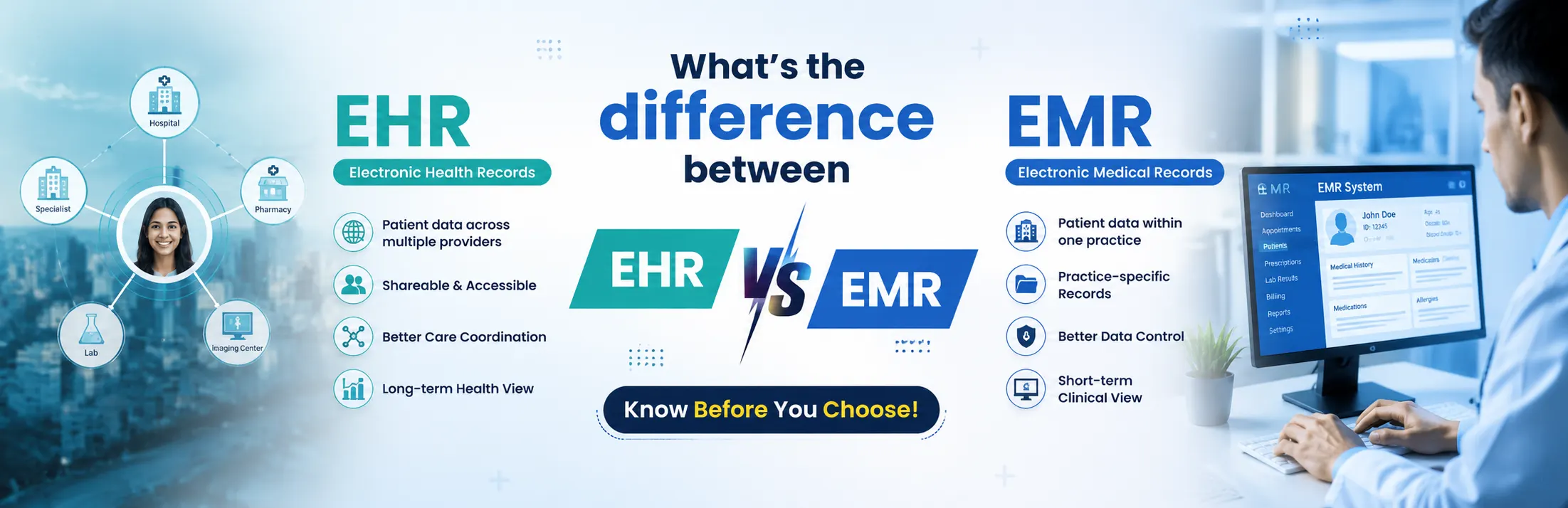
EHR and EMR Integration — Linking the pharmacy system to Electronic Health Records and Electronic Medical Records gives authorized staff access to relevant patient and medication data instantly, cutting out duplicate entry and improving continuity of care.
Hospital Management System Integration — Connecting pharmacy operations to a broader hospital management system platform ties together registration, OPD, IPD, billing, and clinical workflows. For example:
Doctor Consultation → Prescription → Pharmacy → Billing → Patient
A connected flow like this closes the information gaps that usually exist between departments.
Billing and Payment Integration — Depending on the organization, this can include UPI, card payments, digital wallets, corporate billing, and insurance or TPA workflows — all reconciled automatically.
Delivery and Order Management — For pharmacies offering delivery, integrations help manage order tracking, delivery notifications, and customer communication.
HRMS and Workforce Management — Pharmacies rely heavily on well-managed, well-scheduled staff. Hospitals running round-the-clock pharmacy operations need solid handling of:
Connecting pharmacy operations to an HRMS gives administrators one unified view of both pharmacy workflows and workforce management.
A standalone pharmacy app might handle inventory or billing well enough on its own but a hospital is a lot more complex than a single pharmacy counter. Pharmacy operations touch doctors, nurses, patients, billing teams, inventory managers, finance, and hospital administration all at once.
Disconnected software creates data silos and forces staff to enter the same information multiple times across different systems. An integrated healthcare platform solves this by design and this is exactly where ZYNO by Elite Mindz brings a broader, more connected approach to hospital operations.
ZYNO is built to bring healthcare and business processes together in one digital environment. Rather than treating every department as its own isolated system, ZYNO connects clinical workflows, hospital administration, pharmacy-related processes, billing, and workforce management under a single platform.
Connected Hospital Workflows — Information moves between departments instead of getting stuck in silos, cutting duplication and improving day-to-day operational visibility.
Workforce Management with ZYNO HRMS Pharmacy operations often run in multiple shifts around the clock. ZYNO HRMS helps hospitals manage attendance, shifts, payroll, and leave so pharmacy staff are managed alongside the wider hospital workforce, not separately.
Centralized Reporting — Bringing operational data together with reporting and analytics gives management a genuinely complete picture of pharmacy performance, inventory movement, financials, and workforce trends all in one place, as part of a broader AI Healthcare Operating System approach to running a hospital.
Simplify pharmacy operations with a connected hospital management solution. ZYNO HIMS helps hospitals streamline pharmacy workflows, billing, inventory, patient management, and other healthcare operations from one centralized platform.
Before implementing a PIS, it's worth evaluating any system against your hospital's actual operational needs:
Pharmacy management is heading toward something more connected, automated, and data-driven. Pharmacy systems are increasingly becoming part of a larger digital healthcare ecosystem that links clinical records, prescriptions, inventory, billing, analytics, and patient services under one roof.
Cloud-based deployment, mobile access, inventory automation, and deeper clinical integration are quickly becoming the norm rather than the exception. For hospitals, that means pharmacy software shouldn't just digitize the tasks that already exist it should actively build a more connected workflow across the entire organization.
A Pharmacy Information System (PIS) has become a genuinely essential part of running a modern pharmacy or hospital. It brings prescriptions, medication data, inventory, billing, reporting, and daily workflows together under one centralized system.
From e-prescribing and medication therapy management to automated inventory tracking, expiry alerts, billing, and analytics a well-built PIS makes pharmacy operations noticeably more efficient and organized.
But the real value shows up when pharmacy software stops being a standalone tool and starts talking to the rest of the hospital. By connecting pharmacy operations with hospital billing software, EMR/EHR platforms, inventory systems, and workforce management, hospitals can close information gaps and create a smoother experience for both patients and staff.
With an integrated platform like ZYNO HIMS by Elite Mindz, healthcare organizations can move past standalone pharmacy management and toward a genuinely connected digital healthcare ecosystem complete with hospital management software, doctor appointment system capabilities, and Electronic Medical Records support built in.
A Pharmacy Information System (PIS) is software that helps pharmacies manage prescriptions, medication records, inventory, billing, dispensing, and pharmacy operations from a centralized digital platform.
Key features include electronic prescription management, inventory tracking, batch and expiry management, automated stock alerts, medication records, billing, reporting, analytics, and integration with hospital systems.
A PIS connects pharmacy activities with hospital workflows. Doctors can send prescriptions digitally, pharmacists can verify and dispense medicines, inventory can be updated automatically, and billing information can be recorded within the connected workflow.
A PIS can improve pharmacy efficiency, reduce manual errors, provide real-time inventory visibility, minimize medicine wastage, speed up prescription processing, simplify billing, and improve reporting.
Pharmacy software tracks medicine quantities, batches, expiry dates, stock movement, and reorder levels. It can also generate low-stock and expiry alerts to help prevent shortages and wastage.
Yes. Electronic prescriptions, structured medication records, automated workflows, and reduced manual data entry can help minimize errors associated with illegible prescriptions, incorrect entries, and dispensing processes.
Yes. Modern PIS solutions can integrate with EMR, EHR, HIMS, billing, inventory, and other healthcare systems, allowing relevant information to move between departments and reducing duplicate data entry.
Yes. PIS solutions can be used by pharmacies of different sizes. The right system should be scalable so that it can support increasing medicines, transactions, users, patients, and additional pharmacy locations.
It can connect medicine dispensing with billing, automatically calculate applicable charges, maintain transaction records, update inventory after sales, and provide financial reports for better revenue tracking.
Look for inventory and expiry management, e-prescribing, billing, reporting, security, scalability, ease of use, EMR/EHR and HIMS integration, automation, and reliable customer support. For hospitals, an integrated solution like ZYNO can be more useful than isolated pharmacy software
Why Cloud-Based AI HIMS is Transforming the Future of Indian Healthcare
Read More →The Complete ZYNO HIMS Guide for Modern Healthcare Management
Read More →How a Hospital Management System Improves Healthcare Operations
Read More →
Cloud vs Offline Hospital Management Systems: What Should Your Hospital Choose
Read More →What Is a Hospital Information System (HIS)? Features, Benefits & Complete Guide
Read More →How HIMS Software Improves Patient Care and Hospital Efficiency
Read More →How Is Hospital Software Transforming Patient Data Management in Modern Healthcare
Read More →
HIMS Software in Kenya: The Complete Guide for Hospitals & Clinics (2026)
Read More →
Top 10 KareXpert HIMS Alternatives & Competitors in 2026
Read More →
What is a Clinic Management System and How Does It Improve Patient Care?
Read More →
Top Challenges in Pharmacy Management and How to Overcome Them
Read More →
Top 10 Hospital Management Challenges and How ZYNO HIMS Solves Them
Read More →
Why Modern Clinics Are Switching to EMR Systems
Read More →
Top Reasons Why You Should Use Electronic Health Records System
Read More →
A Complete Guide to Choosing the Right Hospital Management Software
Read More →
ABDM Compliance Checklist: A Complete Guide for Hospitals to Achieve Digital Health Compliance
Read More →
Why Govt Hospitals Need HIMS: Improving Patient Care, Efficiency, and Digital Healthcare
Read More →
What Is Hospital Information Management Systems in Healthcare? A Complete Guide
Read More →
DocPulse vs ZYNO HIMS (2026): Why ZYNO HIMS Is the Smarter Hospital Management Choice
Read More →
MocDoc vs ZYNO HIMS: Which Hospital Management Software Is Better in 2026?
Read More →
Caresoft vs ZYNO HIMS: Complete HIMS Comparison for Hospitals
Read More →
Best PMJAY-Compliant HIMS Software in India (2026): Complete Guide for Hospitals
Read More →
Medical Report Analyzer Software: How AI Makes Medical Reports Easy to Understand
Read More →
How to Choose a Hospital Management System
Read More →
AI in HIMS: 10 Practical Ways Artificial Intelligence is Transforming Hospital Management
Read More →
Best Hospital Management Software for Private Clinics in Kenya
Read More →
Hospital Management Software in Japan: What Healthcare Providers Need in 2026
Read More →
Pharmacy Management Software for Kenyan Pharmacies: Features That Matter
Read More →
DHA and MOH Compliance for Hospital Software in the UAE
Read More →
Top 10 Hospital Management Software in India 2026: Features, Pros, Cons & Pricing
Read More →
OPD vs IPD: Difference Between OPD and IPD, Services & Complete Guide
Read More →
Pharmacy Inventory Management: Methods, Inventory Control & Best Practices
Read More →
What Is a Pharmacy Information System (PIS)? Features, Benefits & How It Improves Pharmacy Management
Read More →Partner with ZYNO by Elite Mindz to revolutionize how your business works. Fill out the form, and we’ll reach out with AI-powered solutions made just for you.
We use browser cookies to ensure you get the best experience on our website. Learn more
The form was submitted successfully!