Why Cloud-Based AI HIMS is Transforming the Future of Indian Healthcare
Read More →

×
A comprehensive guide to choosing hospital management software specifically for multispecialty hospitals, with emphasis on unified clinical workflows, EMR/EHR, OPD/IPD, billing, pharmacy/lab integration, AI, NABH compliance, and scalability.
Businesses using ZYNO Books cut accounting time by 70% and stay 100% ZATCA-compliant — automatically.
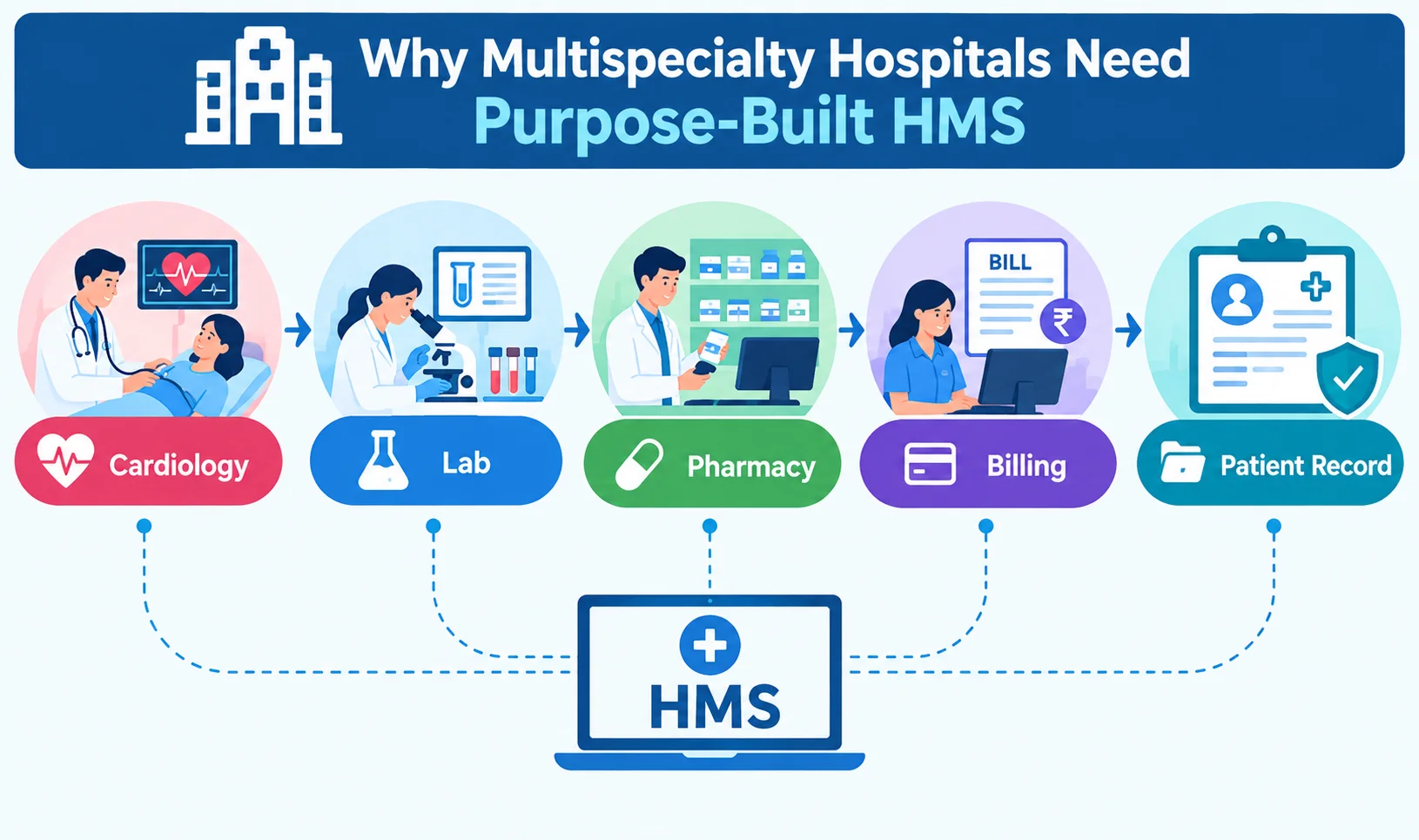
Run a multi-specialty hospital for even a week, and you'll notice the pattern: cardiology runs on one system, the lab has its own, billing lives in spreadsheets, and pharmacy is still calling departments to confirm stock. Nobody's wrong, exactly — the problem is that nothing talks to anything else.
That disconnect is expensive. It shows up as duplicate patient records, delayed discharges, billing errors, and doctors chasing lab reports that should already be on their screen. For a hospital juggling ten specialties under one roof, this isn't a minor inefficiency — it's the single biggest drag on patient care and revenue.
The fix is hospital management software for multispecialty hospitals — built specifically to connect every department, specialty, and workflow into one system instead of twenty disconnected ones. This guide explains what it is, why generic software falls short, the features that matter, and how to choose the right one for your hospital.
Read More: Hospital Management Software for New Hospitals
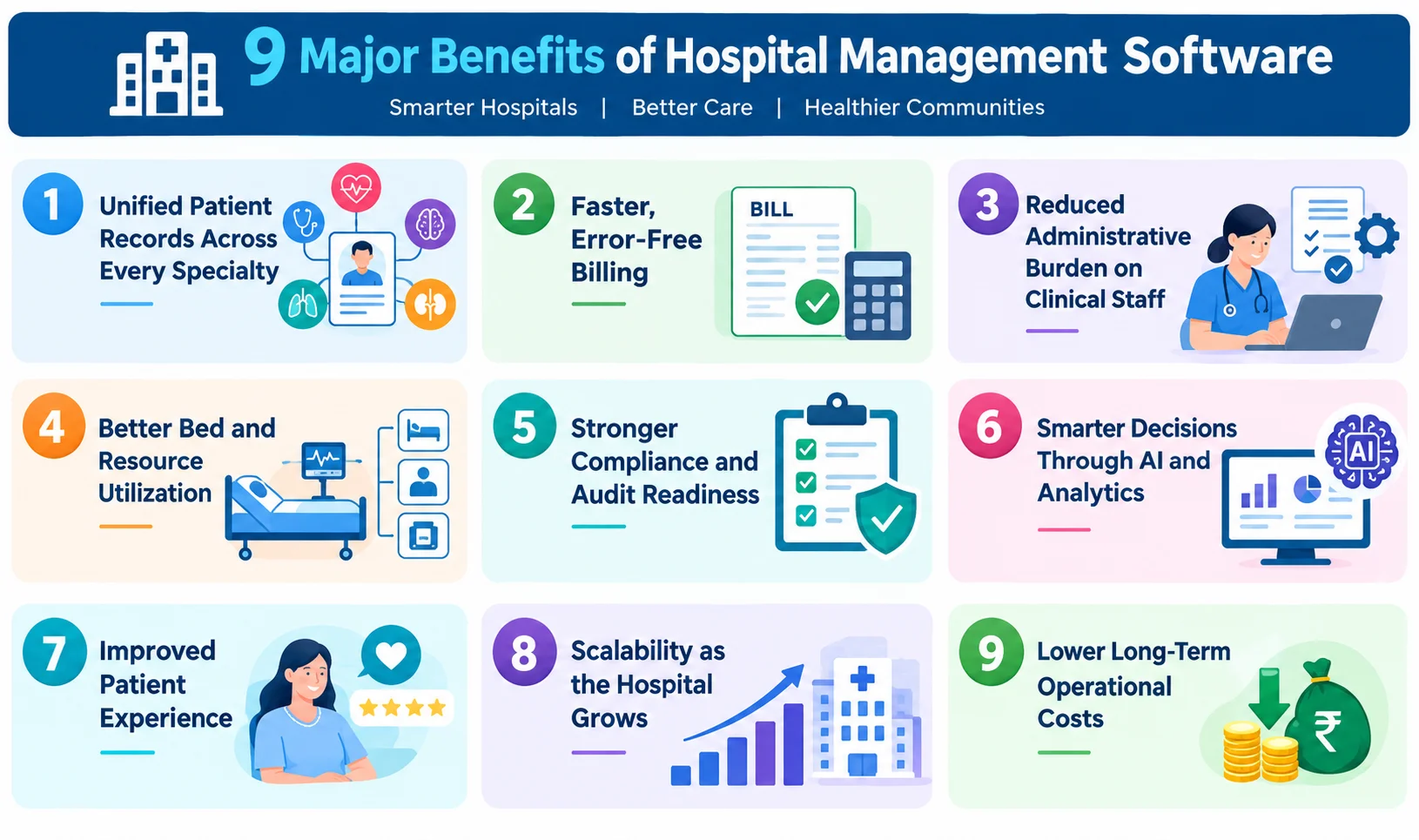
Choosing the right HMS isn't just about ticking feature boxes — it's about what actually changes on the ground, for staff and patients alike. Here's what a well-implemented hospital management software for multispecialty hospitals delivers in practice.
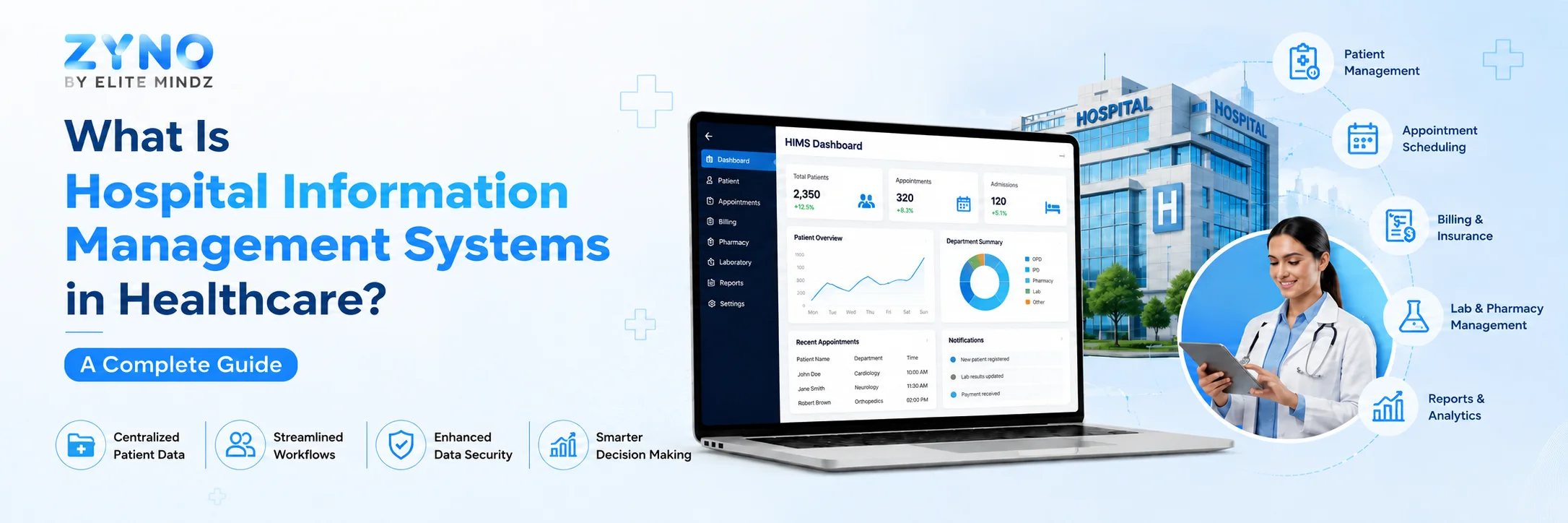
Discover how modern Hospital Management Software can simplify patient care, OPD/IPD workflows, billing, diagnostics, pharmacy, and hospital operations.
Instead of cardiology, orthopedics, and the ER each holding separate patient files, everything lives in one record. Any doctor treating that patient — regardless of department — sees the complete clinical history instantly. Fewer repeat tests, fewer missed allergies, faster diagnoses.
When a patient's charges from multiple departments flow into one centralized bill, there's no manual reconciliation, no duplicate entries, no delayed invoices. This also speeds up insurance claim processing — fewer rejected claims, faster reimbursements, and a healthier cash flow for the hospital.
3. Reduced Administrative Burden on Clinical Staff
Automating registration, appointment scheduling, discharge summaries, and documentation frees up doctors and nurses to focus on patient care instead of paperwork. In a multispecialty setup, where staff is already stretched thin across departments, this time saved compounds fast.
Read More: Hospital Appointment Scheduling Software
4. Better Bed and Resource Utilization
With real-time visibility into bed occupancy, OT schedules, and equipment availability across departments, hospitals can allocate resources smarter — cutting down patient wait times and avoiding the scramble of manually checking with every department.
5. Stronger Compliance and Audit Readiness
Multispecialty hospitals face heavier documentation requirements, especially for NABH accreditation. HMS software with built-in audit trails and structured record-keeping turns compliance from a once-a-year scramble into an everyday, automatic process.
6. Smarter Decisions Through AI and Analytics
Modern platforms like ZYNO HIMS go beyond record-keeping — using AI to flag abnormal lab results early, predict patient inflow for better staffing, and surface operational insights hospital administrators would otherwise miss buried in spreadsheets.
7. Improved Patient Experience
Shorter wait times, fewer repeated questions at every department, faster billing, and quicker access to test results — for the patient, a connected HMS means a visit that feels coordinated instead of chaotic.
8. Scalability as the Hospital Grows
Whether you're adding a new specialty department or opening a second location, a purpose-built HMS scales with you — no need to bolt on new software or rebuild workflows from scratch every time the hospital expands.
9. Lower Long-Term Operational Costs
Fewer manual errors, less duplicate work, faster billing cycles, and reduced paperwork all add up. What looks like an upfront software investment typically pays for itself through operational efficiency within the first year or two.

Read More: Top Hospital Management Software in India | Best Hospital Management Software in Japan | Hospital Management Software for Private Clinics in Kenya
Generic software or, worse, a patchwork of specialty-specific tools creates more problems than it solves once a hospital scales past one or two departments. Here's why purpose-built systems matter:
Fragmented patient data. When cardiology, orthopedics, and the ER each keep separate records, no single doctor sees the complete patient history. That's a clinical risk, not just an inconvenience.
Inconsistent workflows across departments. Every specialty has its own admission, treatment, and discharge process. Without a shared system, staff waste hours re-entering the same information into different tools.
Billing chaos. A patient treated across three departments generates three sets of charges. Without centralized billing, reconciling that manually leads to delayed invoices, denied insurance claims, and revenue leakage.
Compliance risk. Multispecialty hospitals face heavier documentation and audit requirements than single-specialty clinics, especially for NABH accreditation. Manual record-keeping makes that a constant scramble instead of a built-in process.
Purpose-built HMS solves all four by design, not as an afterthought bolted onto generic ERP software.

Not all hospital software is built the same way. If you're evaluating hospital management software for multispecialty hospitals, these are the non-negotiables.
Unified EMR/EHR Across Departments
Every specialty should read from and write to the same patient record. A cardiologist should be able to see a patient's orthopedic history without a phone call or a fax. This single change eliminates most of the clinical blind spots multispecialty hospitals deal with daily.
OPD and IPD Management
Outpatient and inpatient workflows are fundamentally different — registration, bed allocation, discharge summaries, follow-ups. Your hospital OPD IPD software should manage both without forcing staff to switch between separate tools.
Centralized Billing and Insurance Processing
One patient, one bill — even across five departments. Automated billing pulls charges from every touchpoint into a single invoice, cuts down manual errors, and speeds up insurance claim processing.
Pharmacy, Lab, and Inventory Integration
When pharmacy, lab, and inventory modules are connected to the same platform, stock levels update automatically, lab results reach the treating doctor instantly, and nobody's manually tracking expiry dates on a spreadsheet.
AI-Powered Automation
This is where modern HMS software pulls ahead of legacy systems. ZYNO HIMS, for instance, uses AI to flag abnormal lab results before a human reviews them, predict patient inflow for better staffing decisions, and automate routine documentation — freeing up clinical staff for actual patient care instead of paperwork.
NABH and Compliance Readiness
Look for software that's built with NABH-ready hospital software standards in mind — structured documentation, audit trails, and reporting that make accreditation reviews far less painful.
Multi-Location and Scalability Support
If your hospital has multiple branches — or plans to — your HMS needs to manage them from one dashboard, not a separate login for every location.
| What You Need | Generic ERP | Purpose-Built HMS |
|---|---|---|
| Understands clinical workflows | No - built for manufacturing/finance | Yes - built around patient care |
| Cross-specialty patient records | Requires heavy customization | Native, built-in |
| NABH/compliance support | Limited or absent | Designed for healthcare accreditation |
| OPD/IPD-specific processes | Not supported out of the box | Fully supported |
| AI-driven clinical insights | Rare | Increasingly standard |
ERP manages business operations. HMS manages patient care and hospital operations together — and for a multispecialty hospital, that difference shows up in every department, every day.
Before you sign anything, run your shortlist through this:
If a vendor can't answer "yes" to most of these, it's not built for a multi-specialty hospital — it's built for something simpler, repackaged to look like it fits.
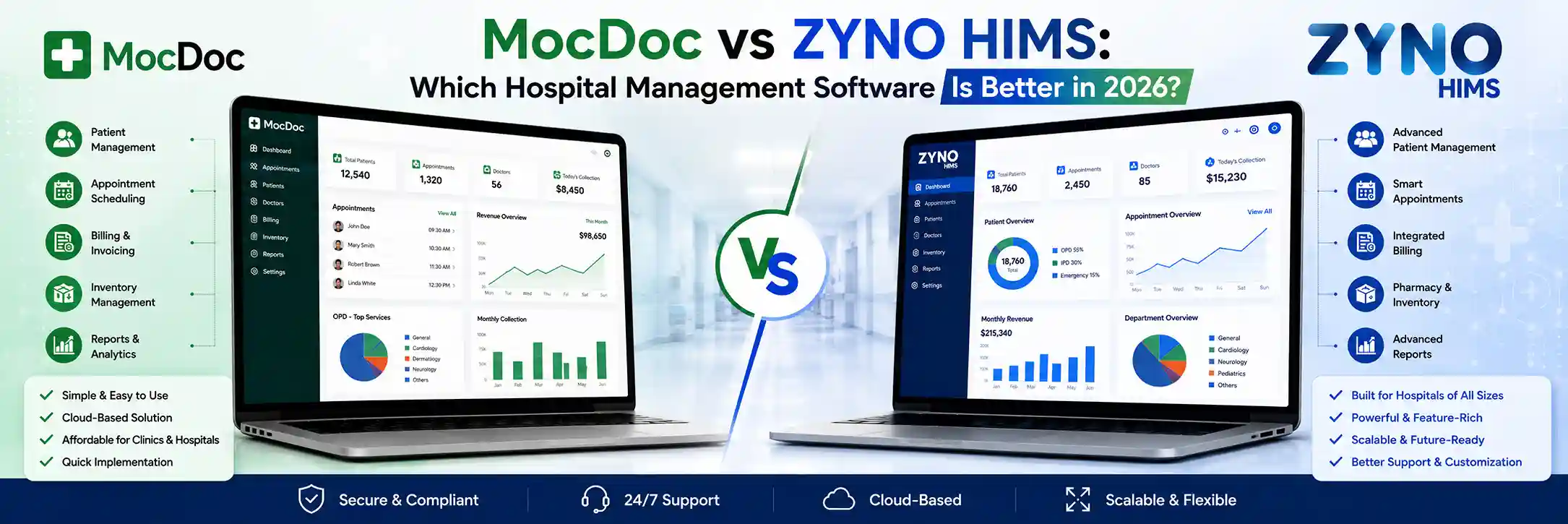
Read More: MocDoc vs ZYNO HIMS
Manage patients, appointments, OPD, IPD, billing, pharmacy, diagnostics, and multiple specialties with an integrated Hospital Management Software platform.
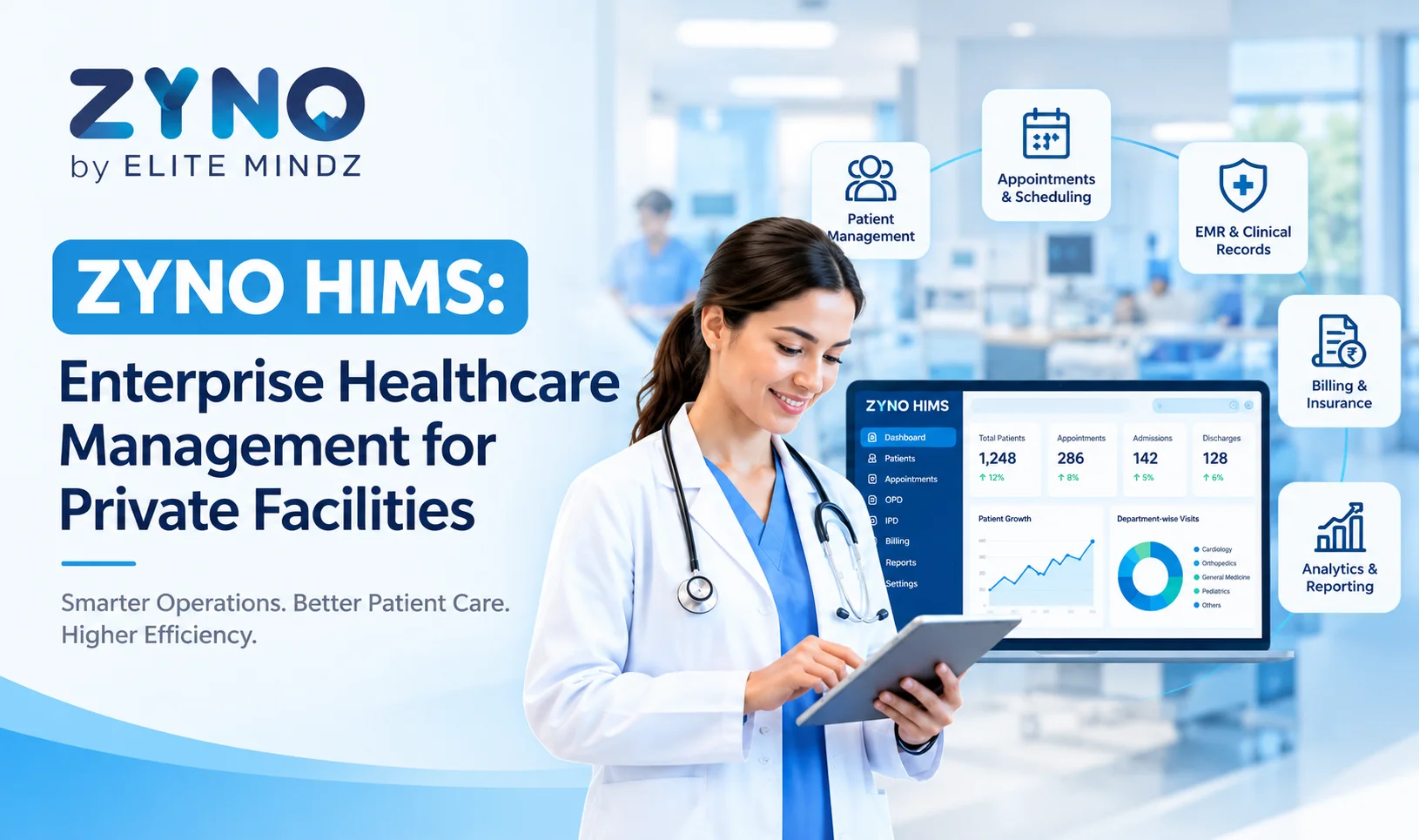
ZYNO HIMS is built around exactly the problem this guide started with: multispecialty hospitals need one system that understands every department, not twenty tools stitched together.
It brings EMR/EHR, OPD/IPD management, billing, pharmacy, lab, and inventory onto a single AI-powered platform — so a patient's record, treatment history, and billing follow them across every specialty they visit, automatically. Add in AI-driven tools like automated report analysis and smart patient search, and your clinical staff spend less time on admin work and more time on actual care.
For hospitals working toward NABH accreditation, ZYNO HIMS is designed with the documentation and audit-readiness built in from day one — not added later as a compliance patch.
Running a multispecialty hospital without unified software isn't just inefficient — it's a daily risk to patient care, revenue, and compliance. The right hospital management software for multispecialty hospitals turns a dozen disconnected departments into one coordinated system, without adding complexity for your staff.
If you're evaluating options, ZYNO HIMS is built specifically for this challenge — AI-powered, NABH-ready, and designed to scale with your hospital.
Book a free demo with ZYNO HIMS today and see how a unified platform can transform the way your hospital runs.
They're often used interchangeably. Hospital Management Software (HMS) typically refers to operational and administrative modules, while Hospital Information Management System (HIMS) usually includes clinical data management like EMR/EHR. Most modern platforms, including ZYNO HIMS, combine both under one system.
Do multispecialty hospitals really need different software than single-specialty clinics?
Yes. A single-specialty clinic has one workflow to manage. A multispecialty hospital has to coordinate dozens of specialty-specific workflows under one patient journey — which requires software built for that complexity from the ground up.
How much does hospital management software cost for a multispecialty hospital?
Pricing depends on hospital size, number of modules, and deployment (cloud vs. on-premise). Most vendors offer tiered or subscription-based pricing — it's worth requesting a demo and quote tailored to your hospital's scale rather than relying on generic pricing pages.
Is NABH-compliant hospital software mandatory?
It's not legally mandatory everywhere, but NABH accreditation significantly improves patient trust, insurance partnerships, and quality benchmarks — and software built for compliance from the start makes that process far smoother than retrofitting later.
Can hospital management software integrate with existing lab or radiology systems?
A good HMS should support integration with LIS, PACS, and other existing clinical systems rather than forcing a hospital to rip and replace everything at once. Always confirm integration capability before choosing a platform
Why Cloud-Based AI HIMS is Transforming the Future of Indian Healthcare
Read More →The Complete ZYNO HIMS Guide for Modern Healthcare Management
Read More →How a Hospital Management System Improves Healthcare Operations
Read More →
Cloud vs Offline Hospital Management Systems: What Should Your Hospital Choose
Read More →What Is a Hospital Information System (HIS)? Features, Benefits & Complete Guide
Read More →How HIMS Software Improves Patient Care and Hospital Efficiency
Read More →How Is Hospital Software Transforming Patient Data Management in Modern Healthcare
Read More →
HIMS Software in Kenya: The Complete Guide for Hospitals & Clinics (2026)
Read More →
Top 10 KareXpert HIMS Alternatives & Competitors in 2026
Read More →
What is a Clinic Management System and How Does It Improve Patient Care?
Read More →
Top Challenges in Pharmacy Management and How to Overcome Them
Read More →
Top 10 Hospital Management Challenges and How ZYNO HIMS Solves Them
Read More →
Why Modern Clinics Are Switching to EMR Systems
Read More →
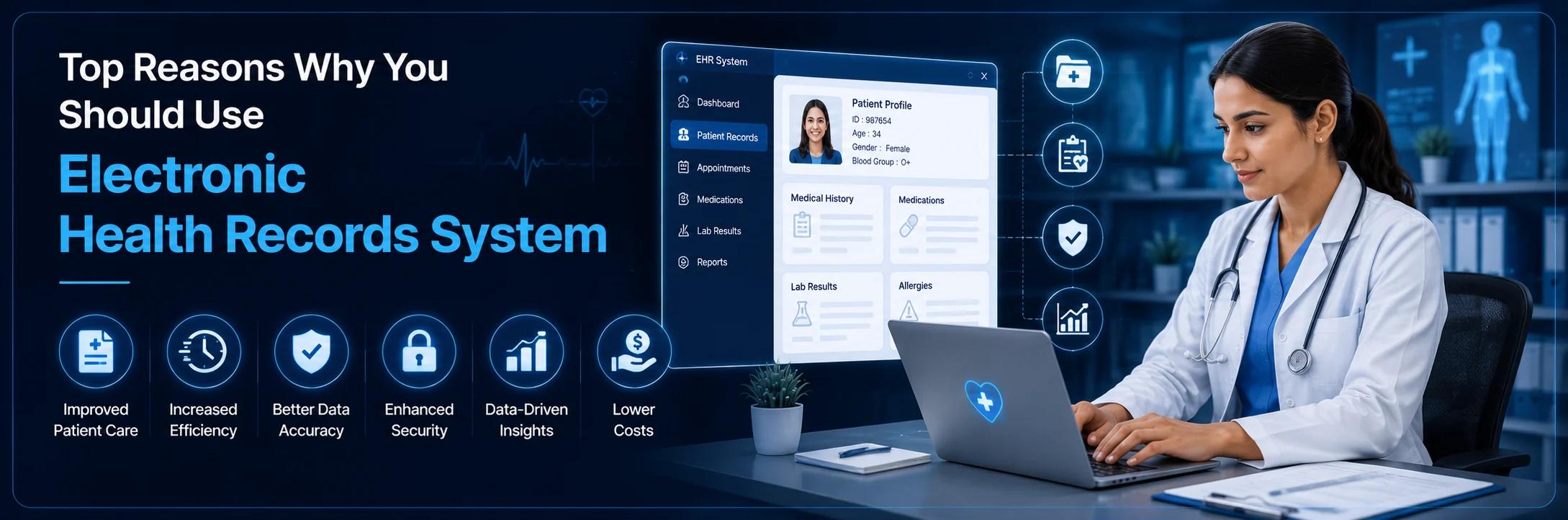
Top Reasons Why You Should Use Electronic Health Records System
Read More →
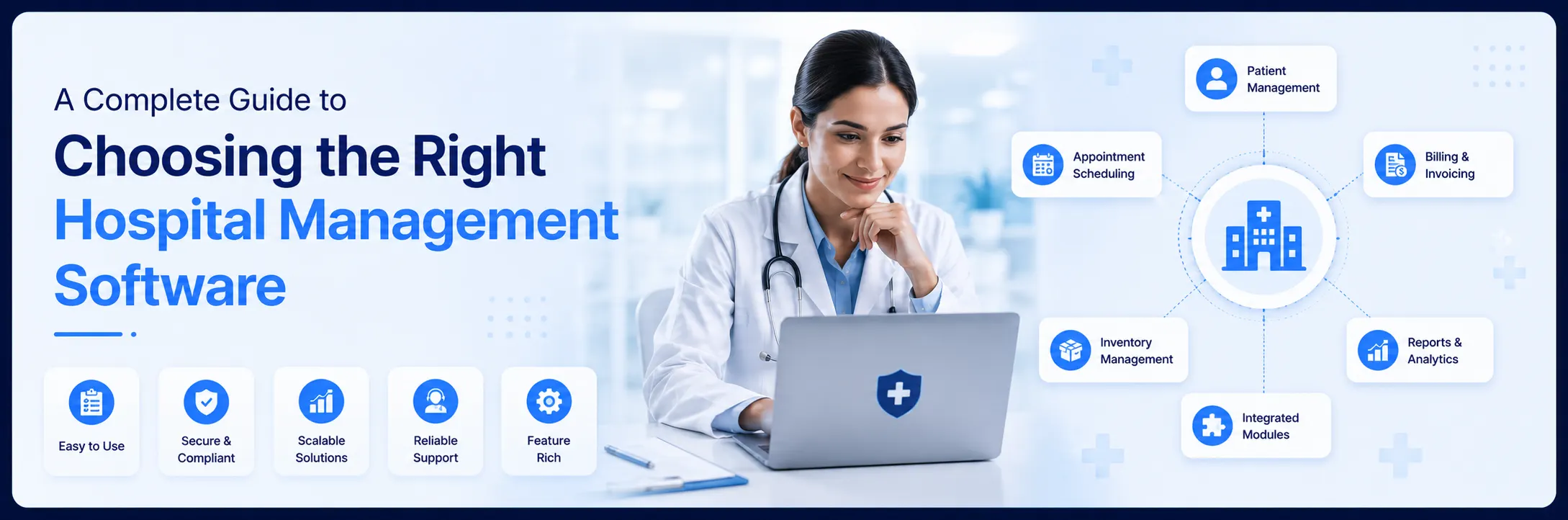
A Complete Guide to Choosing the Right Hospital Management Software
Read More →
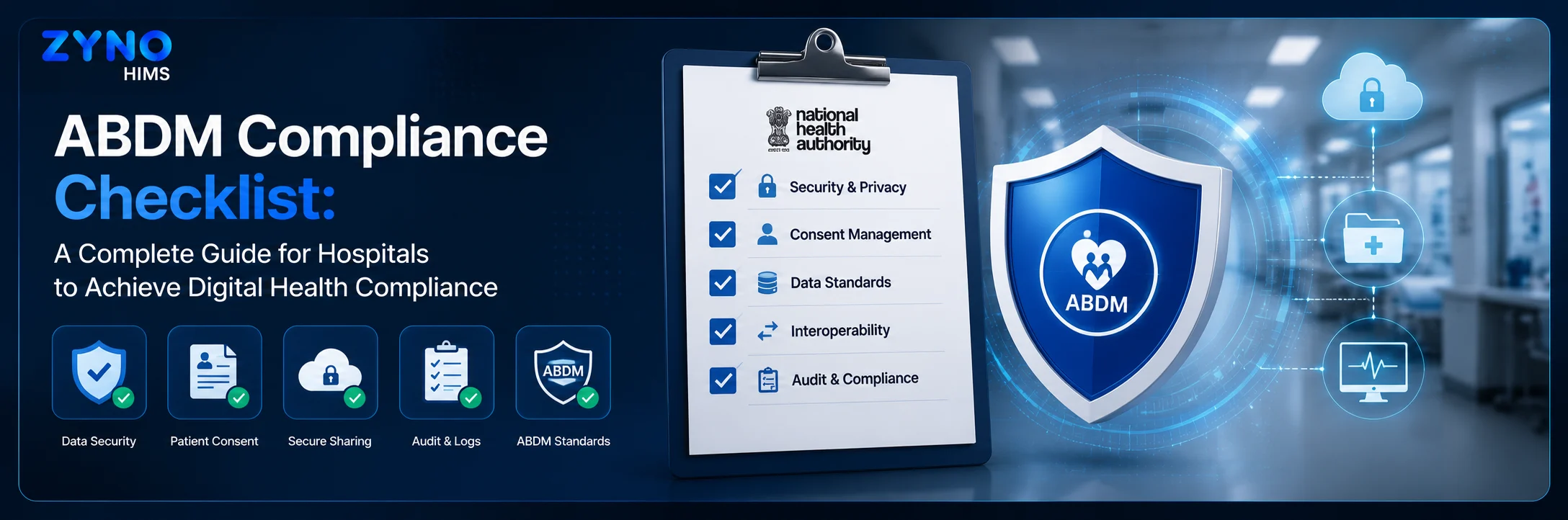
ABDM Compliance Checklist: A Complete Guide for Hospitals to Achieve Digital Health Compliance
Read More →
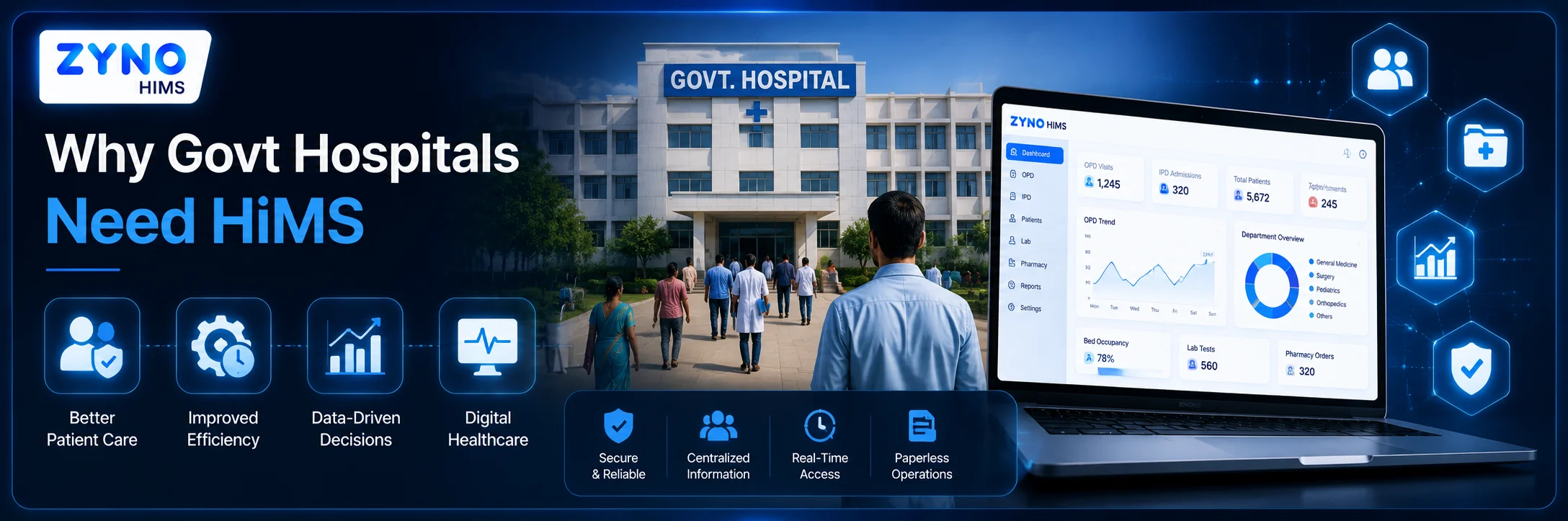
Why Govt Hospitals Need HIMS: Improving Patient Care, Efficiency, and Digital Healthcare
Read More →
What Is Hospital Information Management Systems in Healthcare? A Complete Guide
Read More →
DocPulse vs ZYNO HIMS (2026): Why ZYNO HIMS Is the Smarter Hospital Management Choice
Read More →
MocDoc vs ZYNO HIMS: Which Hospital Management Software Is Better in 2026?
Read More →
Caresoft vs ZYNO HIMS: Complete HIMS Comparison for Hospitals
Read More →
Best PMJAY-Compliant HIMS Software in India (2026): Complete Guide for Hospitals
Read More →
Medical Report Analyzer Software: How AI Makes Medical Reports Easy to Understand
Read More →
How to Choose a Hospital Management System
Read More →
AI in HIMS: 10 Practical Ways Artificial Intelligence is Transforming Hospital Management
Read More →
Best Hospital Management Software for Private Clinics in Kenya
Read More →
Hospital Management Software in Japan: What Healthcare Providers Need in 2026
Read More →
Pharmacy Management Software for Kenyan Pharmacies: Features That Matter
Read More →
DHA and MOH Compliance for Hospital Software in the UAE
Read More →
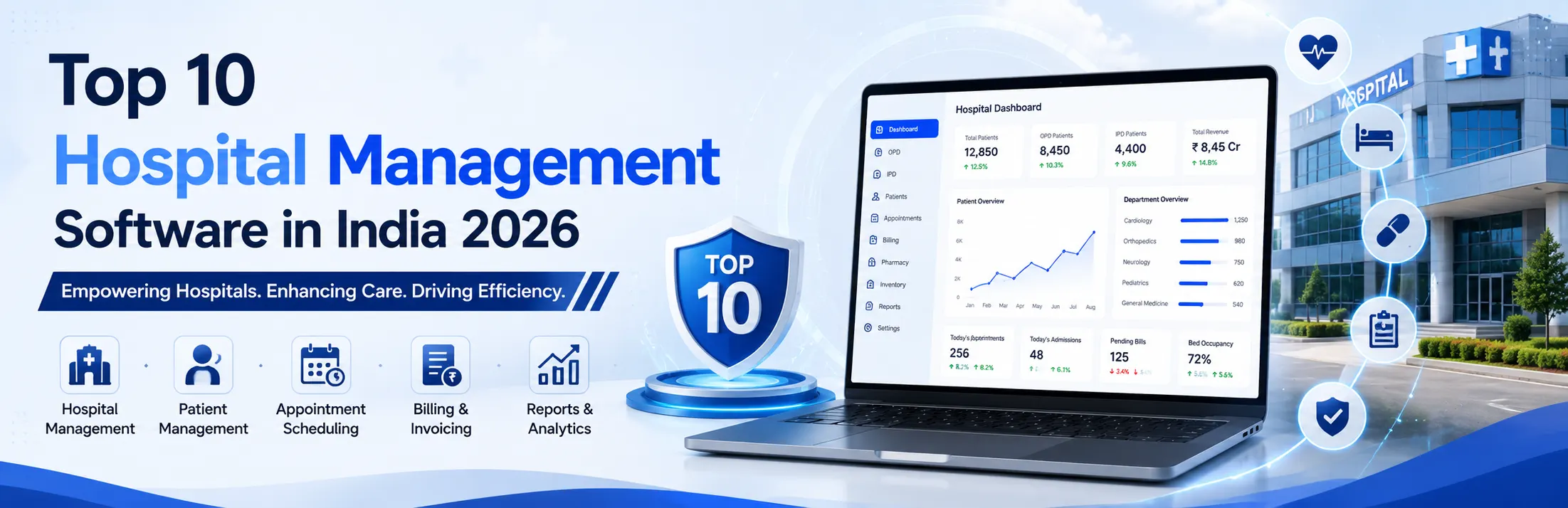
Top 10 Hospital Management Software in India 2026: Features, Pros, Cons & Pricing
Read More →
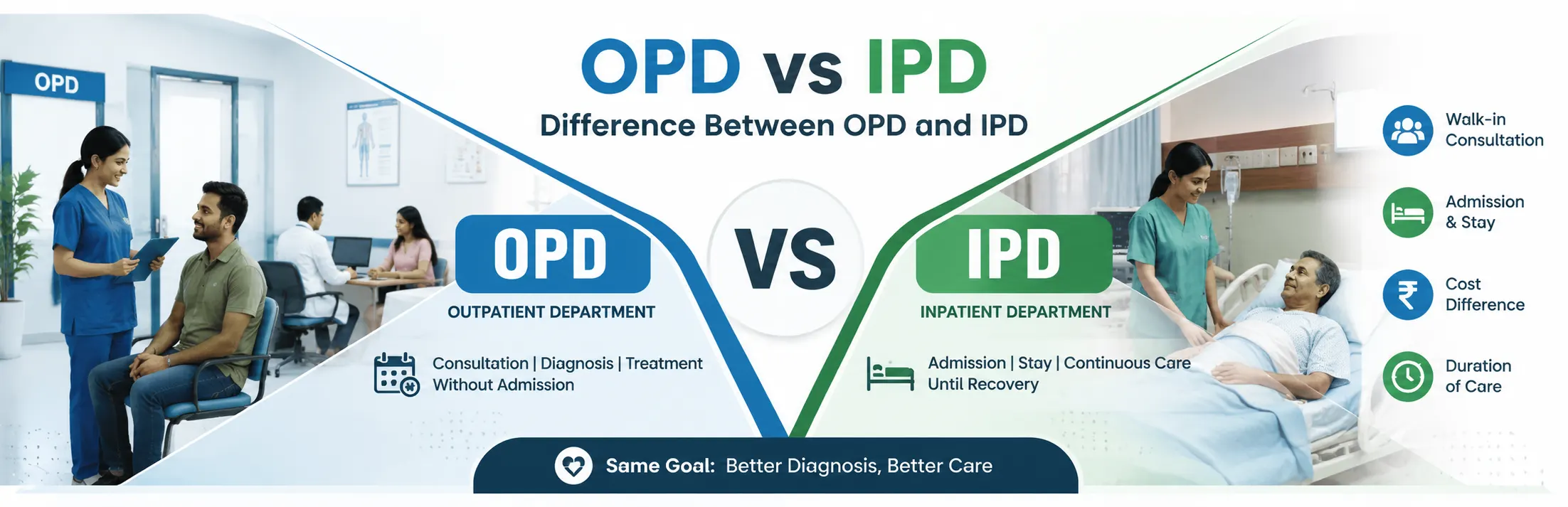
OPD vs IPD: Difference Between OPD and IPD, Services & Complete Guide
Read More →
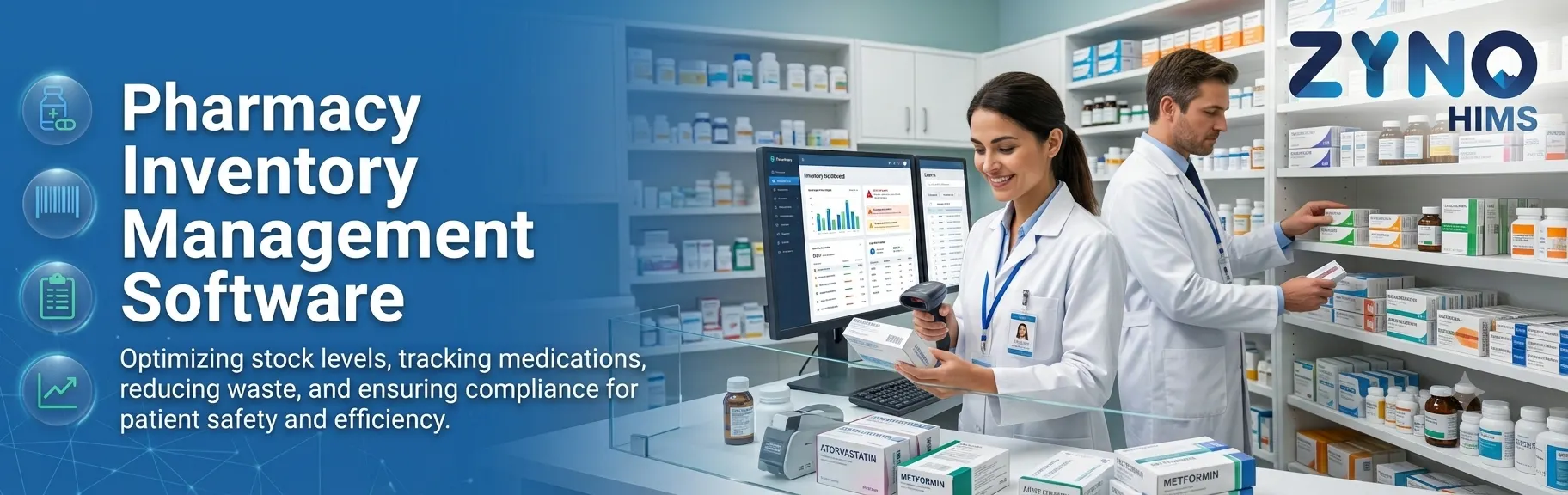
Pharmacy Inventory Management: Methods, Inventory Control & Best Practices
Read More →
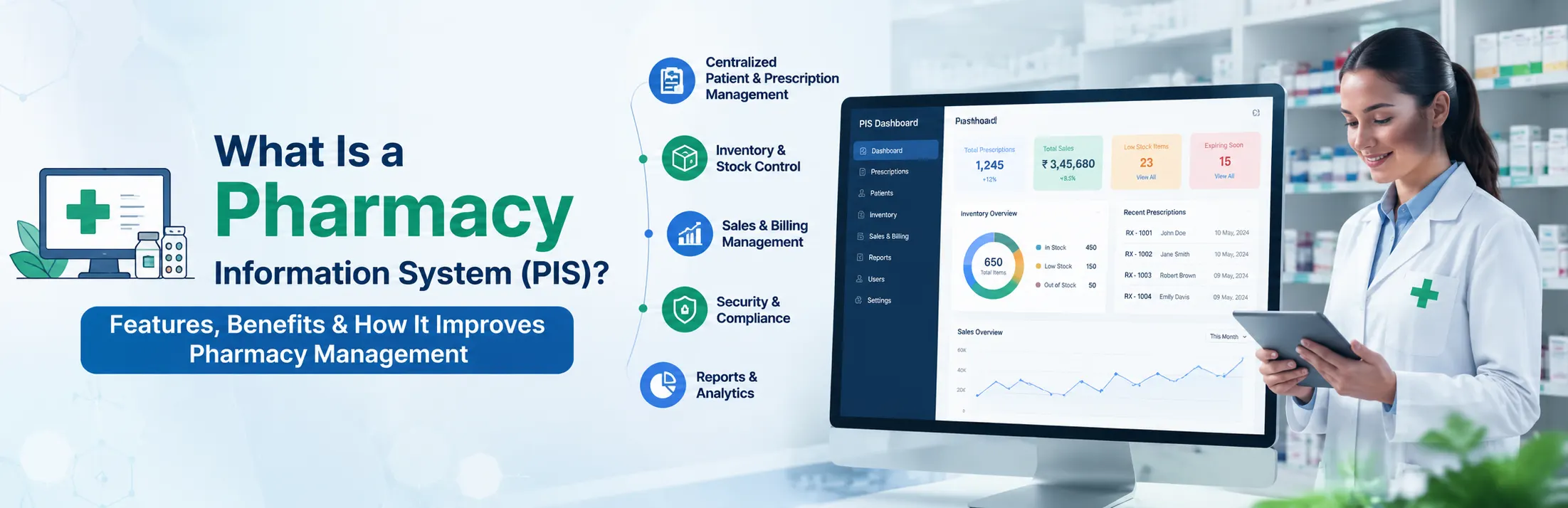
What Is a Pharmacy Information System (PIS)? Features, Benefits & How It Improves Pharmacy Management
Read More →
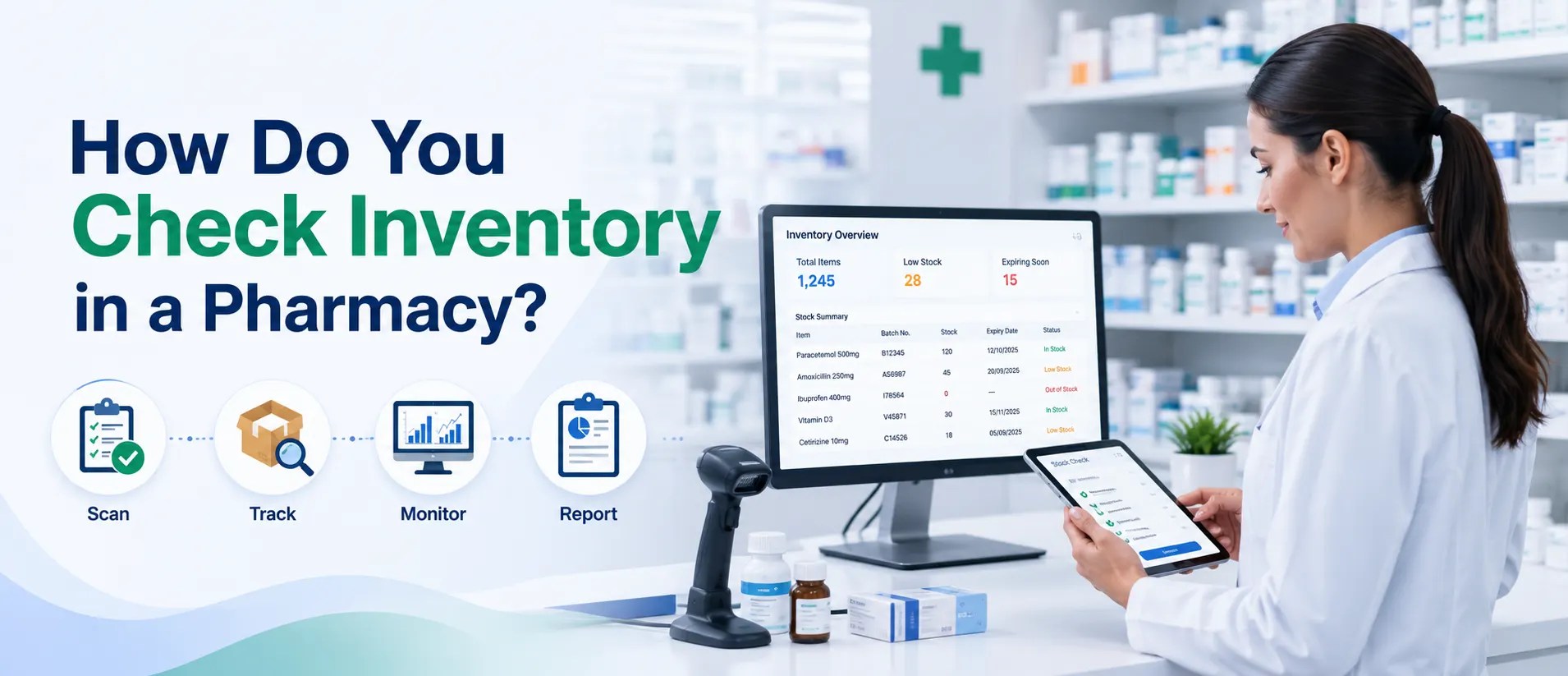
How Do You Check Inventory in a Pharmacy?
Read More →
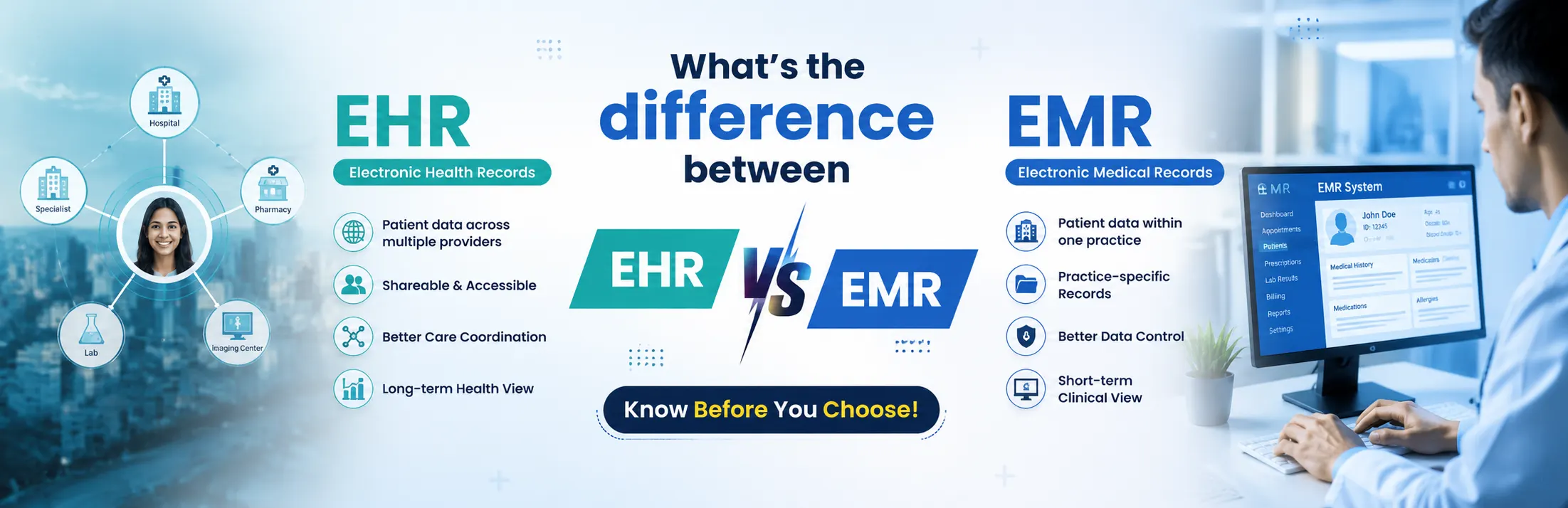
What’s the Difference Between EHR and EMR? Key Differences, Benefits & Guide
Read More →
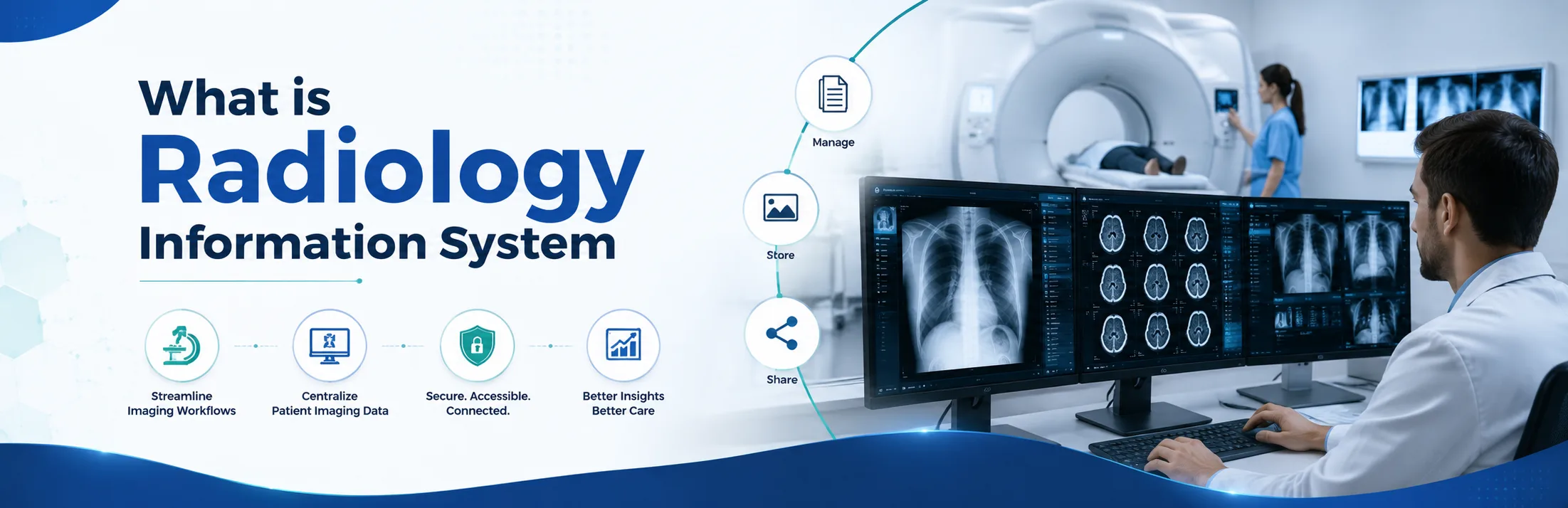
What is Radiology Information System? Features & Benefits
Read More →
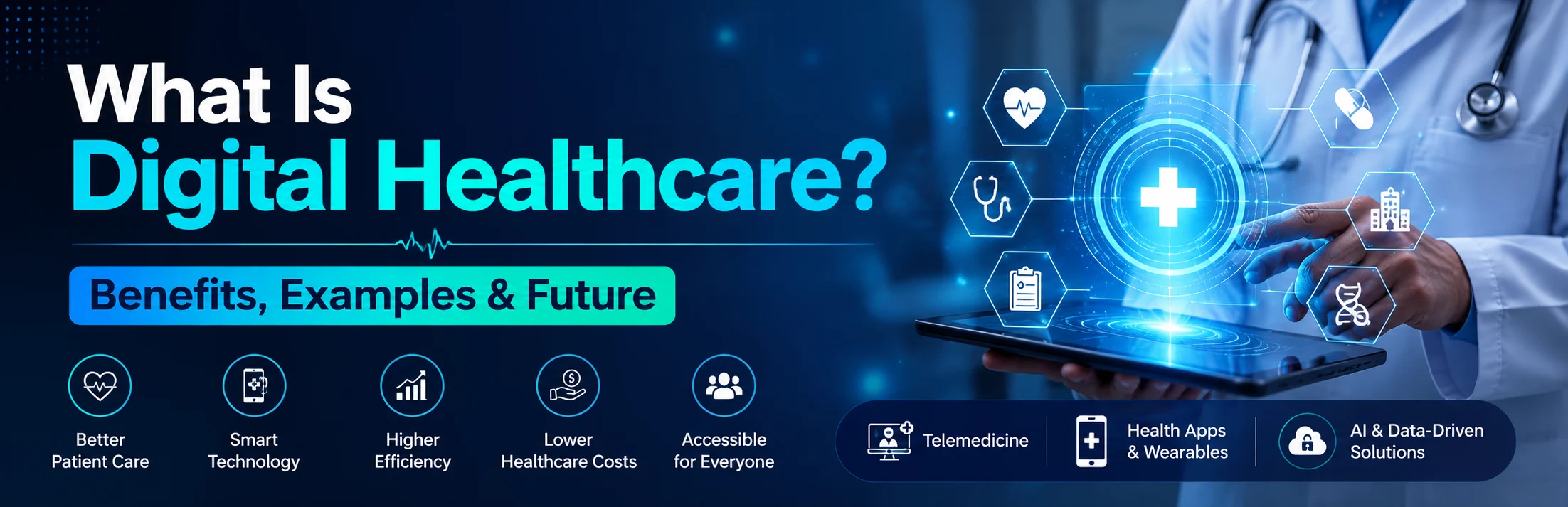
What Is Digital Healthcare? Benefits, Examples & Future
Read More →
Healthcare Supply Chain Management Benefits
Read More →
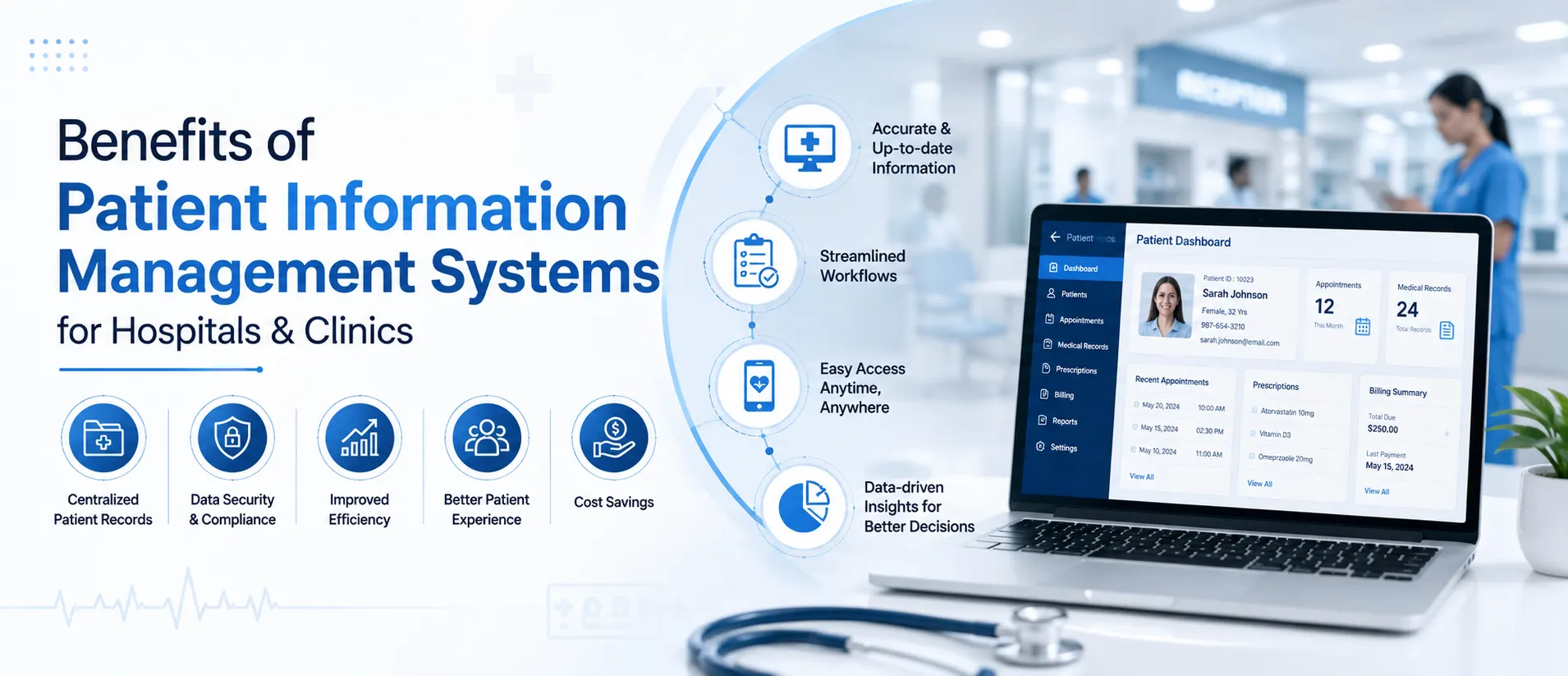
Benefits of Patient Information Management Systems for Hospitals & Clinics
Read More →
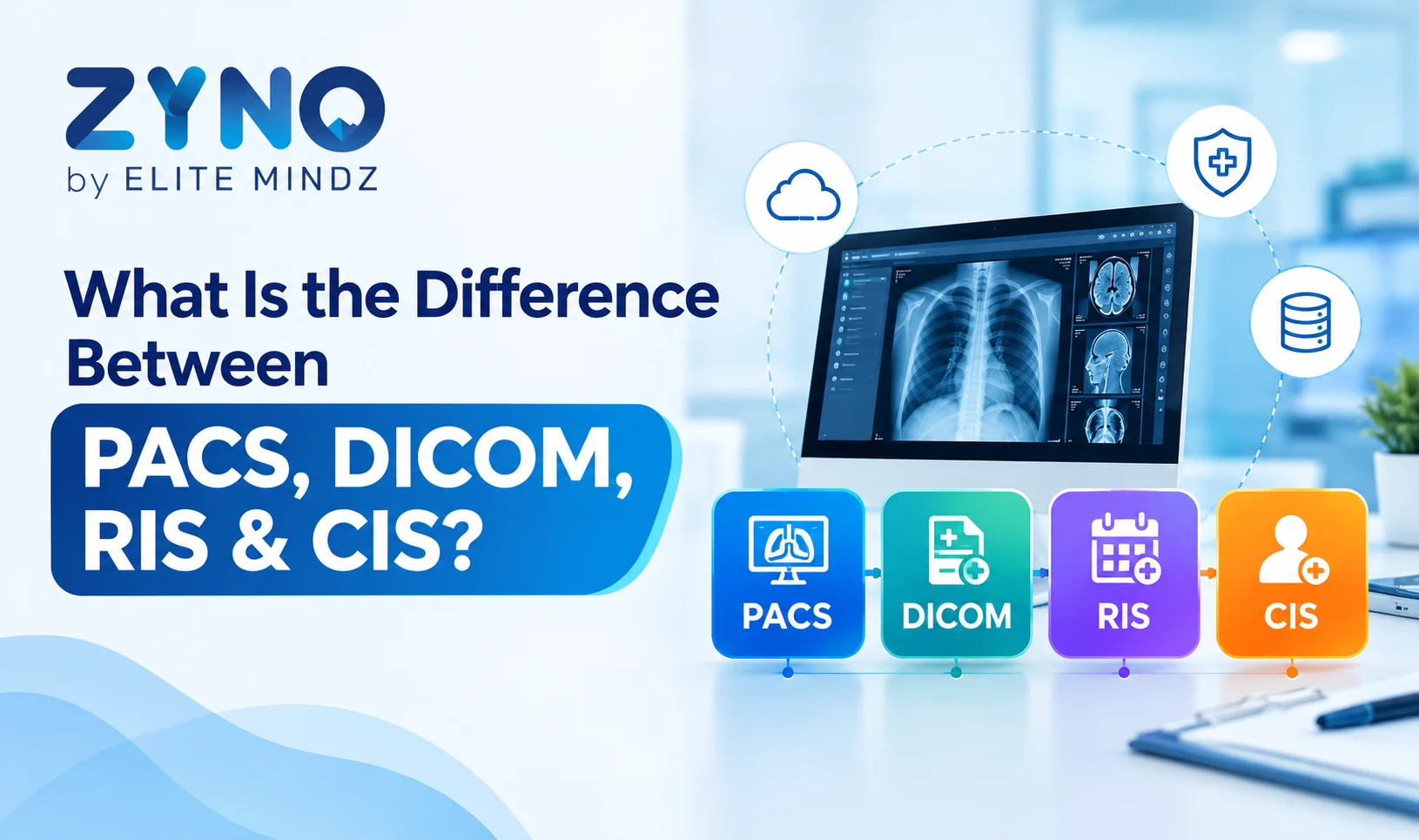
What Is the Difference Between PACS, DICOM, RIS & CIS?
Read More →
Best Hospital Billing Software in India 2026: Top 10 Medical Billing Solutions
Read More →
Top Features of Hospital Billing Software in India
Read More →
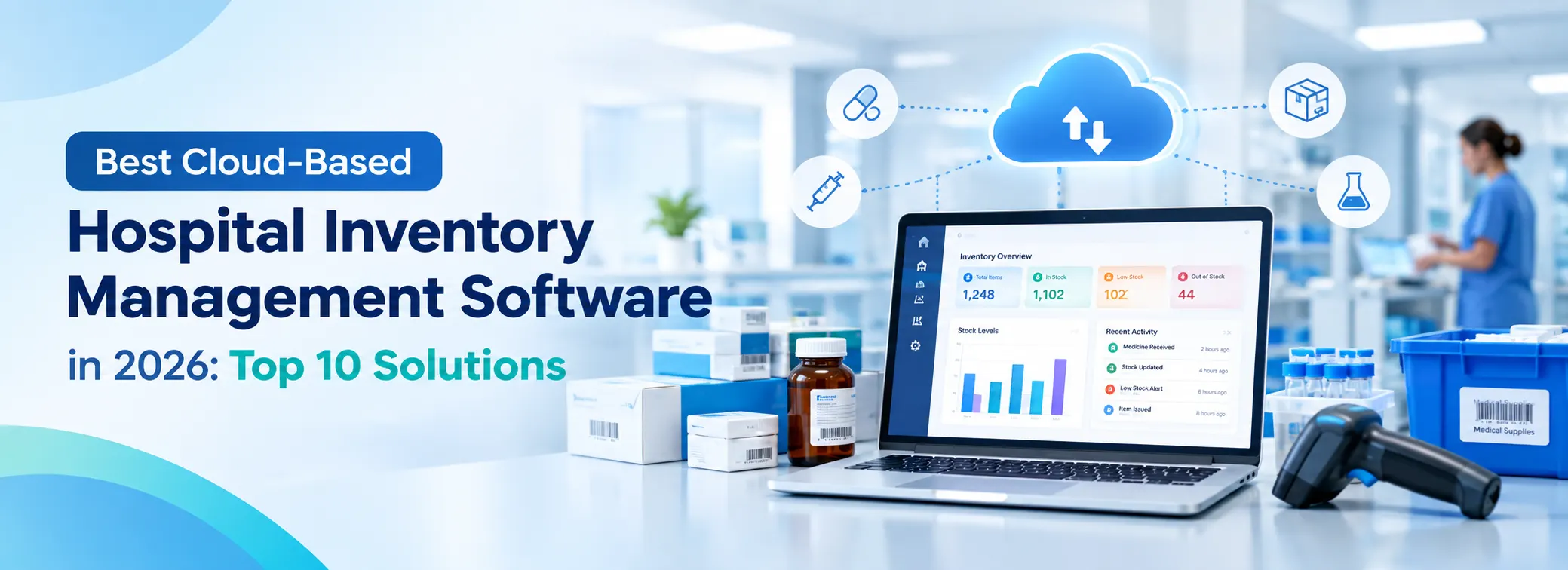
Best Cloud-Based Hospital Inventory Management Software in 2026: Top 10 Solutions
Read More →
Which Hospital Management Software in India Is Suitable for Newly Established Hospitals?
Read More →
Medical Diagnostic Software: What It Is, How It Works & Top 5 Players in 2026
Read More →
10 Best Patient Management Software in 2026
Read More →
Hospital Management Software for Multispecialty Hospitals: A Complete Guide
Read More →Partner with ZYNO by Elite Mindz to revolutionize how your business works. Fill out the form, and we’ll reach out with AI-powered solutions made just for you.
We use browser cookies to ensure you get the best experience on our website. Learn more
The form was submitted successfully!