Why Cloud-Based AI HIMS is Transforming the Future of Indian Healthcare
Read More →
×
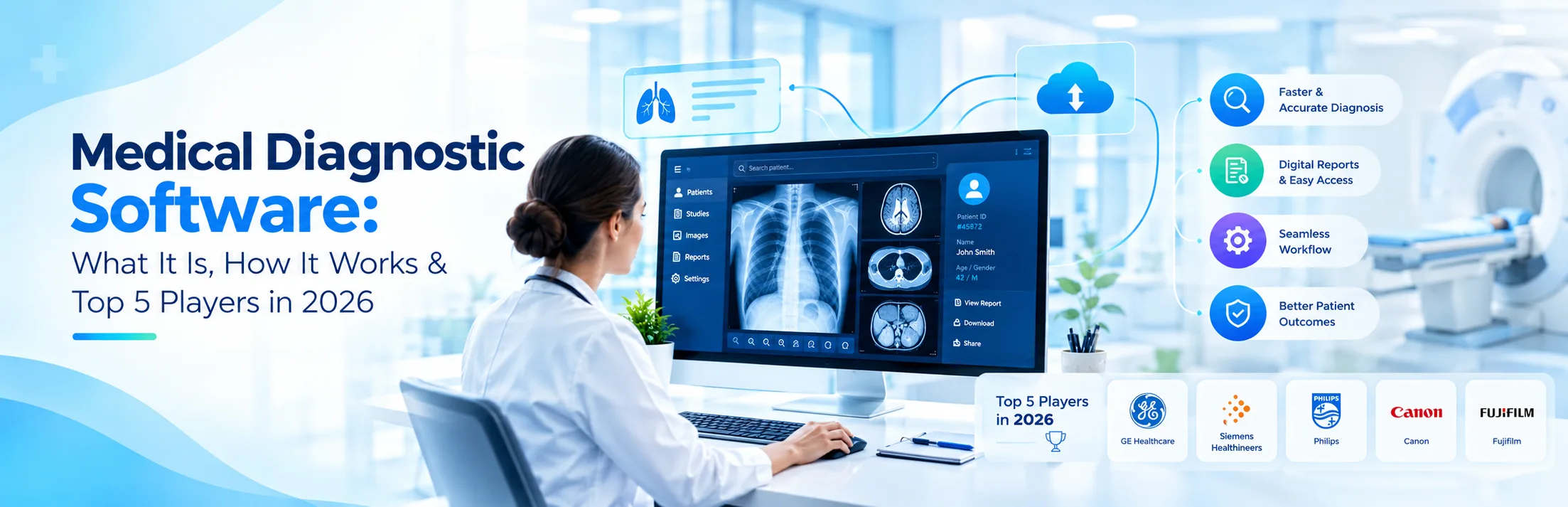
Medical diagnostic software supports lab, imaging, pathology, and ECG workflows using AI and EMR integration. Top players in 2026 include ZYNO HIMS, Qure.ai, SigTuple, Tricog, and Aidoc—connecting diagnostics with clinical decisions.
Businesses using ZYNO Books cut accounting time by 70% and stay 100% ZATCA-compliant — automatically.
Medical diagnostic software is a digital technology used to support the process of collecting, organizing, interpreting, and communicating patient diagnostic information. It can range from software that manages laboratory and imaging workflows to AI systems that assist clinicians in interpreting medical images, pathology data, ECGs, and other diagnostic information.
The market is also changing rapidly. AI is moving from experimental healthcare projects toward practical applications in radiology, pathology, cardiology, and clinical workflows in India.
For hospitals, the biggest opportunity is not simply adding an AI diagnostic tool. It is connecting patient records, investigations, reports, imaging, and clinical decisions into one continuous digital workflow.
Discover how modern diagnostic software can streamline patient data, laboratory workflows, medical reports, billing, and healthcare operations.
Medical diagnostic software is software designed to support healthcare professionals during the diagnostic process.
Depending on the type of solution, it can help with:
Traditional diagnostic software primarily organized information. Modern platforms increasingly add AI, OCR, natural-language processing, predictive analytics, and clinical decision-support capabilities.
However, diagnostic AI should generally be considered a clinical support technology rather than an autonomous replacement for qualified healthcare professionals. Regulatory authorization and clinical validation also matter when evaluating AI diagnostic products.
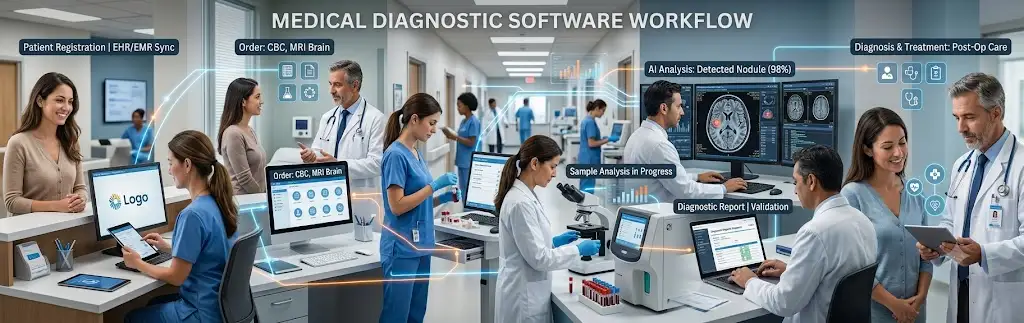
A typical diagnostic workflow looks like this:
Patient Registration → Consultation → Diagnostic Order → Sample/Image Acquisition → AI/Clinical Analysis → Report → Doctor Review → Diagnosis & Treatment → EHR/EMR Update
For example, a doctor may order a laboratory test or imaging investigation from the patient's digital record. The diagnostic department processes the request, produces the result, and sends the report back into the patient's electronic medical record.
This creates a connected diagnostic loop rather than forcing staff to move information manually between departments.
PATIENT
↓
Registration / EMR
↓
Doctor Consultation
↓
Diagnostic Test Ordered
↙ ↘
LAB TEST IMAGING
↓ ↓
Sample Analysis Image Analysis
↘ ↙
AI / CDS Support
↓
Diagnostic Report
↓
Doctor Validation
↓
Diagnosis & Treatment
↓
EHR / EMR
ZYNO HIMS follows this connected approach by linking its EMR with laboratory and diagnostic workflows. A lab request can move to the laboratory module, while results can return to the patient's EMR for physician review. Its radiology integration can also make imaging reports and DICOM images available within the patient record.

The modern diagnostic software ecosystem can be broadly divided into four areas:
Medical Diagnostic Software
│
┌────────┼─────────┬──────────┐
↓ ↓ ↓ ↓
Imaging Pathology Cardiac Diagnostic
AI AI AI Workflow/HIMS
This distinction is important. Qure.ai, for example, focuses on AI-assisted medical imaging, while SigTuple works in digital pathology. Tricog focuses on cardiac diagnostics. ZYNO HIMS, meanwhile, approaches diagnostics from the broader hospital workflow side, connecting diagnostic information with EMR/EHR and other hospital departments. India's current healthcare AI landscape includes these specialized diagnostic categories as well as integrated clinical platforms.

ZYNO HIMS takes a different approach from standalone diagnostic AI companies. Instead of focusing on only one diagnostic modality, it connects diagnostics with the patient's broader digital healthcare record.
Its EMR platform connects patient registration, consultation, laboratory results, imaging records, prescriptions, diagnoses, and treatment history. Doctors can access diagnostic information directly from the patient's record rather than relying on disconnected systems.
Its EMR also integrates laboratory workflows, allowing test orders to move to the laboratory module and results to return to the patient's medical record. Radiology integration can bring imaging reports and DICOM images into the patient's authorized record.
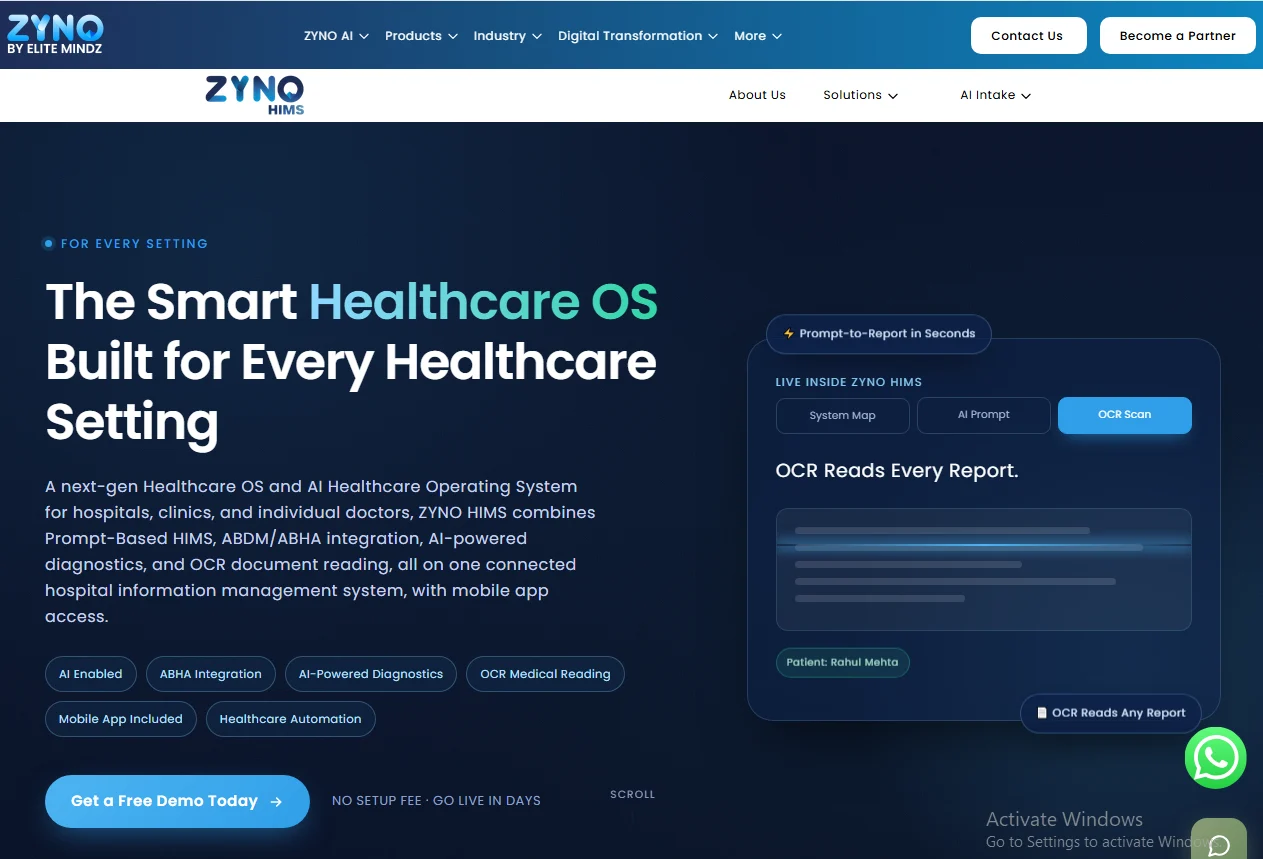
ZYNO also incorporates AI-powered clinical decision support, OCR-based medical document reading, voice-to-text documentation, and prompt-based healthcare workflows.
Best for: Hospitals and clinics wanting diagnostic information connected to a complete EMR/EHR and HIMS.

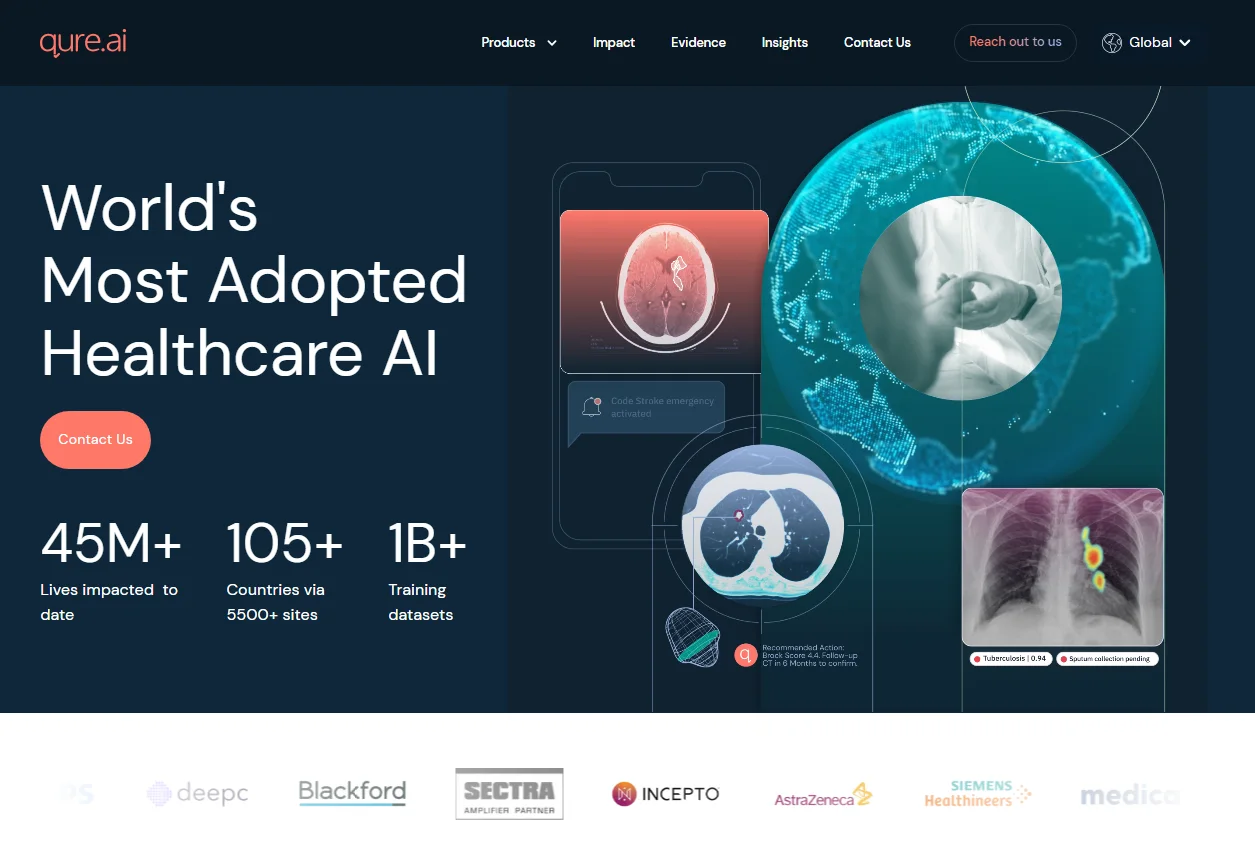
Qure.ai is one of India's prominent medical AI companies focused on diagnostic imaging. Its technology uses AI to assist with interpretation of medical images and support clinical workflows.
Its importance is particularly relevant to radiology and imaging-heavy healthcare environments, where AI can help clinicians prioritize and analyze diagnostic information.
AI-enabled radiology is one of the areas experiencing significant growth in Indian healthcare.
Best for: AI-assisted medical imaging and radiology workflows.

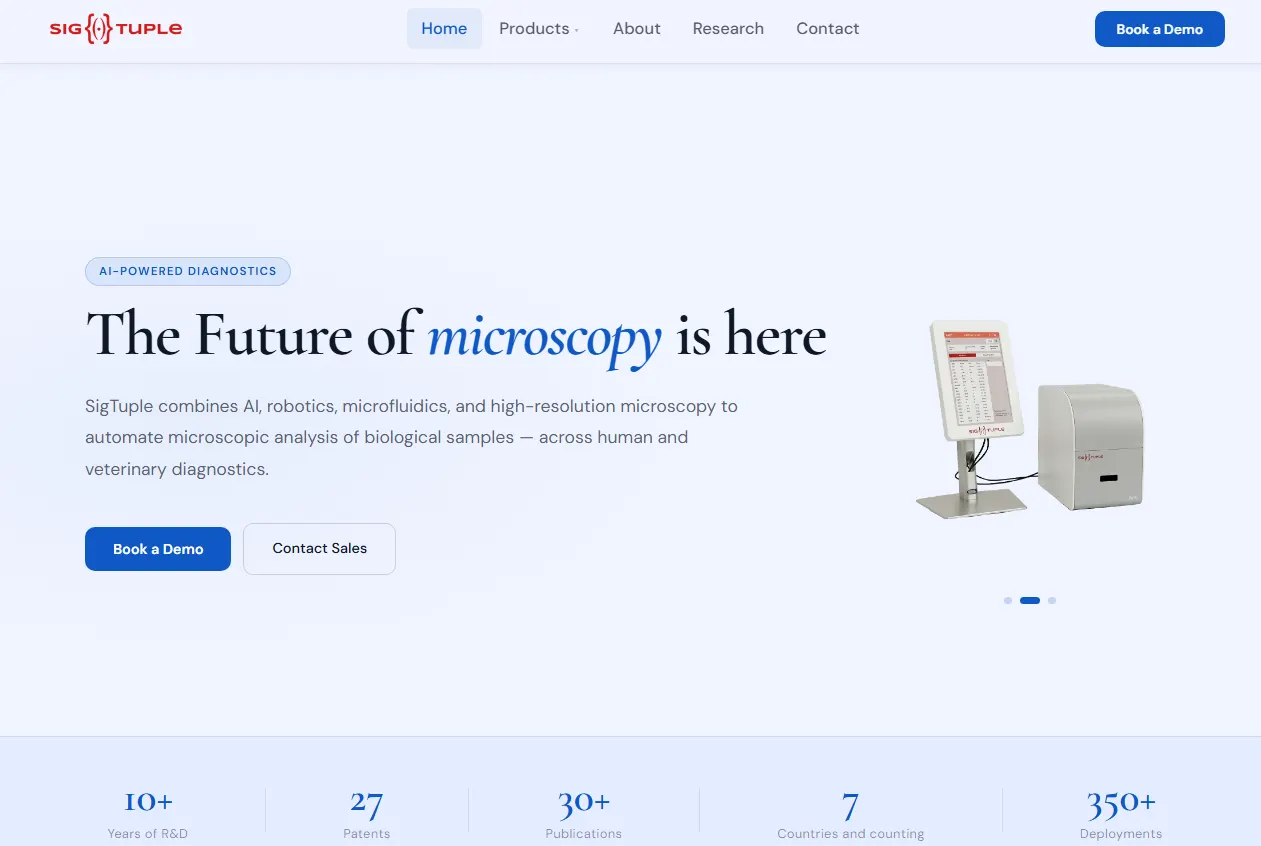
SigTuple focuses on AI-enabled pathology and digital diagnostics. Its technology is designed to digitize pathology workflows and apply AI to assist with the analysis of pathology information.
Digital pathology is an important part of the transition from traditional microscope-based workflows toward digitally connected diagnostic environments.
Best for: Pathology laboratories and organizations exploring AI-assisted digital pathology.

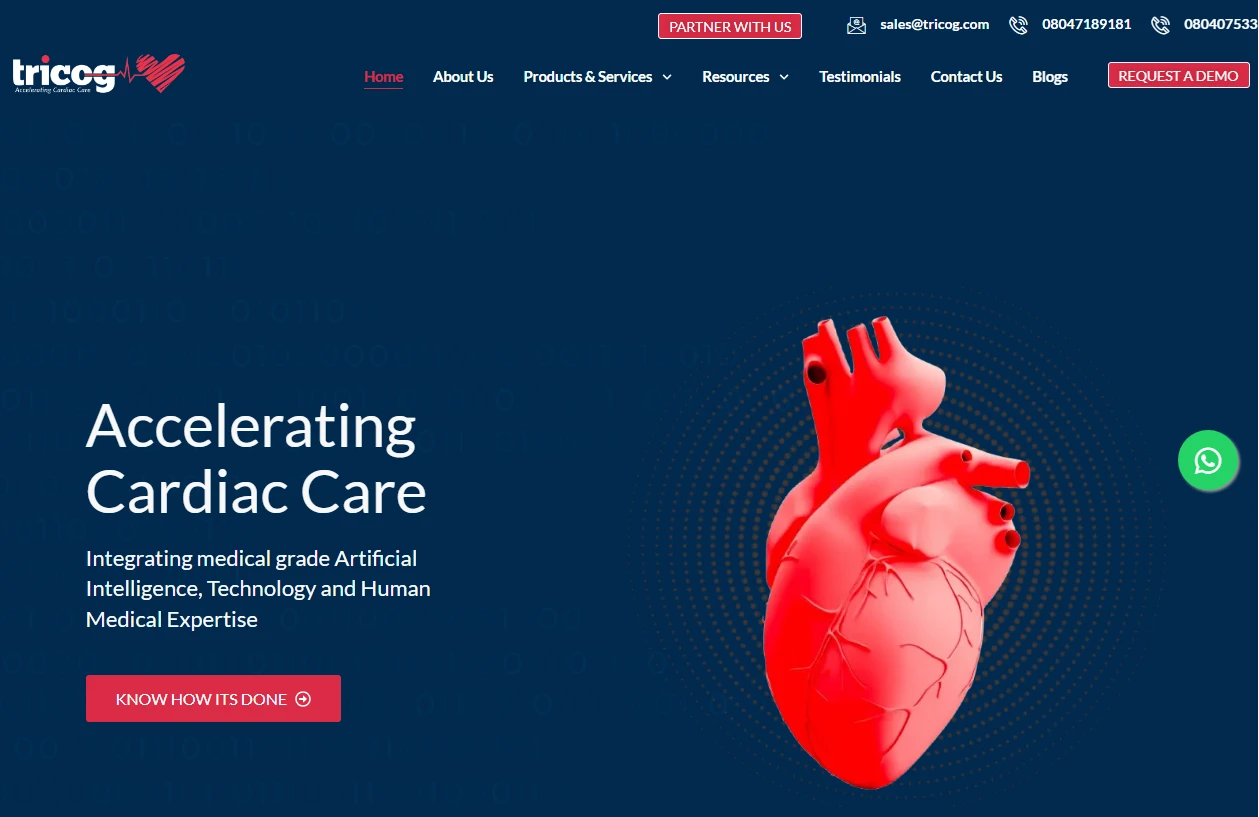
Tricog focuses on cardiac diagnostics, particularly ECG and cardiovascular workflows. Its technology uses AI and digital healthcare infrastructure to support faster interpretation and access to cardiac expertise.
Its relevance in 2026 is underscored by its continued expansion in India's AI-powered cardiac diagnostics ecosystem, including a recently announced partnership initiative with Sanofi Healthcare India.
Best for: Cardiac diagnostics and ECG-focused healthcare workflows.

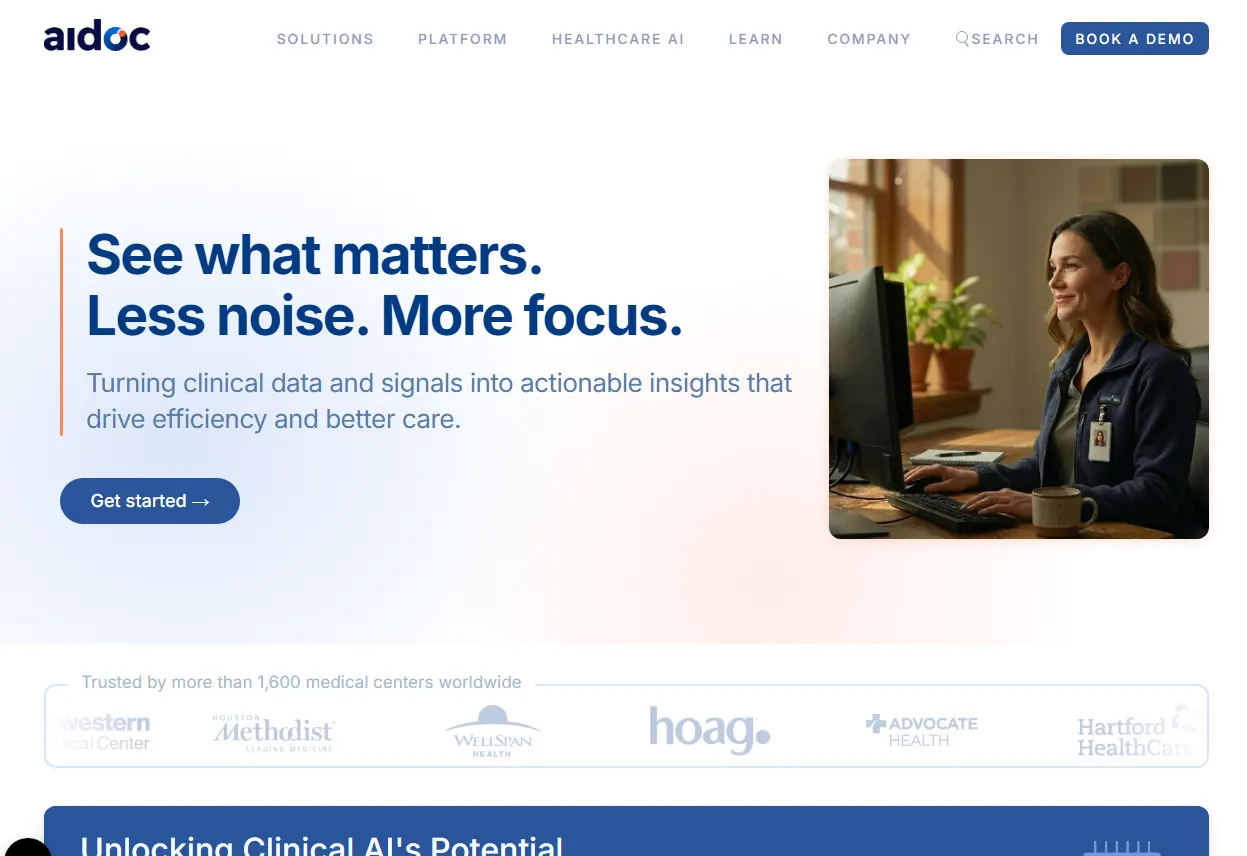
Aidoc is a global medical AI company focused on radiology and clinical imaging workflows. Its AI tools are designed to assist healthcare teams in identifying clinically important findings and prioritizing cases.
The broader medical AI market now includes hundreds of authorized AI/ML medical devices, with radiology representing one of the most established clinical AI categories.
Best for: AI-assisted radiology and medical imaging workflows.
These terms are often used interchangeably, but they are not exactly the same.
|
Category |
Primary Purpose |
Example |
|
Diagnostic Workflow Software |
Manage tests, reports and diagnostic workflows |
ZYNO HIMS |
|
Imaging AI |
Analyze medical images |
Qure.ai, Aidoc |
|
Pathology AI |
Assist pathology analysis |
SigTuple |
|
Cardiac AI |
Analyze ECG/cardiac information |
Tricog |
|
EMR/EHR |
Store and connect patient information |
ZYNO HIMS |
The strongest hospital environment may use both an integrated diagnostic workflow platform and specialized AI tools.
Connected diagnostic software can help hospitals reduce fragmented information and improve the flow of diagnostic data between departments.
Major benefits include:
Faster access to reports: Doctors can review diagnostic information from the patient's digital record.
Reduced manual data entry: Test orders and results can move electronically between connected systems.
Better clinical context: Laboratory and imaging results can be viewed alongside medical history, medications, and treatment information.
AI-assisted decision support: AI can surface alerts, patterns, or relevant information for clinician review.
Better patient continuity: Diagnostic information remains connected to the patient's longitudinal record.
ZYNO HIMS specifically positions its EHR around bringing demographics, diagnoses, prescriptions, laboratory results, imaging, and treatment information into a structured patient record.
Before selecting diagnostic software, hospitals should evaluate:
For AI-based diagnostic tools, hospitals should pay particular attention to clinical evidence, regulatory status, interoperability, workflow integration, and human oversight. AI accuracy alone does not guarantee successful clinical deployment.
Simplify diagnostic workflows, manage patient records, reports, billing, and healthcare operations with ZYNO HIMS.
Explore ZYNO HIMS →Medical diagnostic software is evolving from a system that simply stores reports into an intelligent layer connecting patient data, diagnostics, clinical workflows, and AI-assisted decision support.
Specialized players such as Qure.ai, SigTuple, Tricog, and Aidoc demonstrate how AI is transforming individual diagnostic areas. ZYNO HIMS takes the broader approach by connecting EMR/EHR, laboratory, radiology, patient records, and AI capabilities within one hospital ecosystem.
For hospitals that want to build a connected diagnostic workflow rather than deploy isolated diagnostic applications, an integrated HIMS such as ZYNO HIMS can provide the foundation on which specialized diagnostic technologies can operate.
Medical diagnostic software is technology that helps healthcare professionals manage, analyze, interpret, and communicate diagnostic information such as laboratory results, medical images, ECGs, pathology data, and clinical reports.
Diagnostic software manages diagnostic workflows and information, while diagnostic AI uses artificial intelligence to assist with analysis or interpretation of clinical data. A hospital can use both technologies together.
AI can assist clinicians by analyzing medical data and identifying patterns or potential abnormalities, but its role depends on the specific technology, regulatory authorization, clinical evidence, and intended use. Final clinical decisions should remain with qualified healthcare professionals.
AI diagnostic software can be used for applications including medical imaging, pathology, ECG analysis, clinical decision support, and other diagnostic workflows.
Modern diagnostic systems can integrate with EMR/EHR platforms so that test orders, results, reports, and imaging information become part of the patient's digital record.
Yes. ZYNO HIMS connects diagnostic workflows with its EMR/EHR environment. Laboratory results and radiology reports can be made available within the patient's digital medical record.
ZYNO HIMS incorporates AI-powered clinical decision support and other AI capabilities within its healthcare platform. These capabilities are intended to support clinicians and healthcare workflows rather than replace professional clinical judgment.
Examples include Qure.ai for medical imaging, SigTuple for digital pathology, and Tricog for cardiac diagnostics. These companies operate in specialized diagnostic areas, while platforms such as ZYNO HIMS focus on connecting diagnostic information with broader hospital workflows.
There is no universal best solution because hospitals have different diagnostic requirements. For specialized AI, hospitals may evaluate imaging, pathology, or cardiac platforms. For a connected hospital environment, ZYNO HIMS is suited to organizations that want diagnostics integrated with EMR/EHR and other hospital workflows.
The future is moving toward connected, AI-assisted diagnostic workflows where clinical records, laboratory data, imaging, pathology, and decision-support technologies work together. In India, adoption is growing, but successful implementation will depend on clinical validation, interoperability, governance, and integration into real healthcare workflows.
Why Cloud-Based AI HIMS is Transforming the Future of Indian Healthcare
Read More →The Complete ZYNO HIMS Guide for Modern Healthcare Management

Read More →How a Hospital Management System Improves Healthcare Operations
Read More →
Cloud vs Offline Hospital Management Systems: What Should Your Hospital Choose
Read More →What Is a Hospital Information System (HIS)? Features, Benefits & Complete Guide
Read More →How HIMS Software Improves Patient Care and Hospital Efficiency
Read More →How Is Hospital Software Transforming Patient Data Management in Modern Healthcare
Read More →
HIMS Software in Kenya: The Complete Guide for Hospitals & Clinics (2026)
Read More →
Top 10 KareXpert HIMS Alternatives & Competitors in 2026
Read More →
What is a Clinic Management System and How Does It Improve Patient Care?
Read More →
Top Challenges in Pharmacy Management and How to Overcome Them
Read More →
Top 10 Hospital Management Challenges and How ZYNO HIMS Solves Them
Read More →
Why Modern Clinics Are Switching to EMR Systems
Read More →
Top Reasons Why You Should Use Electronic Health Records System
Read More →
A Complete Guide to Choosing the Right Hospital Management Software
Read More →
ABDM Compliance Checklist: A Complete Guide for Hospitals to Achieve Digital Health Compliance
Read More →
Why Govt Hospitals Need HIMS: Improving Patient Care, Efficiency, and Digital Healthcare
Read More →
What Is Hospital Information Management Systems in Healthcare? A Complete Guide
Read More →
DocPulse vs ZYNO HIMS (2026): Why ZYNO HIMS Is the Smarter Hospital Management Choice
Read More →
MocDoc vs ZYNO HIMS: Which Hospital Management Software Is Better in 2026?
Read More →
Caresoft vs ZYNO HIMS: Complete HIMS Comparison for Hospitals
Read More →
Best PMJAY-Compliant HIMS Software in India (2026): Complete Guide for Hospitals
Read More →
Medical Report Analyzer Software: How AI Makes Medical Reports Easy to Understand
Read More →
How to Choose a Hospital Management System
Read More →
AI in HIMS: 10 Practical Ways Artificial Intelligence is Transforming Hospital Management
Read More →
Best Hospital Management Software for Private Clinics in Kenya
Read More →
Hospital Management Software in Japan: What Healthcare Providers Need in 2026
Read More →
Pharmacy Management Software for Kenyan Pharmacies: Features That Matter
Read More →
DHA and MOH Compliance for Hospital Software in the UAE
Read More →
Top 10 Hospital Management Software in India 2026: Features, Pros, Cons & Pricing
Read More →
OPD vs IPD: Difference Between OPD and IPD, Services & Complete Guide
Read More →
Pharmacy Inventory Management: Methods, Inventory Control & Best Practices
Read More →
What Is a Pharmacy Information System (PIS)? Features, Benefits & How It Improves Pharmacy Management
Read More →
How Do You Check Inventory in a Pharmacy?
Read More →
What’s the Difference Between EHR and EMR? Key Differences, Benefits & Guide
Read More →
What is Radiology Information System? Features & Benefits
Read More →
What Is Digital Healthcare? Benefits, Examples & Future
Read More →
Healthcare Supply Chain Management Benefits
Read More →
Benefits of Patient Information Management Systems for Hospitals & Clinics
Read More →
What Is the Difference Between PACS, DICOM, RIS & CIS?
Read More →
Best Hospital Billing Software in India 2026: Top 10 Medical Billing Solutions
Read More →
Top Features of Hospital Billing Software in India
Read More →
Best Cloud-Based Hospital Inventory Management Software in 2026: Top 10 Solutions
Read More →
Which Hospital Management Software in India Is Suitable for Newly Established Hospitals?
Read More →
Medical Diagnostic Software: What It Is, How It Works & Top 5 Players in 2026
Read More →Partner with ZYNO by Elite Mindz to revolutionize how your business works. Fill out the form, and we’ll reach out with AI-powered solutions made just for you.
We use browser cookies to ensure you get the best experience on our website. Learn more
The form was submitted successfully!