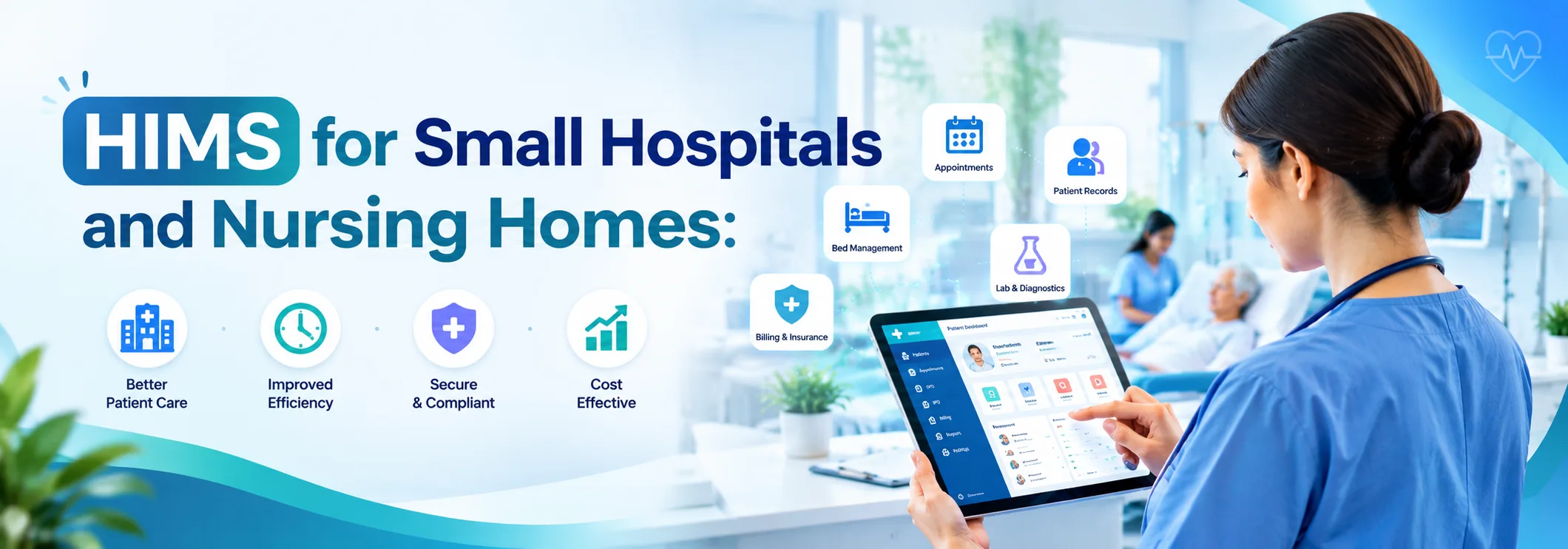
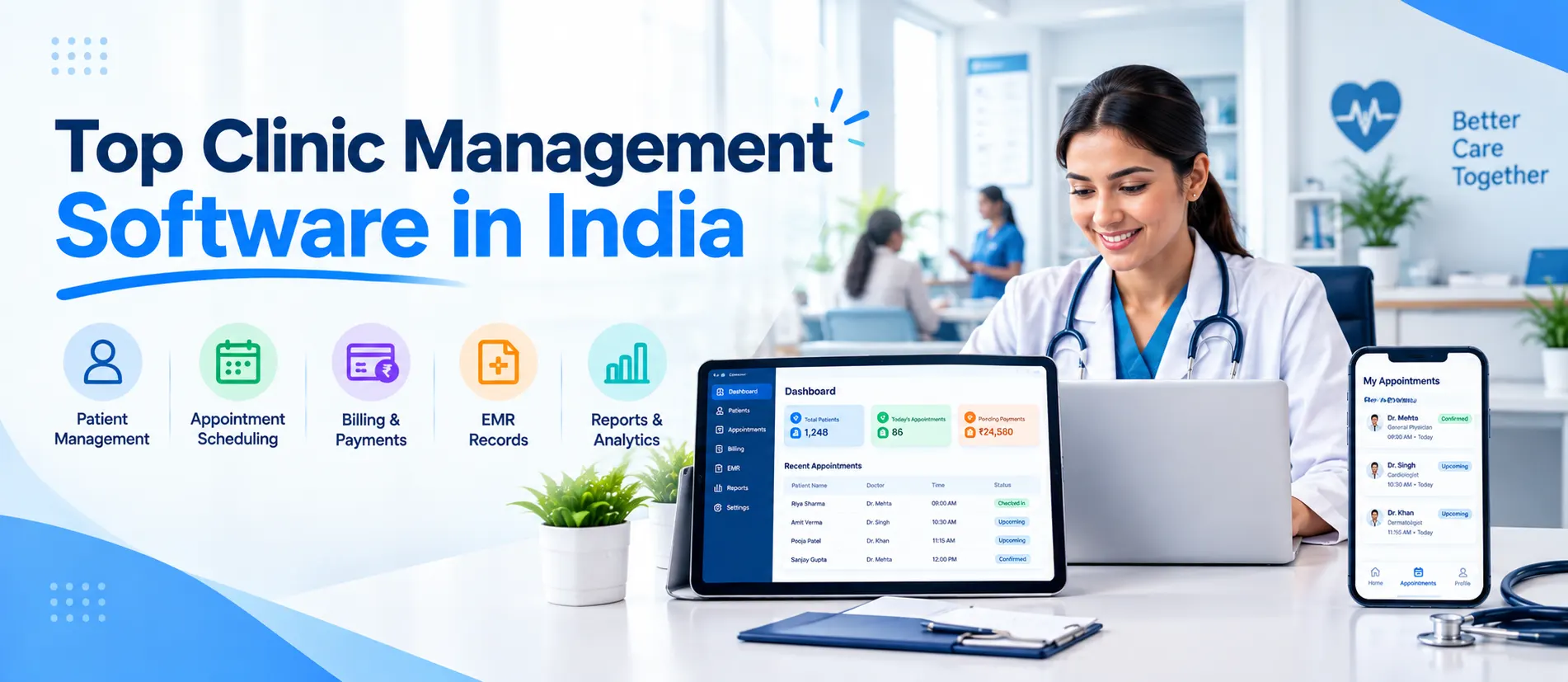
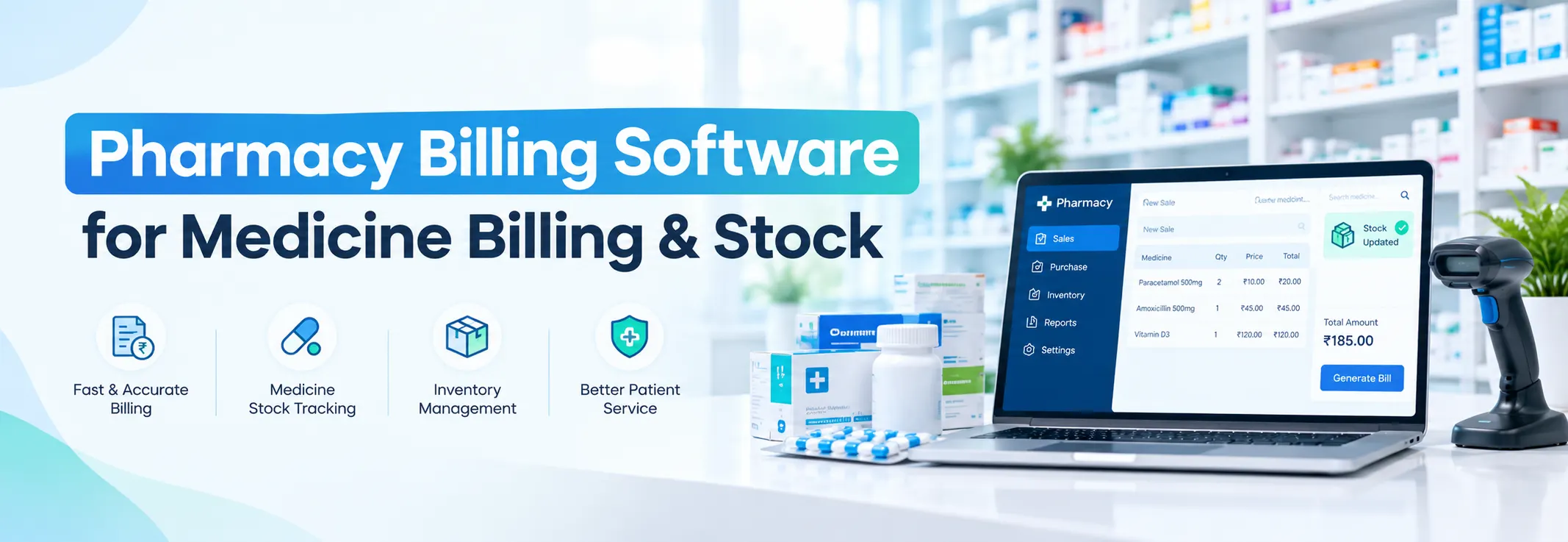
Here is a quick reality check. Most hospitals today are not running on paper files. The old registers are gone. Doctors no longer write on carbon-copy pads. Many hospitals now use some form of digital tools. Some rely on Excel sheets. Others use billing apps or a basic EHR system. So the problem has changed. The real question is no longer whether a hospital uses tech. It is whether that tech is linked, smart, and ready to grow. This is exactly the gap a modern Hospital Management System is built to fill.
This is where most hospitals hit a wall. They have software — but it works in parts. The billing team uses one tool. The pharmacy uses a different one. The lab has its own app. The OPD records sit in yet another system. None of these talk to each other. So staff retype the same data in many places. They chase updates from other teams. They lose hours on tasks that should take seconds. The issue is not a lack of digital tools. The gap is a lack of connection.
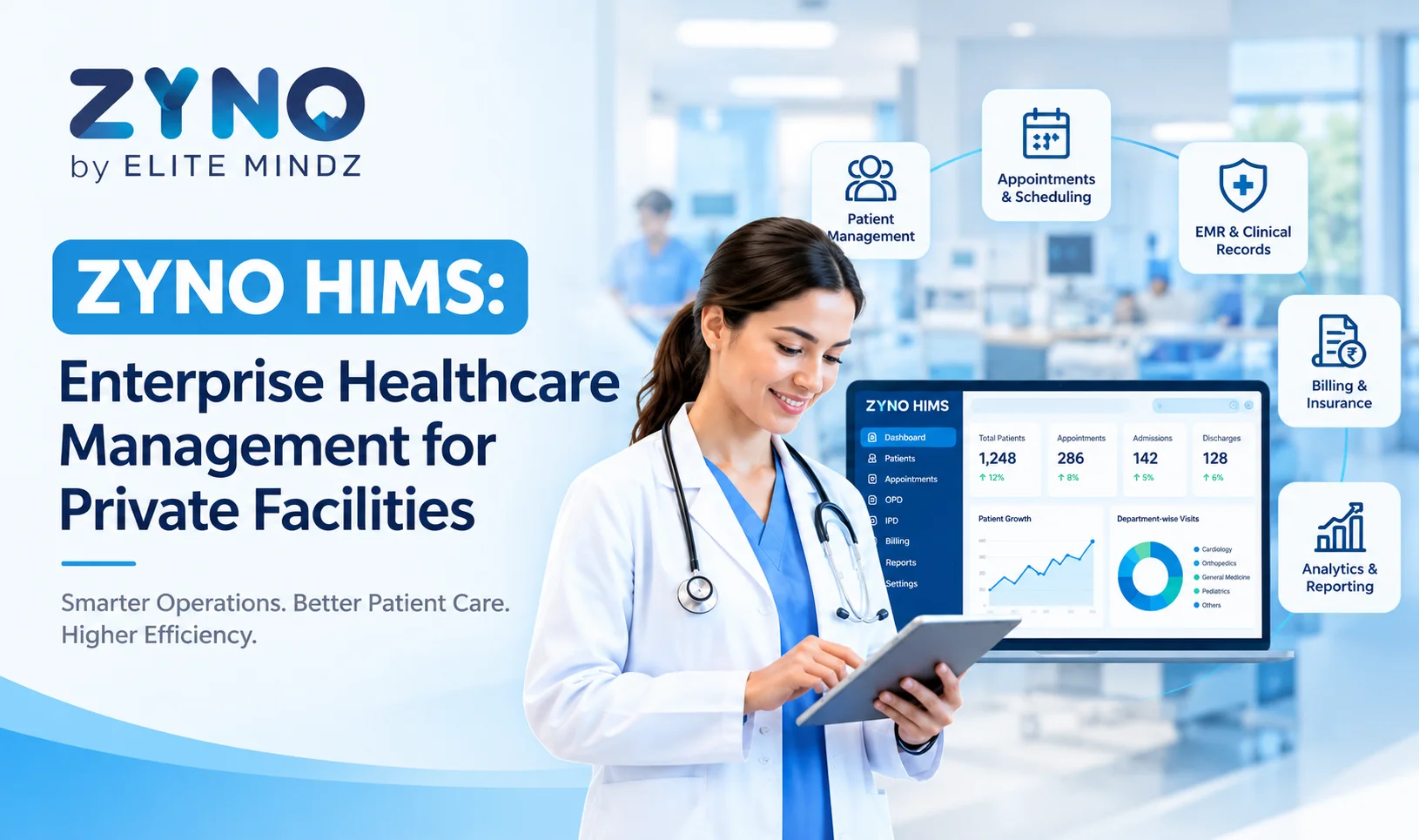
A Hospital Management System (HMS) fills this gap. Also known as a health management information system, it is one platform that links every part of a hospital. Patient records, billing, pharmacy, lab, HR — all in one place. ZYNO HIMS by Elite Mindz is built on this idea. It does not just put tasks online. It links them. So every team has the right data at the right time.
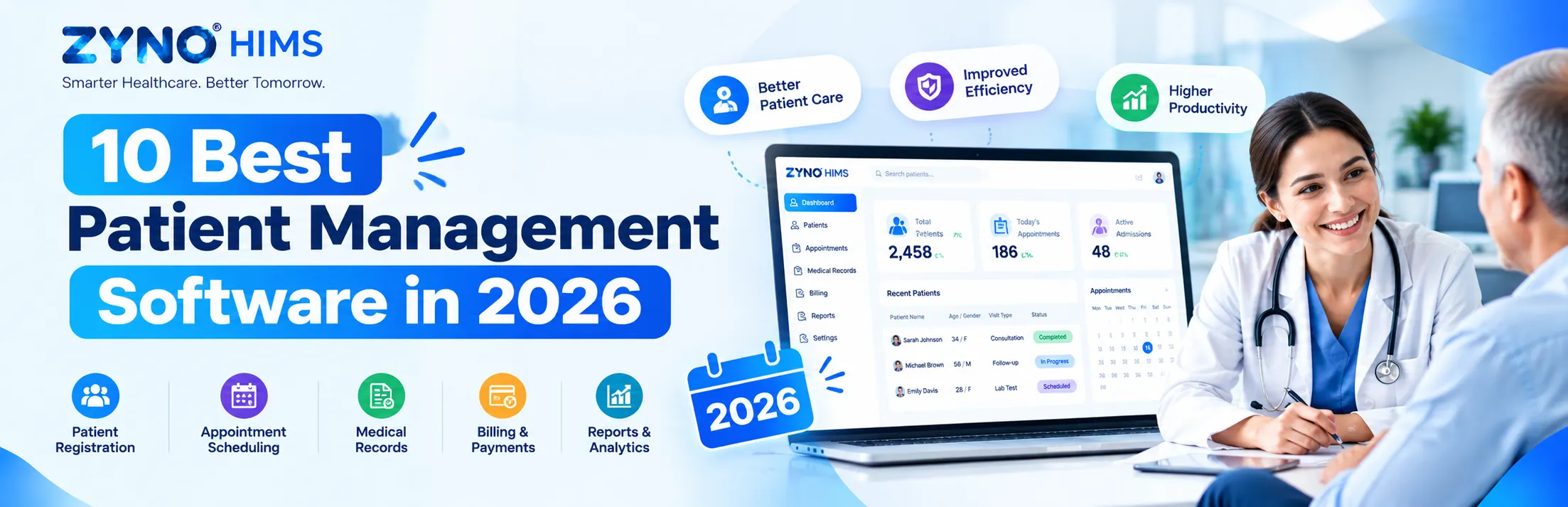
The health sector is growing fast. More patients come in each day. Rules are getting tighter. And patients now want fast service, clear bills, and good care. In this setup, tools that do not talk to each other are a real risk.
Moreover, health cover is now more common. Hospitals need live, correct records to process claims and stay on track. Many facilities still rely on basic clinic billing software that works alone and cannot connect with other systems. A broken-up setup like this cannot handle today's demands. A unified Hospital Management System like ZYNO HIMS can.
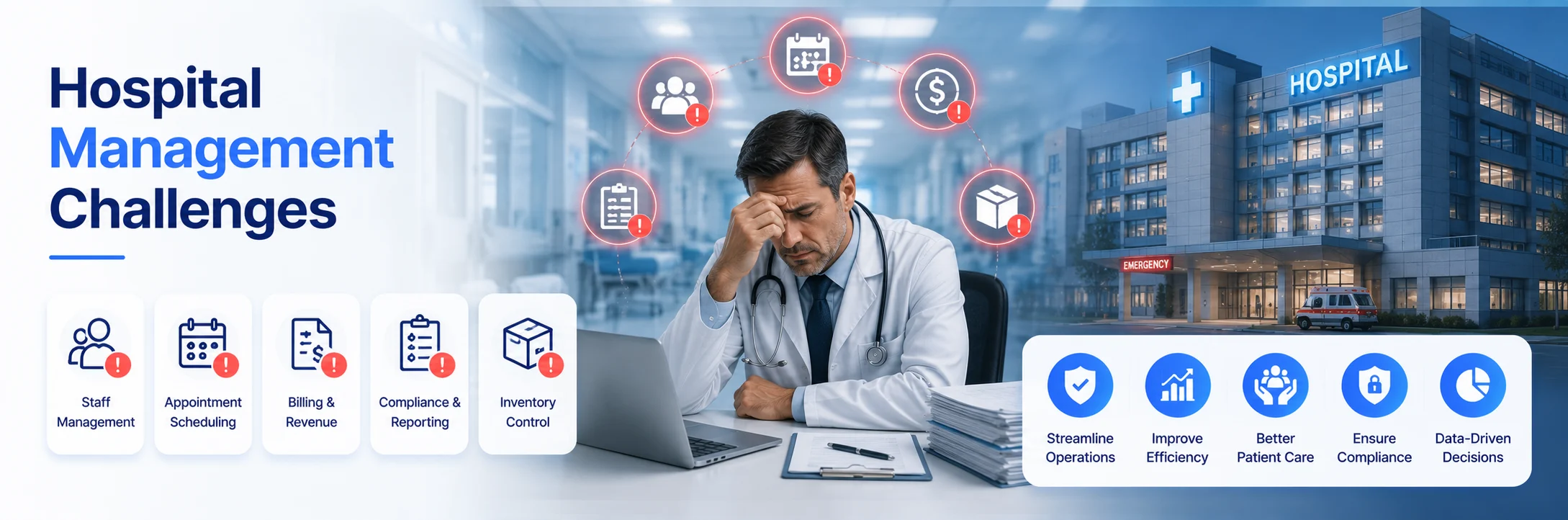
Even hospitals with some digital tools face daily problems. Without a unified Hospital Management System, issues crop up at every step. Let us look at the most common ones.
When teams use different software, data is moved by hand. A note typed in the OPD has to be retyped in the pharmacy. A lab result has to be added to the patient file manually. Each step like this creates a risk of error. In health care, errors can have serious effects. Research shows admin issues account for nearly 30% of total health spending in systems that still use manual data handling.
When patient records are spread across many platforms, no one gets the full picture. As a result, doctors may repeat tests, miss past history, or make calls based on wrong data. Broken-up data is not just slow. It can harm patient safety.
Billing in a hospital is complex. It needs input from doctors, nurses, labs, and insurers — often at the same time. Many hospitals use standalone clinic billing software that does not connect with clinical or pharmacy records. Without a central billing system, delays grow. Claims get denied. Revenue is lost without anyone noticing. As a result, the hospital's cash flow suffers.
Even in partly digital hospitals, teams struggle to stay in sync. The pharmacy may not know what the doctor has prescribed until someone walks over with a slip. The billing team may hear about a discharge hours later. These gaps slow everything down — and upset both staff and patients.
Not all HMS platforms are the same. One of the biggest choices a hospital makes is between a legacy on-site system and a modern cloud-based one. This choice affects cost, access, and long-term growth.
A legacy on-site HMS needs physical servers inside the hospital. It also needs a tech team to run and update it. While this gives some control, it comes with clear downsides.
High setup costs — buying and running servers is expensive, more so for small hospitals
Limited access — staff can only log in from inside the hospital building
Manual updates — someone has to install every patch and fix by hand
Risk of data loss — a server crash or power cut can wipe records if backups fail
Hard to scale — adding new wards or branches means buying more hardware
In short, on-site systems were built for a simpler time. As hospitals grow and doctors work on the move, these limits get harder to deal with.
ZYNO HIMS offers a cloud option. Hospitals do not need to buy or manage local servers. The whole system runs through a secure internet link. The benefits are clear.
Lower upfront cost — no hardware to buy from day one
Auto updates — the system stays current with no manual work
Built-in backups — data stays safe even if local hardware fails
Easy to scale — adding users, wards, or new branches takes just minutes
Fast setup — hospitals go live much sooner than with on-site systems
Furthermore, Elite Mindz handles the tech, security, and uptime. So the hospital team can focus on patients — not servers.
The biggest benefit of cloud-based ZYNO HIMS is freedom. Since the system is online, it works from any device — a desktop, a laptop, or a phone. ZYNO HIMS is built using cross platform mobile app development. The same app runs smoothly on Android, iOS, and web — with no loss of features or speed.
Doctors who visit more than one hospital can check a patient's history before entering the ward. Managers can track work while on the road. In multi-branch setups, data flows across all sites without delay. ZYNO HIMS is built using cross platform app development best practices. Therefore, the hospital keeps running well — no matter where the team is.
With cloud-based ZYNO HIMS, your hospital does not stop when you step outside. Your data is always there — safe, current, and ready to use.
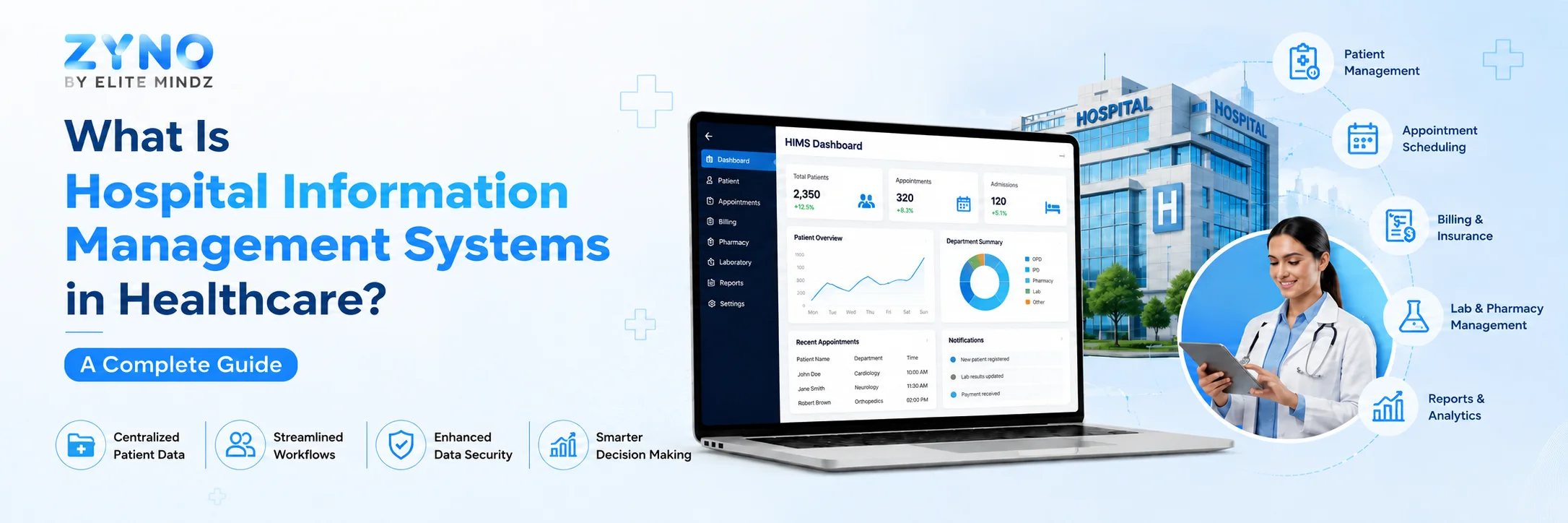
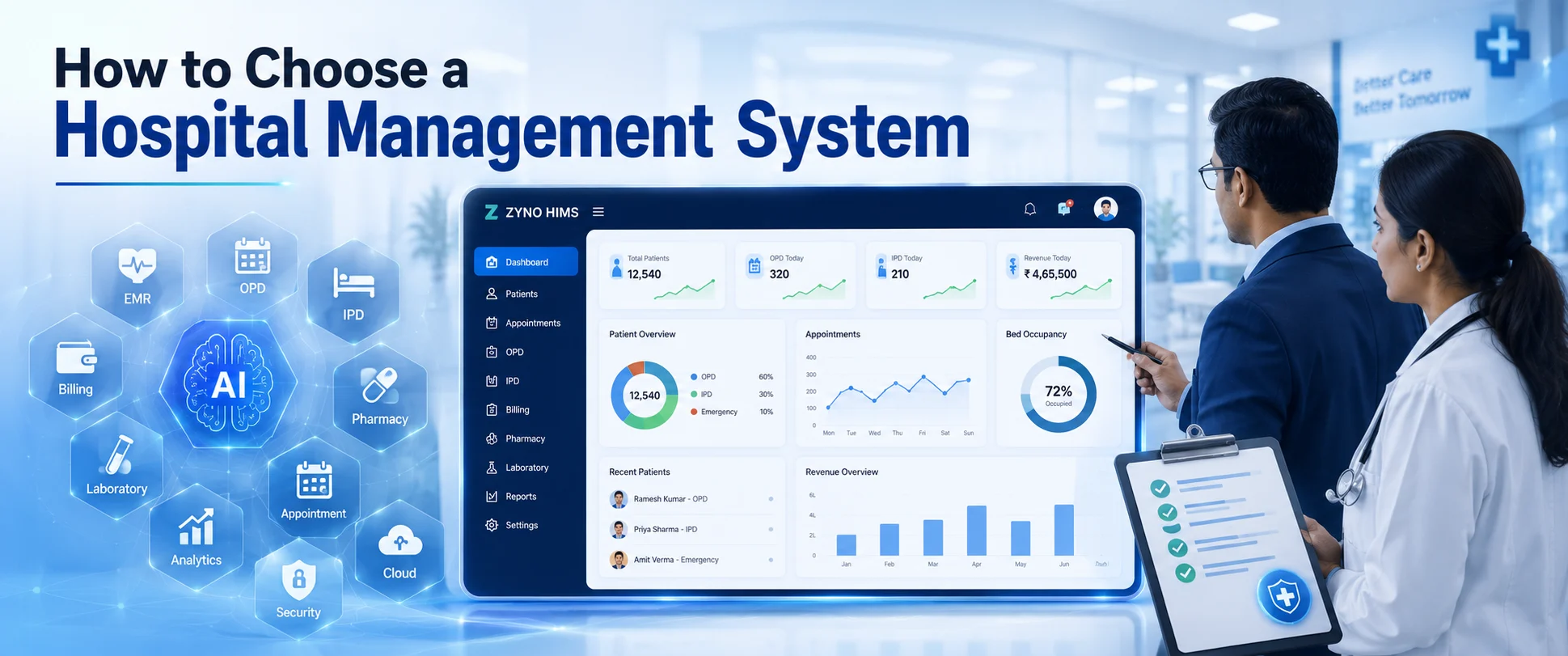
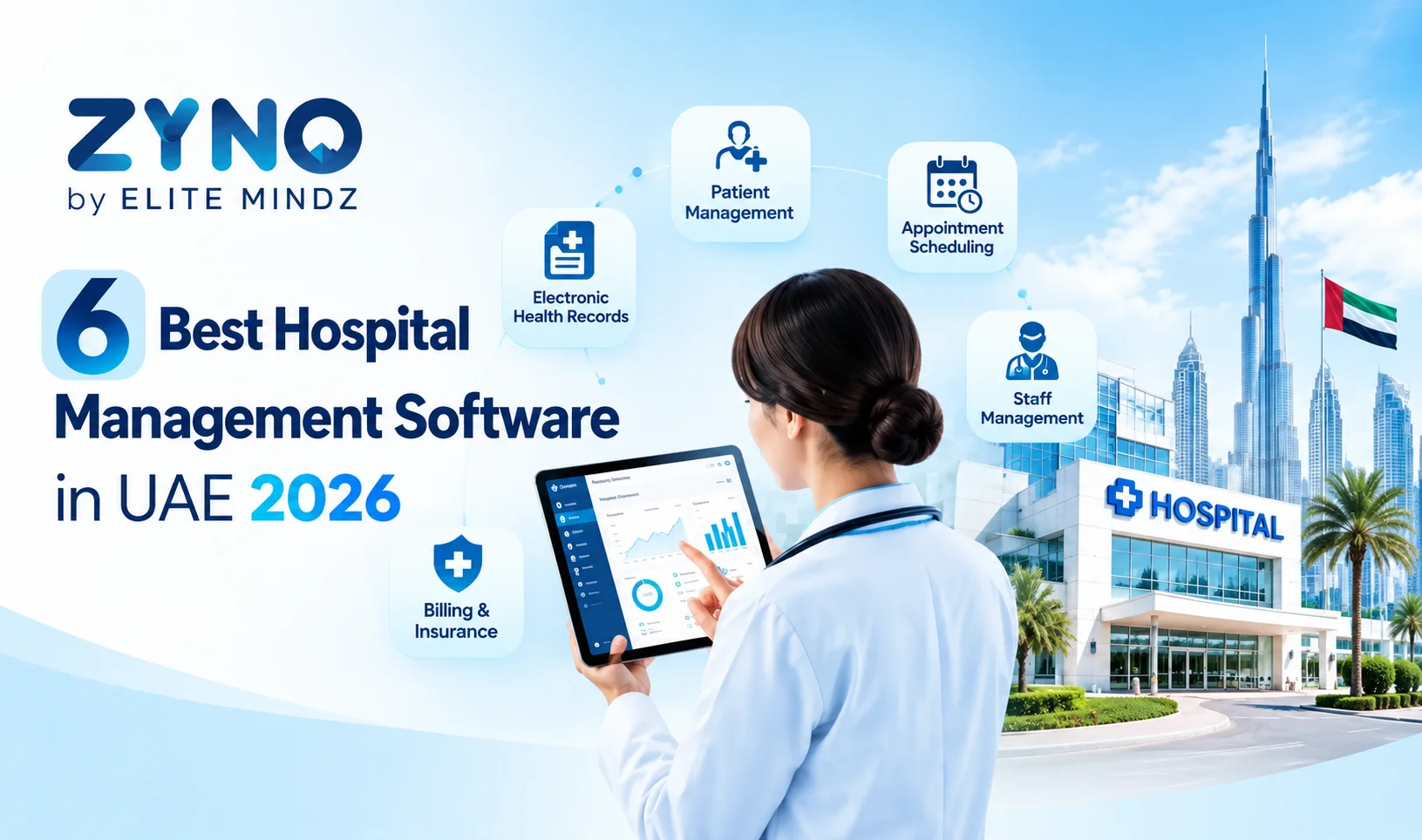
ZYNO HIMS is built to match how a hospital really works. Each module solves a real problem. Together, they cover every key part of a health facility.

Staff can sign up a new patient in just a few minutes. The system gives a unique ID, saves all details, and manages the OPD queue. This cuts the need for paper logs and reduces wait times at the front desk.
Each patient's full history is saved in one place — past visits, prescriptions, allergies, and test results. Doctors can view this on any device in seconds. As a result, they are always ready before a visit starts.
Patients can book slots online or at the front desk. The system tracks doctor time, stops double-booking, and sends auto reminders. So no-shows drop and the daily plan stays on track.
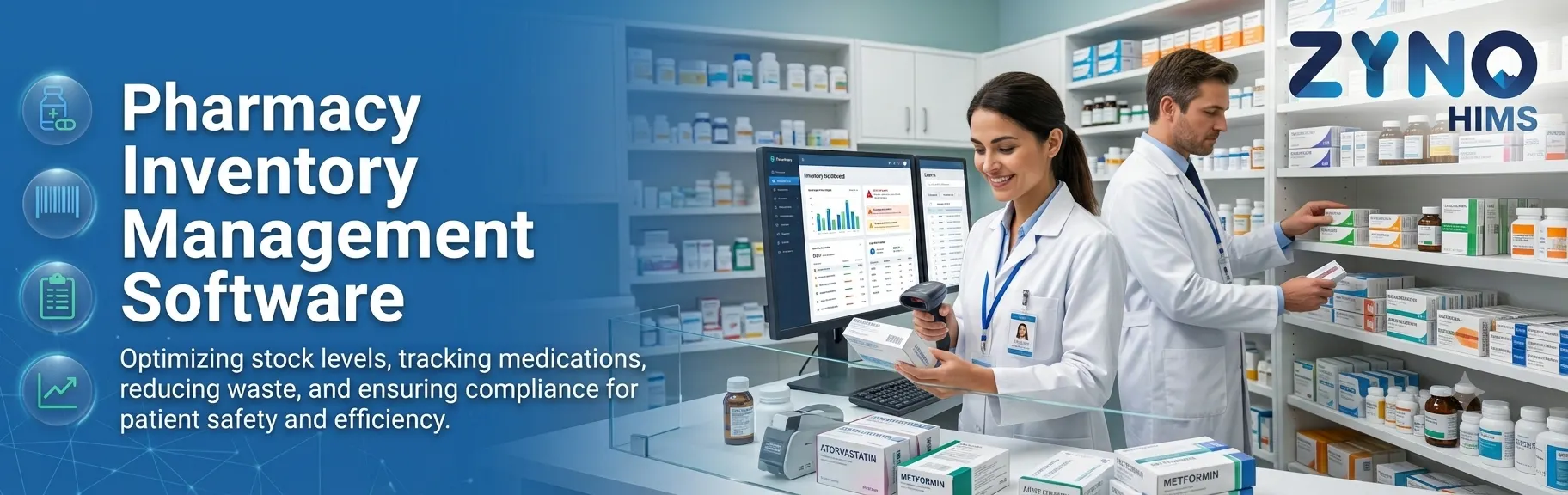
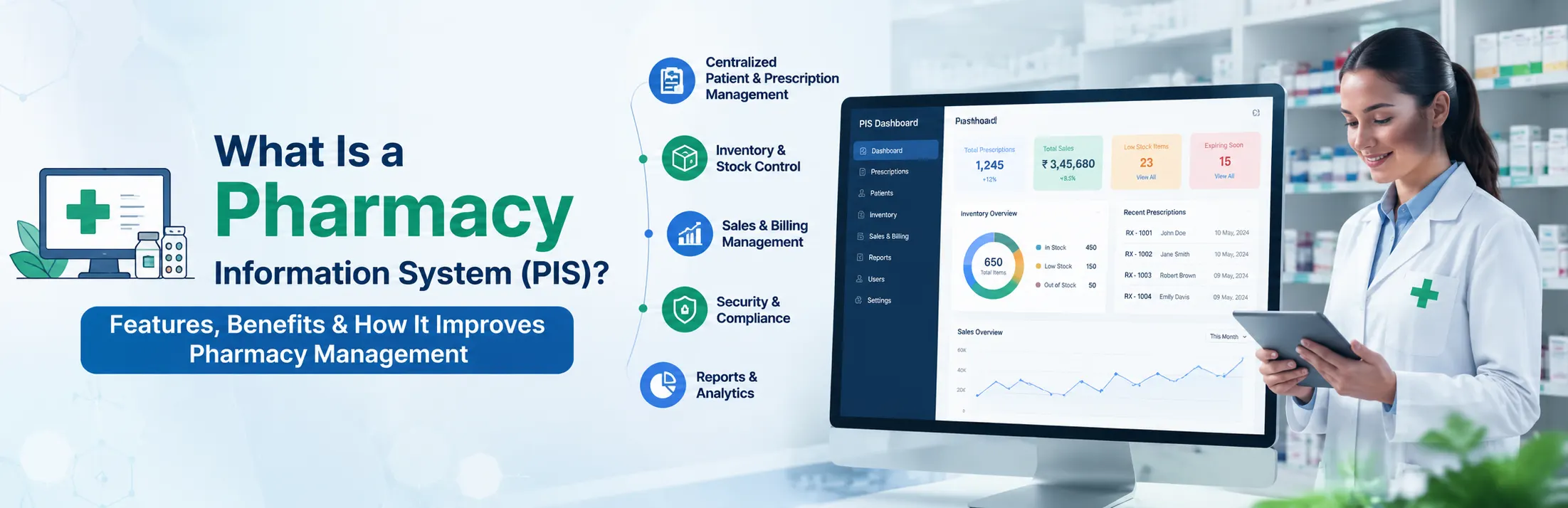
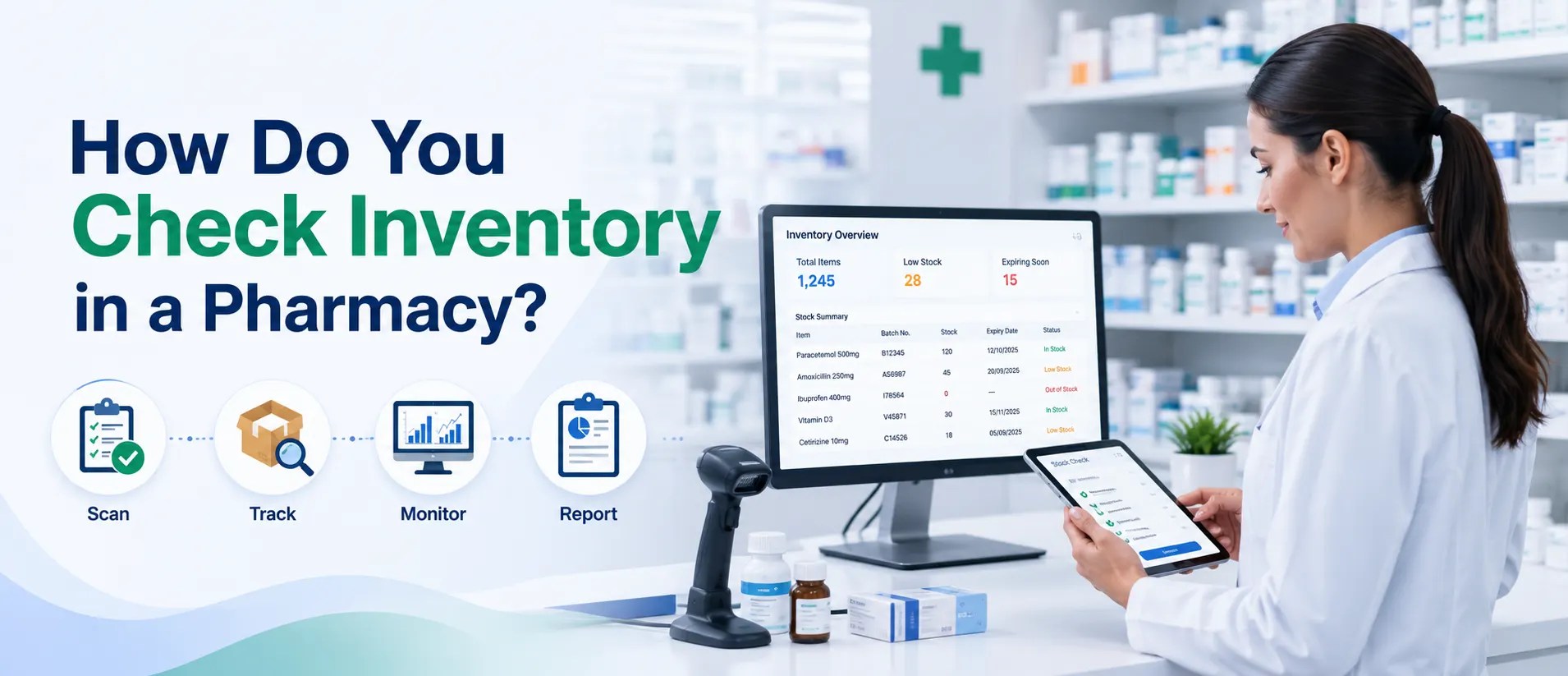
When a doctor writes a prescription, the pharmacy is updated at once. But ZYNO HIMS goes further. It acts as a full production planning and inventory control tool for the pharmacy. It manages stock levels, expiry dates, order cycles, and supplier data — all in one place.
The built-in vendor management software features allow hospitals to track supplier performance, manage purchase orders, and compare quotes from different vendors. This ensures the pharmacy is always stocked with the right medicines at the right cost. Good production planning at the pharmacy level reduces waste, cuts costs, and prevents stock-outs that could affect patient care.
Lab orders go from the doctor to the lab through the system. Once results are ready, they are added to the patient's file and the doctor is told. This cuts delays from manual report delivery and speeds up the whole process.
Every service and medicine is added to the patient's bill as it happens. Unlike standalone clinic billing software, ZYNO HIMS connects billing directly with clinical, pharmacy, and lab records. The system handles cashless insurance, stores all claim papers, and shows payment status live. So billing is fast and correct — every time.
ZYNO HIMS helps manage the full team. Attendance, pay, duty shifts, and output are all in one place. HR teams work more quickly and ensure the right staff are in place at all times.
The modules work well alone. But together, they change how a hospital runs each day. Here are the key improvements this Hospital Management System brings.
Long waits are a top complaint from patients. ZYNO HIMS helps fix this. Online booking, digital check-ins, and queue tools make patient flow much smoother. Furthermore, doctors already have the patient's records open before the visit. So there is no time lost at the start. Hospitals using ZYNO HIMS report up to 40% shorter wait times.
When data is entered once and shared across the system, retyping errors stop. A prescription goes straight from the doctor to the pharmacist. Test results link directly to the patient's file. Therefore, every team works from the same correct data at all times. No guesswork. No missing details.
ZYNO HIMS handles routine tasks on its own. Reports, reminders, billing updates — the system does them. As a result, staff spend less time on admin and more time with patients. Moreover, all teams stay in sync through one shared platform. No more follow-up calls or manual hand-offs.
Every service is logged and added to the bill as it happens. So the billing team can produce a full, correct invoice in minutes. Claims also go through faster because all papers are already in the system. This means fewer rejections and a steady cash flow.
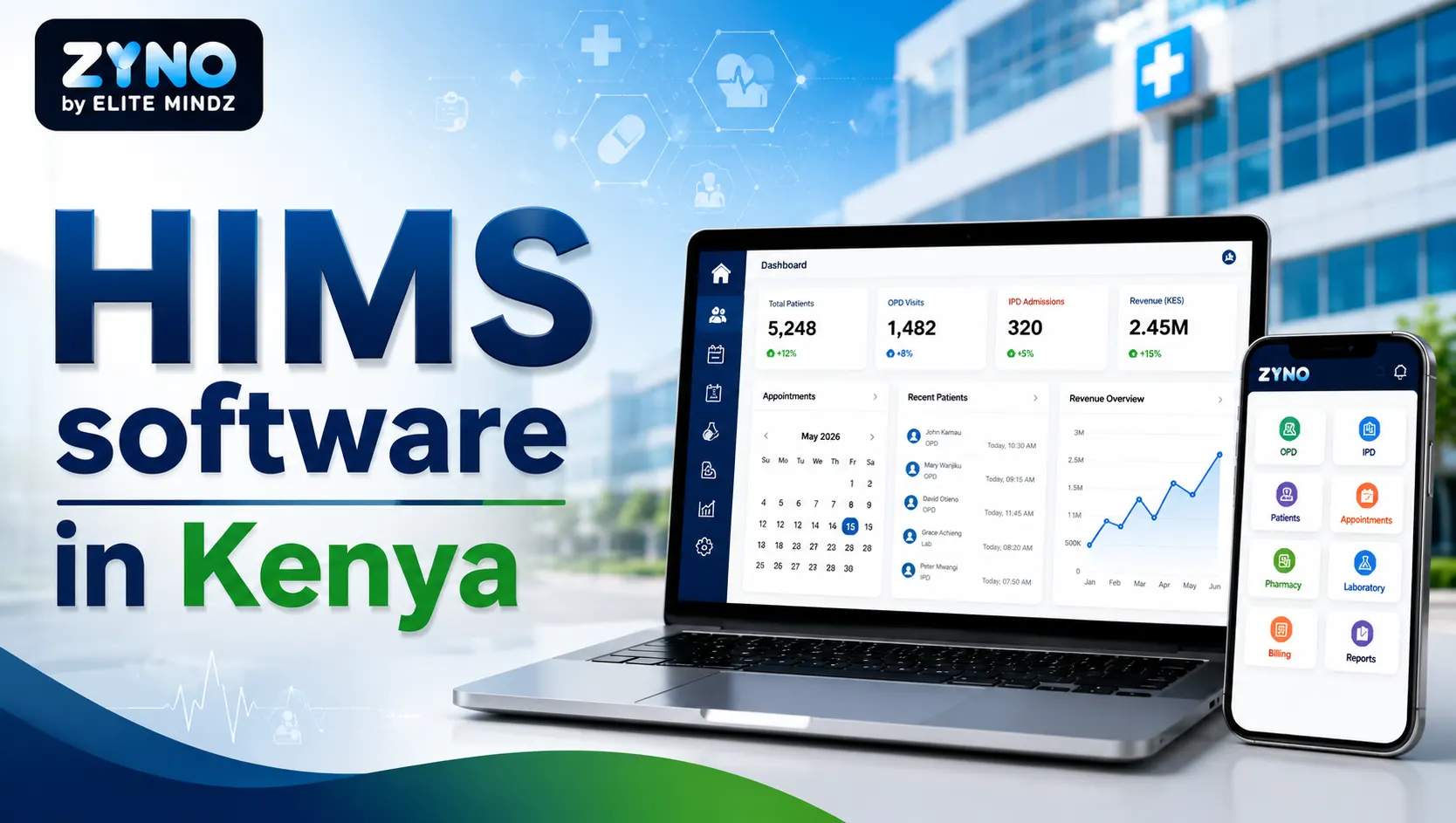
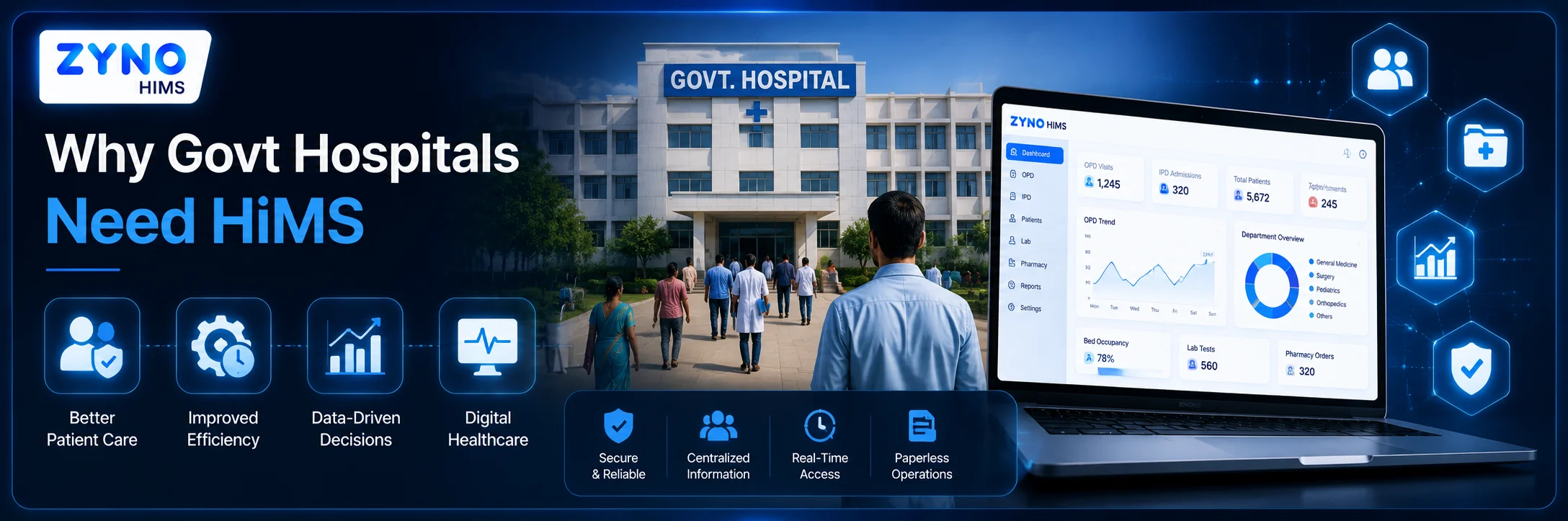
Hospital leaders need good data to act fast. ZYNO HIMS gives them a live dashboard with data on bed use, revenue, patient flow, and staff output. So they can spot issues early, move resources where needed, and act without delay.
ZYNO HIMS is built with safety at its core. It uses role-based access, data encryption, and full audit logs. Records are stored in a clear format and easy to pull up during checks. This guards patient privacy and keeps the hospital safe from legal risk.
A good Hospital Management System helps everyone in the hospital — not just the admin team. Here is how ZYNO HIMS delivers value to each group.
Live dashboards to track all teams from one screen
Lower costs through process automation and smart workflows
Better planning with accurate finance and output data
Full audit readiness and easier rule compliance at all times
Full patient history available in seconds before every visit
Digital prescriptions and lab orders cut paperwork by a large amount
Less admin work means more time for patient care
Easy contact with all teams through one shared system
Shorter waits and a smooth hospital experience from start to finish
Simple online booking with auto reminders
Clear, correct bills with no hidden charges or delays
More trust in the hospital due to better service and care
Auto billing cuts manual work and stops revenue loss — far beyond what basic clinic billing software can offer
Faster insurance claims with all papers ready in the system
Clear view of pending payments and collections at all times
Full finance reports ready for month-end and year-end review
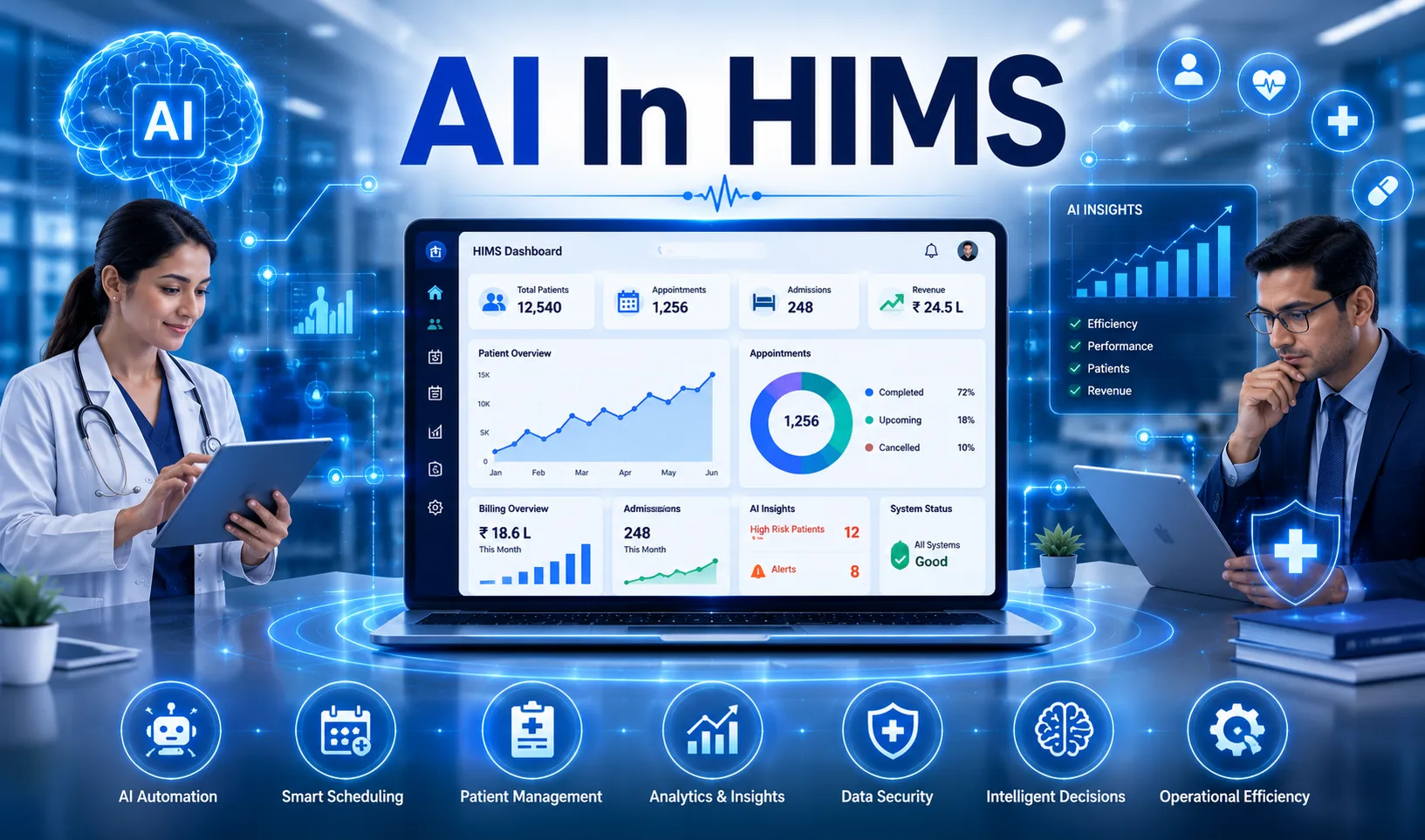
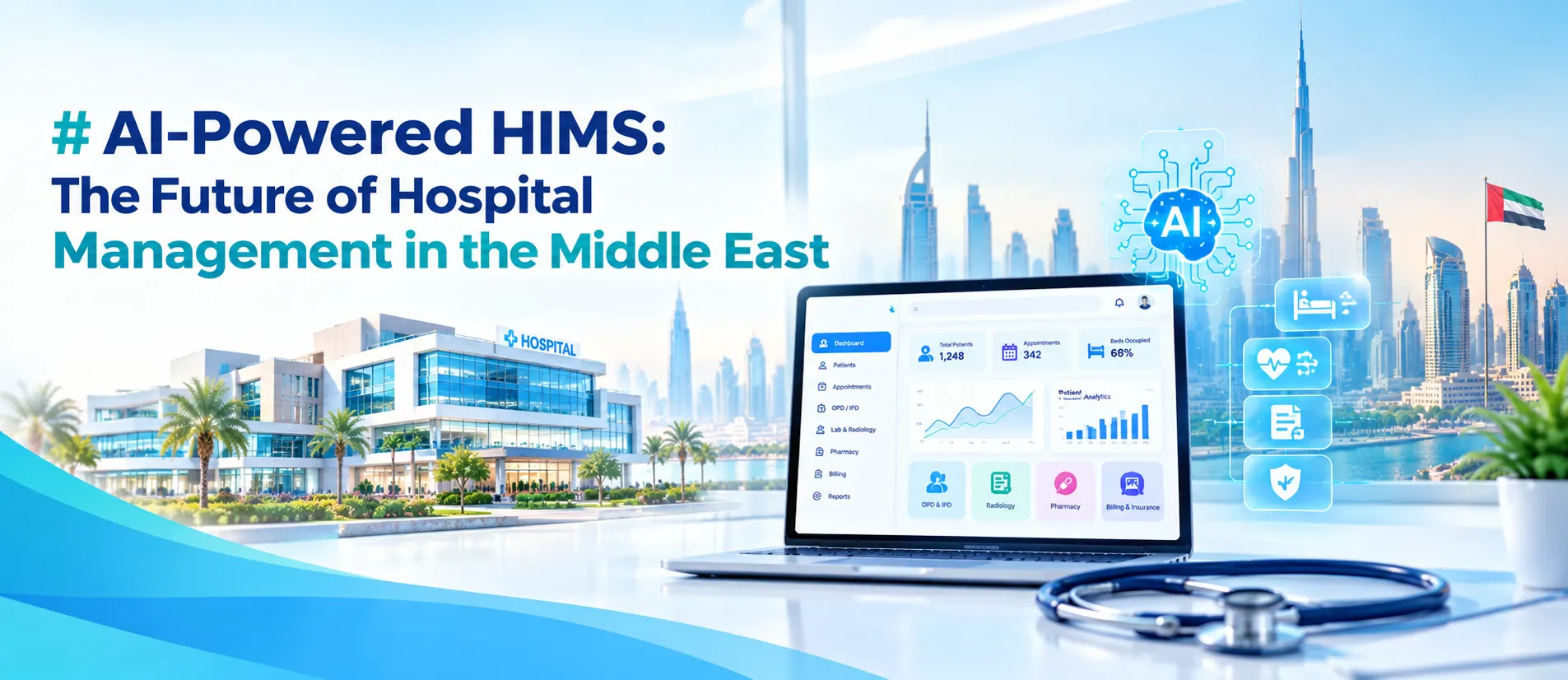
Being linked is important. But the next step is being smart. Hospitals today create huge amounts of data. The ability to read that data and act on it is a big edge. ZYNO HIMS includes AI-based tools that help hospitals move from fixing problems to stopping them before they start.

Bed access is one of the hardest things to manage. Admissions rise without warning. Discharges get delayed. Staff rush to find space. Predictive tools in ZYNO HIMS help solve this.
The system looks at past data, trends, and live bed use. It then forecasts future demand. So admins can plan ahead. They can set up early discharges, move staff to the right wards, and prep beds before the rush comes.
In large hospitals, this is even more useful. For example, if the bone ward tends to fill up after long weekends, the system flags it early. The team can arrange staff, medicines, and tools in advance — not after the crisis begins.
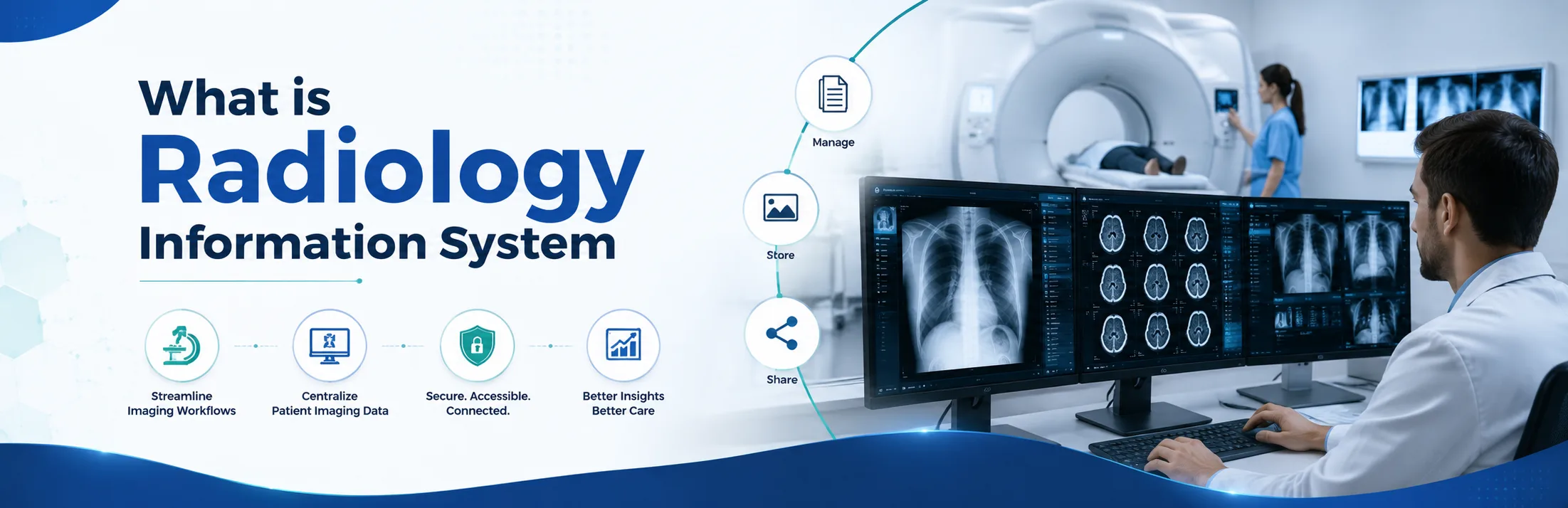
ZYNO HIMS supports links with AI diagnostic tools. These tools help clinical teams spot patterns, catch odd values, and stay alert to key details. The doctor always makes the final call. But AI support adds a useful extra layer of checks — more so in busy settings where a second look is not always possible.
For instance, when a doctor reviews lab results, the system can flag values that look off based on the patient's age, current drugs, and health history. Where imaging tools are linked, AI can point out areas that need a closer look. This is useful when senior doctors are not on hand.
This is not about replacing doctors. It is about helping them. In a high-pressure setting, AI tools help make sure key details do not get missed.
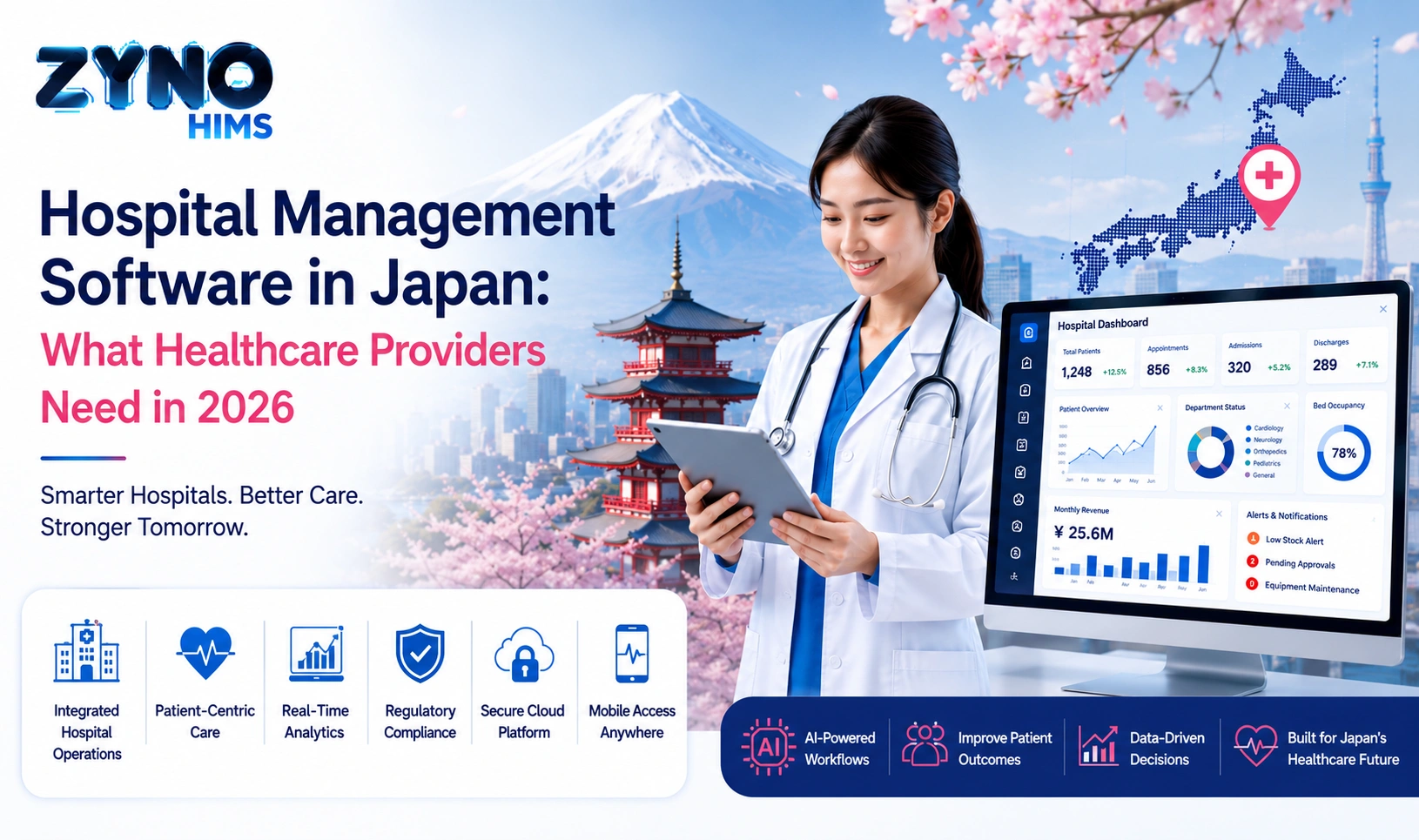
Data is only useful when it is clear and easy to act on. ZYNO HIMS gives managers a clean, role-based dashboard with live data from every team.
Bed use and ward-level patient count, updated live
Revenue by team, compared to targets and past results
Average patient time across OPD, IPD, emergency, and discharge
Pharmacy stock trends with alerts before supplies run low
Staff time, overtime, and output data for HR planning
Claim status — sent, pending, approved, and denied — in one view
Instead of waiting for a weekly report, managers open the dashboard and see where things stand right now. As a result, calls that used to take days can now be made in minutes — with much more confidence.
Data without insight is just noise. ZYNO HIMS turns your hospital's data into clear, fast decisions — giving leaders the edge to act right.
The benefits of a unified Hospital Management System are not just ideas. Hospitals that have used platforms like ZYNO HIMS report real gains across work, finance, and patient care.
Research shows hospitals using a linked HMS cut admin costs by 20 to 30 percent. This happens because the system handles data entry, report prep, and cross-team follow-ups on its own — tasks that used to eat up hours of staff time each day.
Patient surveys show higher scores in hospitals that use digital tools. Patients point to faster service, fewer billing issues, and a more professional feel as the main reasons. In a busy market, this leads to better retention and more word-of-mouth referrals.
Manual insurance claims can take 15 to 30 days. With ZYNO HIMS, the same claims are often done in 3 to 7 days. That is a drop of more than 70 percent. This boosts cash flow and eases the load on the finance team.
There are many HMS options out there. So what makes ZYNO HIMS stand out? The answer lies in how it was made. ZYNO HIMS is more than just a Hospital Management System. It is a complete health management information system — built for health care from the ground up. Real input from admins, doctors, and finance teams shaped every part of it.
Simple, clean interface that staff can pick up fast with little training
Fully linked modules — no need for many tools across teams
Flexible setup — cloud or on-site, based on what suits the hospital
Live dashboards that can be set up for each role and team
Built-in support for insurance rules and health schemes
Mobile access for doctors and managers on the move, built using cross platform mobile app development
ZYNO HIMS grows with your hospital. Whether you run a small clinic or a large hospital, the system can be set up to fit your needs. Elite Mindz also provides full support during setup, staff training, and help after go-live. So you are never left on your own.
Elite Mindz has years of experience in health tech. ZYNO HIMS was built with the input of the people who use it every day. This gives it a real edge over generic tools that look good in demos but fall short in actual hospital settings.
Health care is changing fast. Patients want more. Rules are tighter. And hospital teams are under more load than ever. In this setting, a broken-up digital setup is just as much of a problem as paper files were ten years ago.
The hospitals that will lead in the years ahead are the ones that move to a Hospital Management System that is linked, smart, and built to grow. ZYNO HIMS by Elite Mindz is exactly that — one platform that connects your people, your data, and your choices.
From smoother patient flow and correct billing to cloud access and AI-driven insights, ZYNO HIMS helps your hospital work at its best — every day. The decision is not if you should upgrade. It is when. And the sooner you start, the sooner you see real results.
Healthcare excellence starts with operational excellence. ZYNO HIMS is your partner in building both.
Book a free demo today and see how ZYNO HIMS — a complete Hospital Management System — can be set up for your hospital's specific needs. Our team at Elite Mindz is ready to walk you through every feature — with no obligation. Contact us to set up a one-on-one session.
Here are answers to the most common questions hospitals ask about ZYNO HIMS.
Q1. Is ZYNO HIMS suitable for small hospitals and clinics?
Yes. ZYNO HIMS works for all sizes from small clinics to large multi-specialty hospitals. You can start with just the modules you need right now. As your facility grows, you can add more features. There is no need to switch to a new system later.
Q2. How long does it take to set up ZYNO HIMS?
The time depends on your hospital size and the modules you choose. However, most hospitals go live within a few weeks. The cloud option is the fastest to set up. Elite Mindz provides a team to help at every step from setup to staff training and launch.
Q3. Can ZYNO HIMS connect with our existing lab or imaging software?
Yes. ZYNO HIMS is built to link with third-party lab systems, imaging tools, and diagnostic apps. You do not have to replace everything you already use. The system connects with your current tools and brings all data into one place.
Q4. How does ZYNO HIMS keep patient data safe and private?
Data safety is a top priority. ZYNO HIMS uses encryption, role-based access, and full audit logs. Each staff member sees only the data they are allowed to. All actions are tracked. Patient privacy is protected at every level of the system.
Q6. What kind of support does ZYNO by Elite Mindz provide after setup?
ZYNO by Elite Mindz provides full support after go-live. This includes tech help, system updates, issue fixes, and training for new staff. A support team is on hand whenever you need them. The goal is to make sure ZYNO HIMS keeps giving value — long after the first day.
Are you looking for a professional advisor for your business?
Complete the form and discuss implementation strategies with our IT expertise.
Get a Quote in Minutes