Why Cloud-Based AI HIMS is Transforming the Future of Indian Healthcare
Read More →{ "@context": "https://schema.org", "@type": "FAQPage", "mainEntity": [ { "@type": "Question", "name": "Is EHR just a newer name for EMR?", "acceptedAnswer": { "@type": "Answer", "text": "Not exactly. While the terms are often used loosely, EHR specifically refers to systems designed for sharing patient data across multiple providers, whereas EMR traditionally refers to records confined to one practice or facility." } }, { "@type": "Question", "name": "Can an EMR be upgraded into an EHR?", "acceptedAnswer": { "@type": "Answer", "text": "In some cases, EMR vendors add interoperability features over time, but true EHR functionality usually requires the underlying architecture to support secure, standards-based data exchange from the start — which is why many hospitals opt for a purpose-built platform like ZYNO HIMS instead of patching an old EMR." } }, { "@type": "Question", "name": "Do small clinics need an EHR, or is an EMR sufficient?", "acceptedAnswer": { "@type": "Answer", "text": "A solo practice with no referral network may manage fine with an EMR. But any facility that refers patients out, works with labs externally, or plans to scale should consider EHR-capable software to avoid data fragmentation later." } }, { "@type": "Question", "name": "Why does ABDM compliance matter when choosing between EMR and EHR software?", "acceptedAnswer": { "@type": "Answer", "text": "India's ABDM framework is built around interoperable health records. A system with true EHR capabilities — like ZYNO HIMS — is naturally better positioned to meet these requirements than a closed, single-facility EMR." } }, { "@type": "Question", "name": "What should hospitals look for when comparing HIMS platforms on this front?", "acceptedAnswer": { "@type": "Answer", "text": "Look past the marketing labels and check for real data portability, patient portal access, lab/pharmacy integration, and compliance readiness. These are the practical markers of EHR-grade software, and they're the areas where ZYNO HIMS is specifically built to perform." } }, { "@type": "Question", "name": "What information can be stored in an EHR or EMR?", "acceptedAnswer": { "@type": "Answer", "text": "Both EHR and EMR systems can store important patient information such as medical history, diagnoses, prescriptions, allergies, consultation notes, laboratory reports, treatment plans, and follow-up records. EHR platforms can additionally support a broader view of a patient's health information across different healthcare interactions and connected providers." } }, { "@type": "Question", "name": "How does EHR and EMR software improve patient care?", "acceptedAnswer": { "@type": "Answer", "text": "Digital health records give authorized healthcare professionals faster access to relevant patient information. Doctors can review previous diagnoses, prescriptions, investigations, allergies, and treatment history without depending on paper files. With an integrated platform such as ZYNO HIMS this information can also connect with pharmacy, laboratory, billing, OPD, and IPD workflows." } }, { "@type": "Question", "name": "Can EHR and EMR software integrate with laboratory and pharmacy systems?", "acceptedAnswer": { "@type": "Answer", "text": "Yes. Modern HIMS platforms can connect electronic patient records with laboratory and pharmacy workflows. For example, diagnostic reports can be made available to authorized clinicians, while prescriptions can flow into pharmacy operations. ZYNO HIMS connects clinical records with key hospital departments to reduce duplicate data entry and disconnected workflows." } }, { "@type": "Question", "name": "Is cloud-based EHR and EMR software better for hospitals?", "acceptedAnswer": { "@type": "Answer", "text": "Cloud-based healthcare software can provide authorized users with secure access to patient information from supported locations and devices, while reducing the need for hospitals to maintain extensive on-premise infrastructure. However, hospitals should also evaluate security, access controls, backups, audit trails, integrations, and compliance capabilities before selecting a solution." } }, { "@type": "Question", "name": "Can EHR and EMR software support OPD and IPD patient records?", "acceptedAnswer": { "@type": "Answer", "text": "Yes. An integrated HIMS can maintain patient information across both outpatient and inpatient workflows. This allows hospitals to continue using the patient's existing medical history and clinical information when care moves from OPD to IPD. ZYNO HIMS is designed to connect OPD, IPD, EMR/EHR, diagnostics, pharmacy, billing, and other hospital operations within one platform." } } ] }

×
Learn the key differences between EHR and EMR, including their features, benefits, accessibility, data sharing, and role in patient care. This guide explains how both systems work and helps healthcare organizations understand which solution best fits their needs.
Businesses using ZYNO Books cut accounting time by 70% and stay 100% ZATCA-compliant — automatically.
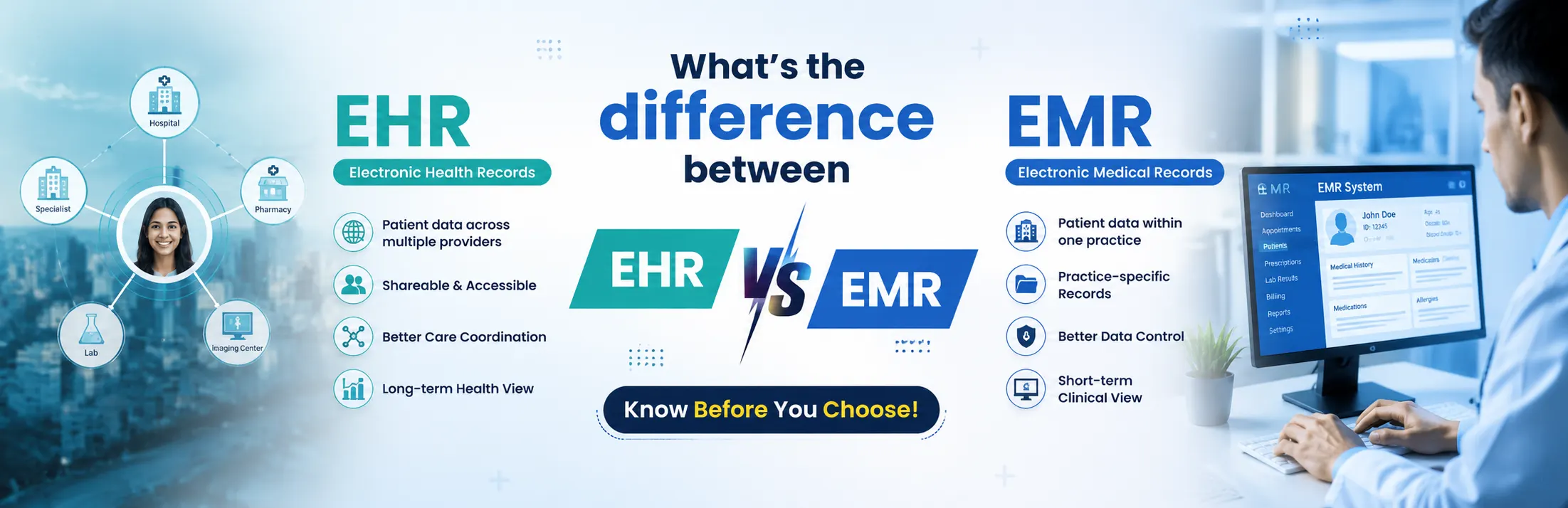
EHR and EMR are two of the most common terms you'll come across when talking about digital healthcare. They're often used as if they mean the same thing, which can make things confusing for hospitals, clinics, and healthcare professionals.
But there is a difference between the two. Understanding how EHR and EMR work, and where each one fits into a healthcare setup, can help you choose the right technology for managing patient information, coordinating care, and keeping records accessible when they're needed.
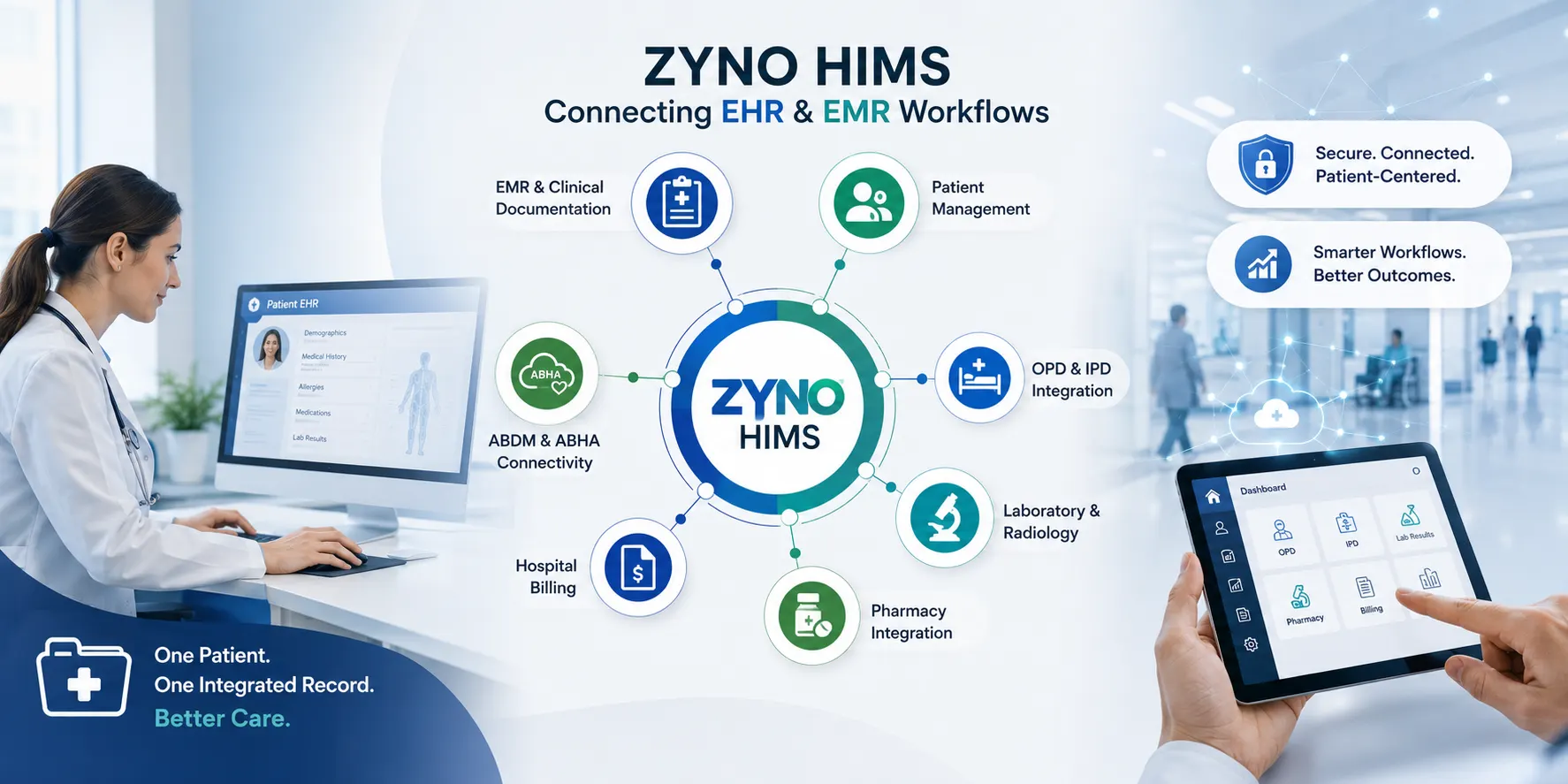
In this guide, we'll explain the difference between EHR and EMR in simple terms, look at how they differ in day-to-day healthcare operations, and explore why hospitals are moving toward more connected healthcare platforms. We'll also look at how ZYNO HIMS brings patient records and hospital workflows together through a unified hospital management system.
Discover how ZYNO HIMS connects EHR, EMR, OPD, IPD, pharmacy, laboratory, billing, and other hospital workflows to create a more connected healthcare experience.
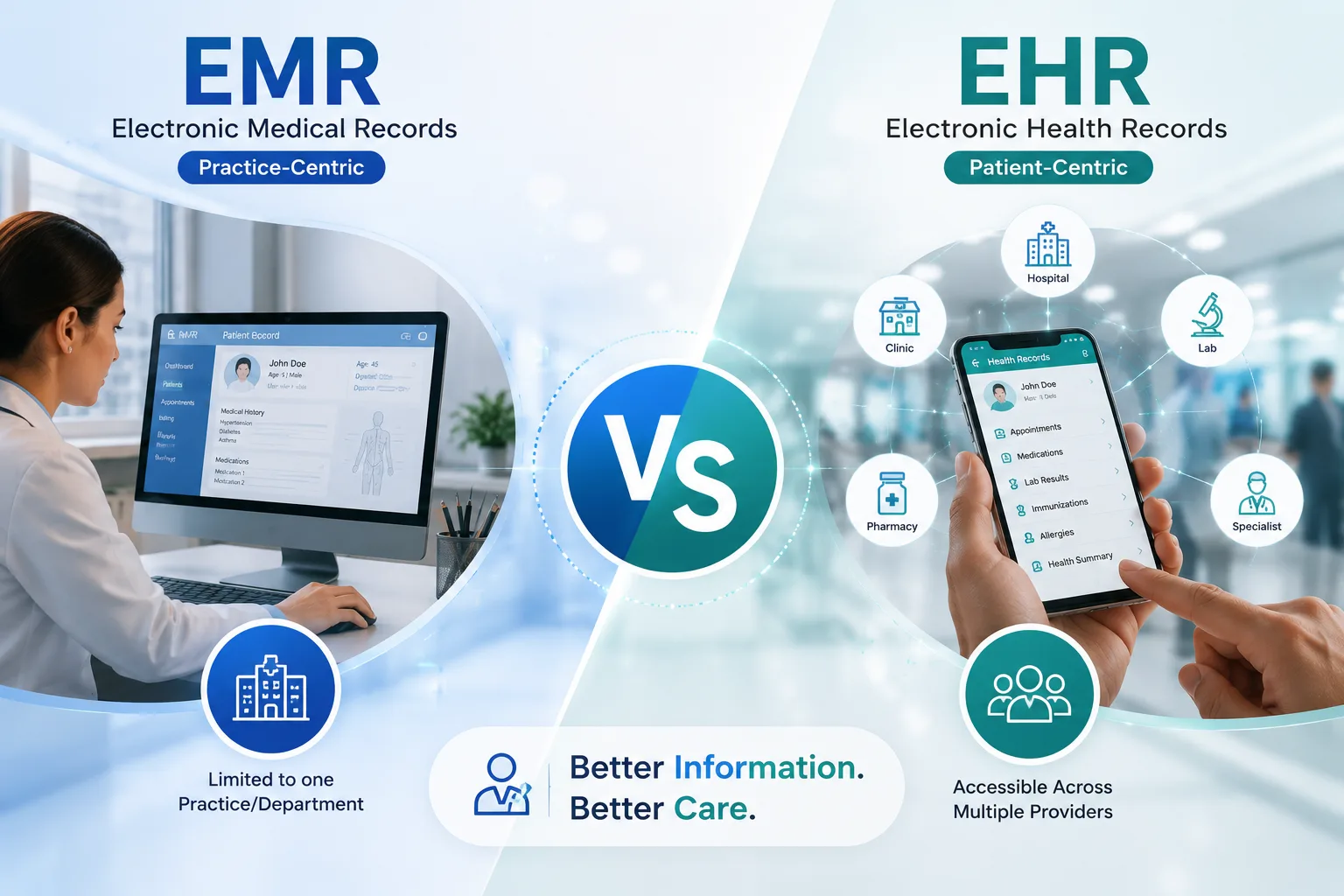
An Electronic Medical Record is essentially a digital version of the paper chart you'd find in a single doctor's office or a single hospital department. It holds the medical and treatment history of patients within one practice diagnoses, medications, immunizations, allergies, lab results, and visit notes.
Think of it as a digital filing cabinet that replaces the physical folder. It's useful for:
The catch? An EMR's data mostly stays within the walls of that one facility. If a patient switches doctors or is referred to a specialist elsewhere, their EMR record typically doesn't travel with them. Someone has to print it, fax it, or manually re-enter it the very inefficiency electronic records were supposed to eliminate.
An Electronic Health Record takes everything an EMR does and expands it well beyond a single practice. It's designed to be shared across multiple healthcare providers hospitals, labs, pharmacies, specialists giving a more complete, real-time picture of a patient's overall health journey, not just their history at one clinic.
An EHR typically includes everything in an EMR, plus:
In short: an EMR is a chart. An EHR is a connected health record designed to follow the patient, not stay locked in one building.
|
Aspect |
EMR |
EHR |
|
Scope |
Single practice or department |
Multiple providers and facilities |
|
Data sharing |
Limited, mostly manual transfer |
Built for interoperability and real-time sharing |
|
Patient access |
Rarely available |
Often includes patient portals |
|
Continuity of care |
Fragmented across providers |
Continuous, follows the patient |
|
Use case |
Digitizing internal records |
Coordinated, patient-centered care |
It's a subtle but important distinction: every EHR usually contains EMR-like functionality, but not every EMR is built to function as an EHR. The difference lies in connectivity and scope, not just features.

For a solo clinic, an EMR might genuinely be enough. But for hospitals, multi-specialty setups, and diagnostic chains especially in markets pushing toward national digital health frameworks like India's Ayushman Bharat Digital Mission (ABDM) relying on an isolated EMR creates real operational risk:
The future of hospital software isn't about digitizing paper it's about connecting care. That's the real shift from EMR to EHR.
This is exactly the gap ZYNO HIMS was built to close. Rather than functioning as just another EMR module bolted onto hospital software, ZYNO HIMS is architected as a full Hospital Information Management System with EHR-level connectivity baked in from day one.
Some of what sets it apart:
For hospital administrators evaluating software today, the real question isn't "EMR or EHR" as a checkbox it's whether your platform can actually behave like an EHR when it counts: during referrals, audits, emergencies, and multi-department care. That's where a system built with connected architecture, like ZYNO HIMS, offers a meaningful advantage over tools that were originally designed as single-department EMRs and later relabeled.
The difference between EHR and EMR becomes much more meaningful when you look at how patient information actually moves through a hospital. A patient may visit the OPD, undergo diagnostic tests, receive medicines from the pharmacy, get admitted to IPD, and later return for follow-up care.
Managing each of these activities in separate systems can make it difficult for healthcare teams to get a complete picture of the patient's history. This is where an integrated hospital management system can make a practical difference.
ZYNO HIMS connects electronic patient records with essential hospital workflows, helping healthcare organizations manage clinical and operational information through a unified platform.

With EMR, healthcare professionals can manage digital patient records, consultation details, diagnoses, prescriptions, medical history, and clinical notes in one place.
Instead of relying on paper files or scattered records, doctors and authorized staff can access relevant patient information during consultations and follow-up visits.
Patient information is not limited to the doctor's consultation. Registration, appointments, medical history, billing, investigations, and follow-ups are all part of the patient's healthcare journey.
Patient Management Software helps bring these activities together, giving healthcare teams a more organized way to manage patient information from registration through treatment and follow-up.
A patient's healthcare journey can move from outpatient consultation to inpatient treatment and back to follow-up care. When these workflows are disconnected, staff may have to repeatedly search for or enter patient information.
ZYNO HIMS connects OPD and IPD workflows with the patient's digital records, helping authorized users maintain continuity of information as the patient's care progresses.
Diagnostic information is an important part of a patient's medical record. Doctors often need access to laboratory and radiology results while reviewing a patient's condition or deciding on a treatment plan.
By connecting diagnostic workflows with the broader HIMS environment, ZYNO HIMS helps make relevant investigation information available within the patient's digital healthcare journey instead of keeping it isolated in a separate system.
Prescriptions and medication history are another important part of an electronic health record.
With Pharmacy Management Software, pharmacy operations can work alongside the hospital's clinical workflows. This helps reduce repeated data entry and makes it easier to connect prescriptions with medication-related processes.
Clinical care and billing are closely connected in day-to-day hospital operations. Consultation, diagnostic tests, procedures, medicines, admissions, and other services can all contribute to a patient's bill.
Hospital Billing Software helps connect billing activities with other hospital workflows, reducing the need to maintain completely separate records for clinical and financial processes.
As India's healthcare ecosystem moves toward greater digital health interoperability, hospitals also need to consider how their systems can work with national digital health initiatives.
ZYNO HIMS is designed with digital healthcare connectivity in mind, helping healthcare organizations move toward more connected patient information management and supporting their broader ABDM and ABHA requirements.
Connect EHR, EMR, OPD, IPD, pharmacy, laboratory, billing, and more with ZYNO HIMS.
Explore ZYNO HIMS →The EMR vs EHR distinction isn't just semantics it reflects two very different philosophies of healthcare software. One digitizes a single practice's paperwork. The other connects an entire care journey across providers, departments, and facilities. As hospitals move toward more integrated, compliant, and patient-centric operations, the shift from EMR-style thinking to true EHR-level architecture isn't optional anymore it's the direction the whole industry is heading.
That's the philosophy behind ZYNO HIMS: not just another record-keeping tool, but a connected hospital operating system built for how healthcare actually works today.
Q1. Is EHR just a newer name for EMR?
Not exactly. While the terms are often used loosely, EHR specifically refers to systems designed for sharing patient data across multiple providers, whereas EMR traditionally refers to records confined to one practice or facility.
Q2. Can an EMR be upgraded into an EHR?
In some cases, EMR vendors add interoperability features over time, but true EHR functionality usually requires the underlying architecture to support secure, standards-based data exchange from the start which is why many hospitals opt for a purpose-built platform like ZYNO HIMS instead of patching an old EMR.
Q3. Do small clinics need an EHR, or is an EMR sufficient?
A solo practice with no referral network may manage fine with an EMR. But any facility that refers patients out, works with labs externally, or plans to scale should consider EHR-capable software to avoid data fragmentation later.
Q4. Why does ABDM compliance matter when choosing between EMR and EHR software?
India's ABDM framework is built around interoperable health records. A system with true EHR capabilities like ZYNO HIMS is naturally better positioned to meet these requirements than a closed, single-facility EMR.
Q5. What should hospitals look for when comparing HIMS platforms on this front?
Look past the marketing labels and check for real data portability, patient portal access, lab/pharmacy integration, and compliance readiness. These are the practical markers of EHR-grade software, and they're the areas where ZYNO HIMS is specifically built to perform.
Both EHR and EMR systems can store important patient information such as medical history, diagnoses, prescriptions, allergies, consultation notes, laboratory reports, treatment plans, and follow-up records. EHR platforms can additionally support a broader view of a patient's health information across different healthcare interactions and connected providers.
Digital health records give authorized healthcare professionals faster access to relevant patient information. Doctors can review previous diagnoses, prescriptions, investigations, allergies, and treatment history without depending on paper files. With an integrated platform such as ZYNO HIMS this information can also connect with pharmacy, laboratory, billing, OPD, and IPD workflows.
Yes. Modern HIMS platforms can connect electronic patient records with laboratory and pharmacy workflows. For example, diagnostic reports can be made available to authorized clinicians, while prescriptions can flow into pharmacy operations. ZYNO HIMS connects clinical records with key hospital departments to reduce duplicate data entry and disconnected workflows.
Cloud-based healthcare software can provide authorized users with secure access to patient information from supported locations and devices, while reducing the need for hospitals to maintain extensive on-premise infrastructure. However, hospitals should also evaluate security, access controls, backups, audit trails, integrations, and compliance capabilities before selecting a solution.
Yes. An integrated HIMS can maintain patient information across both outpatient and inpatient workflows. This allows hospitals to continue using the patient's existing medical history and clinical information when care moves from OPD to IPD. ZYNO HIMS is designed to connect OPD, IPD, EMR/EHR, diagnostics, pharmacy, billing, and other hospital operations within one platform.
Why Cloud-Based AI HIMS is Transforming the Future of Indian Healthcare
Read More →The Complete ZYNO HIMS Guide for Modern Healthcare Management
Read More →How a Hospital Management System Improves Healthcare Operations
Read More →
Cloud vs Offline Hospital Management Systems: What Should Your Hospital Choose
Read More →What Is a Hospital Information System (HIS)? Features, Benefits & Complete Guide
Read More →How HIMS Software Improves Patient Care and Hospital Efficiency
Read More →How Is Hospital Software Transforming Patient Data Management in Modern Healthcare
Read More →
HIMS Software in Kenya: The Complete Guide for Hospitals & Clinics (2026)
Read More →
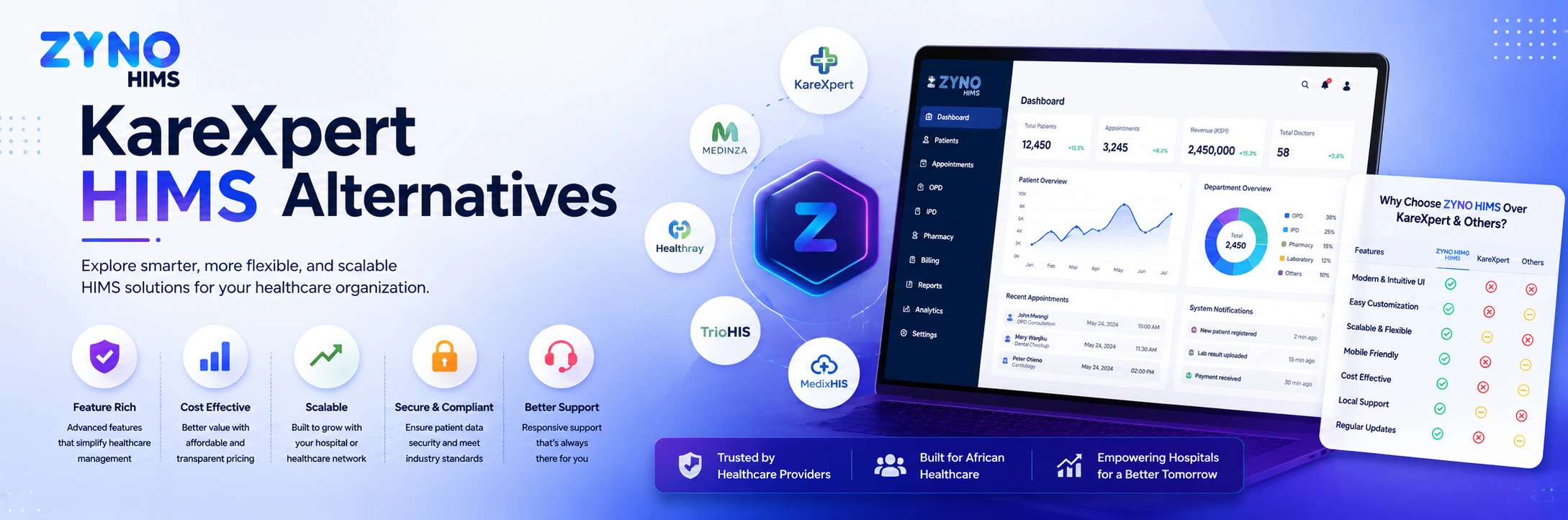
Top 10 KareXpert HIMS Alternatives & Competitors in 2026
Read More →
What is a Clinic Management System and How Does It Improve Patient Care?
Read More →
Top Challenges in Pharmacy Management and How to Overcome Them
Read More →
Top 10 Hospital Management Challenges and How ZYNO HIMS Solves Them
Read More →
Why Modern Clinics Are Switching to EMR Systems
Read More →
Top Reasons Why You Should Use Electronic Health Records System
Read More →
A Complete Guide to Choosing the Right Hospital Management Software
Read More →
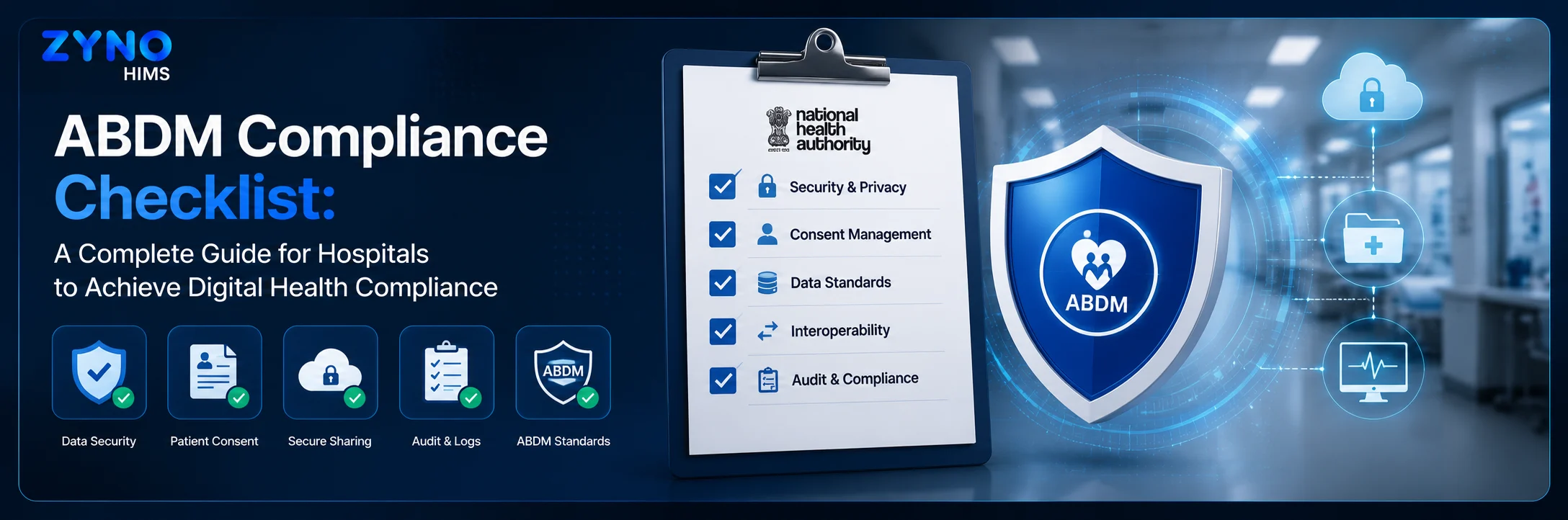
ABDM Compliance Checklist: A Complete Guide for Hospitals to Achieve Digital Health Compliance
Read More →
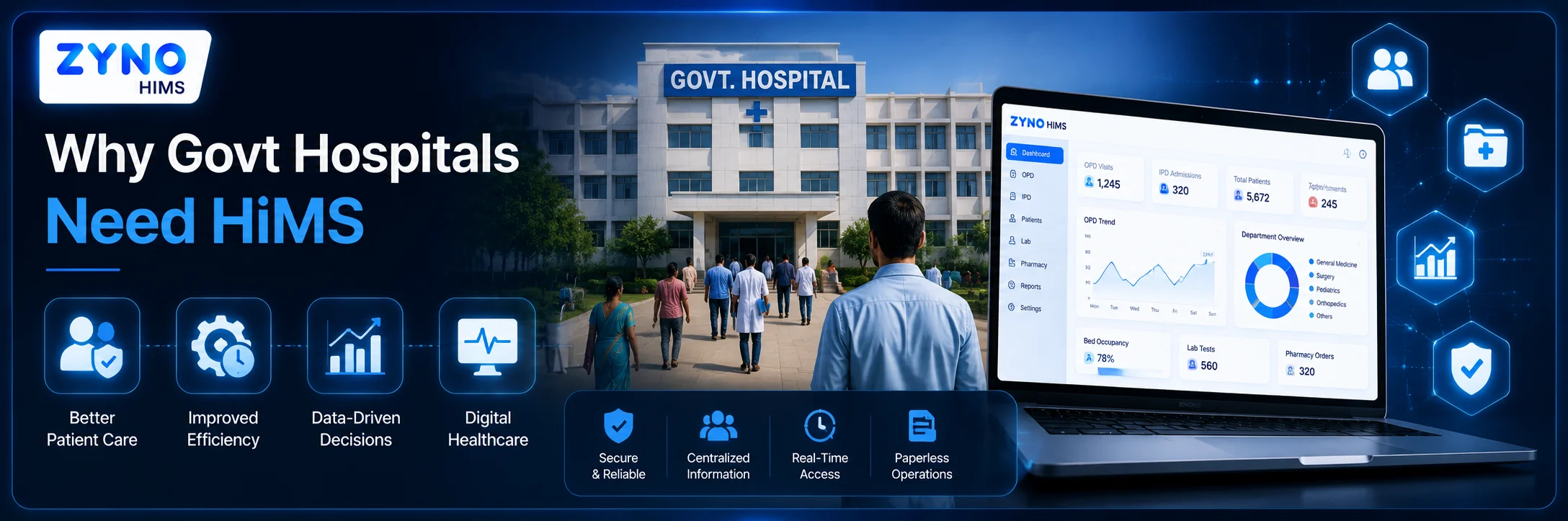
Why Govt Hospitals Need HIMS: Improving Patient Care, Efficiency, and Digital Healthcare
Read More →
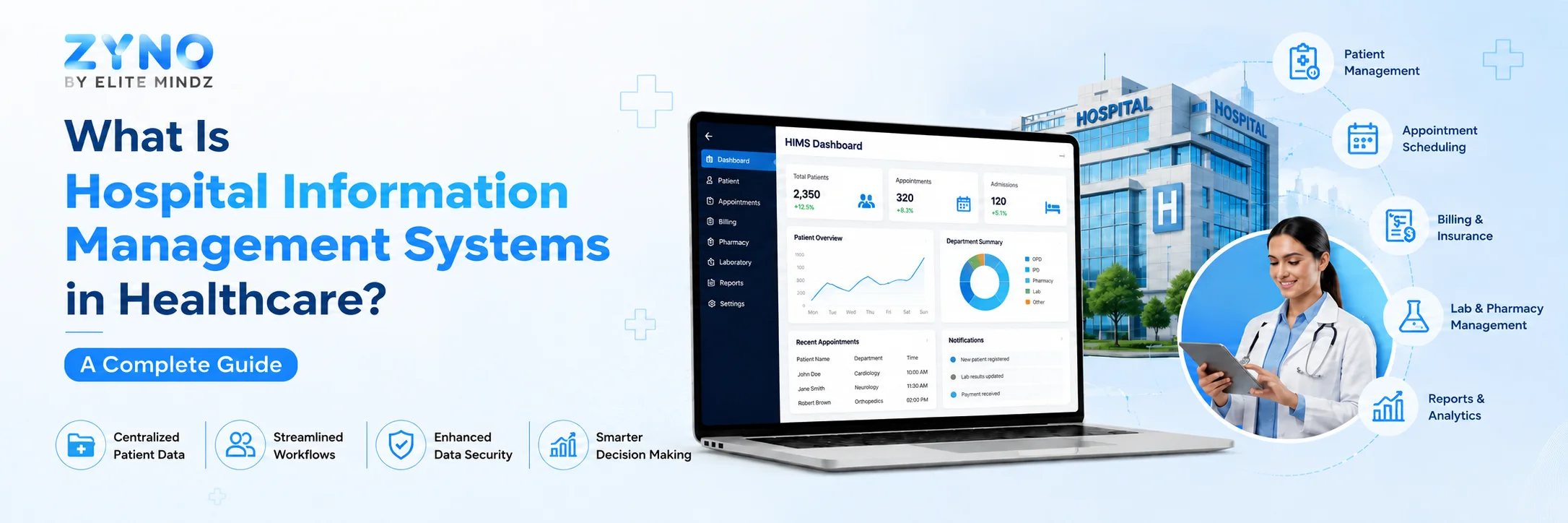
What Is Hospital Information Management Systems in Healthcare? A Complete Guide
Read More →
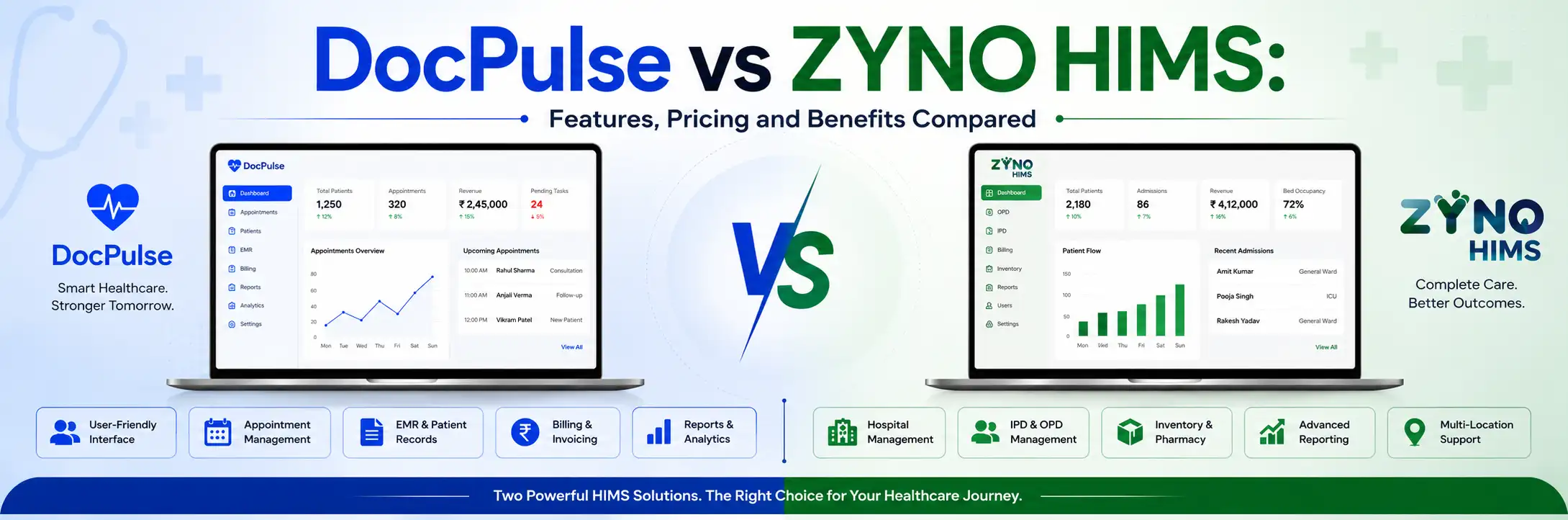
DocPulse vs ZYNO HIMS (2026): Why ZYNO HIMS Is the Smarter Hospital Management Choice
Read More →
MocDoc vs ZYNO HIMS: Which Hospital Management Software Is Better in 2026?
Read More →
Caresoft vs ZYNO HIMS: Complete HIMS Comparison for Hospitals
Read More →
Best PMJAY-Compliant HIMS Software in India (2026): Complete Guide for Hospitals
Read More →
Medical Report Analyzer Software: How AI Makes Medical Reports Easy to Understand
Read More →
How to Choose a Hospital Management System
Read More →
AI in HIMS: 10 Practical Ways Artificial Intelligence is Transforming Hospital Management
Read More →
Best Hospital Management Software for Private Clinics in Kenya
Read More →
Hospital Management Software in Japan: What Healthcare Providers Need in 2026
Read More →
Pharmacy Management Software for Kenyan Pharmacies: Features That Matter
Read More →
DHA and MOH Compliance for Hospital Software in the UAE
Read More →
Top 10 Hospital Management Software in India 2026: Features, Pros, Cons & Pricing
Read More →
OPD vs IPD: Difference Between OPD and IPD, Services & Complete Guide
Read More →
Pharmacy Inventory Management: Methods, Inventory Control & Best Practices
Read More →
What Is a Pharmacy Information System (PIS)? Features, Benefits & How It Improves Pharmacy Management
Read More →
How Do You Check Inventory in a Pharmacy?
Read More →
What’s the Difference Between EHR and EMR? Key Differences, Benefits & Guide
Read More →Partner with ZYNO by Elite Mindz to revolutionize how your business works. Fill out the form, and we’ll reach out with AI-powered solutions made just for you.
We use browser cookies to ensure you get the best experience on our website. Learn more
The form was submitted successfully!