




Why Cloud-Based AI HIMS is Transforming the Future of Indian Healthcare
Read More →

×
Not sure whether your hospital needs EMR, EHR, or HIMS software? See how they differ, what each covers, and how to choose the right one.
Businesses using ZYNO Books cut accounting time by 70% and stay 100% ZATCA-compliant — automatically.
Imagine a patient walks into your hospital. The front desk creates a paper file, the doctor prescribes by hand, the lab sends results on a separate printout, and the billing team re-enters everything into another system. Now imagine this happening hundreds of times a day.
If this sounds familiar, you are not alone. Many hospitals and clinics still depend on disconnected tools. And when they decide to go digital, they hit a new wall: EMR, EHR, HIMS, HIS. Which one do you actually need?
This guide explains the EMR vs EHR vs HIMS question in simple language, so you can choose the right system with confidence.
Software vendors often use Electronic Medical Records, Electronic Health Records, Hospital Information System (HIS), and Hospital Information Management System as if they mean the same thing. They do not. As a result, hospital owners and administrators are often unsure about what they are really buying.
Meanwhile, the everyday problems keep piling up:
Choosing the wrong system is expensive, and the damage often shows up only after go-live.
Suppose you buy only EMR software for hospitals when what you really need is to run the whole hospital digitally. Your doctors get digital charts, but billing, pharmacy, lab, and inventory stay manual or sit in separate tools. Staff now work across two or three systems. Data does not match. Patients wait longer. Revenue leaks through missed charges. And when you finally decide to switch, you face the pain of data migration and retraining.
The opposite mistake is just as costly. A small clinic that only needs digital consultation records may end up paying for a large system with features it never uses.
Understand what each system does before you invest.
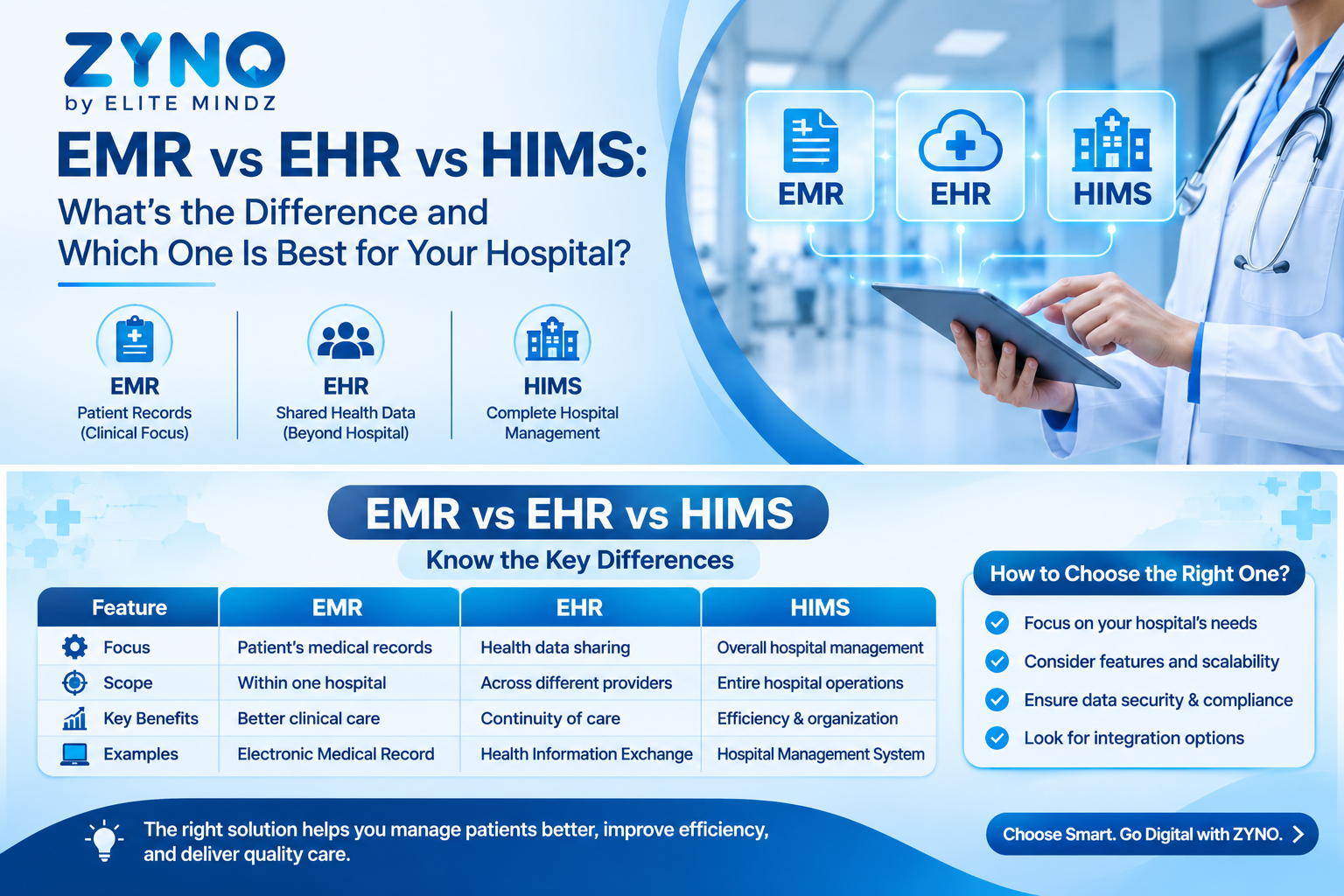
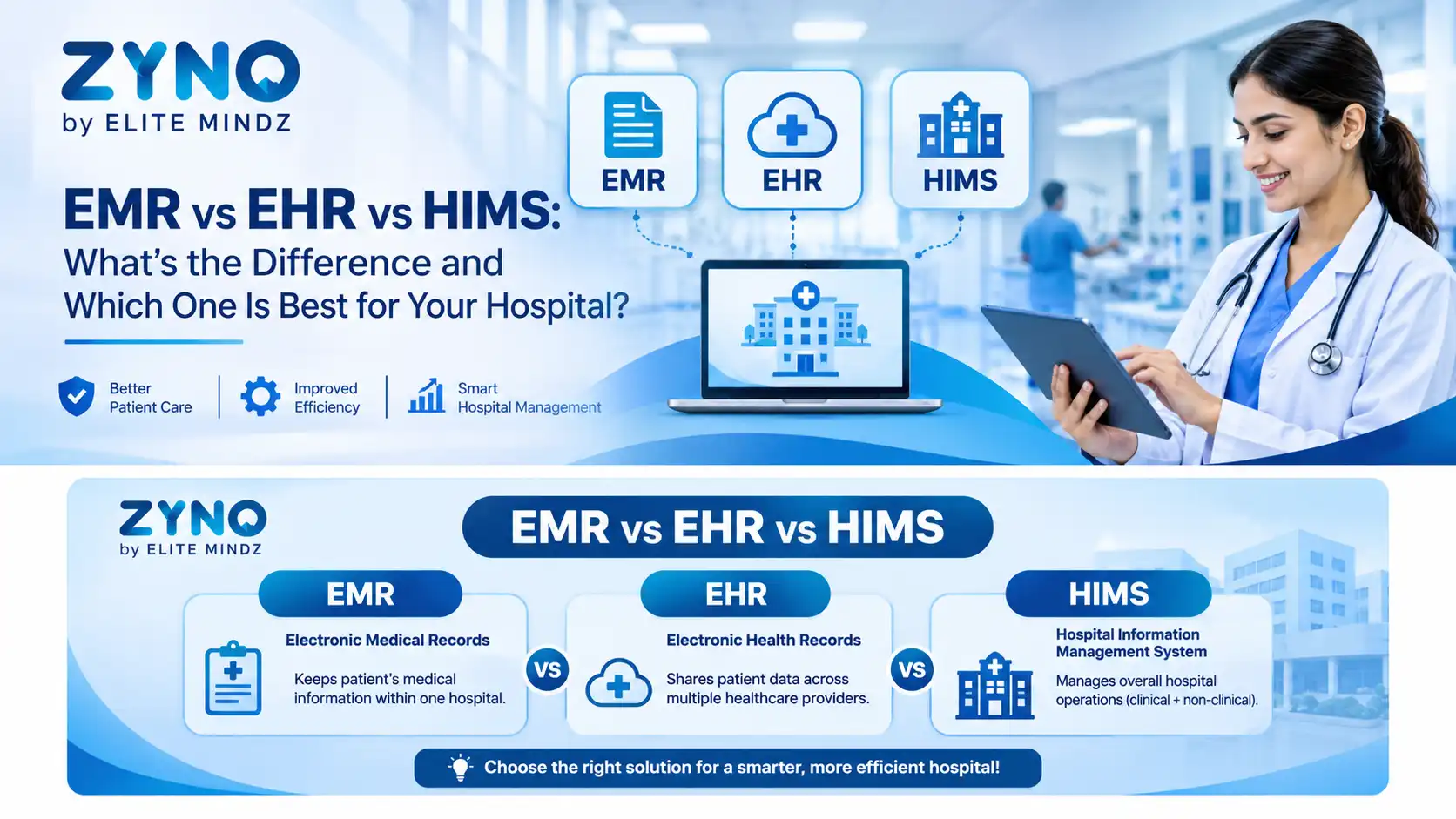
Electronic Medical Records (EMR) are the digital version of the paper chart kept inside one clinic or hospital. They store a patient’s medical history, diagnoses, prescriptions, test results, and treatment notes recorded by that provider.
Electronic Health Records (EHR) go one step further. An EHR is built to share a patient’s health information across different providers, such as hospitals, specialists, labs, and pharmacies. The record follows the patient instead of staying in one place.
A Hospital Information Management System (HIMS), also called a Hospital Information System (HIS), is complete hospital management software. It manages the clinical, administrative, and financial work of the entire hospital.
HIMS software usually includes EMR or EHR as one module, along with:
A simple way to remember it: EMR is a chapter, EHR is the full story, and HIMS is the entire library.
| Feature | EMR | EHR | HIMS / HIS |
|---|---|---|---|
| Scope | One clinic or hospital | Multiple providers | Entire hospital operations |
| Main users | Doctors and nurses | Care teams, specialists, patients | Doctors, admin, billing, pharmacy, lab, management |
| Data sharing | Limited | Built for sharing | Shared across departments; external sharing depends on integration |
| Billing and inventory | Usually not included | Limited or not included | Fully included |
| Best for | Small clinics | Referral-heavy and multi-provider care | Hospitals of all sizes |
The key takeaway: the EMR vs EHR difference is about how far patient data can travel. The difference between EMR or EHR and HIMS is about how much of the hospital the software actually runs.
Here is what makes a good HIMS stand out, explained from features to real-world results.
Everything in one connected platform. A modern HIMS brings registration, OPD, IPD, EMR, billing, pharmacy, lab, inventory, and reports into a single system with one patient database.
What that design does for your team.
Benefits: what you and your patients actually gain.
Evidence: a day in the life of a patient. Consider a patient who visits the OPD and is advised admission. In a connected HIMS, the doctor’s advice reaches the IPD desk instantly. A bed is allocated, the nursing team sees the treatment chart, the pharmacy receives medicine orders, and billing updates automatically. Nobody re-enters anything, and nothing gets lost between desks. Many HIMS platforms also help hospitals prepare for NABH accreditation and ABDM-based digital health requirements, since records and processes are already structured and traceable.
The right answer depends on your size, your services, and your growth plans.
The confusion around EMR vs EHR vs HIMS is common, but the choice becomes clear once you know what each one does. EMR records what happens inside your facility. EHR lets that information travel with the patient. HIMS runs the whole hospital and usually includes both.
For most hospitals that want faster service, fewer errors, and better control, a complete Hospital Information Management System is the smartest long-term investment.
Book a Free Demo Today and see how our HIMS can simplify your hospital operations.
Contact Us Now to get a customized quote for your hospital.
An EMR is a digital patient chart used within one clinic or hospital. An EHR is a broader record that can be shared across multiple healthcare providers. In short, EMR stays in one place, while EHR travels with the patient.
In most cases, yes. HIS and HIMS are used for the same type of software that manages clinical, administrative, and financial work in a hospital. Some vendors use one term, and some use the other.
Most good HIMS platforms include EMR or EHR as a core module, along with billing, pharmacy, lab, inventory, and reporting.
A small clinic with a single doctor can usually start with EMR. If you plan to add billing, pharmacy, lab, or IPD services, a modular HIMS is a better long-term choice.
Yes, but it is smoother if you choose a vendor that offers both. This way, your existing records can move over without major data loss or retraining.
Look for patient registration, OPD and IPD management, EMR, billing and insurance, pharmacy, lab and radiology, inventory, reports, and role-based security.
Electronic Medical Records help doctors document and track a patient’s care within one facility. Electronic Health Records help different providers see the patient’s complete health history, which supports better coordination and continuity of care.
No. HIMS software is available for clinics, nursing homes, and large hospitals. Many are modular, so you can pay for the modules you need and add more as you grow.
Why Cloud-Based AI HIMS is Transforming the Future of Indian Healthcare
Read More →The Complete ZYNO HIMS Guide for Modern Healthcare Management
Read More →How a Hospital Management System Improves Healthcare Operations
Read More →
Cloud vs Offline Hospital Management Systems: What Should Your Hospital Choose
Read More →What Is a Hospital Information System (HIS)? Features, Benefits & Complete Guide
Read More →How HIMS Software Improves Patient Care and Hospital Efficiency
Read More →How Is Hospital Software Transforming Patient Data Management in Modern Healthcare
Read More →
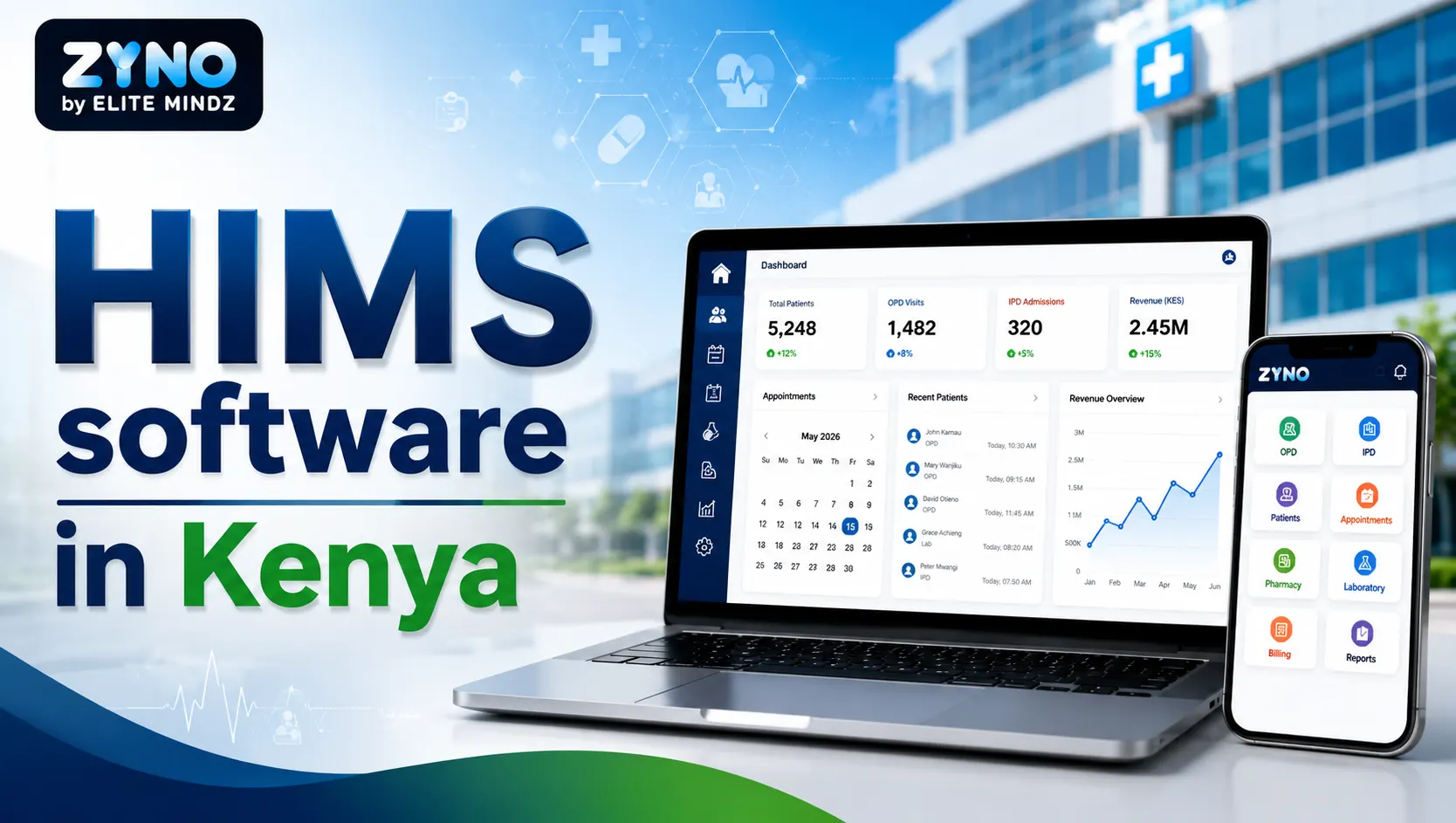
HIMS Software in Kenya: The Complete Guide for Hospitals & Clinics (2026)
Read More →
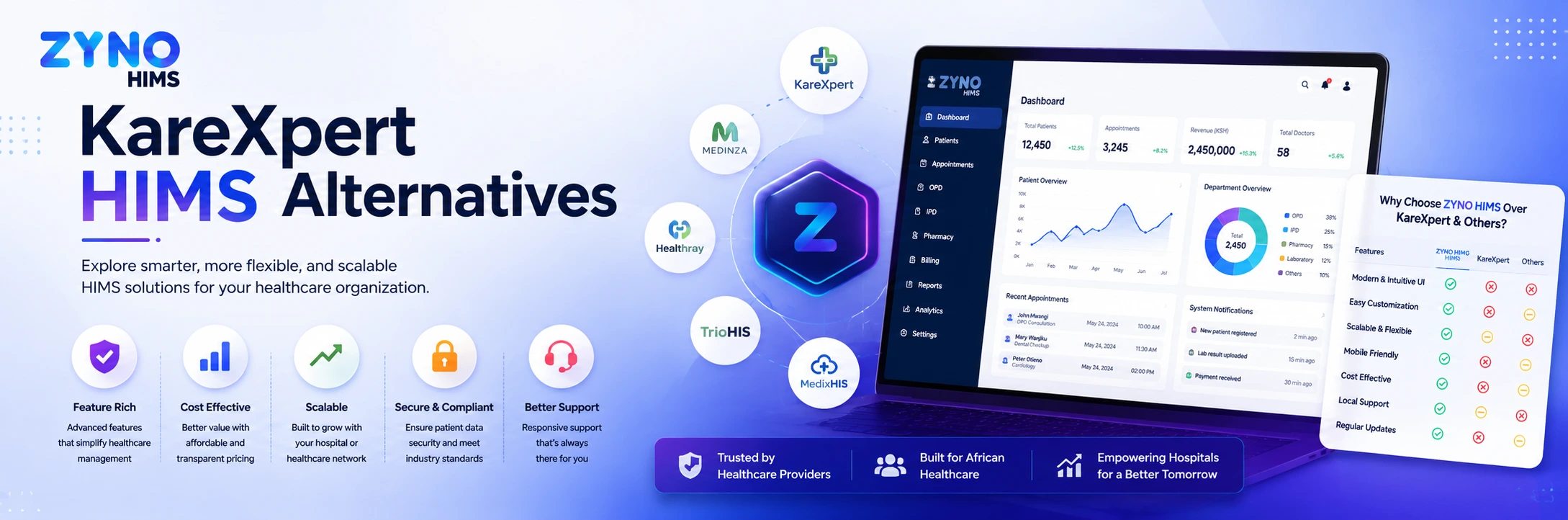
Top 10 KareXpert HIMS Alternatives & Competitors in 2026
Read More →
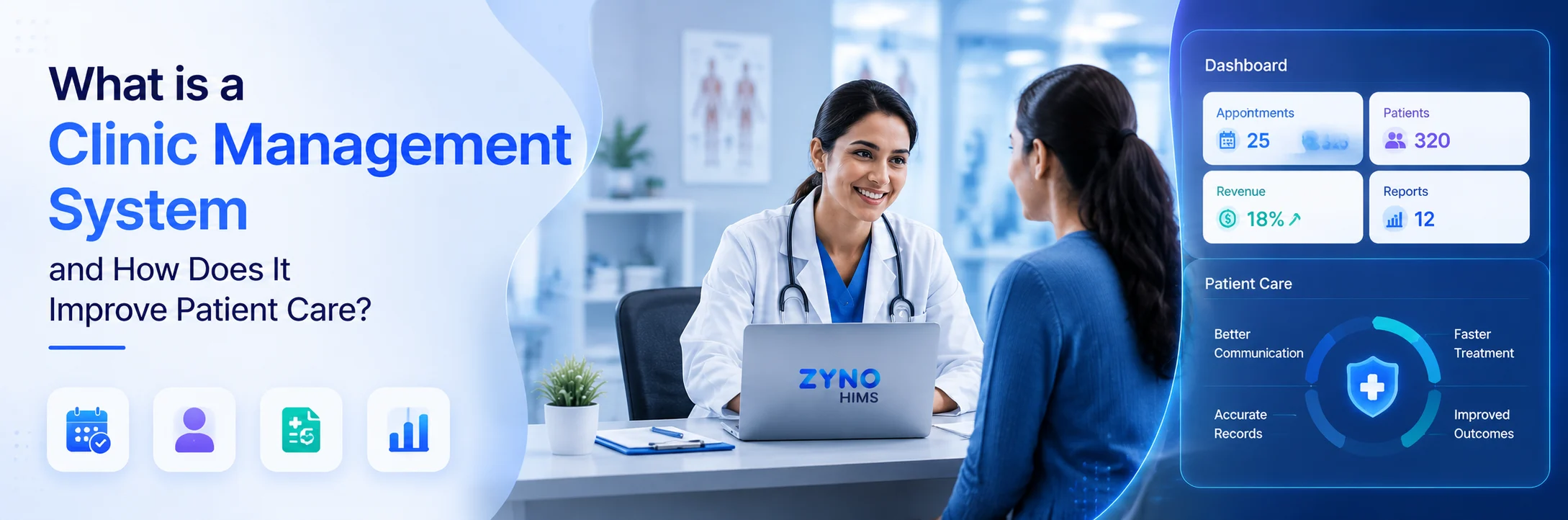
What is a Clinic Management System and How Does It Improve Patient Care?
Read More →
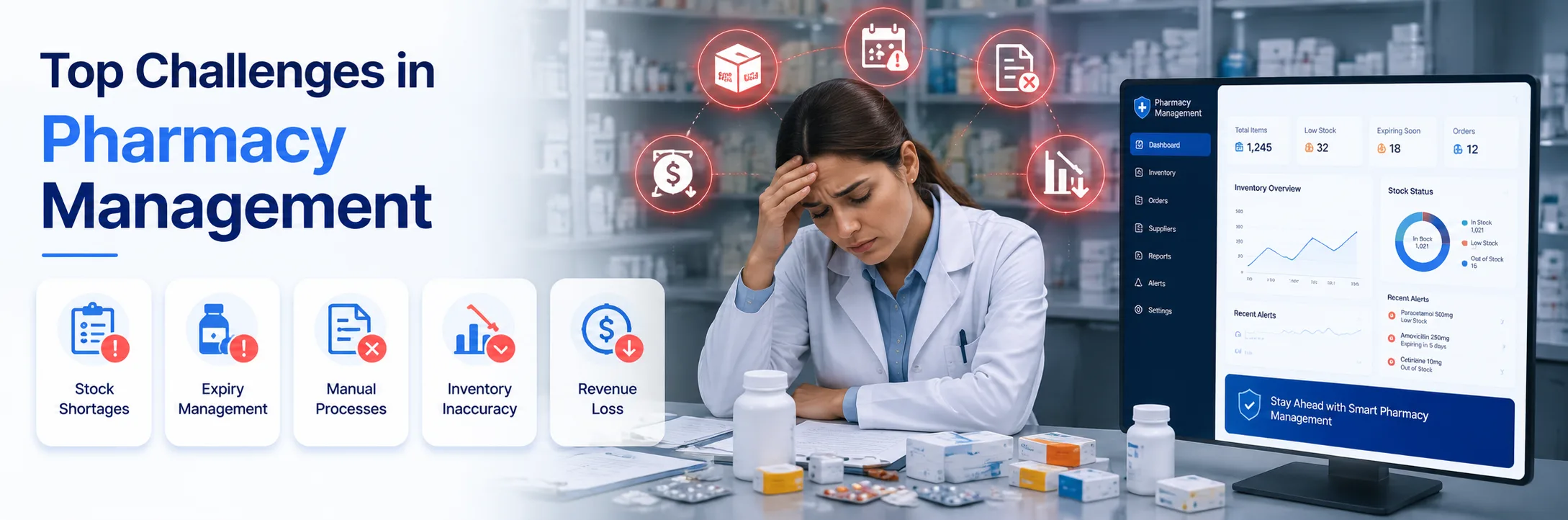
Top Challenges in Pharmacy Management and How to Overcome Them
Read More →
Top 10 Hospital Management Challenges and How ZYNO HIMS Solves Them
Read More →
Why Modern Clinics Are Switching to EMR Systems
Read More →
Top Reasons Why You Should Use Electronic Health Records System
Read More →
A Complete Guide to Choosing the Right Hospital Management Software
Read More →
ABDM Compliance Checklist: A Complete Guide for Hospitals to Achieve Digital Health Compliance
Read More →
Why Govt Hospitals Need HIMS: Improving Patient Care, Efficiency, and Digital Healthcare
Read More →
What Is Hospital Information Management Systems in Healthcare? A Complete Guide
Read More →
DocPulse vs ZYNO HIMS (2026): Why ZYNO HIMS Is the Smarter Hospital Management Choice
Read More →
MocDoc vs ZYNO HIMS: Which Hospital Management Software Is Better in 2026?
Read More →
Caresoft vs ZYNO HIMS: Complete HIMS Comparison for Hospitals
Read More →
Best PMJAY-Compliant HIMS Software in India (2026): Complete Guide for Hospitals
Read More →
Medical Report Analyzer Software: How AI Makes Medical Reports Easy to Understand
Read More →
How to Choose a Hospital Management System
Read More →
AI in HIMS: 10 Practical Ways Artificial Intelligence is Transforming Hospital Management
Read More →
Best Hospital Management Software for Private Clinics in Kenya
Read More →
Hospital Management Software in Japan: What Healthcare Providers Need in 2026
Read More →
Pharmacy Management Software for Kenyan Pharmacies: Features That Matter
Read More →
DHA and MOH Compliance for Hospital Software in the UAE
Read More →
Top 10 Hospital Management Software in India 2026: Features, Pros, Cons & Pricing
Read More →
OPD vs IPD: Difference Between OPD and IPD, Services & Complete Guide
Read More →
Pharmacy Inventory Management: Methods, Inventory Control & Best Practices
Read More →
What Is a Pharmacy Information System (PIS)? Features, Benefits & How It Improves Pharmacy Management
Read More →
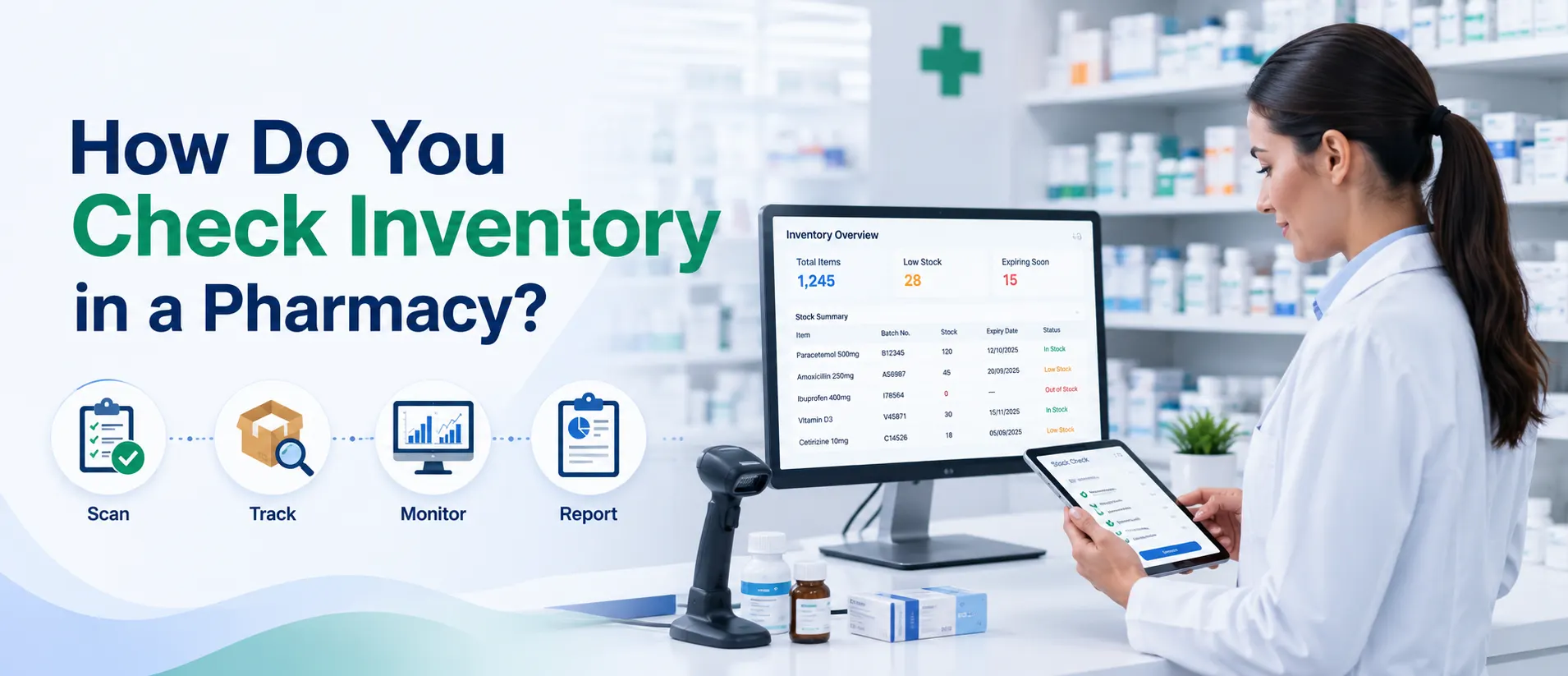
How Do You Check Inventory in a Pharmacy?
Read More →
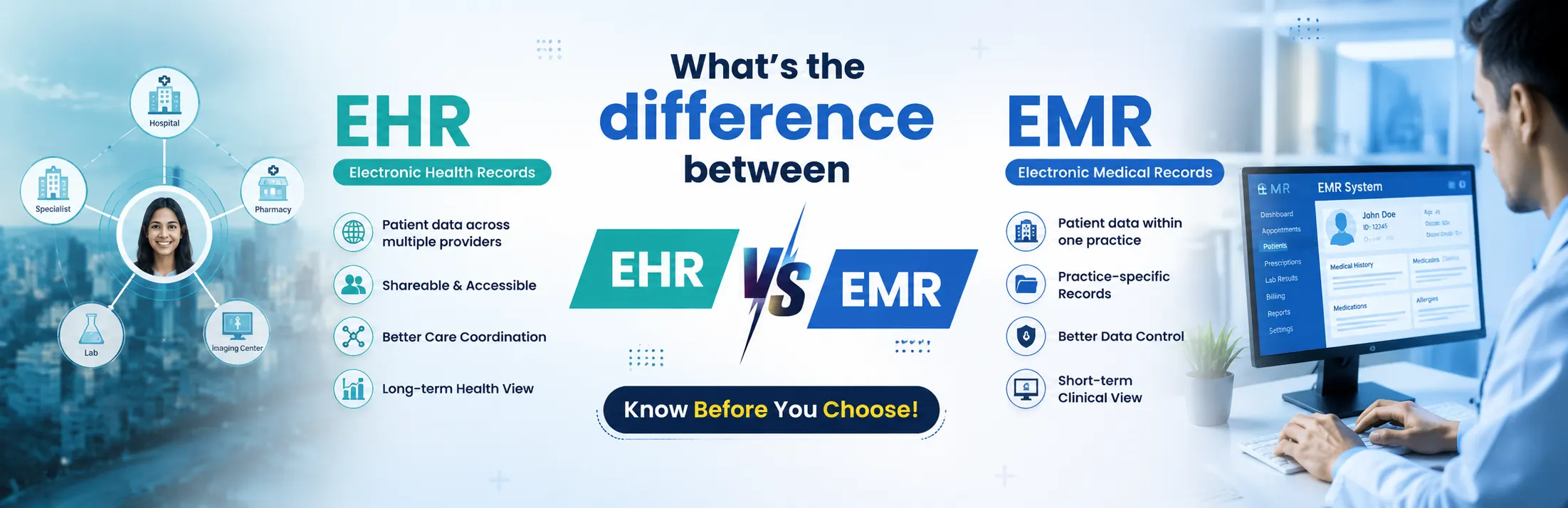
What’s the Difference Between EHR and EMR? Key Differences, Benefits & Guide
Read More →
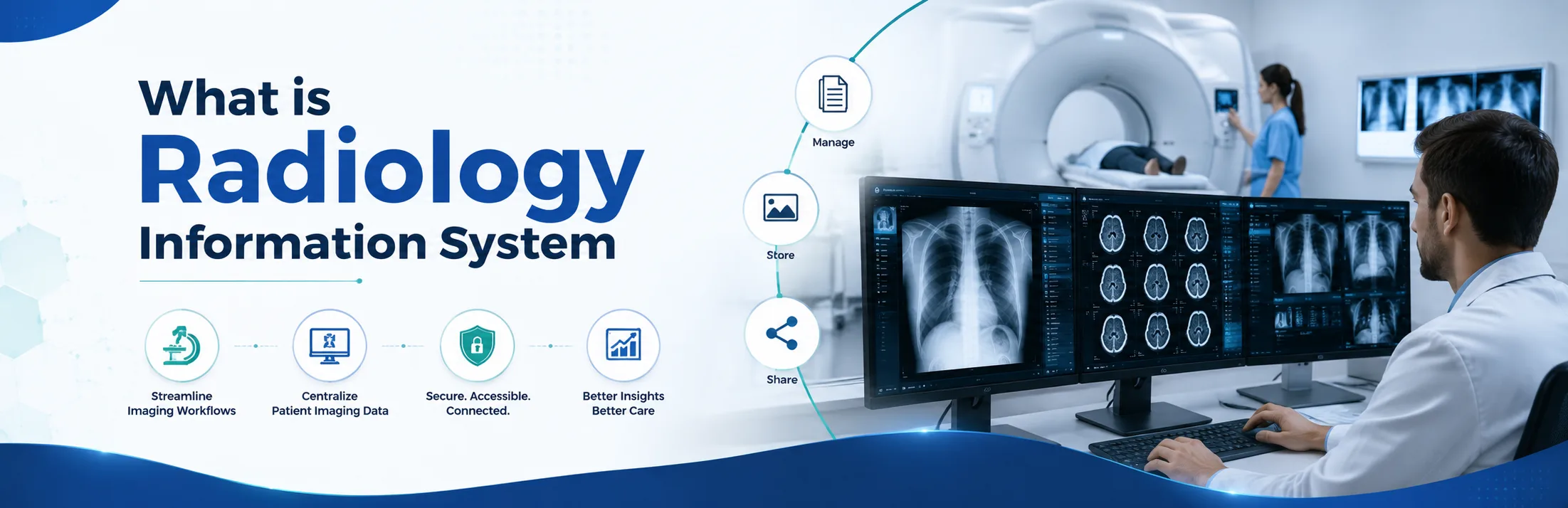
What is Radiology Information System? Features & Benefits
Read More →
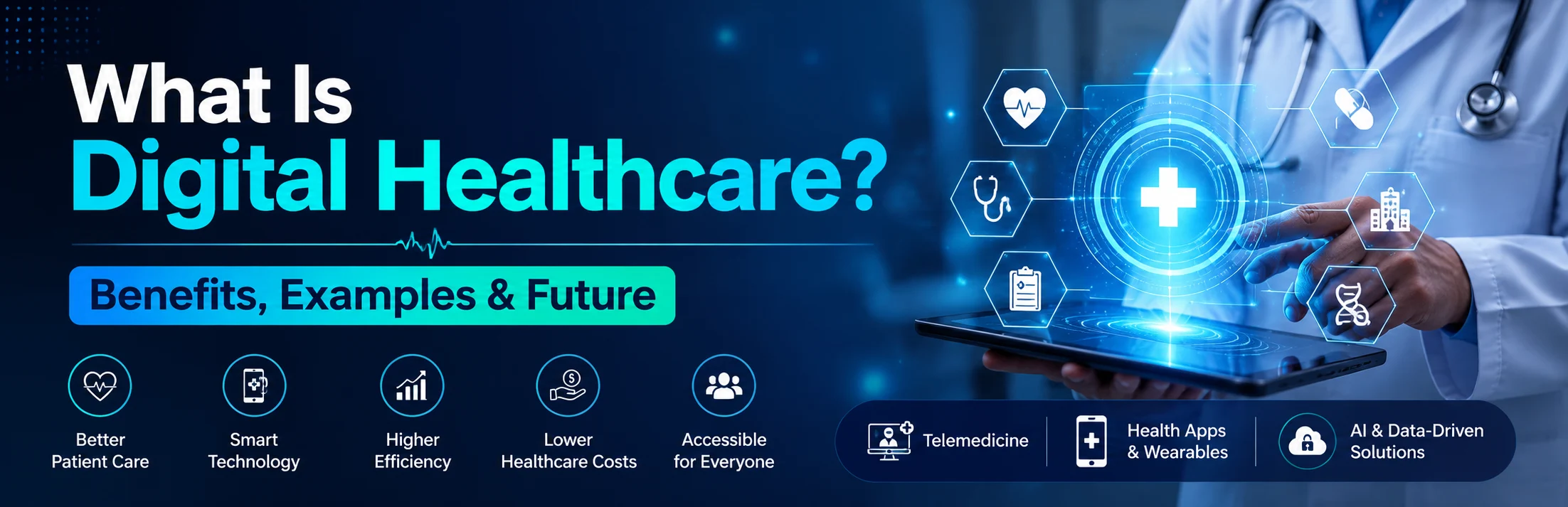
What Is Digital Healthcare? Benefits, Examples & Future
Read More →
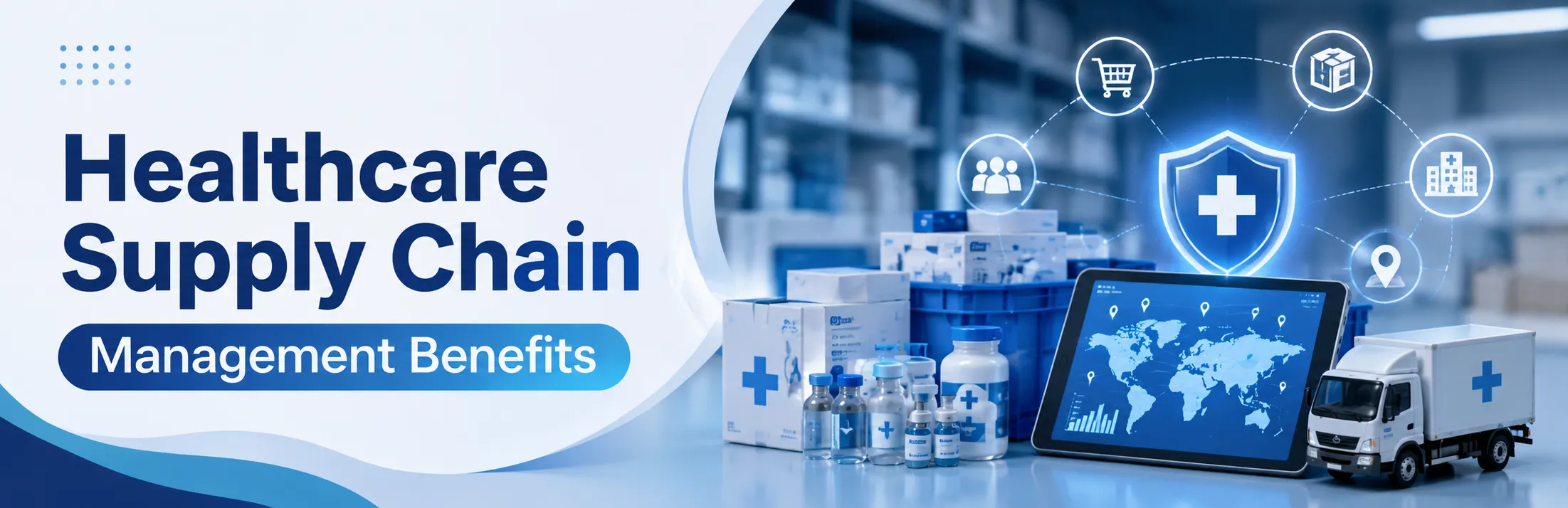
Healthcare Supply Chain Management Benefits
Read More →
Benefits of Patient Information Management Systems for Hospitals & Clinics
Read More →
What Is the Difference Between PACS, DICOM, RIS & CIS?
Read More →
Best Hospital Billing Software in India 2026: Top 10 Medical Billing Solutions
Read More →
Top Features of Hospital Billing Software in India
Read More →
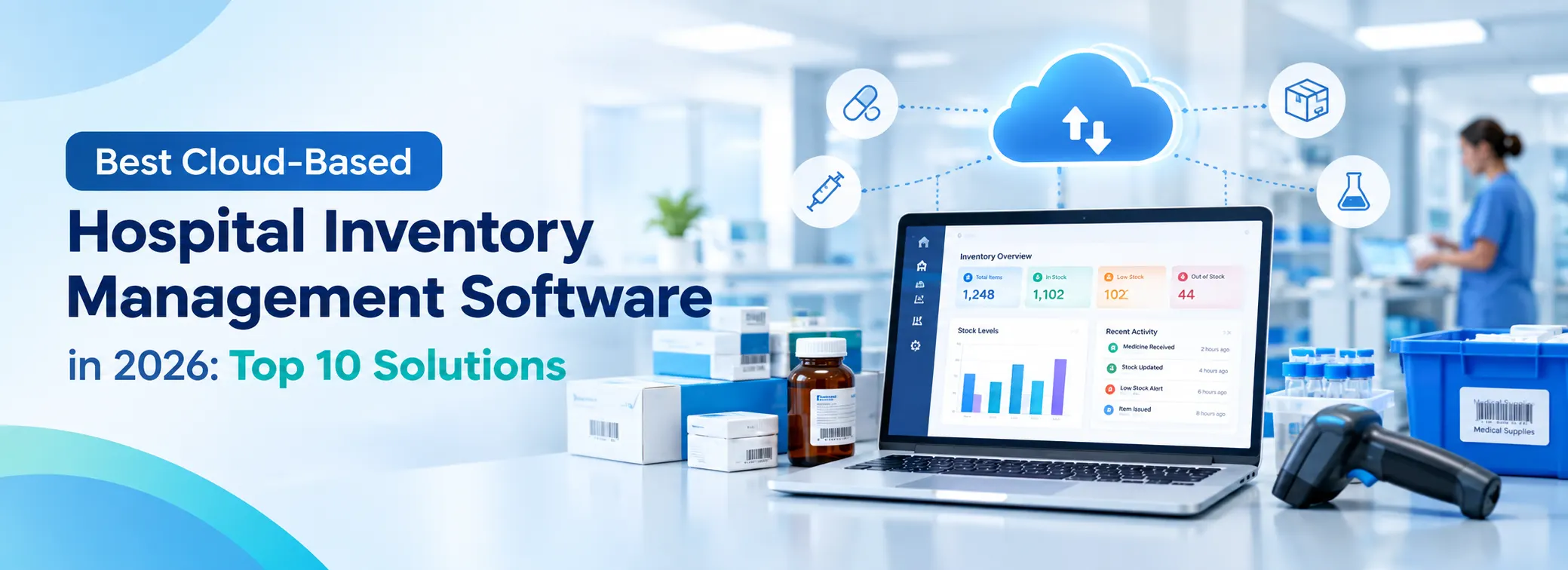
Best Cloud-Based Hospital Inventory Management Software in 2026: Top 10 Solutions
Read More →
Which Hospital Management Software in India Is Suitable for Newly Established Hospitals?
Read More →
Medical Diagnostic Software: What It Is, How It Works & Top 5 Players in 2026
Read More →
10 Best Patient Management Software in 2026
Read More →
Hospital Management Software for Multispecialty Hospitals: A Complete Guide
Read More →
Top 10 Multi-Location Hospital Management Software in India
Read More →
Top 10 Hospital Management Software Companies in Qatar
Read More →
ZYNO HIMS: Enterprise Healthcare Management for Private Facilities
Read More →
How Hospital Staff Can Digitize Paper-Based Tabular Data into Excel Records
Read More →
Top 10 Features to Look for in a HIMS Software in Saudi Arabia & UAE
Read More →
AI-Powered HIMS: The Future of Hospital Management in the Middle East
Read More →
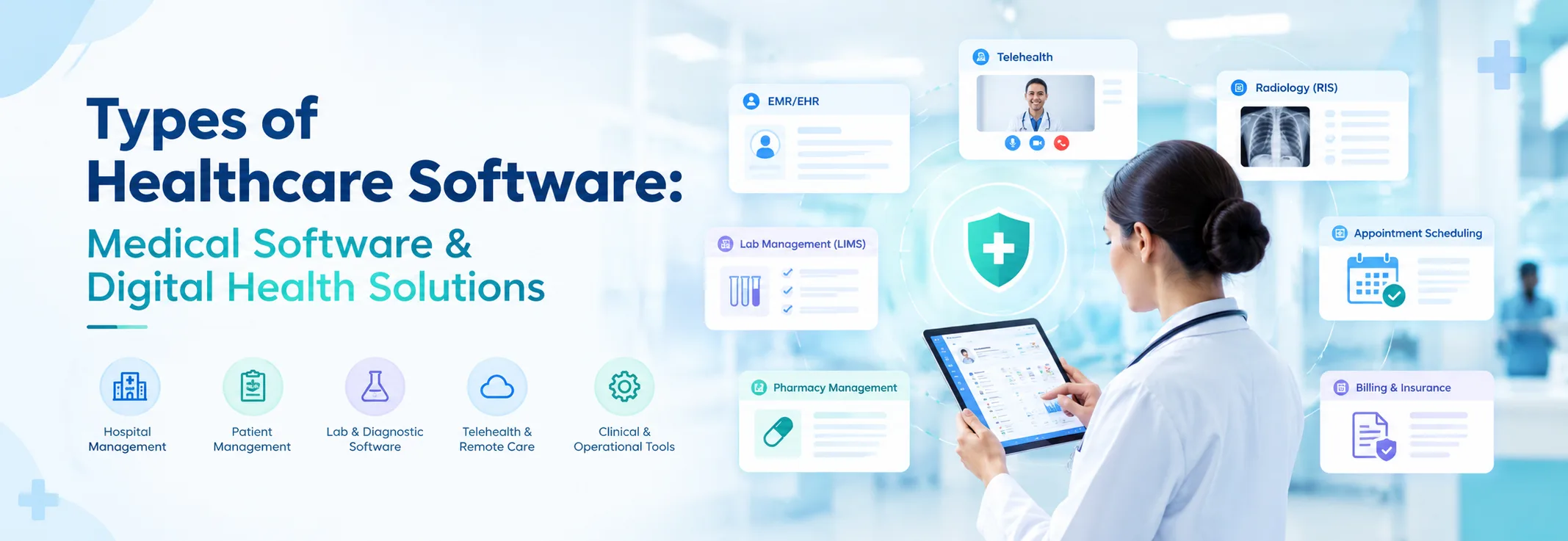
Types of Healthcare Software: Medical Software & Digital Health Solutions
Read More →
Telehealth vs Telemedicine: What Is the Difference Between Telehealth and Telemedicine?
Read More →
7 Best EMR Software Options for Dubai Clinics in 2026
Read More →
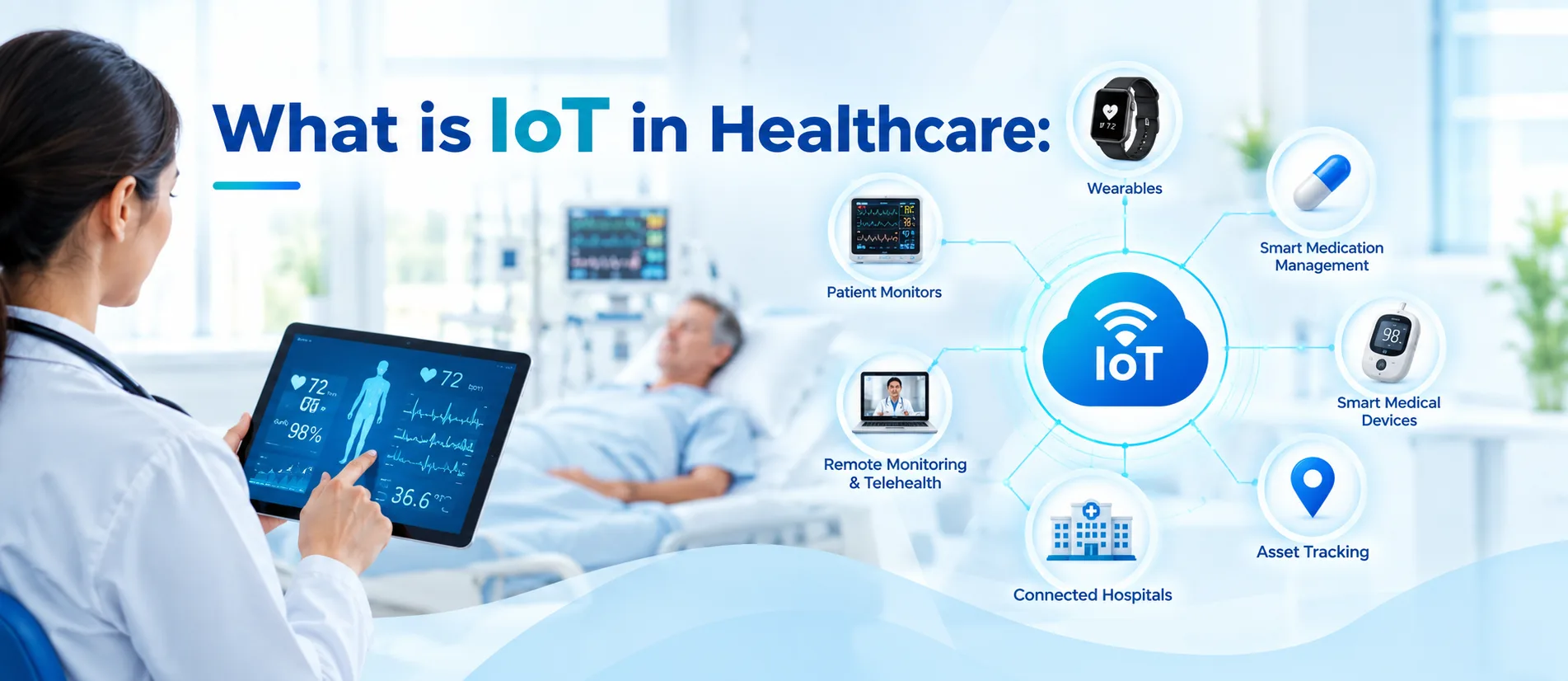
What is IoT in Healthcare: Application & Software in Healthcare IoT
Read More →
6 Best Hospital Management Software in UAE 2026
Read More →
HIMS for Small Hospitals and Nursing Homes: A Complete Guide for 2026
Read More →
Top 10 Clinic Management Software in India for Doctors and Clinics in 2026
Read More →
10 Best Pharmacy Billing Software for Medicine Billing & Stock
Read More →
HIMS Evaluation Guide: 20 Questions to Ask in a HIMS Software Demo
Read More →
EMR vs EHR vs HIMS: What’s the Difference and Which One Is Best for Your Hospital?
Read More →Partner with ZYNO by Elite Mindz to revolutionize how your business works. Fill out the form, and we’ll reach out with AI-powered solutions made just for you.
We use browser cookies to ensure you get the best experience on our website. Learn more
The form was submitted successfully!