Why Cloud-Based AI HIMS is Transforming the Future of Indian Healthcare
Read More →{ "@context": "https://schema.org", "@type": "FAQPage", "mainEntity": [ { "@type": "Question", "name": "Is a Radiology Information System the same as PACS?", "acceptedAnswer": { "@type": "Answer", "text": "No. A RIS manages workflow data scheduling, orders, reports, billing while a PACS (Picture Archiving and Communication System) stores and displays the actual medical images. The two are often used together, and many modern hospital platforms integrate both alongside broader HIMS functionality." } }, { "@type": "Question", "name": "Do small diagnostic centers need a full RIS?", "acceptedAnswer": { "@type": "Answer", "text": "Even small imaging centers benefit from basic scheduling and reporting automation. But as patient volume grows or referral networks expand, a connected system that ties radiology to the rest of patient care like ZYNO HIMS becomes far more valuable than a standalone RIS." } }, { "@type": "Question", "name": "How does a RIS reduce hospital costs?", "acceptedAnswer": { "@type": "Answer", "text": "By cutting down on data-entry errors, repeated documentation, and delayed reporting, a RIS reduces the rework and administrative overhead that quietly drain hospital budgets over time." } }, { "@type": "Question", "name": "Can radiology data be linked to a patient's overall EHR?", "acceptedAnswer": { "@type": "Answer", "text": "Yes this is exactly where standalone RIS tools fall short and connected platforms shine. ZYNO HIMS links radiology reports and images directly into each patient's unified health record, visible to authorized staff across departments." } }, { "@type": "Question", "name": "What should hospitals evaluate when choosing radiology management software?", "acceptedAnswer": { "@type": "Answer", "text": "Look for real interoperability with the rest of the hospital's systems, fast reporting turnaround, integrated billing, and compliance readiness all areas where ZYNO HIMS is purpose-built to perform, rather than treating radiology as an afterthought." } }, { "@type": "Question", "name": "What is the main purpose of a Radiology Information System?", "acceptedAnswer": { "@type": "Answer", "text": "A Radiology Information System (RIS) helps manage the complete radiology workflow, including patient registration, appointment scheduling, imaging orders, reporting, billing, and result distribution. It keeps radiology information organized and accessible to authorized staff." } }, { "@type": "Question", "name": "How does RIS improve radiology workflow?", "acceptedAnswer": { "@type": "Answer", "text": "RIS reduces manual work by automating scheduling, patient tracking, reporting, and data management. It helps radiologists and staff access the right information quickly, reducing delays, duplicate data entry, and administrative errors." } }, { "@type": "Question", "name": "Can RIS integrate with hospital management software?", "acceptedAnswer": { "@type": "Answer", "text": "Yes. A modern RIS can integrate with Hospital Information Management Systems (HIMS), EHRs, PACS, laboratory systems, and billing platforms. This allows radiology data to flow smoothly across departments and supports coordinated patient care." } }, { "@type": "Question", "name": "Does a Radiology Information System improve patient experience?", "acceptedAnswer": { "@type": "Answer", "text": "Yes. RIS can reduce waiting times through better appointment scheduling, faster reporting, and streamlined patient workflows. Doctors can also access reports more quickly, helping support timely diagnosis and treatment decisions." } }, { "@type": "Question", "name": "Is a cloud-based Radiology Information System useful for hospitals?", "acceptedAnswer": { "@type": "Answer", "text": "Yes. A cloud-based RIS can provide secure access to radiology information from different locations, simplify system management, and support collaboration between departments. It can be particularly useful for hospitals with multiple locations or growing radiology operations." } } ] }

×
Discover what a Radiology Information System (RIS) is, its key features, benefits, workflow, reporting, billing, and integration with hospital systems to improve radiology operations, reduce manual work, enhance data accuracy, and support faster, more efficient patient care.
Businesses using ZYNO Books cut accounting time by 70% and stay 100% ZATCA-compliant — automatically.
Every hospital's radiology department deals with an enormous flow of data—scan requests, patient histories, image files, reports, billing, and follow-ups—all moving between technicians, radiologists, and referring doctors. When this is managed on paper registers or disconnected spreadsheets, delays and errors are almost guaranteed. A Radiology Information System (RIS) exists to solve exactly this problem.
In this guide, we'll cover what a Radiology Information System actually does, its core features, the real operational benefits it brings, and why hospitals are increasingly choosing connected platforms like ZYNO HIMS which brings RIS-level radiology management into a single, AI-powered hospital system rather than a standalone add-on.
Discover how ZYNO HIMS connects radiology, patient records, billing, pharmacy, laboratory, and other hospital workflows in one AI-powered healthcare platform.
A Radiology Information System is a specialized software module used to manage the workflow of a radiology department patient scheduling, imaging orders, scan tracking, reporting, and billing, all in one digital environment. It's closely related to electronic health record (EHR) systems, but built specifically for the unique needs of diagnostic imaging: X-rays, CT scans, MRIs, ultrasounds, and more.
Instead of technicians manually logging which patient had which scan, or radiologists chasing paper reports across departments, a RIS keeps every step from the moment a scan is ordered to the moment the report reaches the referring physician visible and trackable in one place.
For hospitals still relying on manual radiology logs, the shift to a proper RIS (or a hospital platform with built-in radiology management, like ZYNO HIMS) is usually one of the fastest ways to cut down transcription errors and reporting delays.
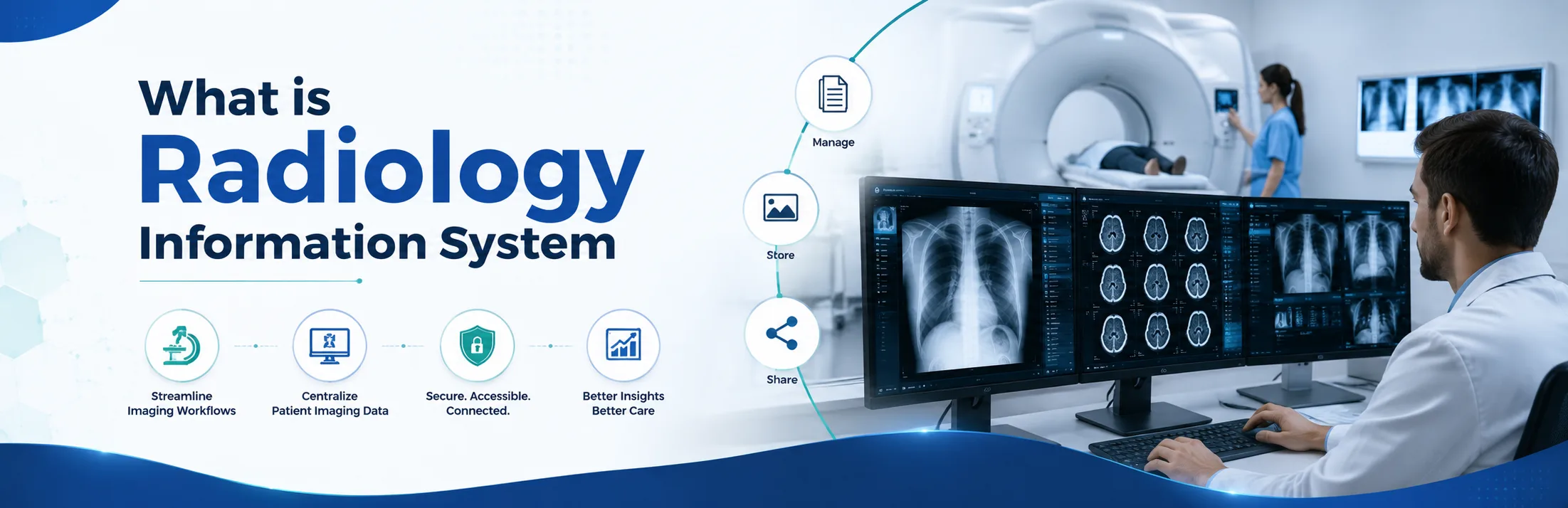
A Radiology Information System (RIS) streamlines imaging workflows, patient data, reporting, and resource management for efficient radiology operations.

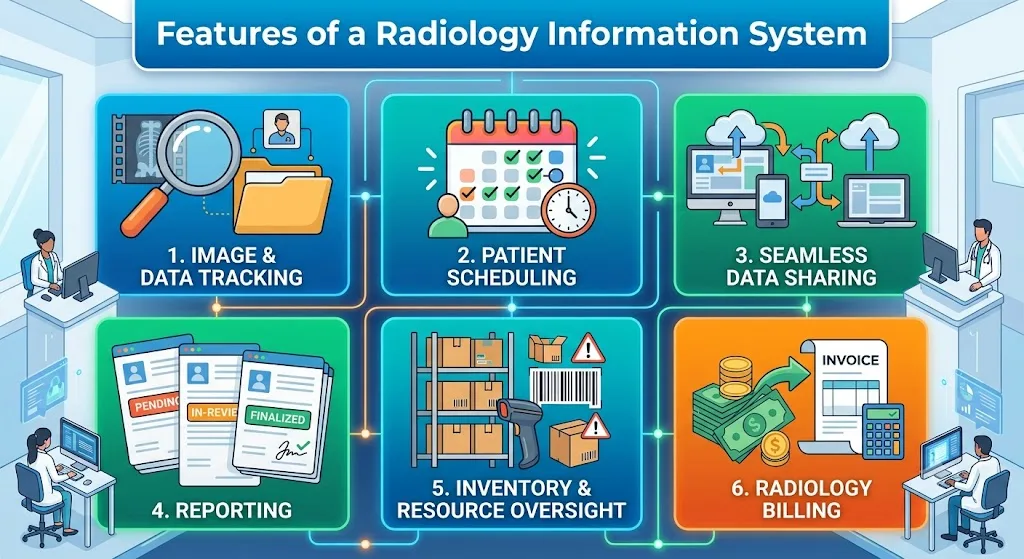
A RIS maintains searchable records of imaging orders, procedures, and reports while integrating with PACS to associate the correct medical images with each patient record.
From registration to discharge, the system tracks each patient's radiology visit appointment booking, scan status, and history so staff always know where a patient is in the process without repeated phone calls or manual follow-ups.
Reports and images can be shared instantly between radiologists, referring doctors, and other departments, cutting down the back-and-forth that paper-based or siloed systems create.
Structured reporting templates let radiologists generate and distribute results faster, with statuses (pending, in-review, finalized) visible to everyone who needs them.
By tying billing directly to completed scans and reports, a RIS speeds up invoice generation and reduces the manual reconciliation that typically slows down the revenue cycle.
A Radiology Information System (RIS) delivers measurable benefits by improving operational efficiency, reducing costs, supporting accurate diagnosis, and enhancing patient care.
|
Benefit |
What It Means for the Hospital |
|
Cost savings |
Fewer manual errors and faster processing reduce rework and administrative overhead |
|
Faster revenue cycle |
Quicker report turnaround means faster billing and fewer missed appointments |
|
Higher staff productivity |
Automated scheduling and data entry free up staff for patient-facing work |
|
Streamlined administration |
Less paperwork, fewer redundant processes, lower staffing pressure |
|
Better patient care |
Staff spend more time with patients and less time on manual coordination |
|
Improved Data Accuracy |
Accurate, centralized data supports more reliable clinical decisions |
|
Improved care coordination |
Referring physicians and specialists get real-time access to reports and images |
Taken together, these benefits explain why radiology departments running on paper-based systems consistently lag behind those using a connected RIS not just in speed, but in the accuracy of care they can deliver.
A radiology department is only as efficient as the system tracking its patients, images, and reports and that system needs to talk to the rest of the hospital, not just sit in its own corner.
Most standalone RIS products solve radiology workflow in isolation which still leaves a gap when that data needs to reach the rest of the hospital: the referring doctor, the billing desk, the pharmacy, or the patient's own health record. ZYNO HIMS was built to close exactly this gap by embedding radiology management directly into a unified hospital information system.
What this looks like in practice:
For hospital administrators comparing a standalone RIS against a connected HIMS, the practical question is simple: does the referring doctor see the scan report the moment it's ready, or does someone have to walk it over? A platform like ZYNO HIMS is designed so the referring doctor can access the report as soon as it is finalized, without relying on manual handoffs.
Looking to bring radiology management into one connected hospital system instead of a standalone tool?
See how ZYNO HIMS unifies radiology, billing, pharmacy, and patient records with AI-powered, ABDM-ready hospital operations.
Manage radiology workflows, patient records, imaging reports, billing, and hospital operations with ZYNO HIMS.
Explore ZYNO HIMS →Final Thoughts
A Radiology Information System brings order to one of the busiest, most data-heavy departments in any hospital but its real value multiplies when that data doesn't stop at the radiology department's door. Connecting scan orders, reports, and images to the rest of a patient's care journey is what separates a good radiology tool from a truly effective hospital system.
That's the approach behind ZYNO HIMS: radiology management built in, not bolted on part of a single, connected hospital operating system designed for how modern healthcare actually runs.
Frequently Asked Questions
Q1. Is a Radiology Information System the same as PACS?
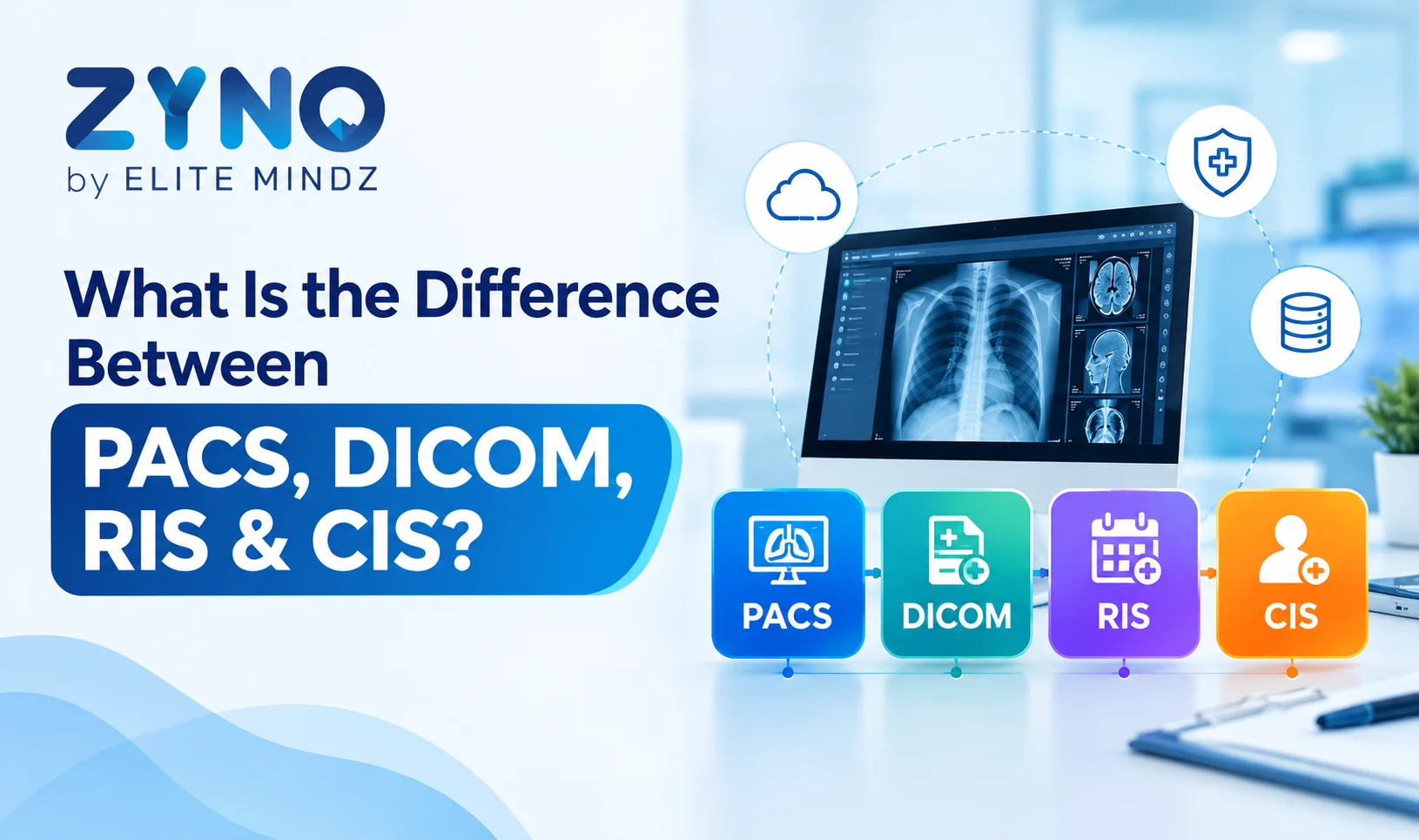
No. A RIS manages workflow data scheduling, orders, reports, billing while a PACS (Picture Archiving and Communication System) stores and displays the actual medical images. The two are often used together, and many modern hospital platforms integrate both alongside broader HIMS functionality.
Q2. Do small diagnostic centers need a full RIS?
Even small imaging centers benefit from basic scheduling and reporting automation. But as patient volume grows or referral networks expand, a connected system that ties radiology to the rest of patient care like ZYNO HIMS becomes far more valuable than a standalone RIS.
Q3. How does a RIS reduce hospital costs?
By cutting down on data-entry errors, repeated documentation, and delayed reporting, a RIS reduces the rework and administrative overhead that quietly drain hospital budgets over time.
Q4. Can radiology data be linked to a patient's overall EHR?
Yes this is exactly where standalone RIS tools fall short and connected platforms shine. ZYNO HIMS links radiology reports and images directly into each patient's unified health record, visible to authorized staff across departments.
Q5. What should hospitals evaluate when choosing radiology management software?
Look for real interoperability with the rest of the hospital's systems, fast reporting turnaround, integrated billing, and compliance readiness all areas where ZYNO HIMS is purpose-built to perform, rather than treating radiology as an afterthought.
A Radiology Information System (RIS) helps manage the complete radiology workflow, including patient registration, appointment scheduling, imaging orders, reporting, billing, and result distribution. It keeps radiology information organized and accessible to authorized staff.
RIS reduces manual work by automating scheduling, patient tracking, reporting, and data management. It helps radiologists and staff access the right information quickly, reducing delays, duplicate data entry, and administrative errors.
Yes. A modern RIS can integrate with Hospital Information Management Systems (HIMS), EHRs, PACS, laboratory systems, and billing platforms. This allows radiology data to flow smoothly across departments and supports coordinated patient care.
Yes. RIS can reduce waiting times through better appointment scheduling, faster reporting, and streamlined patient workflows. Doctors can also access reports more quickly, helping support timely diagnosis and treatment decisions.
Yes. A cloud-based RIS can provide secure access to radiology information from different locations, simplify system management, and support collaboration between departments. It can be particularly useful for hospitals with multiple locations or growing radiology operations.
Why Cloud-Based AI HIMS is Transforming the Future of Indian Healthcare
Read More →The Complete ZYNO HIMS Guide for Modern Healthcare Management
Read More →How a Hospital Management System Improves Healthcare Operations
Read More →
Cloud vs Offline Hospital Management Systems: What Should Your Hospital Choose
Read More →What Is a Hospital Information System (HIS)? Features, Benefits & Complete Guide
Read More →How HIMS Software Improves Patient Care and Hospital Efficiency
Read More →How Is Hospital Software Transforming Patient Data Management in Modern Healthcare
Read More →
HIMS Software in Kenya: The Complete Guide for Hospitals & Clinics (2026)
Read More →
Top 10 KareXpert HIMS Alternatives & Competitors in 2026
Read More →
What is a Clinic Management System and How Does It Improve Patient Care?
Read More →
Top Challenges in Pharmacy Management and How to Overcome Them
Read More →
Top 10 Hospital Management Challenges and How ZYNO HIMS Solves Them
Read More →
Why Modern Clinics Are Switching to EMR Systems
Read More →
Top Reasons Why You Should Use Electronic Health Records System
Read More →
A Complete Guide to Choosing the Right Hospital Management Software
Read More →
ABDM Compliance Checklist: A Complete Guide for Hospitals to Achieve Digital Health Compliance
Read More →
Why Govt Hospitals Need HIMS: Improving Patient Care, Efficiency, and Digital Healthcare
Read More →
What Is Hospital Information Management Systems in Healthcare? A Complete Guide
Read More →
DocPulse vs ZYNO HIMS (2026): Why ZYNO HIMS Is the Smarter Hospital Management Choice
Read More →
MocDoc vs ZYNO HIMS: Which Hospital Management Software Is Better in 2026?
Read More →
Caresoft vs ZYNO HIMS: Complete HIMS Comparison for Hospitals
Read More →
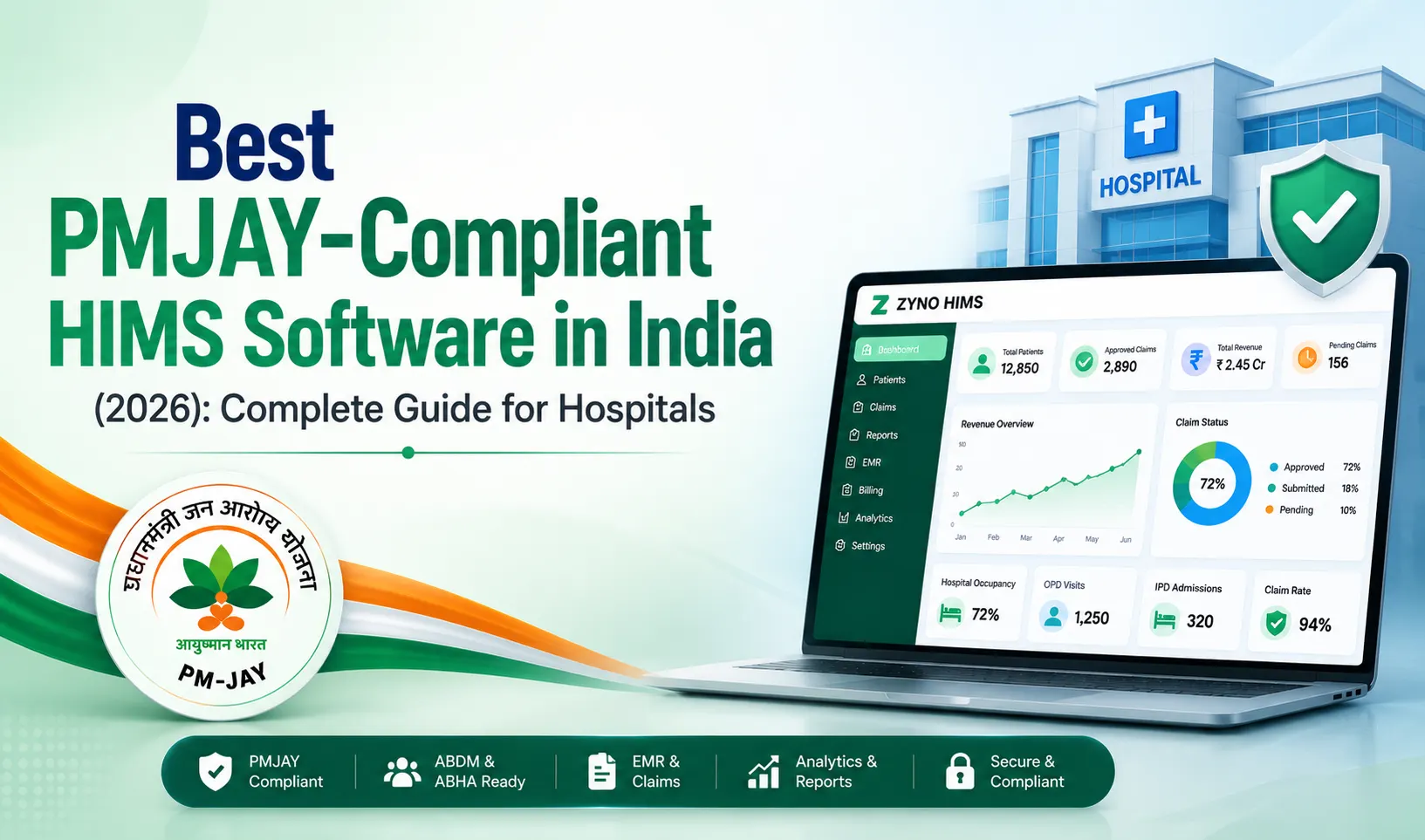
Best PMJAY-Compliant HIMS Software in India (2026): Complete Guide for Hospitals
Read More →
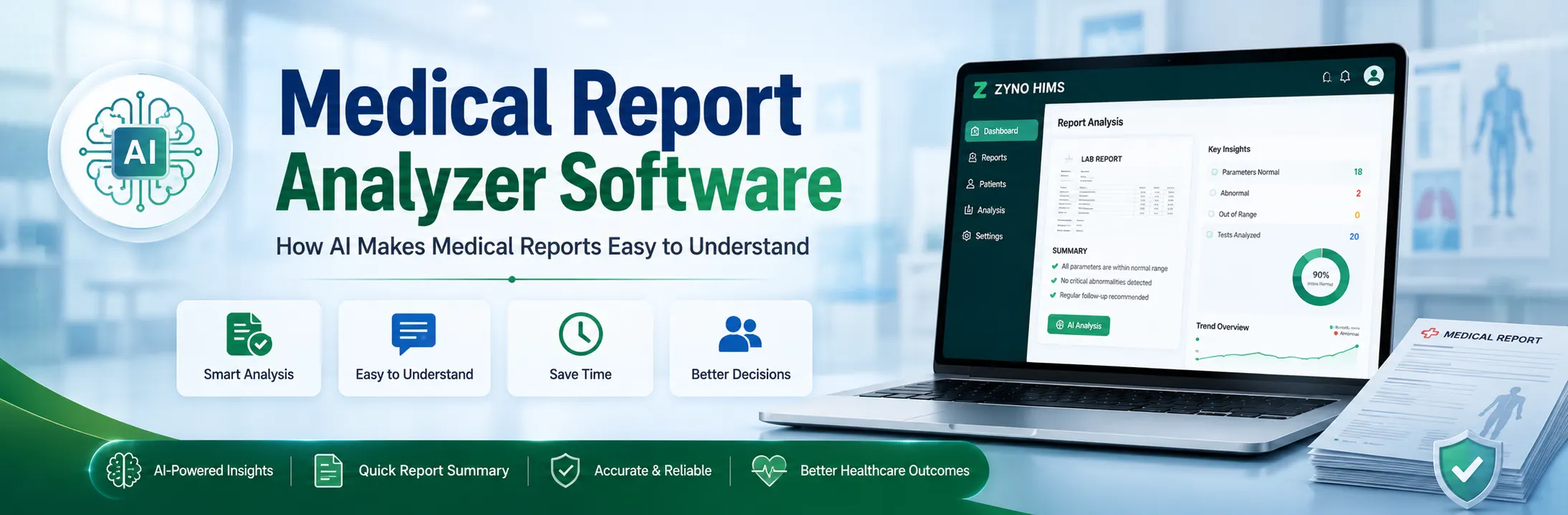
Medical Report Analyzer Software: How AI Makes Medical Reports Easy to Understand
Read More →
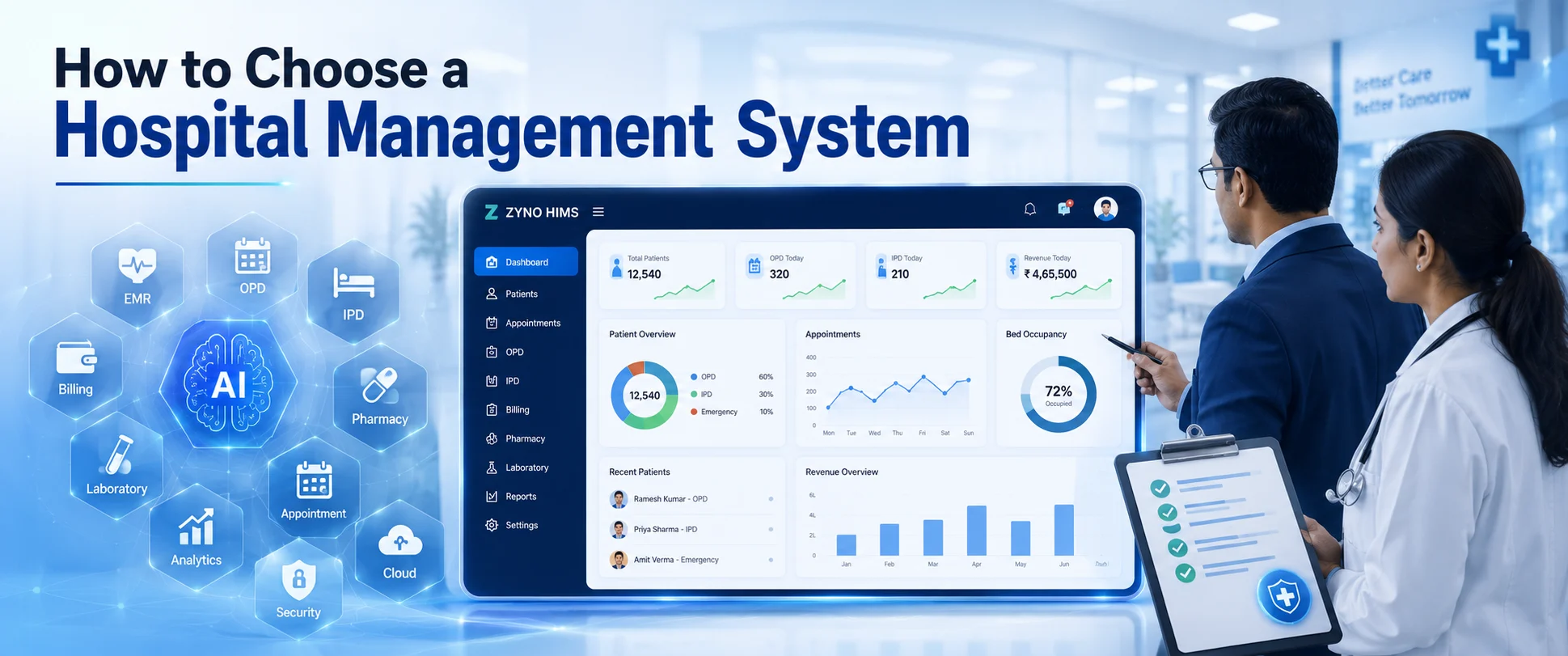
How to Choose a Hospital Management System
Read More →
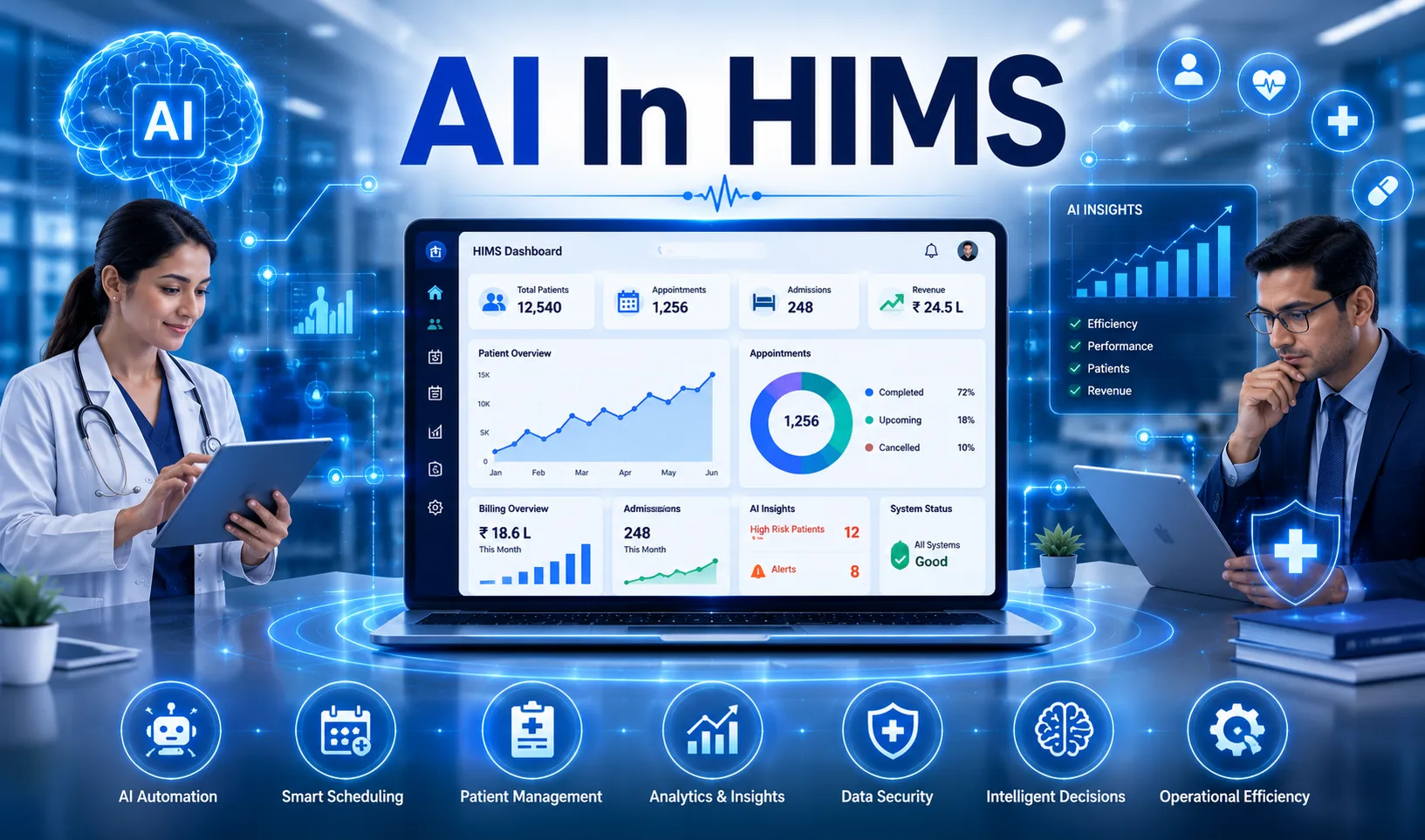
AI in HIMS: 10 Practical Ways Artificial Intelligence is Transforming Hospital Management
Read More →
Best Hospital Management Software for Private Clinics in Kenya
Read More →
Hospital Management Software in Japan: What Healthcare Providers Need in 2026
Read More →
Pharmacy Management Software for Kenyan Pharmacies: Features That Matter
Read More →
DHA and MOH Compliance for Hospital Software in the UAE
Read More →
Top 10 Hospital Management Software in India 2026: Features, Pros, Cons & Pricing
Read More →
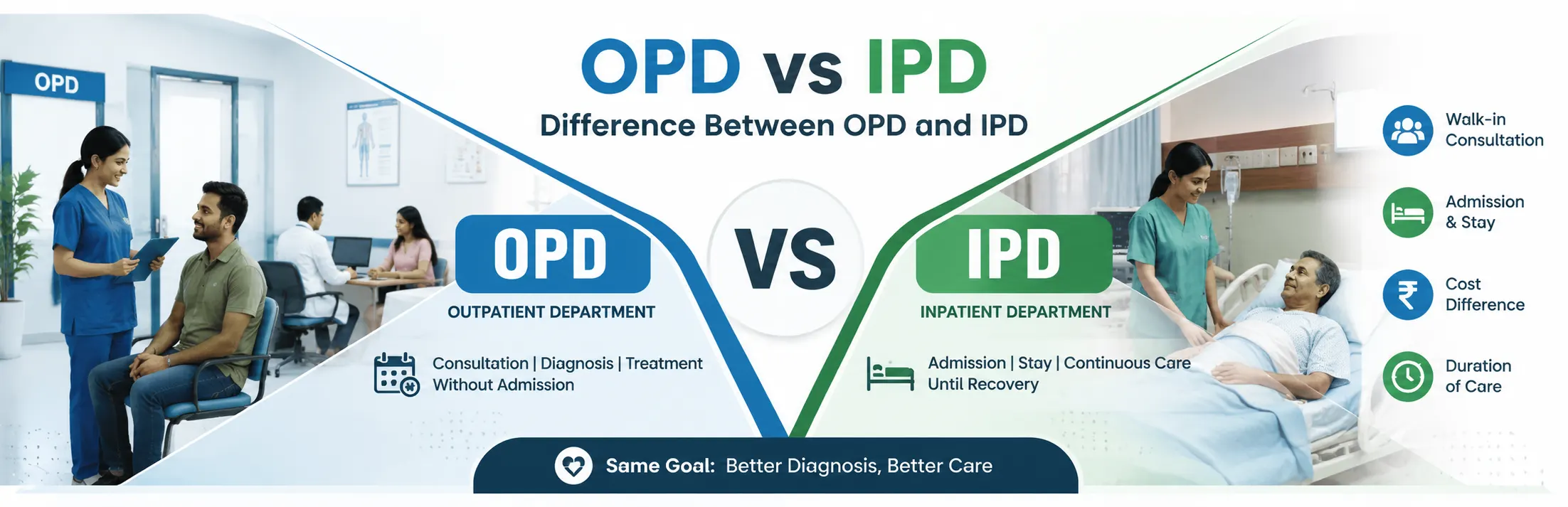
OPD vs IPD: Difference Between OPD and IPD, Services & Complete Guide
Read More →
Pharmacy Inventory Management: Methods, Inventory Control & Best Practices
Read More →
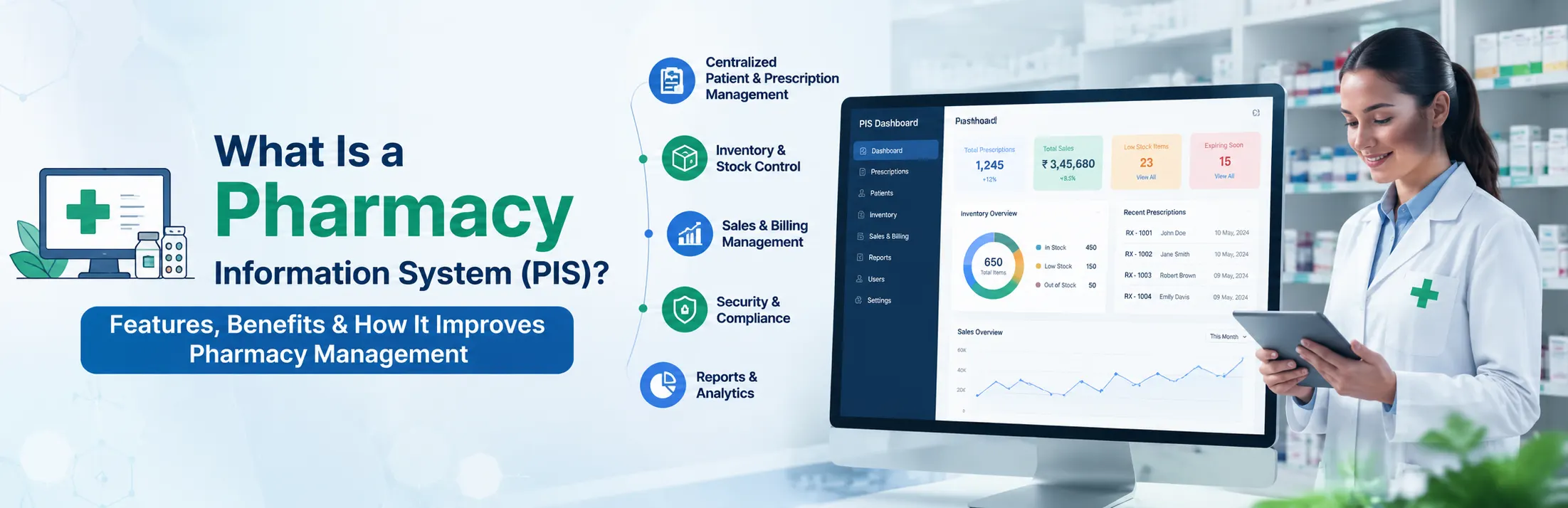
What Is a Pharmacy Information System (PIS)? Features, Benefits & How It Improves Pharmacy Management
Read More →
How Do You Check Inventory in a Pharmacy?
Read More →
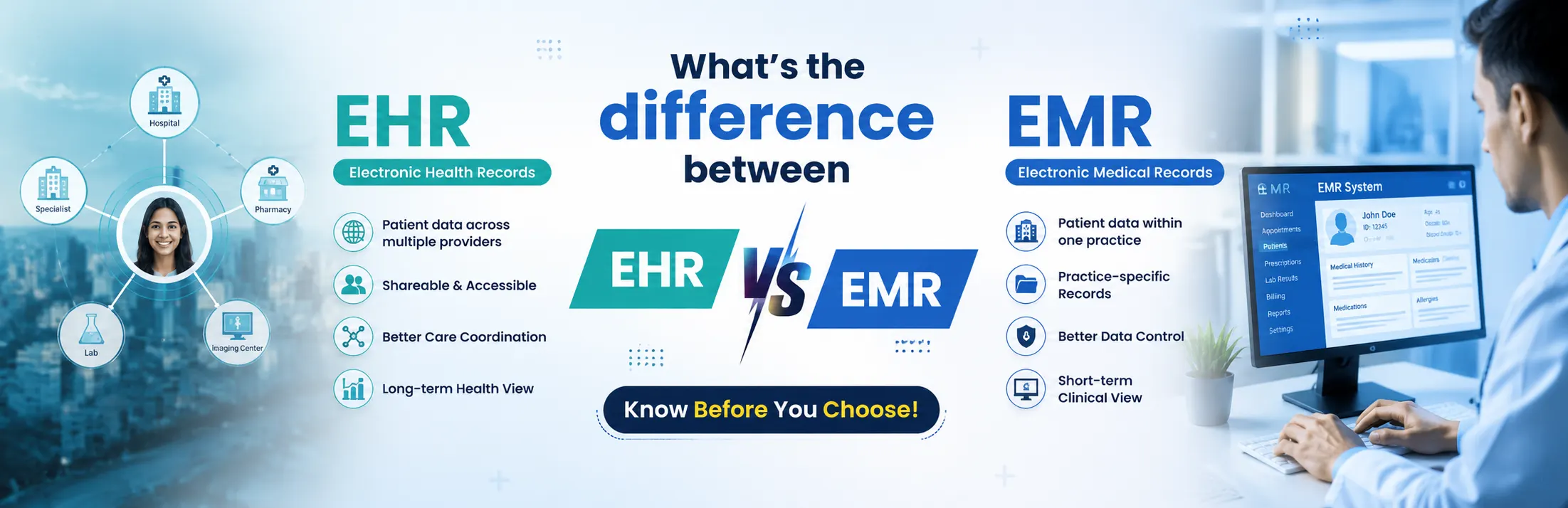
What’s the Difference Between EHR and EMR? Key Differences, Benefits & Guide
Read More →
What is Radiology Information System? Features & Benefits
Read More →Partner with ZYNO by Elite Mindz to revolutionize how your business works. Fill out the form, and we’ll reach out with AI-powered solutions made just for you.
We use browser cookies to ensure you get the best experience on our website. Learn more
The form was submitted successfully!