Procurement Software Trends in 2026: What to Expect
Read More →

×
The right procurement software should be evaluated across workflow fit, automation, sourcing, supplier management, spend visibility, AI capabilities, integrations, security, usability, implementation, total cost of ownership, support, scalability and ROI. Use a weighted checklist to compare every shortlisted vendor against the same requirements, then validate critical capabilities through realistic demos before making a decision.
Businesses using ZYNO Books cut accounting time by 70% and stay 100% ZATCA-compliant — automatically.
Choosing procurement software can look simple until you start comparing vendors.
Most platforms can handle purchase orders, approvals, suppliers, invoices or reporting. Many also promote AI, automation and integrations. On a feature sheet, they can start looking remarkably similar.
The real question is not “Which procurement software has the most features?”
It is:
“Which platform fits the way our procurement team actually works, integrates with our existing systems, solves our current problems and creates a measurable business case?”
That is why a structured procurement software evaluation checklist matters.
Instead of judging software based on a sales demo or a long feature list, this checklist gives procurement, finance, IT, and business stakeholders a consistent framework for comparing solutions.
| Evaluation Area | What to Check |
|---|---|
| Procurement workflows | Requisitions, approvals, POs and purchasing processes |
| Sourcing | RFQ, RFP, supplier responses and quotation comparison |
| Supplier management | Onboarding, documents, compliance and performance |
| Automation | Approval routing, notifications and repetitive tasks |
| AI capabilities | AI-assisted intake, recommendations, extraction and analysis |
| Spend visibility | Spend analysis, supplier insights and reporting |
| Integrations | ERP, accounting, finance, HR, SSO and other systems |
| Security | Access controls, encryption, authentication and data protection |
| Compliance | Policies, audit trails, approvals and regulatory requirements |
| User experience | Ease of use, adoption and workflow simplicity |
| Reporting | Dashboards, custom reports and actionable analytics |
| Customization | Workflows, fields, rules and business-specific requirements |
| Scalability | Users, entities, locations, currencies and transaction volumes |
| Implementation | Deployment plan, migration, configuration and timelines |
| Training | User enablement, documentation and change management |
| Support | Support channels, SLAs and escalation process |
| Total cost of ownership | Software, implementation, integration, training and support costs |
| ROI | Savings, productivity gains, risk reduction and payback |
| Vendor fit | Experience, references, roadmap and product maturity |
| Evaluation process | Weighted scoring, evidence and realistic demos |
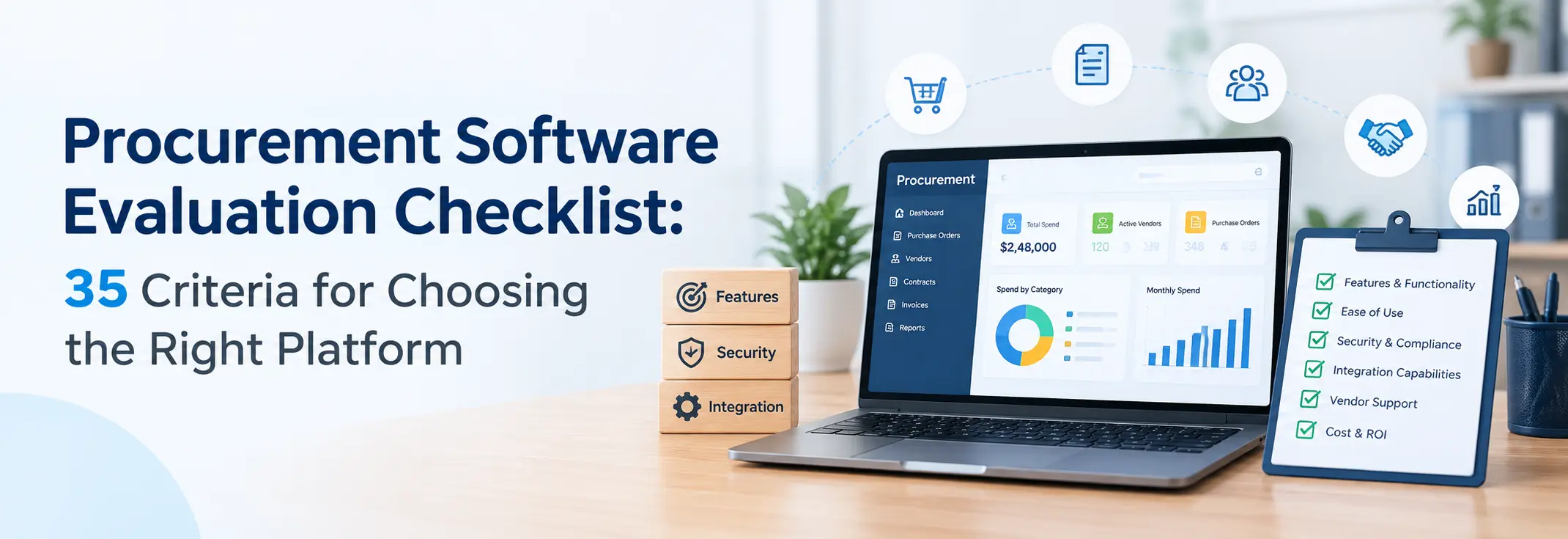
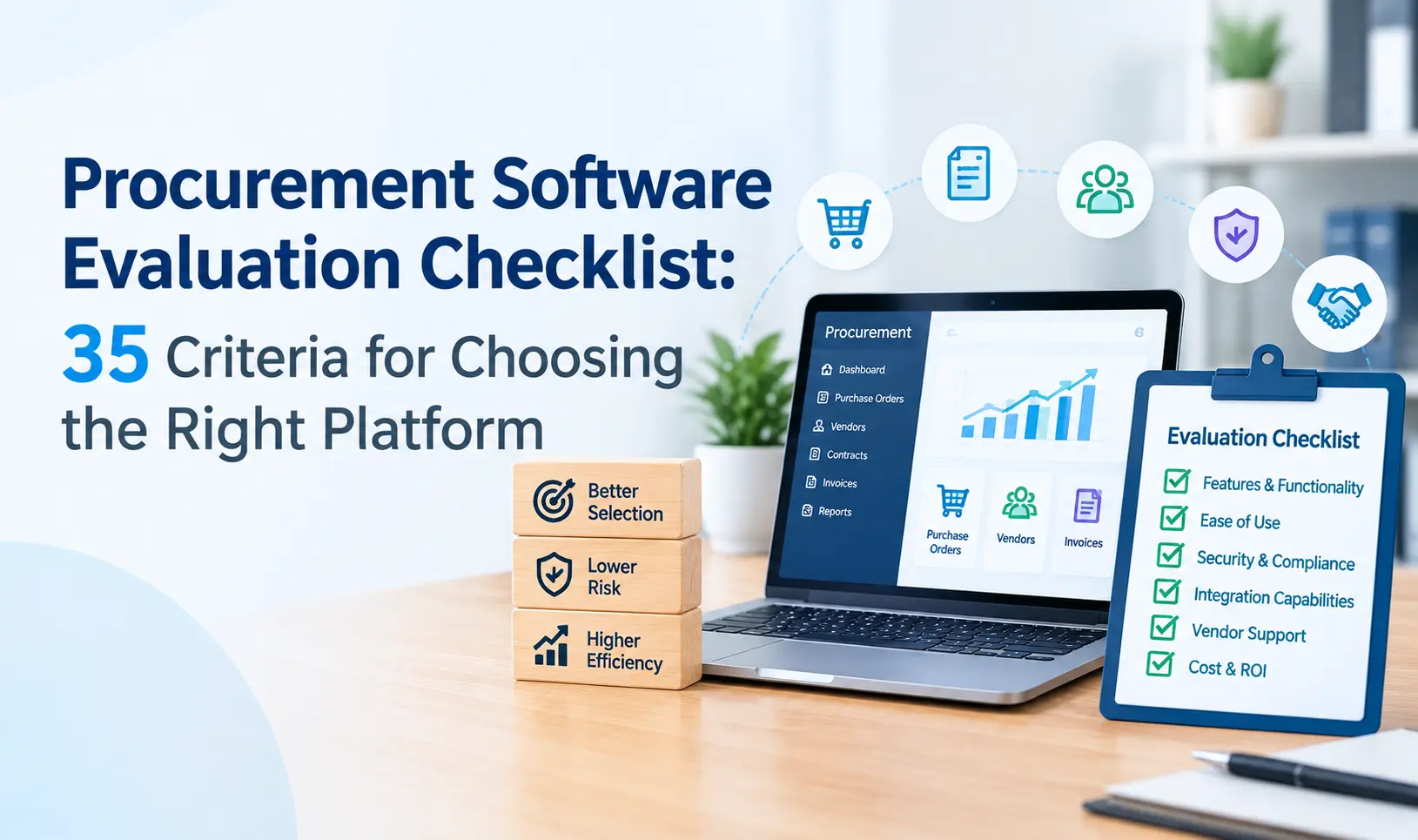
Before going into the 35 criteria, use this quick checklist to see whether your evaluation covers the areas that matter most.
This gives you the evaluation structure. The next step is turning each category into questions you can actually ask vendors.
Start with your existing procurement process rather than the software's feature list.
Map the journey from purchase request to approval, sourcing, purchase order, receipt, invoice and payment.
Ask:
The goal is not to force your procurement process into a rigid system. The software should support the processes your organization actually needs.
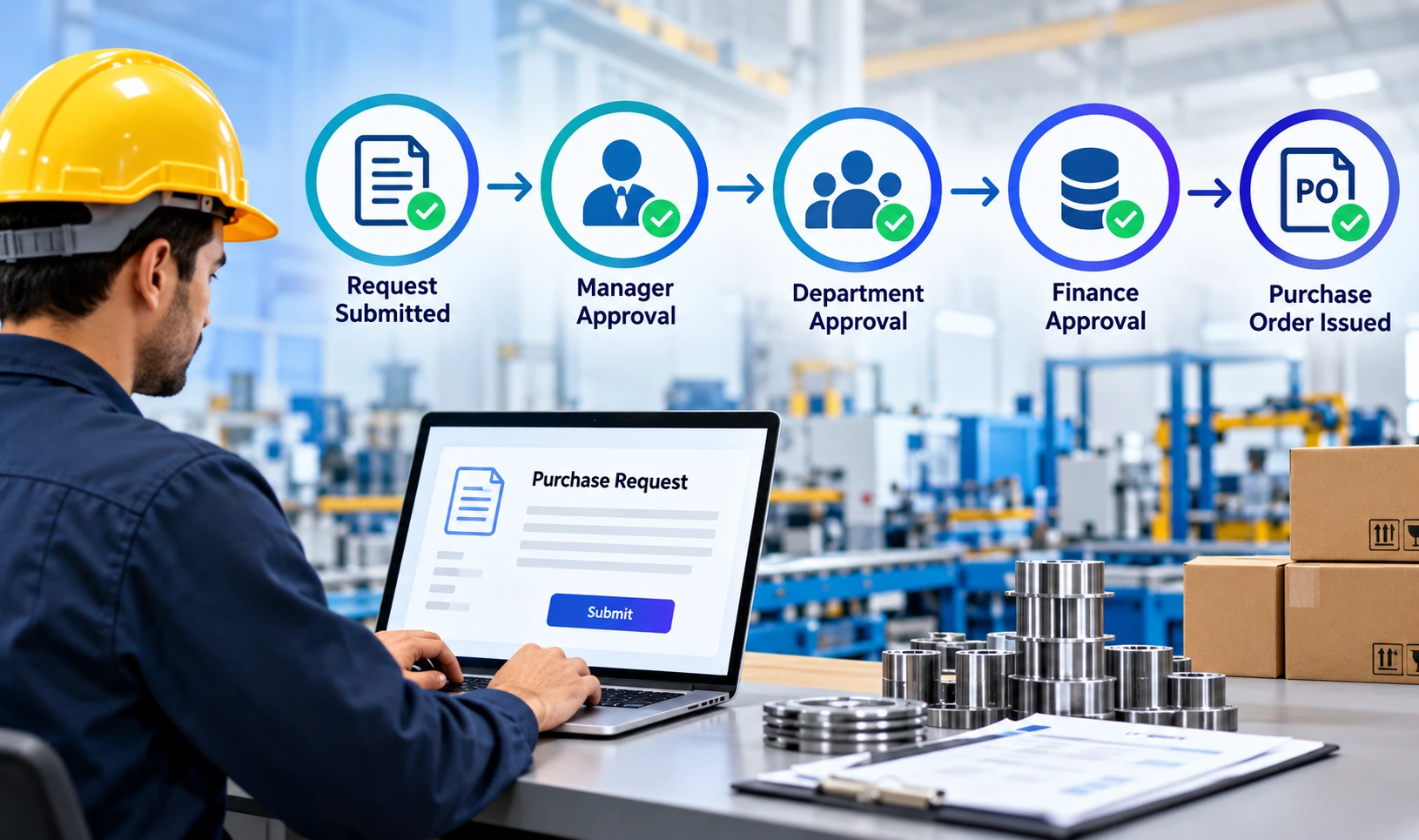
Purchase requisitions are often where procurement control begins.
Check whether users can submit requests digitally and whether the system can automatically route them to the appropriate approvers.
Evaluate:
A good workflow should make the compliant path easier than the manual workaround.

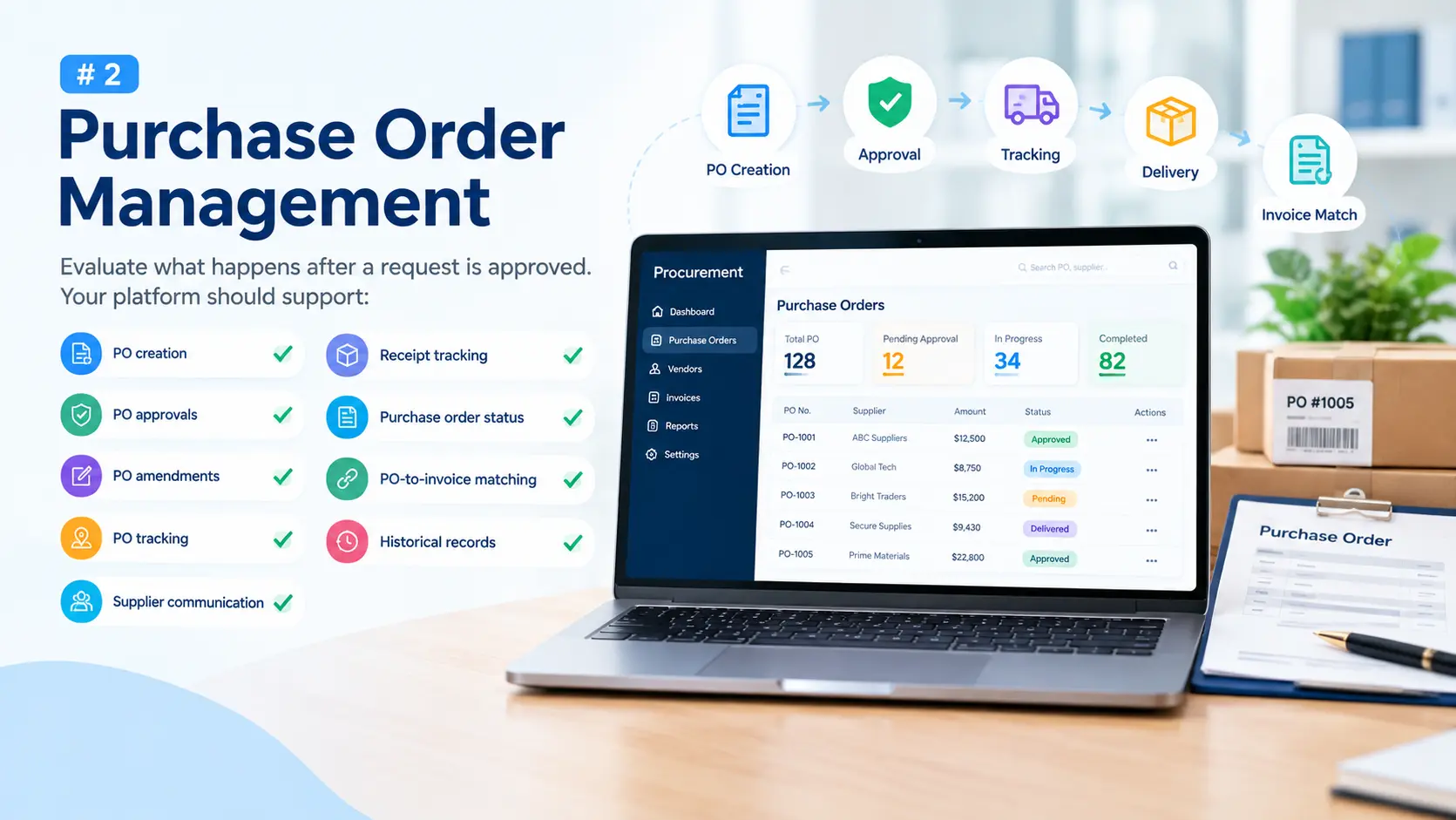
Your evaluation should also examine what happens after a request is approved.
Check whether the platform supports:
Do not evaluate purchase order management in isolation. The important question is how smoothly it connects with the rest of the procure-to-pay process.
If your organization regularly compares suppliers or collects competitive quotations, sourcing functionality should be part of the evaluation.
Ask whether the platform supports:
Also ask vendors to demonstrate a real sourcing scenario rather than simply showing a sourcing dashboard.
That distinction matters because a feature can exist in a product while still being difficult to use in practice.
See how ZYNO Procurement helps teams streamline purchasing, automate workflows, manage suppliers, improve spend visibility, and connect the complete procurement process in one platform.
Supplier information often becomes fragmented across spreadsheets, emails and finance systems.
Evaluate whether the software provides a central supplier record containing relevant information such as:
Ask:
Can procurement teams see the supplier information they need without switching between multiple systems?
If the answer is no, the platform may not provide the operational visibility you need.
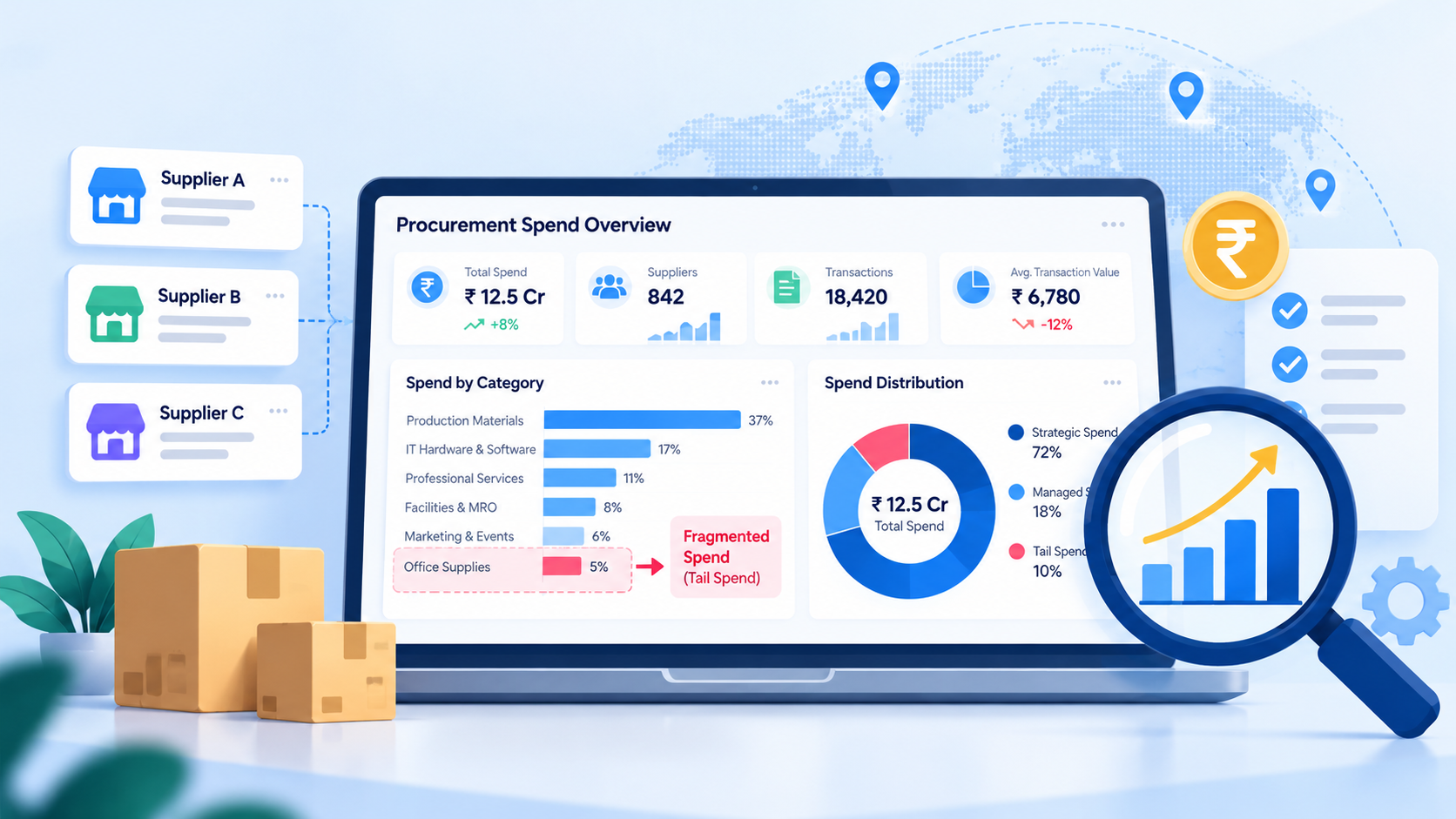
Procurement software should help you understand where money is going, not simply record transactions.
Evaluate whether the platform can provide visibility into:
The important question is whether the analytics help procurement teams make decisions.
A dashboard full of charts is not automatically useful analytics.
Look beyond basic digitization.
Ask which repetitive procurement activities can actually be automated.
For example:
Then ask:
Which steps still require manual intervention?
This helps you distinguish genuine process automation from software that simply moves paperwork onto a screen.
AI is now part of many procurement software evaluations, but it should not become a checkbox exercise.
Instead of asking only “Does your platform use AI?”, ask what the AI actually does.
Evaluate areas such as:
Also ask:
This is particularly important because AI terminology can sound impressive without necessarily improving your procurement workflow.
Integration should be one of the highest-weighted criteria if procurement data needs to flow into your financial systems.
Evaluate compatibility with:
Ask vendors to explain:
A procurement platform that does not connect properly with your existing systems can create another data silo.
Procurement depends heavily on clean and consistent data.
Evaluate how the platform handles:
Ask how data is imported, updated, validated and synchronized.
This becomes particularly important during implementation and integration.
Procurement systems contain commercially sensitive information, including supplier details, pricing, contracts and purchasing data.
Ask vendors about:
Do not stop at asking whether the product is “secure.”
Ask for the specific controls and documentation relevant to your organization's security requirements.
Procurement decisions may need to be reviewed months or years later.
Your evaluation should therefore examine whether the system provides a reliable audit trail.
Check:
Ask:
Can we reconstruct who did what, when they did it and why?
That question is much more useful than simply checking whether a vendor claims to support compliance.
A technically capable platform can still fail if employees avoid using it.
Evaluate the experience for:
Look at:
During demos, ask a non-procurement user to complete a realistic purchase request.
That can reveal usability issues that a standard sales presentation will not.
Explore how ZYNO Procurement helps businesses automate purchasing, manage suppliers, control spend, and streamline procurement workflows from one platform.
If employees approve requests or manage procurement activities outside their desks, mobile capability may matter.
Check whether the platform supports:
Do not assume that “mobile-friendly” means the same thing as a complete mobile workflow.
Test the actual actions your users need.
Determine whether standard reports are sufficient for your procurement requirements.
Evaluate:
Ask whether business users can create or modify reports themselves or whether every change requires vendor assistance.
Every organization has different approval structures, policies and procurement rules.
Ask what you can configure without custom development.
Evaluate:
The key question is:
Can the system adapt to your requirements without becoming expensive or difficult to maintain?
The software should work not only for today's procurement operation but also as the organization grows.
Consider:
Ask vendors to explain how the platform handles increasing transaction volumes and organizational complexity.
If suppliers need to interact directly with procurement, evaluate the supplier experience too.
Check whether suppliers can:
A supplier portal can reduce back-and-forth communication, but only if suppliers can use it without unnecessary friction.
Contracts often sit alongside procurement rather than inside the actual purchasing workflow.
If contract management is important to your organization, evaluate:
Ask whether contract information can influence purchasing decisions and compliance.
Buying the software is only the beginning.
Ask vendors:
Avoid accepting an implementation timeline without understanding the assumptions behind it.
If you are replacing spreadsheets or an existing procurement system, migration needs its own evaluation category.
Ask:
A successful migration is about more than importing a spreadsheet.
Procurement transformation requires user adoption.
Evaluate:
Ask how the vendor helps organizations move users away from email, spreadsheets and manual processes.
Support becomes important when procurement operations depend on the platform every day.
Evaluate:
Ask vendors to explain what happens when a critical procurement workflow stops working.
The software itself is only one part of the purchase.
Evaluate the vendor's:
Where possible, speak with customers who have similar procurement complexity.
Ask them what they would do differently if they were evaluating the software again.
A platform should not only solve today's requirements.
Ask:
Most importantly, separate available today from planned or promised later.
A capability that does not exist today should not receive the same score as a proven production feature.
Software price is only one component of procurement software cost.
Your TCO calculation should consider:
TCO = Software Costs + Implementation + Integration + Data Migration + Training + Support + Internal Costs + Other Required Costs
Ask vendors to provide a complete commercial picture.
Consider:
A lower subscription price does not automatically mean a lower total cost.
Once you understand the complete cost, build the business case.
Potential measurable benefits may include:
Use your organization's actual baseline wherever possible.
A simple formula is:
ROI = [(Total Measurable Benefits − Total Investment Cost) ÷ Total Investment Cost] × 100
Do not use vendor ROI claims as your business case without validating the assumptions.
ROI is important, but timing matters too.
Ask:
How quickly can the organization start receiving measurable value from the platform?
Evaluate:
A platform with slightly higher TCO may still make more sense if it can address important procurement problems sooner and with less operational disruption.
Understand exactly how the vendor charges.
Ask whether pricing changes based on:
Also ask:
This prevents a low initial quote from becoming an unexpectedly expensive long-term solution.
Vendor selection should include the possibility that you may eventually need to leave the platform.
Ask:
This is often overlooked during procurement software evaluations but can become important later.
After evaluating individual features, step back.
Ask whether the platform actually fits your organization's:
The best procurement software is not necessarily the most sophisticated platform.
It is the one that solves the right problems without introducing unnecessary complexity.
This is one of the most important parts of the entire checklist.
Do not let each vendor choose the scenario that makes its product look strongest.
Create the same scenarios for every shortlisted platform.
For example:
Scenario 1: An employee submits a purchase request.
Scenario 2: The request exceeds a predefined approval threshold.
Scenario 3: Procurement requests quotations from multiple suppliers.
Scenario 4: A supplier submits its quotation and compliance documents.
Scenario 5: Procurement compares supplier responses and selects a vendor.
Scenario 6: The approved request becomes a purchase order.
Scenario 7: An invoice arrives and needs to be verified.
Scenario 8: Procurement needs to investigate supplier or category spend.
Now compare how each system handles the same journey.
This turns the demo from a sales presentation into an actual evaluation exercise.
| Criterion | Weight | Vendor A | Vendor B | Vendor C |
|---|---|---|---|---|
| Procurement workflow | 15% | |||
| Integrations | 15% | |||
| Supplier management | 10% | |||
| Automation | 10% | |||
| Spend analytics | 10% | |||
| Security & compliance | 10% | |||
| AI capabilities | 5% | |||
| User experience | 5% | |||
| Implementation | 10% | |||
| TCO & ROI | 10% |
Not every criterion deserves the same importance.
For example:
Your actual weights should reflect your business priorities.
For example, an enterprise with a complex ERP environment may give integrations a much higher weight than a smaller company with fewer systems.
The scorecard creates consistency. But there is one more step that makes it much more reliable.
If you are running a formal RFP, convert your evaluation criteria into structured vendor questions.
Your RFP can cover:
This makes vendor responses much easier to compare.
| Requirement | Vendor Response | Evidence | Status | Score |
|---|---|---|---|---|
| Multi-level approval | Demonstrated | Live demo | Available | 5 |
| ERP integration | API available | Technical documentation | Requires integration | 4 |
| Supplier onboarding | Demonstrated | Live demo | Available | 5 |
| AI recommendations | Demonstrated | Product workflow | Available | 4 |
A score such as 8/10 does not tell you enough.
Record why the vendor received the score.
For each important requirement, capture:
Use statuses such as:
A score without evidence can quickly become subjective.
Your checklist should not only identify what a vendor can do. It should also reveal potential problems.
Watch for:
If the vendor keeps returning to generic dashboards instead of demonstrating your scenarios, ask why.
Do not score planned functionality as though it already exists.
Check whether integrations, implementation, support or additional modules are separate costs.
If fundamental procurement processes require significant customization, investigate the long-term maintenance implications.
“API available” is not enough. Ask what data can be exchanged, how frequently, and what the integration requires.
Ask for the documentation required by your IT and security teams.
Let actual users test the product.
Build your own business case using your procurement baseline.
A procurement system should ideally improve visibility across the systems that matter to your purchasing and finance processes.
Understand data portability before signing a long-term agreement.
There is no universal number that works for every organization.
A practical approach is to:
The important part is not evaluating as many products as possible.
It is evaluating enough relevant options to make a confident decision without turning the process into an endless comparison exercise.
Once all the scores are complete, resist the temptation to simply choose the vendor with the highest number.
Instead, review five questions:
A platform should address the problems that triggered the software search in the first place.
Integration problems can undermine an otherwise strong platform.
Adoption matters because unused functionality creates little business value.
Compare TCO with measurable benefits rather than comparing subscription prices alone.
The relationship continues after implementation.
The objective is not to find the platform with the most capabilities.
It is to find the platform with the right capabilities for your procurement operation.
If you are evaluating ZYNO Procurement by Elite Mindz, use the same framework rather than evaluating the product in isolation.
Map your requirements against areas such as:
Then take your own procurement scenarios into the evaluation.
For example:
“Show us how an employee submits a purchase request, how the approval is routed, how procurement converts it into the next purchasing step, and how we can track the transaction afterward.”
That is a much stronger evaluation question than:
“Does your platform support purchase requests?”
The first question tests the workflow.
The second only tests whether a checkbox exists.
Discover how ZYNO Procurement helps teams simplify purchasing, automate approvals, strengthen supplier management, and gain better control over procurement spend.
A strong software evaluation should naturally lead into implementation planning.
Once a vendor is selected, document:
Requirements → Configuration → Integrations → Data Migration → Testing → Training → User Adoption → Go-Live → Measurement
Before implementation begins, establish the baseline metrics you will use to measure whether the investment is delivering value.
For example:
This creates a clear connection between the original evaluation and the results you expect after implementation.
| Category | Requirement | Mandatory? | Weight | Vendor Score | Evidence | Notes |
|---|---|---|---|---|---|---|
| Workflow | Purchase requisitions | Yes | High | |||
| Workflow | Approval automation | Yes | High | |||
| Purchasing | PO management | Yes | High | |||
| Sourcing | RFQ/RFP | Yes | Medium | |||
| Suppliers | Supplier onboarding | Yes | High | |||
| Suppliers | Supplier performance | No | Medium | |||
| Analytics | Spend visibility | Yes | High | |||
| AI | AI-assisted workflows | No | Medium | |||
| Integration | ERP integration | Yes | High | |||
| Security | Access controls | Yes | High | |||
| Compliance | Audit trail | Yes | High | |||
| UX | Ease of use | Yes | Medium | |||
| Implementation | Migration | Yes | Medium | |||
| Support | SLA | Yes | Medium | |||
| Cost | TCO | Yes | High | |||
| Business Case | ROI | Yes | High |
Use this simplified framework when creating your own procurement software comparison:
You can expand this table with the full 35 criteria when conducting a formal procurement software evaluation.
Look for workflow coverage, purchase requisitions, approvals, purchase orders, sourcing, supplier management, spend analytics, automation, AI capabilities, integrations, security, compliance, usability, scalability, implementation, support, TCO and ROI.
The most important criteria depend on your organization, but workflow fit, ERP integration, supplier management, automation, security, usability, implementation effort and total cost are typically critical areas to assess.
Define requirements first, assign weights to important criteria, shortlist relevant vendors, test the same real-world scenarios with each vendor, record evidence, validate technical and security requirements, compare TCO and build an organization-specific ROI case.
A procurement software scorecard is a structured comparison tool that assigns weights and scores to software requirements so stakeholders can evaluate vendors consistently instead of relying on subjective impressions.
Yes, if AI can address a meaningful business requirement. Evaluate the actual AI use cases, data handling, human oversight and availability of each capability rather than simply giving a vendor credit for having an “AI-powered” product.
Give every vendor the same realistic procurement scenarios and ask them to demonstrate the complete workflow. Record what is available, configurable, integration-dependent, planned or unsupported.
Procurement software costs vary based on the vendor, modules, users, implementation, integrations, support and other requirements. Evaluate the complete total cost of ownership rather than comparing subscription or license prices alone.
Total cost of ownership includes software costs plus implementation, integrations, migration, training, support, internal resources and other required costs over the period being evaluated.
Use:
ROI = [(Total Measurable Benefits − Total Investment Cost) ÷ Total Investment Cost] × 100
Use your organization's actual baseline wherever possible instead of relying only on vendor estimates.
One of the biggest mistakes is choosing based on features or a polished demo without first defining requirements and testing the software against real procurement workflows.
Procurement software is a significant operational decision. The wrong platform can create integration problems, low adoption, unnecessary costs and another disconnected system.
The right evaluation process works differently.
The objective is not to buy the software with the longest feature list.
It is to select the platform that can support your procurement operation today, scale with the business and create measurable value over time.
Evaluating procurement software? Bring your real procurement scenarios, compare the requirements, validate the workflows and build the business case before you choose.
Explore ZYNO Procurement to see how a unified procurement platform can support purchasing, supplier management, sourcing, procure-to-pay and spend visibility.
Procurement Software Trends in 2026: What to Expect
Read More →
Why E-Procurement Outperforms Traditional ERP in Modern Procurement
Read More →
Top Procurement Software in India: 12 Best Options for 2026
Read More →
Best Procurement Software Companies in Kuwait (2025)
Read More →
5 Best Procurement Software in Africa for Enterprises & SMEs (2026 Guide)
Read More →
Best Procurement Software in Nigeria 2026 | Top 5 Picks
Read More →
Best Procurement Software Providers in USA (2025): How AI is Transforming the Future
Read More →
10 Best Procurement Software Providers in Thailand for Streamlined Supply Chain Management
Read More →
Top 10 Cloud-Based Procurement Solutions in Portugal for Businesses in 2025
Read More →
Top 10 Procurement Software Providers in Switzerland 2026: Streamlining Sourcing and Supplier Management
Read More →
What Makes ZYNO Procurement Different from Other Oil & Gas Procurement Software
Read More →
The Digital Transformation of Logistics Procurement in the Middle East
Read More →
A Step by Step Guide to Procurement Management Software for Modern Enterprises
Read More →
Sourcing and Procurement: What is the Difference and Why It Matters
Read More →Difference Between Procurement and Supply Chain Management
Read More →
What Is Procurement Software and Why Do Modern Businesses Need It?
Read More →
Best Procurement Management Software to Automate ERP Process
Read More →
Direct vs Indirect Procurement: Key Differences, Examples & Uses (2026)
Read More →
Smart procurement strategies for cost optimization & risk management
Read More →
What Is Procurement? Everything You Need to Know (Types, Process & SAP)
Read More →Beyond Cost-Cutting: How Procurement Drives Margin Expansion in 2026
Read More →
Direct Procurement: Process, Examples, and When to Use It
Read More →
What Are the 5 Types of E-Procurement? A Complete Guide for Businesses
Read More →
Which Procurement Management Software Is Best? Top Tools Compared for 2026
Read More →
Top 8 Coupa Alternatives to Explore in 2026
Read More →
Looking to Replace Coupa? Discover the Best Alternatives Like ZYNO Procurement
Read More →
How Does Procurement Software Work? A Complete Guide
Read More →
ZYNO Procurement vs Coupa: Best Procurement Software Comparison for Mid-Market Teams
Read More →
Best SAP ARIBA Procurement Alternatives in 2026
Read More →
ZYNO Procurement vs SAP Ariba: Which Solution Is More User-Friendly?
Read More →
AI-Powered Procurement Management Software for Fast, Connected, and Visible Workflows in Dubai
Read More →
What is Vendor Management? Complete Guide to Vendor Management Software, Systems, and Processes
Read More →
Best Procurement Management Software In Kenya
Read More →
6 SAP Ariba Alternatives for Mid-Market Businesses in 2026
Read More →
Top E-Procurement Solutions for B2B Organizations (2026)
Read More →
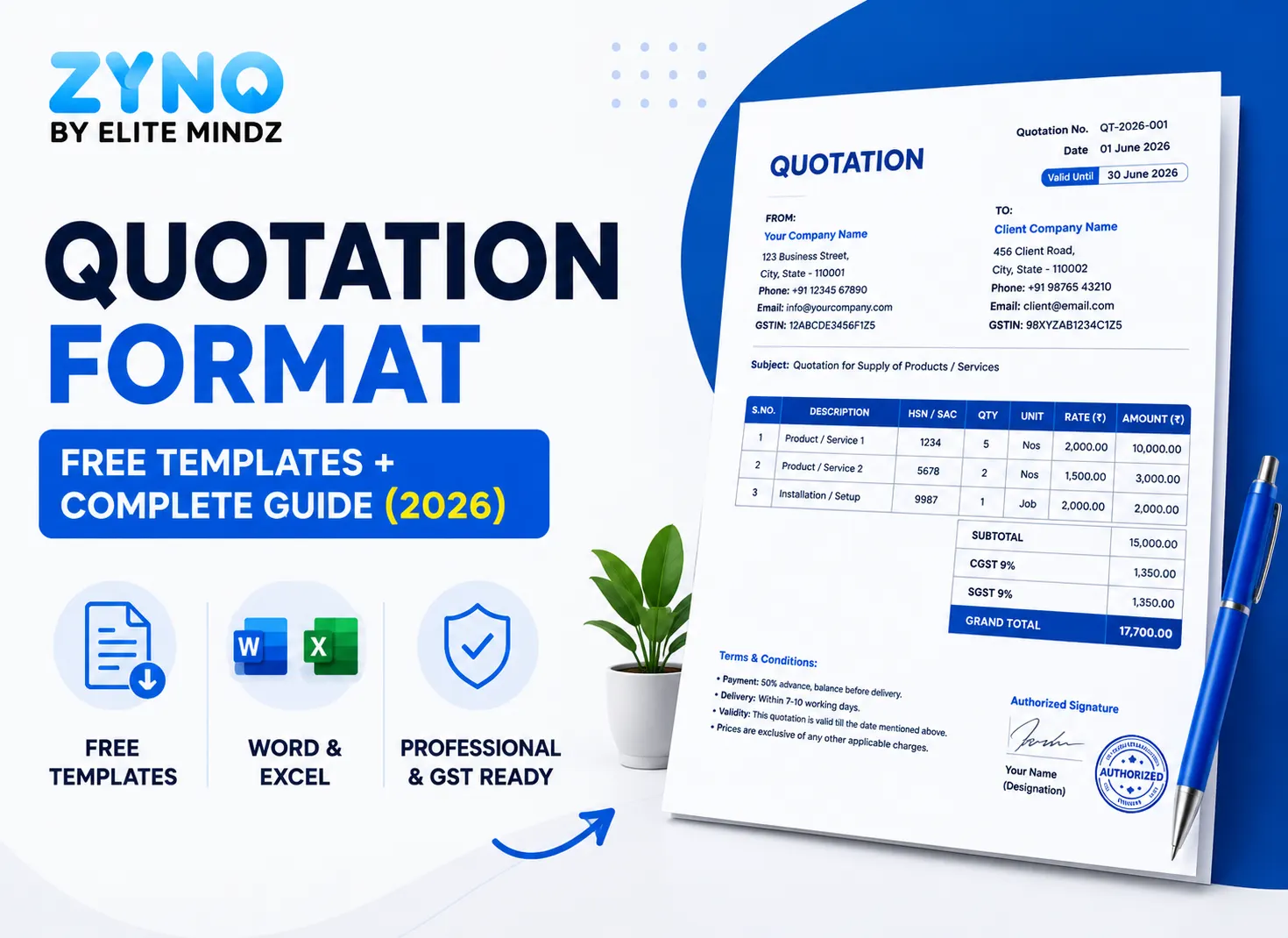
Quotation Format: Free Templates + Complete Guide (2026)
Read More →
Cost Control Software: Features, Benefits & Performance Guide for 2026
Read More →
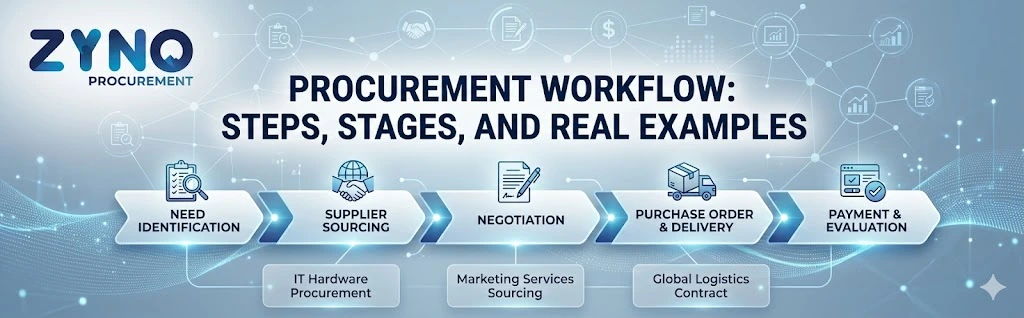
Procurement Workflow: Steps, Stages, and Real Examples
Read More →
Top 10 Zycus Alternatives for Procurement Teams in 2026
Read More →
Best Precoro Alternative for Purchase Requisition and Procurement
Read More →
Top AI Procurement Tools in 2026
Read More →
Best Tools for Supplier Risk Management
Read More →
FEFO vs FIFO vs LIFO: Differences, Benefits & Which Inventory Method Is Best?
Read More →
AI Procurement Software: Features, Benefits, Use Cases & How to Choose
Read More →
Best AI Tools for Supply Chain Procurement
Read More →
Procurement Risk Management
Read More →
Still Using Excel for Procurement? Read This Before It's Too Late
Read More →
Best RFP Software in 2026: Top Tools Compared for Faster Proposal Responses
Read More →
What Is Procure-to-Pay (P2P)? A Complete Guide
Read More →
Complete Procurement Workflow Guide for Modern Businesses
Read More →
Complete Guide to E-Procurement Solutions for B2B Organizations
Read More →
Cost Control Software Comparison Guide: Features, Pricing & Benefits
Read More →
Purchase Order Tracking: How to Manage Every PO Without the Chaos
Read More →
Inventory Management: What It Is, How It Works and Why It Matters
Read More →
Top 10 Procurement Software Tools for Purchasing Automation in 2026
Read More →
Agentic AI Procurement Platforms and the Future of Strategic Sourcing
Read More →
AI Spend Analytics Software for Procurement Leaders
Read More →
From Prompt to Procurement: How AI Is Transforming Enterprise Purchasing
Read More →
ZYNO Procurement vs IBM Procure-to-Pay Automation
Read More →
ZYNO Procurement vs Infor Nexus: Which Procure-to-Pay Platform Fits Your Team?
Read More →
AI-Powered Procurement Software in 2026: Top 6 Platforms That Actually Deliver ROI
Read More →
Contract Management Software Buyer's Guide: Features, Costs & Top Picks
Read More →
Top 10 Procure to Pay Software Companies in India 2026
Read More →
10 Best Vendor Management Software in India (2026): Features, Benefits & Comparison
Read More →
How Machine Learning and AI Are Transforming Procurement: A Strategic Overview
Read More →
What Is Procurement Software for GP? Features, Benefits and Best Solutions for Businesses
Read More →
What Procurement Software Do Mid-Market Companies Use Instead of SAP Ariba or Coupa?
Read More →
Prompt-Based Procurement Software for Kenyan Businesses
Read More →
Project Management Software: A Complete Guide to Streamline Business Operations and Procurement Processes
Read More →
SAP Ariba vs ZYNO Procurement: Complete Feature Comparison (2026)
Read More →
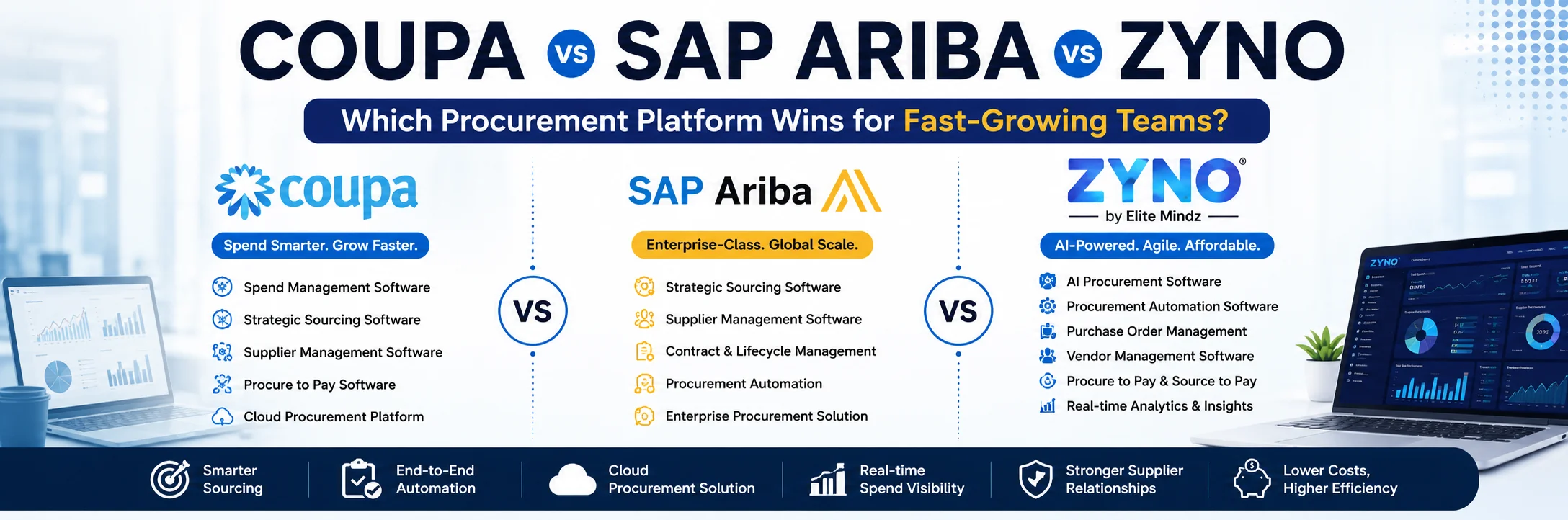
Coupa vs SAP Ariba vs ZYNO: Which Procurement Platform Wins for Fast-Growing Teams?
Read More →
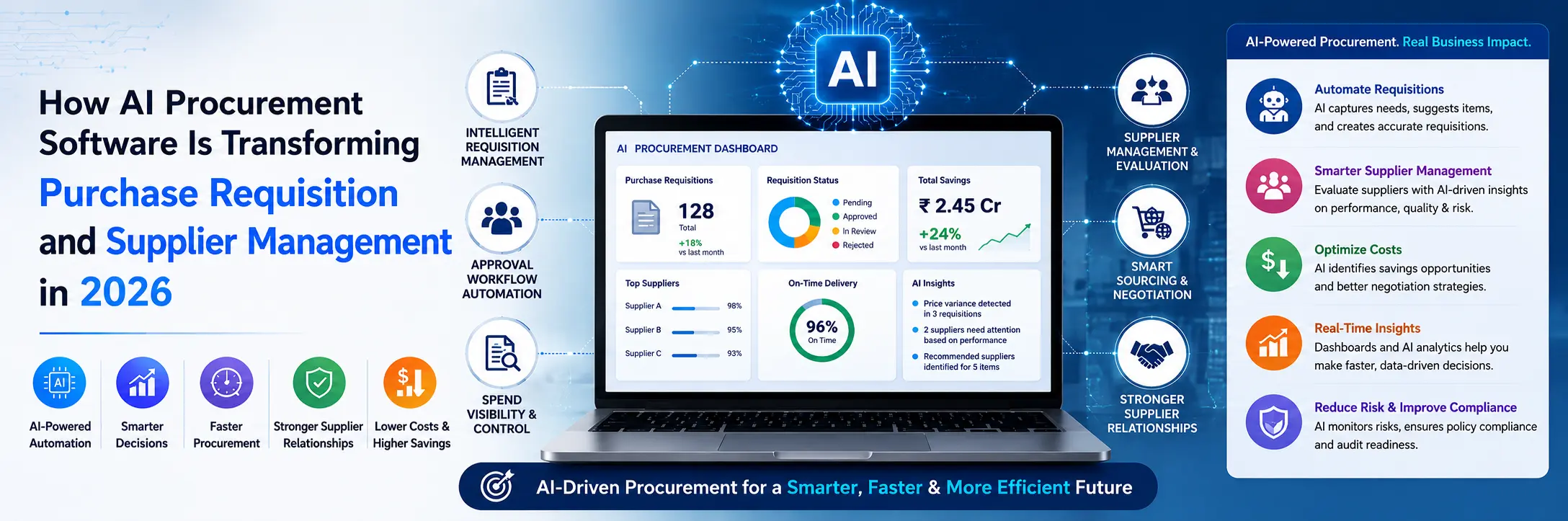
How AI Procurement Software Is Transforming Purchase Requisition and Supplier Management in 2026
Read More →
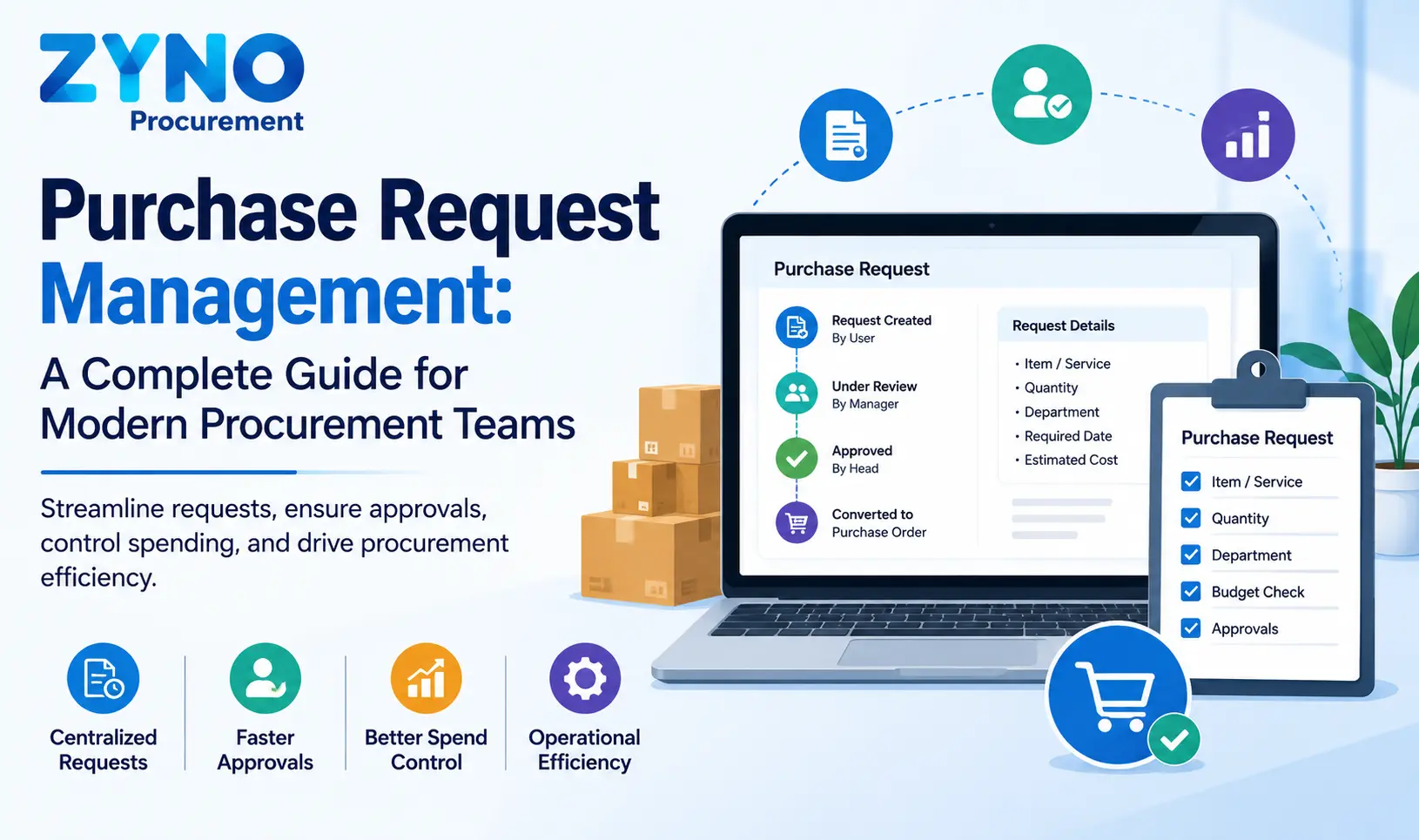
Purchase Request Management: A Complete Guide for Modern Procurement Teams
Read More →
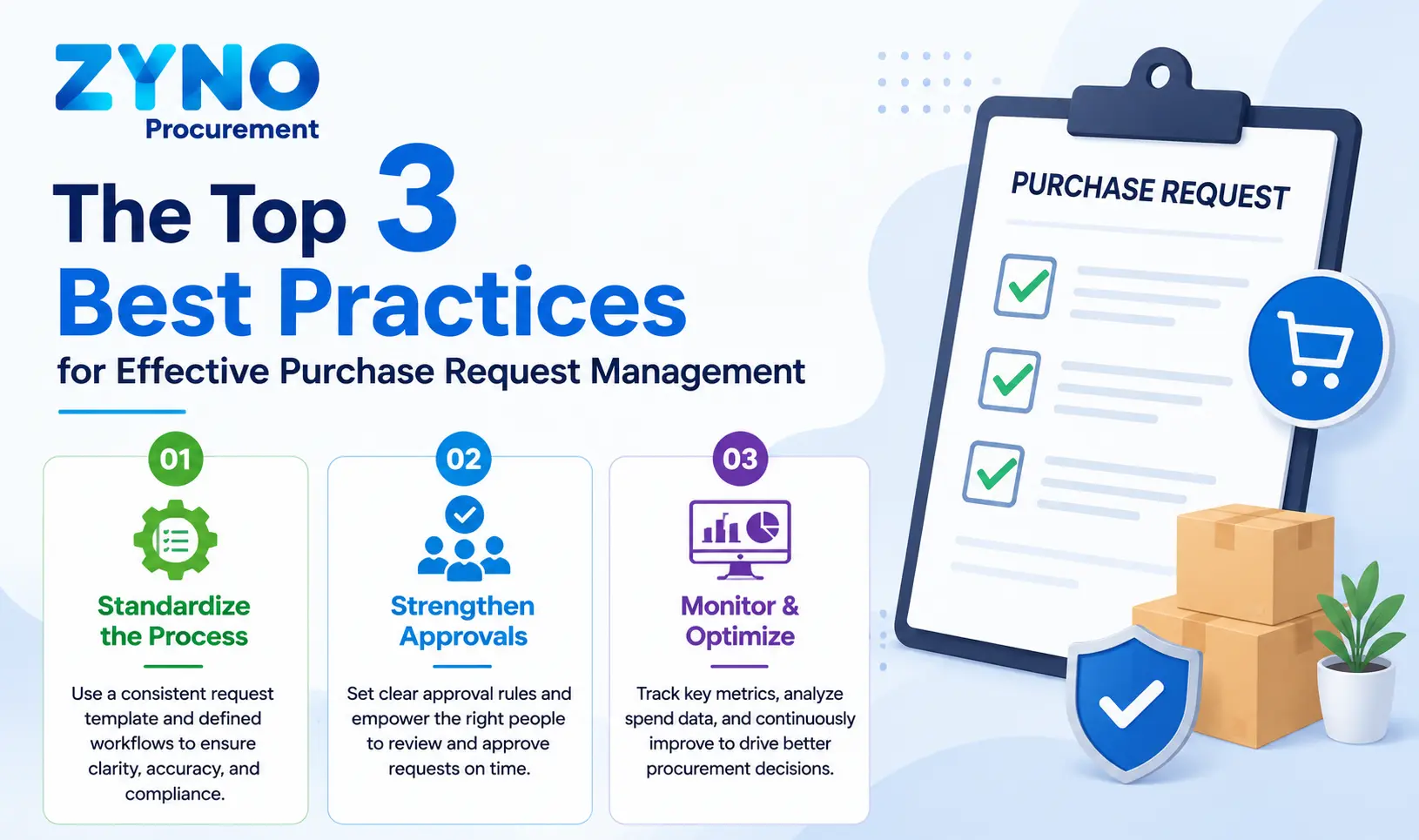
The Top 3 Best Practices for Effective Purchase Request Management
Read More →
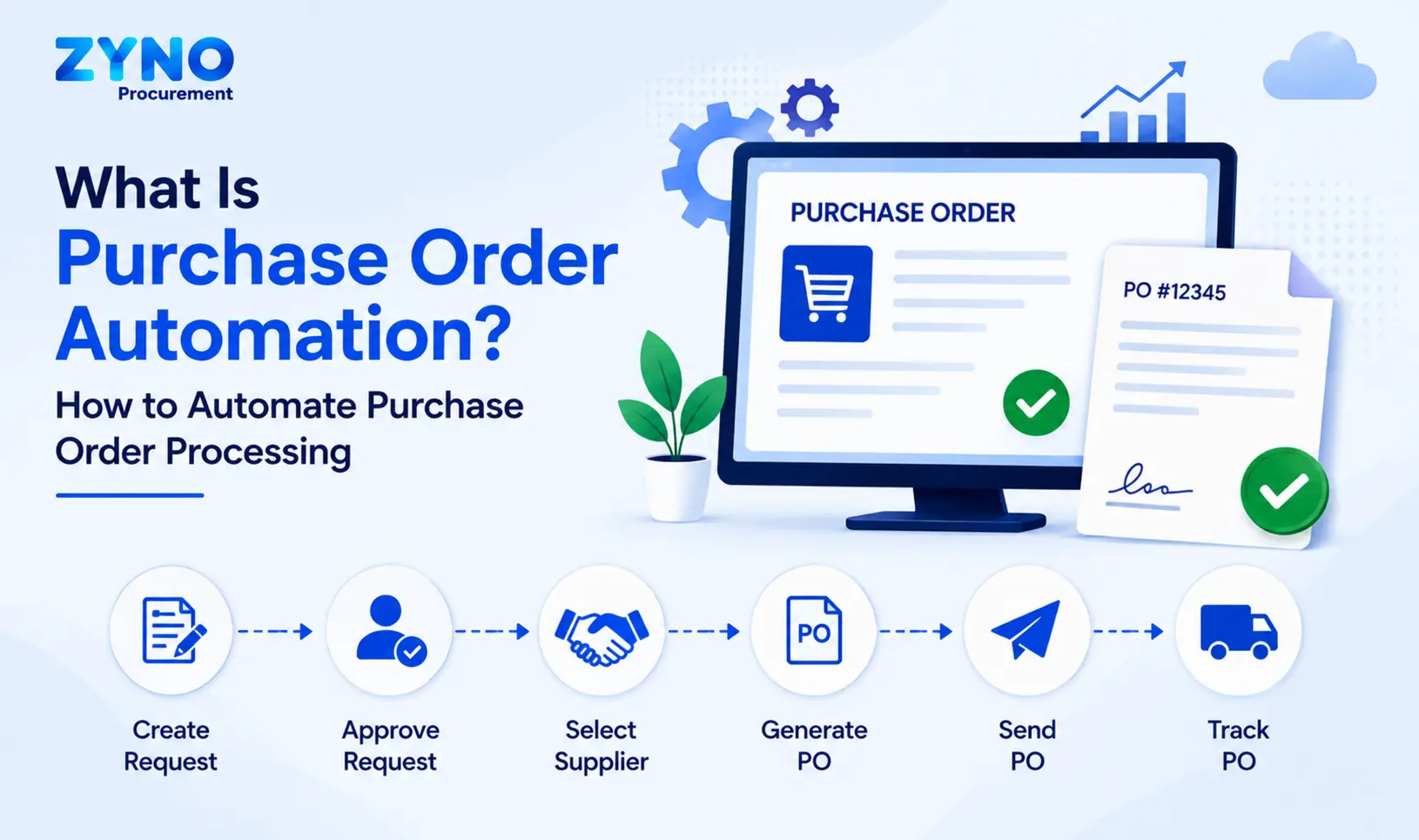
What Is Purchase Order Automation? How to Automate Purchase Order Processing
Read More →
5 Common Purchase Request Mistakes and How to Avoid Them
Read More →
What is Supplier Relationship Management in Procurement? A Complete Guide
Read More →
What is Strategic Vendor Management? A Complete Guide for Modern Procurement
Read More →
What Are Inventory Control Methods? Complete Guide to Types, Techniques, Systems, & Benefits
Read More →
Inventory Audit Checklist: Steps, Process & Best Practices
Read More →
Warehouse Inventory Management: Best Practices for 2026
Read More →
Treasury Management System (TMS): A Complete Guide for Modern Corporates
Read More →
What is Portfolio Management Services (PMS) and What Are Its Benefits?
Read More →
Generative AI Procurement Software Solution: The Future of Intelligent Procurement
Read More →
Top Contract Management Software Companies in Ethiopia: Features, Benefits & Best Procurement Solutions
Read More →
AI Procurement Software: Complete Guide to Intelligent, Generative AI & Machine Learning Procurement Solutions
Read More →
Top SAP alternatives for small, midsize, and enterprise businesses
Read More →
Best RFP Software in 2026: Top Solutions for Smarter Procurement and Proposal Management
Read More →
GST on Purchase: Complete Guide to GST on Purchases in India
Read More →
Procurement Software UAE: Complete Guide to Choosing the Best Procurement Solution
Read More →
Supply Chain Procurement: Everything You Need to Know
Read More →
Top 10 Oracle Procurement Alternatives for Businesses in 2026
Read More →
Quotation Software vs Excel: Which Is Better for Businesses in 2026?
Read More →
Contract Management Software Buyer's Guide: Features, Pricing & How to Choose
Read More →
How to Identify the Right Vendor: 10 Simple Steps
Read More →
Top 10 Automated PO Generation Tools in 2026: Best Purchase Order Software with AI Capabilities
Read More →
How to Generate a PO Automatically in SAP: Step-by-Step Guide
Read More →
What Is the Best Budget-Friendly Procurement Software With Vendor Onboarding for Indian SMEs?
Read More →
How to Generate a PO Automatically in SAP: Step-by-Step Guide
Read More →
How to Solve Invoice Mismatches: 10 Real Ways to Fix Invoice Discrepancies
Read More →
Top 10 Vendor Onboarding Tools for Businesses in 2026: Features, Process & How to Choose
Read More →
Vendor Comparison & Supplier Intelligence: How AI Helps Businesses Choose the Right Vendor
Read More →
How to Choose the Right Procurement Management Software in 2026 (Complete Buyer's Guide)
Read More →
How to Reduce Procurement Costs: 18 Practical Strategies That Actually Work
Read More →
How to Choose the Right Procurement Management Software in 2026 (Complete Buyer's Guide)
Read More →
How to Calculate Procurement Software ROI: Formula, Example & Calculator
Read More →
Procurement Software Evaluation Checklist: 35 Criteria for Choosing the Right Platform
Read More →
Procurement Software Evaluation Checklist: 35 Criteria for Choosing the Right Platform
Read More →Partner with ZYNO by Elite Mindz to revolutionize how your business works. Fill out the form, and we’ll reach out with AI-powered solutions made just for you.
We use browser cookies to ensure you get the best experience on our website. Learn more
The form was submitted successfully!