Procurement Software Trends in 2026: What to Expect
Read More →

×
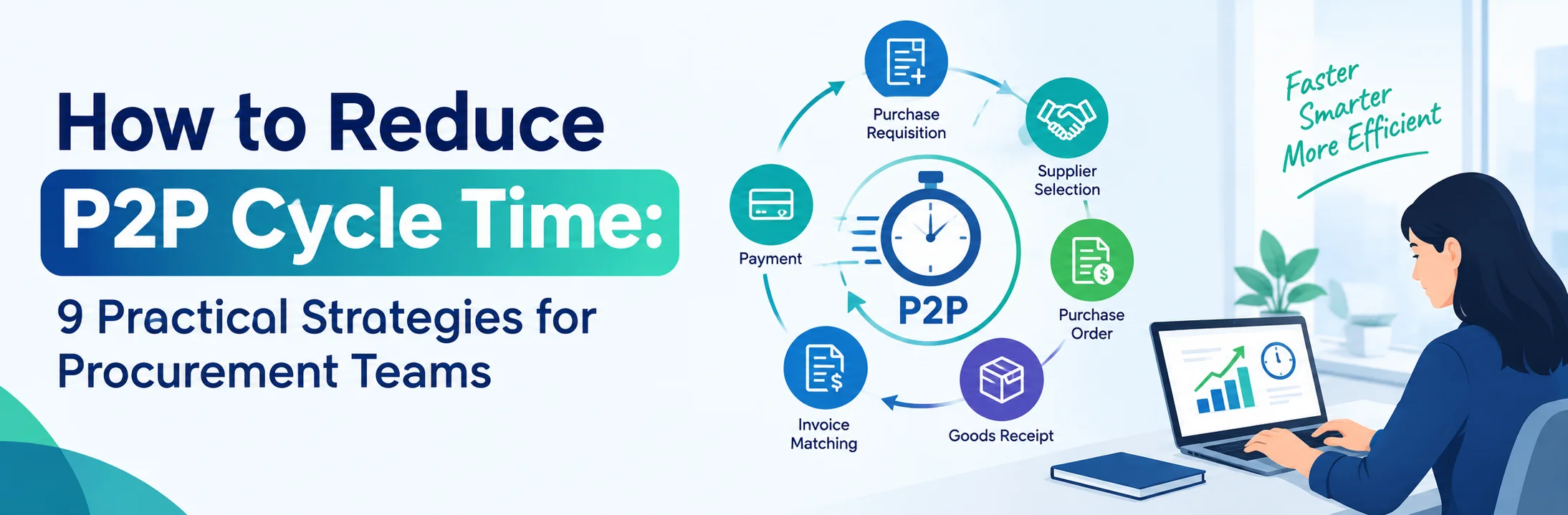
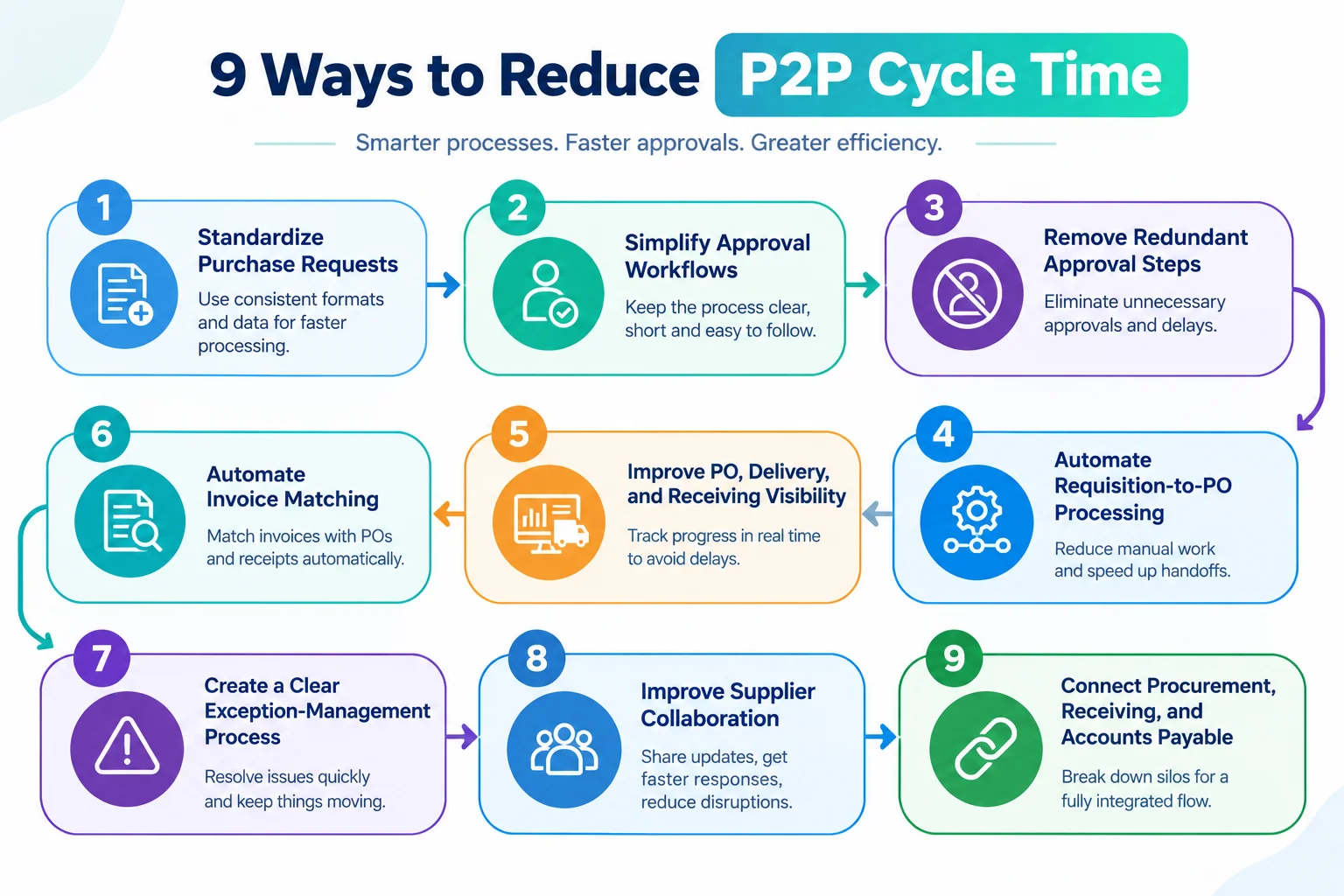
Learn how to reduce P2P cycle time with 9 practical procurement strategies. This guide explains how to streamline purchase requests, simplify approvals, automate purchase orders, improve invoice matching, strengthen supplier collaboration, and connect procurement with accounts payable. Discover practical ways procurement teams can reduce delays, improve process visibility, and build a faster, more efficient procure-to-pay workflow.
Businesses using ZYNO Books cut accounting time by 70% and stay 100% ZATCA-compliant — automatically.
To reduce P2P cycle time, identify where purchases spend the most time waiting, then remove unnecessary approvals and handoffs, standardize purchase requests, automate repetitive procurement and invoice tasks, improve supplier coordination, and route exceptions to the right people. The biggest delays usually occur around purchase requisition approvals, purchase order creation, receiving, invoice matching, and exception resolution.
A practical way to improve P2P cycle time is to map the process, measure each stage, find the bottleneck, simplify the workflow, automate repetitive work, and monitor the results. The goal is not to push every purchase through as quickly as possible. It is to make routine transactions move smoothly while giving procurement and finance teams more time to deal with purchases and exceptions that actually require their attention.
P2P cycle time is the time it takes to move a purchase through the procure-to-pay process, from the initial purchase request through approval, purchasing, receiving, invoice processing, and payment.
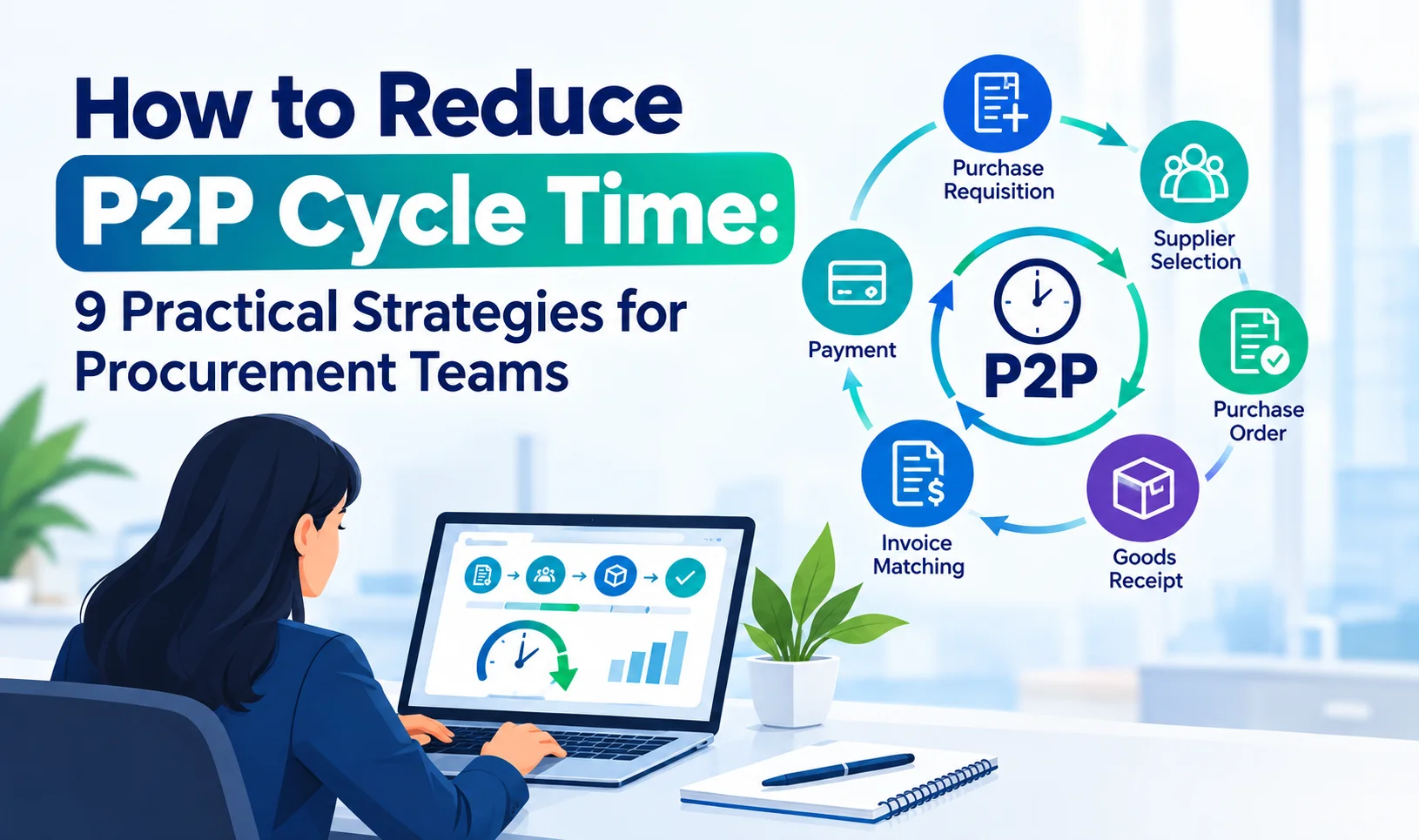
A typical P2P process looks like this:
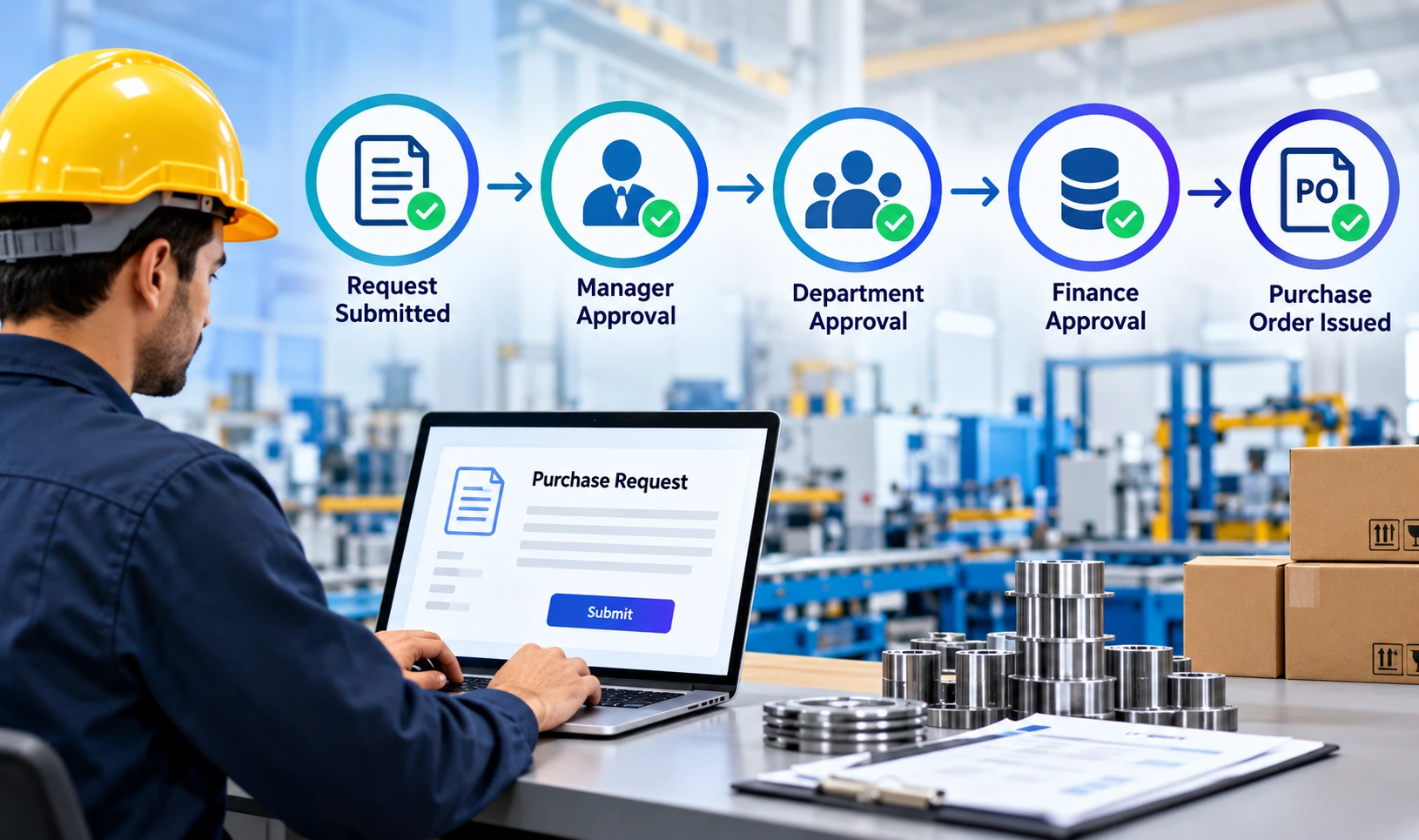
Purchase Request → Approval → Purchase Order → Goods or Service Receipt → Invoice → Matching → Payment
The exact workflow varies between organizations. Some businesses add sourcing, contracting, compliance, or additional approval stages. Others use simpler workflows for routine purchases.
That is why there is no useful universal answer to "What should P2P cycle time be?" until you define what your own process includes.
More importantly, you need to separate working time from waiting time.
A buyer might spend only a few minutes creating a PO, but the purchase could still take days because the request was waiting for approval beforehand.
That difference is where many P2P improvement opportunities begin.
Streamline purchase requests, approvals, purchase orders, invoicing, and supplier workflows with ZYNO Procurement.
A slow P2P process creates more than a delay in getting a purchase completed.
Think about what happens when an employee needs something.
They submit a request. Someone reviews it. A manager approves it. Procurement creates the PO. The supplier delivers the goods or service. Someone records the receipt. AP receives the invoice. The invoice is matched. Then it moves toward payment.
When everything flows, the process feels almost invisible.
But if the request sits in an inbox for two days, the supplier needs to be chased, or the invoice cannot be matched because the receipt was never recorded, the same purchase suddenly becomes a chain of follow-ups.
That is why P2P cycle time is not just an AP metric. It involves requesters, procurement, approvers, receiving teams, suppliers, and finance.
A well-designed P2P process should make it easy to:
The objective is simple:
Less waiting. Less rework. Fewer unnecessary handoffs.
Once you look at P2P that way, the next question becomes much easier to answer: where is your process actually losing time?
Before changing the workflow or buying new software, find the bottleneck.
A purchase can have a long end-to-end cycle even when the actual work involved takes only a few hours. The rest of the time may be spent waiting for information, approvals, receipt confirmation, invoice clarification, or exception resolution.
Common bottlenecks include:
|
P2P Stage |
Common Bottleneck |
What Happens Next |
|---|---|---|
|
Purchase Request |
Missing information |
Request goes back to the employee |
|
Approval |
Request waits in an inbox |
Purchase cannot move forward |
|
PO Creation |
Manual data entry |
More work and possible errors |
|
Supplier / Order |
Poor status visibility |
Procurement starts chasing updates |
|
Receiving |
Receipt not recorded |
Invoice may not match |
|
Invoice Processing |
Manual data entry |
AP workload increases |
|
Invoice Matching |
Price or quantity difference |
Transaction becomes an exception |
|
Payment Approval |
Manual routing |
More waiting |
|
Exception Handling |
Unclear ownership |
Issues remain open |
Notice the pattern?
The problem is often not that someone is working too slowly.
It is that the transaction is waiting between steps.
That is why simply telling the team to "process POs faster" rarely fixes the underlying issue.

A P2P delay can begin before procurement even receives a usable request.
If employees submit purchasing requirements through emails, spreadsheets, chat messages, or different forms, procurement Software may have to ask basic questions before the purchase can move forward.
What exactly is needed?
How much?
When is it required?
Which department is requesting it?
What is the business purpose?
Every clarification adds another handoff.
A standardized purchase request should capture the information needed for the next stage of the process.
Depending on your organization, that may include:
The goal is not to create a giant form.
It is to make the request complete enough to move forward without unnecessary back-and-forth.
Approval queues are another common source of waiting time.
A purchase may be ready to move forward but remain untouched because the request went to the wrong person, the approver is unavailable, or the workflow requires more approvals than the purchase actually needs.
Approval rules can route requests based on factors such as:
This does not mean removing procurement controls.
It means making those controls easier to apply consistently.
For example, a routine low-value purchase may need a simpler approval path than a high-value or sensitive purchase.
| Stage | What to Investigate |
|---|---|
| Request | How often are requests returned for missing information? |
| Approval | How long do requests wait for approval? |
| PO | How long does PO creation take after approval? |
| Receipt | How long after delivery is receipt recorded? |
| Invoice | How long does invoice processing take? |
| Matching | How many invoices require manual investigation? |
| Payment | How long does an approved invoice wait for payment? |
The important question is not:
"How many approvals do we have?"
It is:
"Which approvals provide useful control, and which ones simply add waiting time?"
This is where a workflow review can uncover some surprisingly simple improvements.
Look at every approval stage and ask:
If several people are reviewing the same information without adding a different decision or control, there may be an unnecessary handoff.
A good approval process balances control and speed.
You do not want to remove the approvals that protect the business. You want to remove the waiting that adds no real value.
Once a purchase request is approved, another delay can appear when procurement has to create the PO manually.
Someone may need to copy item details, quantities, supplier information, pricing, delivery information, and accounting information from one system or document into another.
That is repetitive work.
It also creates another opportunity for data-entry errors.
A connected workflow can carry approved requisition information into the PO process.
Instead of:
Request → Approval → Email → Spreadsheet → Re-entry → PO
the workflow can become:
Request → Approval → PO
The PO still exists. The necessary controls still exist.
What changes is the amount of manual work required to move approved information from one stage to the next.
Creating a PO does not mean the P2P process is finished.
The business still needs to know what happens after the order is placed.
Has the supplier received the PO?
Has the order been confirmed?
Has the product been delivered?
Has the service been completed?
Has the receipt been recorded?
These questions matter because receiving delays can create problems later during invoice matching.
Consider this:
PO created → Goods delivered → Receipt not recorded → Invoice arrives → Invoice cannot be matched → AP starts following up
At first glance, this looks like an invoice-processing problem.
But the delay actually started at receiving.
That is why P2P optimization needs visibility across the transaction rather than isolated visibility inside procurement or AP.
Invoice processing becomes much more time-consuming when employees have to manually compare every invoice with purchasing and receiving information.
Where the required information is available, automated matching can compare:
When the information matches the organization's rules, the transaction can continue.
When something does not match, it can be routed for review.
The workflow becomes:
Routine transaction → Automated processing
Mismatch → Human review
That is a much better use of people's time than manually reviewing every clean transaction.
It also aligns with the current P2P automation approach used across leading procurement platforms, where routine transactions are automated and exceptions are surfaced for human attention.
Bring requests, approvals, purchase orders, suppliers, and invoices into one streamlined procurement workflow with ZYNO Procurement.
Not every purchase will follow the happy path.
You will have:
The problem is not that exceptions exist.
The problem is when nobody knows what happens next.
For recurring exceptions, define:
Now an exception becomes a workflow rather than a mystery sitting in someone's inbox.
This matters because a small number of unresolved exceptions can have a disproportionate effect on overall cycle time.
P2P delays do not always happen inside your organization.
Suppliers can also become part of the bottleneck.
An invoice may arrive without the required PO information. A supplier may not know where to submit an invoice. Someone may have to answer repeated questions about payment status.
Clear supplier requirements can remove some of this friction.
Make sure suppliers understand:
Supplier collaboration is not just a relationship-management issue.
It can directly affect how smoothly the transaction moves from order to payment.
There is another problem that becomes more obvious as procurement operations grow: different teams often have different pieces of the same transaction.
Procurement knows what was requested and approved.
Purchasing knows what PO was created.
Receiving knows what arrived.
AP knows what invoice was received.
If those pieces do not connect, someone ends up playing messenger.
A connected P2P workflow can give teams a clearer view of the transaction from request through payment.
That makes it easier to answer:
That visibility can eliminate a surprising amount of manual follow-up.
If your goal is to reduce P2P cycle time, do not start with a software demo.
Start with your existing process.
Take a sample of recent purchases and map the time between:
Request → Approval → PO → Receipt → Invoice → Match → Payment
Then separate processing time from waiting time.
For example:
This is where the real story usually appears.
You might think invoice processing is the problem because AP has a backlog. But after mapping the process, you may discover that many invoices are waiting because receipts were not recorded.
Now you have something you can actually fix.
Measure first. Automate second.
Once you know where the delays are, measure them consistently.
Useful P2P metrics include:
The total elapsed time across your defined P2P process.
The time between an approved requisition and the creation of the PO.
The time a request spends waiting for approval.
The time between placing an order and recording the receipt.
The time required to process an invoice after it is received.
The time between invoice approval and payment.
The percentage of transactions requiring manual intervention.
The percentage of invoices that match the relevant purchasing and receiving information without additional investigation.
The percentage of transactions that can move through the workflow without manual intervention.
Do not choose an arbitrary cycle-time target simply because another company publishes one.
Your business has its own purchase categories, supplier terms, approval rules, systems, and controls.
Establish a baseline.
Then focus on the stages creating the most unnecessary waiting.
There is no single fix that works for every procurement team.
If requests are incomplete, improve intake.
If approvals are slow, review the approval rules.
If approved requests take too long to become POs, reduce manual PO creation.
If invoices frequently fail matching, investigate PO and receiving data.
If employees constantly ask for purchase status, improve visibility.
If exceptions stay open too long, create clear ownership and escalation.
In short:
Fix the bottleneck before you automate the bottleneck.
This matters because automation can make a good process faster, but automating an unnecessarily complicated process can simply make a complicated process run electronically.
The first job is to make the workflow clear.
The second is to automate it.
Once the process is understood, automation can remove repetitive work from the workflow.
Depending on the platform and process, procurement automation can support:
The benefit is not simply that software "does things faster."
A connected workflow can reduce duplicate data entry, make ownership clearer, provide status visibility, and allow routine transactions to move without unnecessary manual intervention.
Current P2P automation guidance increasingly emphasizes this end-to-end approach: map the existing process first, prioritize the largest sources of delay, automate requisition-to-PO and invoice-to-pay workflows, connect relevant systems, and monitor cycle time and exception metrics afterward.
That is where procurement automation can make a real difference.
If you are looking to reduce manual work across procure-to-pay, ZYNO Procurement brings several procurement workflows into a connected environment.
Its Purchase Request workflow supports structured purchase requests, approval workflows, request tracking, notifications, and movement from approved requisitions toward purchase orders.
Its Procure-to-Pay workflow connects purchasing, approvals, purchase orders, order tracking, invoice processing, and spend visibility.
ZYNO also provides Vendor Management, which helps teams centralize supplier information and manage supplier-related workflows, while Spend Analytics provides visibility into purchasing activity across suppliers, categories, departments, and other dimensions.
For organizations dealing with manual procurement intake, ZYNO also offers AI-assisted purchase requisition capabilities designed to help turn a purchasing requirement into a structured procurement request.
The important part is how these capabilities are applied.
ZYNO should not be treated as a magic button that automatically fixes every P2P problem.
If approvals are unnecessarily complicated, simplify them.
If requests are incomplete, standardize them.
If invoice exceptions are the problem, improve matching and exception handling.
Then use automation to make the improved process easier to execute consistently.
That is a much more practical way to approach P2P cycle-time improvement.
Consider a company where employees submit purchase requests by email.
Procurement reviews the request, asks for missing information, sends it to a manager for approval, waits for a response, creates the PO manually, sends it to the supplier, waits for delivery, and then AP receives an invoice that needs to be checked manually.
The workflow looks like this:
Email request → Clarification → Approval → Manual PO → Supplier follow-up → Receipt → Invoice → Manual matching → Payment
Now imagine the same process after standardization and automation:
Structured request → Automated approval → PO creation → Order tracking → Receipt → Invoice matching → Exception review → Payment
Notice what changed.
The people did not disappear.
The controls did not disappear.
The unnecessary movement between people and systems did.
That is the real opportunity when you are trying to reduce P2P cycle time.
If you are starting your P2P automation journey, focus first on repetitive activities that occur frequently and follow predictable rules.
A practical sequence is:
Make it easier for employees to submit complete requests.
Automatically send requests to the appropriate approver.
Reduce duplicate data entry after approval.
Give procurement and requesters visibility without constant status emails.
Automate routine matches and send discrepancies for review.
Give recurring exceptions clear owners and escalation paths.
Track cycle time, exceptions, approvals, and spend so you can see whether the process is actually improving.
This sequencing is consistent with current procurement automation guidance, which increasingly recommends auditing the existing workflow first and then prioritizing the stages with the greatest delay, manual effort, or exception volume.
Manage purchase requests, suppliers, approvals, purchase orders, invoices, and spend from one centralized procurement platform with ZYNO Procurement.
Reducing P2P cycle time is not about telling procurement teams to work faster.
It is about making the process easier to move through.
Start with the journey from purchase request to payment. Map it. Measure it. Find where transactions are waiting, being returned, manually re-entered, or held up by exceptions.
Then fix those bottlenecks.
Standardize the request. Simplify the approval. Automate repetitive work. Improve visibility. Manage exceptions properly. Measure the result.
When those pieces work together, procurement and finance teams can spend less time chasing transactions and more time managing spend, suppliers, and the decisions that actually require their expertise.
For organizations looking to connect purchasing, approvals, purchase orders, order tracking, invoice processing, supplier workflows, and spend visibility, ZYNO Procurement can be evaluated against the specific bottlenecks in the current P2P process.
Start by mapping your current procure-to-pay process and measuring how long each stage takes. Identify where transactions spend the most time waiting or being reworked. Then standardize purchase requests, simplify approval workflows, automate repetitive purchasing and invoice tasks, improve supplier coordination, and create clear exception-management workflows.
Common causes include incomplete purchase requests, slow approvals, unnecessary approval layers, manual PO creation, limited order visibility, delayed receipt confirmation, invoice mismatches, disconnected systems, and unclear ownership of exceptions.
Automation can route purchase requests and approvals, reduce duplicate data entry, move approved requisitions into purchasing workflows, track orders, support invoice matching, send notifications, and route exceptions to the appropriate person. The goal is to reduce unnecessary manual handoffs and waiting.
P2P cycle time generally refers to the transactional process from purchasing through payment. Procurement cycle time can have a broader definition and may include activities such as sourcing, supplier selection, negotiation, and contracting.
Because organizations define these processes differently, establish the exact start and end points before measuring either one.
Define the start and end points of your P2P process, then measure elapsed time between stages such as requisition-to-approval, approval-to-PO, PO-to-receipt, invoice-to-match, and invoice-to-payment. Measuring each stage helps identify where delays are actually occurring.
There is no single cycle-time target that applies to every business. Purchase complexity, category, supplier terms, approval requirements, systems, and internal controls all affect the process.
A better approach is to establish your own baseline and work on the stages that create the most unnecessary waiting.
Start by improving the quality of information available for matching. Standardize supplier invoice requirements, make sure POs and receipts are recorded accurately, automate matching where appropriate, and give exceptions clear owners instead of manually reviewing every invoice.
No. A faster P2P process should still maintain the controls the business needs. The objective is to automate routine transactions, apply approval rules consistently, and focus human review on purchases or exceptions that require judgment.
Procurement Software Trends in 2026: What to Expect
Read More →
Why E-Procurement Outperforms Traditional ERP in Modern Procurement
Read More →
Top Procurement Software in India: 12 Best Options for 2026
Read More →
Best Procurement Software Companies in Kuwait (2025)
Read More →
5 Best Procurement Software in Africa for Enterprises & SMEs (2026 Guide)
Read More →
Best Procurement Software in Nigeria 2026 | Top 5 Picks
Read More →
Best Procurement Software Providers in USA (2025): How AI is Transforming the Future
Read More →
10 Best Procurement Software Providers in Thailand for Streamlined Supply Chain Management
Read More →
Top 10 Cloud-Based Procurement Solutions in Portugal for Businesses in 2025
Read More →
Top 10 Procurement Software Providers in Switzerland 2026: Streamlining Sourcing and Supplier Management
Read More →
What Makes ZYNO Procurement Different from Other Oil & Gas Procurement Software
Read More →
The Digital Transformation of Logistics Procurement in the Middle East
Read More →
A Step by Step Guide to Procurement Management Software for Modern Enterprises
Read More →
Sourcing and Procurement: What is the Difference and Why It Matters
Read More →Difference Between Procurement and Supply Chain Management
Read More →
What Is Procurement Software and Why Do Modern Businesses Need It?
Read More →
Best Procurement Management Software to Automate ERP Process
Read More →
Direct vs Indirect Procurement: Key Differences, Examples & Uses (2026)
Read More →
Smart procurement strategies for cost optimization & risk management
Read More →
What Is Procurement? Everything You Need to Know (Types, Process & SAP)
Read More →Beyond Cost-Cutting: How Procurement Drives Margin Expansion in 2026
Read More →
Direct Procurement: Process, Examples, and When to Use It
Read More →
What Are the 5 Types of E-Procurement? A Complete Guide for Businesses
Read More →
Which Procurement Management Software Is Best? Top Tools Compared for 2026
Read More →
Top 8 Coupa Alternatives to Explore in 2026
Read More →
Looking to Replace Coupa? Discover the Best Alternatives Like ZYNO Procurement
Read More →
How Does Procurement Software Work? A Complete Guide
Read More →
ZYNO Procurement vs Coupa: Best Procurement Software Comparison for Mid-Market Teams
Read More →
Best SAP ARIBA Procurement Alternatives in 2026
Read More →
ZYNO Procurement vs SAP Ariba: Which Solution Is More User-Friendly?
Read More →
AI-Powered Procurement Management Software for Fast, Connected, and Visible Workflows in Dubai
Read More →
What is Vendor Management? Complete Guide to Vendor Management Software, Systems, and Processes
Read More →
Best Procurement Management Software In Kenya
Read More →
6 SAP Ariba Alternatives for Mid-Market Businesses in 2026
Read More →
Top E-Procurement Solutions for B2B Organizations (2026)
Read More →
Quotation Format: Free Templates + Complete Guide (2026)
Read More →
Cost Control Software: Features, Benefits & Performance Guide for 2026
Read More →
Procurement Workflow: Steps, Stages, and Real Examples
Read More →
Top 10 Zycus Alternatives for Procurement Teams in 2026
Read More →
Best Precoro Alternative for Purchase Requisition and Procurement
Read More →
Top AI Procurement Tools in 2026
Read More →
Best Tools for Supplier Risk Management
Read More →
FEFO vs FIFO vs LIFO: Differences, Benefits & Which Inventory Method Is Best?
Read More →
AI Procurement Software: Features, Benefits, Use Cases & How to Choose
Read More →
Best AI Tools for Supply Chain Procurement
Read More →
Procurement Risk Management
Read More →
Still Using Excel for Procurement? Read This Before It's Too Late
Read More →
Best RFP Software in 2026: Top Tools Compared for Faster Proposal Responses
Read More →
What Is Procure-to-Pay (P2P)? A Complete Guide
Read More →
Complete Procurement Workflow Guide for Modern Businesses
Read More →
Complete Guide to E-Procurement Solutions for B2B Organizations
Read More →
Cost Control Software Comparison Guide: Features, Pricing & Benefits
Read More →
Purchase Order Tracking: How to Manage Every PO Without the Chaos
Read More →
Inventory Management: What It Is, How It Works and Why It Matters
Read More →
Top 10 Procurement Software Tools for Purchasing Automation in 2026
Read More →
Agentic AI Procurement Platforms and the Future of Strategic Sourcing
Read More →
AI Spend Analytics Software for Procurement Leaders
Read More →
From Prompt to Procurement: How AI Is Transforming Enterprise Purchasing
Read More →
ZYNO Procurement vs IBM Procure-to-Pay Automation
Read More →
ZYNO Procurement vs Infor Nexus: Which Procure-to-Pay Platform Fits Your Team?
Read More →
AI-Powered Procurement Software in 2026: Top 6 Platforms That Actually Deliver ROI
Read More →
Contract Management Software Buyer's Guide: Features, Costs & Top Picks
Read More →
Top 10 Procure to Pay Software Companies in India 2026
Read More →
10 Best Vendor Management Software in India (2026): Features, Benefits & Comparison
Read More →
How Machine Learning and AI Are Transforming Procurement: A Strategic Overview
Read More →
What Is Procurement Software for GP? Features, Benefits and Best Solutions for Businesses
Read More →
What Procurement Software Do Mid-Market Companies Use Instead of SAP Ariba or Coupa?
Read More →
Prompt-Based Procurement Software for Kenyan Businesses
Read More →
Project Management Software: A Complete Guide to Streamline Business Operations and Procurement Processes
Read More →
SAP Ariba vs ZYNO Procurement: Complete Feature Comparison (2026)
Read More →
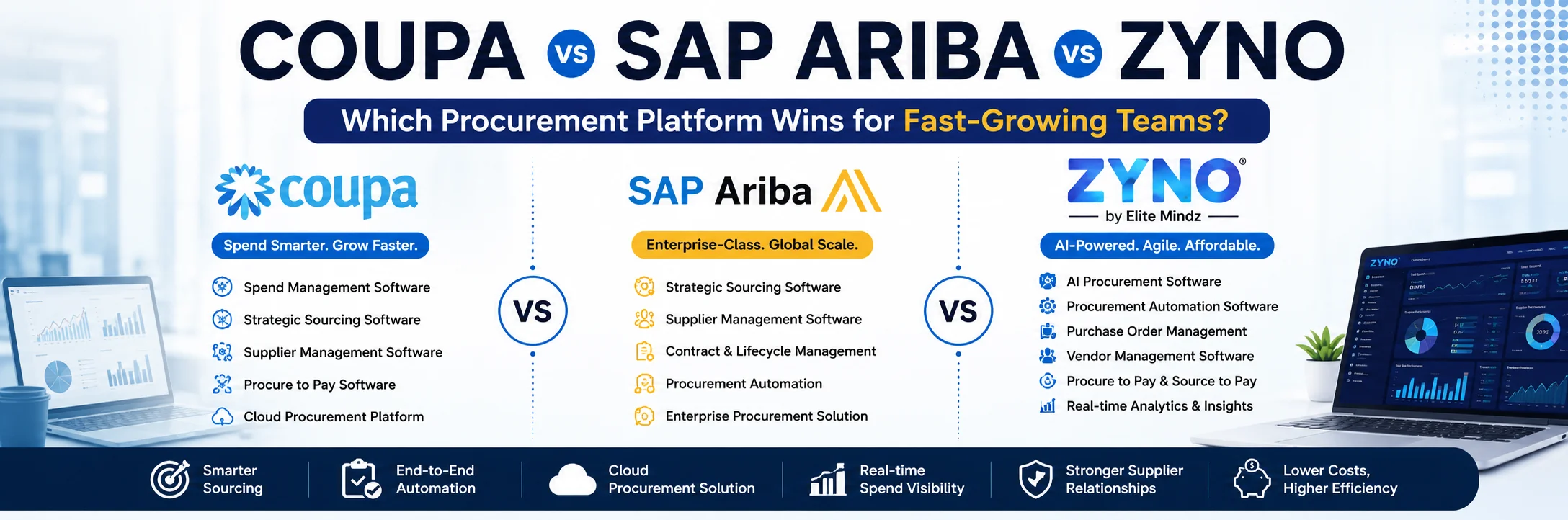
Coupa vs SAP Ariba vs ZYNO: Which Procurement Platform Wins for Fast-Growing Teams?
Read More →
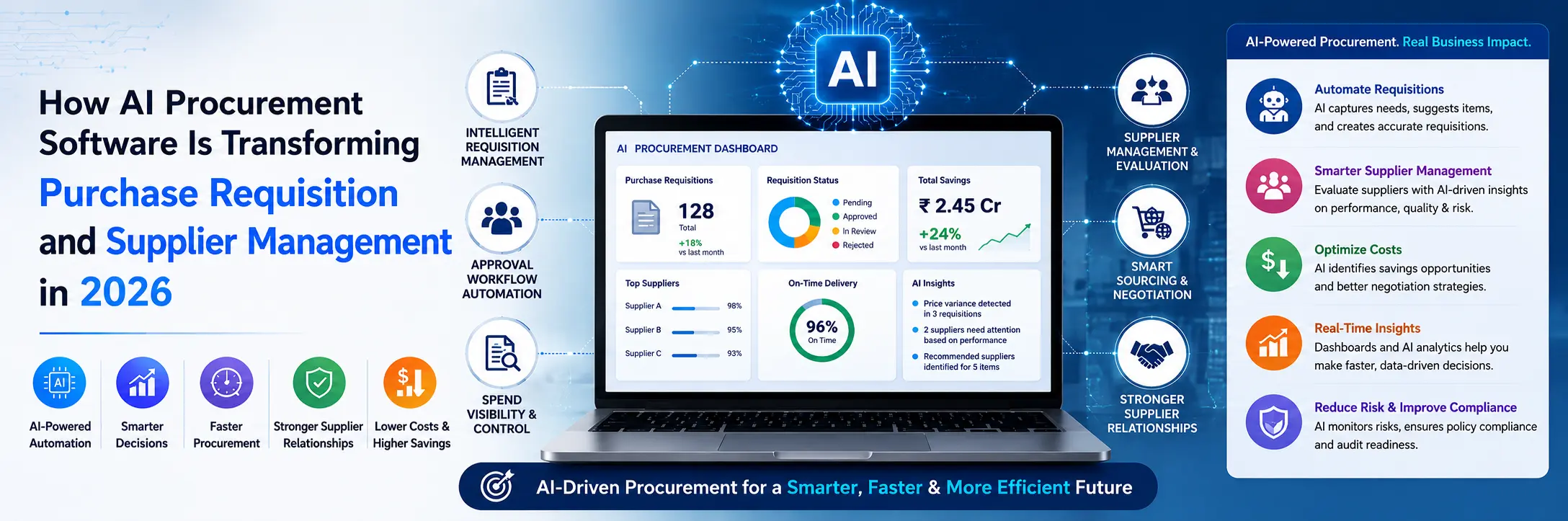
How AI Procurement Software Is Transforming Purchase Requisition and Supplier Management in 2026
Read More →
Purchase Request Management: A Complete Guide for Modern Procurement Teams
Read More →
The Top 3 Best Practices for Effective Purchase Request Management
Read More →
What Is Purchase Order Automation? How to Automate Purchase Order Processing
Read More →
5 Common Purchase Request Mistakes and How to Avoid Them
Read More →
What is Supplier Relationship Management in Procurement? A Complete Guide
Read More →
What is Strategic Vendor Management? A Complete Guide for Modern Procurement
Read More →
What Are Inventory Control Methods? Complete Guide to Types, Techniques, Systems, & Benefits
Read More →
Inventory Audit Checklist: Steps, Process & Best Practices
Read More →
Warehouse Inventory Management: Best Practices for 2026
Read More →
Treasury Management System (TMS): A Complete Guide for Modern Corporates
Read More →
What is Portfolio Management Services (PMS) and What Are Its Benefits?
Read More →
Generative AI Procurement Software Solution: The Future of Intelligent Procurement
Read More →
Top Contract Management Software Companies in Ethiopia: Features, Benefits & Best Procurement Solutions
Read More →
AI Procurement Software: Complete Guide to Intelligent, Generative AI & Machine Learning Procurement Solutions
Read More →
Top SAP alternatives for small, midsize, and enterprise businesses
Read More →
Best RFP Software in 2026: Top Solutions for Smarter Procurement and Proposal Management
Read More →
GST on Purchase: Complete Guide to GST on Purchases in India
Read More →
Procurement Software UAE: Complete Guide to Choosing the Best Procurement Solution
Read More →
Supply Chain Procurement: Everything You Need to Know
Read More →
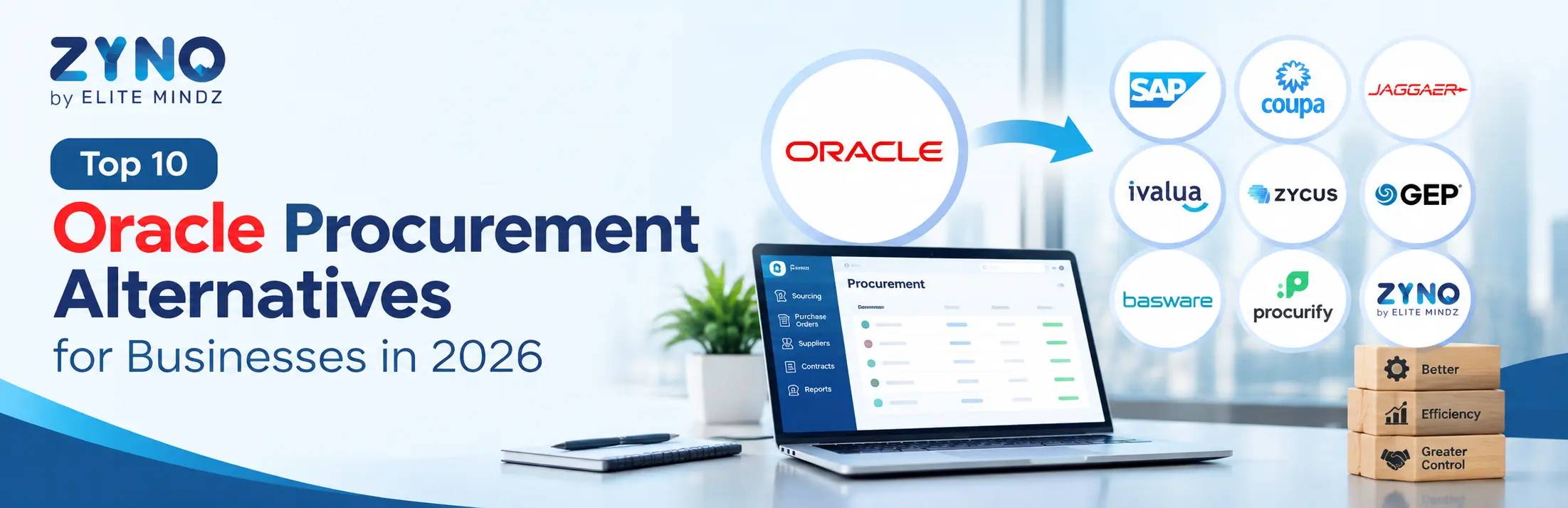
Top 10 Oracle Procurement Alternatives for Businesses in 2026
Read More →
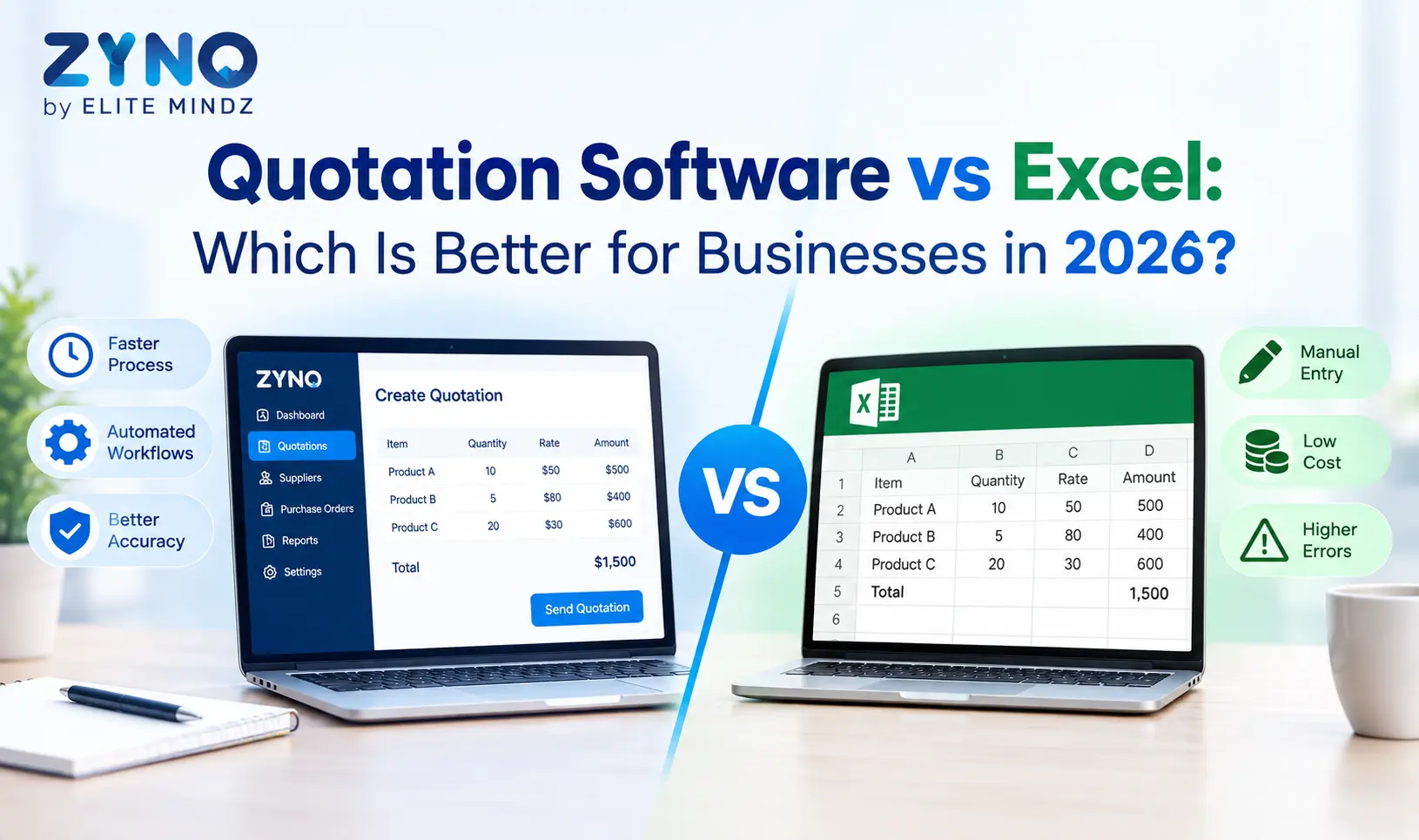
Quotation Software vs Excel: Which Is Better for Businesses in 2026?
Read More →
Contract Management Software Buyer's Guide: Features, Pricing & How to Choose
Read More →
How to Identify the Right Vendor: 10 Simple Steps
Read More →
Top 10 Automated PO Generation Tools in 2026: Best Purchase Order Software with AI Capabilities
Read More →
How to Generate a PO Automatically in SAP: Step-by-Step Guide
Read More →
What Is the Best Budget-Friendly Procurement Software With Vendor Onboarding for Indian SMEs?
Read More →
How to Generate a PO Automatically in SAP: Step-by-Step Guide
Read More →
How to Solve Invoice Mismatches: 10 Real Ways to Fix Invoice Discrepancies
Read More →
Top 10 Vendor Onboarding Tools for Businesses in 2026: Features, Process & How to Choose
Read More →
Vendor Comparison & Supplier Intelligence: How AI Helps Businesses Choose the Right Vendor
Read More →
How to Choose the Right Procurement Management Software in 2026 (Complete Buyer's Guide)
Read More →
How to Reduce Procurement Costs: 18 Practical Strategies That Actually Work
Read More →
How to Choose the Right Procurement Management Software in 2026 (Complete Buyer's Guide)
Read More →
How to Calculate Procurement Software ROI: Formula, Example & Calculator
Read More →
Procurement Software Evaluation Checklist: 35 Criteria for Choosing the Right Platform
Read More →
How Businesses Can Improve Vendor Performance and Manage Supplier Risk
Read More →
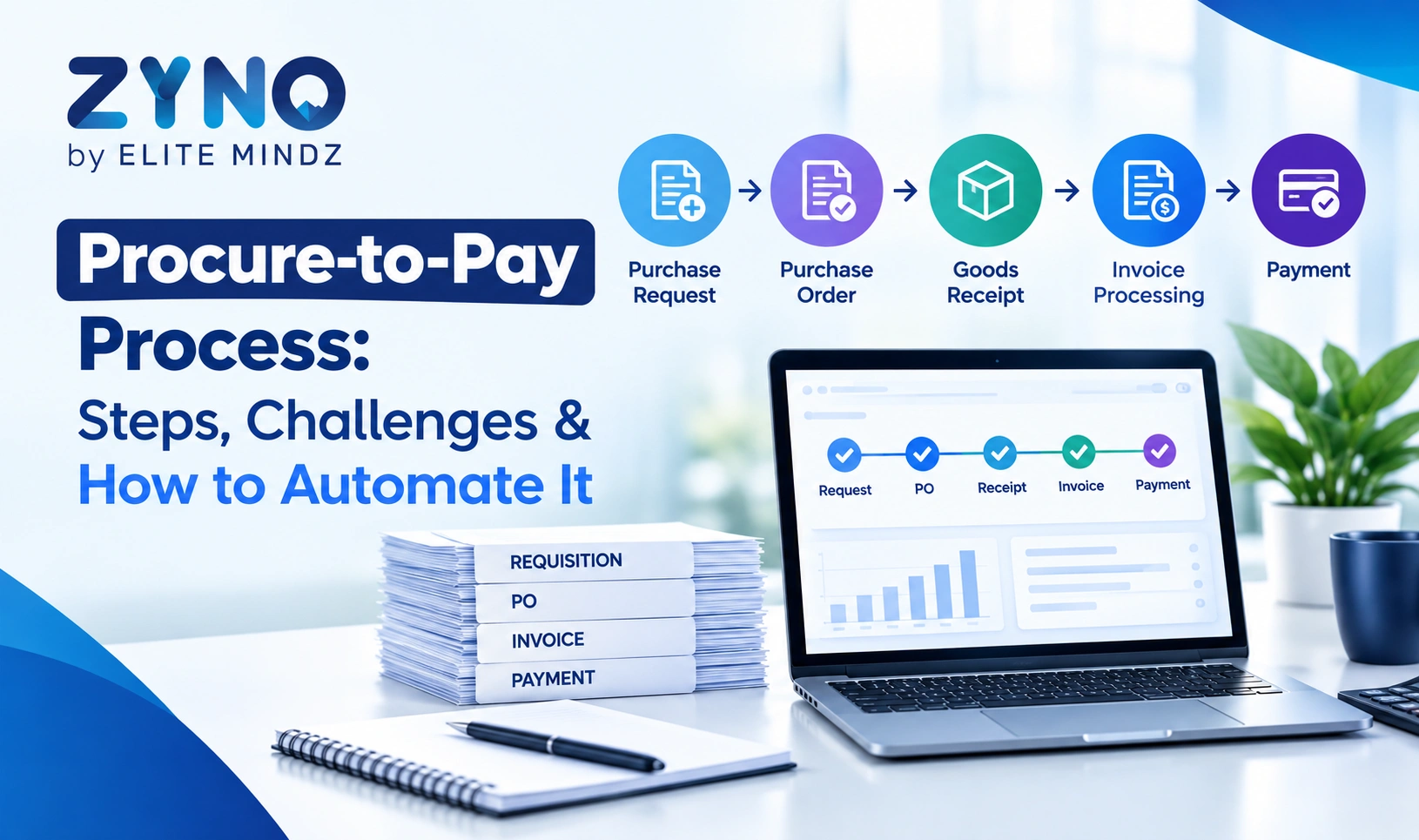
Procure-to-Pay Process: Steps, Challenges & How to Automate It
Read More →
Purchase Requisition vs Purchase Order: What’s the Difference?
Read More →
10 Source-to-Pay Software Platforms to Consider in 2026
Read More →
Supplier Management Software Buying Guide: How to Choose the Right Platform
Read More →
Procurement Automation Guide: How It Works, What to Automate & How to Implement It
Read More →
Procurement Software Features: 12 Must-Have Capabilities to Look For
Read More →
Best E-Procurement Software in 2026: Top Electronic Procurement Systems for Modern Businesses
Read More →
AI in Vendor Management: Complete Guide to Automated Supplier Scoring and Supply Chain Risk Analysis
Read More →
Procurement Software vs ERP: What's the Difference and Which Do You Need?
Read More →
How to Reduce P2P Cycle Time: 9 Practical Strategies for Procurement Teams
Read More →Partner with ZYNO by Elite Mindz to revolutionize how your business works. Fill out the form, and we’ll reach out with AI-powered solutions made just for you.
We use browser cookies to ensure you get the best experience on our website. Learn more
The form was submitted successfully!