Procurement Software Trends in 2026: What to Expect
Read More →

×
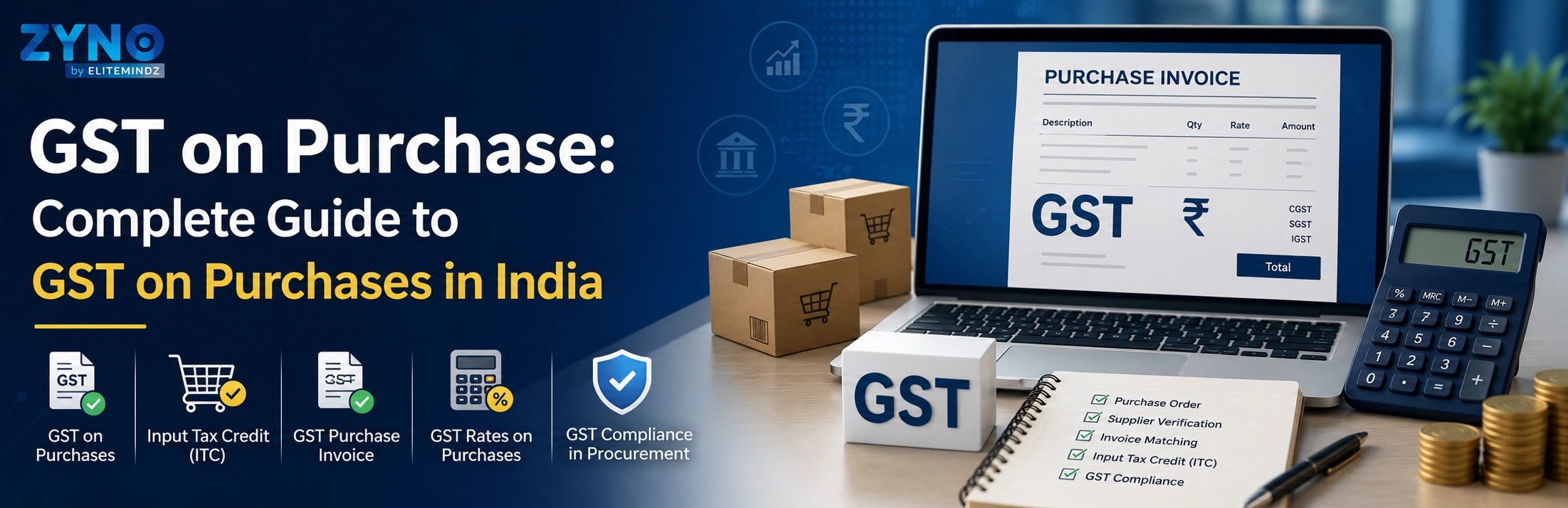
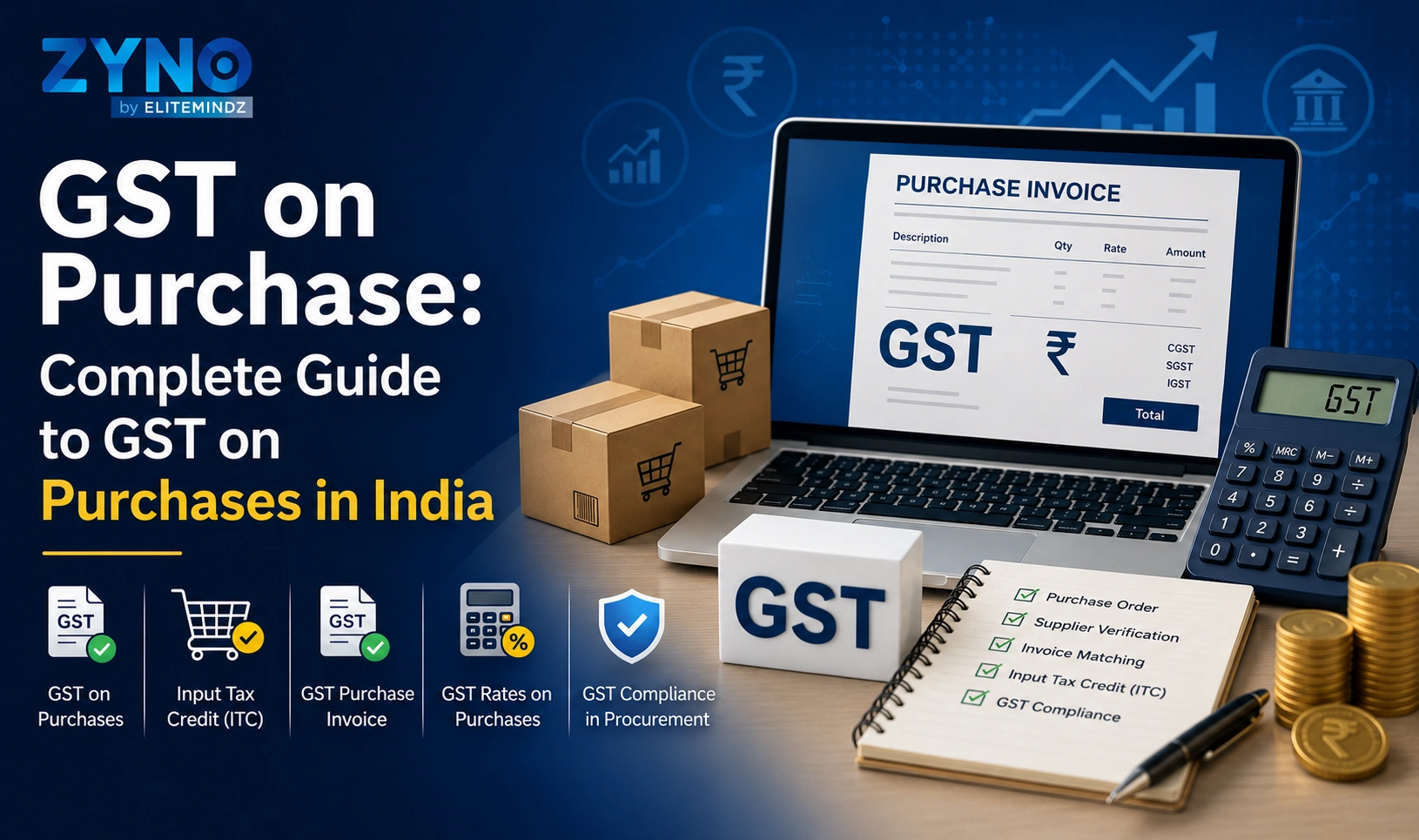
GST on Purchase is an important part of GST compliance for businesses in India. This guide explains GST on purchases, GST purchase invoices, applicable GST rules, documentation requirements, supplier compliance, and claiming eligible Input Tax Credit (ITC). Businesses should maintain accurate invoices, verify GST details, and regularly reconcile purchase records with GST returns. Effective purchase management and digital procurement tools can streamline workflows, improve invoice accuracy, strengthen compliance, and provide better visibility into organizational spending.
Businesses using ZYNO Books cut accounting time by 70% and stay 100% ZATCA-compliant — automatically.
Goods and Services Tax (GST) has significantly changed the way businesses manage purchasing, accounting, taxation, and procurement in India. Every purchase of goods or services can have GST implications, making it essential for businesses to understand GST on Purchase, applicable tax rates, purchase invoices, Input Tax Credit (ITC), and supplier compliance.
For procurement teams, GST is not simply an accounting requirement. It directly affects purchase costs, vendor selection, purchase order processing, invoice verification, and overall tax compliance. Incorrect GST details or non-compliant suppliers can result in blocked Input Tax Credit, financial losses, reconciliation issues, and compliance risks.
This guide explains GST on Purchases, how GST is calculated, how it works in procurement, GST rules for purchase orders, Input Tax Credit on purchases, and the importance of supplier GST verification.
GST on Purchase refers to the Goods and Services Tax paid by a registered business when purchasing goods or services from a supplier.
When a business purchases taxable products or services, the supplier charges GST based on the applicable GST rate. The buyer pays the invoice value along with GST. If the purchase meets the prescribed conditions, the buyer may generally claim the GST paid as Input Tax Credit (ITC), subject to applicable GST laws and compliance requirements.
For example, suppose a business purchases materials worth ₹1,00,000 and the applicable GST rate is 18%.
The business pays ₹1,18,000 to the supplier. Subject to eligibility and GST compliance requirements, the ₹18,000 GST component may be claimed as Input Tax Credit on Purchases.
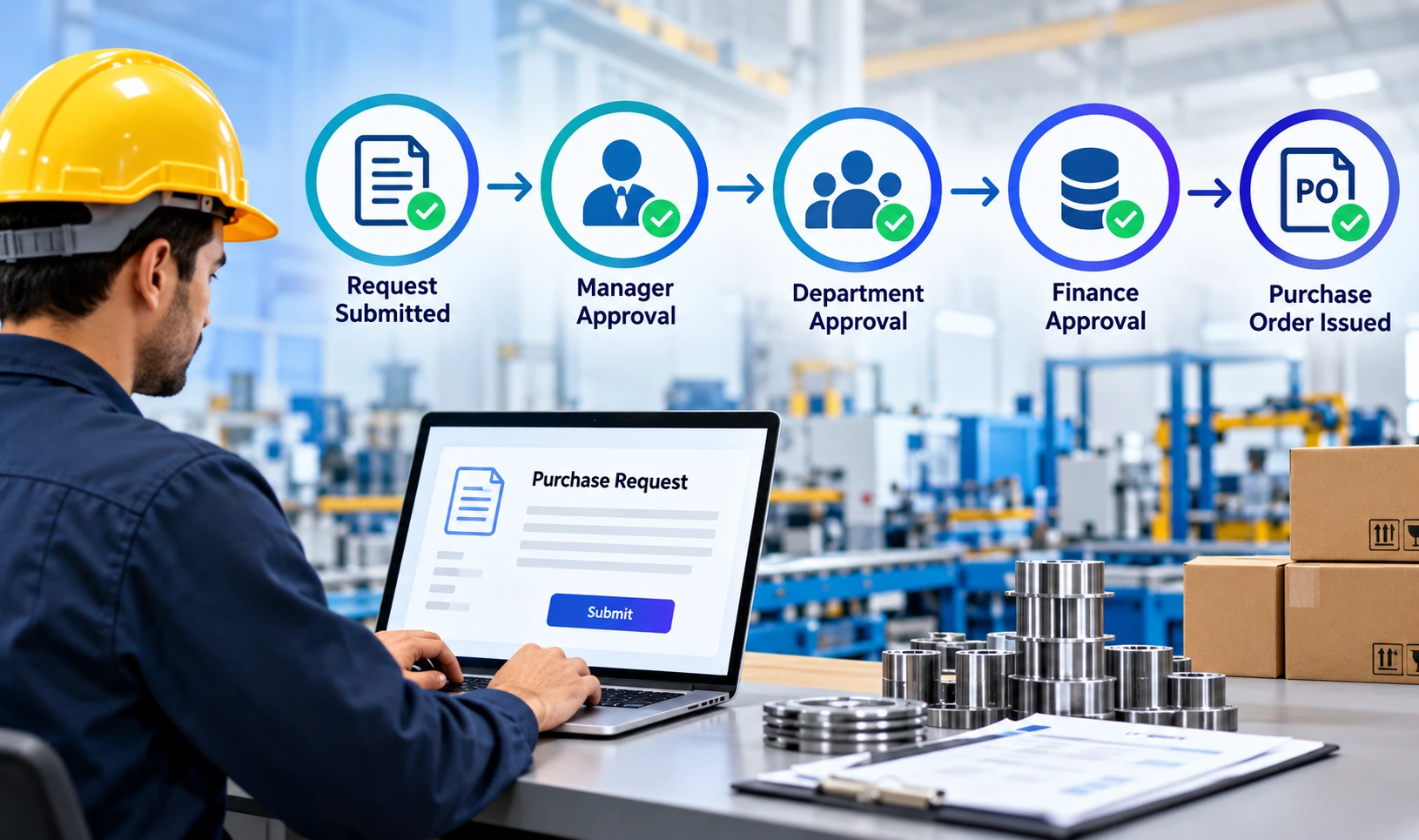
GST affects multiple stages of the procurement process. From supplier onboarding to invoice processing, procurement teams need accurate tax information to maintain compliance.
A typical GST-enabled procurement process includes:
Using Procurement Management Software can help businesses centralize these activities and reduce manual errors during purchasing.
Streamline purchase workflows, improve invoice accuracy, enhance spend visibility, and simplify procurement processes with ZYNO Procurement's smart and automated procurement solutions.
GST on Purchase of Goods depends on the classification of goods and the applicable GST rate. Different goods may attract different GST slabs, and the tax treatment may also depend on whether the transaction is intra-state or inter-state.
When the buyer and supplier are located in the same state, GST is generally divided into:
For example, if GST is charged at 18%:
When the supplier and buyer are located in different states, the transaction generally attracts:
For an 18% GST transaction, the full 18% may generally be charged as IGST.
Accurate location, GST registration details, and supplier information are therefore important while processing purchase transactions.
A GST Purchase Invoice is an important document used to record the purchase transaction and support Input Tax Credit claims, subject to applicable requirements.
A GST-compliant invoice generally contains details such as:
Procurement and finance teams should verify invoice information before approving payments. Incorrect GST details can create reconciliation issues and affect ITC eligibility.
Businesses can calculate Purchase GST by applying the relevant GST percentage to the taxable value of goods or services.
GST Amount = Taxable Value × GST Rate ÷ 100
For example:
If the taxable purchase value is ₹50,000 and the applicable GST rate is 18%:
GST = ₹50,000 × 18 ÷ 100 = ₹9,000
The total invoice value becomes:
₹50,000 + ₹9,000 = ₹59,000
For intra-state purchases, the ₹9,000 GST may generally be divided between CGST and SGST. For inter-state transactions, it may generally be charged as IGST.
An automated Purchase Order Management Software solution can help apply tax rules consistently during purchase order creation.
GST Rates on Purchases depend on the type and classification of goods or services. India uses multiple GST rate categories, and businesses must apply the correct rate based on applicable GST rules.
Common GST rate categories may include:
The applicable rate should be verified based on the relevant product or service classification and current GST regulations. Procurement teams should avoid manually assuming tax rates without proper validation.
Maintaining accurate tax masters in procurement systems can help ensure that the correct GST is applied across purchase transactions.
Simplify purchasing, automate procurement workflows, improve invoice accuracy, and gain better control over business spending with ZYNO Procurement.
Input Tax Credit on Purchases is one of the most important aspects of GST for businesses.
ITC allows eligible registered businesses to offset GST paid on eligible purchases against GST liability on outward taxable supplies, subject to conditions, restrictions, documentation, and compliance requirements under GST law.
For example:
Subject to eligibility, the available Input Tax Credit may be used to reduce the net GST payable.
Net GST Liability = ₹1,50,000 − ₹1,00,000 = ₹50,000
However, businesses should ensure that purchases, invoices, supplier compliance, and other requirements support the ITC claim.

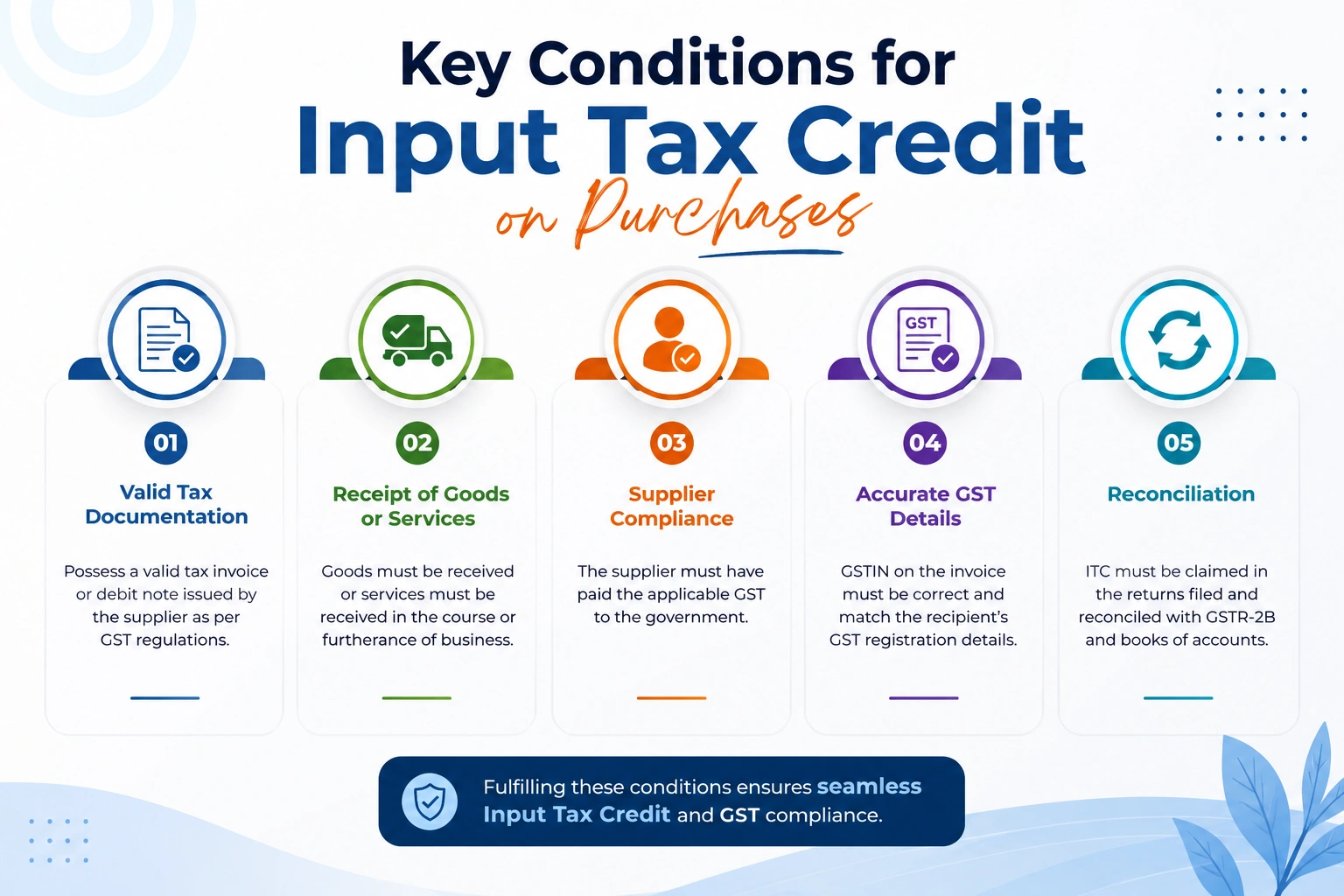
Businesses should establish strong processes for claiming Input Tax Credit (ITC) on Purchases. Important considerations can include:
The business should maintain appropriate tax invoices or prescribed documents.
The goods or services should generally be received in accordance with applicable GST requirements.
Supplier reporting and tax compliance can affect GST reconciliation and ITC availability.
Supplier GSTIN, buyer GSTIN, invoice numbers, tax amounts, and other information should be accurate.
Businesses should regularly reconcile purchase records with relevant GST records and returns.
A digital Procure-to-Pay Software platform can improve coordination between procurement, finance, accounts payable, and compliance teams.
A purchase order is an important procurement document, although the tax invoice is generally the primary document for charging and documenting GST. Businesses should nevertheless ensure that GST Rules for Purchase Orders are properly considered during the purchasing process.
A GST-aware purchase order should capture information such as:
Automating these details helps reduce mismatches between purchase orders and GST purchase invoices.
Supplier GST Verification is an essential part of GST compliance in procurement.
Before onboarding or transacting with a vendor, businesses should verify relevant supplier details and maintain updated records. Procurement teams can establish vendor verification workflows to review:
A structured Vendor Management Software solution can help businesses maintain centralized supplier records and improve GST Vendor Compliance.
Supplier verification should not be treated as a one-time activity. Businesses should periodically review supplier information and compliance status as part of their vendor management process.
GST Compliance in Procurement requires coordination across procurement, finance, accounts payable, tax, and vendor management teams.
An effective compliance process should include:
Incorrect GSTINs and supplier information can cause invoice and reconciliation problems.
Purchase orders should capture the required tax and transaction details.
Purchase invoices should be checked against purchase orders and goods receipt information.
Businesses should compare internal purchase records with applicable GST reporting data.
Discrepancies should be identified and resolved with suppliers quickly.
Invoices, purchase orders, receipts, and supporting records should be securely maintained.
Digital Procurement Automation Software can help standardize these processes and provide better visibility across the purchasing lifecycle.
GST has a direct impact on procurement costs and operational decision-making.
Procurement teams need to consider supplier compliance and documentation quality in addition to price and delivery capability.
Businesses should evaluate the tax-inclusive and tax-exclusive value of purchases.
Delayed or disputed ITC can affect cash flow and working capital.
Approval workflows may need to validate GST information before purchase orders are issued.
Incorrect tax calculations can delay invoice approval and supplier payments.
Poor purchasing documentation can increase audit and compliance risks.
This is why modern procurement strategies increasingly connect purchasing workflows with tax validation and finance processes.
Businesses should avoid the following Common GST Mistakes in Procurement:
Entering the wrong GSTIN can create supplier and invoice reconciliation issues.
Applying an incorrect tax rate may result in incorrect purchase costs and tax records.
This can lead to errors in determining whether CGST/SGST or IGST applies.
Incomplete records can create difficulties during reconciliation and audits.
Differences in quantities, values, tax rates, or supplier details can delay invoice processing.
Poor supplier compliance can create downstream tax and reconciliation risks.
Waiting too long to identify discrepancies can make corrections more difficult.
Modern AI Procurement Software can support procurement teams by improving data accuracy, invoice validation, and workflow automation.
AI-enabled procurement capabilities may help businesses:
For businesses managing high purchase volumes, AI-supported workflows can improve efficiency while maintaining stronger control over purchasing data.
Streamline purchase workflows, improve invoice accuracy, enhance spend visibility, and simplify procurement processes with ZYNO Procurement's smart and automated procurement solutions.
A modern Procurement Management Software solution can help businesses manage GST-related purchasing processes through centralized workflows.
Purchase orders, invoices, supplier information, and approvals can be managed from a single platform.
Tax rules and purchase information can be standardized to reduce manual errors.
Automated approvals and invoice matching can improve processing speed.
Businesses can maintain supplier records and compliance documentation centrally.
Procurement teams can analyze purchasing data and tax-inclusive costs.
Automated controls and validation can help identify missing or inconsistent information.
Automation can reduce the time required to process and verify GST purchase invoices.
Businesses can improve GST Compliance for Purchases by following these practices:
Manual procurement processes often involve spreadsheets, emails, paper invoices, and disconnected systems. These processes can increase the risk of GST errors.
Procurement Automation Software helps businesses create structured workflows for:
By connecting procurement and finance processes, businesses can improve visibility into GST on Purchase transactions and reduce administrative workload.
Understanding GST on Purchase is essential for businesses that want to maintain accurate procurement processes and stronger financial controls. GST affects supplier selection, purchase orders, invoices, Input Tax Credit, compliance, and overall purchase costs.
Businesses should establish clear processes for GST on Purchases, including supplier GST verification, accurate GST purchase invoices, proper tax calculations, purchase order validation, and regular reconciliation.
As purchase volumes increase, managing these activities manually can become difficult. A modern Procurement Management Software, combined with AI Procurement Software, Purchase Order Management Software, Vendor Management Software, and Procure-to-Pay Software, can help businesses automate purchasing workflows, improve data accuracy, strengthen compliance controls, and gain better visibility into procurement operations.
With the right combination of GST knowledge, supplier controls, and procurement automation, organizations can build a more efficient and compliant purchasing process.
GST on Purchase refers to the GST paid by a buyer when purchasing taxable goods or services from a supplier.
Eligible businesses may claim Input Tax Credit on eligible purchases, subject to applicable GST laws, documentation, supplier compliance, and other prescribed conditions.
A GST Purchase Invoice is a tax invoice or purchase document containing transaction and GST details required for accounting and compliance purposes.
GST is calculated by multiplying the taxable purchase value by the applicable GST rate.
CGST and SGST generally apply to intra-state transactions, while IGST generally applies to inter-state transactions.
Supplier verification helps businesses maintain accurate vendor records and reduce compliance and invoice reconciliation risks.
Common mistakes include incorrect GSTINs, incorrect tax rates, invoice mismatches, missing documents, and delayed reconciliation.
GST can affect the total purchase value, cash flow, Input Tax Credit availability, and overall procurement decision-making.
Yes. Purchase Management Software can help centralize purchase data, automate workflows, improve invoice validation, and reduce manual errors.
AI Procurement Software can help automate invoice data extraction, validate purchase information, detect discrepancies, and improve procurement efficiency.
Procurement Software Trends in 2026: What to Expect
Read More →
Why E-Procurement Outperforms Traditional ERP in Modern Procurement
Read More →
Top 10 Procurement Software Companies in India 2026
Read More →
Best Procurement Software Companies in Kuwait (2025)
Read More →
5 Best Procurement Software in Africa for Enterprises & SMEs (2026 Guide)
Read More →
Best Procurement Software in Nigeria 2026 | Top 5 Picks
Read More →
Best Procurement Software Providers in USA (2025): How AI is Transforming the Future
Read More →
10 Best Procurement Software Providers in Thailand for Streamlined Supply Chain Management
Read More →
Top 10 Cloud-Based Procurement Solutions in Portugal for Businesses in 2025
Read More →
Top 10 Procurement Software Providers in Switzerland 2026: Streamlining Sourcing and Supplier Management
Read More →
What Makes ZYNO Procurement Different from Other Oil & Gas Procurement Software
Read More →
The Digital Transformation of Logistics Procurement in the Middle East
Read More →
A Step by Step Guide to Procurement Management Software for Modern Enterprises
Read More →
Sourcing and Procurement: What is the Difference and Why It Matters
Read More →Difference Between Procurement and Supply Chain Management
Read More →
What Is Procurement Software and Why Modern Businesses Need It
Read More →
Best Procurement Management Software to Automate ERP Process
Read More →
Direct vs Indirect Procurement: Key Differences, Examples & Uses (2026)
Read More →
Smart procurement strategies for cost optimization & risk management
Read More →
What Is Procurement? Everything You Need to Know (Types, Process & SAP)
Read More →Beyond Cost-Cutting: How Procurement Drives Margin Expansion in 2026
Read More →
Direct Procurement: Process, Examples, and When to Use It
Read More →
What Are the 5 Types of E-Procurement? A Complete Guide for Businesses
Read More →
Which Procurement Management Software Is Best? Top Tools Compared for 2026
Read More →
Top 8 Coupa Alternatives to Explore in 2026
Read More →
Looking to Replace Coupa? Discover the Best Alternatives Like ZYNO Procurement
Read More →
How Does Procurement Software Work? A Complete Guide
Read More →
ZYNO Procurement vs Coupa: Best Procurement Software Comparison for Mid-Market Teams
Read More →
Best SAP ARIBA Procurement Alternatives in 2026
Read More →
ZYNO Procurement vs SAP Ariba: Which Solution Is More User-Friendly?
Read More →
AI-Powered Procurement Management Software for Fast, Connected, and Visible Workflows in Dubai
Read More →
What is Vendor Management? Complete Guide to Vendor Management Software, Systems, and Processes
Read More →
Best Procurement Management Software In Kenya
Read More →
6 SAP Ariba Alternatives for Mid-Market Businesses in 2026
Read More →
Top E-Procurement Solutions for B2B Organizations (2026)
Read More →
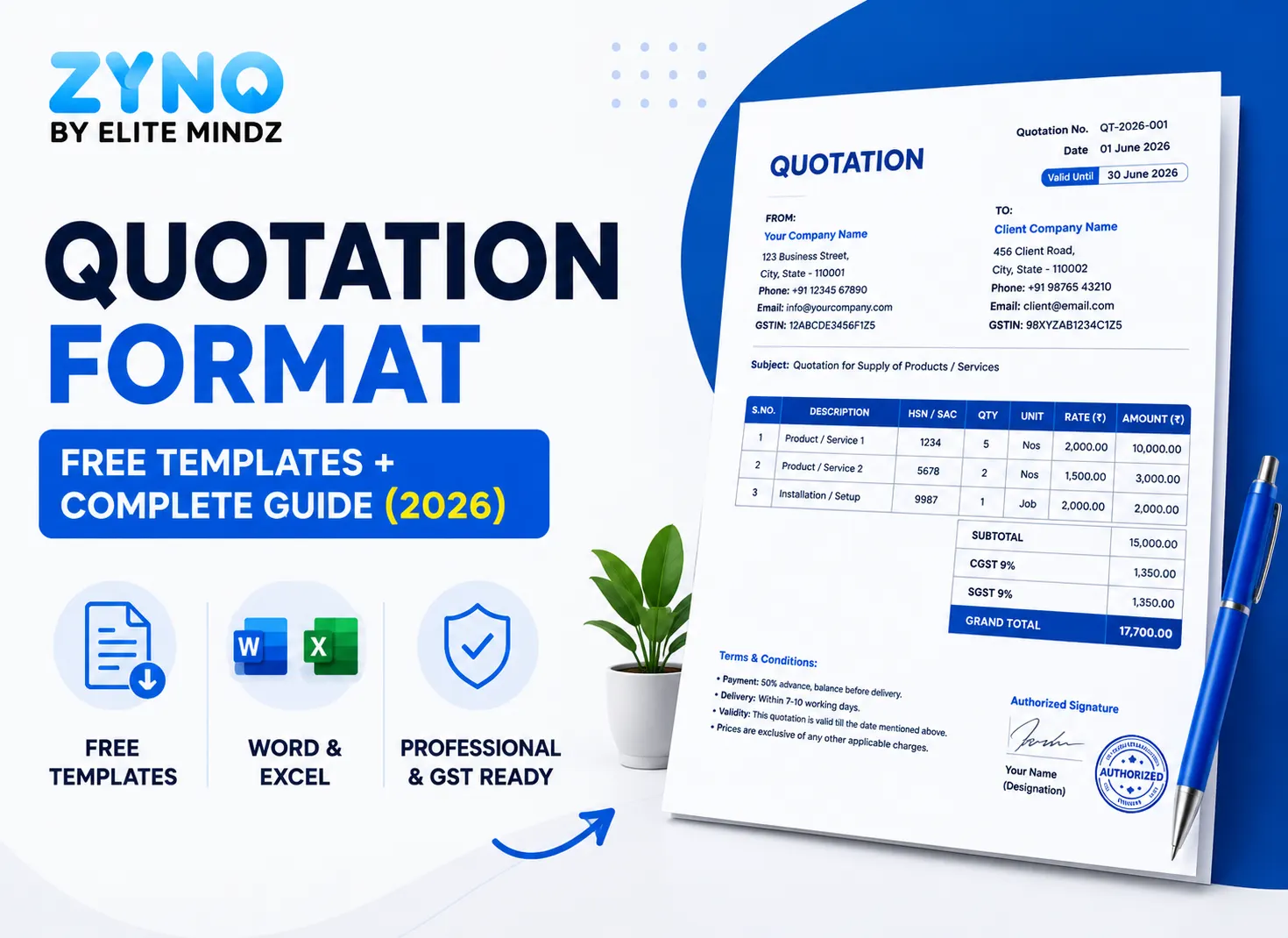
Quotation Format: Free Templates + Complete Guide (2026)
Read More →
Cost Control Software: Features, Benefits & Performance Guide for 2026
Read More →
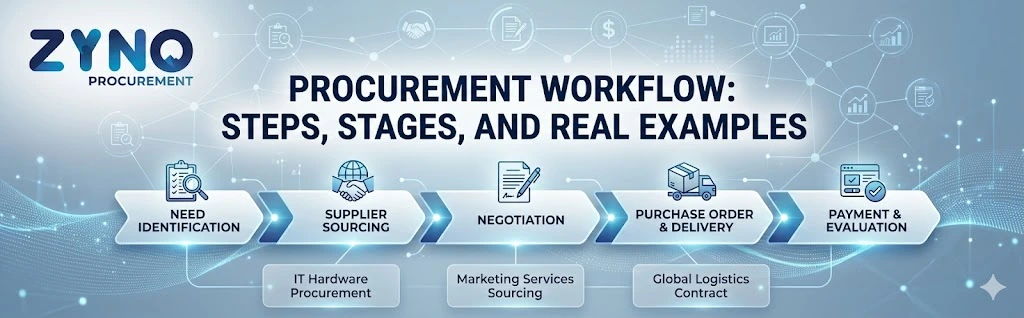
Procurement Workflow: Steps, Stages, and Real Examples
Read More →
Top 10 Zycus Alternatives for Procurement Teams in 2026
Read More →
Best Precoro Alternative for Purchase Requisition and Procurement
Read More →
Top AI Procurement Tools in 2026
Read More →
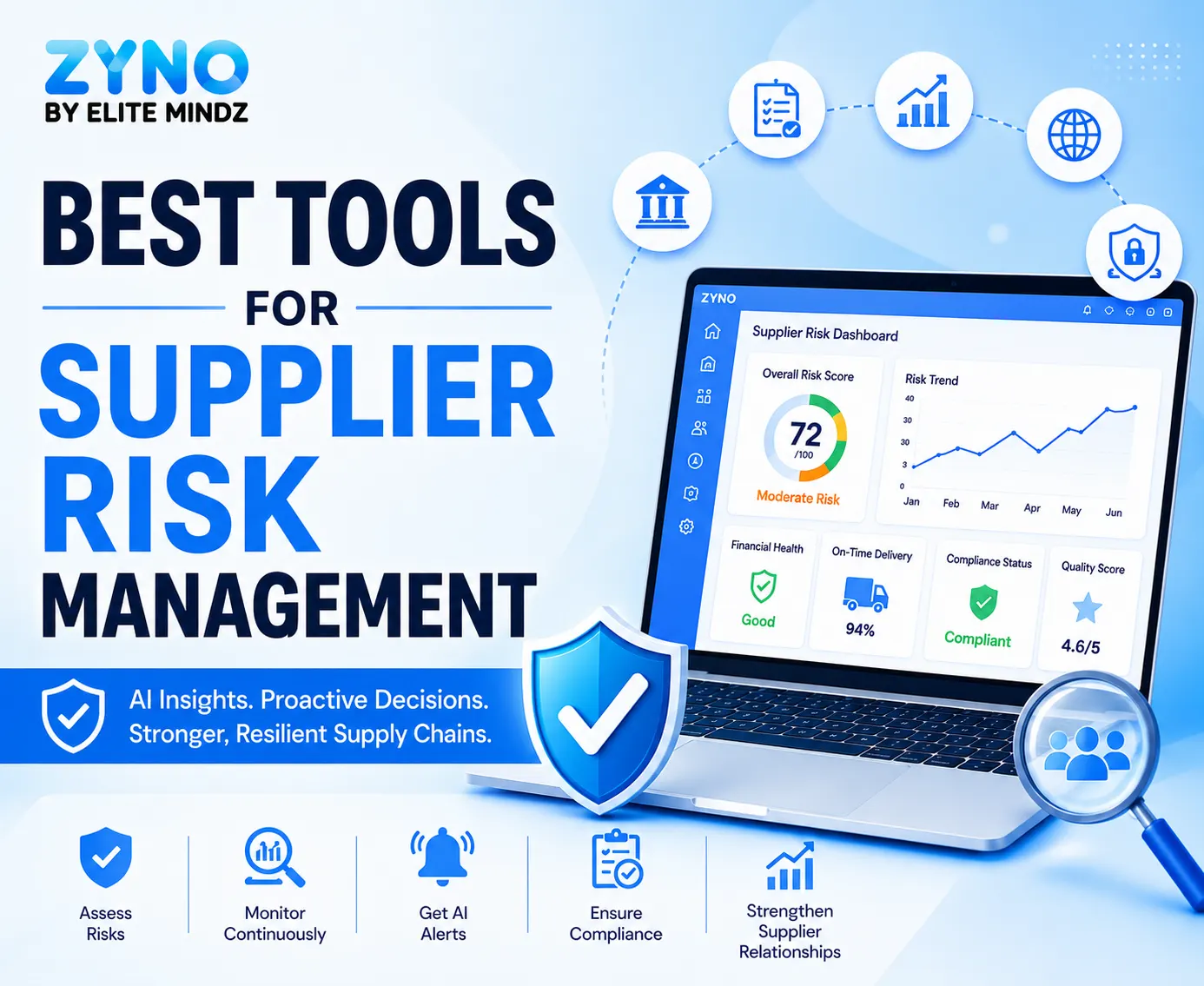
Best Tools for Supplier Risk Management
Read More →
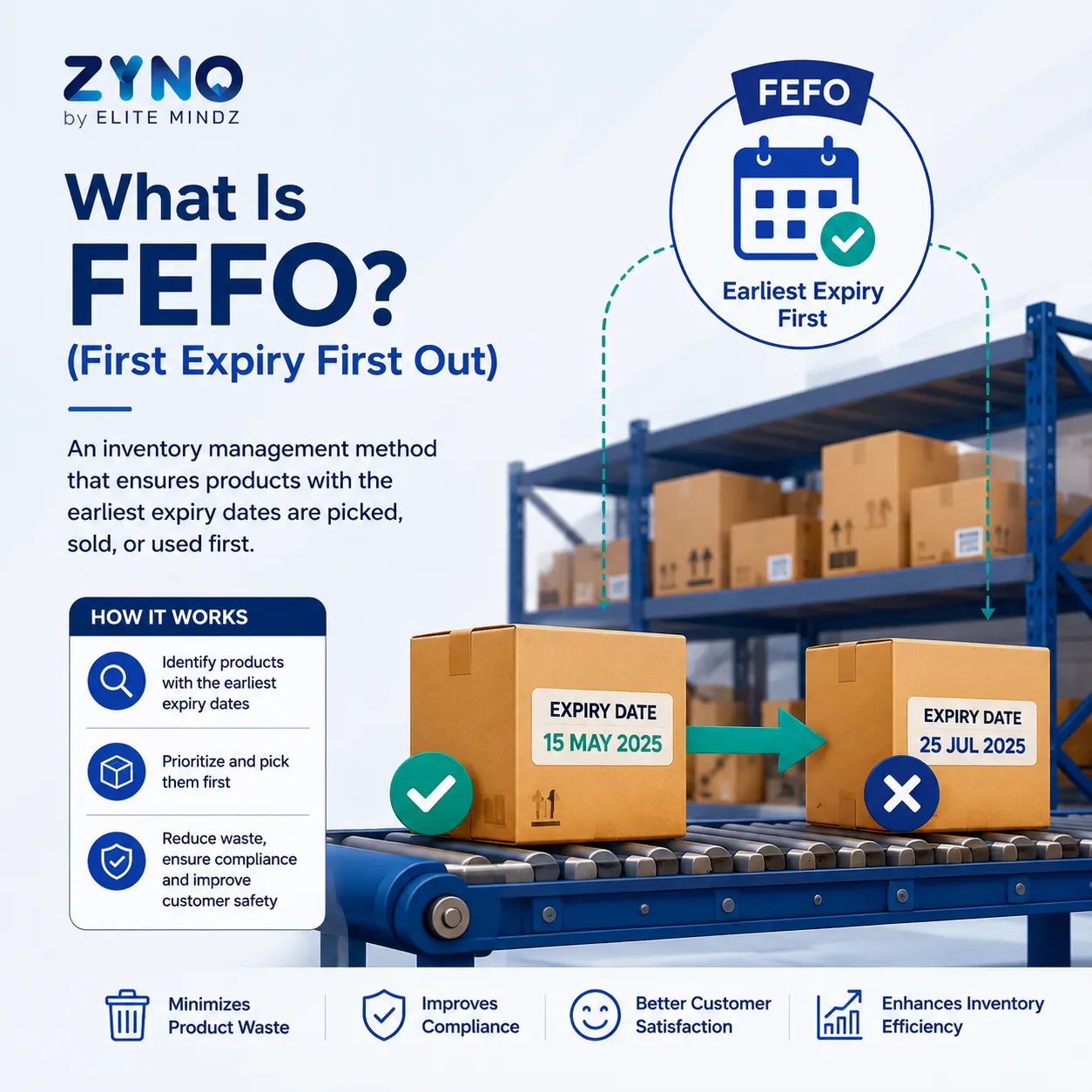
FEFO vs FIFO vs LIFO: Differences, Benefits & Which Inventory Method Is Best?
Read More →
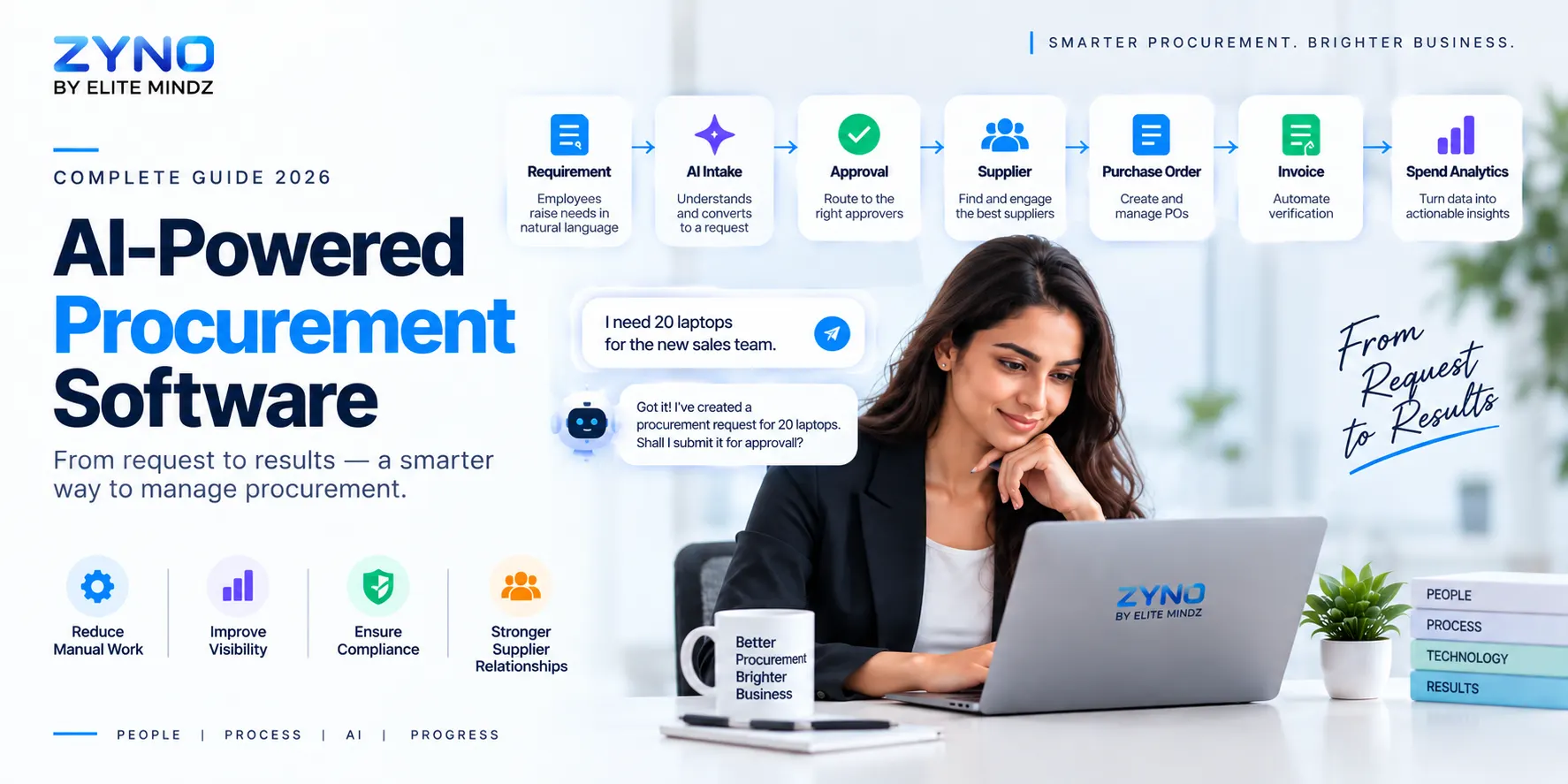
AI-Powered Procurement Software: A Complete Guide for Businesses
Read More →
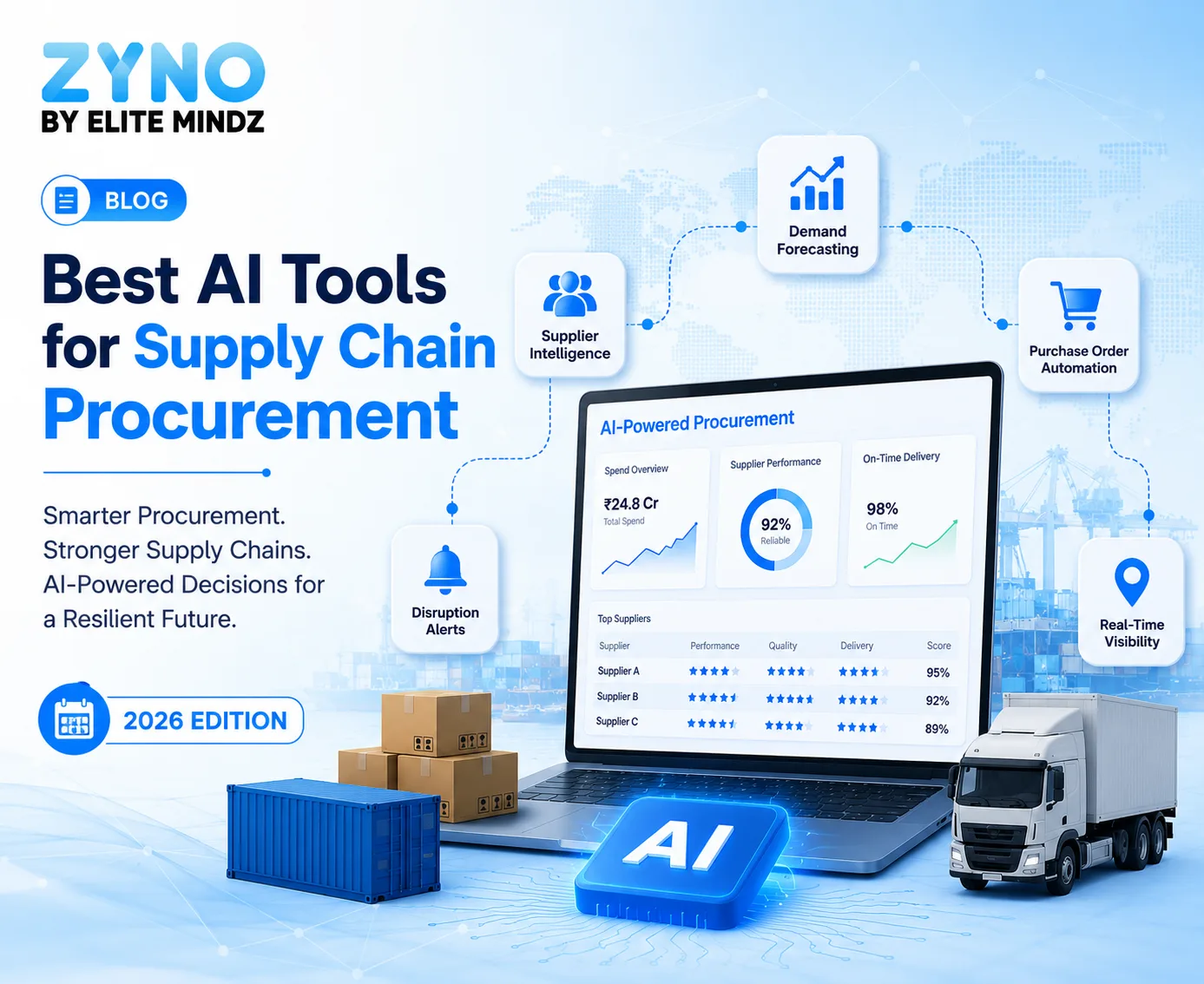
Best AI Tools for Supply Chain Procurement
Read More →
Procurement Risk Management
Read More →
Still Using Excel for Procurement? Read This Before It's Too Late
Read More →
Best RFP Software in 2026: Top Tools Compared for Faster Proposal Responses
Read More →
What Is Procure-to-Pay (P2P)? A Complete Guide
Read More →
Complete Procurement Workflow Guide for Modern Businesses
Read More →
Complete Guide to E-Procurement Solutions for B2B Organizations
Read More →
Cost Control Software Comparison Guide: Features, Pricing & Benefits
Read More →
Purchase Order Tracking: How to Manage Every PO Without the Chaos
Read More →
Inventory Management: What It Is, How It Works and Why It Matters
Read More →
Top 10 Procurement Software Tools for Purchasing Automation in 2026
Read More →
Agentic AI Procurement Platforms and the Future of Strategic Sourcing
Read More →
AI Spend Analytics Software for Procurement Leaders
Read More →
From Prompt to Procurement: How AI Is Transforming Enterprise Purchasing
Read More →
ZYNO Procurement vs IBM Procure-to-Pay Automation
Read More →
ZYNO Procurement vs Infor Nexus: Which Procure-to-Pay Platform Fits Your Team?
Read More →
AI-Powered Procurement Software in 2026: Top 6 Platforms That Actually Deliver ROI
Read More →
Contract Management Software Buyer's Guide: Features, Costs & Top Picks
Read More →
Top 10 Procure to Pay Software Companies in India 2026
Read More →
10 Best Vendor Management Software in India (2026): Features, Benefits & Comparison
Read More →
How Machine Learning and AI Are Transforming Procurement: A Strategic Overview
Read More →
What Is Procurement Software for GP? Features, Benefits and Best Solutions for Businesses
Read More →
What Procurement Software Do Mid-Market Companies Use Instead of SAP Ariba or Coupa?
Read More →
Prompt-Based Procurement Software for Kenyan Businesses
Read More →
Project Management Software: A Complete Guide to Streamline Business Operations and Procurement Processes
Read More →
SAP Ariba vs ZYNO Procurement: Complete Feature Comparison (2026)
Read More →
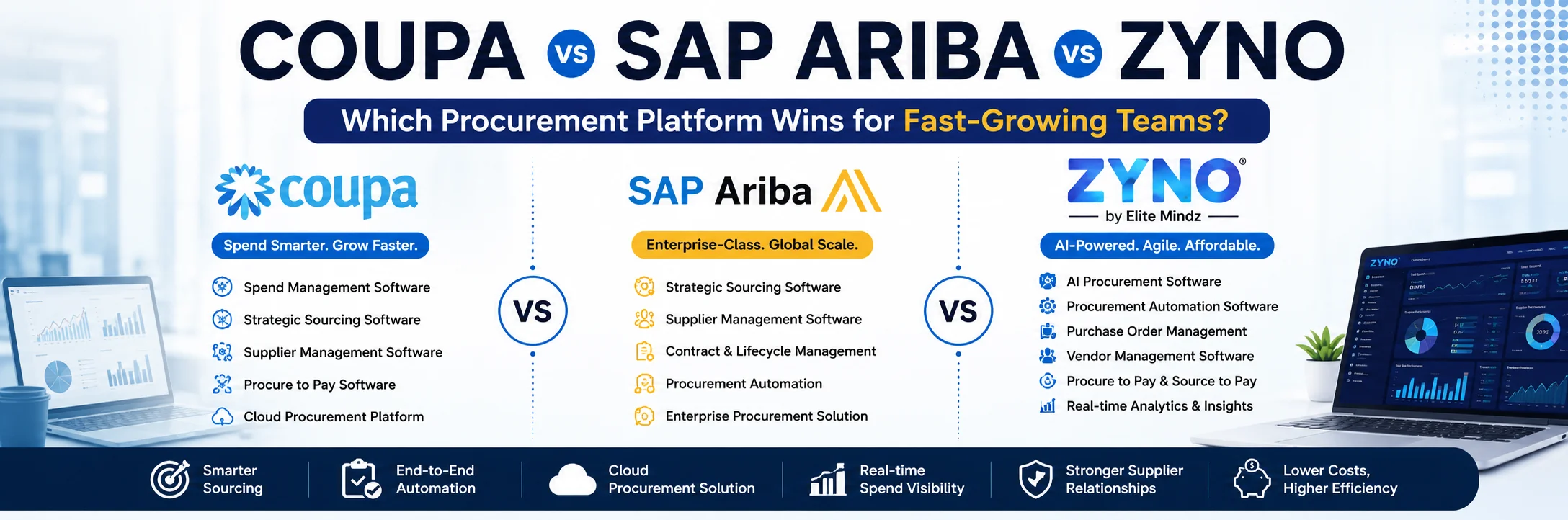
Coupa vs SAP Ariba vs ZYNO: Which Procurement Platform Wins for Fast-Growing Teams?
Read More →
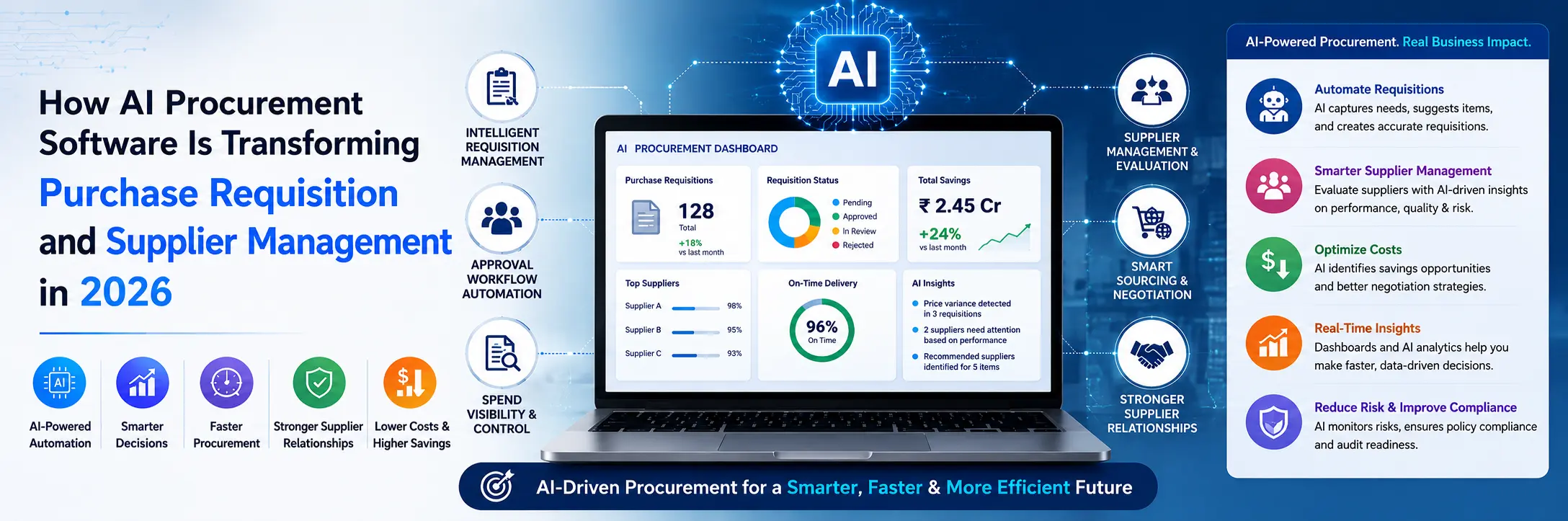
How AI Procurement Software Is Transforming Purchase Requisition and Supplier Management in 2026
Read More →
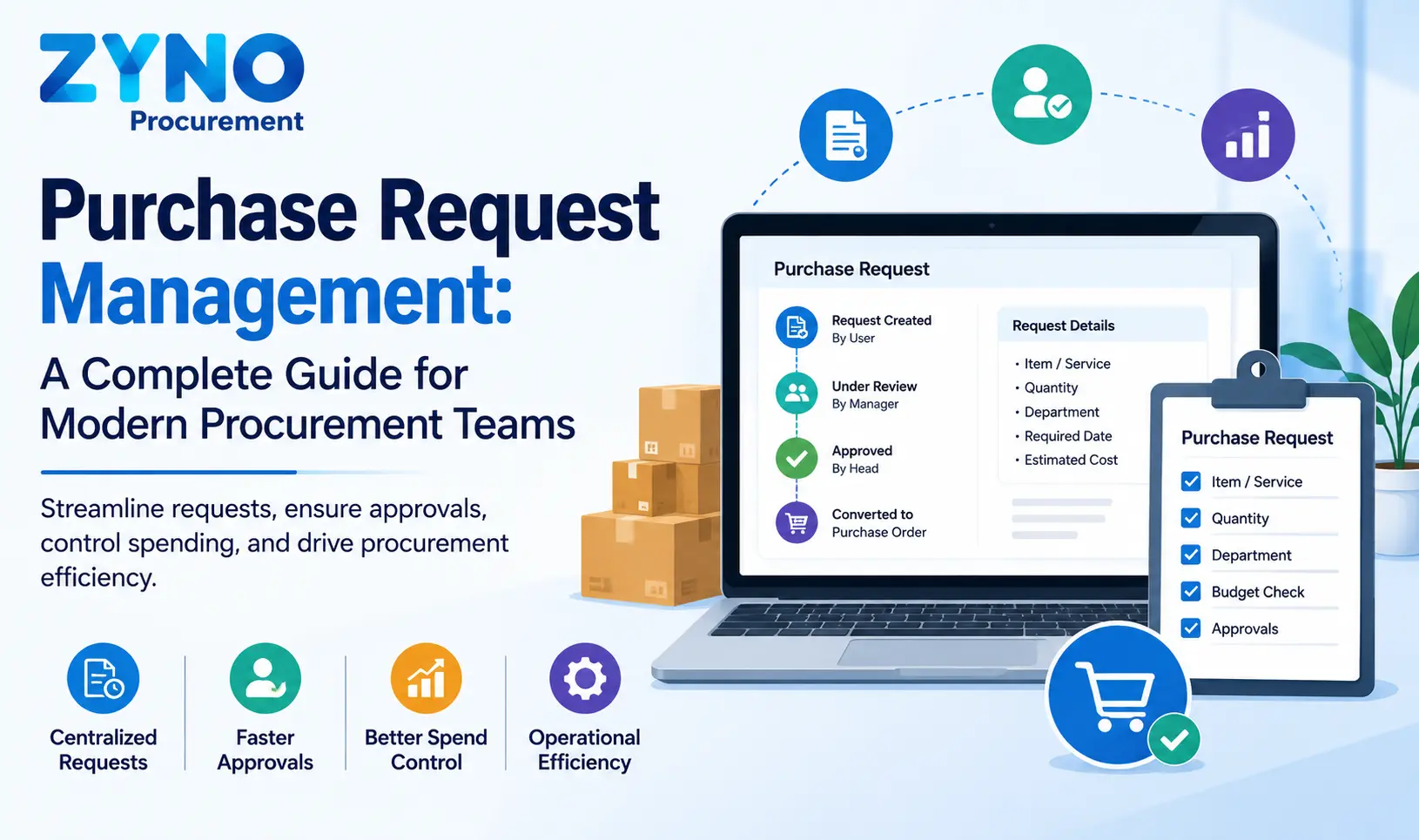
Purchase Request Management: A Complete Guide for Modern Procurement Teams
Read More →
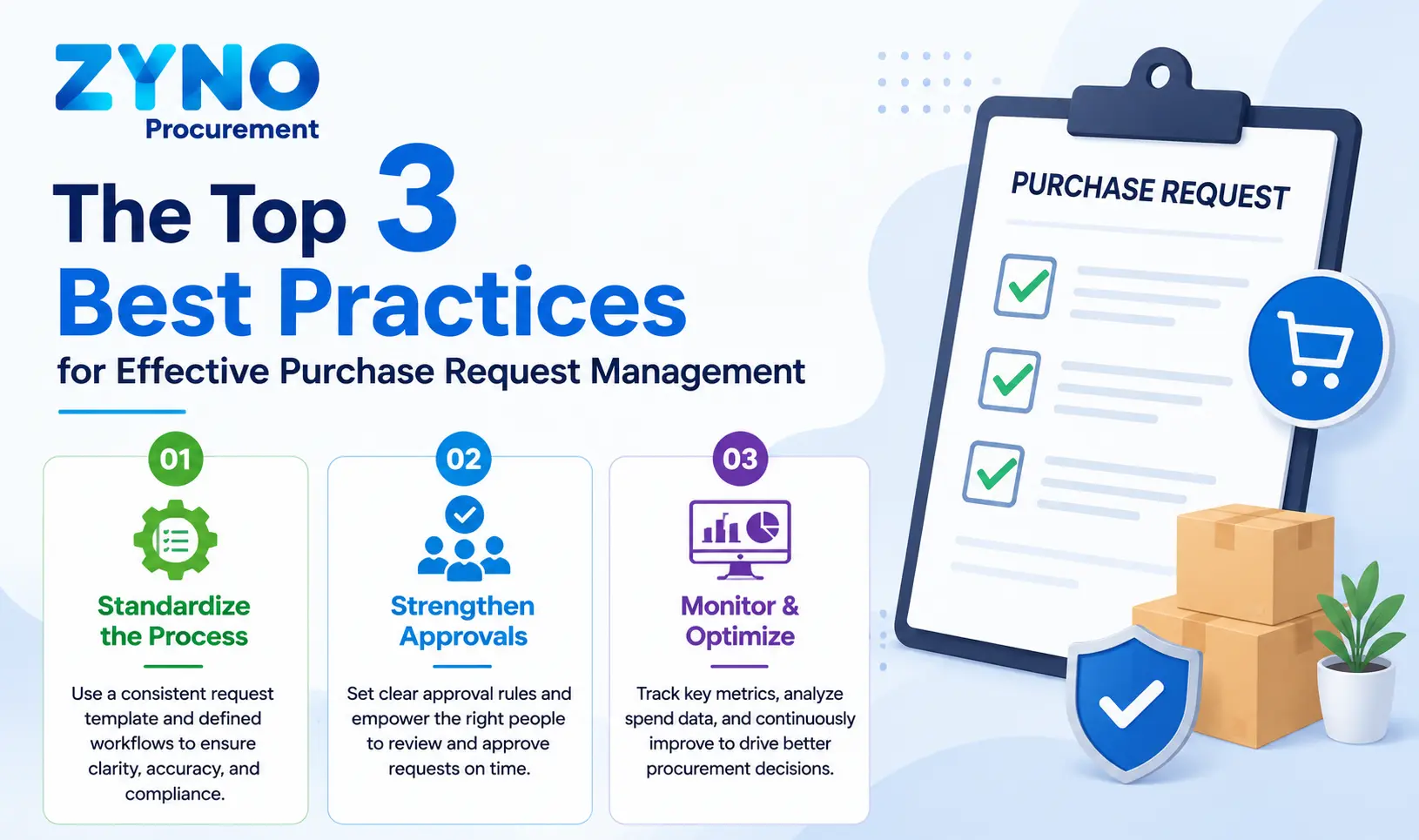
The Top 3 Best Practices for Effective Purchase Request Management
Read More →
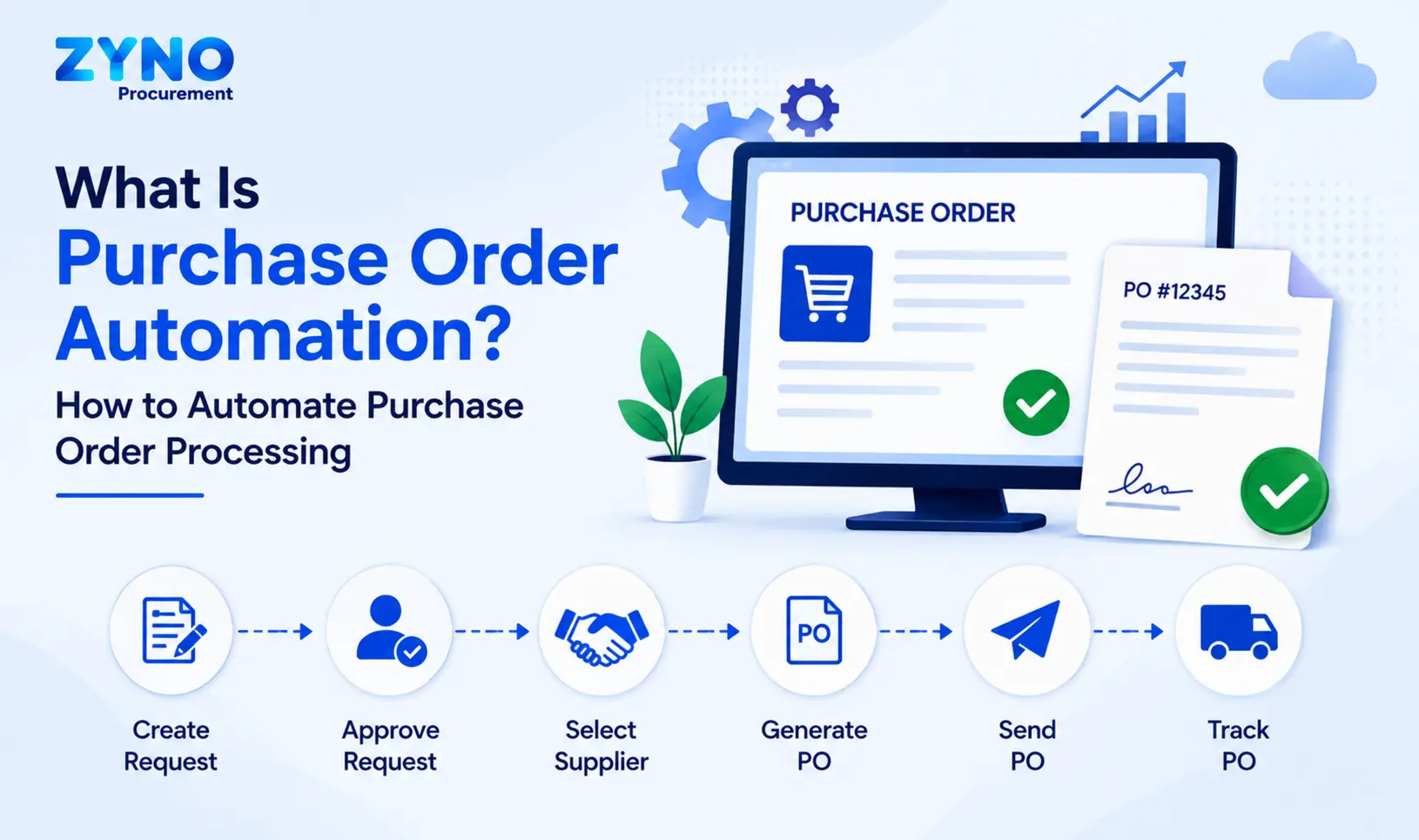
What Is Purchase Order Automation? How to Automate Purchase Order Processing
Read More →
5 Common Purchase Request Mistakes and How to Avoid Them
Read More →
What is Supplier Relationship Management in Procurement? A Complete Guide
Read More →
What is Strategic Vendor Management? A Complete Guide for Modern Procurement
Read More →
What Are Inventory Control Methods? Complete Guide to Types, Techniques, Systems, & Benefits
Read More →
Inventory Audit Checklist: Steps, Process & Best Practices
Read More →
Warehouse Inventory Management: Best Practices for 2026
Read More →
Treasury Management System (TMS): A Complete Guide for Modern Corporates
Read More →
What is Portfolio Management Services (PMS) and What Are Its Benefits?
Read More →
Generative AI Procurement Software Solution: The Future of Intelligent Procurement
Read More →
Top Contract Management Software Companies in Ethiopia: Features, Benefits & Best Procurement Solutions
Read More →
AI Procurement Software: Complete Guide to Intelligent, Generative AI & Machine Learning Procurement Solutions
Read More →
Top SAP alternatives for small, midsize, and enterprise businesses
Read More →
Best RFP Software in 2026: Top Solutions for Smarter Procurement and Proposal Management
Read More →
Best RFP Software in 2026: Top Solutions for Smarter Procurement and Proposal Management
Read More →
GST on Purchase: Complete Guide to GST on Purchases in India
Read More →Partner with ZYNO by Elite Mindz to revolutionize how your business works. Fill out the form, and we’ll reach out with AI-powered solutions made just for you.
We use browser cookies to ensure you get the best experience on our website. Learn more
The form was submitted successfully!