Procurement Software Trends in 2026: What to Expect
Read More →

×
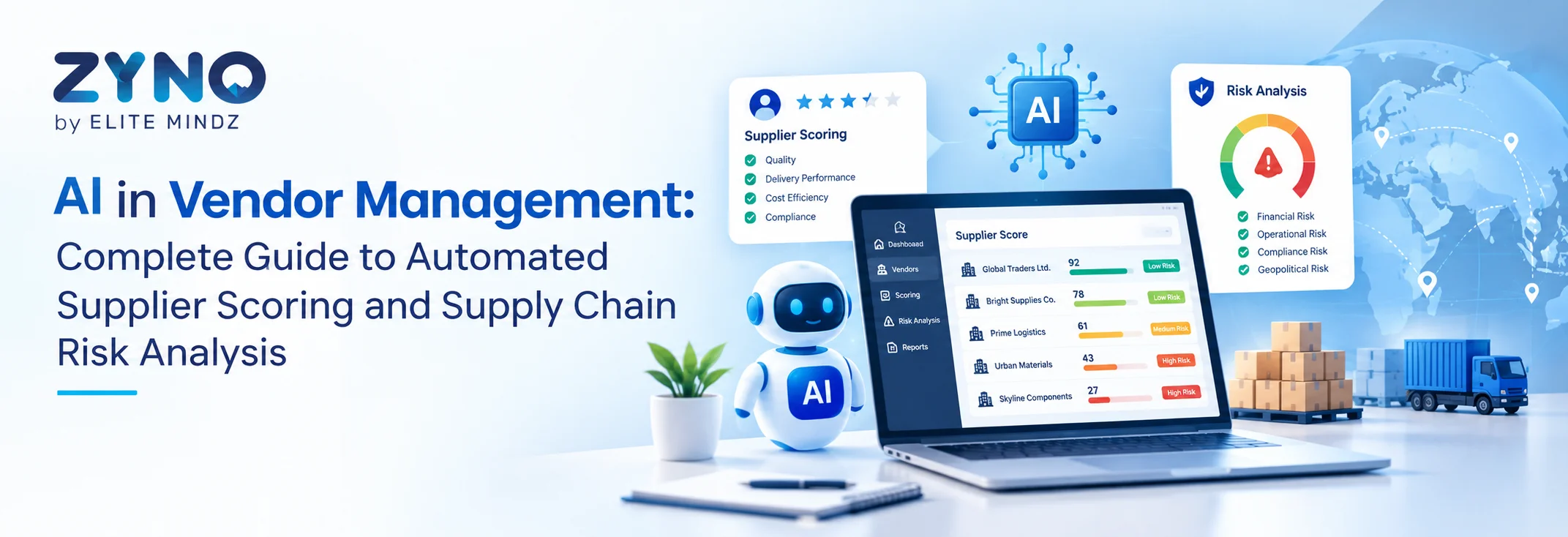
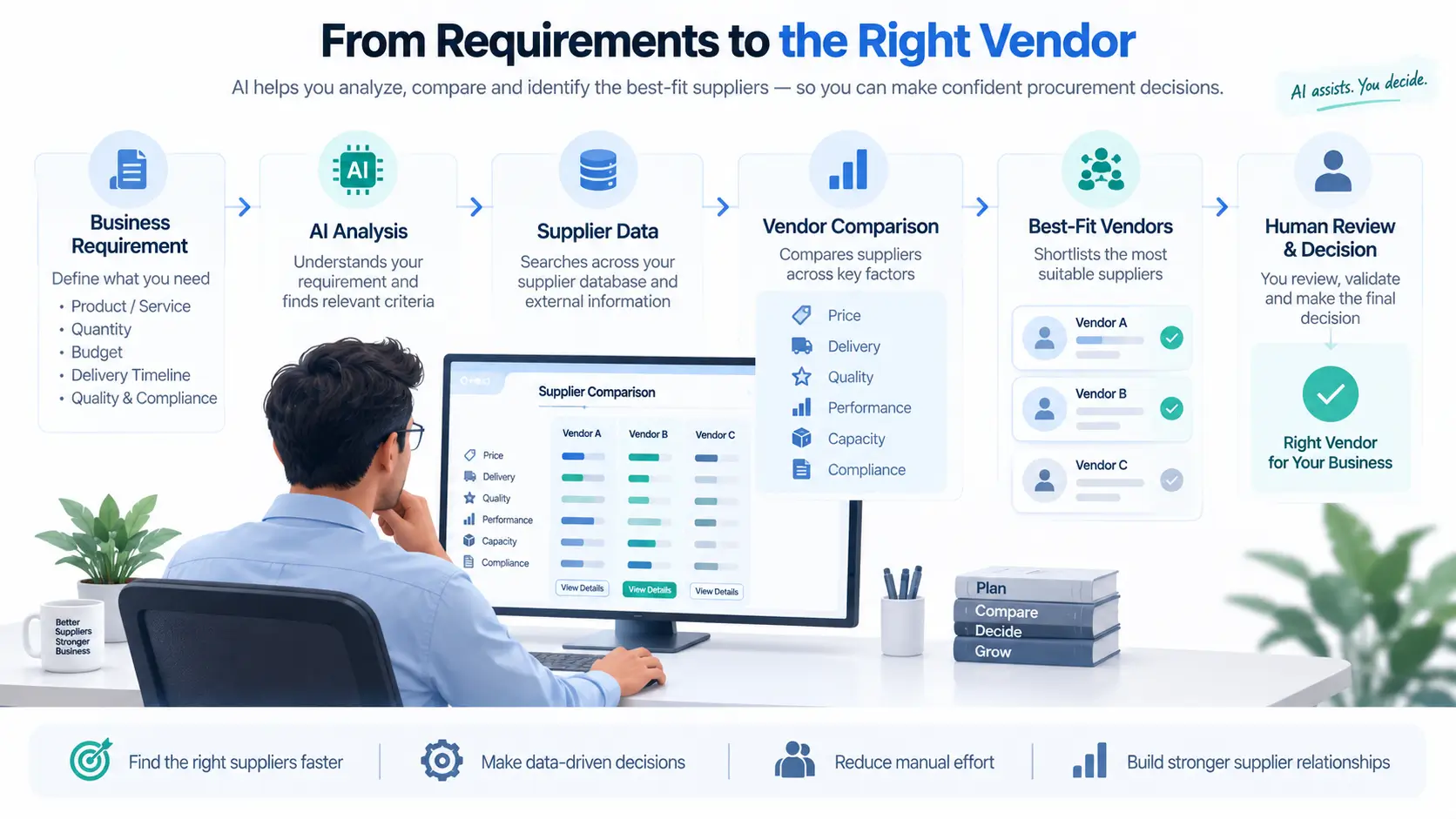
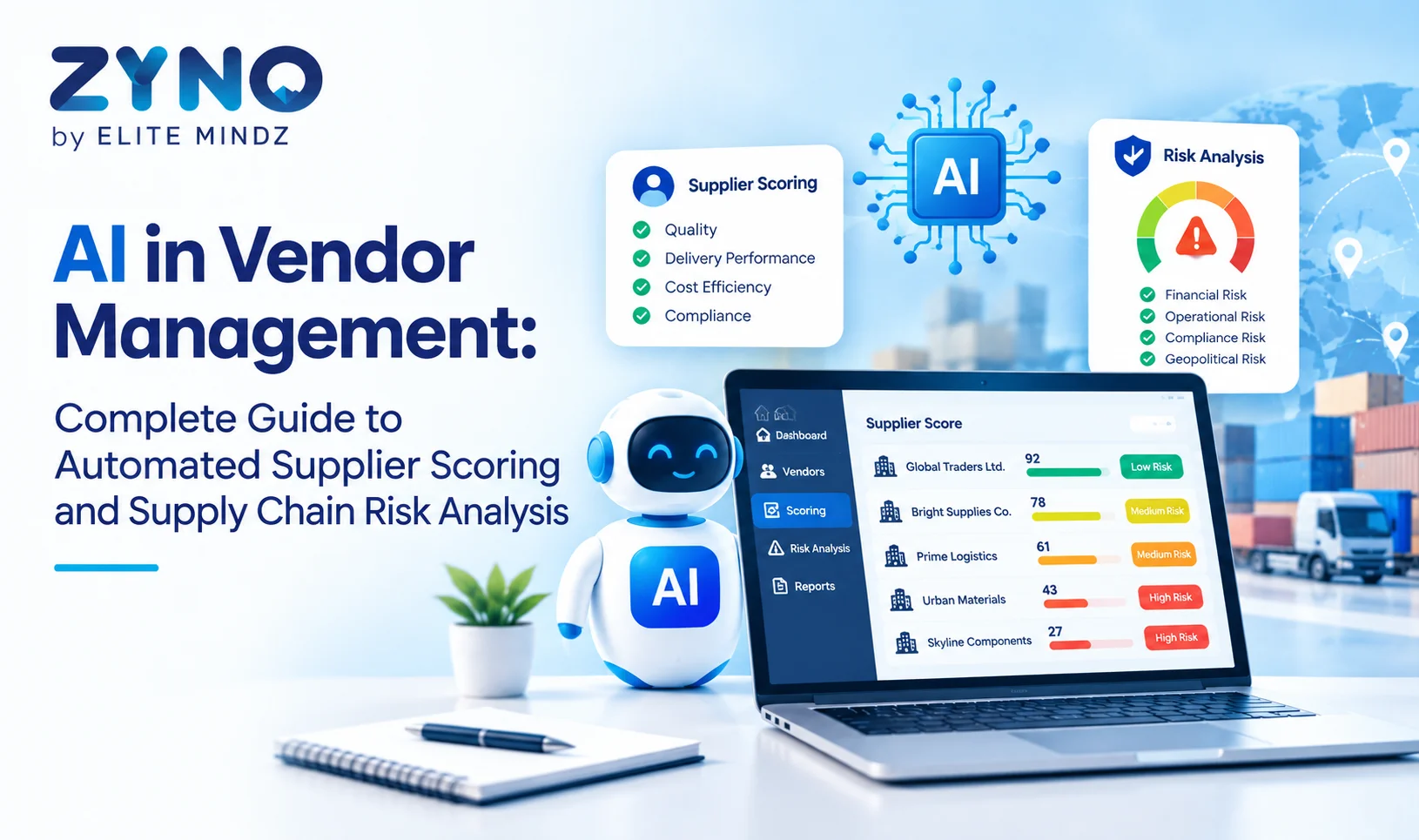
AI in Vendor Management uses artificial intelligence to automate supplier scoring, evaluate vendor performance, identify supply chain risks, and support data-driven procurement decisions. AI-powered vendor management helps businesses compare suppliers, monitor risk factors, improve supplier visibility, and streamline vendor evaluation from a centralized platform.
Businesses using ZYNO Books cut accounting time by 70% and stay 100% ZATCA-compliant — automatically.
Artificial intelligence transforms vendor management Software from reactive firefighting into predictive, data-driven decision-making. AI systems analyze supplier performance in real-time, predict supply chain disruptions weeks in advance, and score vendors across dozens of criteria simultaneously.
This guide covers how AI vendor management works, includes calculation formulas you can implement immediately, and explains why procurement software leaders are adopting these systems across India and globally.
Key Insight: Procurement teams using AI vendor management report 35% reduction in supplier-related supply chain disruptions, 28% improvement in on-time delivery rates, and 22% cost savings through better vendor consolidation decisions.
Simplify supplier evaluation, automate vendor scoring, identify supply chain risks, and make smarter procurement decisions with ZYNO Procurement.
Most procurement teams evaluate vendors using methods unchanged for decades. A manager reads a spreadsheet of historical delivery dates. Another department member calls references. Purchasing reviews the lowest bid. These approaches worked when supply chains were simple and change happened slowly.
Today's supply chains face constant disruption. Geopolitical tensions affect shipping routes. Financial instability at a supplier can emerge in days. Quality issues escalate instantly across social media. Vendor performance data accumulates faster than anyone can manually review.
Traditional vendor management struggles because it relies on historical information and human judgment rather than real-time data and predictive analysis. By the time a spreadsheet is updated, the situation has changed. By the time a meeting is scheduled to discuss vendor issues, the opportunity to prevent problems has passed.
| Vendor Management Problem | Average Cost Impact | Frequency in Supply Chains |
|---|---|---|
| Late supplier delivery causing production delays | $50,000 per incident (manufacturing) | Once per quarter |
| Quality issues requiring rework or returns | $25,000–$100,000 per incident | 2–3 times yearly |
| Supplier bankruptcy or operational closure | $200,000–$1,000,000+ depending on supply concentration | Unpredictable (preventable with early warnings) |
| Compliance violations or regulatory issues | $10,000–$500,000 in fines plus remediation | 1–2 times yearly |
| Maverick spending (unauthorized supplier purchases) | 15–25% cost premium versus negotiated rates | Ongoing across organization |
These issues aren't rare edge cases. They happen regularly in supply chains that lack predictive visibility. A manufacturing company loses $200,000 when a primary supplier suddenly closes. A retail business pays 20% more for emergency purchases when suppliers experience unexpected delays. A hospital faces regulatory penalties when procurement doesn't catch compliance gaps until audit time.

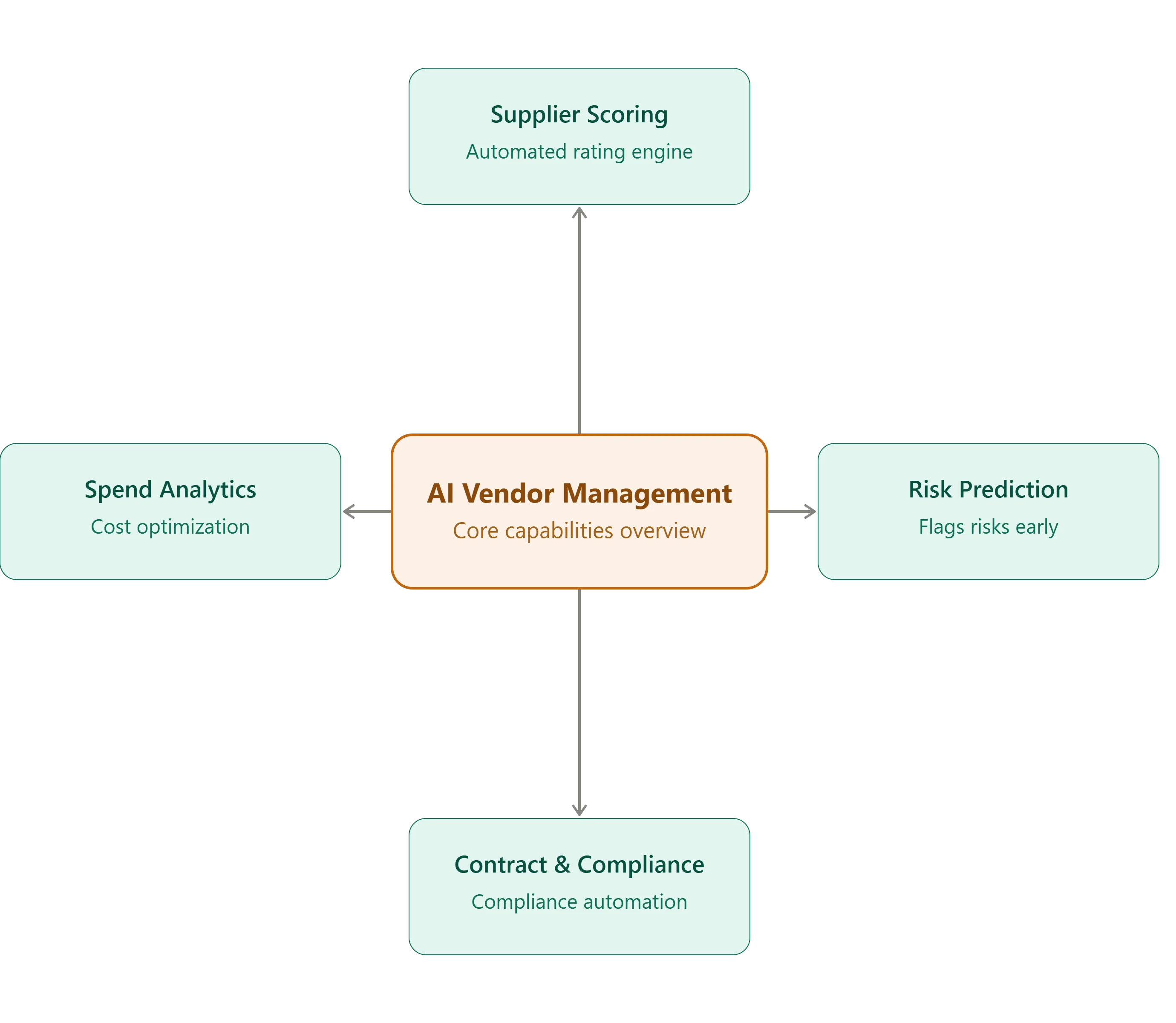
AI vendor management systems evaluate suppliers across dozens of performance dimensions simultaneously, assigning dynamic scores that update continuously rather than annually or manually.
Unlike traditional weighted-point methods that require manual input, AI systems automatically collect data from purchase orders, shipping records, quality inspections, invoices, and communication logs. The system calculates vendor ratings daily based on current performance.
Key metrics analyzed include:
Machine learning models scan hundreds of external data sources to predict supply chain disruptions weeks or months in advance. The system monitors:
Procurement teams receive alerts with recommended actions weeks before a supplier issue would traditionally become visible through routine performance reports.
AI systems process thousands of pages of supplier contracts using optical character recognition and natural language processing. Within seconds, the system extracts key information that typically requires hours of manual review:
The system flags non-standard terms that deviate from your organization's procurement policies, reducing legal and financial risk.
AI analyzes your entire purchasing history to identify opportunities to consolidate spending, negotiate better terms, and eliminate cost waste.
28%
Average cost savings from spend consolidation and better negotiations
42%
Reduction in maverick spending when AI flags unauthorized purchases

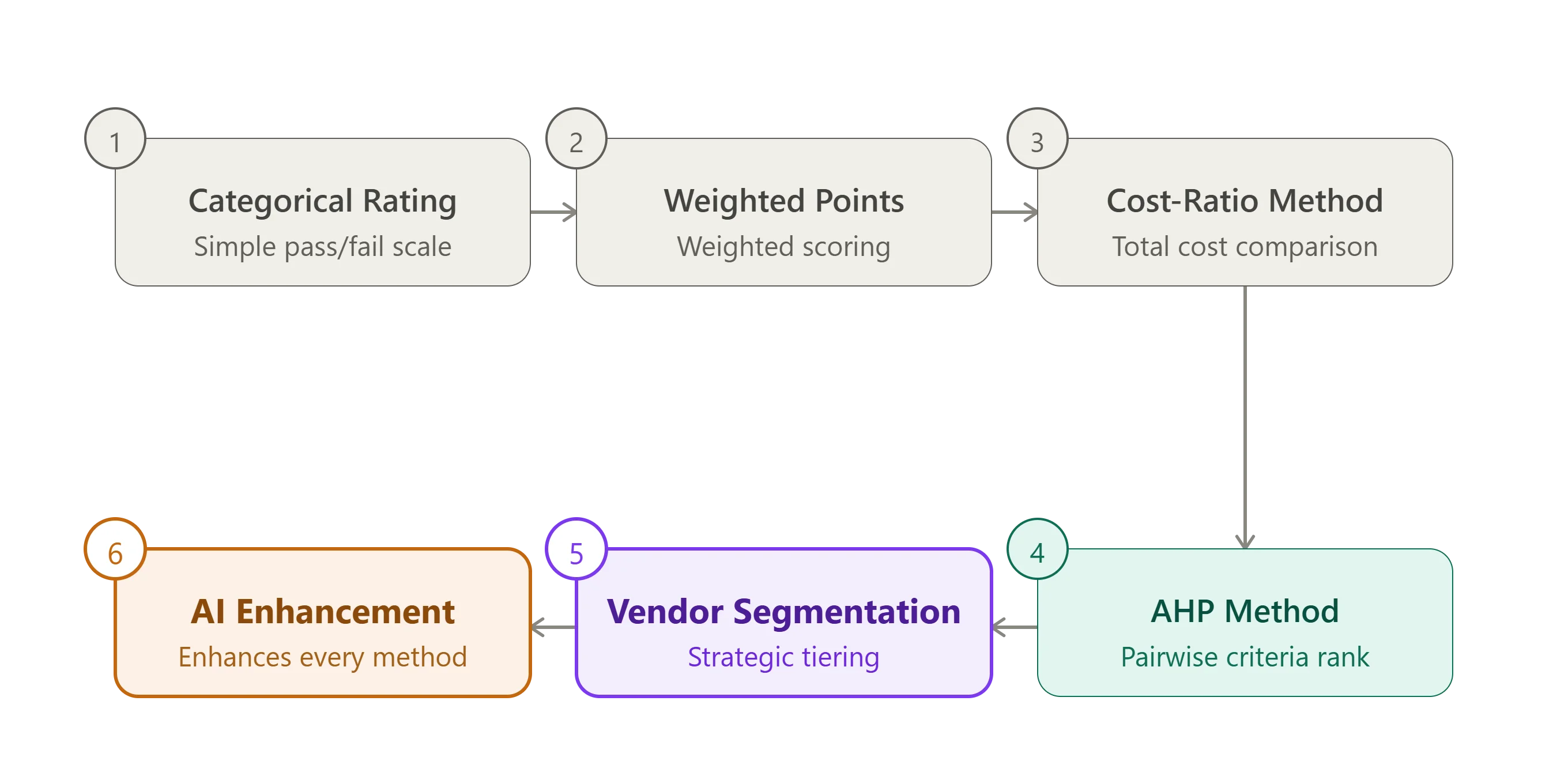
The oldest and simplest method asks team members to rate vendors as "good," "fair," or "poor" based on personal experience. While easy to understand, this approach suffers from subjectivity, inconsistency across evaluators, and lack of quantifiable data.
This method works only for organizations with few vendors and simple supply chains. It's inadequate for modern procurement where thousands of purchasing decisions happen daily.
Organizations identify key performance categories like quality, delivery, and cost. Each category receives a weight representing its importance (quality 50%, delivery 30%, cost 20%). Vendors receive scores 1-100 for each category, then the scores multiply by weights to create a composite rating.
Weighted Point Formula: Final Vendor Rating = (Quality Score × Quality Weight) + (Delivery Score × Delivery Weight) + (Cost Score × Cost Weight) Example: Quality Score of 90 × 0.50 weight = 45 points Delivery Score of 80 × 0.30 weight = 24 points Cost Score of 70 × 0.20 weight = 14 points Final Rating = 45 + 24 + 14 = 83/100
This method is widely used because it balances objectivity with simplicity. However, it still requires manual data collection and calculation, making real-time updates impractical.
Rather than focusing on purchase price alone, this method calculates the true cost of using a supplier by adding hidden expenses caused by poor performance.
True Cost Formula: Total Vendor Cost = Purchase Price + Hidden Costs Hidden Costs Include: + Inspection and quality control labor + Rework or rejection costs for defective goods + Expedited shipping fees for late deliveries + Production line stoppages due to incomplete shipments + Additional inventory carrying costs for unreliable suppliers
A supplier quoting the lowest price may actually cost significantly more when hidden expenses are included. This method reveals vendors that create operational friction despite competitive pricing.
Manage purchasing, suppliers, approvals, quotations, and procurement workflows from one powerful platform with ZYNO Procurement.
The Analytical Hierarchy Process breaks vendor selection into multiple levels of criteria and sub-criteria. Decision-makers compare options pairwise at each level, then aggregate scores to reach a final vendor ranking.
AHP handles both qualitative factors (like company reputation) and quantitative metrics (like defect rates) in one framework. It's ideal for high-stakes supplier decisions, but requires more time and structured decision-making than simpler methods.
Organizations plot suppliers on a two-dimensional grid based on factors like strategic importance and supply chain risk. This visualization reveals which suppliers deserve different management approaches.
| Vendor Segment | Strategic Importance | Supply Risk | Management Approach |
|---|---|---|---|
| Strategic Partners | High | Low | Long-term partnerships, joint planning, investment in relationship |
| Bottleneck Suppliers | High | High | Develop backup alternatives, lock in contracts, close monitoring |
| Leverage Suppliers | Low | Low | Competitive bidding, cost focus, lower engagement |
| Commodity Suppliers | Low | High | Diversify sources, maintain multiple alternatives |
AI doesn't replace these traditional methods. Instead, it automates the data collection, scoring, and analysis that make these methods work.
AI vendor management begins with consolidating data from across your organization. Most companies have vendor information scattered across purchase order systems, accounting software, quality management tools, and email correspondence.
Procurement teams typically work with IT to connect data sources:
The AI system creates a unified vendor profile combining data from all these sources.
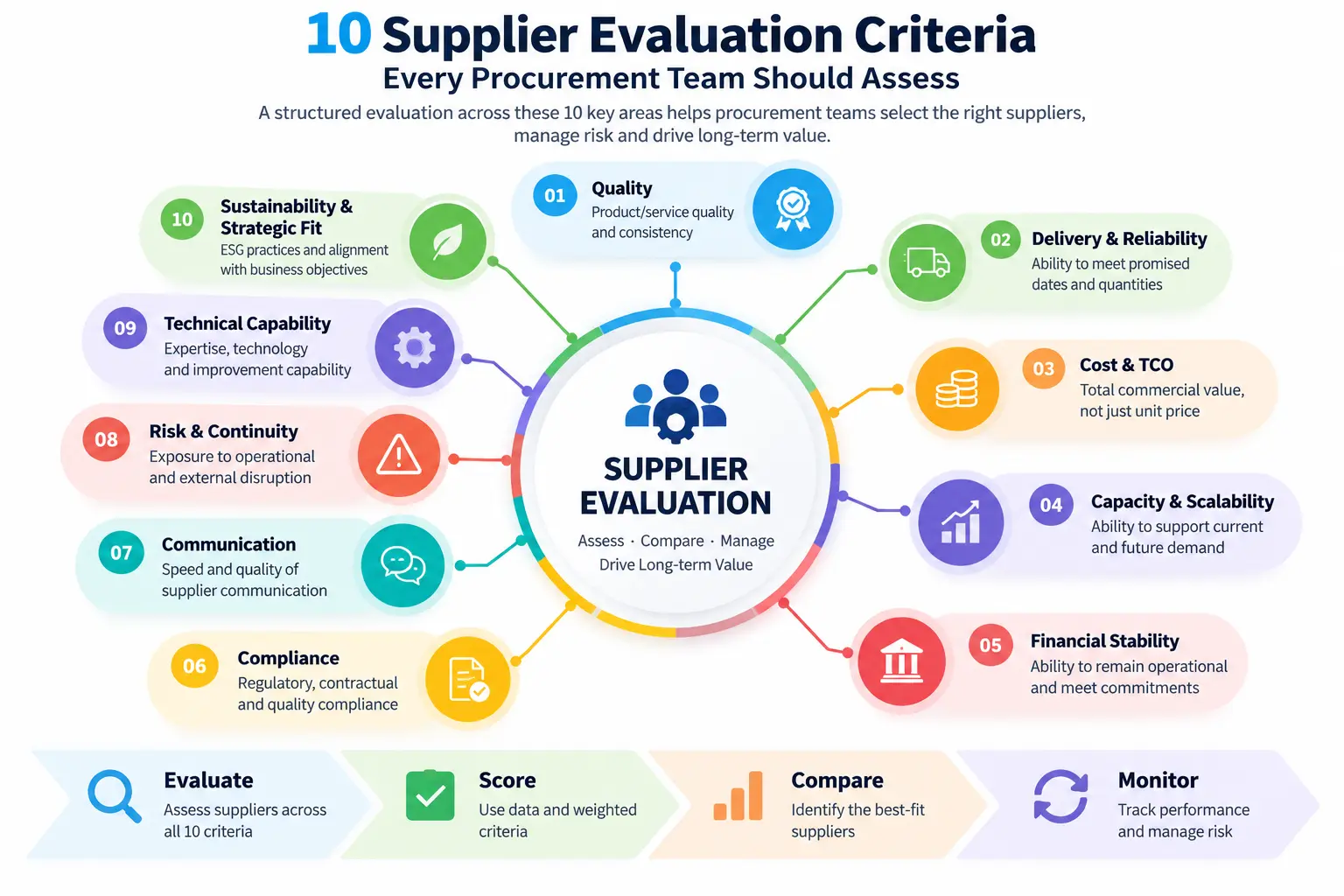
Your procurement team defines which performance categories matter most for your business. A manufacturing company prioritizes quality and delivery. A retail buyer emphasizes cost and flexibility. A tech company values innovation and reliability.
Categories typically include:
| Performance Category | Key Metrics | Data Source | Typical Weight |
|---|---|---|---|
| Quality | Defect rate, returns, compliance to specs | Quality systems, inspection records | 30–50% |
| Delivery | On-time delivery rate, order completeness | Shipping, logistics systems | 20–35% |
| Cost | Price competitiveness, payment terms, discounts | Purchase orders, invoices | 15–30% |
| Compliance | Contract adherence, certifications, regulatory compliance | Contracts, audit records, regulatory databases | 10–20% |
| Communication | Response time, issue resolution speed, responsiveness | Email logs, ticketing systems | 5–15% |
| Financial Health | Credit rating, bankruptcy risk, cash flow stability | Credit agencies, financial databases | 5–15% |
The AI system analyzes historical data to understand relationships between metrics and actual business outcomes. Machine learning models learn which vendors performed well over time and which factors predicted that success.
The system compares its AI-generated ratings against your organization's past vendor decisions. If procurement historically preferred certain vendors, the AI learns what characteristics those vendors shared. This calibration ensures the AI model reflects your organization's actual priorities, not just the stated weights.
Once deployed, the AI system continuously updates vendor ratings as new data arrives. A quality issue at a supplier immediately affects their quality score. A late delivery impacts the delivery metric within hours of the missed deadline.
The system sends alerts when vendors fall below performance thresholds or when external data signals upcoming disruption. Procurement teams receive notifications with context and recommended actions rather than vague warnings.
When procurement teams need to make vendor decisions, the AI system provides analysis and recommendations. Planning a new sourcing event? The system recommends which current vendors should be invited based on performance history and capability. Faced with a supplier failure? The system ranks alternative suppliers that can step in quickly.
Important: AI vendor management is a decision support tool, not a replacement for human judgment. Procurement professionals should understand the data driving AI recommendations and maintain authority over final vendor decisions. The best outcomes come from combining AI analysis with experienced procurement expertise.
Consider a manufacturing company evaluating three suppliers for metal components. They define weights as Quality 40%, Delivery 35%, Cost 15%, Compliance 10%.
| Metric | Supplier A | Supplier B | Supplier C |
|---|---|---|---|
| Quality Score (defects, specifications met) | 92 | 78 | 85 |
| Delivery Score (on-time %, completeness) | 88 | 95 | 72 |
| Cost Score (price competitiveness) | 75 | 92 | 88 |
| Compliance Score (certifications, adherence) | 94 | 82 | 79 |
| Supplier | Quality (40%) | Delivery (35%) | Cost (15%) | Compliance (10%) | Final Score |
|---|---|---|---|---|---|
| Supplier A | 92 × 0.40 = 36.8 | 88 × 0.35 = 30.8 | 75 × 0.15 = 11.3 | 94 × 0.10 = 9.4 | 88.3 |
| Supplier B | 78 × 0.40 = 31.2 | 95 × 0.35 = 33.3 | 92 × 0.15 = 13.8 | 82 × 0.10 = 8.2 | 86.5 |
| Supplier C | 85 × 0.40 = 34.0 | 72 × 0.35 = 25.2 | 88 × 0.15 = 13.2 | 79 × 0.10 = 7.9 | 80.3 |
Supplier A ranks highest overall with an 88.3 score. Quality and compliance are strengths, though cost is lower. Supplier B excels at delivery and cost but shows weaker quality and compliance. Supplier C falls short across all metrics.
With AI monitoring, this company would track whether Supplier B's quality improves over time or if Supplier A's cost becomes competitive. As circumstances change, ratings update automatically rather than waiting for annual reviews.
Beyond rating vendor performance, AI systems predict which suppliers face disruption risks. Machine learning identifies patterns preceding supplier closures, quality collapses, or operational changes.
Risk indicators include:
Real Example: A technology manufacturer received an AI alert that a critical component supplier's credit rating was declining. Investigation revealed the supplier was losing major customers and experiencing cash flow stress. The company immediately secured backup suppliers and negotiated payment terms favoring early shipment. When the supplier eventually closed operations, this organization was protected. Competitors who didn't have early warning faced 3-month production delays.
External events—geopolitical tensions, extreme weather, regulatory changes—create vendor risks that internal performance metrics don't capture. AI systems monitor external data sources to predict how events will affect your suppliers.
Shipping delays due to port closures, production issues from pandemic-related restrictions, compliance challenges from regulatory changes—these disruptions become predictable through external data analysis.
| Benefit Category | Typical Improvement | How It's Realized |
|---|---|---|
| Spend Consolidation Savings | 22–28% cost reduction | Eliminate duplicate suppliers, consolidate volume, negotiate better terms |
| Quality Improvement | 35–45% reduction in defects | Identify problematic suppliers early, increase quality focus in vendor selection |
| On-Time Delivery | 25–35% improvement | Score vendors on delivery performance, replace unreliable suppliers |
| Maverick Spending Reduction | 30–42% reduction in unauthorized purchases | AI flags off-contract purchases, enforce supplier discipline |
| Supply Chain Disruption Prevention | Avoid $500K–$5M+ disruption costs | Predict supplier issues weeks in advance, develop contingency plans |
| Procurement Time Savings | 40–60% reduction in manual analysis time | Automate vendor scoring, spend analysis, contract review |
For an organization with $50 million annual procurement spend, typical ROI from AI vendor management:
| Item | Amount |
|---|---|
| Annual Procurement Spend | $50,000,000 |
| Spend Consolidation Savings (25%) | $12,500,000 |
| Quality Improvement Savings (prevents 30% of defect costs) | $750,000 |
| Delivery Efficiency (faster problem resolution) | $500,000 |
| Maverick Spending Control (35% reduction) | $2,100,000 |
| Disruption Prevention (avoid 1 major incident annually) | $1,000,000 |
| Total Annual Benefits | $16,850,000 |
| AI Vendor Management System Cost | $300,000 |
| Net First-Year ROI | $16,550,000 (5,517% ROI) |
| Payback Period | Less than 1 week |
These numbers illustrate why procurement organizations rapidly adopt AI vendor management. The cost savings alone typically exceed the technology investment by orders of magnitude.
AI systems produce output only as good as their input data. Before implementing AI vendor management, assess data quality:
Organizations with poor data quality benefit from data cleanup before deploying AI. Garbage in, garbage out applies to vendor management as much as any analytical system.
Procurement professionals may initially view AI as threatening their expertise. In reality, AI handles routine analysis and flagging while procurement professionals focus on strategic decisions. The best implementations position AI as a tool making procurement teams more effective, not replacing them.
Successful organizations invest in training procurement teams on how to interpret AI recommendations, understand underlying data, and make better decisions with AI support.
AI vendor management works best when integrated into existing procurement workflows rather than as a separate system. Source-to-pay platforms increasingly include vendor management AI as native capabilities.
Consider how AI vendor data feeds into your:
Establish governance around AI vendor management decisions. Who can override AI recommendations? How often do procurement professionals audit AI decision logic? What escalation procedures exist when AI flagging conflicts with business relationships?
Organizations should document why certain suppliers remain approved despite lower AI scores. Sometimes business relationships, strategic partnerships, or long-term contracts justify keeping suppliers despite numerical ratings.
Manufacturers face complex supplier relationships with multiple tiers of suppliers and sub-suppliers. AI vendor management predicts disruptions across the entire supply chain, not just tier-one suppliers.
Critical focus areas include quality consistency, delivery reliability, and financial stability of suppliers. Manufacturing typically uses longer planning horizons, making predictive vendor analysis especially valuable.
Retail procurement focuses heavily on cost, volume flexibility, and speed to market. AI vendor management optimizes these factors while managing supplier concentration risk.
Seasonality and trend forecasting become critical. AI systems help retail buyers anticipate seasonal demand surges and ensure suppliers can scale capacity accordingly.
Tech companies prioritize innovation, security, and reliability from vendors. AI vendor management assesses vendors on security certifications, innovation track record, and operational stability.
Vendor risk management includes evaluating technology providers on cybersecurity posture and data protection compliance.
Healthcare procurement emphasizes regulatory compliance, product quality, and reliability. Supplier failures in healthcare create patient safety risks beyond normal business disruption costs.
AI vendor management helps healthcare organizations maintain stringent quality standards and ensure suppliers meet regulatory requirements.
Government procurement requires transparent, objective vendor evaluation meeting specific regulatory requirements. AI vendor management satisfies these requirements by providing auditable, documented scoring.
Multi-criteria evaluation processes like AHP align naturally with government procurement procedures.

When evaluating new suppliers, vendors lack historical performance data. AI systems assess new supplier risk through:
Rather than lengthy qualification processes, AI accelerates new supplier approval by quickly assessing available data.
When consolidating suppliers or re-sourcing categories, AI vendor management analyzes all potential suppliers simultaneously. The system can model scenarios: What if we use Supplier A for 60% and Supplier B for 40%? What supplier combination minimizes risk while optimizing cost?
When vendors underperform, AI systems help procurement teams set specific improvement targets. Rather than vague feedback, procurement can tell a supplier exactly which metrics need improvement and by how much.
AI also tracks whether suppliers actually improve or whether they're declining suppliers where alternatives should be developed.
Organizations optimize for purchase price and miss hidden costs from quality issues, late deliveries, and poor service. AI captures hidden costs automatically through cost-ratio analysis.
Different procurement professionals may score the same vendor differently based on personal relationships or selective information. AI applies consistent criteria across all vendors.
Annual vendor reviews mean decisions are based on year-old data. AI updates ratings continuously as new data arrives, eliminating lag time between performance changes and management decisions.
Organizations spend heavily with one or two suppliers without realizing their supply chain vulnerability. AI identifies concentration risk and recommends diversification.
Supplier financial problems, regulatory issues, or geopolitical risks emerge before affecting performance metrics. AI monitors external signals while humans focus on historical performance.
Use our Vendor Rating Template to assess supplier performance, track key metrics, and make data-driven vendor management decisions.
Download Vendor Rating Template →Audit current vendor management processes. Map existing data sources. Define procurement priorities and category weights. Identify quick wins where AI can deliver immediate value.
Consolidate vendor data from multiple systems. Clean and standardize data. Create unified vendor profiles combining internal and external data.
Deploy AI vendor management for one procurement category. Validate results against procurement team judgment. Calibrate scoring models based on pilot feedback.
Expand AI vendor management across all procurement categories. Integrate with purchase order and contract management systems. Train procurement teams on using AI recommendations.
Monitor system performance and ROI. Continuously refine scoring weights based on actual vendor performance. Add new data sources and external signals as opportunities emerge.
Timeline Note: Organizations can realize significant value within 3-6 months. Full optimization continues over years as the system learns from more data and procurement teams develop expertise using AI recommendations.
When selecting AI vendor management platforms, procurement teams should evaluate:
Many organizations implement AI vendor management as part of comprehensive source-to-pay platforms that also include:
Integrated platforms provide data consistency and workflow efficiency that point solutions can't match.
AI vendor management continues advancing beyond current capabilities. Future developments include:
As AI capabilities expand, the strategic role of procurement professionals increases rather than decreases. While AI handles routine analysis and scoring, procurement leaders focus on strategic supplier partnerships, innovation collaboration, and business relationship development.
The most successful organizations view AI not as a replacement for procurement expertise but as a force multiplier enabling procurement teams to operate at higher strategic levels.
Streamline procurement, automate purchasing workflows, manage suppliers, simplify approvals, and gain better visibility into business spending with ZYNO Procurement.
Vendor management fundamentally impacts business success. Every product manufactured, every service delivered, every dollar spent flows through supplier relationships. Organizations managing vendors through spreadsheets and annual reviews operate with a massive strategic disadvantage.
AI transforms vendor management from reactive firefighting into predictive, data-driven optimization. Procurement teams get real-time visibility into supplier performance. Management receives early warnings of disruption risks. Cost savings become automatic through better negotiations and spending consolidation.
The organizations winning in their markets adopt AI vendor management today. Those that delay risk supplier failures, quality issues, and cost overruns while competitors operate with superior vendor relationships and lower supply chain costs.
35%
Average reduction in supplier-related supply chain disruptions
$16M+
Annual savings for $50M procurement spend organizations
Procurement management software leaders ready to transform vendor management should start by assessing current state. What data do you have? Which suppliers create the most risk? Where could better vendor ratings improve decisions?
The business case for AI vendor management is straightforward: reduce supply chain disruptions, lower procurement costs, and improve vendor quality. The implementation path is clear: assess data, define priorities, pilot with one category, then scale.
Your vendors are a strategic asset. Managing them through AI transforms procurement from a cost center into a competitive advantage.
What is AI in vendor management?
AI in vendor management uses artificial intelligence to automate supplier scoring, monitor vendor performance, identify risks, and support data-driven procurement decisions.
How does AI improve vendor management?
AI analyzes supplier data from purchase orders, invoices, quality records, delivery information, and other sources to provide real-time vendor performance insights.
What is automated supplier scoring?
Automated supplier scoring evaluates vendors across factors such as quality, delivery, cost, compliance, communication, and financial health to generate dynamic performance scores.
How does AI help with supplier risk analysis?
AI can monitor financial, operational, regulatory, geopolitical, weather, and other external signals to identify potential supply chain risks before they become major disruptions.
What factors are used in AI-based vendor scoring?
Common factors include on-time delivery, defect rates, price stability, contract compliance, communication responsiveness, regulatory compliance, and financial stability.
Can AI predict supplier disruptions?
AI-powered systems can analyze historical and external data to identify patterns and provide early warnings about potential supplier disruptions.
How does AI reduce procurement costs?
AI can identify duplicate purchases, maverick spending, supplier consolidation opportunities, and potential negotiation areas through spend analysis.
What is the difference between traditional and AI-based vendor rating?
Traditional vendor rating often depends on manual data collection and periodic reviews, while AI-based systems can continuously analyze supplier data and update performance ratings as new information becomes available.
Can AI vendor management integrate with procurement software?
Yes. AI vendor management can be integrated with procurement workflows such as supplier selection, RFQs, contracts, purchase orders, quality tracking, and accounts payable.
Does AI replace human decision-making in vendor management?
No. AI acts as a decision-support tool by providing data, scores, alerts, and recommendations, while procurement professionals retain control over final vendor decisions.
Procurement Software Trends in 2026: What to Expect
Read More →
Why E-Procurement Outperforms Traditional ERP in Modern Procurement
Read More →
Top Procurement Software in India: 12 Best Options for 2026
Read More →
Best Procurement Software Companies in Kuwait (2025)
Read More →
5 Best Procurement Software in Africa for Enterprises & SMEs (2026 Guide)
Read More →
Best Procurement Software in Nigeria 2026 | Top 5 Picks
Read More →
Best Procurement Software Providers in USA (2025): How AI is Transforming the Future
Read More →
10 Best Procurement Software Providers in Thailand for Streamlined Supply Chain Management
Read More →
Top 10 Cloud-Based Procurement Solutions in Portugal for Businesses in 2025
Read More →
Top 10 Procurement Software Providers in Switzerland 2026: Streamlining Sourcing and Supplier Management
Read More →
What Makes ZYNO Procurement Different from Other Oil & Gas Procurement Software
Read More →
The Digital Transformation of Logistics Procurement in the Middle East
Read More →
A Step by Step Guide to Procurement Management Software for Modern Enterprises
Read More →
Sourcing and Procurement: What is the Difference and Why It Matters
Read More →Difference Between Procurement and Supply Chain Management
Read More →
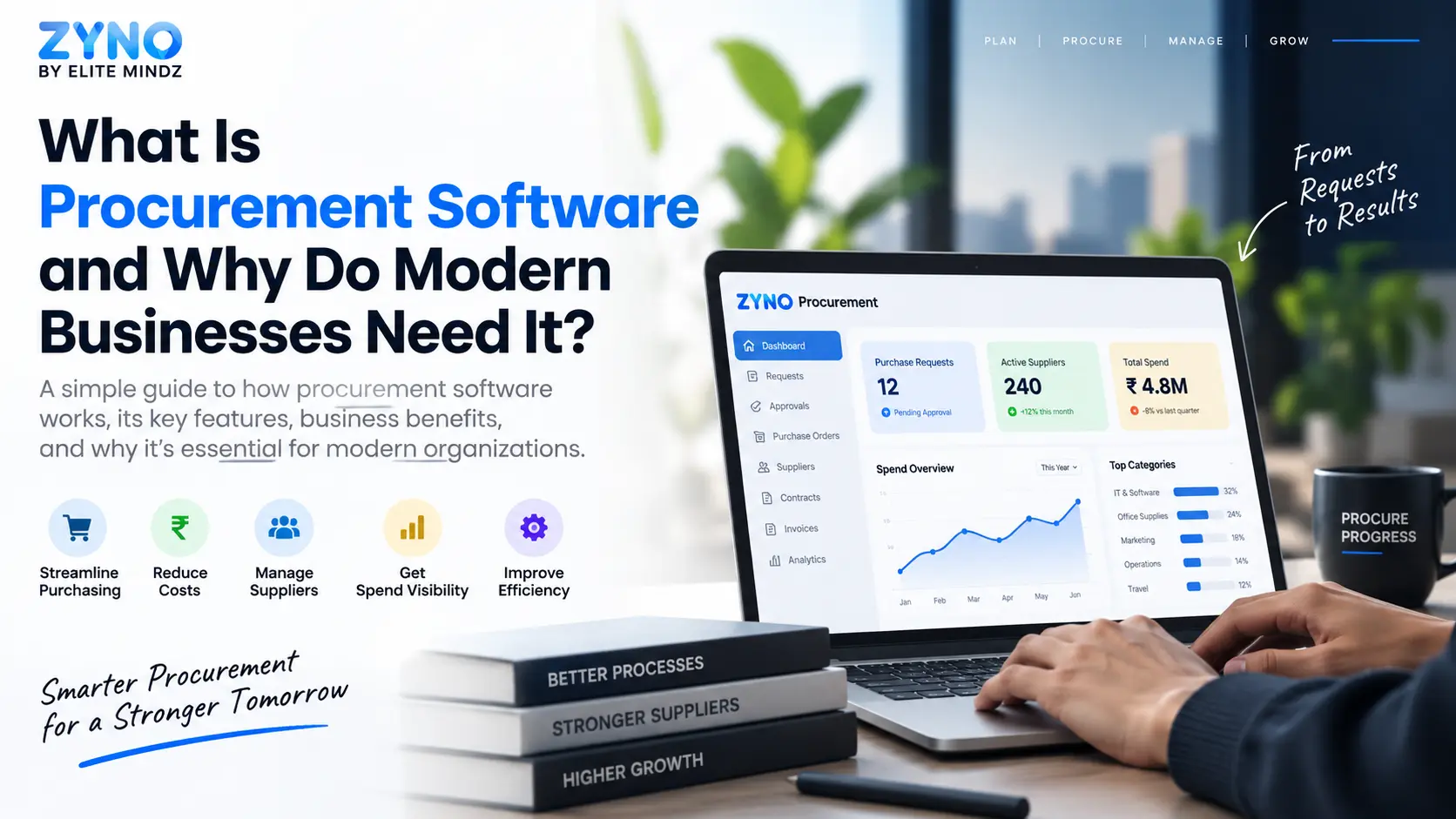
What Is Procurement Software and Why Do Modern Businesses Need It?
Read More →
Best Procurement Management Software to Automate ERP Process
Read More →
Direct vs Indirect Procurement: Key Differences, Examples & Uses (2026)
Read More →
Smart procurement strategies for cost optimization & risk management
Read More →
What Is Procurement? Everything You Need to Know (Types, Process & SAP)
Read More →Beyond Cost-Cutting: How Procurement Drives Margin Expansion in 2026
Read More →
Direct Procurement: Process, Examples, and When to Use It
Read More →
What Are the 5 Types of E-Procurement? A Complete Guide for Businesses
Read More →
Which Procurement Management Software Is Best? Top Tools Compared for 2026
Read More →
Top 8 Coupa Alternatives to Explore in 2026
Read More →
Looking to Replace Coupa? Discover the Best Alternatives Like ZYNO Procurement
Read More →
How Does Procurement Software Work? A Complete Guide
Read More →
ZYNO Procurement vs Coupa: Best Procurement Software Comparison for Mid-Market Teams
Read More →
Best SAP ARIBA Procurement Alternatives in 2026
Read More →
ZYNO Procurement vs SAP Ariba: Which Solution Is More User-Friendly?
Read More →
AI-Powered Procurement Management Software for Fast, Connected, and Visible Workflows in Dubai
Read More →
What is Vendor Management? Complete Guide to Vendor Management Software, Systems, and Processes
Read More →
Best Procurement Management Software In Kenya
Read More →
6 SAP Ariba Alternatives for Mid-Market Businesses in 2026
Read More →
Top E-Procurement Solutions for B2B Organizations (2026)
Read More →
Quotation Format: Free Templates + Complete Guide (2026)
Read More →
Cost Control Software: Features, Benefits & Performance Guide for 2026
Read More →
Procurement Workflow: Steps, Stages, and Real Examples
Read More →
Top 10 Zycus Alternatives for Procurement Teams in 2026
Read More →
Best Precoro Alternative for Purchase Requisition and Procurement
Read More →
Top AI Procurement Tools in 2026
Read More →
Best Tools for Supplier Risk Management
Read More →
FEFO vs FIFO vs LIFO: Differences, Benefits & Which Inventory Method Is Best?
Read More →
AI Procurement Software: Features, Benefits, Use Cases & How to Choose
Read More →
Best AI Tools for Supply Chain Procurement
Read More →
Procurement Risk Management
Read More →
Still Using Excel for Procurement? Read This Before It's Too Late
Read More →
Best RFP Software in 2026: Top Tools Compared for Faster Proposal Responses
Read More →
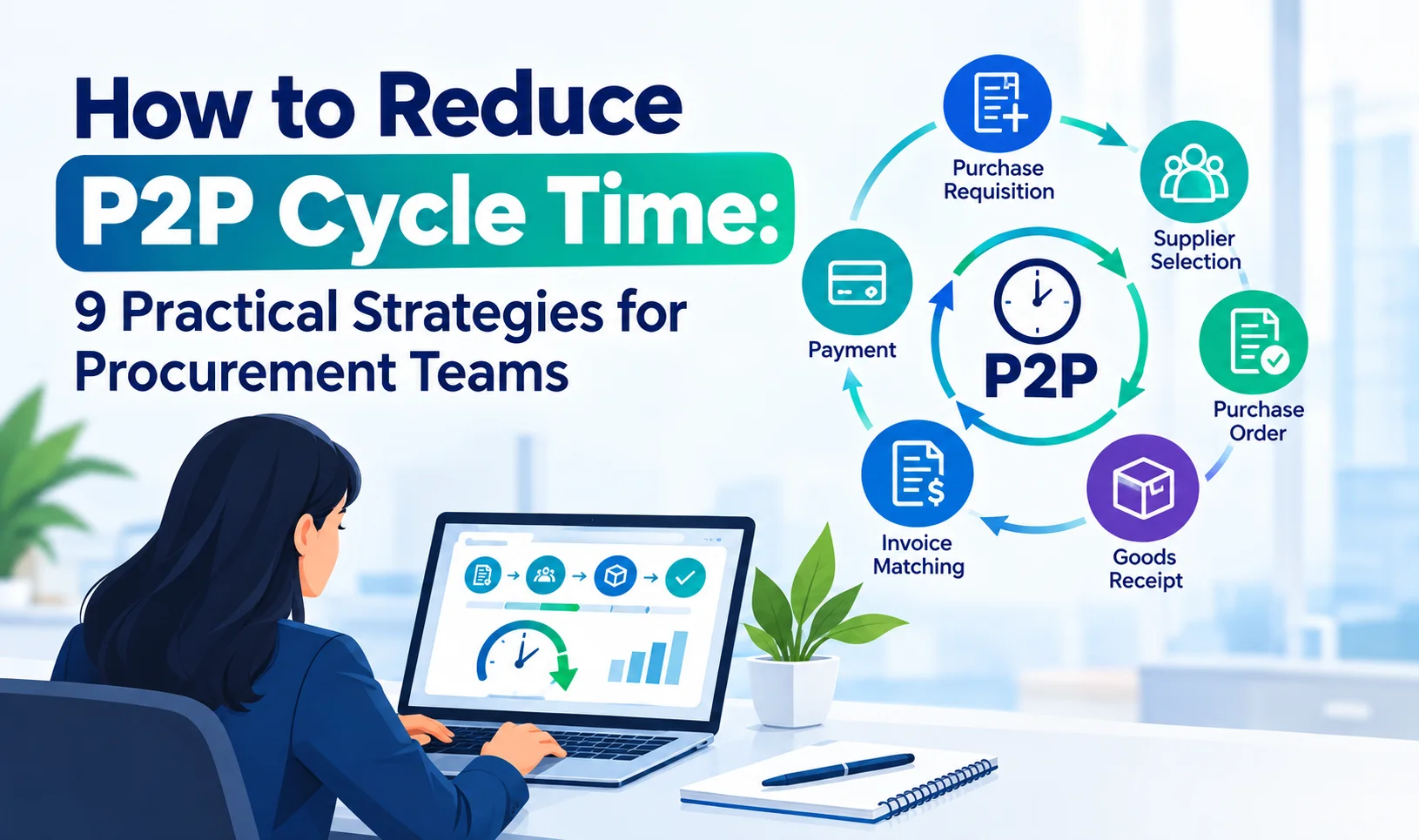
What Is Procure-to-Pay (P2P)? A Complete Guide
Read More →
Complete Procurement Workflow Guide for Modern Businesses
Read More →
Complete Guide to E-Procurement Solutions for B2B Organizations
Read More →
Cost Control Software Comparison Guide: Features, Pricing & Benefits
Read More →
Purchase Order Tracking: How to Manage Every PO Without the Chaos
Read More →
Inventory Management: What It Is, How It Works and Why It Matters
Read More →
Top 10 Procurement Software Tools for Purchasing Automation in 2026
Read More →
Agentic AI Procurement Platforms and the Future of Strategic Sourcing
Read More →
AI Spend Analytics Software for Procurement Leaders
Read More →
From Prompt to Procurement: How AI Is Transforming Enterprise Purchasing
Read More →
ZYNO Procurement vs IBM Procure-to-Pay Automation
Read More →
ZYNO Procurement vs Infor Nexus: Which Procure-to-Pay Platform Fits Your Team?
Read More →
AI-Powered Procurement Software in 2026: Top 6 Platforms That Actually Deliver ROI
Read More →
Contract Management Software Buyer's Guide: Features, Costs & Top Picks
Read More →
Top 10 Procure to Pay Software Companies in India 2026
Read More →
10 Best Vendor Management Software in India (2026): Features, Benefits & Comparison
Read More →
How Machine Learning and AI Are Transforming Procurement: A Strategic Overview
Read More →
What Is Procurement Software for GP? Features, Benefits and Best Solutions for Businesses
Read More →
What Procurement Software Do Mid-Market Companies Use Instead of SAP Ariba or Coupa?
Read More →
Prompt-Based Procurement Software for Kenyan Businesses
Read More →
Project Management Software: A Complete Guide to Streamline Business Operations and Procurement Processes
Read More →
SAP Ariba vs ZYNO Procurement: Complete Feature Comparison (2026)
Read More →
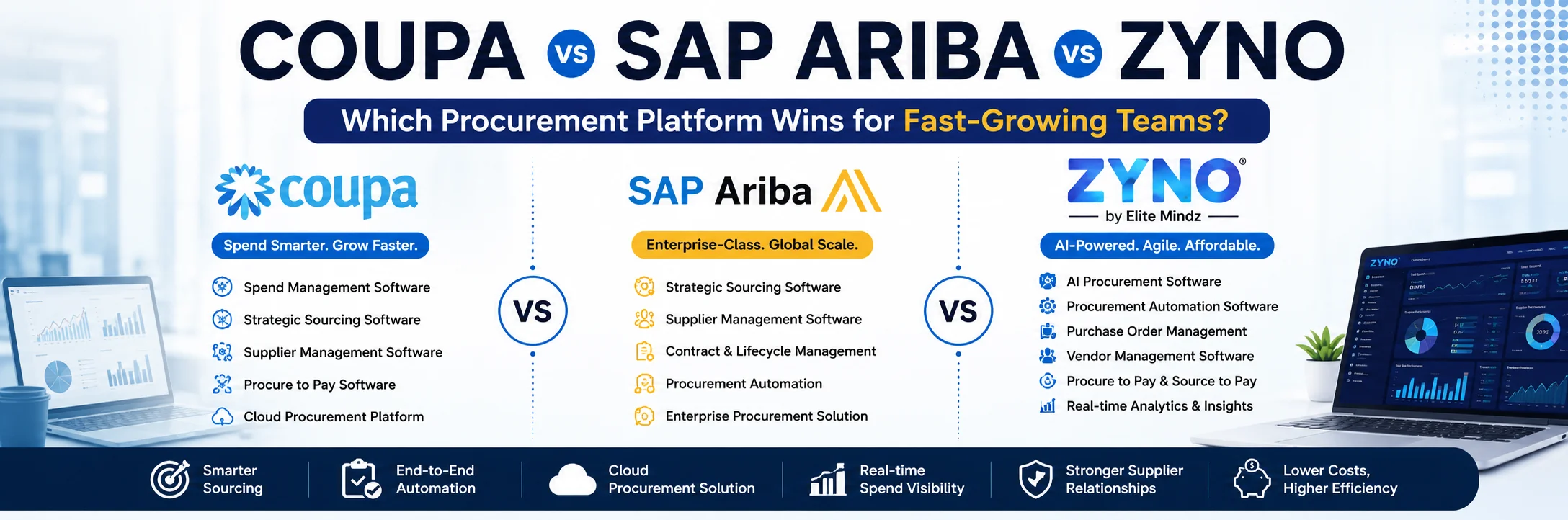
Coupa vs SAP Ariba vs ZYNO: Which Procurement Platform Wins for Fast-Growing Teams?
Read More →
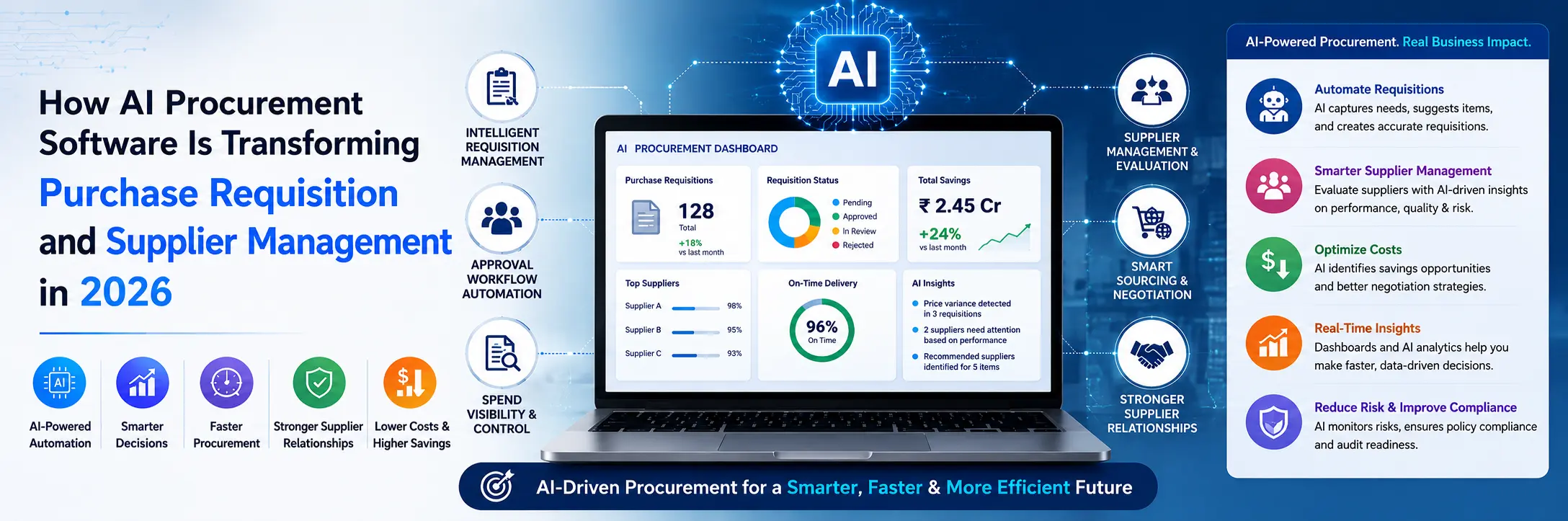
How AI Procurement Software Is Transforming Purchase Requisition and Supplier Management in 2026
Read More →
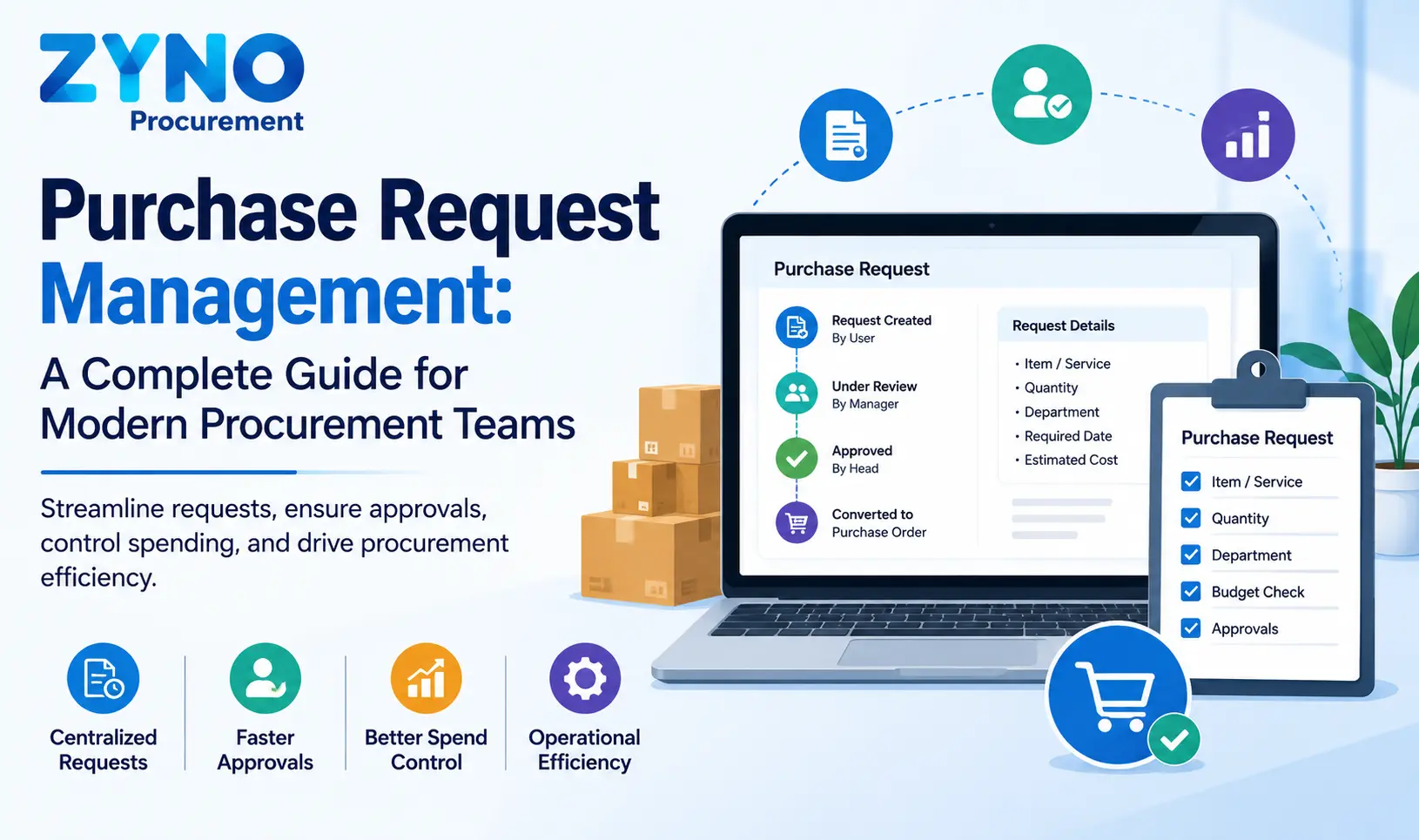
Purchase Request Management: A Complete Guide for Modern Procurement Teams
Read More →
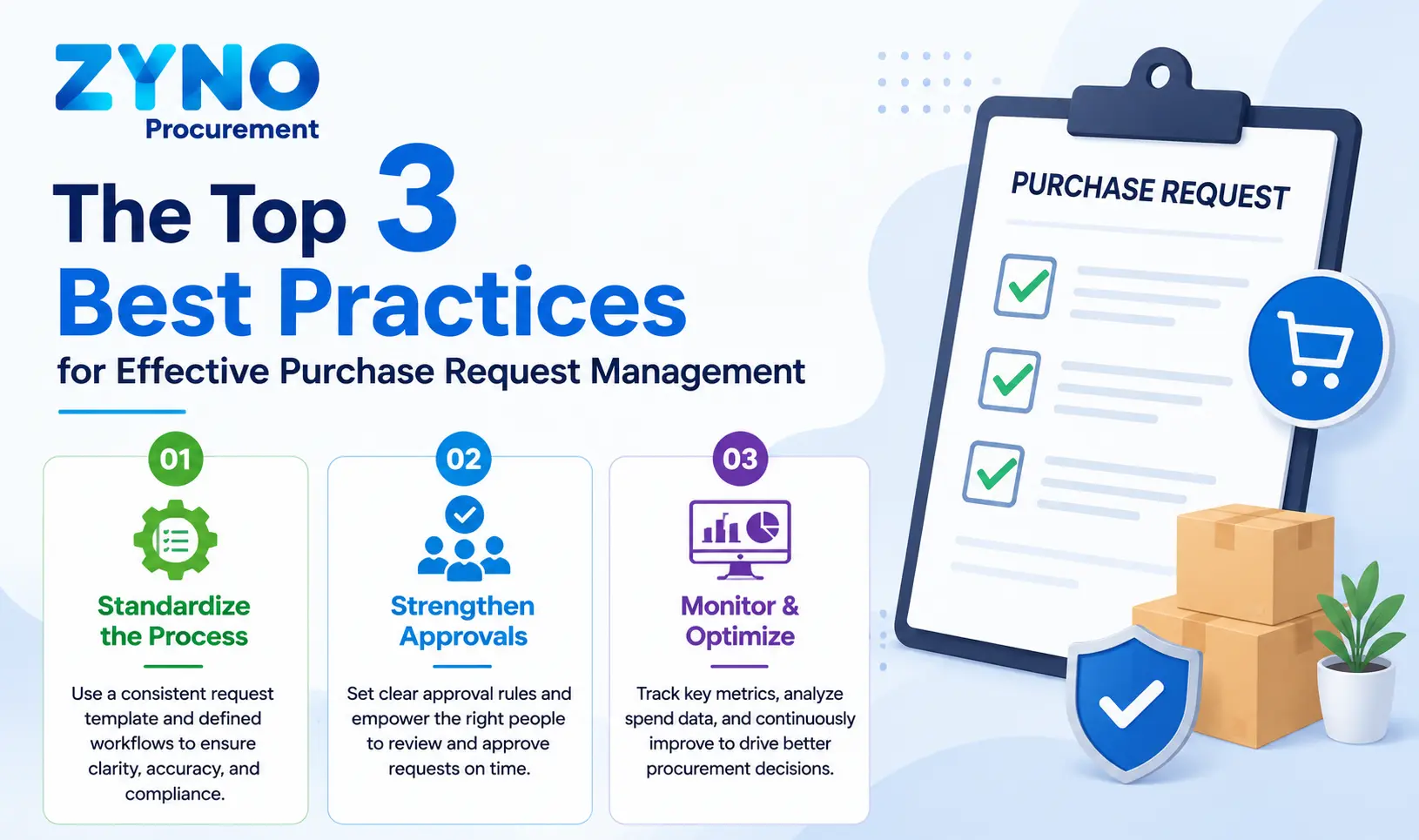
The Top 3 Best Practices for Effective Purchase Request Management
Read More →
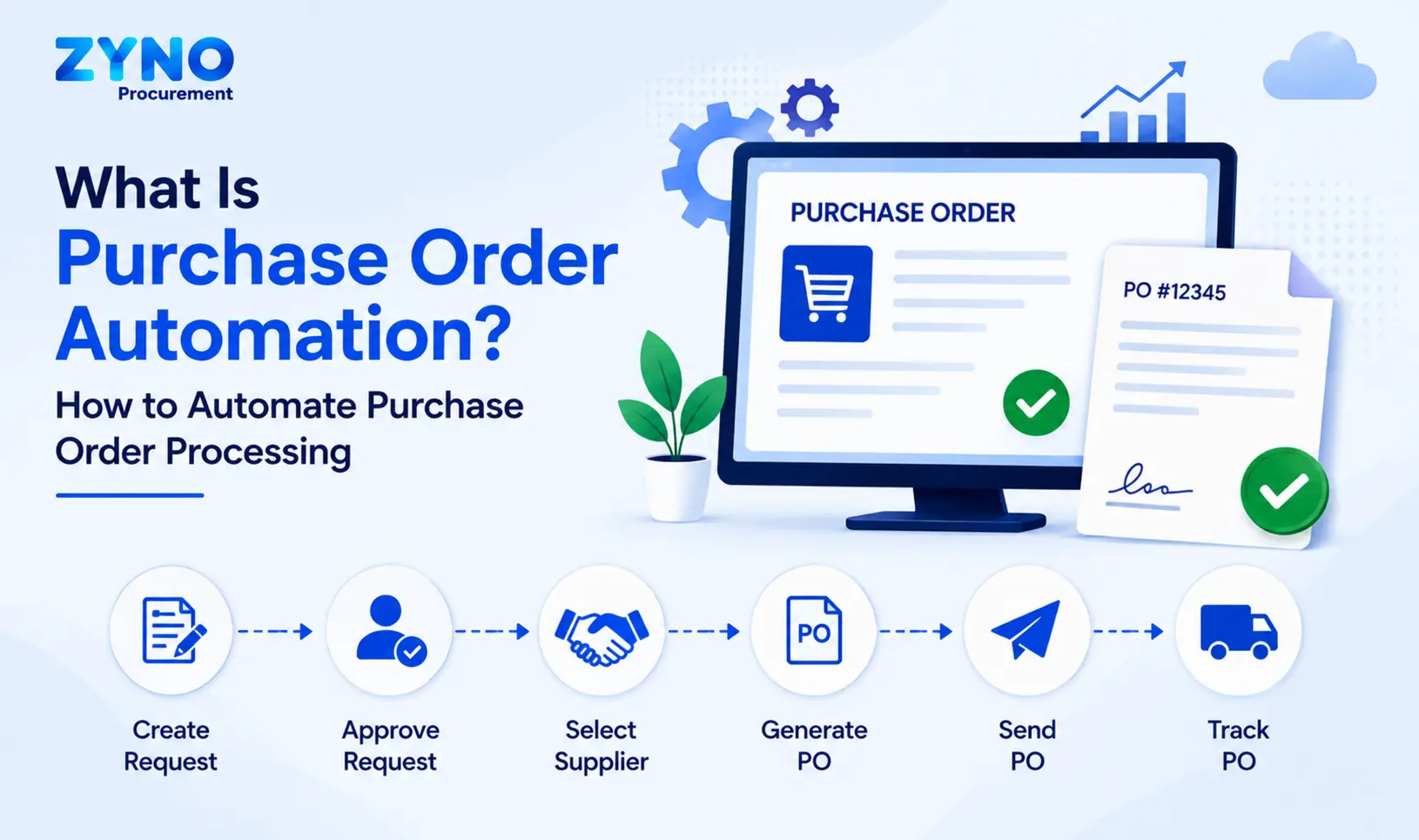
What Is Purchase Order Automation? How to Automate Purchase Order Processing
Read More →
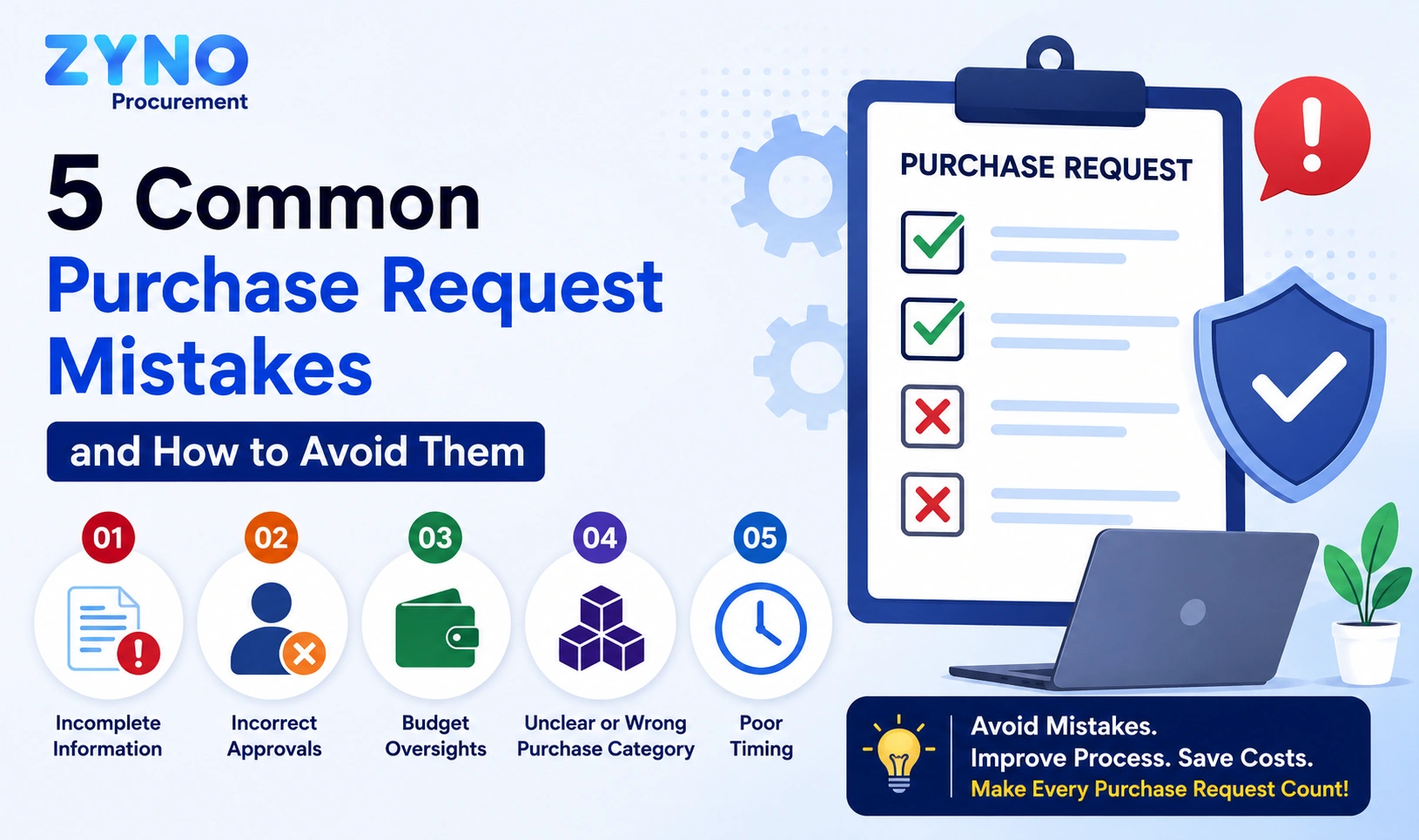
5 Common Purchase Request Mistakes and How to Avoid Them
Read More →
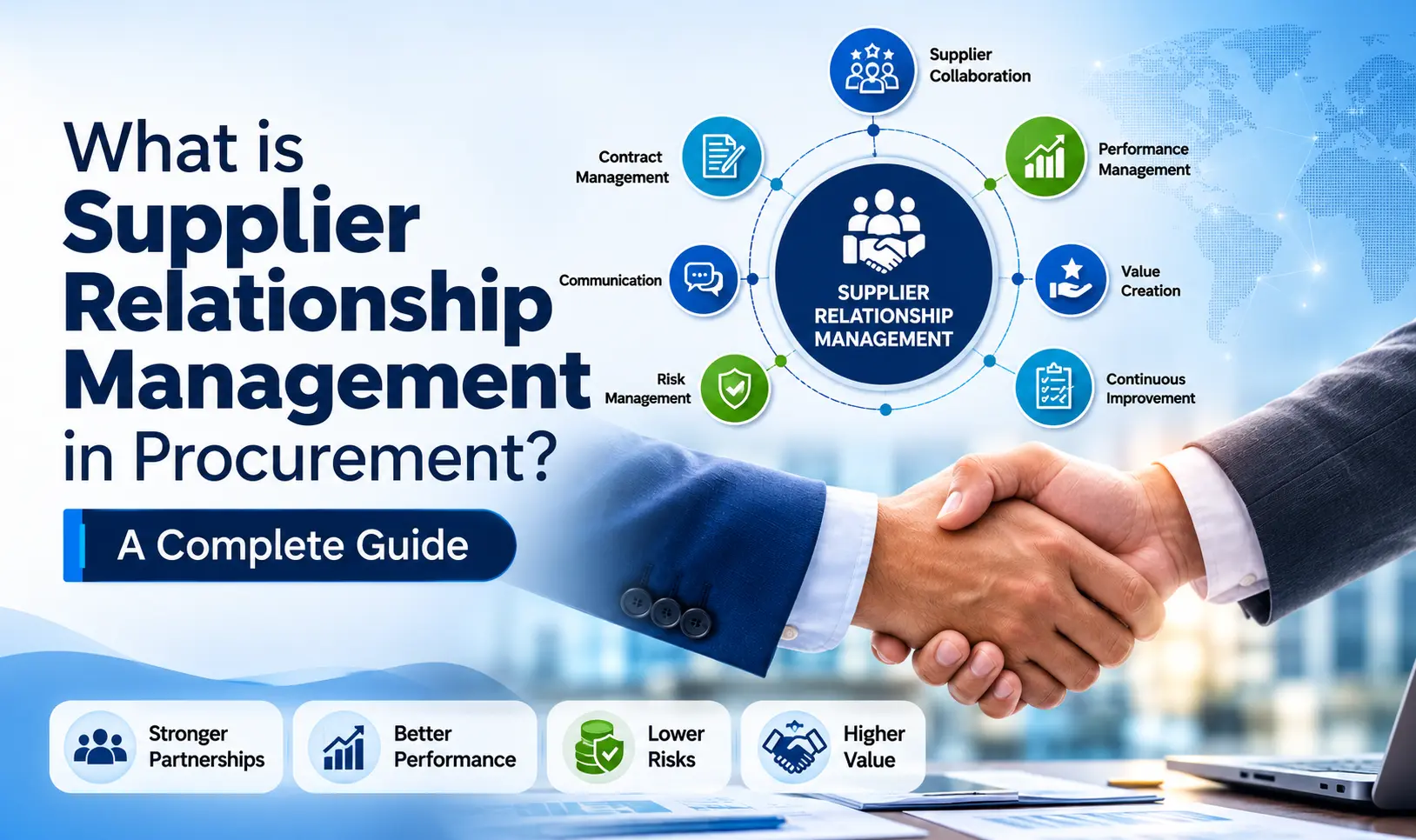
What is Supplier Relationship Management in Procurement? A Complete Guide
Read More →
What is Strategic Vendor Management? A Complete Guide for Modern Procurement
Read More →
What Are Inventory Control Methods? Complete Guide to Types, Techniques, Systems, & Benefits
Read More →
Inventory Audit Checklist: Steps, Process & Best Practices
Read More →
Warehouse Inventory Management: Best Practices for 2026
Read More →
Treasury Management System (TMS): A Complete Guide for Modern Corporates
Read More →
What is Portfolio Management Services (PMS) and What Are Its Benefits?
Read More →
Generative AI Procurement Software Solution: The Future of Intelligent Procurement
Read More →
Top Contract Management Software Companies in Ethiopia: Features, Benefits & Best Procurement Solutions
Read More →
AI Procurement Software: Complete Guide to Intelligent, Generative AI & Machine Learning Procurement Solutions
Read More →
Top SAP alternatives for small, midsize, and enterprise businesses
Read More →
Best RFP Software in 2026: Top Solutions for Smarter Procurement and Proposal Management
Read More →
GST on Purchase: Complete Guide to GST on Purchases in India
Read More →
Procurement Software UAE: Complete Guide to Choosing the Best Procurement Solution
Read More →
Supply Chain Procurement: Everything You Need to Know
Read More →
Top 10 Oracle Procurement Alternatives for Businesses in 2026
Read More →
Quotation Software vs Excel: Which Is Better for Businesses in 2026?
Read More →
Contract Management Software Buyer's Guide: Features, Pricing & How to Choose
Read More →
How to Identify the Right Vendor: 10 Simple Steps
Read More →
Top 10 Automated PO Generation Tools in 2026: Best Purchase Order Software with AI Capabilities
Read More →
How to Generate a PO Automatically in SAP: Step-by-Step Guide
Read More →
What Is the Best Budget-Friendly Procurement Software With Vendor Onboarding for Indian SMEs?
Read More →
How to Generate a PO Automatically in SAP: Step-by-Step Guide
Read More →
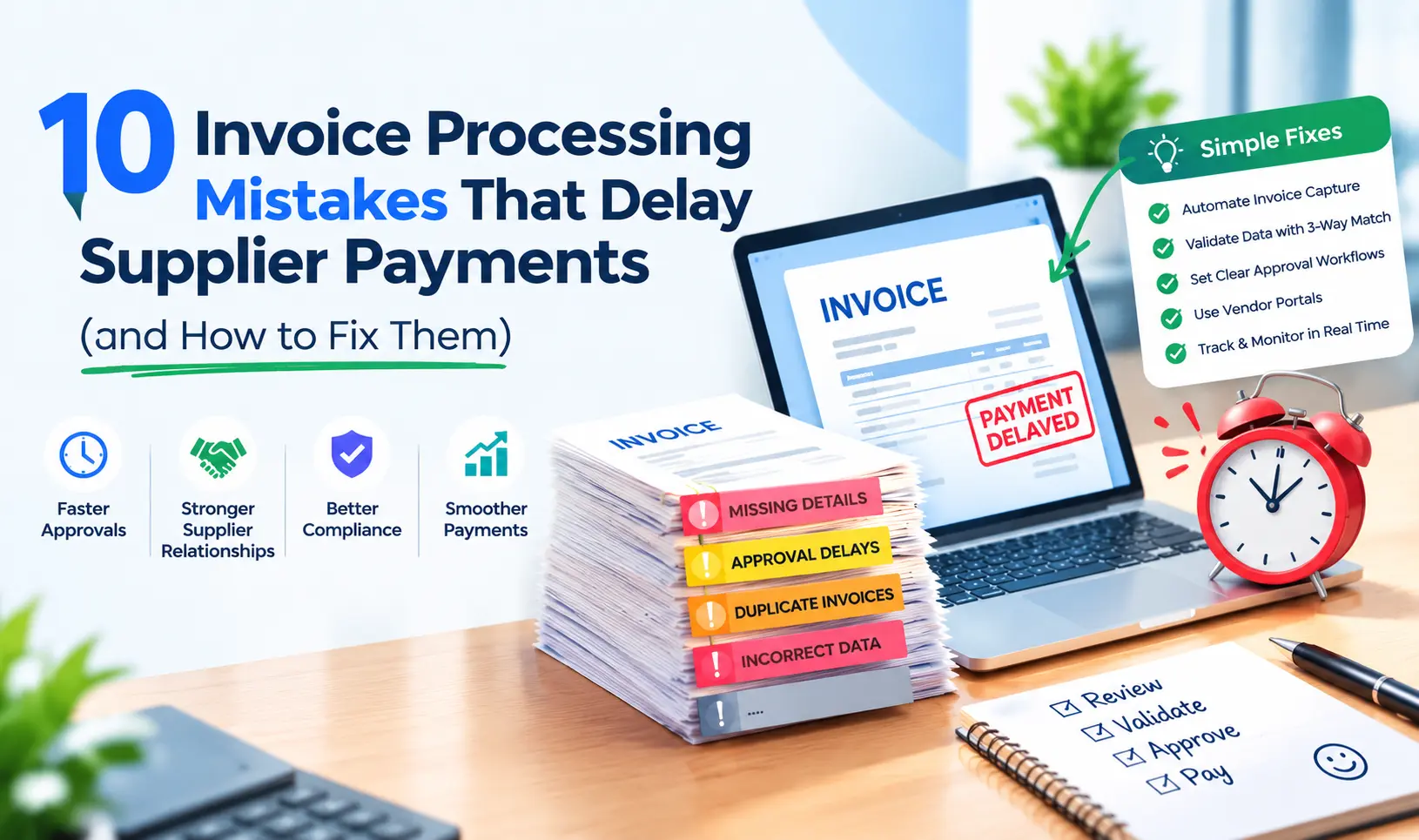
How to Solve Invoice Mismatches: 10 Real Ways to Fix Invoice Discrepancies
Read More →
Top 10 Vendor Onboarding Tools for Businesses in 2026: Features, Process & How to Choose
Read More →
Vendor Comparison & Supplier Intelligence: How AI Helps Businesses Choose the Right Vendor
Read More →
How to Choose the Right Procurement Management Software in 2026 (Complete Buyer's Guide)
Read More →
How to Reduce Procurement Costs: 18 Practical Strategies That Actually Work
Read More →
How to Choose the Right Procurement Management Software in 2026 (Complete Buyer's Guide)
Read More →
How to Calculate Procurement Software ROI: Formula, Example & Calculator
Read More →
Procurement Software Evaluation Checklist: 35 Criteria for Choosing the Right Platform
Read More →
How Businesses Can Improve Vendor Performance and Manage Supplier Risk
Read More →
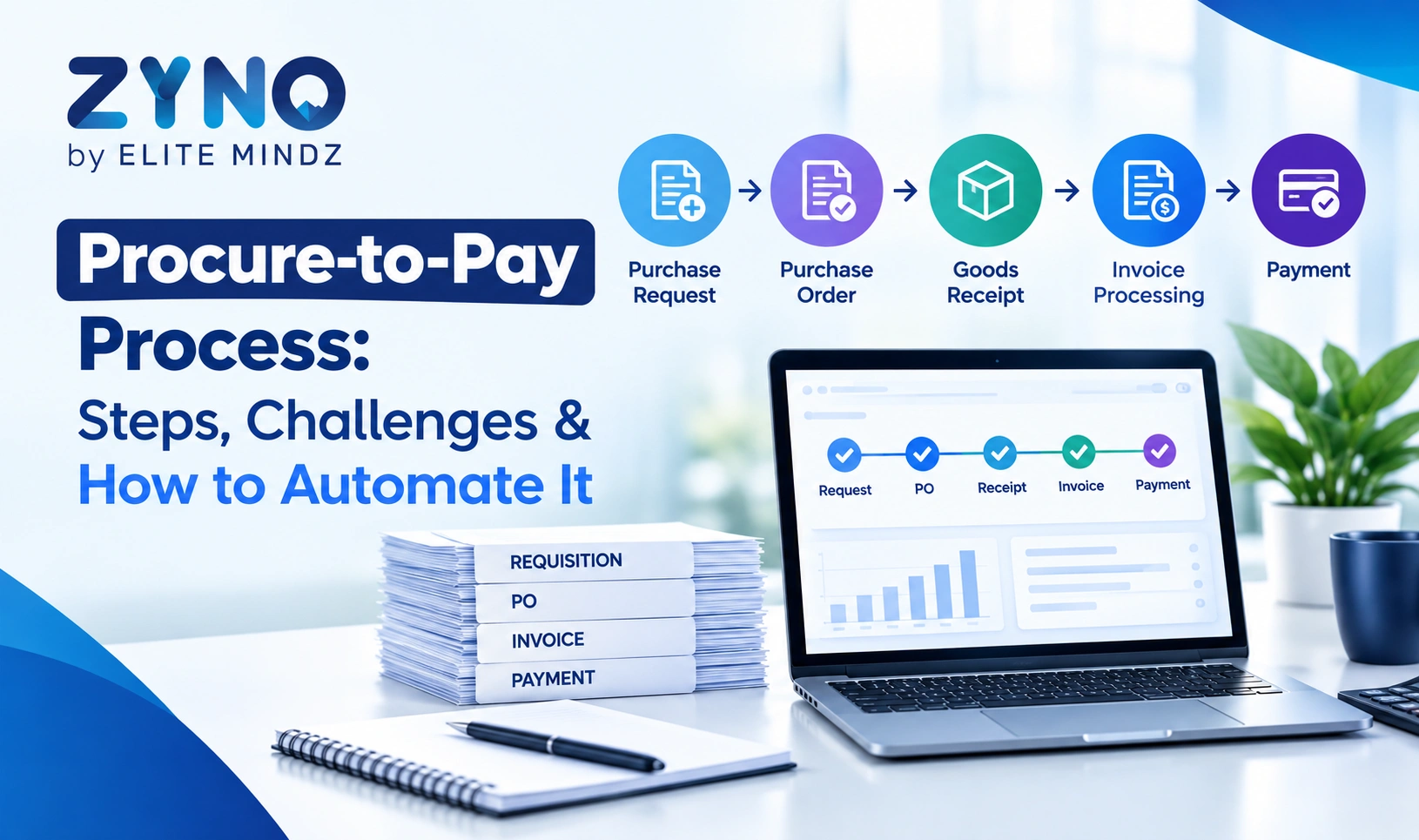
Procure-to-Pay Process: Steps, Challenges & How to Automate It
Read More →
Purchase Requisition vs Purchase Order: What’s the Difference?
Read More →
10 Source-to-Pay Software Platforms to Consider in 2026
Read More →
Supplier Management Software Buying Guide: How to Choose the Right Platform
Read More →
Procurement Automation Guide: How It Works, What to Automate & How to Implement It
Read More →
Procurement Software Features: 12 Must-Have Capabilities to Look For
Read More →
Best E-Procurement Software in 2026: Top Electronic Procurement Systems for Modern Businesses
Read More →
AI in Vendor Management: Complete Guide to Automated Supplier Scoring and Supply Chain Risk Analysis
Read More →
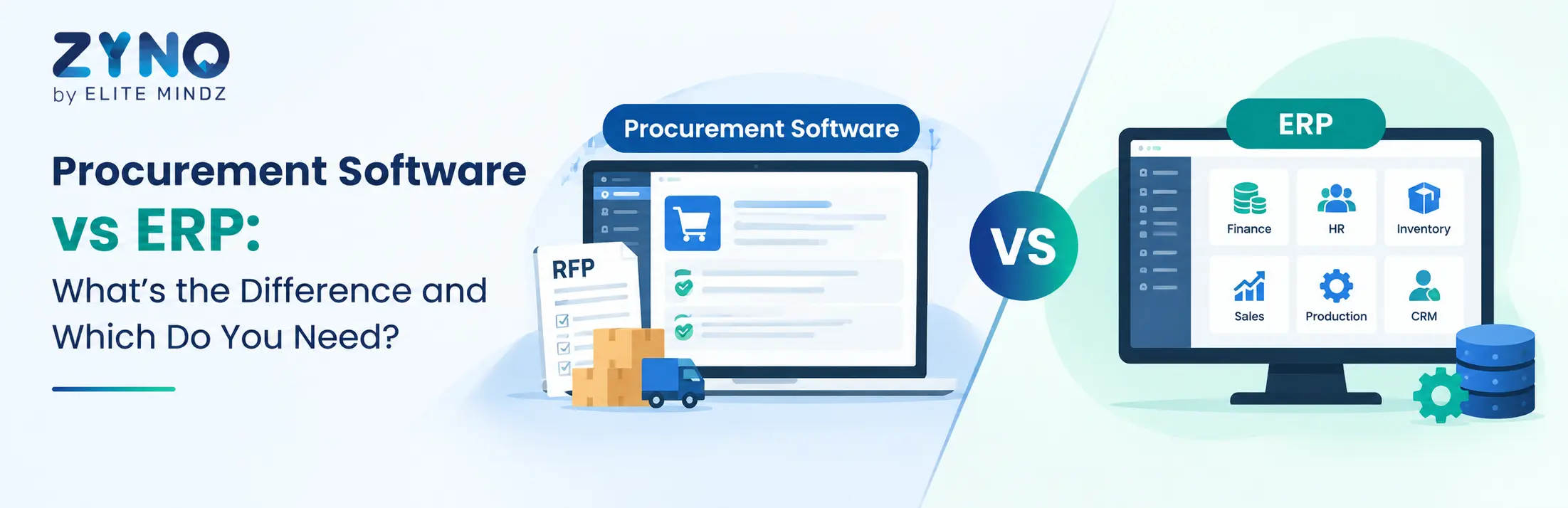
Procurement Software vs ERP: What's the Difference and Which Do You Need?
Read More →Partner with ZYNO by Elite Mindz to revolutionize how your business works. Fill out the form, and we’ll reach out with AI-powered solutions made just for you.
We use browser cookies to ensure you get the best experience on our website. Learn more
The form was submitted successfully!