Procurement Software Trends in 2026: What to Expect
Read More →

×
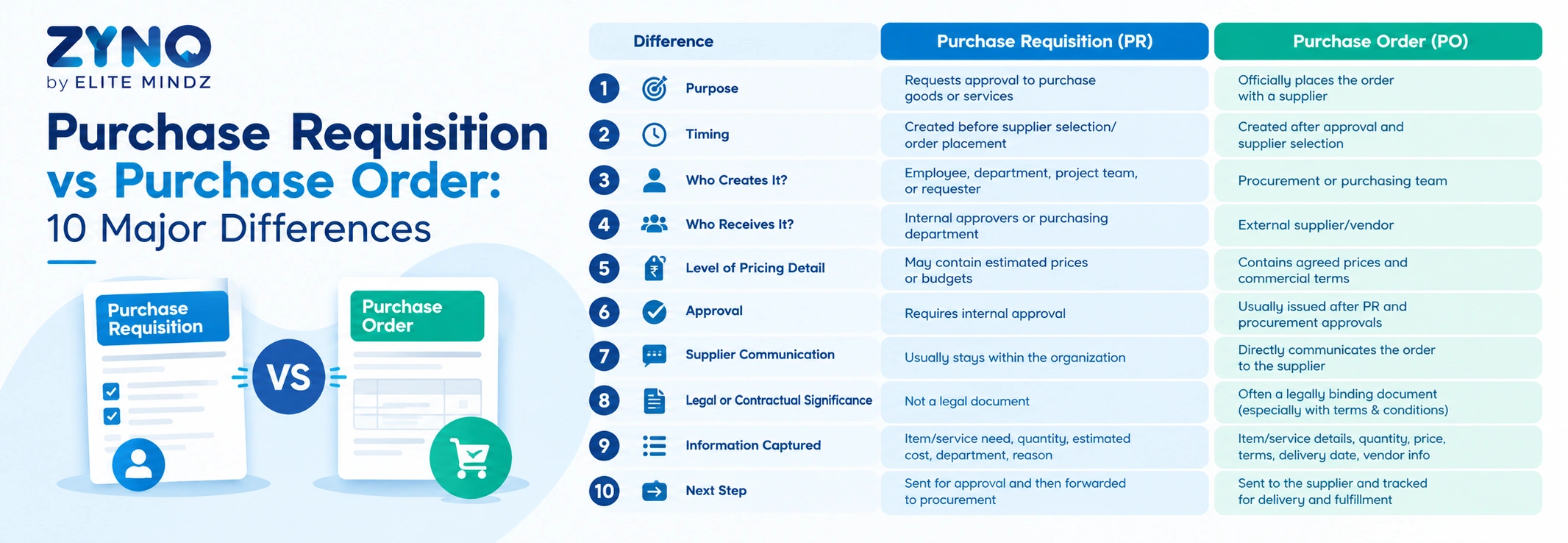
A purchase requisition (PR) is an internal request to buy goods or services, while a purchase order (PO) is an official document sent to the supplier to authorize the purchase. The PR starts the approval process; the PO confirms approved items, quantities, prices, delivery terms, and supplier details.
Businesses using ZYNO Books cut accounting time by 70% and stay 100% ZATCA-compliant — automatically.
A purchase requisition (PR) is an internal request asking for approval to purchase goods or services, while a purchase order (PO) is an official purchasing document issued to a supplier after the purchase has been approved.
In simple terms:
Purchase Requisition = “We need to buy this. Can we get approval?”
Purchase Order = “The purchase is approved. We are ordering this from you.”
Although PR and PO are often confused, they serve different purposes in the procurement process. Understanding the difference is important for maintaining purchasing control, avoiding unauthorized spending, reducing errors, and creating a clear audit trail.
For organizations handling a high volume of purchases, connecting these two stages through procurement software can make the entire process faster, more controlled, and easier to manage.
| Purchase Requisition | Purchase Order |
|---|---|
| Internal purchase request | Official supplier order |
| Starts the purchasing process | Executes the approved purchase |
| Usually created by an employee or department | Usually created by procurement or purchasing |
| Used for internal approval | Used for supplier communication |
| Contains requested items and estimated requirements | Contains agreed items, prices, quantities, and terms |
| Normally stays within the organization | Sent to the supplier |
| Comes before supplier ordering | Comes after approval and purchasing decisions |
| Helps control and authorize spending | Helps formalize and track the purchase |
The simplest difference is: a PR requests permission to purchase; a PO communicates the approved purchase to the supplier.
A purchase requisition is an internal request created when an employee or department needs to buy a product or service.
It allows the organization to review the requirement before any purchase is made.
For example, suppose the HR department needs laptops for 10 new employees.
Instead of directly contacting a supplier, an employee can create a purchase requisition specifying:
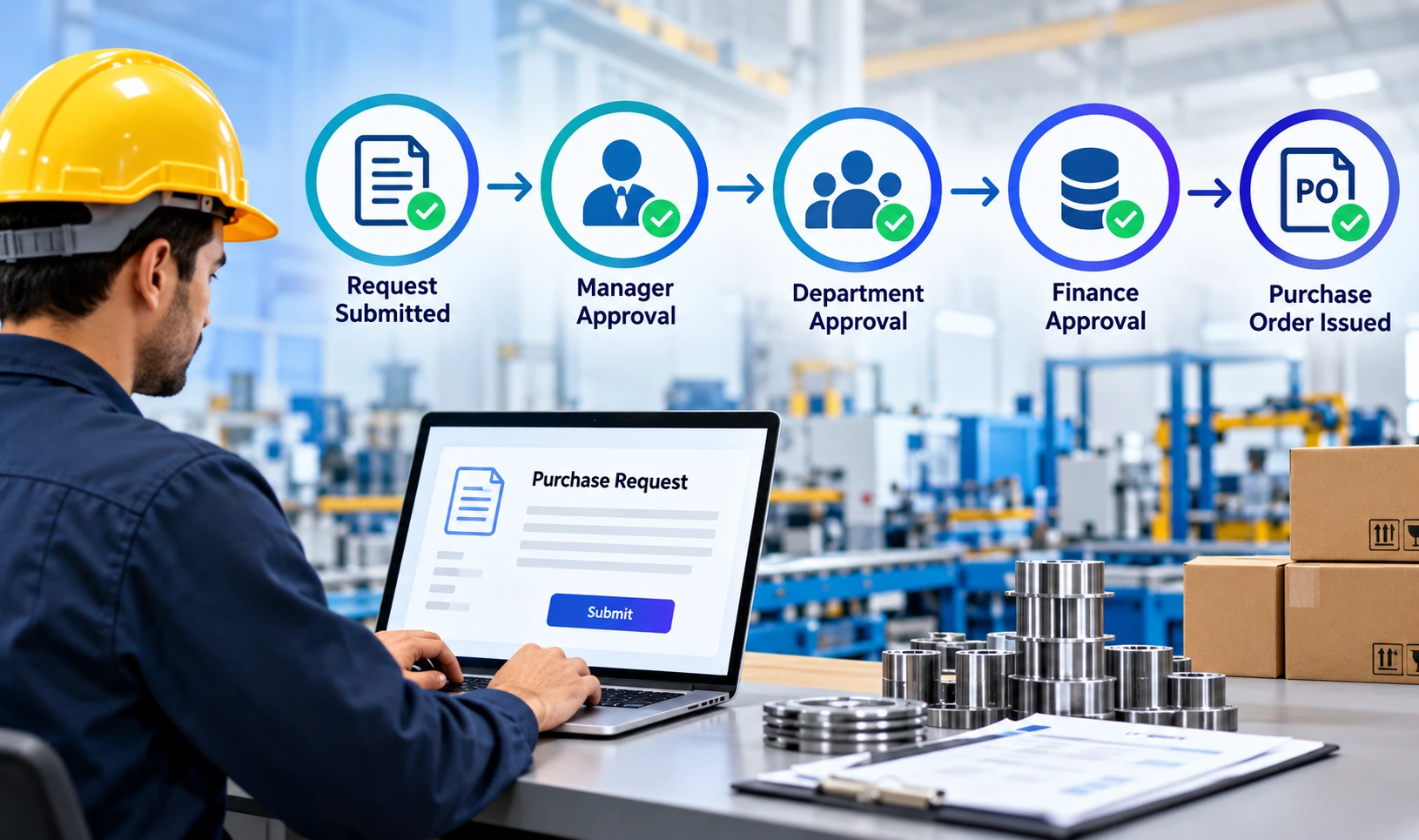
The request can then move through the organization's approval workflow.
Automate purchase requests, approvals, purchase orders, supplier management, invoices, and payments with ZYNO Procurement.
A purchase requisition gives the business control over what employees want to purchase before money is committed.
It helps organizations:
In short, a PR answers:
What does the business need to buy, why does it need it, and who needs to approve it?
A purchase order is a formal document issued by a buyer to a supplier to communicate the details of an approved purchase.
A PO generally includes:
For example, after approving the laptop request, procurement may issue a PO to the selected supplier for 10 laptops at an agreed price and delivery date.
The supplier can then use the PO as the basis for fulfilling the order.
A PO helps businesses create a clear record of:
Depending on the wording, acceptance, existing contracts, and applicable law, a purchase order may also have contractual significance.

Understanding individual differences becomes easier when you look at the complete procurement workflow.
A purchase requisition is used to request approval for a purchase.
A purchase order is used to place the approved order with a supplier.
PR: Request
PO: Order
A PR normally comes first.
The typical sequence is:
Requirement → Purchase Requisition → Approval → Procurement Review → Purchase Order
Therefore, creating a PO before the required internal approvals can bypass important purchasing controls.
A purchase requisition can be created by:
A purchase order is generally created by:
In an automated procurement workflow, user permissions can determine who can create, approve, modify, or issue each document.
A PR is primarily an internal document.
It may be reviewed by:
A PO is intended for the supplier.
This is one of the easiest ways to remember the difference:
PR → Internal
PO → External
A PR may contain an estimated price or budgetary amount.
A PO generally contains the final or approved commercial details, such as:
The exact information depends on the organization's procurement process.
A PR usually goes through an internal approval workflow.
For example:
Employee → Manager → Finance → Procurement
The approval rules may change based on:
A PO may also require approval depending on the organization's controls, but its primary purpose is supplier ordering rather than initiating the internal request.
A purchase requisition usually does not need to be sent to the supplier.
A purchase order is specifically designed to communicate the approved purchase to the supplier.
That means a PO can become part of the supplier fulfillment process.
Connect purchase requisitions, approvals, purchase orders, suppliers, and procurement workflows in one streamlined system with ZYNO Procurement.
A purchase requisition is generally an internal authorization request and does not itself create a supplier obligation.
A purchase order may have contractual significance if it is accepted by the supplier and its terms form part of the agreement.
However, businesses should not assume that every PO is automatically legally binding. The effect depends on the PO's terms, acceptance, existing agreements, and applicable jurisdiction.
A PR generally focuses on the business requirement.
A PO focuses on the supplier transaction.
Common information includes:
The next step after an approved PR is generally procurement processing.
The next step after a PO is usually supplier fulfillment.
This means the documents sit at different stages of the same procurement journey.
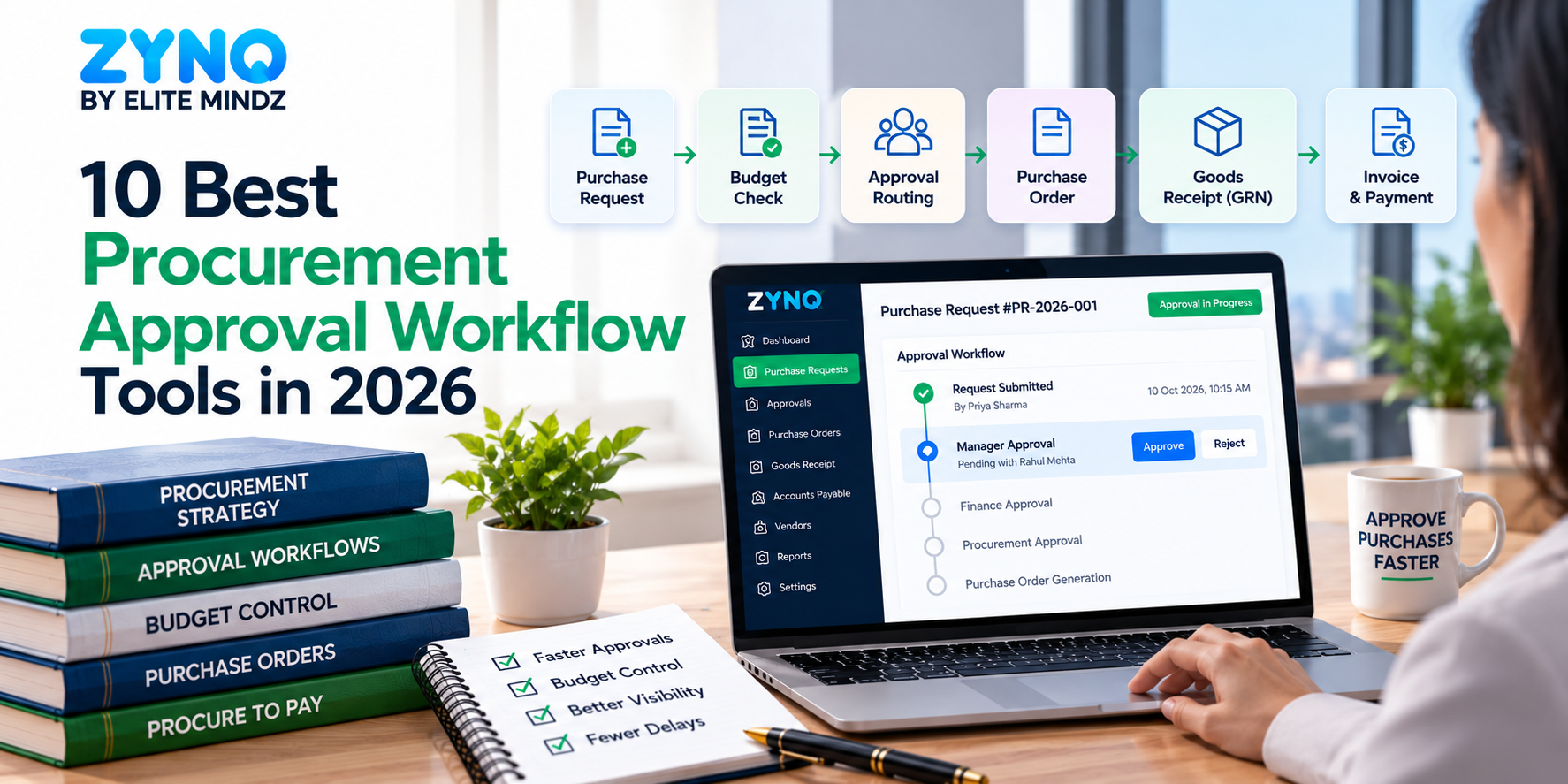
A well-controlled purchasing workflow typically looks like this:
Employee identifies a need
↓
Purchase requisition is created
↓
Manager reviews the request
↓
Budget/policy checks are performed
↓
Request is approved
↓
Procurement reviews suppliers or quotations
↓
Supplier is selected
↓
Purchase order is created
↓
PO is sent to supplier
↓
Goods/services are received
↓
Invoice is matched
↓
Payment is processed
This is more than a document workflow.
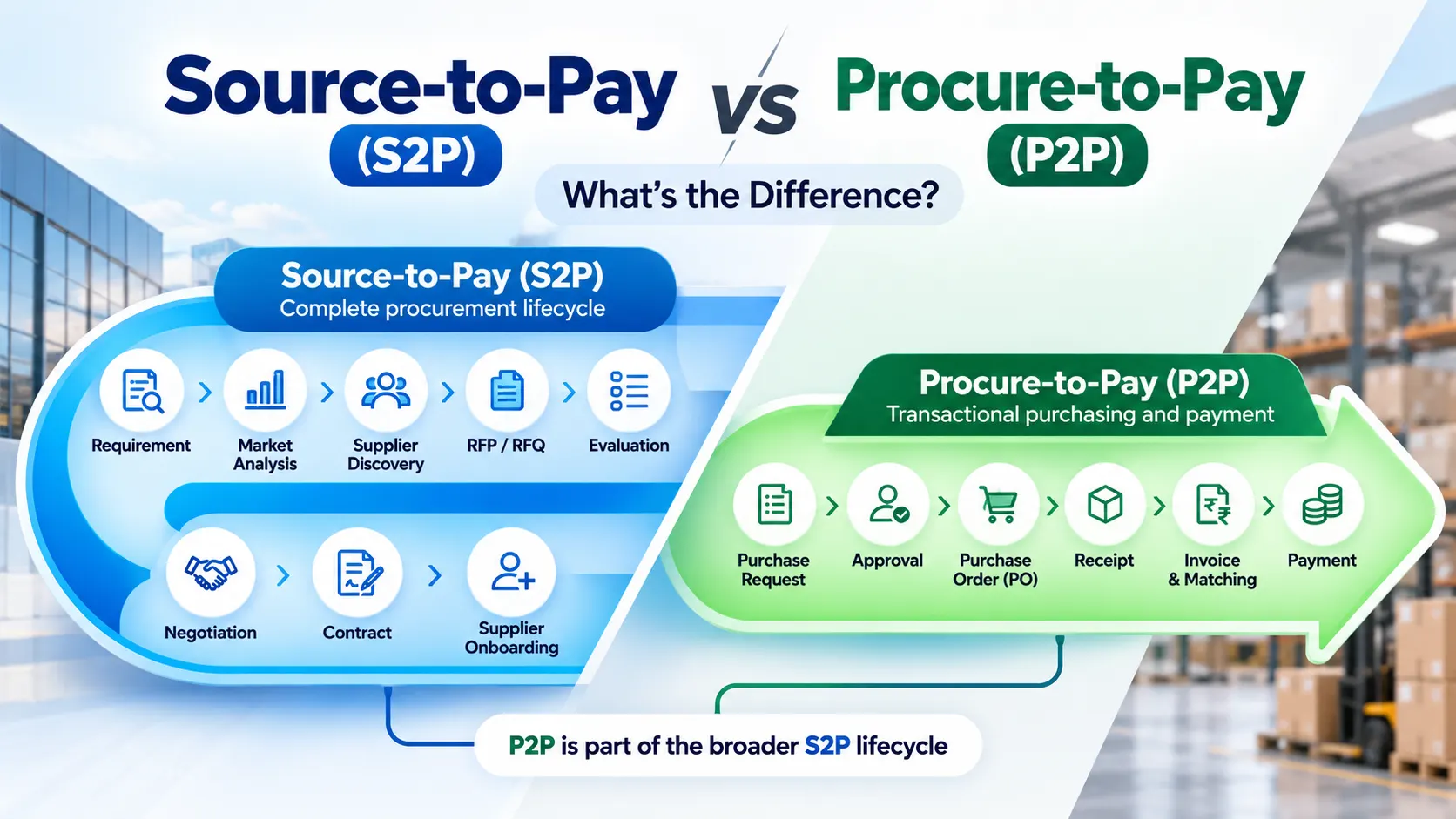
It is part of the broader Procure-to-Pay process.
Let's take a simple example.
A company is opening a new office and needs 100 office chairs.
The facilities team creates a purchase requisition containing:
The request goes to the appropriate approver.
Once approved, procurement evaluates available suppliers and pricing.
The selected supplier is then used to create the purchase order.
The resulting PO might contain:
Supplier: ABC Office Solutions
Product: Ergonomic Office Chair
Quantity: 100
Unit Price: ₹8,500
Delivery: New Delhi Office
Required Date: 15 October
Payment Terms: Net 30
The PO is sent to the supplier.
Now the supplier has a clear instruction about what the company wants to purchase.
Some businesses ask:
“If we already have a purchase order, why do we need a purchase requisition?”
Because the two documents solve different problems.
The PR provides internal purchasing control.
The PO provides supplier and order control.
Without a PR process, employees may be able to initiate purchases without proper approval.
Without a PO process, procurement may struggle to maintain consistent supplier orders, pricing, quantities, delivery terms, and purchasing records.
Together, they create a controlled procurement workflow.
For many businesses, the actual process looks something like this:
Employee sends email
↓
Manager replies with approval
↓
Finance checks budget
↓
Procurement searches for suppliers
↓
Quotation arrives by email
↓
Procurement copies information into Excel
↓
PO is created manually
↓
PO is converted to PDF
↓
PO is emailed to supplier
↓
Invoice arrives separately
This may work for a small number of purchases.
But as purchase volume grows, manual processes become difficult to control.
Requests can remain stuck in email inboxes when approvers are unavailable.
The same product, quantity, supplier, and pricing information may be entered multiple times.
Manual data entry can result in incorrect quantities, pricing, tax information, or supplier details.
Management may not know how much has been requested, approved, ordered, or committed.
Employees may purchase outside the approved process or budget.
Emails, quotations, approvals, and purchase documents may be scattered across different systems.
Procurement teams may spend significant time collecting evidence of who requested, approved, and purchased something.
These problems are exactly why organizations move from manual purchasing to procurement automation.
Centralize supplier data, track performance indicators, manage vendor risks, and make informed procurement decisions with ZYNO Procurement.
PR-to-PO automation connects purchase requests, approvals, procurement decisions, and purchase order creation in a structured digital workflow.
Instead of manually moving information between emails, spreadsheets, and documents, businesses can manage the process through procurement software.
A simplified automated workflow can look like:
Digital Purchase Request
↓
Automated Approval Routing
↓
Budget & Policy Validation
↓
Procurement Review
↓
Supplier / Quote Selection
↓
Approved Request
↓
PO Creation
↓
Supplier Communication
This can reduce repetitive administrative work and improve purchasing visibility.
Modern procurement software can bring the entire purchasing workflow into one centralized platform.
Instead of managing PRs, POs, suppliers, approvals, and invoices separately, teams can connect these activities.
The biggest advantage is not simply replacing paper with software.
It is creating one connected source of procurement information.
These terms are related but not identical.
Purchase requisition software primarily focuses on:
Procurement software can cover a much broader purchasing lifecycle, including:
If a company only wants to digitize internal purchase requests, purchase requisition software may be sufficient.
If it wants to manage the complete procurement lifecycle, a broader procurement management platform is generally more appropriate.
If your goal is to automate the PR-to-PO process, look for software that provides more than basic document creation.
Employees should be able to create structured requests without relying on email or spreadsheets.
Approval routing should support different rules based on factors such as amount, department, category, or business policy.
The platform should make it easy to create, approve, track, and manage POs.
Supplier information should be centralized so procurement teams can work with reliable and up-to-date supplier data.
Procurement teams should be able to compare supplier quotations and make better purchasing decisions.
Businesses should be able to see what has been requested, approved, ordered, and spent.
Every important procurement action should be traceable.
PR and PO processes should connect with receiving, invoices, and payments wherever possible.
Procurement software should integrate with the organization's existing finance and business systems where required.
AI-powered procurement software can help simplify request creation, validate information, recommend suppliers, and automate repetitive procurement tasks.
Evaluate supplier performance, improve visibility across procurement activities, and manage vendor relationships more efficiently with ZYNO Procurement.
Businesses looking to replace manual purchasing workflows can use ZYNO Procurement to connect purchasing activities through a centralized procurement platform.
Its purchase request capabilities are designed to help businesses digitize purchase requests, automate approvals, maintain an audit trail, and connect approved requests with purchasing workflows.
The wider platform extends beyond PR and PO management to support areas such as:
This gives procurement teams a way to move from:
Email + Excel + Manual Approvals
to:
Request → Approval → Procurement → PO → Receipt → Invoice → Payment
in a more connected workflow.
Procurement automation becomes particularly valuable when your organization is experiencing:
A growing business does not necessarily need more people to manage every manual procurement step.
It may need a better .procurement workflow
The difference can be summarized in one sentence:
A purchase requisition starts the internal buying process; a purchase order communicates the approved purchase to the supplier.
The complete journey is:
Need → Purchase Requisition → Approval → Procurement → Purchase Order → Supplier → Receipt → Invoice → Payment
When these steps are managed separately, procurement teams often deal with delays, duplicate data, errors, and limited visibility.
When they are connected through procurement software, organizations can create a more controlled and transparent purchasing process.
No. A purchase requisition is an internal request to obtain approval for a purchase. A purchase order is an official order issued to a supplier.
A purchase requisition normally comes first. After the requirement is reviewed and approved, procurement can create a purchase order.
Usually, an employee, department, project team, or another authorized requester creates the PR.
A procurement or purchasing team generally creates the PO after the purchasing requirement has been approved and the supplier decision has been made.
Yes. In a connected procurement workflow, approved purchase request information can be used as the basis for creating a purchase order.
Generally, a PR is an internal request and does not itself create an obligation with a supplier.
A PO may have contractual significance depending on its terms, supplier acceptance, existing contracts, and applicable law. Businesses should review the specific contractual circumstances rather than assuming every PO has the same legal effect.
PR-to-PO automation connects purchase requests, approvals, procurement decisions, and purchase order creation through a digital workflow.
It can help businesses standardize purchase requests, automate approvals, improve visibility, maintain audit trails, and reduce manual procurement work.
Purchasing software may focus primarily on buying and order management, while procurement software can cover a broader lifecycle including sourcing, suppliers, purchase orders,
Procurement Software Trends in 2026: What to Expect
Read More →
Why E-Procurement Outperforms Traditional ERP in Modern Procurement
Read More →
Top Procurement Software in India: 12 Best Options for 2026
Read More →
Best Procurement Software Companies in Kuwait (2025)
Read More →
5 Best Procurement Software in Africa for Enterprises & SMEs (2026 Guide)
Read More →
Best Procurement Software in Nigeria 2026 | Top 5 Picks
Read More →
Best Procurement Software Providers in USA (2025): How AI is Transforming the Future
Read More →
10 Best Procurement Software Providers in Thailand for Streamlined Supply Chain Management
Read More →
Top 10 Cloud-Based Procurement Solutions in Portugal for Businesses in 2025
Read More →
Top 10 Procurement Software Providers in Switzerland 2026: Streamlining Sourcing and Supplier Management
Read More →
What Makes ZYNO Procurement Different from Other Oil & Gas Procurement Software
Read More →
The Digital Transformation of Logistics Procurement in the Middle East
Read More →
A Step by Step Guide to Procurement Management Software for Modern Enterprises
Read More →
Sourcing and Procurement: What is the Difference and Why It Matters
Read More →Difference Between Procurement and Supply Chain Management
Read More →
What Is Procurement Software and Why Do Modern Businesses Need It?
Read More →
Best Procurement Management Software to Automate ERP Process
Read More →
Direct vs Indirect Procurement: Key Differences, Examples & Uses (2026)
Read More →
Smart procurement strategies for cost optimization & risk management
Read More →
What Is Procurement? Everything You Need to Know (Types, Process & SAP)
Read More →Beyond Cost-Cutting: How Procurement Drives Margin Expansion in 2026
Read More →
Direct Procurement: Process, Examples, and When to Use It
Read More →
What Are the 5 Types of E-Procurement? A Complete Guide for Businesses
Read More →
Which Procurement Management Software Is Best? Top Tools Compared for 2026
Read More →
Top 8 Coupa Alternatives to Explore in 2026
Read More →
Looking to Replace Coupa? Discover the Best Alternatives Like ZYNO Procurement
Read More →
How Does Procurement Software Work? A Complete Guide
Read More →
ZYNO Procurement vs Coupa: Best Procurement Software Comparison for Mid-Market Teams
Read More →
Best SAP ARIBA Procurement Alternatives in 2026
Read More →
ZYNO Procurement vs SAP Ariba: Which Solution Is More User-Friendly?
Read More →
AI-Powered Procurement Management Software for Fast, Connected, and Visible Workflows in Dubai
Read More →
What is Vendor Management? Complete Guide to Vendor Management Software, Systems, and Processes
Read More →
Best Procurement Management Software In Kenya
Read More →
6 SAP Ariba Alternatives for Mid-Market Businesses in 2026
Read More →
Top E-Procurement Solutions for B2B Organizations (2026)
Read More →
Quotation Format: Free Templates + Complete Guide (2026)
Read More →
Cost Control Software: Features, Benefits & Performance Guide for 2026
Read More →
Procurement Workflow: Steps, Stages, and Real Examples
Read More →
Top 10 Zycus Alternatives for Procurement Teams in 2026
Read More →
Best Precoro Alternative for Purchase Requisition and Procurement
Read More →
Top AI Procurement Tools in 2026
Read More →
Best Tools for Supplier Risk Management
Read More →
FEFO vs FIFO vs LIFO: Differences, Benefits & Which Inventory Method Is Best?
Read More →
AI Procurement Software: Features, Benefits, Use Cases & How to Choose
Read More →
Best AI Tools for Supply Chain Procurement
Read More →
Procurement Risk Management
Read More →
Still Using Excel for Procurement? Read This Before It's Too Late
Read More →
Best RFP Software in 2026: Top Tools Compared for Faster Proposal Responses
Read More →
What Is Procure-to-Pay (P2P)? A Complete Guide
Read More →
Complete Procurement Workflow Guide for Modern Businesses
Read More →
Complete Guide to E-Procurement Solutions for B2B Organizations
Read More →
Cost Control Software Comparison Guide: Features, Pricing & Benefits
Read More →
Purchase Order Tracking: How to Manage Every PO Without the Chaos
Read More →
Inventory Management: What It Is, How It Works and Why It Matters
Read More →
Top 10 Procurement Software Tools for Purchasing Automation in 2026
Read More →
Agentic AI Procurement Platforms and the Future of Strategic Sourcing
Read More →
AI Spend Analytics Software for Procurement Leaders
Read More →
From Prompt to Procurement: How AI Is Transforming Enterprise Purchasing
Read More →
ZYNO Procurement vs IBM Procure-to-Pay Automation
Read More →
ZYNO Procurement vs Infor Nexus: Which Procure-to-Pay Platform Fits Your Team?
Read More →
AI-Powered Procurement Software in 2026: Top 6 Platforms That Actually Deliver ROI
Read More →
Contract Management Software Buyer's Guide: Features, Costs & Top Picks
Read More →
Top 10 Procure to Pay Software Companies in India 2026
Read More →
10 Best Vendor Management Software in India (2026): Features, Benefits & Comparison
Read More →
How Machine Learning and AI Are Transforming Procurement: A Strategic Overview
Read More →
What Is Procurement Software for GP? Features, Benefits and Best Solutions for Businesses
Read More →
What Procurement Software Do Mid-Market Companies Use Instead of SAP Ariba or Coupa?
Read More →
Prompt-Based Procurement Software for Kenyan Businesses
Read More →
Project Management Software: A Complete Guide to Streamline Business Operations and Procurement Processes
Read More →
SAP Ariba vs ZYNO Procurement: Complete Feature Comparison (2026)
Read More →
Coupa vs SAP Ariba vs ZYNO: Which Procurement Platform Wins for Fast-Growing Teams?
Read More →
How AI Procurement Software Is Transforming Purchase Requisition and Supplier Management in 2026
Read More →
Purchase Request Management: A Complete Guide for Modern Procurement Teams
Read More →
The Top 3 Best Practices for Effective Purchase Request Management
Read More →
What Is Purchase Order Automation? How to Automate Purchase Order Processing
Read More →
5 Common Purchase Request Mistakes and How to Avoid Them
Read More →
What is Supplier Relationship Management in Procurement? A Complete Guide
Read More →
What is Strategic Vendor Management? A Complete Guide for Modern Procurement
Read More →
What Are Inventory Control Methods? Complete Guide to Types, Techniques, Systems, & Benefits
Read More →
Inventory Audit Checklist: Steps, Process & Best Practices
Read More →
Warehouse Inventory Management: Best Practices for 2026
Read More →
Treasury Management System (TMS): A Complete Guide for Modern Corporates
Read More →
What is Portfolio Management Services (PMS) and What Are Its Benefits?
Read More →
Generative AI Procurement Software Solution: The Future of Intelligent Procurement
Read More →
Top Contract Management Software Companies in Ethiopia: Features, Benefits & Best Procurement Solutions
Read More →
AI Procurement Software: Complete Guide to Intelligent, Generative AI & Machine Learning Procurement Solutions
Read More →
Top SAP alternatives for small, midsize, and enterprise businesses
Read More →
Best RFP Software in 2026: Top Solutions for Smarter Procurement and Proposal Management
Read More →
GST on Purchase: Complete Guide to GST on Purchases in India
Read More →
Procurement Software UAE: Complete Guide to Choosing the Best Procurement Solution
Read More →
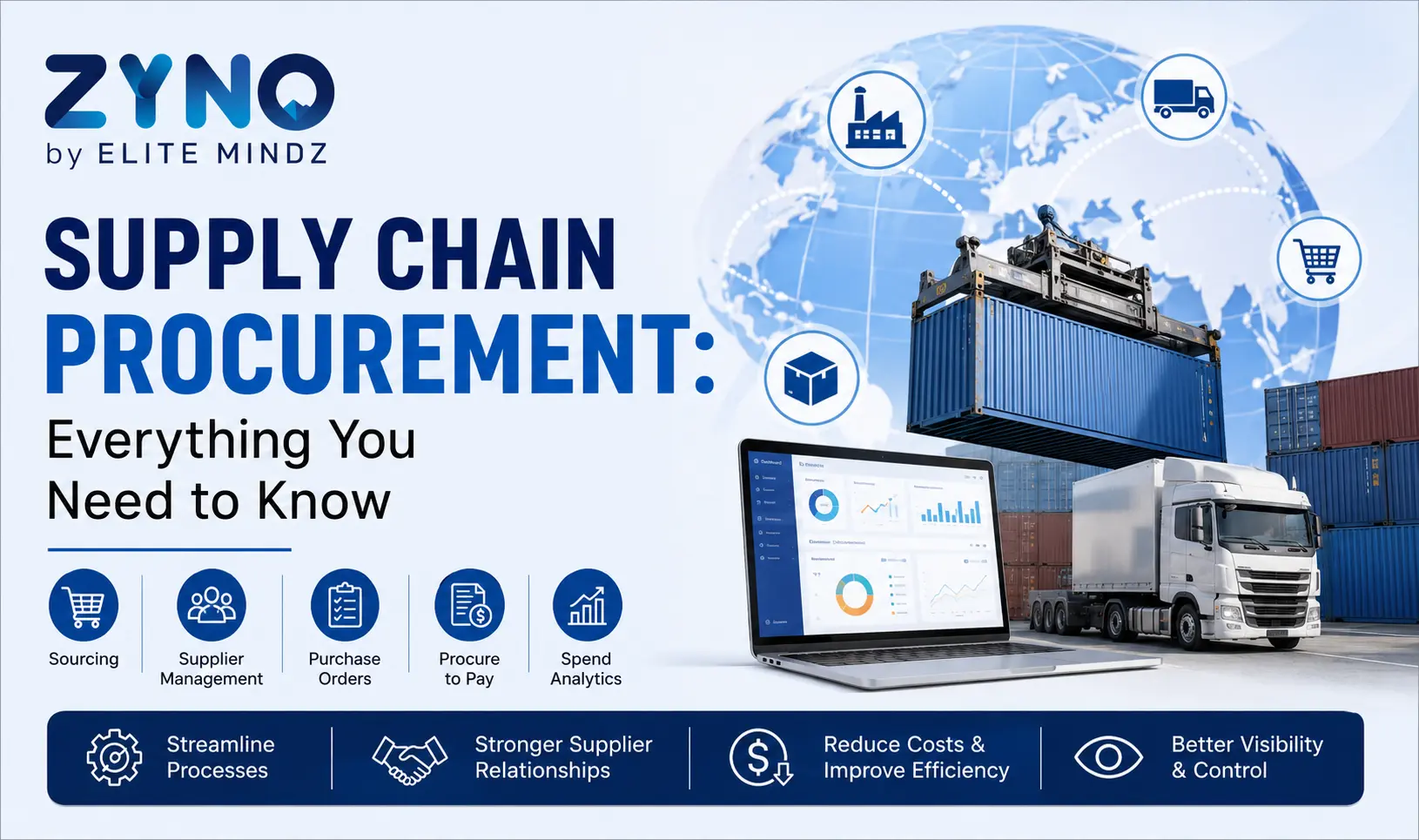
Supply Chain Procurement: Everything You Need to Know
Read More →
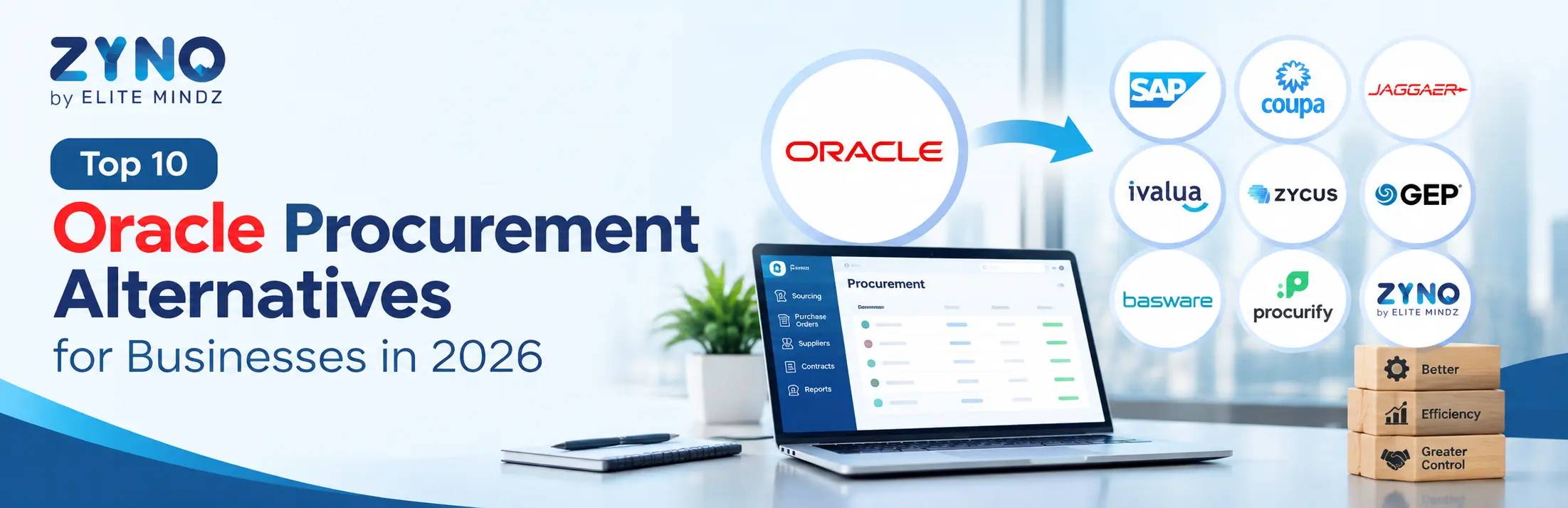
Top 10 Oracle Procurement Alternatives for Businesses in 2026
Read More →
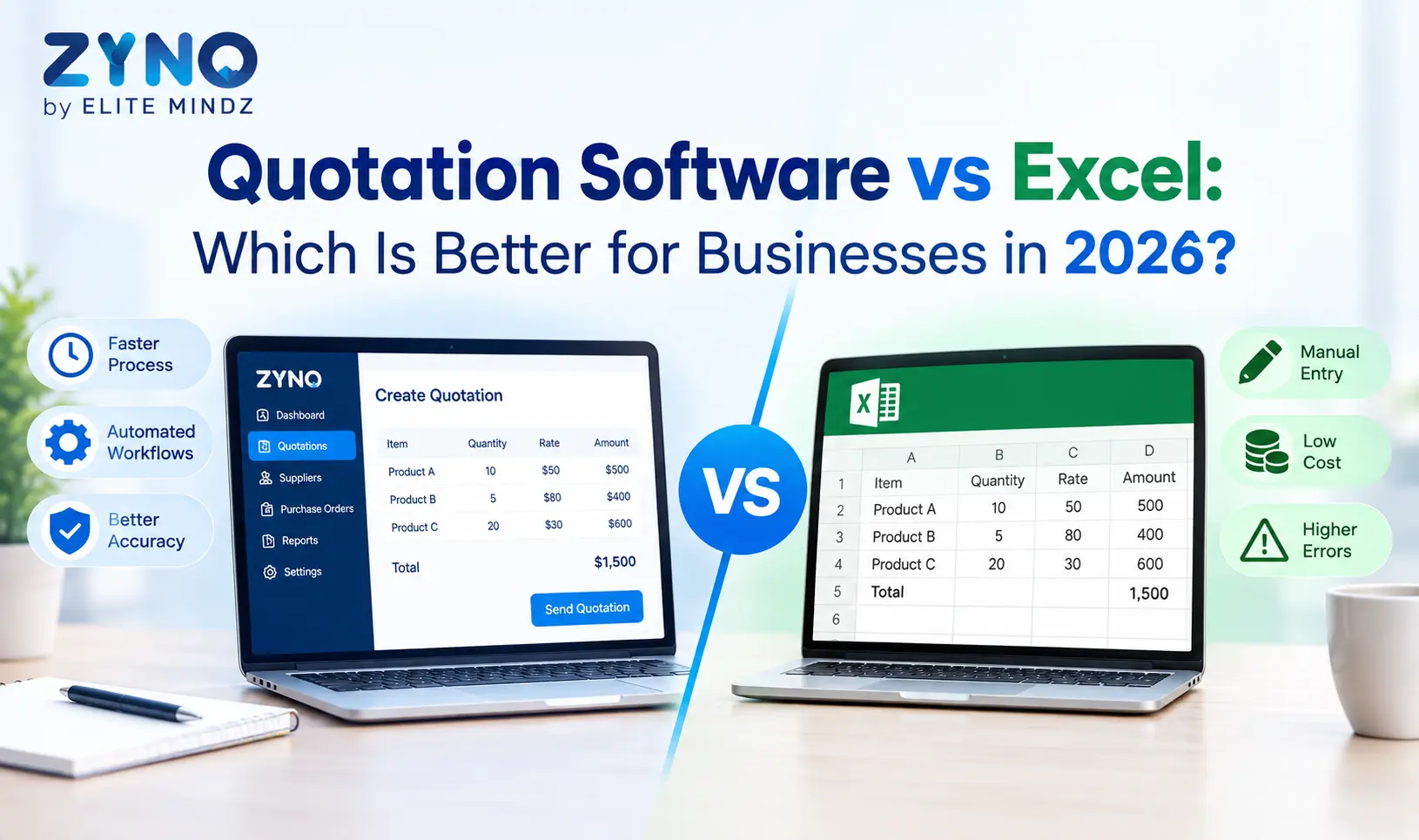
Quotation Software vs Excel: Which Is Better for Businesses in 2026?
Read More →
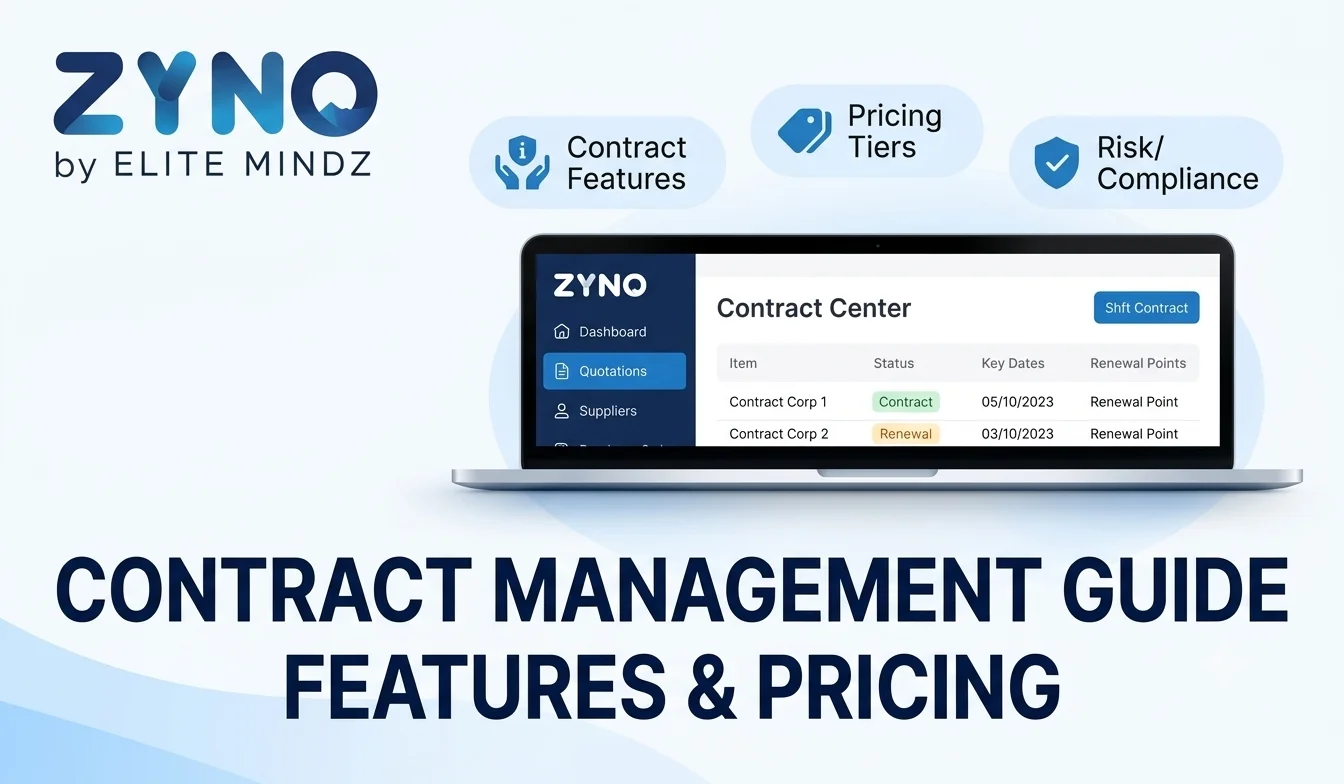
Contract Management Software Buyer's Guide: Features, Pricing & How to Choose
Read More →
How to Identify the Right Vendor: 10 Simple Steps
Read More →
Top 10 Automated PO Generation Tools in 2026: Best Purchase Order Software with AI Capabilities
Read More →
How to Generate a PO Automatically in SAP: Step-by-Step Guide
Read More →
What Is the Best Budget-Friendly Procurement Software With Vendor Onboarding for Indian SMEs?
Read More →
How to Generate a PO Automatically in SAP: Step-by-Step Guide
Read More →
How to Solve Invoice Mismatches: 10 Real Ways to Fix Invoice Discrepancies
Read More →
Top 10 Vendor Onboarding Tools for Businesses in 2026: Features, Process & How to Choose
Read More →
Vendor Comparison & Supplier Intelligence: How AI Helps Businesses Choose the Right Vendor
Read More →
How to Choose the Right Procurement Management Software in 2026 (Complete Buyer's Guide)
Read More →
How to Reduce Procurement Costs: 18 Practical Strategies That Actually Work
Read More →
How to Choose the Right Procurement Management Software in 2026 (Complete Buyer's Guide)
Read More →
How to Calculate Procurement Software ROI: Formula, Example & Calculator
Read More →
Procurement Software Evaluation Checklist: 35 Criteria for Choosing the Right Platform
Read More →
How Businesses Can Improve Vendor Performance and Manage Supplier Risk
Read More →
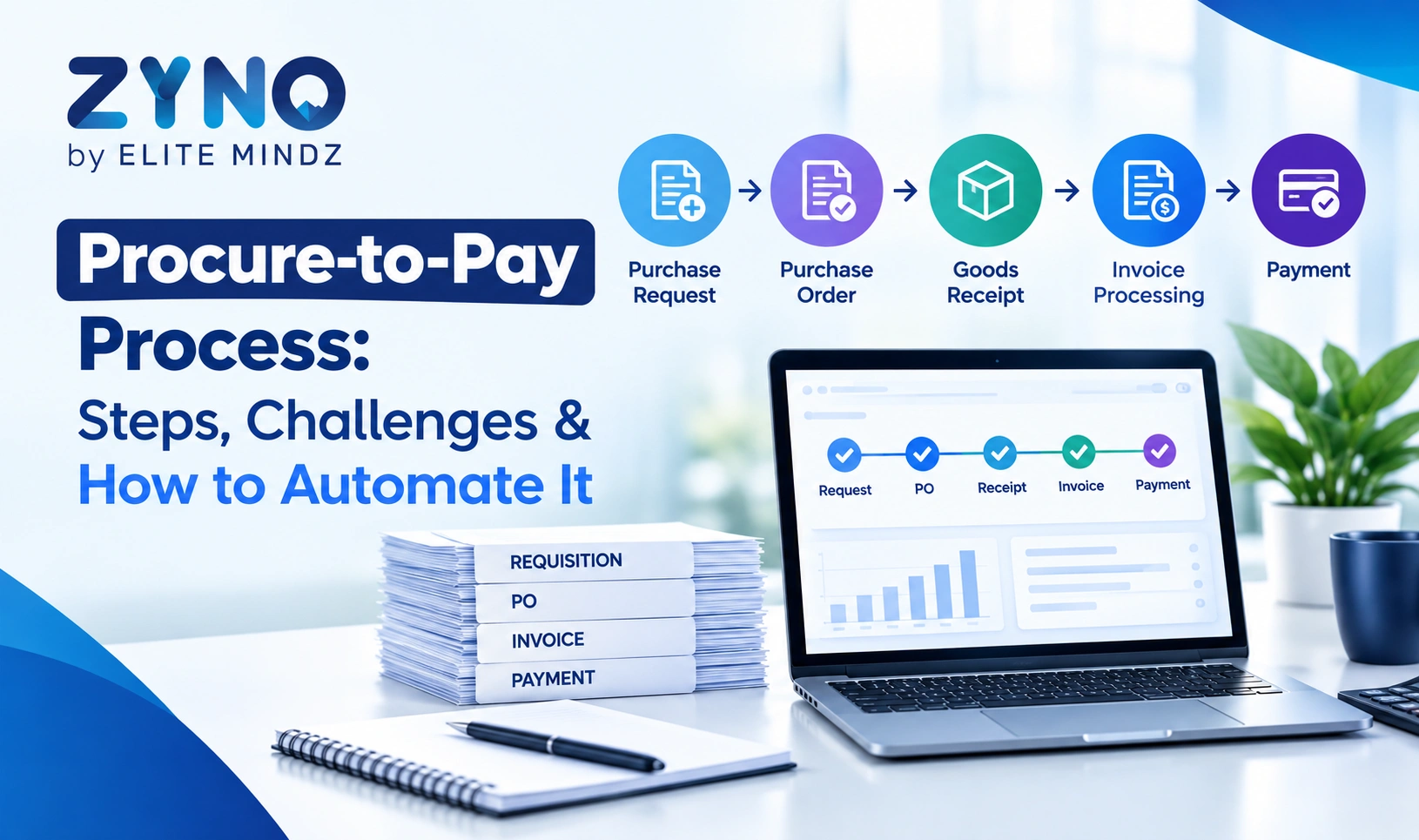
Procure-to-Pay Process: Steps, Challenges & How to Automate It
Read More →
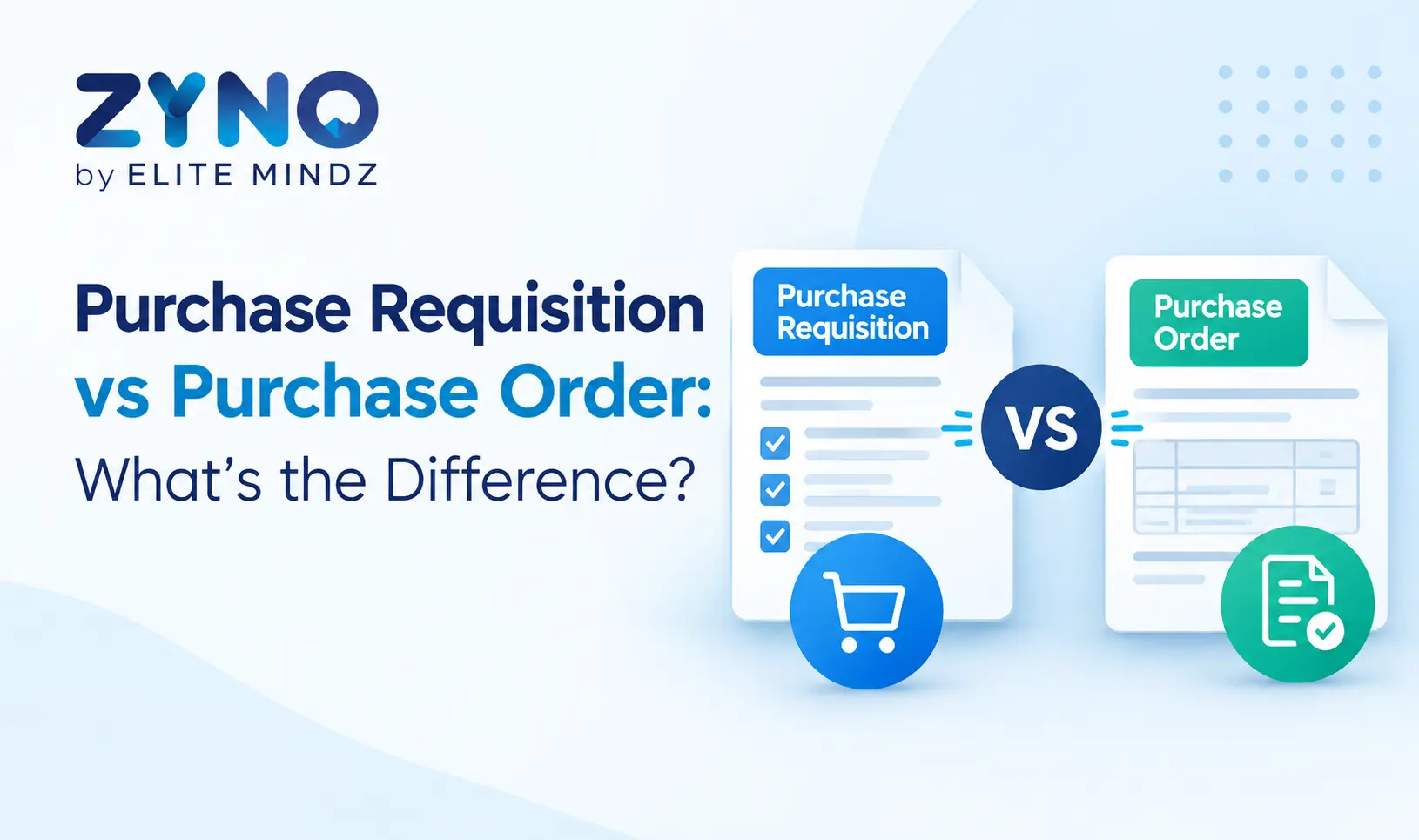
Purchase Requisition vs Purchase Order: What’s the Difference?
Read More →
Purchase Requisition vs Purchase Order: What’s the Difference?
Read More →Partner with ZYNO by Elite Mindz to revolutionize how your business works. Fill out the form, and we’ll reach out with AI-powered solutions made just for you.
We use browser cookies to ensure you get the best experience on our website. Learn more
The form was submitted successfully!