Procurement Software Trends in 2026: What to Expect
Read More →

×
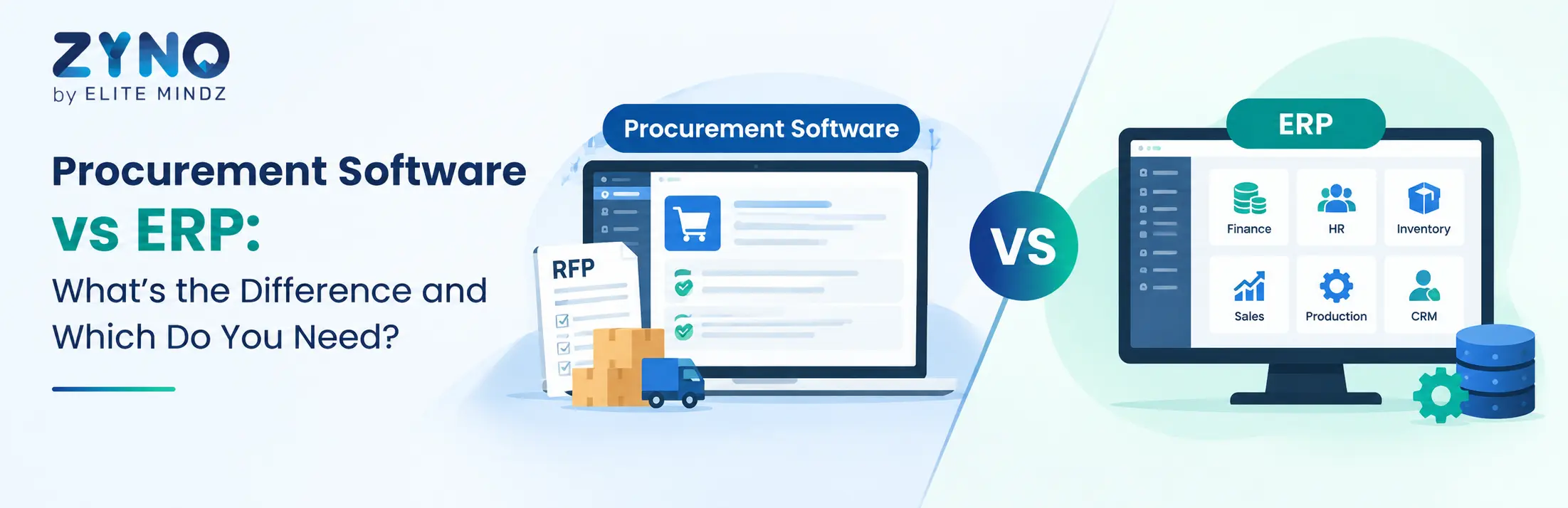
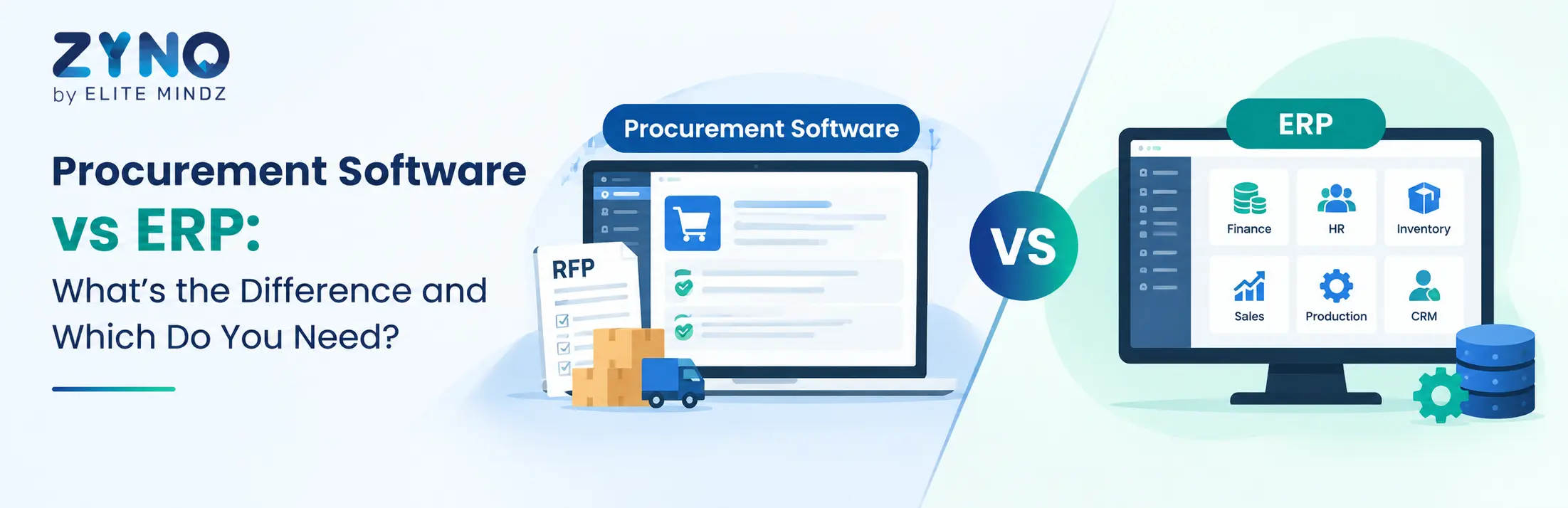
Procurement software and ERP are not the same thing. ERP manages broader business operations such as finance, accounting, inventory, and supply chain, while procurement software focuses specifically on purchasing, sourcing, supplier management, approvals, and procurement workflows. An ERP may already provide enough procurement functionality for some businesses, while others may benefit from dedicated procurement software or an integrated combination of both.
Businesses using ZYNO Books cut accounting time by 70% and stay 100% ZATCA-compliant — automatically.
For some businesses, the procurement capabilities already available in an ERP may be enough. For others, procurement has become complex enough to require deeper sourcing, supplier, analytics, automation, or workflow capabilities.
The right choice depends on what your procurement team needs to accomplish, what your existing ERP already handles, and where the gaps are.
|
Area |
Procurement Software |
ERP |
|---|---|---|
|
Primary Focus |
Procurement and purchasing workflows |
Enterprise-wide business management |
|
Procurement |
Specialized procurement capabilities |
Procurement module within a broader system |
|
Finance |
Usually integrates with finance systems |
Core capability |
|
Accounting |
Usually integrates with accounting |
Core capability |
|
Inventory |
Can integrate with inventory |
Usually a core ERP function |
|
Sourcing |
Often a major capability |
Depends on the ERP and module |
|
Supplier Management |
Procurement-focused supplier workflows |
Supplier and vendor records within ERP |
|
Purchase Requisitions |
Yes |
Yes |
|
Purchase Orders |
Yes |
Yes |
|
Approval Workflows |
Procurement-specific workflows |
Configurable ERP workflows |
|
Spend Analytics |
Procurement-focused analysis |
Broader financial and operational reporting |
|
Contracts |
Depends on the platform |
Depends on the ERP and modules |
|
Best Fit |
Businesses needing deeper procurement capabilities |
Businesses prioritizing unified enterprise operations |
The important point is that this is not always an either-or decision.
A company can use an ERP as its core business system while adding procurement software where more specialized procurement capabilities are needed.
An ERP can provide procurement software functionality through its procurement or purchasing module, but ERP is broader than procurement software.
Explore a smarter procurement solution for sourcing, supplier management, purchase workflows, spend visibility, and procurement automation.
ERP stands for Enterprise Resource Planning. It brings multiple business functions into one system, which can include finance, accounting, inventory, supply chain, sales, HR, and procurement.
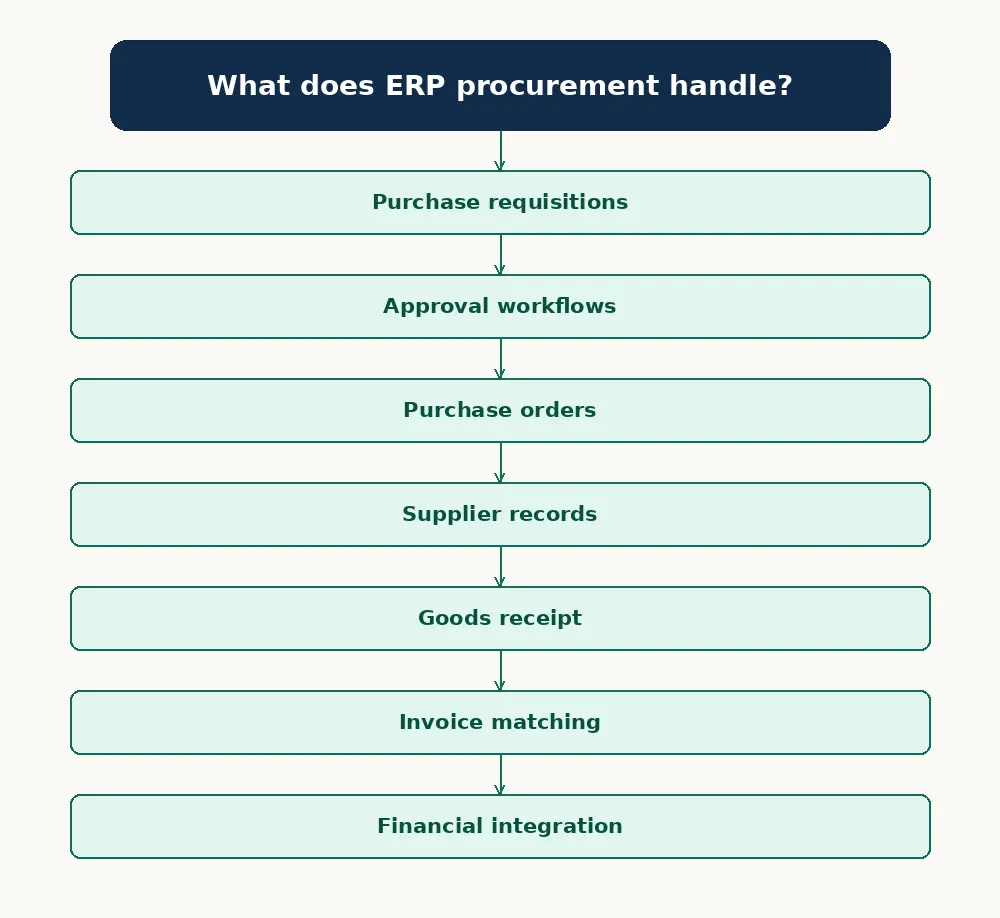
Its procurement module may handle activities such as:
That makes an ERP capable of handling many day-to-day procurement activities.
The difference is scope.
A dedicated procurement platform is designed specifically around procurement. Depending on the product, it may go deeper into sourcing, supplier onboarding, RFQs and RFPs, quotation comparison, contract workflows, spend analytics, guided buying, and procurement-specific automation.
So the better question is not simply:
“Can an ERP do procurement?”
It is:
“Does our ERP provide enough procurement depth for the way our business buys?”
ERP software is a business management system that connects multiple functions through a shared system and data environment.
Instead of finance, inventory, procurement, and other departments working with disconnected systems, an ERP can connect their activities.
For example, a purchase can move through a connected business process:
Purchase request → Approval → Purchase order → Goods receipt → Invoice → Accounting
The procurement activity can therefore affect other parts of the business without requiring every team to maintain a separate record.
That connected structure is one of the biggest strengths of ERP.
Depending on the platform, ERP can include:
Not every ERP includes the same modules or depth of functionality, so businesses should evaluate the specific procurement capabilities available in the ERP they use or are considering.
Procurement software is a specialized platform designed to manage and automate procurement activities across one or more parts of the purchasing lifecycle.
Depending on the platform, procurement software can support:
The main difference is focus.
ERP is designed to connect the business.
Procurement software is designed to make procurement easier to control, manage, analyze, and automate.

The difference becomes much clearer when you look at what each system is designed to accomplish.
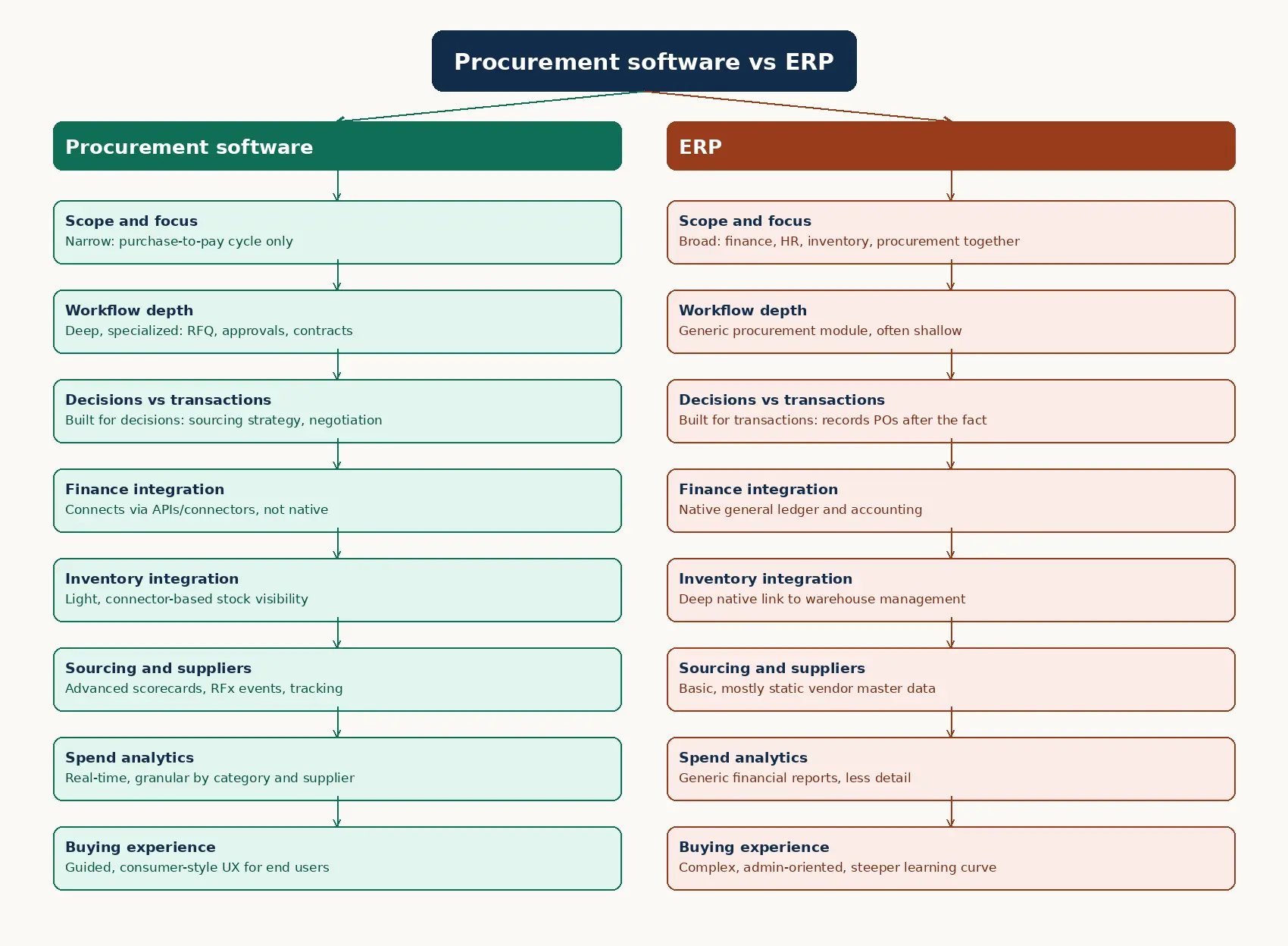
ERP has a broad enterprise focus, while procurement software has a specialized procurement focus.
An ERP may manage finance, inventory, procurement, sales, HR, and other business functions in one environment.
Procurement software concentrates on purchasing and supplier-related processes.
This makes ERP useful when the priority is business-wide integration, while procurement software becomes more valuable when the priority is procurement depth.
Both systems can support purchasing workflows, but dedicated procurement software may provide more specialized procurement capabilities.
For example, a procurement platform may offer deeper functionality around:
An ERP may already cover the workflows your organization needs.
The question is whether those workflows are sufficient for your procurement team's actual requirements.
Move beyond basic ERP purchasing workflows with smarter sourcing, supplier management, automation, and procurement insights.
ERP is typically strongest at recording and controlling business transactions, while dedicated procurement software can provide deeper tools for procurement decisions and workflows.
Think about the questions your procurement team needs to answer.
There is overlap, and modern systems can cover both sides to varying degrees.
The distinction is useful because it explains why procurement software and ERP can complement each other instead of simply competing.
ERP has a natural advantage when finance and accounting are central to the process because those functions are part of the broader ERP environment.
A procurement platform can send purchasing and invoice information to the ERP or finance system through integrations.
For example:
Procurement software → Purchase order → ERP → Goods receipt → Invoice → Accounts payable
This allows procurement teams to use specialized procurement workflows without disconnecting purchasing from financial operations.
ERP is particularly useful when procurement decisions are closely connected to inventory and operational planning.
For example, inventory levels can influence purchasing requirements.
A business that needs procurement tightly connected to:
may benefit from keeping these processes within an integrated ERP environment.
A dedicated procurement platform can also connect with inventory systems, but this generally depends on the available integrations and the architecture of the business.
Dedicated procurement software often provides greater depth for procurement teams managing sourcing, suppliers, and competitive purchasing processes.
Depending on the platform, this can include:
Some modern ERPs also provide these capabilities, so this should be evaluated feature by feature rather than assumed from the product category.
Both ERP and procurement software can provide spend visibility, but procurement platforms may offer analytics designed specifically around procurement decisions.
Procurement teams may want to understand:
ERP reporting can answer many financial questions, while procurement-focused analytics can help teams purchasing behavior in greater detail.
Procurement software is often designed around the experience of people who request, approve, source, purchase, and manage suppliers.
That can include:
ERP interfaces are designed to support a much broader range of business processes.
This does not make one automatically better.
It means the better choice depends on who needs to use the system and what they need to accomplish.

An ERP procurement module can cover much of the operational purchasing cycle, from requisition through purchasing, receiving, invoice processing, and payment.
A typical workflow may look like:
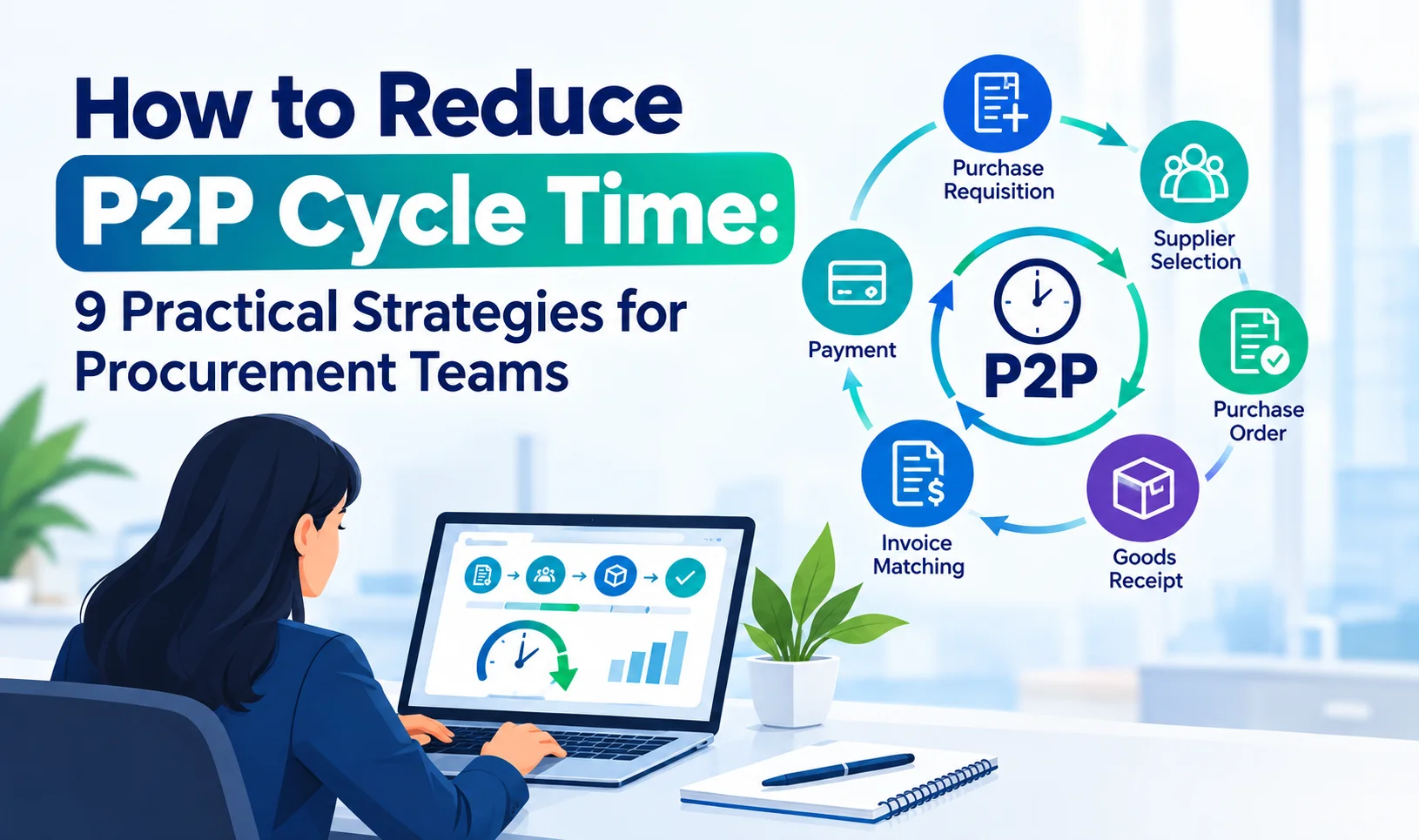
Purchase Requisition → Approval → Purchase Order → Goods Receipt → Invoice Matching → Payment
Common capabilities can include:
Employees or departments can submit requests for products or services.
Requests can be routed according to organizational rules, spending limits, departments, or other criteria.
Approved requests can be converted into purchase orders and tracked through fulfillment.
The ERP can maintain supplier information alongside purchasing and financial records.
Teams can record what was received and connect that information to the purchase order.
The system can compare purchasing, receiving, and invoice information before payment.
Purchasing transactions can flow into accounts payable and other financial processes.
This connected workflow is one of the strongest reasons businesses choose ERP-native procurement.
A dedicated procurement platform can add deeper capabilities around procurement-specific processes, depending on the product.
These may include:
Manage sourcing events, RFQs, RFPs, supplier responses, and evaluations.
Centralize onboarding, documentation, performance information, and supplier workflows.
Help employees follow approved purchasing processes and preferred supplier or catalog rules.
Analyze spend by supplier, category, department, and other procurement dimensions.
Automate repetitive procurement tasks and route work through predefined workflows.
Use AI to assist with purchase requests, supplier recommendations, document processing, anomaly detection, or procurement insights.
The value comes from solving actual procurement problems, not simply from having more features.
Yes. Procurement software and ERP can work together, and for some organizations this is the most practical approach.
The ERP can remain the central system for finance, accounting, inventory, and business records, while procurement software manages specialized procurement workflows.
A connected process might look like:
Employee Request → Procurement Platform → Approval → Sourcing/Supplier Selection → Purchase Order → ERP → Receipt → Invoice → Finance
This approach can make sense when the ERP already works well for financial and operational processes but procurement teams need more specialized capabilities.
It also means the business does not necessarily have to replace its ERP to improve procurement.
Instead, it can address specific procurement gaps while maintaining the existing enterprise system.
An ERP procurement module may be enough when your purchasing process is relatively standardized and your main priority is keeping procurement closely connected to finance, inventory, and other business functions.
It may be a good fit when:
The key is not company size alone.
A small company can have complex procurement requirements, while a large company may have relatively straightforward purchasing workflows.
Evaluate the process, not just the headcount.
Dedicated procurement software becomes more compelling when procurement itself has become complex enough that the ERP's existing capabilities no longer provide the depth or workflow experience your team needs.
Consider it when you have:
This does not mean your ERP has failed.
It may simply mean procurement has developed requirements that deserve a more specialized layer.
Using both can make sense when the ERP is already strong in finance and operations but procurement needs additional specialized capabilities.
For example, imagine a company already has an ERP managing:
But the procurement team still manages:
Replacing the ERP may be unnecessary.
A procurement platform can address those procurement workflows while integrating the resulting transactions with the ERP.
That gives each system a clear role:
ERP manages the broader business system.
Procurement software manages specialized procurement workflows.
|
If Your Main Need Is... |
Consider... |
|---|---|
|
Finance and accounting |
ERP |
|
Inventory management |
ERP |
|
Enterprise-wide business processes |
ERP |
|
Standard purchasing workflows |
ERP procurement module |
|
Complex sourcing |
Procurement software |
|
Advanced supplier management |
Procurement software |
|
RFQ/RFP management |
Procurement software or a capable ERP module |
|
Deep procurement analytics |
Procurement software or a capable ERP module |
|
Tight finance and inventory integration |
ERP |
|
Specialized procurement automation |
Procurement software |
|
Existing ERP works well but procurement has gaps |
ERP + procurement software |
|
One connected system for straightforward operations |
ERP |
There is no universal winner. The right choice depends on your procurement process, existing systems, required capabilities, and business priorities.
The decision should come down to capability, process complexity, integration, user experience, and total requirements, not simply which category sounds more advanced.
Before choosing a system, ask these questions.
The answers will tell you much more than comparing feature counts.
If you decide to add procurement software alongside an ERP, evaluate the integration as carefully as the procurement features themselves.
Look at:
The goal is to avoid creating another data silo.
A procurement platform should make procurement easier without creating a new reconciliation problem for finance.
ZYNO is designed to support procurement workflows across purchasing and supplier management.
Its capabilities include:
For example, a procurement process can begin with a digital purchase request, move through configured approvals, continue into sourcing or supplier evaluation, and then progress into purchasing and spend tracking.
If your ERP already handles finance and core business records but your procurement team needs stronger purchasing workflows, supplier management, sourcing, spend visibility, or AI-assisted procurement, ZYNO can be evaluated as a dedicated procurement layer.
The important question is not simply whether a platform has procurement features.
It is whether those capabilities match your current procurement process and how the platform needs to work with your existing business systems.
Explore ZYNO Procurement to see how its procurement capabilities map to your workflow.
Streamline purchasing, supplier management, sourcing, approvals, and spend analysis with a procurement solution built for modern businesses.
ERP and procurement software are not competing categories by default. They solve different levels of the business problem.
ERP provides the broader business foundation, connecting areas such as finance, accounting, inventory, and procurement.
Procurement software focuses more deeply on how an organization requests, sources, evaluates, approves, purchases, and manages suppliers.
For a straightforward purchasing process, an ERP procurement module may be all you need.
For more complex procurement operations, a dedicated procurement platform can provide additional depth.
And when the ERP already works well but procurement needs more specialized capabilities, using procurement software alongside the ERP can be the most practical approach.
The right decision is therefore not:
“ERP or procurement software?”
It is:
“Which procurement capabilities do we need, which system already provides them, and where are the gaps worth solving?”
ERP can provide procurement software functionality through its procurement or purchasing module, but ERP is broader than procurement software. ERP connects procurement with functions such as finance, accounting, inventory, and other business operations.
ERP is an enterprise-wide business management system, while procurement software specializes in procurement activities. ERP focuses on connecting business functions, while procurement software can provide deeper capabilities for sourcing, supplier management, purchasing, approvals, spend analysis, and procurement automation.
Not universally. ERP may be the better fit when the priority is integrated finance, inventory, accounting, and standard purchasing. Dedicated procurement software may be a better fit when procurement requires deeper sourcing, supplier, workflow, or analytics capabilities.
Usually not when a business relies on its ERP for finance, accounting, inventory, and other enterprise functions. Procurement software is generally designed to specialize in procurement rather than replace the broader ERP environment.
Yes. Procurement platforms can integrate with ERP and finance systems so purchasing, supplier, invoice, and other relevant data can move between systems. The exact integration capabilities depend on the products involved.
No. E-procurement refers broadly to using digital systems to manage procurement activities. ERP procurement is procurement functionality delivered within an ERP. Dedicated e-procurement platforms can provide specialized procurement workflows and may integrate with an ERP.
Yes. Purchase order management is a common ERP procurement capability. The exact workflow, approval controls, supplier collaboration, and automation available depend on the ERP.
It can integrate with inventory systems, but inventory management is typically a broader ERP capability. Whether procurement software provides native inventory functionality depends on the platform.
Procurement software can cover a broad range of procurement activities, while procure-to-pay focuses on the purchasing process from request through payment. Some platforms cover both, but the scope depends on the product.
It can be, especially when procurement is relatively standardized and the ERP already provides the required requisition, approval, purchase order, receiving, invoice matching, supplier, and reporting capabilities. If procurement requires deeper sourcing, supplier management, guided buying, analytics, or specialized automation, dedicated procurement software may provide additional capabilities.
Not necessarily. If purchasing is relatively straightforward and the existing ERP or accounting system handles the required workflows, a separate procurement platform may not be necessary. As supplier complexity, purchasing volume, approval requirements, or procurement controls increase, specialized software can become more useful.
Procurement Software Trends in 2026: What to Expect
Read More →
Why E-Procurement Outperforms Traditional ERP in Modern Procurement
Read More →
Top Procurement Software in India: 12 Best Options for 2026
Read More →
Best Procurement Software Companies in Kuwait (2025)
Read More →
5 Best Procurement Software in Africa for Enterprises & SMEs (2026 Guide)
Read More →
Best Procurement Software in Nigeria 2026 | Top 5 Picks
Read More →
Best Procurement Software Providers in USA (2025): How AI is Transforming the Future
Read More →
10 Best Procurement Software Providers in Thailand for Streamlined Supply Chain Management
Read More →
Top 10 Cloud-Based Procurement Solutions in Portugal for Businesses in 2025
Read More →
Top 10 Procurement Software Providers in Switzerland 2026: Streamlining Sourcing and Supplier Management
Read More →
What Makes ZYNO Procurement Different from Other Oil & Gas Procurement Software
Read More →
The Digital Transformation of Logistics Procurement in the Middle East
Read More →
A Step by Step Guide to Procurement Management Software for Modern Enterprises
Read More →
Sourcing and Procurement: What is the Difference and Why It Matters
Read More →Difference Between Procurement and Supply Chain Management
Read More →
What Is Procurement Software and Why Do Modern Businesses Need It?
Read More →
Best Procurement Management Software to Automate ERP Process
Read More →
Direct vs Indirect Procurement: Key Differences, Examples & Uses (2026)
Read More →
Smart procurement strategies for cost optimization & risk management
Read More →
What Is Procurement? Everything You Need to Know (Types, Process & SAP)
Read More →Beyond Cost-Cutting: How Procurement Drives Margin Expansion in 2026
Read More →
Direct Procurement: Process, Examples, and When to Use It
Read More →
What Are the 5 Types of E-Procurement? A Complete Guide for Businesses
Read More →
Which Procurement Management Software Is Best? Top Tools Compared for 2026
Read More →
Top 8 Coupa Alternatives to Explore in 2026
Read More →
Looking to Replace Coupa? Discover the Best Alternatives Like ZYNO Procurement
Read More →
How Does Procurement Software Work? A Complete Guide
Read More →
ZYNO Procurement vs Coupa: Best Procurement Software Comparison for Mid-Market Teams
Read More →
Best SAP ARIBA Procurement Alternatives in 2026
Read More →
ZYNO Procurement vs SAP Ariba: Which Solution Is More User-Friendly?
Read More →
AI-Powered Procurement Management Software for Fast, Connected, and Visible Workflows in Dubai
Read More →
What is Vendor Management? Complete Guide to Vendor Management Software, Systems, and Processes
Read More →
Best Procurement Management Software In Kenya
Read More →
6 SAP Ariba Alternatives for Mid-Market Businesses in 2026
Read More →
Top E-Procurement Solutions for B2B Organizations (2026)
Read More →
Quotation Format: Free Templates + Complete Guide (2026)
Read More →
Cost Control Software: Features, Benefits & Performance Guide for 2026
Read More →
Procurement Workflow: Steps, Stages, and Real Examples
Read More →
Top 10 Zycus Alternatives for Procurement Teams in 2026
Read More →
Best Precoro Alternative for Purchase Requisition and Procurement
Read More →
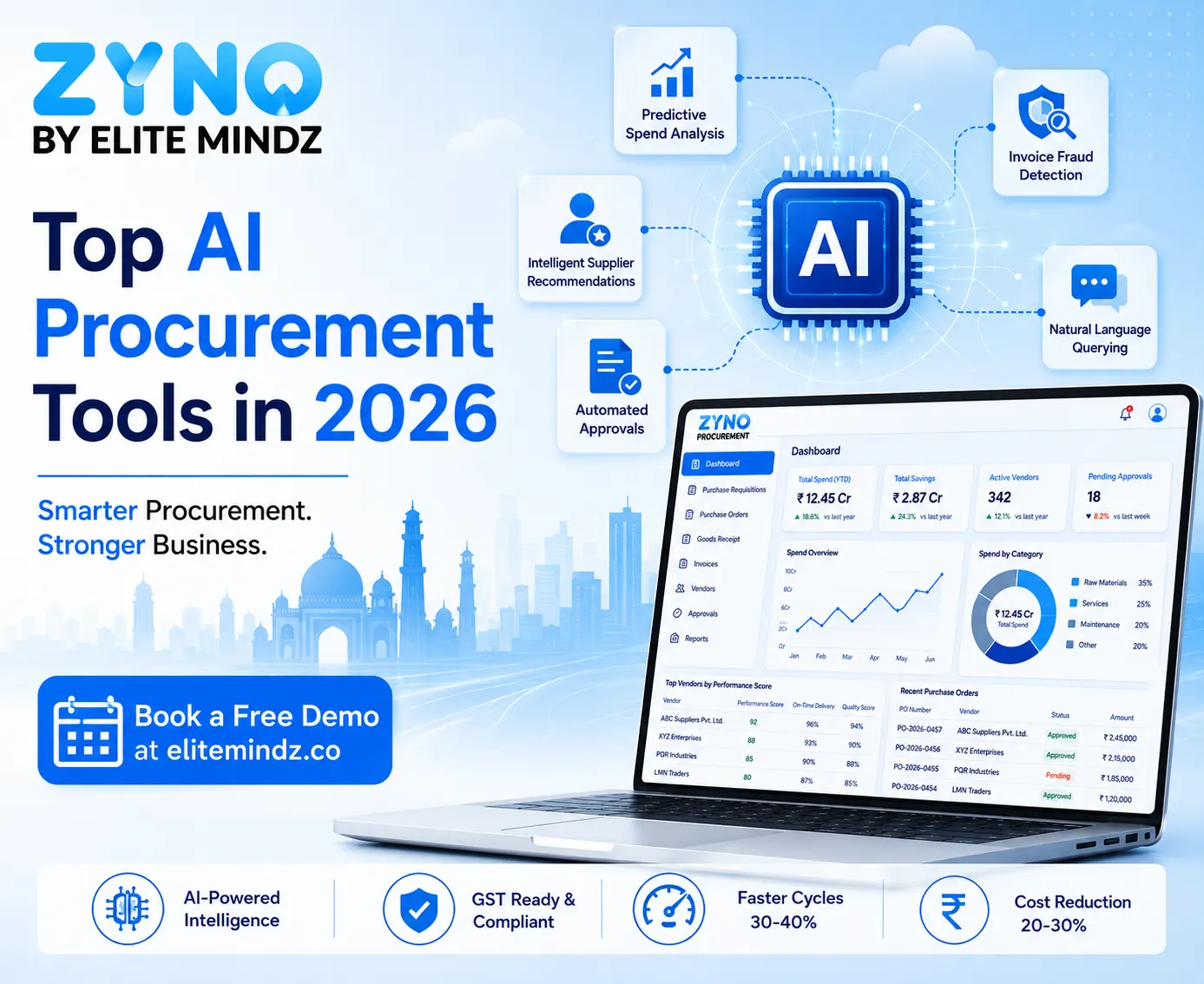
Top AI Procurement Tools in 2026
Read More →
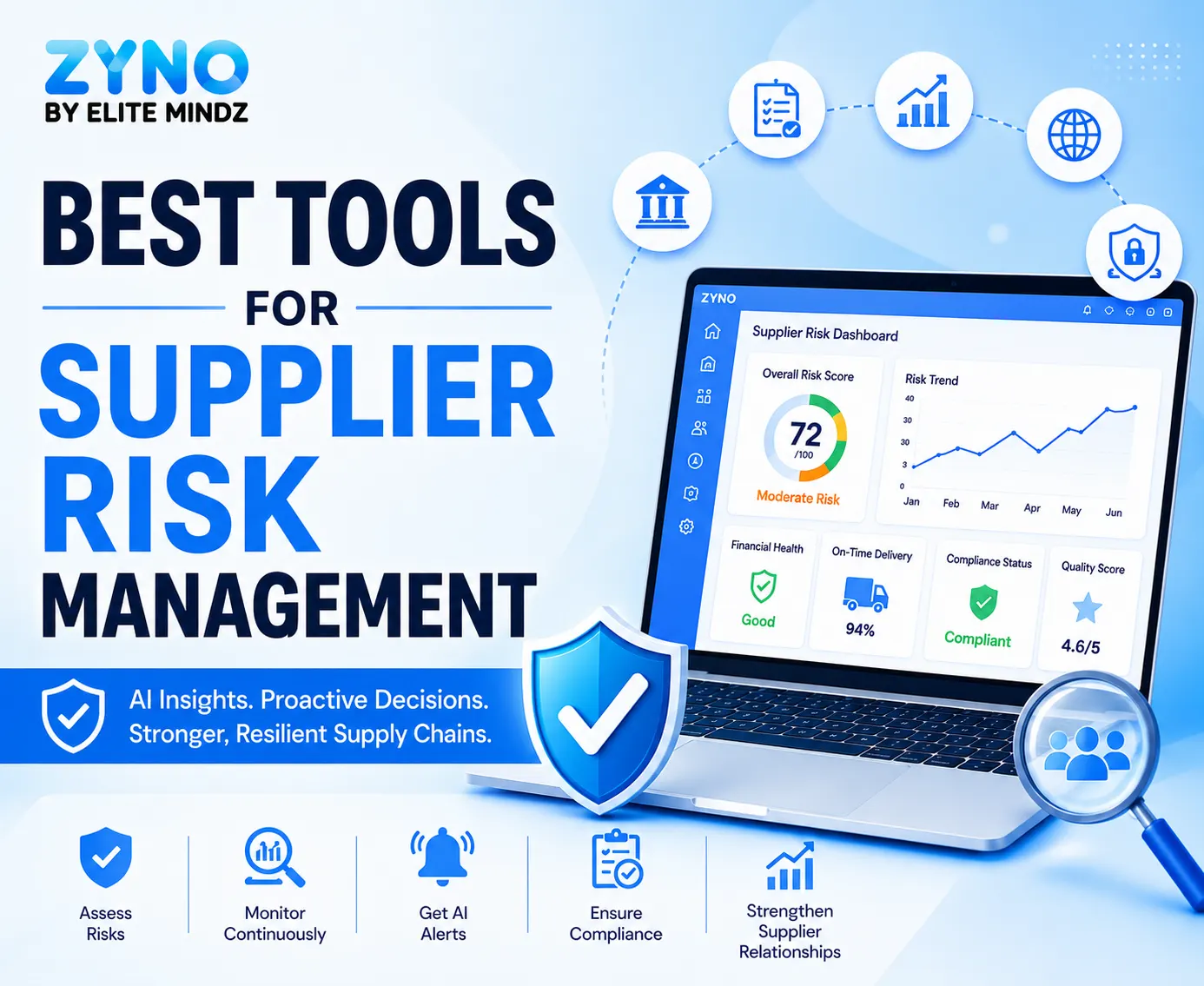
Best Tools for Supplier Risk Management
Read More →
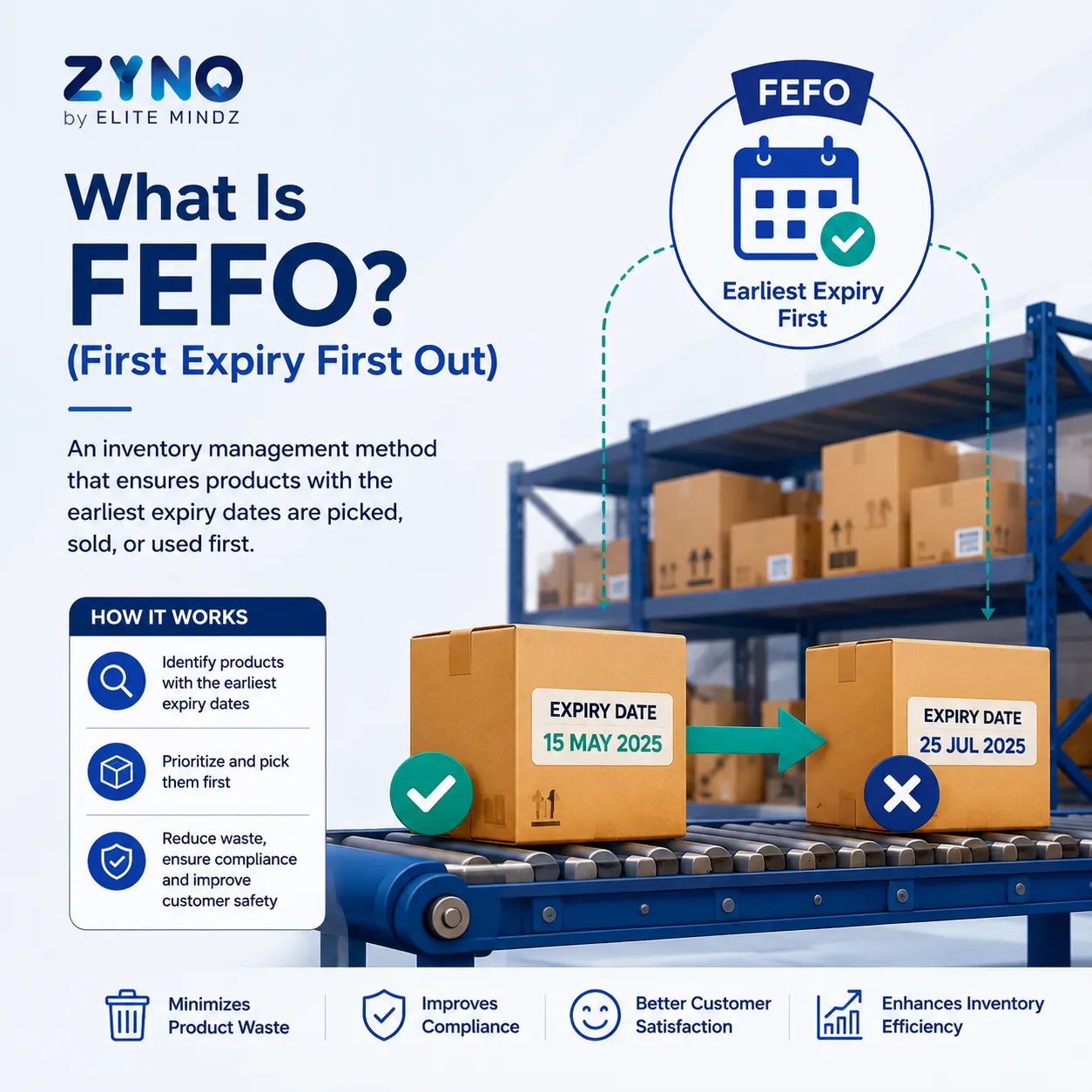
FEFO vs FIFO vs LIFO: Differences, Benefits & Which Inventory Method Is Best?
Read More →
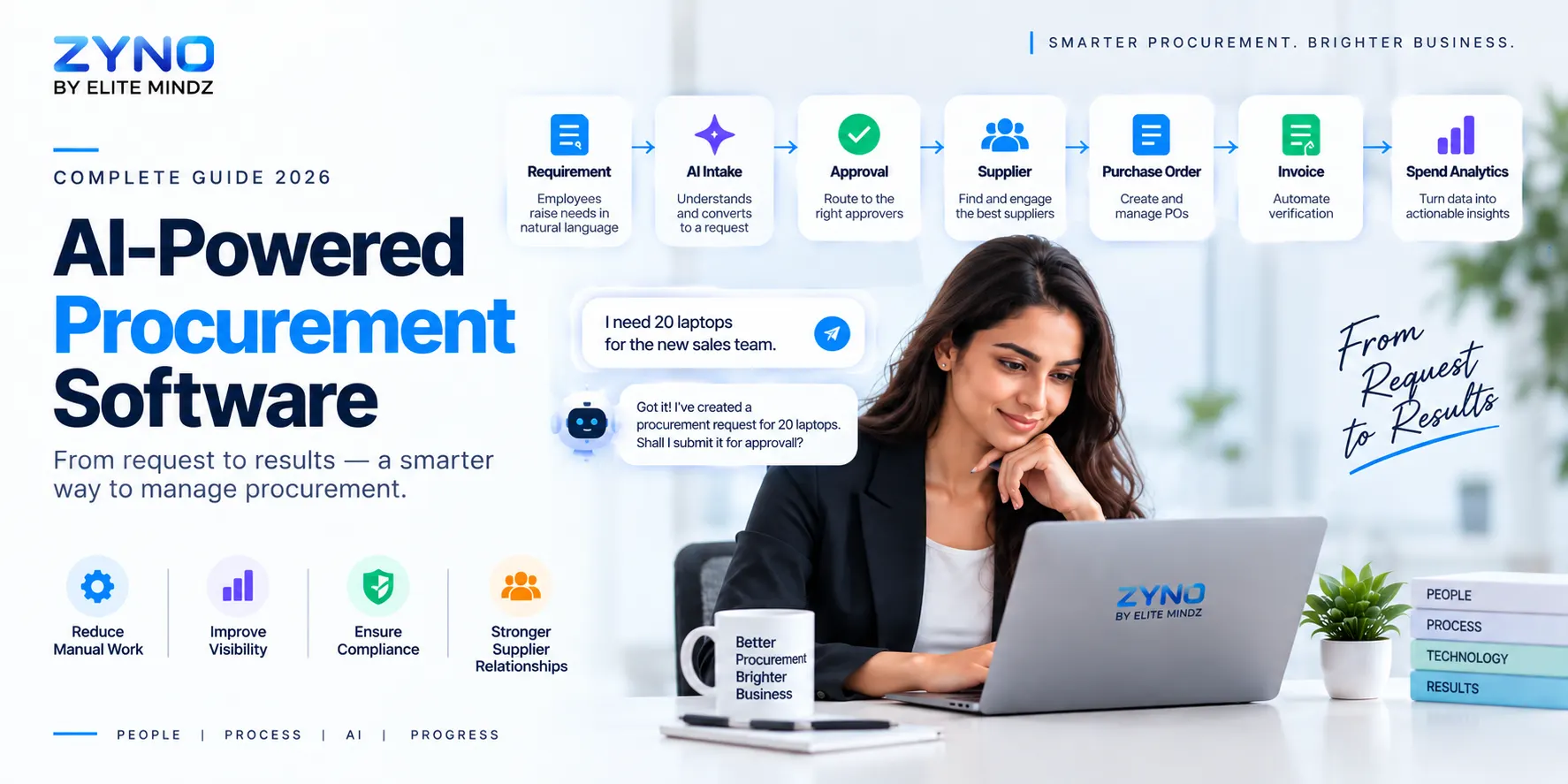
AI Procurement Software: Features, Benefits, Use Cases & How to Choose
Read More →
Best AI Tools for Supply Chain Procurement
Read More →
Procurement Risk Management
Read More →
Still Using Excel for Procurement? Read This Before It's Too Late
Read More →
Best RFP Software in 2026: Top Tools Compared for Faster Proposal Responses
Read More →
What Is Procure-to-Pay (P2P)? A Complete Guide
Read More →
Complete Procurement Workflow Guide for Modern Businesses
Read More →
Complete Guide to E-Procurement Solutions for B2B Organizations
Read More →
Cost Control Software Comparison Guide: Features, Pricing & Benefits
Read More →
Purchase Order Tracking: How to Manage Every PO Without the Chaos
Read More →
Inventory Management: What It Is, How It Works and Why It Matters
Read More →
Top 10 Procurement Software Tools for Purchasing Automation in 2026
Read More →
Agentic AI Procurement Platforms and the Future of Strategic Sourcing
Read More →
AI Spend Analytics Software for Procurement Leaders
Read More →
From Prompt to Procurement: How AI Is Transforming Enterprise Purchasing
Read More →
ZYNO Procurement vs IBM Procure-to-Pay Automation
Read More →
ZYNO Procurement vs Infor Nexus: Which Procure-to-Pay Platform Fits Your Team?
Read More →
AI-Powered Procurement Software in 2026: Top 6 Platforms That Actually Deliver ROI
Read More →
Contract Management Software Buyer's Guide: Features, Costs & Top Picks
Read More →
Top 10 Procure to Pay Software Companies in India 2026
Read More →
10 Best Vendor Management Software in India (2026): Features, Benefits & Comparison
Read More →
How Machine Learning and AI Are Transforming Procurement: A Strategic Overview
Read More →
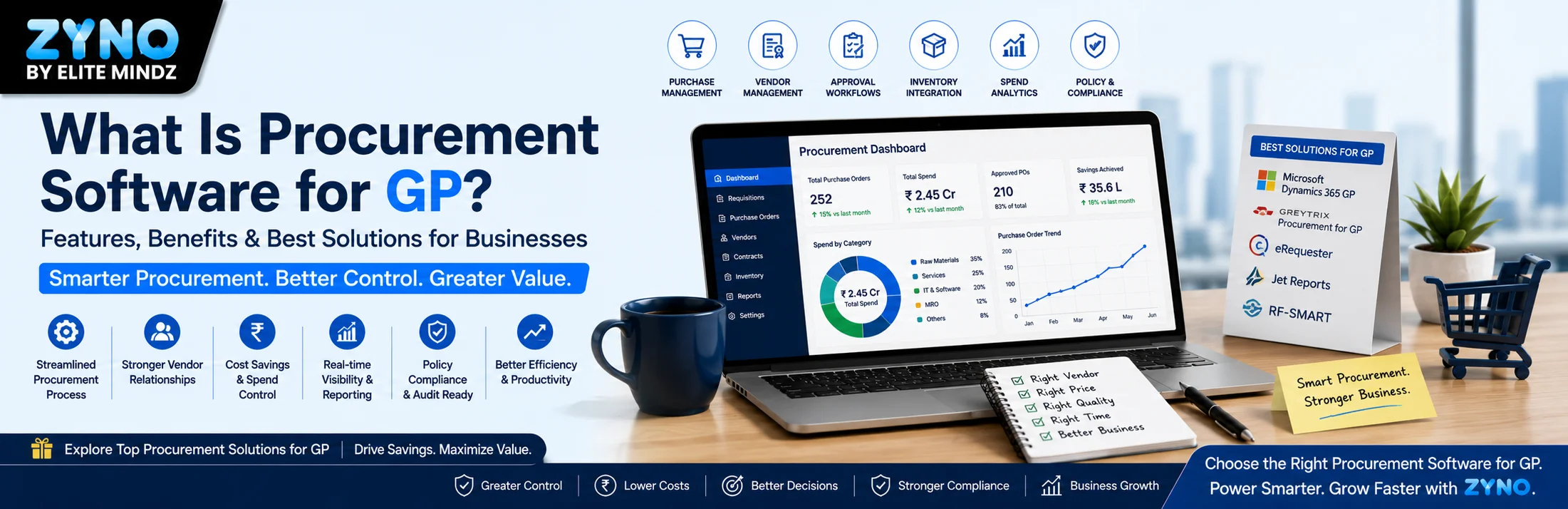
What Is Procurement Software for GP? Features, Benefits and Best Solutions for Businesses
Read More →
What Procurement Software Do Mid-Market Companies Use Instead of SAP Ariba or Coupa?
Read More →
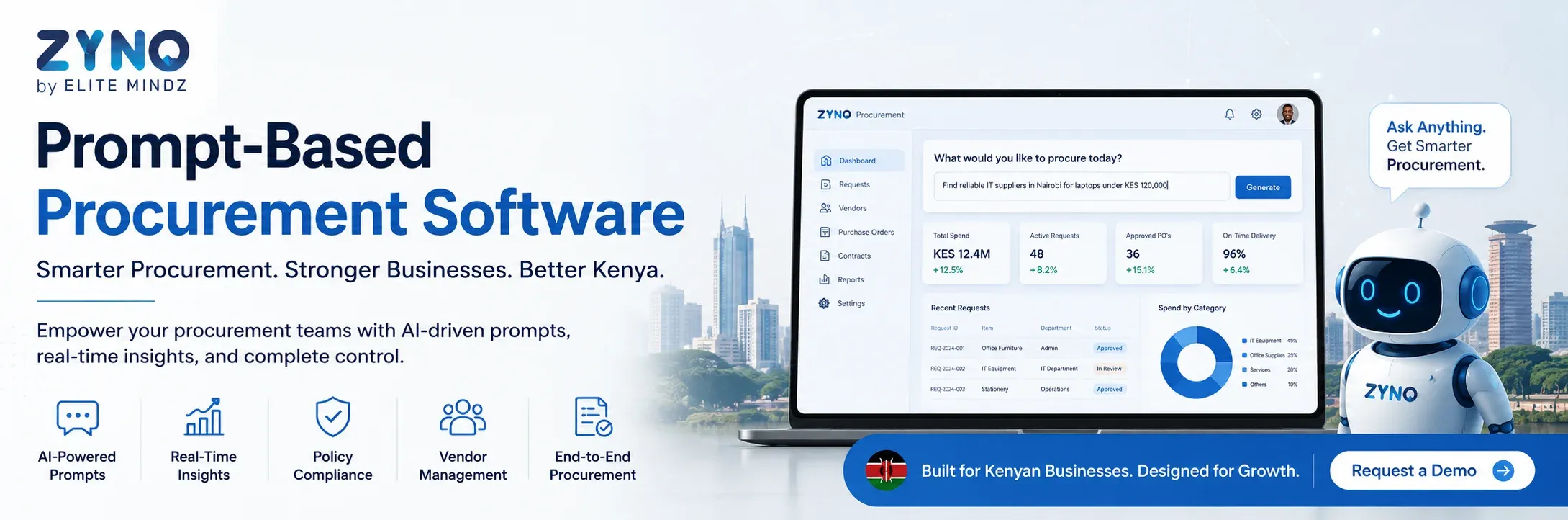
Prompt-Based Procurement Software for Kenyan Businesses
Read More →
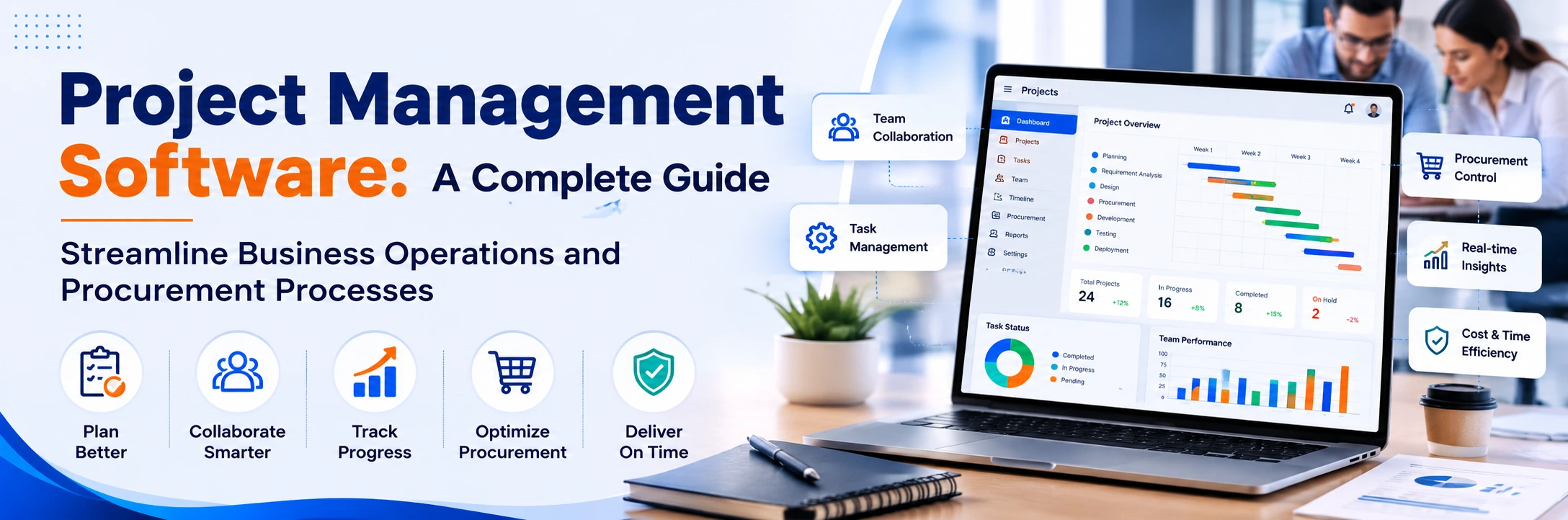
Project Management Software: A Complete Guide to Streamline Business Operations and Procurement Processes
Read More →
SAP Ariba vs ZYNO Procurement: Complete Feature Comparison (2026)
Read More →
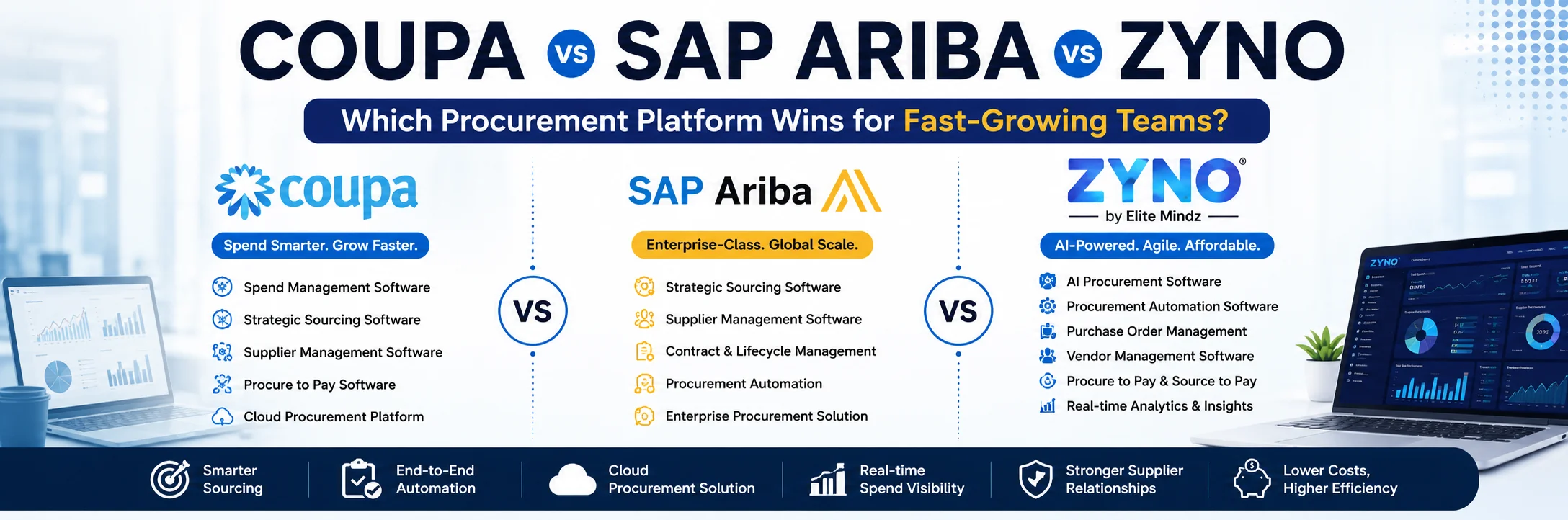
Coupa vs SAP Ariba vs ZYNO: Which Procurement Platform Wins for Fast-Growing Teams?
Read More →
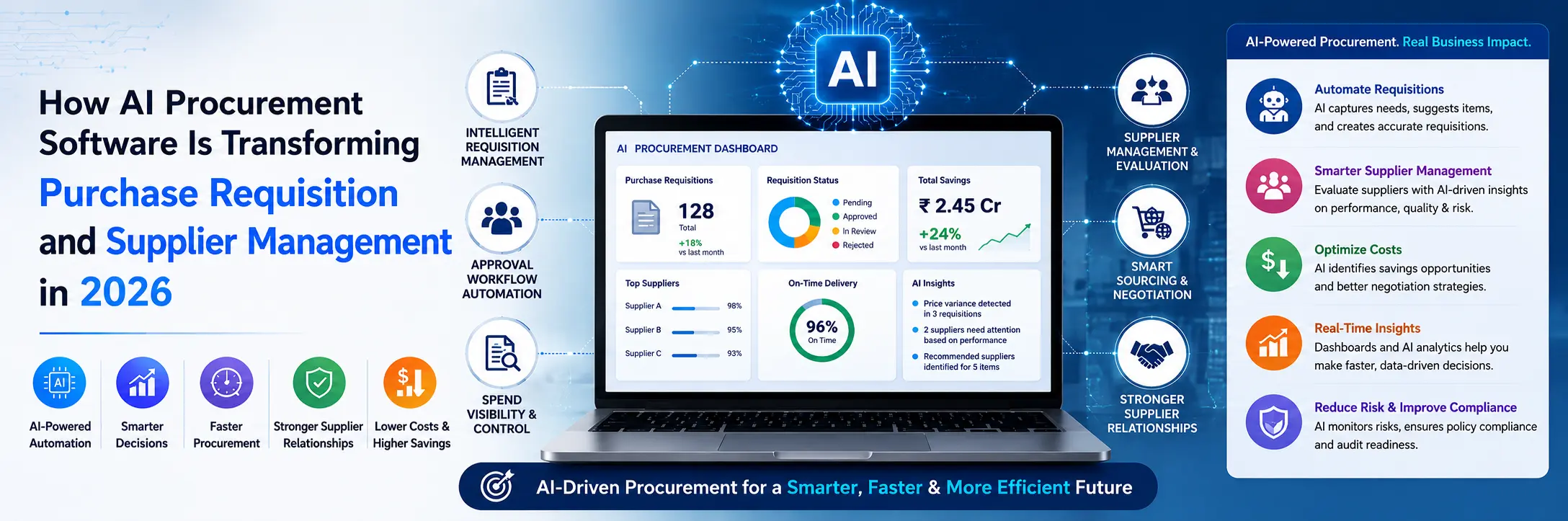
How AI Procurement Software Is Transforming Purchase Requisition and Supplier Management in 2026
Read More →
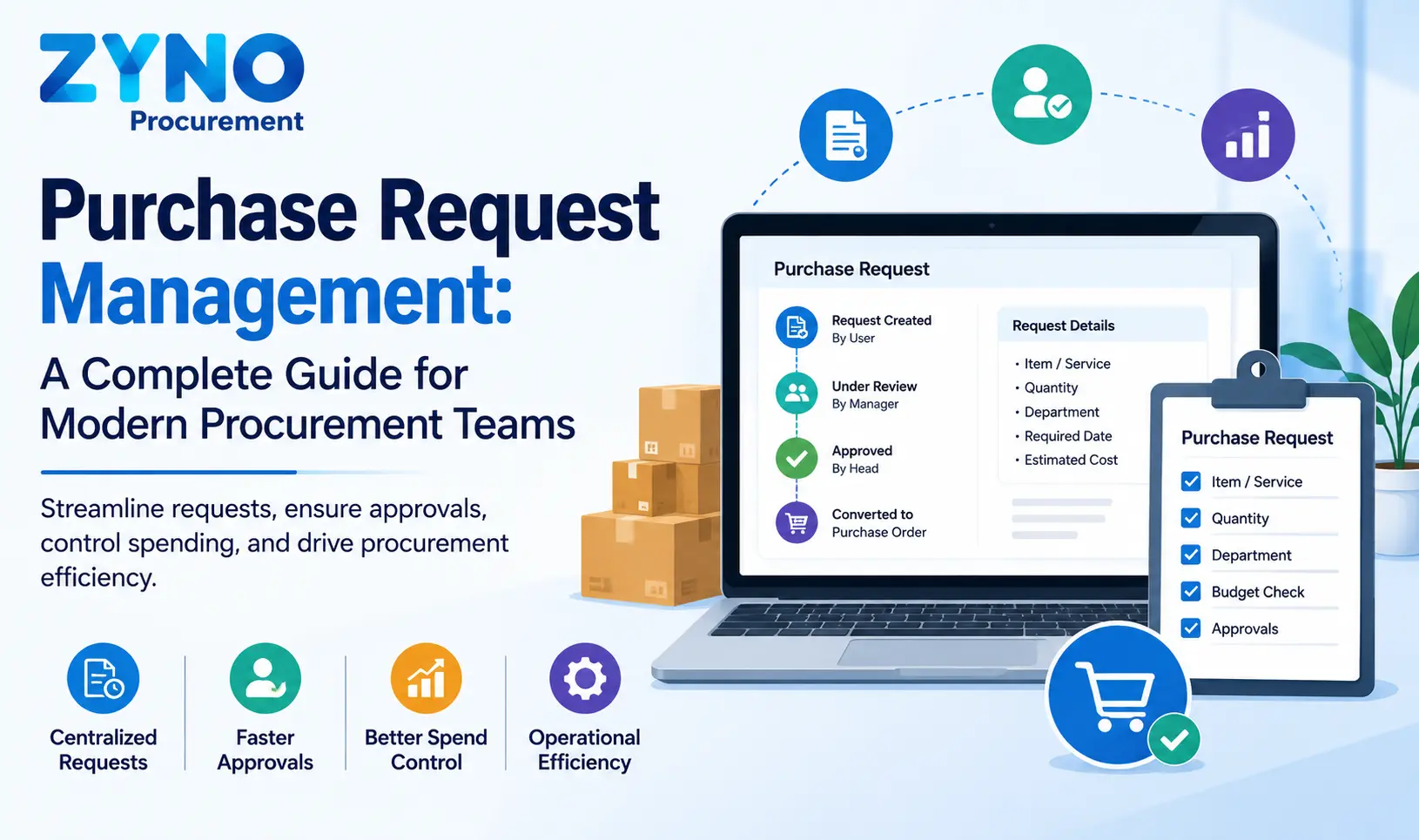
Purchase Request Management: A Complete Guide for Modern Procurement Teams
Read More →
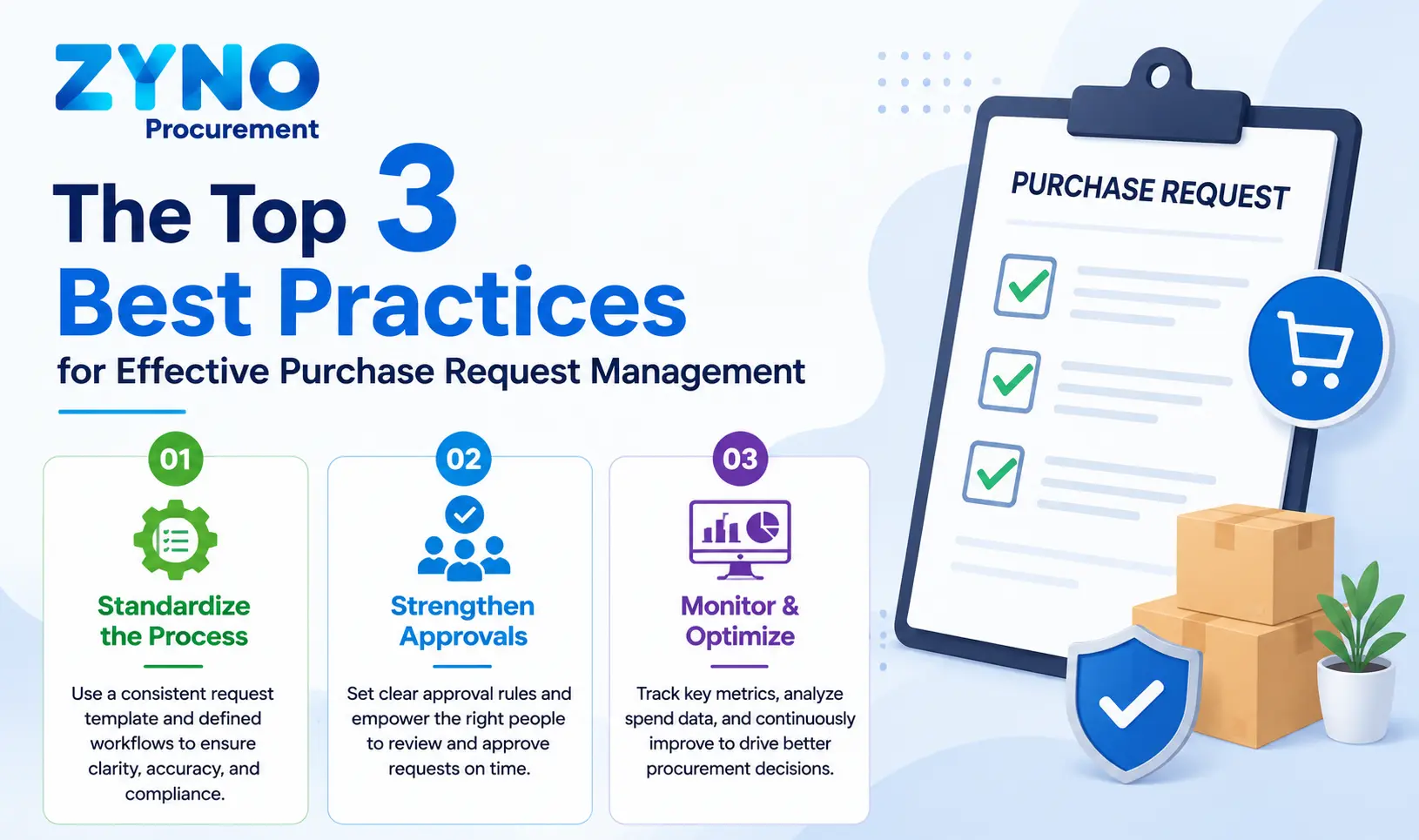
The Top 3 Best Practices for Effective Purchase Request Management
Read More →
What Is Purchase Order Automation? How to Automate Purchase Order Processing
Read More →
5 Common Purchase Request Mistakes and How to Avoid Them
Read More →
What is Supplier Relationship Management in Procurement? A Complete Guide
Read More →
What is Strategic Vendor Management? A Complete Guide for Modern Procurement
Read More →
What Are Inventory Control Methods? Complete Guide to Types, Techniques, Systems, & Benefits
Read More →
Inventory Audit Checklist: Steps, Process & Best Practices
Read More →
Warehouse Inventory Management: Best Practices for 2026
Read More →
Treasury Management System (TMS): A Complete Guide for Modern Corporates
Read More →
What is Portfolio Management Services (PMS) and What Are Its Benefits?
Read More →
Generative AI Procurement Software Solution: The Future of Intelligent Procurement
Read More →
Top Contract Management Software Companies in Ethiopia: Features, Benefits & Best Procurement Solutions
Read More →
AI Procurement Software: Complete Guide to Intelligent, Generative AI & Machine Learning Procurement Solutions
Read More →
Top SAP alternatives for small, midsize, and enterprise businesses
Read More →
Best RFP Software in 2026: Top Solutions for Smarter Procurement and Proposal Management
Read More →
GST on Purchase: Complete Guide to GST on Purchases in India
Read More →
Procurement Software UAE: Complete Guide to Choosing the Best Procurement Solution
Read More →
Supply Chain Procurement: Everything You Need to Know
Read More →
Top 10 Oracle Procurement Alternatives for Businesses in 2026
Read More →
Quotation Software vs Excel: Which Is Better for Businesses in 2026?
Read More →
Contract Management Software Buyer's Guide: Features, Pricing & How to Choose
Read More →
How to Identify the Right Vendor: 10 Simple Steps
Read More →
Top 10 Automated PO Generation Tools in 2026: Best Purchase Order Software with AI Capabilities
Read More →
How to Generate a PO Automatically in SAP: Step-by-Step Guide
Read More →
What Is the Best Budget-Friendly Procurement Software With Vendor Onboarding for Indian SMEs?
Read More →
How to Generate a PO Automatically in SAP: Step-by-Step Guide
Read More →
How to Solve Invoice Mismatches: 10 Real Ways to Fix Invoice Discrepancies
Read More →
Top 10 Vendor Onboarding Tools for Businesses in 2026: Features, Process & How to Choose
Read More →
Vendor Comparison & Supplier Intelligence: How AI Helps Businesses Choose the Right Vendor
Read More →
How to Choose the Right Procurement Management Software in 2026 (Complete Buyer's Guide)
Read More →
How to Reduce Procurement Costs: 18 Practical Strategies That Actually Work
Read More →
How to Choose the Right Procurement Management Software in 2026 (Complete Buyer's Guide)
Read More →
How to Calculate Procurement Software ROI: Formula, Example & Calculator
Read More →
Procurement Software Evaluation Checklist: 35 Criteria for Choosing the Right Platform
Read More →
How Businesses Can Improve Vendor Performance and Manage Supplier Risk
Read More →
Procure-to-Pay Process: Steps, Challenges & How to Automate It
Read More →
Purchase Requisition vs Purchase Order: What’s the Difference?
Read More →
10 Source-to-Pay Software Platforms to Consider in 2026
Read More →
Supplier Management Software Buying Guide: How to Choose the Right Platform
Read More →
Procurement Automation Guide: How It Works, What to Automate & How to Implement It
Read More →
Procurement Software Features: 12 Must-Have Capabilities to Look For
Read More →
Best E-Procurement Software in 2026: Top Electronic Procurement Systems for Modern Businesses
Read More →
AI in Vendor Management: Complete Guide to Automated Supplier Scoring and Supply Chain Risk Analysis
Read More →
Procurement Software vs ERP: What's the Difference and Which Do You Need?
Read More →Partner with ZYNO by Elite Mindz to revolutionize how your business works. Fill out the form, and we’ll reach out with AI-powered solutions made just for you.
We use browser cookies to ensure you get the best experience on our website. Learn more
The form was submitted successfully!