Procurement Software Trends in 2026: What to Expect
Read More →

×
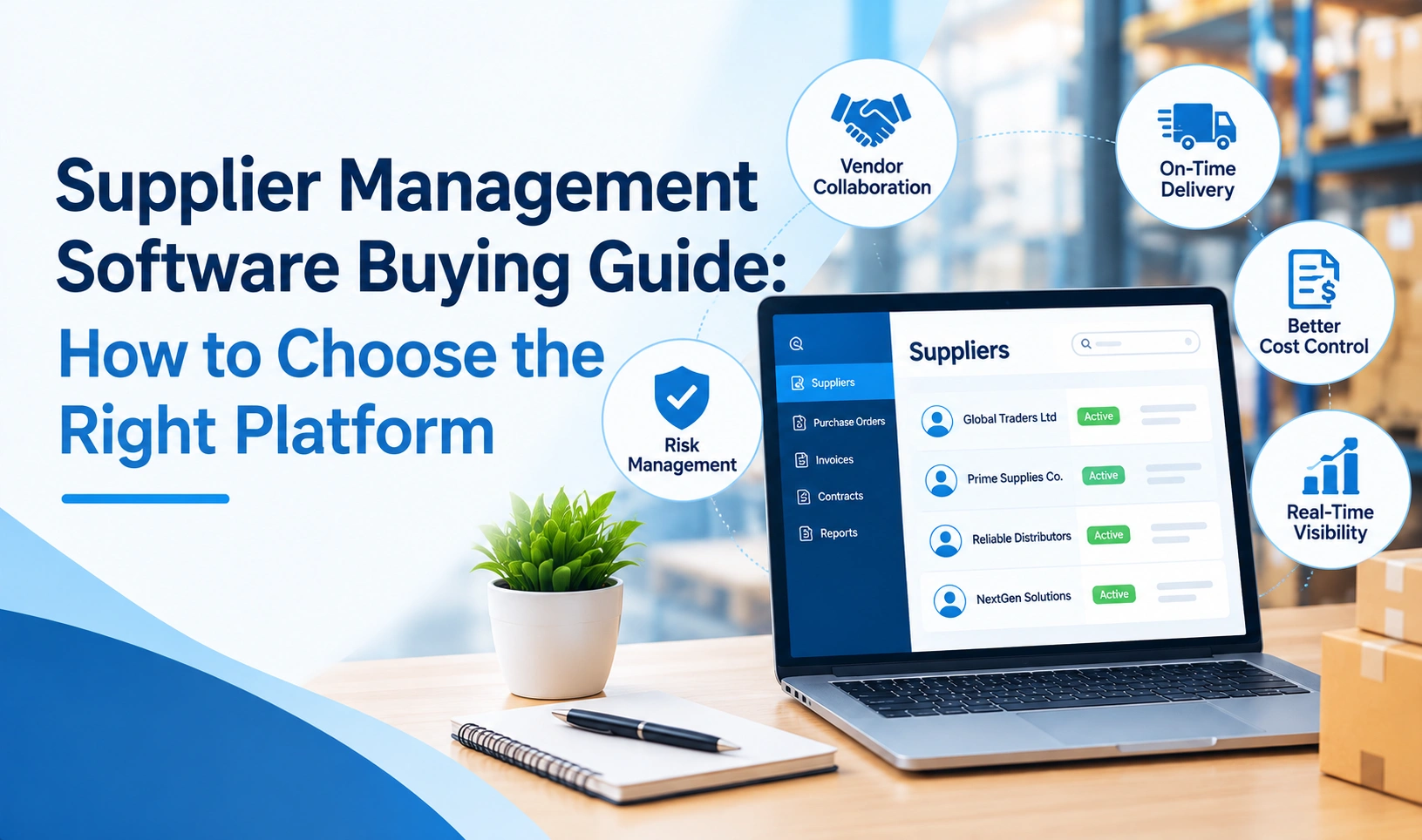
Supplier management software helps businesses centralize supplier onboarding, vendor information, performance tracking, compliance, contracts, and procurement workflows. When choosing a platform, evaluate automation, integration, reporting, supplier collaboration, security, scalability, and ease of use. The right supplier management software can improve visibility, reduce manual work, strengthen supplier relationships, and support better procurement decisions.
Businesses using ZYNO Books cut accounting time by 70% and stay 100% ZATCA-compliant — automatically.
If you are comparing supplier management software, do not start by asking which platform has the most features. Start by asking whether it can manage your supplier lifecycle, solve your current procurement problems, integrate with your existing systems, and give your team better control over supplier data, risk, compliance and performance.
That sounds simple.
The buying decision isn't.
A supplier management platform can look impressive in a demo and still turn out to be a poor fit once implementation begins.
Supplier onboarding may still require emails. Compliance documents may still need manual follow-up. Supplier performance information may remain in spreadsheets. Your ERP integration may cover only basic data. Or you may end up paying for dozens of capabilities your procurement team rarely uses while the workflow you actually care about still requires manual work.
That is why buying supplier management software should be treated as a procurement decision, not a software shopping exercise.
This guide gives you a practical framework to evaluate supplier management software, compare vendors, test real workflows, calculate total cost and ROI, identify red flags, and decide whether a platform is actually right for your procurement operation.
|
Evaluation Area |
What the Software Should Help You Do |
|---|---|
|
Supplier Onboarding |
Register, qualify, and approve suppliers |
|
Supplier Information |
Maintain accurate supplier records |
|
Supplier Compliance |
Collect, monitor, and manage required documents |
|
Supplier Risk |
Identify, assess, and manage supplier risks |
|
Supplier Performance |
Track KPIs and supplier performance |
|
Supplier Workflows |
Automate approvals, reviews, and follow-ups |
|
Supplier Portal |
Enable supplier self-service and collaboration |
|
Supplier Analytics |
Turn supplier data into actionable insights |
|
Integration |
Connect supplier data with ERP and procurement systems |
|
Security |
Control access and maintain auditability |
|
AI |
Assist with supplier analysis and workflows |
|
Scalability |
Support growth in suppliers, users, and business units |
|
Implementation |
Enable realistic migration and adoption |
|
TCO |
Understand the complete cost of ownership |
|
ROI |
Connect investment to measurable business value |
The most important supplier management software capabilities typically include:
The right platform is not necessarily the one with the longest feature list. It is the one that provides the strongest fit across your supplier lifecycle, data, workflows, users, technology environment and business case.
And that distinction is where a good buying decision begins.
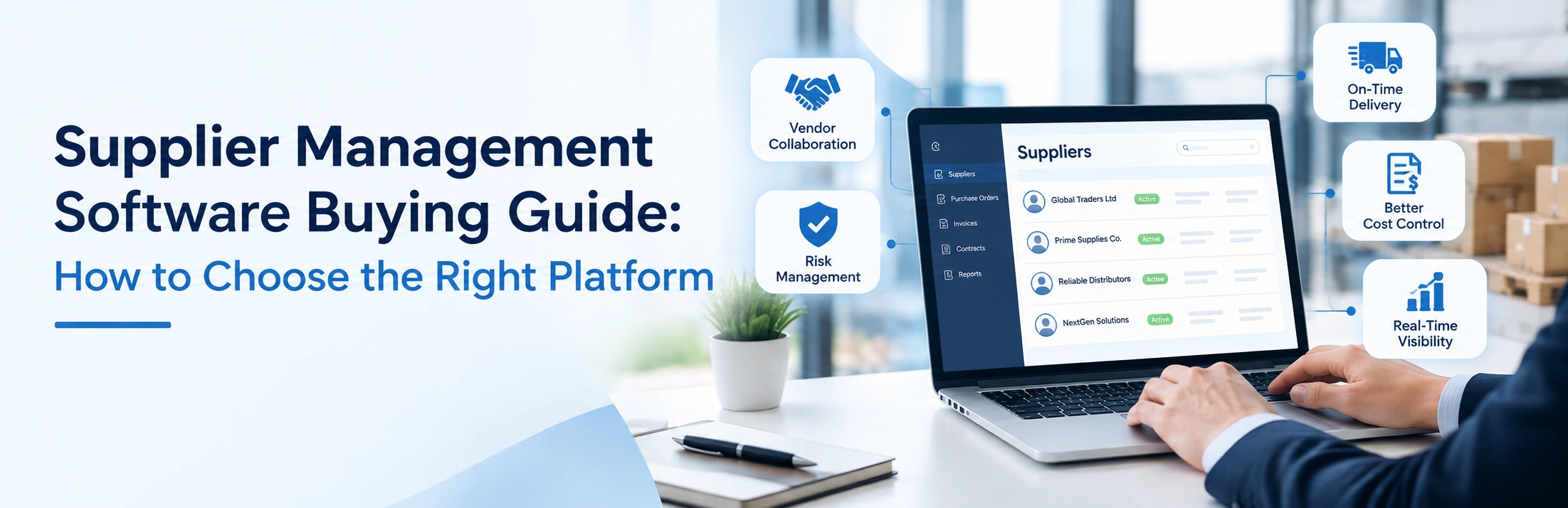
Streamline supplier onboarding, improve vendor performance, automate procurement workflows, and gain better visibility with powerful supplier management software.
Supplier management gets harder as the organization grows.
One supplier becomes 100.
One business unit becomes several.
One spreadsheet becomes multiple versions.
One compliance requirement becomes dozens.
And suddenly procurement is spending time answering questions that should have been easy:
Which suppliers are approved?
Which documents are expiring?
Which suppliers are high risk?
Which suppliers are underperforming?
Who approved this supplier?
Is this supplier's information still accurate?
How much are we actually spending with this supplier?
What happens if this supplier fails?
When answering those questions requires searching through emails, spreadsheets, shared folders and different systems, the problem is no longer simply supplier administration.
It becomes a visibility and control problem.
And that is usually where the software conversation starts.
Before comparing vendors, take two minutes to assess your current process.
Give yourself one point for every "yes."
0–2 points: Your current process may still be manageable manually.
3–6 points: It may be worth evaluating supplier management software.
7–10 points: Your current process may be creating enough operational friction to justify a serious software evaluation.
These are not industry benchmarks. They are simply a practical self-assessment to help determine whether your current process deserves a closer look.
And there is one question that matters even more:
If our supplier base doubled tomorrow, would our current process still work?
If the answer is no, your problem is not simply that you need "more automation."
You need a more scalable way to manage suppliers.
Supplier management software is a platform that centralizes supplier information and helps organizations manage supplier lifecycle activities such as onboarding, qualification, compliance, risk assessment, performance monitoring and supplier collaboration.
Depending on the platform, it may also connect supplier management with sourcing, purchasing, contracts, invoices, spend analytics and other procurement processes.
The important word here is manage.
A system that simply stores supplier records is not necessarily solving supplier management.
A useful platform should help procurement move from:
Collect → Store → Search
to:
Collect → Validate → Approve → Monitor → Analyze → Act
That is a much more interesting difference when you are evaluating software.

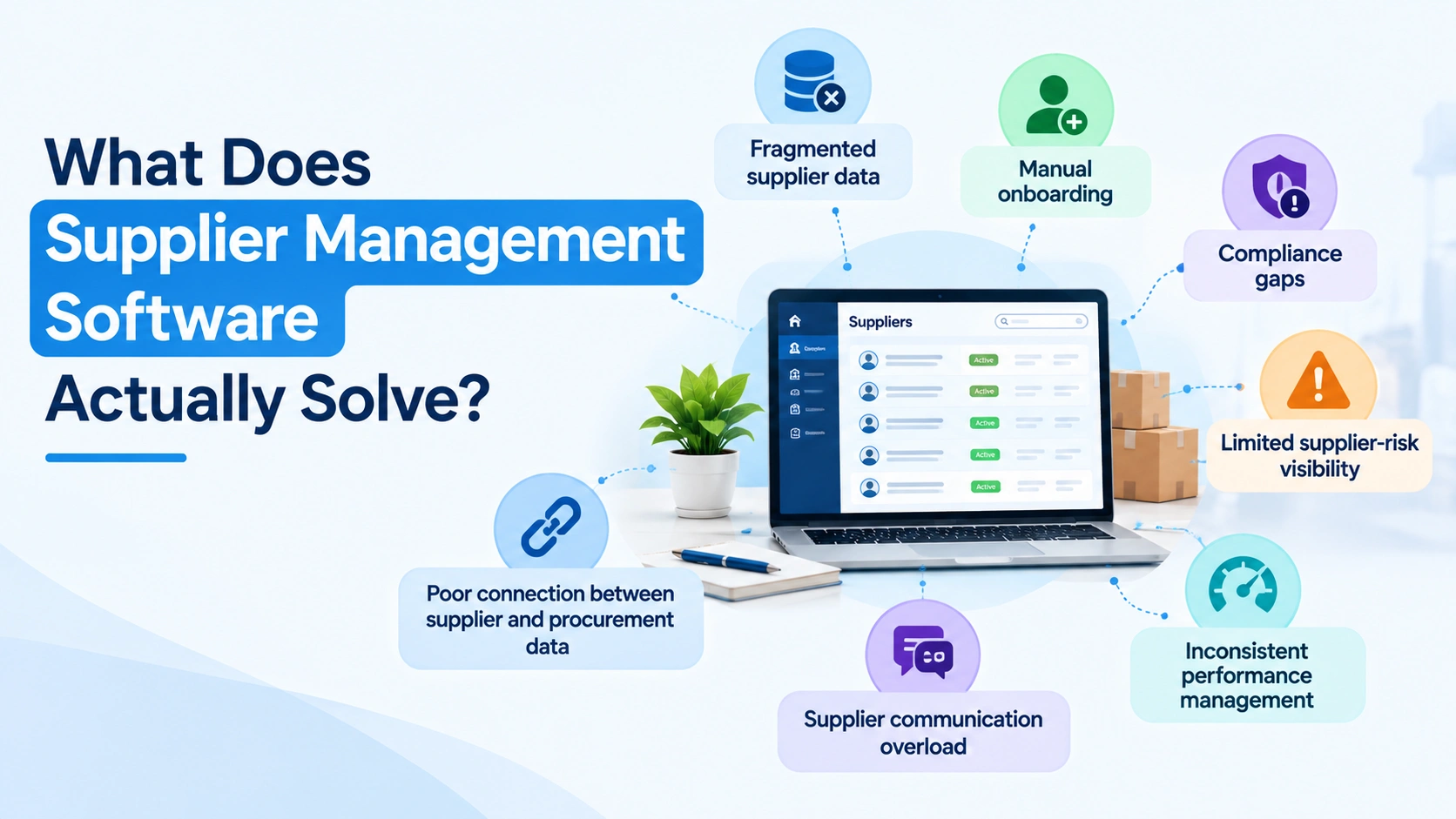
Supplier management software is generally purchased to address specific operational problems.
These can include:
Supplier information exists in multiple spreadsheets, systems or departments.
Employees spend time collecting information, checking documents and following up with suppliers.
Required supplier documents are difficult to track or renew.
Procurement knows supplier risk matters but cannot easily see or act on changing risk.
Supplier reviews depend on manual scorecards or individual teams.
Procurement spends time chasing routine information.
Supplier information is separated from sourcing, purchasing, spend or finance activity.
The purpose of software is therefore not simply to "digitize suppliers."
It is to create a more controlled supplier-management process.
A supplier does not become relevant only when someone creates a purchase order.
The relationship begins much earlier.
A typical supplier lifecycle looks like:
Supplier registration → Qualification → Approval → Onboarding → Compliance → Contracting → Purchasing → Performance → Risk monitoring → Renewal → Offboarding
A good supplier management platform should help you understand what is happening across this lifecycle.
That matters because problems rarely stay inside one stage.
For example:
Poor onboarding → incomplete supplier data → compliance issue → purchasing disruption → supplier performance problem
When those stages are disconnected, procurement sees individual problems.
When they are connected, procurement can see the supplier relationship more holistically.
Now we get to the part most buying guides get wrong.
Do not ask:
"Does the software have supplier onboarding?"
Ask:
"How well does the software handle our supplier onboarding process, and what manual work remains?"
That small change in thinking can completely change your evaluation.
Supplier onboarding is one of the first workflows you should test.
Look for:
"Show us a new supplier going from invitation to approved supplier without using a separate spreadsheet."
Then count the manual steps.
That tells you more than a feature list.
Your supplier record should provide a reliable view of the supplier.
Depending on your organization, this may include:
Ask:
"Can we maintain one reliable supplier record instead of multiple versions of supplier information?"
Also evaluate how duplicate, outdated or incomplete information is identified and managed.
Not every supplier should automatically become an approved supplier.
Qualification workflows allow procurement to assess suppliers against defined requirements.
These may include:
Can qualification requirements change depending on supplier type, category, location or risk level?
If every supplier has to follow exactly the same workflow, the system may not fit a complex procurement environment.
Compliance is one of those areas where "having the feature" and "actually controlling the process" are very different things.
Look for:
Tell the vendor:
"A supplier's mandatory document expires in 30 days. Show us exactly what happens."
You want to see the entire workflow, not just a dashboard showing a red warning.
Supplier risk is not static.
A supplier that was low risk during onboarding may become more concerning later because of:
Evaluate whether the platform supports:
"What happens after the system identifies a high-risk supplier?"
If the answer ends with "the dashboard shows it," keep asking.
The useful system is the one that connects:
Risk → Decision → Action
Manage suppliers efficiently, streamline procurement workflows, monitor vendor performance, and improve purchasing visibility with ZYNO Procurement.
Supplier performance should not depend entirely on someone's quarterly spreadsheet.
Look for support for KPIs such as:
The specific KPIs should reflect your organization.
"Can we create supplier scorecards based on the metrics that matter to our categories?"
Then ask:
"Can those performance results be connected with supplier decisions?"
That second question is often more important.
A supplier scorecard can bring multiple dimensions into one evaluation.
|
Dimension |
Example Measure |
|---|---|
|
Quality |
Defect rate |
|
Delivery |
On-time delivery |
|
Cost |
Price variance |
|
Compliance |
Compliance status |
|
Service |
Response time |
|
Risk |
Risk rating |
For example:
Do not build scorecards simply because the software allows them.
Build them around decisions.
What decision will this scorecard help procurement make?
That is the question that keeps supplier performance management useful rather than turning it into another reporting exercise.
Not every supplier should receive the same level of attention.
You may want to distinguish between:
Segmentation can help procurement focus resources where supplier relationships matter most.
A supplier portal can move routine supplier activity away from procurement employees and toward supplier self-service.
Depending on the platform, suppliers may be able to:
This can be particularly useful when procurement teams spend too much time asking suppliers for information they should be able to maintain themselves.
"What can a supplier do without contacting our procurement team?"
That question reveals the practical value of a supplier portal.
Think about the difference.
Without self-service:
Procurement asks → Supplier responds → Procurement updates spreadsheet → Someone checks it → Another follow-up happens
With a well-designed supplier workflow:
Supplier updates → System captures → Workflow validates → Procurement reviews
That is the kind of operational improvement you should look for during a demo.
Automation should be evaluated based on work removed, not the number of automation features listed on a product page.
Potential workflows include:
Ask:
"Which steps are automated?"
Then ask:
"Which steps still require human intervention?"
You want both answers.
Good procurement automation does not mean removing humans from every decision.
It means removing unnecessary manual work while keeping appropriate controls.
Supplier data becomes valuable when it helps procurement make decisions.
Your platform should ideally help answer questions such as:
Look for:
The goal isn't another dashboard.
The goal is better procurement decisions.
Supplier management becomes more useful when supplier information can be connected to spend.
For example:
Supplier + Category + Spend + Performance + Risk
is far more useful than:
Supplier name + address + contact person
Evaluate whether the platform can connect supplier information with relevant purchasing or spend information.
This can help procurement identify supplier concentration, consolidation opportunities and relationships that deserve closer attention.
Contracts should not become another isolated information source.
Depending on your requirements, evaluate visibility into:
The key question is:
"Can procurement connect the supplier relationship with the relevant contract information?"
This is one of the most important areas of your evaluation.
Your supplier management software may need to connect with:
But don't accept:
"Yes, we integrate with your ERP."
as the end of the conversation.
Ask:
An integration logo on a website is not the same thing as a working integration for your workflow.
AI is becoming increasingly relevant to procurement technology, but this is where buyers should be especially careful.
Do not ask:
"Is the platform AI-powered?"
Ask:
"What procurement work does the AI actually perform?"
Potential supplier-management AI applications can include:
Then ask:
What data does the AI use?
What can it recommend or do?
Can a person review the result?
Can decisions be audited?
What happens when the system is uncertain?
A useful AI feature should improve a real workflow.
AI should be evaluated by the work it performs, not the label attached to the software.
For a broader discussion of AI procurement technology, keep your existing AI Procurement Software Buying Guide as the dedicated resource rather than repeating that subject here.
Supplier data may include sensitive commercial and financial information.
Your evaluation should therefore include:
Ask the vendor to demonstrate how different users see different supplier information.
The platform needs to work not only for today's supplier base but also for the organization you expect to have tomorrow.
Evaluate:
The interesting question is:
"What happens when our procurement operation becomes more complex?"
At this point, you probably have a long list of features.
That is exactly where many buying processes go wrong.
| Score | Meaning |
|---|---|
| 1 | Does not meet requirement |
| 2 | Major gaps |
| 3 | Meets requirement |
| 4 | Strong fit |
| 5 | Excellent fit |
The next step is to convert your requirements into a weighted evaluation framework.
Start with a 1–5 score:
| Score | Meaning |
|---|---|
| 1 | Does not meet requirement |
| 2 | Major gaps |
| 3 | Meets requirement |
| 4 | Strong fit |
| 5 | Excellent fit |
But don't stop there.
Record the evidence.
| Requirement | Vendor Score | Evidence |
|---|---|---|
| Supplier Onboarding | Live demo | |
| Compliance Tracking | Live demo | |
| Risk Management | Configuration | |
| ERP Integration | Technical validation | |
| Supplier Portal | Supplier test | |
| Analytics | Live demo | |
| Security | Documentation | |
| Implementation | Proposal | |
| Risk | Commercial proposal |
This prevents one of the biggest problems in software buying:
A vendor receives a "5" because someone said the feature exists.
A better score is:
5 = demonstrated successfully in our workflow.
|
Criteria |
Priority |
What to Validate |
|---|---|---|
|
Supplier Onboarding |
High |
Registration, qualification and approval |
|
Supplier Data |
High |
Centralized and accurate records |
|
Compliance |
High |
Documents, expiry and alerts |
|
Supplier Risk |
High |
Assessment and action workflows |
|
Performance |
High |
KPIs and scorecards |
|
Supplier Portal |
High |
Supplier self-service |
|
Automation |
High |
Manual work eliminated |
|
Analytics |
High |
Decision-ready reporting |
|
Integration |
High |
ERP/procurement data flow |
|
Security |
High |
Access and auditability |
|
AI |
Medium/High |
Practical use cases and controls |
|
Scalability |
High |
Future growth |
|
Usability |
High |
Procurement and supplier adoption |
|
Implementation |
High |
Migration, configuration and rollout |
|
Support |
Medium/High |
Service model |
|
TCO |
High |
Full three-year cost |
|
Data Portability |
Medium |
Export and exit requirements |
You can use this framework with every shortlisted vendor:
| Criteria | Priority | What to Validate |
|---|---|---|
| Supplier Onboarding | High | Registration, qualification and approval |
| Supplier Data | High | Centralized and accurate records |
| Compliance | High | Documents, expiry and alerts |
| Supplier Risk | High | Assessment and action workflows |
| Performance | High | KPIs and scorecards |
| Supplier Portal | High | Supplier self-service |
| Automation | High | Manual work eliminated |
| Analytics | High | Decision-ready reporting |
| Integration | High | ERP/procurement data flow |
| Security | High | Access and auditability |
| AI | Medium/High | Practical use cases and controls |
| Scalability | High | Future growth |
| Usability | High | Procurement and supplier adoption |
| Implementation | High | Migration, configuration and rollout |
| Support | Medium/High | Service model |
| TCO | High | Full three-year cost |
| Data Portability | Medium | Export and exit requirements |
Tip: Weight your most important criteria rather than allowing every feature to have equal importance.
If ERP integration is mission-critical, for example, it should carry more decision weight than a feature your team may use twice a year.
A polished software demo is designed to make software look good.
Your job is to make the software prove itself.
Give every shortlisted vendor the same scenarios.
Ask the vendor to show:
Invitation → Registration → Information → Documents → Qualification → Approval → Supplier Record
Then ask:
Ask:
"What happens 30 days before expiry?"
Look for:
Ask:
"How does procurement discover the problem and what happens next?"
Look for:
Data → Alert → Review → Corrective Action → Follow-up
Ask:
"Show us the complete workflow from risk identification to procurement action."
Don't settle for a risk dashboard.
Test what happens next.
Ask:
"What happens if the supplier changes important information?"
Look for:
Don't forget this one:
"How do we get our data back if we leave?"
Ask about:
This is the question many buying teams forget.
When evaluating supplier management software, it is easy to ask:
Simplify supplier onboarding, track vendor performance, streamline procurement processes, and gain greater control over supplier relationships with ZYNO Procurement.
"How much will the software cost?"
But there is another question:
"How much is our current supplier-management process already costing us?"
The cost of a manual process can include:
Not every one of these costs will translate directly into financial savings.
But they should be considered when building the business case.
This gives you two numbers to compare:
Cost of the new system
versus
Cost and risk of maintaining the current process
That is a much more useful procurement conversation.
Comparing subscription prices is easy.
Comparing the real cost is harder.
Your total cost may include:
Software license + Implementation + Integration + Data migration + Configuration + Training + Support + Customization + Internal administration + Add-ons
That is your broader Total Cost of Ownership (TCO).
A platform with a lower subscription price may not necessarily be cheaper once implementation, integration and internal administration are included.
This is why procurement should ask for a complete commercial picture before comparing vendors.
A simple ROI formula is:
ROI = [(Total Measurable Benefits − Total Investment Cost) ÷ Total Investment Cost] × 100
Potential benefits could include:
Separate financial benefits into two categories.
Benefits that can be directly measured financially.
Benefits such as:
This makes the business case more credible when it reaches procurement leadership or finance.
If you need internal approval, don't simply present a list of software features.
Build the business case around four questions:
Document the manual processes and risks.
Identify the workflows the platform will automate, centralize or improve.
Calculate the complete TCO.
Identify measurable savings, productivity gains, risk reduction and visibility improvements.
That gives leadership something much more useful than:
"We need a supplier management system."
It gives them:
Problem → Solution → Cost → Expected value
More features do not mean better fit.
Define your requirements first.
Otherwise, the best presentation can become the winner.
A system that procurement likes but suppliers avoid creates another problem.
Validate actual data flows.
Cleaning the data should happen before or during migration.
Test the actual use case.
Subscription price is not total cost.
A feature list cannot tell you how the system behaves in your organization.
Know how your data can be retrieved before you sign.
You may notice that software vendors use supplier management and vendor management interchangeably.
In many procurement environments, the terminology overlaps.
The practical difference depends more on functionality than the label.
A supplier management platform may focus on:
A broader procurement platform may connect those activities with:
So when comparing platforms, don't ask:
"Is this supplier management or vendor management software?"
Ask:
"Does this platform cover the supplier workflows we actually need?"
You do not need to demo 15 platforms.
A practical selection process could look like:
Longlist → 5–8 vendors → 3–5 shortlisted → 2 finalists → 1 selected platform
The exact number depends on your organization.
The principle matters more:
Use the same requirements, same scoring method and same demo scenarios for every finalist.
That makes the final decision much easier to defend internally.
A successful implementation starts before the software goes live.
Identify:
Document:
Who → does what → when → using which data → requiring which approval
Map:
Supplier Management ↔ ERP ↔ Procurement ↔ Finance ↔ Analytics
Configure:
Test the actual scenarios procurement performs.
Supplier adoption matters just as much as internal adoption.
After implementation, track whether the original business problems are actually improving.
You can have a platform that checks every feature box and still choose the wrong software.
Why?
Because software fit has several dimensions.
Does it match the way your procurement team works?
Can it maintain reliable supplier information?
Can it integrate with your environment?
Will procurement, stakeholders and suppliers use it?
Can the value justify the cost and implementation effort?
The strongest supplier management software is the one that fits all five.
If your supplier management requirements extend beyond maintaining supplier records, it is worth evaluating how supplier management connects with the broader procurement process.
ZYNO Procurement brings supplier management into a broader procurement environment, with capabilities around supplier onboarding, supplier information, compliance, supplier performance and supplier collaboration.
For a buyer evaluating ZYNO, the relevant question is not simply:
"Does ZYNO have supplier management?"
It is:
"How well does ZYNO fit our supplier-management requirements?"
Use the same evaluation framework you would use for any shortlisted platform.
| Your Requirement | What to Evaluate |
|---|---|
| Supplier onboarding | How suppliers register, submit information and move through approval |
| Supplier information | How supplier records are maintained |
| Supplier compliance | How documents and compliance workflows are managed |
| Supplier performance | How procurement monitors supplier performance |
| Supplier risk | How risk information supports procurement decisions |
| Supplier collaboration | How suppliers interact with procurement |
| Supplier portal | What suppliers can manage through self-service |
| Procurement connection | How supplier management connects with procurement workflows |
| Spend visibility | How supplier information can connect with procurement insights |
ZYNO's supplier-management approach can be evaluated as part of the broader procurement workflow:
Supplier → Onboarding → Qualification → Approval → Purchasing → Performance → Spend → Risk
The important part is not simply that these capabilities exist.
The important question is whether they fit your organization's actual supplier-management process.
Don't rely on a generic demo.
Bring your own process.
Show the vendor:
Then evaluate the workflow against the same criteria you used for other vendors.
That makes the conversation about your procurement requirements rather than simply a product presentation.
Book a ZYNO Procurement demo and bring your real supplier workflows, requirements and integration needs to the conversation.
Before selecting a platform, make sure you have evaluated:
Simplify supplier onboarding, track vendor performance, streamline procurement processes, and gain greater control over supplier relationships with ZYNO Procurement.
Supplier management software is a platform used to centralize supplier information and manage supplier lifecycle activities such as onboarding, qualification, compliance, risk, performance and supplier collaboration.
The most important capabilities typically include supplier onboarding, supplier information management, qualification, compliance management, supplier risk management, supplier performance management, supplier portals, workflow automation, analytics, integrations and security.
Choose supplier management software by evaluating your supplier lifecycle, business requirements, data needs, workflows, integrations, supplier experience, security, implementation requirements, total cost of ownership and expected ROI. Then validate critical requirements through real workflow demonstrations.
Supplier lifecycle management is the process of managing a supplier from registration and qualification through onboarding, compliance, purchasing, performance monitoring, risk management, renewal and eventual offboarding.
The terms are often used interchangeably. The functionality matters more than the terminology. Evaluate whether the platform supports the supplier information, onboarding, compliance, risk, performance and collaboration workflows your organization requires.
Ask vendors to demonstrate your actual workflows, explain integration and data flows, show how supplier compliance and risk are managed, explain implementation and migration requirements, provide complete TCO information, and demonstrate what suppliers can do through the platform.
Supplier management software pricing varies according to suppliers, users, modules, integrations, implementation, migration, customization, training and support. Buyers should calculate total cost of ownership rather than comparing subscription prices alone.
Supplier management software can be worthwhile when manual supplier processes create significant administrative effort, data-quality problems, compliance gaps, supplier-risk challenges or limited visibility. The business case should be based on your organization's measurable costs and expected benefits.
AI can assist with supplier data processing, document analysis, classification, risk insights, supplier recommendations, anomaly detection and supplier-performance analysis. Buyers should evaluate AI according to the actual procurement work it performs, the information it uses and the level of human oversight and auditability available.
A strong demo should show real workflows such as supplier onboarding, qualification, compliance-document expiry, supplier risk escalation, performance management, supplier information changes and integration with existing procurement or ERP systems.
Buying supplier management software should not end with:
"Vendor A has more features."
It should end with:
"Vendor A fits our supplier lifecycle, solves our biggest operational problems, integrates with our environment, works for our suppliers and gives us a defensible business case."
That is a much stronger procurement decision.
Before signing, test the workflows.
Before comparing prices, calculate TCO.
Before believing an AI claim, test the use case.
Before approving an integration, validate the data flow.
Before selecting a supplier platform, ask the people who will actually use it.
And most importantly:
Do not buy the software that looks best in the demo. Buy the platform that performs best against your real procurement requirements.
If supplier onboarding, compliance, supplier performance, risk and collaboration are still spread across emails, spreadsheets or disconnected systems, it may be time to evaluate a more connected approach.
See how ZYNO can fit your supplier-management workflow.
Bring your real supplier process, requirements and integration needs to a ZYNO Procurement demo and evaluate the platform against the criteria in this guide.
Procurement Software Trends in 2026: What to Expect
Read More →
Why E-Procurement Outperforms Traditional ERP in Modern Procurement
Read More →
Top Procurement Software in India: 12 Best Options for 2026
Read More →
Best Procurement Software Companies in Kuwait (2025)
Read More →
5 Best Procurement Software in Africa for Enterprises & SMEs (2026 Guide)
Read More →
Best Procurement Software in Nigeria 2026 | Top 5 Picks
Read More →
Best Procurement Software Providers in USA (2025): How AI is Transforming the Future
Read More →
10 Best Procurement Software Providers in Thailand for Streamlined Supply Chain Management
Read More →
Top 10 Cloud-Based Procurement Solutions in Portugal for Businesses in 2025
Read More →
Top 10 Procurement Software Providers in Switzerland 2026: Streamlining Sourcing and Supplier Management
Read More →
What Makes ZYNO Procurement Different from Other Oil & Gas Procurement Software
Read More →
The Digital Transformation of Logistics Procurement in the Middle East
Read More →
A Step by Step Guide to Procurement Management Software for Modern Enterprises
Read More →
Sourcing and Procurement: What is the Difference and Why It Matters
Read More →Difference Between Procurement and Supply Chain Management
Read More →
What Is Procurement Software and Why Do Modern Businesses Need It?
Read More →
Best Procurement Management Software to Automate ERP Process
Read More →
Direct vs Indirect Procurement: Key Differences, Examples & Uses (2026)
Read More →
Smart procurement strategies for cost optimization & risk management
Read More →
What Is Procurement? Everything You Need to Know (Types, Process & SAP)
Read More →Beyond Cost-Cutting: How Procurement Drives Margin Expansion in 2026
Read More →
Direct Procurement: Process, Examples, and When to Use It
Read More →
What Are the 5 Types of E-Procurement? A Complete Guide for Businesses
Read More →
Which Procurement Management Software Is Best? Top Tools Compared for 2026
Read More →
Top 8 Coupa Alternatives to Explore in 2026
Read More →
Looking to Replace Coupa? Discover the Best Alternatives Like ZYNO Procurement
Read More →
How Does Procurement Software Work? A Complete Guide
Read More →
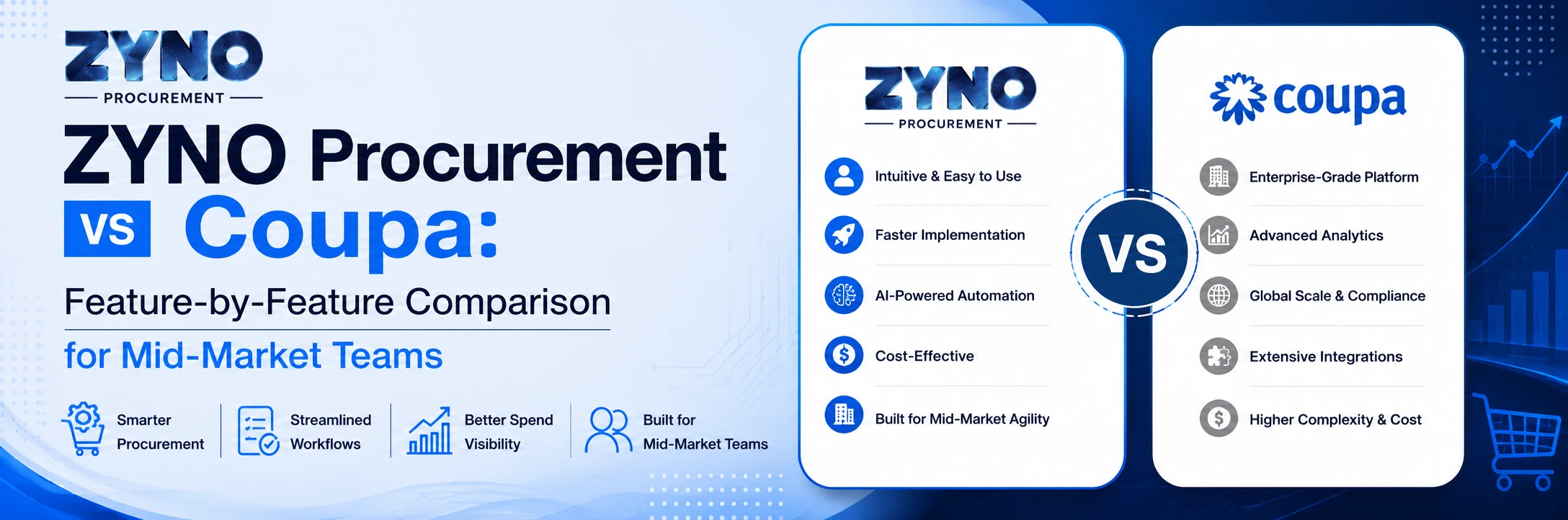
ZYNO Procurement vs Coupa: Best Procurement Software Comparison for Mid-Market Teams
Read More →
Best SAP ARIBA Procurement Alternatives in 2026
Read More →
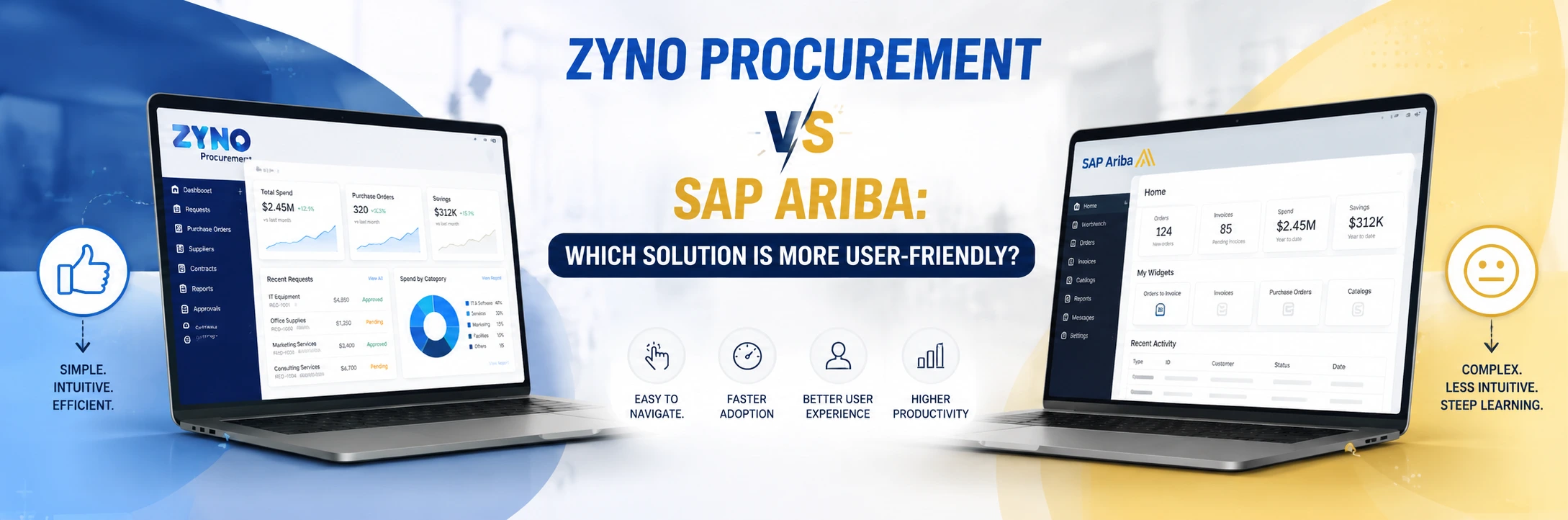
ZYNO Procurement vs SAP Ariba: Which Solution Is More User-Friendly?
Read More →
AI-Powered Procurement Management Software for Fast, Connected, and Visible Workflows in Dubai
Read More →
What is Vendor Management? Complete Guide to Vendor Management Software, Systems, and Processes
Read More →
Best Procurement Management Software In Kenya
Read More →
6 SAP Ariba Alternatives for Mid-Market Businesses in 2026
Read More →
Top E-Procurement Solutions for B2B Organizations (2026)
Read More →
Quotation Format: Free Templates + Complete Guide (2026)
Read More →
Cost Control Software: Features, Benefits & Performance Guide for 2026
Read More →
Procurement Workflow: Steps, Stages, and Real Examples
Read More →
Top 10 Zycus Alternatives for Procurement Teams in 2026
Read More →
Best Precoro Alternative for Purchase Requisition and Procurement
Read More →
Top AI Procurement Tools in 2026
Read More →
Best Tools for Supplier Risk Management
Read More →
FEFO vs FIFO vs LIFO: Differences, Benefits & Which Inventory Method Is Best?
Read More →
AI Procurement Software: Features, Benefits, Use Cases & How to Choose
Read More →
Best AI Tools for Supply Chain Procurement
Read More →
Procurement Risk Management
Read More →
Still Using Excel for Procurement? Read This Before It's Too Late
Read More →
Best RFP Software in 2026: Top Tools Compared for Faster Proposal Responses
Read More →
What Is Procure-to-Pay (P2P)? A Complete Guide
Read More →
Complete Procurement Workflow Guide for Modern Businesses
Read More →
Complete Guide to E-Procurement Solutions for B2B Organizations
Read More →
Cost Control Software Comparison Guide: Features, Pricing & Benefits
Read More →
Purchase Order Tracking: How to Manage Every PO Without the Chaos
Read More →
Inventory Management: What It Is, How It Works and Why It Matters
Read More →
Top 10 Procurement Software Tools for Purchasing Automation in 2026
Read More →
Agentic AI Procurement Platforms and the Future of Strategic Sourcing
Read More →
AI Spend Analytics Software for Procurement Leaders
Read More →
From Prompt to Procurement: How AI Is Transforming Enterprise Purchasing
Read More →
ZYNO Procurement vs IBM Procure-to-Pay Automation
Read More →
ZYNO Procurement vs Infor Nexus: Which Procure-to-Pay Platform Fits Your Team?
Read More →
AI-Powered Procurement Software in 2026: Top 6 Platforms That Actually Deliver ROI
Read More →
Contract Management Software Buyer's Guide: Features, Costs & Top Picks
Read More →
Top 10 Procure to Pay Software Companies in India 2026
Read More →
10 Best Vendor Management Software in India (2026): Features, Benefits & Comparison
Read More →
How Machine Learning and AI Are Transforming Procurement: A Strategic Overview
Read More →
What Is Procurement Software for GP? Features, Benefits and Best Solutions for Businesses
Read More →
What Procurement Software Do Mid-Market Companies Use Instead of SAP Ariba or Coupa?
Read More →
Prompt-Based Procurement Software for Kenyan Businesses
Read More →
Project Management Software: A Complete Guide to Streamline Business Operations and Procurement Processes
Read More →
SAP Ariba vs ZYNO Procurement: Complete Feature Comparison (2026)
Read More →
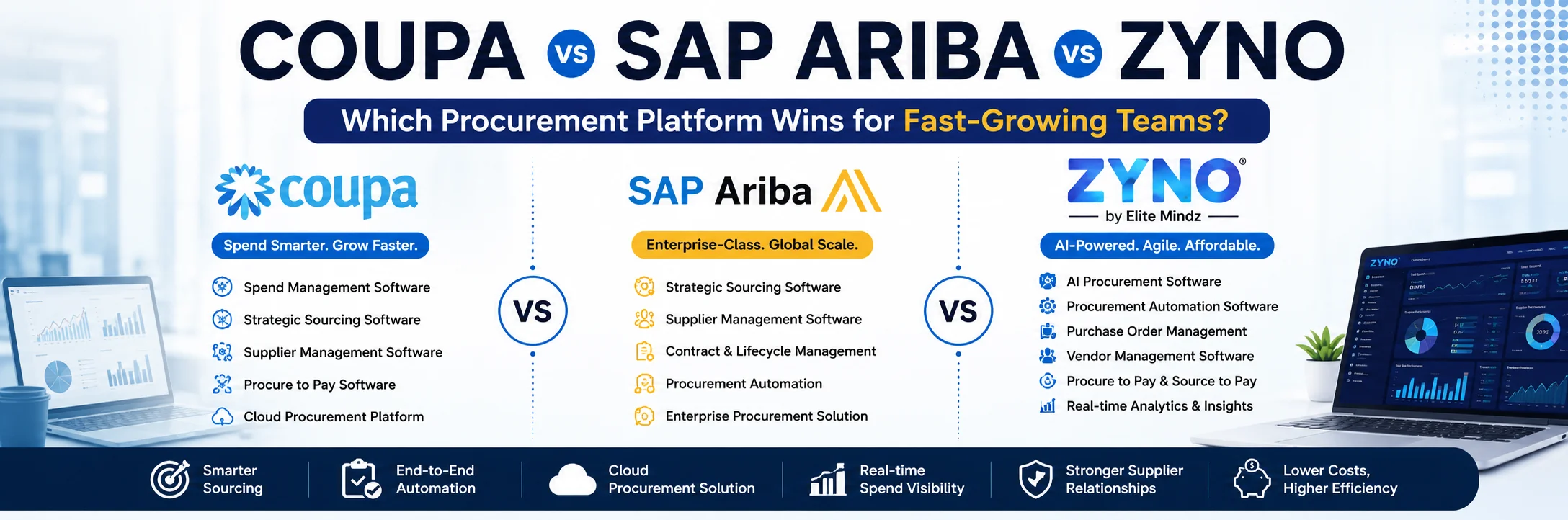
Coupa vs SAP Ariba vs ZYNO: Which Procurement Platform Wins for Fast-Growing Teams?
Read More →
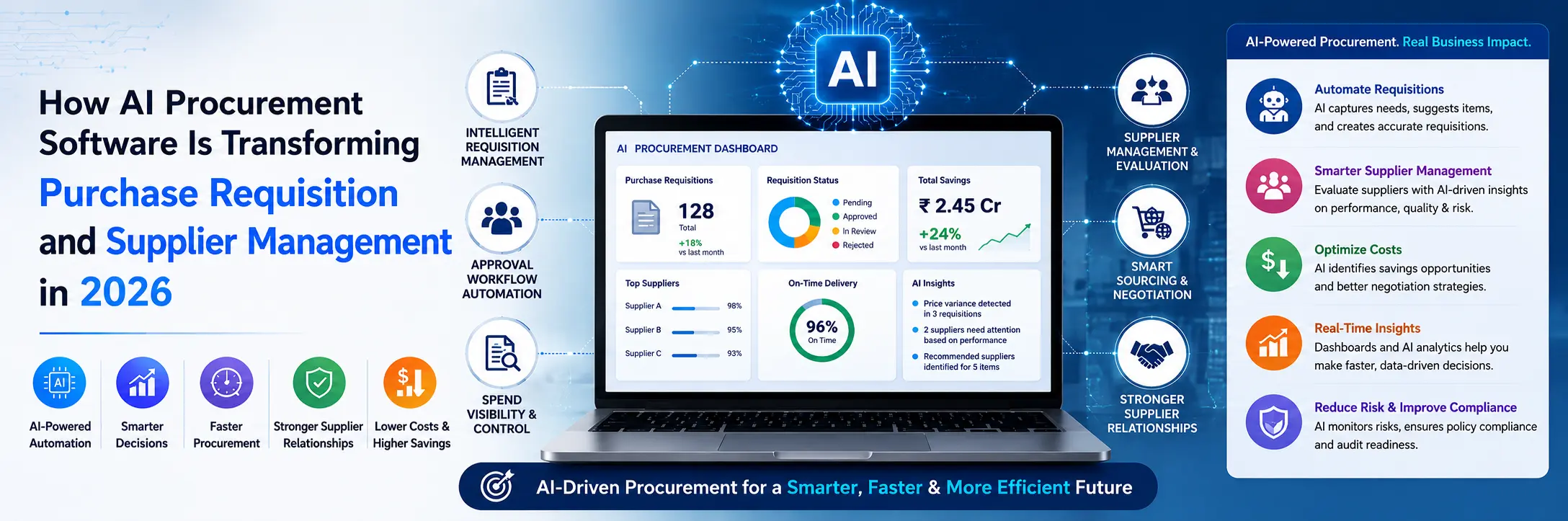
How AI Procurement Software Is Transforming Purchase Requisition and Supplier Management in 2026
Read More →
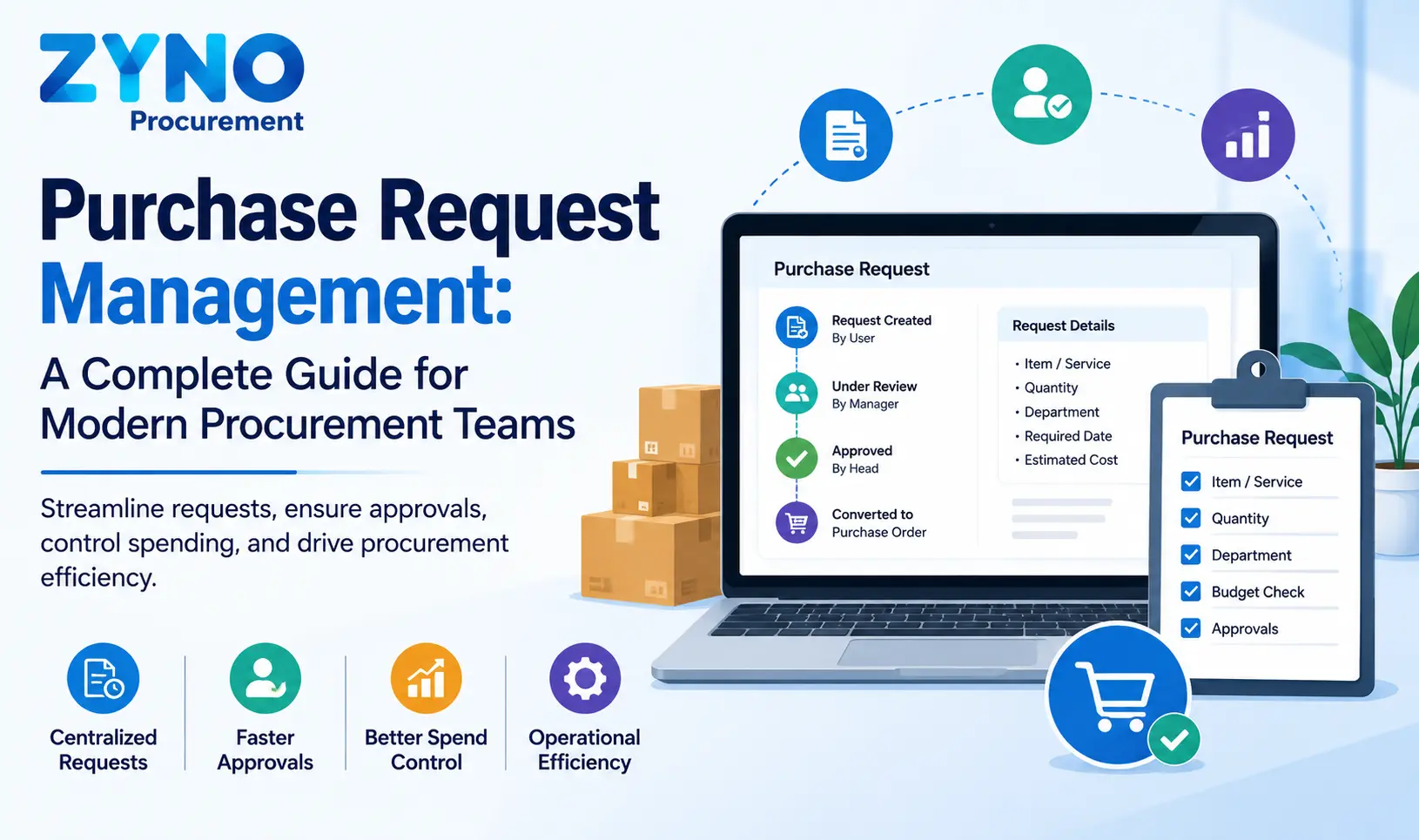
Purchase Request Management: A Complete Guide for Modern Procurement Teams
Read More →
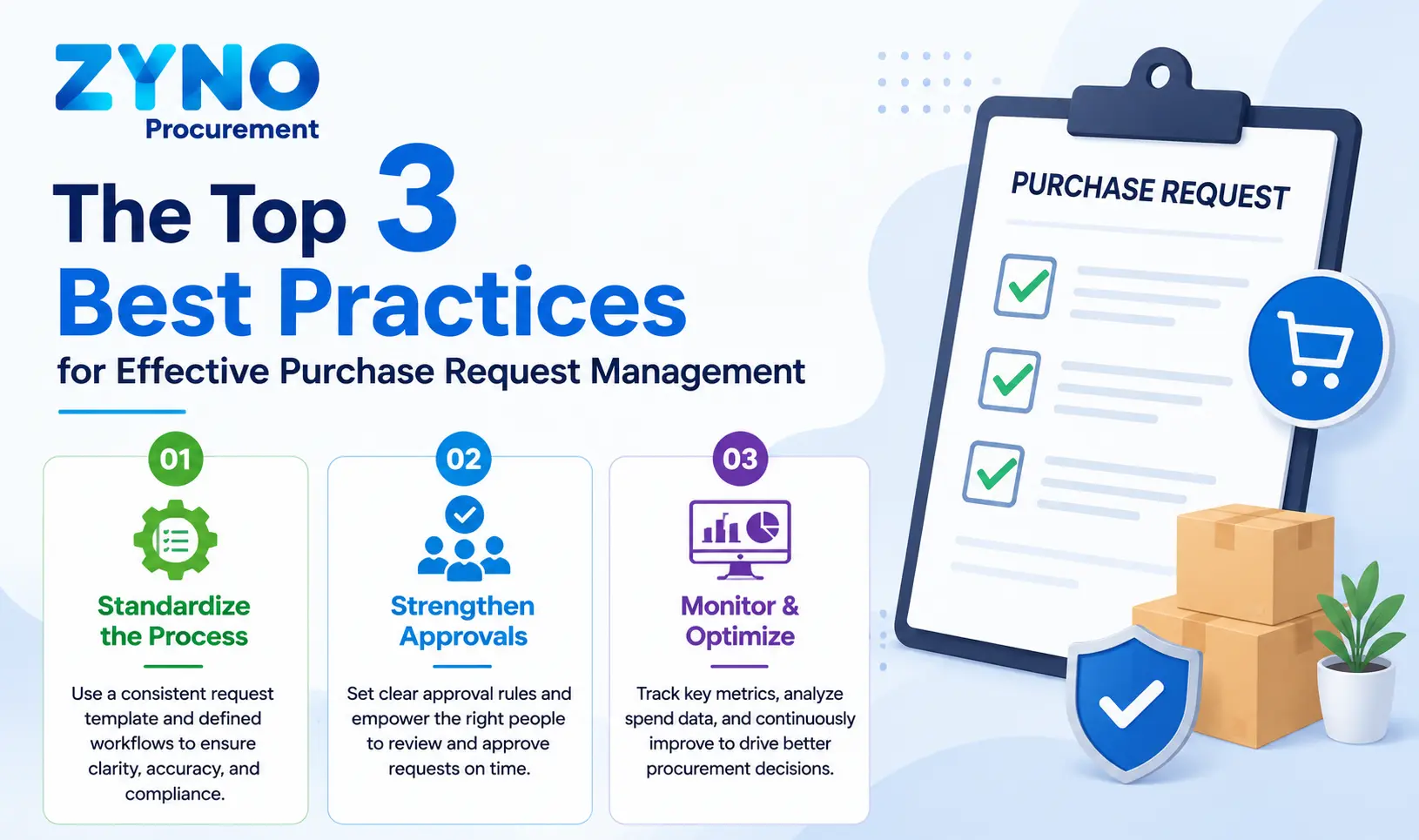
The Top 3 Best Practices for Effective Purchase Request Management
Read More →
What Is Purchase Order Automation? How to Automate Purchase Order Processing
Read More →
5 Common Purchase Request Mistakes and How to Avoid Them
Read More →
What is Supplier Relationship Management in Procurement? A Complete Guide
Read More →
What is Strategic Vendor Management? A Complete Guide for Modern Procurement
Read More →
What Are Inventory Control Methods? Complete Guide to Types, Techniques, Systems, & Benefits
Read More →
Inventory Audit Checklist: Steps, Process & Best Practices
Read More →
Warehouse Inventory Management: Best Practices for 2026
Read More →
Treasury Management System (TMS): A Complete Guide for Modern Corporates
Read More →
What is Portfolio Management Services (PMS) and What Are Its Benefits?
Read More →
Generative AI Procurement Software Solution: The Future of Intelligent Procurement
Read More →
Top Contract Management Software Companies in Ethiopia: Features, Benefits & Best Procurement Solutions
Read More →
AI Procurement Software: Complete Guide to Intelligent, Generative AI & Machine Learning Procurement Solutions
Read More →
Top SAP alternatives for small, midsize, and enterprise businesses
Read More →
Best RFP Software in 2026: Top Solutions for Smarter Procurement and Proposal Management
Read More →
GST on Purchase: Complete Guide to GST on Purchases in India
Read More →
Procurement Software UAE: Complete Guide to Choosing the Best Procurement Solution
Read More →
Supply Chain Procurement: Everything You Need to Know
Read More →
Top 10 Oracle Procurement Alternatives for Businesses in 2026
Read More →
Quotation Software vs Excel: Which Is Better for Businesses in 2026?
Read More →
Contract Management Software Buyer's Guide: Features, Pricing & How to Choose
Read More →
How to Identify the Right Vendor: 10 Simple Steps
Read More →
Top 10 Automated PO Generation Tools in 2026: Best Purchase Order Software with AI Capabilities
Read More →
How to Generate a PO Automatically in SAP: Step-by-Step Guide
Read More →
What Is the Best Budget-Friendly Procurement Software With Vendor Onboarding for Indian SMEs?
Read More →
How to Generate a PO Automatically in SAP: Step-by-Step Guide
Read More →
How to Solve Invoice Mismatches: 10 Real Ways to Fix Invoice Discrepancies
Read More →
Top 10 Vendor Onboarding Tools for Businesses in 2026: Features, Process & How to Choose
Read More →
Vendor Comparison & Supplier Intelligence: How AI Helps Businesses Choose the Right Vendor
Read More →
How to Choose the Right Procurement Management Software in 2026 (Complete Buyer's Guide)
Read More →
How to Reduce Procurement Costs: 18 Practical Strategies That Actually Work
Read More →
How to Choose the Right Procurement Management Software in 2026 (Complete Buyer's Guide)
Read More →
How to Calculate Procurement Software ROI: Formula, Example & Calculator
Read More →
Procurement Software Evaluation Checklist: 35 Criteria for Choosing the Right Platform
Read More →
How Businesses Can Improve Vendor Performance and Manage Supplier Risk
Read More →
Procure-to-Pay Process: Steps, Challenges & How to Automate It
Read More →
Purchase Requisition vs Purchase Order: What’s the Difference?
Read More →
10 Source-to-Pay Software Platforms to Consider in 2026
Read More →
Supplier Management Software Buying Guide: How to Choose the Right Platform
Read More →
Procurement Automation Guide: How It Works, What to Automate & How to Implement It
Read More →Partner with ZYNO by Elite Mindz to revolutionize how your business works. Fill out the form, and we’ll reach out with AI-powered solutions made just for you.
We use browser cookies to ensure you get the best experience on our website. Learn more
The form was submitted successfully!