Procurement Software Trends in 2026: What to Expect
Read More →

×
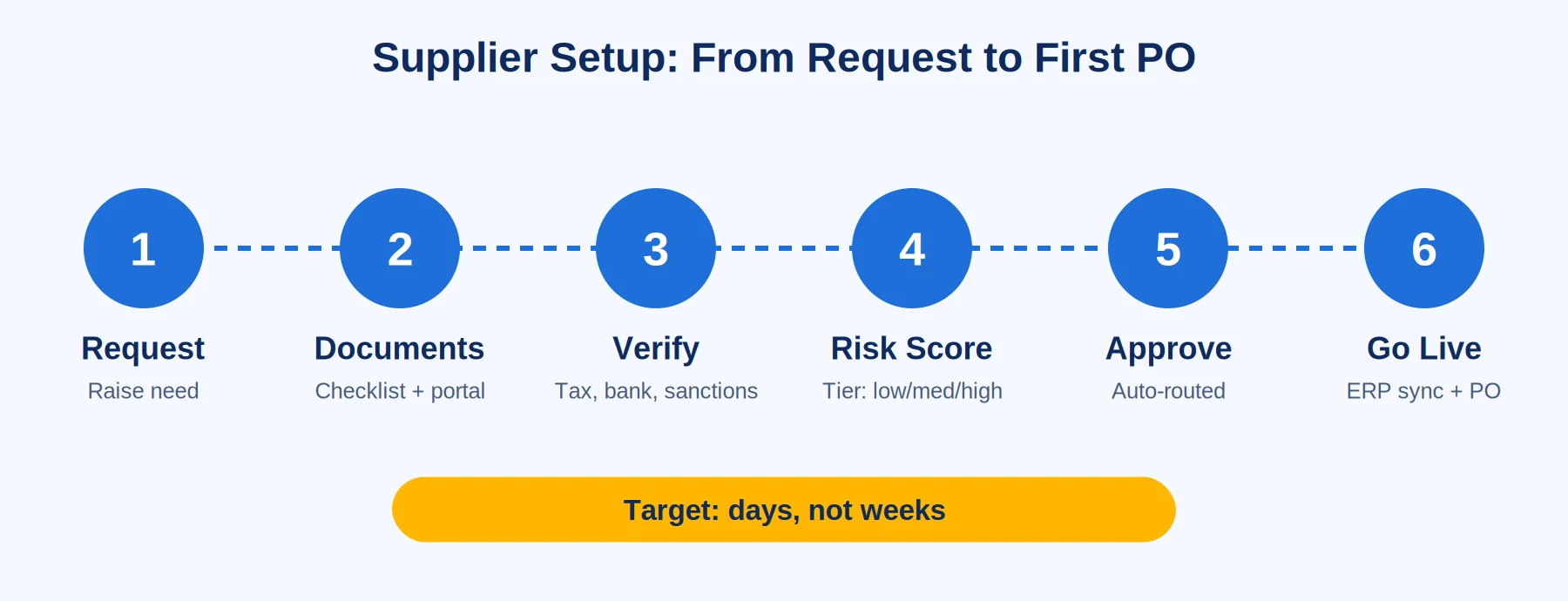
Strong supplier setup follows ten steps: standardize the workflow, tier suppliers by risk, share a document checklist, use a self-service portal, verify every detail, assess compliance early, automate approvals, integrate with ERP, welcome partners clearly, and revalidate regularly. Together, they cut approval time, reduce fraud, and keep supplier data clean.
Businesses using ZYNO Books cut accounting time by 70% and stay 100% ZATCA-compliant — automatically.
Every business depends on outside partners: raw material suppliers, logistics providers, IT service firms, contractors, consultants. The moment you sign with one of them, a clock starts ticking. How smoothly that partner gets set up in your systems decides how quickly they deliver, how safely you operate, and how much time your own team wastes on chasing paperwork.
Most companies still treat this stage as a formality: collect a few documents over email, add the supplier to a spreadsheet, and hope for the best. In 2026, with tighter regulations, rising supply chain risk, and finance teams under pressure to cut costs, that approach no longer works.
This guide walks through ten proven practices that procurement, finance, and operations teams can use to bring new suppliers on board faster, safer, and with far fewer errors.

Before the practices, a quick look at what is at stake.
A structured approach fixes all four problems at once.
The biggest source of delay is confusion. If every department collects different documents in a different order, no one knows who owns what.
Streamline vendor registration, verification, approvals, document management, and supplier collaboration with ZYNO Procurement.
Start by mapping the full journey from the first request to the first purchase order. Decide:
Put this in writing and share it with procurement Software, finance, legal, and the requesting teams. A single documented workflow removes guesswork and makes every future supplier experience consistent.

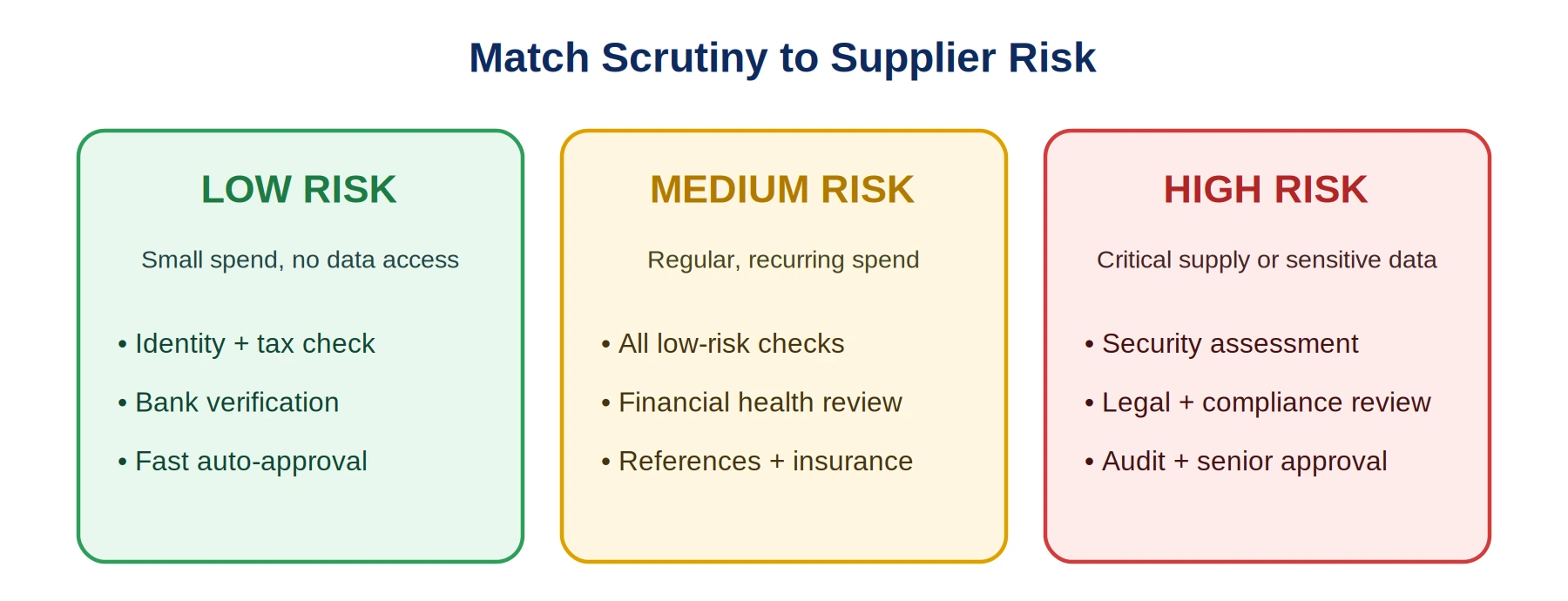
Not every partner deserves the same level of scrutiny. A stationery supplier with a small yearly spend does not need the same checks as a subcontractor handling sensitive data or a manufacturer supplying critical components.
Create tiers, for example:
Tiering keeps the process light where it can be and strict where it must be. It also stops your team from burning time on low-impact checks.
Half of all delays come from incomplete submissions that bounce back and forth. Avoid this by giving every new supplier a clear checklist on day one.
A typical checklist includes:
Explain the accepted file formats, size limits, and validity requirements. The clearer the request, the fewer the revisions.
Email threads and shared sheets are where information goes to get lost. A dedicated supplier portal lets partners fill in their own details, upload documents, track their status, and update information later, without your team retyping anything.
The benefits are immediate:
Self-service also scales. Whether you add five suppliers a month or five hundred, the effort on your side stays manageable.
Collecting a document is not the same as validating it. A forged certificate or a mismatched bank account can slip through if nobody actually checks.
Build verification into the workflow:
Automated validation catches mistakes in seconds that a manual review might miss entirely, and it creates a defensible audit trail.
Compliance problems are far cheaper to prevent than to fix. Before a supplier is approved, evaluate the areas that could hurt you later:
Document the findings and score each partner. A simple risk score helps decision makers compare options objectively.
Simplify purchasing workflows, vendor collaboration, approvals, purchase orders, and payments with ZYNO Procurement's AI-powered Procure-to-Pay solution.
Approvals are where many processes stall. A request sits in someone's inbox, nobody follows up, and a week disappears.
Use automated routing so that every request goes to the right approver based on category, spend, or risk level. Add:
This keeps things moving and removes the awkward manual chasing that frustrates both internal teams and suppliers.
If the supplier master data lives in one place and your purchasing and payment systems live in another, you are inviting duplicates, mismatches, and reconciliation pain.
Connect your onboarding workflow with:
Once approved, a partner's verified record should flow automatically into every system that needs it. One source of truth means cleaner data, faster payments, and easier audits.
An approved partner still needs to know how to work with you. Many early problems come from unclear expectations, not bad intent.
Send a short welcome package that covers:
A friendly, well-organized start builds trust and sets the tone for a long relationship. Suppliers who feel respected from the beginning tend to prioritize your orders.
The work does not end at approval. Documents expire, finances change, and risk profiles shift over time.
Set up ongoing management that includes:
Treat the initial setup as the foundation of a continuous relationship, not a one-time event.
Even well-intentioned teams stumble. Watch out for these pitfalls:
You cannot improve what you do not track. Monitor a few simple metrics:
Review these monthly. Small improvements in each add up to big gains in speed and control.
If your current process is mostly manual, you do not need to fix everything at once. Try this sequence:
A strong supplier setup process protects your business, speeds up delivery, and builds partnerships that last. The ten practices above, from a standardized workflow and risk-based tiers to portal-driven submissions, automated verification, system integration, and continuous monitoring, give you a practical blueprint you can apply right away.
Manage vendors, streamline procurement workflows, automate approvals, and improve purchasing visibility with ZYNO Procurement.
In 2026, the companies that win will be the ones that make it easy for good suppliers to join, and hard for risky ones to slip through. Start with one or two changes this month, measure the impact, and build from there.
1. How long should it take to bring a new supplier on board?
For low-risk partners with a digital process, a few working days is realistic. Higher-risk or complex partners, such as those handling sensitive data or supplying critical components, may need two to four weeks because of deeper verification, legal review, and security checks. The biggest factor is not the checks themselves but how quickly documents are submitted and approvals are given. Automated reminders and a self-service portal can cut the timeline dramatically.
2. What documents are most commonly required?
The usual essentials are business registration or incorporation proof, tax IDs such as GST and PAN, bank account proof like a cancelled cheque, relevant licenses, insurance certificates, and signed agreements including NDAs and a code of conduct. Depending on the category, you may also need quality certifications like ISO, MSME certificates, or data protection policies. Share this checklist on day one so suppliers can submit everything in a single go.
3. Can small businesses use the same approach?
Yes. Smaller teams do not need expensive software to begin with. Start with a standard checklist, a shared form, and a simple approval sequence, then move to automation as the number of suppliers grows. The principles stay the same: collect clean data, verify it, assess risk, and keep records updated. Only the tools change with scale.
4. How often should supplier data be reviewed?
Critical partners should be reviewed at least once a year, and high-spend or high-risk partners can be reviewed every six months. For everyone else, automated alerts for expiring documents such as licenses, insurance, and certifications work better than a fixed calendar. Bank details and tax information should be revalidated whenever a change is requested.
5. Does automation replace human judgment?
No. Automation handles the repetitive work: collecting documents, matching data, running verification checks, and sending reminders. Your team still makes the decisions that need context, such as how much risk is acceptable, whether to negotiate terms, or when to escalate a concern. The best results come from using automation to free people for relationship building and strategic thinking.
6. What are the biggest risks of a poorly managed setup process?
The most common risks are payment fraud through fake or altered bank details, compliance penalties from unverified suppliers, duplicate records that cause double payments, and delivery delays from unclear expectations. Data security is another concern when partners get system access without proper checks. A structured process with verification and approval controls reduces all of these.
7. Who should own the process inside a company?
Procurement usually leads it, but it works best as a shared responsibility. Finance validates bank and tax details, legal reviews contracts, IT or security checks data access, and the requesting department confirms the business need. What matters is that one team is clearly accountable for the overall workflow and that every approver knows their role and deadline.
8. How can we reduce the time suppliers take to submit documents?
Give them a clear checklist upfront, with accepted formats and validity rules. Use a self-service portal where they can upload files and track their status, and send automatic reminders for pending items. Most delays happen because suppliers are unsure what is needed, so clarity matters more than pressure.
9. What is the difference between supplier setup and supplier management?
Supplier setup is the initial stage where a new partner is verified, assessed, approved, and added to your systems. Supplier management covers everything after that: performance tracking, contract renewals, periodic revalidation, relationship reviews, and eventual offboarding. Strong setup makes management far easier because the data is accurate from the start.
10. How do we verify bank details safely?
Never rely on emailed bank letters alone. Use penny-drop verification or a bank account validation service to confirm that the account exists and that the account holder's name matches the registered business name. Require a call-back or secondary approval before any change to bank details is accepted, since fraudsters often target these requests.
11. Should we assess every supplier for risk?
Yes, but not to the same depth. A tiered approach works best. Low-spend, low-impact suppliers need only basic identity, tax, and bank checks. Medium-risk partners need financial and reference reviews as well. High-risk partners, such as those with data access or critical supply roles, need security assessments, legal review, and sometimes on-site audits.
12. What should be included in a welcome package for new suppliers?
Include key contact names, instructions for submitting purchase order acknowledgments and invoices, payment terms and the usual payment cycle, quality and delivery standards, reporting requirements, and a clear escalation path for disputes. A short, friendly guide prevents early misunderstandings and helps the supplier start delivering without confusion.
13. Which metrics show that the process is working?
Track the average time to approve a new supplier, the first-time-right rate for submissions, the percentage of suppliers with complete and valid documents, the number of duplicate or inactive records, payment errors linked to wrong supplier data, and supplier satisfaction with the experience. Review them monthly and look for trends, not just single numbers.
14. How does integration with ERP and finance systems help?
Once a supplier is approved, their verified details can flow automatically into your ERP, procurement, and payment systems. This removes manual re-entry, prevents mismatched records, speeds up purchase orders and payments, and gives auditors a single reliable source of truth. Without integration, teams end up maintaining the same data in several places, which leads to errors.
Procurement Software Trends in 2026: What to Expect
Read More →
Why E-Procurement Outperforms Traditional ERP in Modern Procurement
Read More →
Top Procurement Software in India: 12 Best Options for 2026
Read More →
Best Procurement Software Companies in Kuwait (2025)
Read More →
5 Best Procurement Software in Africa for Enterprises & SMEs (2026 Guide)
Read More →
Best Procurement Software in Nigeria 2026 | Top 5 Picks
Read More →
Best Procurement Software Providers in USA (2025): How AI is Transforming the Future
Read More →
10 Best Procurement Software Providers in Thailand for Streamlined Supply Chain Management
Read More →
Top 10 Cloud-Based Procurement Solutions in Portugal for Businesses in 2025
Read More →
Top 10 Procurement Software Providers in Switzerland 2026: Streamlining Sourcing and Supplier Management
Read More →
What Makes ZYNO Procurement Different from Other Oil & Gas Procurement Software
Read More →
The Digital Transformation of Logistics Procurement in the Middle East
Read More →
A Step by Step Guide to Procurement Management Software for Modern Enterprises
Read More →
Sourcing and Procurement: What is the Difference and Why It Matters
Read More →Difference Between Procurement and Supply Chain Management
Read More →
What Is Procurement Software and Why Do Modern Businesses Need It?
Read More →
Best Procurement Management Software to Automate ERP Process
Read More →
Direct vs Indirect Procurement: Key Differences, Examples & Uses (2026)
Read More →
Smart procurement strategies for cost optimization & risk management
Read More →
What Is Procurement? Everything You Need to Know (Types, Process & SAP)
Read More →Beyond Cost-Cutting: How Procurement Drives Margin Expansion in 2026
Read More →
Direct Procurement: Process, Examples, and When to Use It
Read More →
What Are the 5 Types of E-Procurement? A Complete Guide for Businesses
Read More →
Which Procurement Management Software Is Best? Top Tools Compared for 2026
Read More →
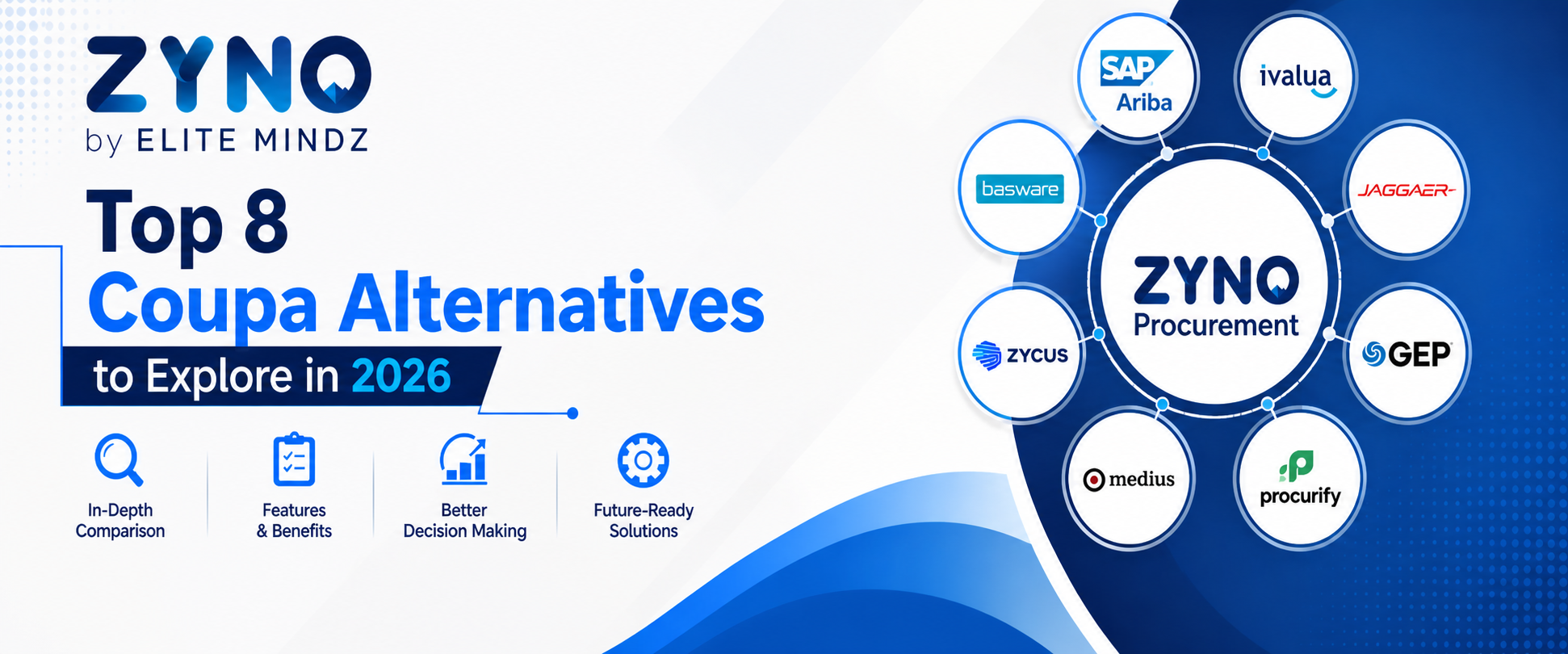
Top 8 Coupa Alternatives to Explore in 2026
Read More →
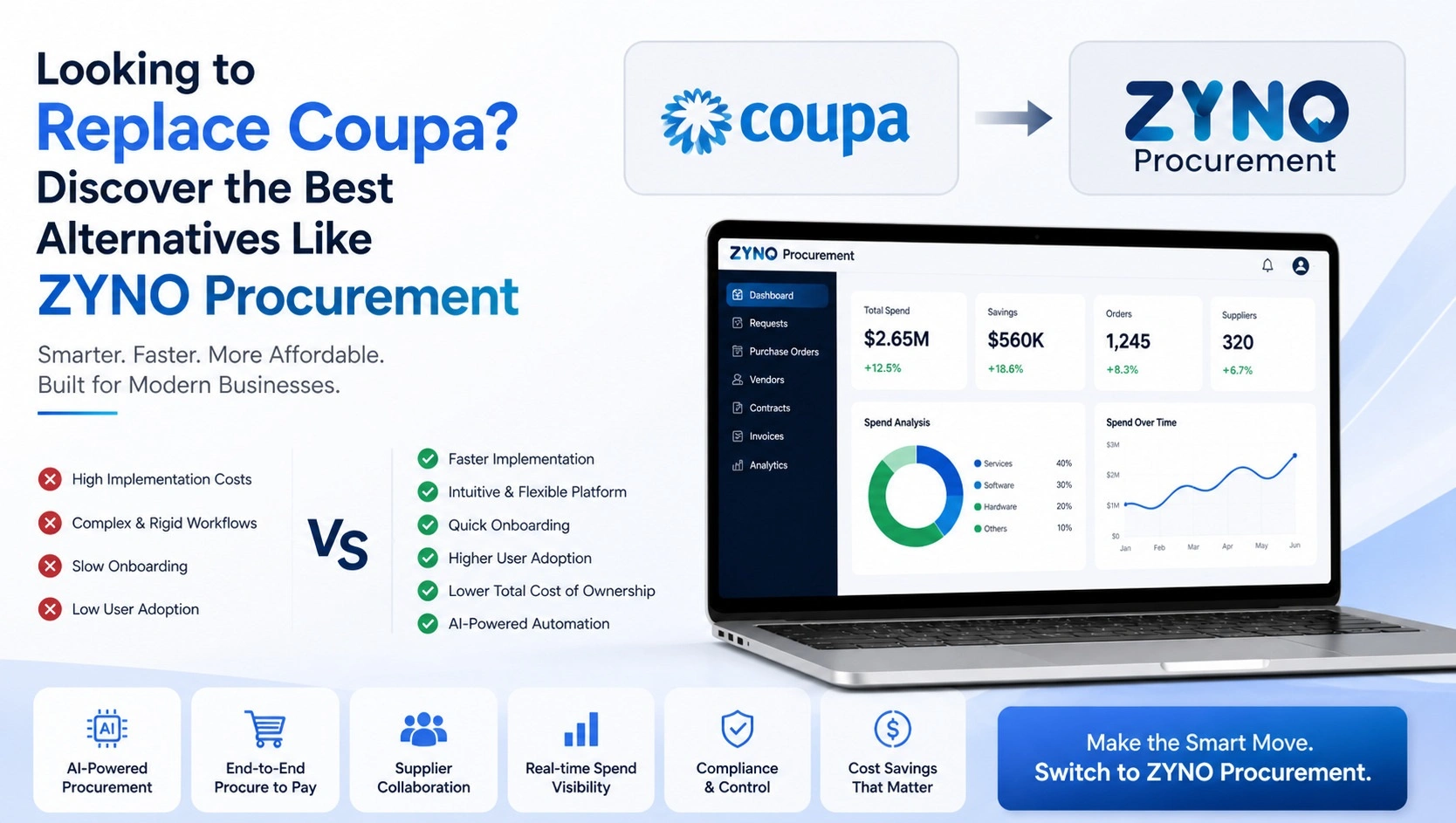
Looking to Replace Coupa? Discover the Best Alternatives Like ZYNO Procurement
Read More →
How Does Procurement Software Work? A Complete Guide
Read More →
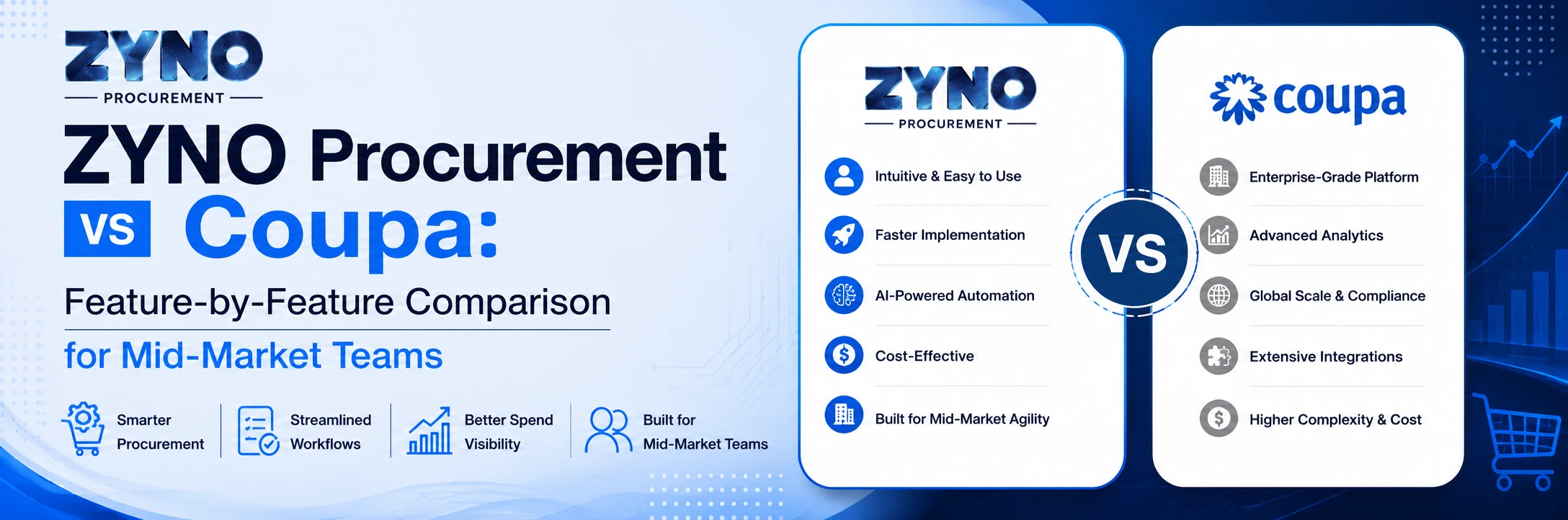
ZYNO Procurement vs Coupa: Best Procurement Software Comparison for Mid-Market Teams
Read More →
Best SAP ARIBA Procurement Alternatives in 2026
Read More →
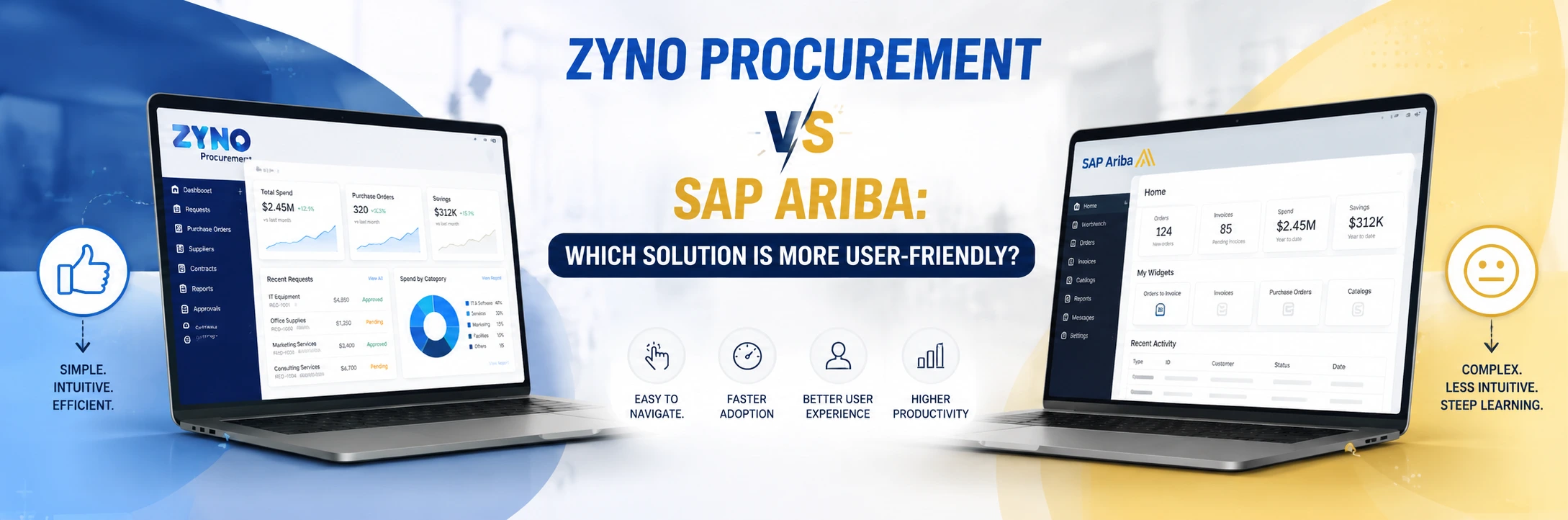
ZYNO Procurement vs SAP Ariba: Which Solution Is More User-Friendly?
Read More →
AI-Powered Procurement Management Software for Fast, Connected, and Visible Workflows in Dubai
Read More →
What is Vendor Management? Complete Guide to Vendor Management Software, Systems, and Processes
Read More →
Best Procurement Management Software In Kenya
Read More →
6 SAP Ariba Alternatives for Mid-Market Businesses in 2026
Read More →
Top E-Procurement Solutions for B2B Organizations (2026)
Read More →
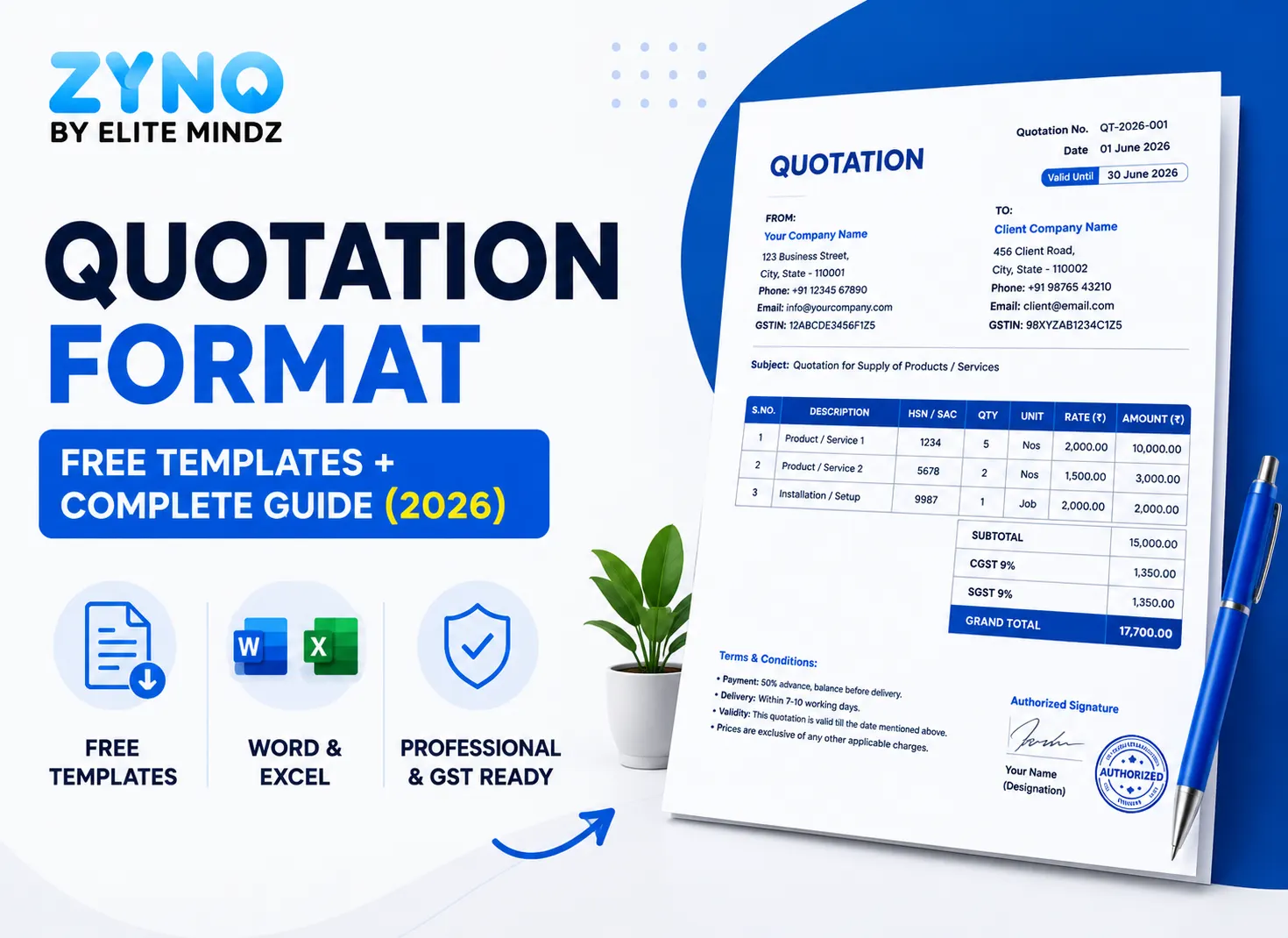
Quotation Format: Free Templates + Complete Guide (2026)
Read More →
Cost Control Software: Features, Benefits & Performance Guide for 2026
Read More →
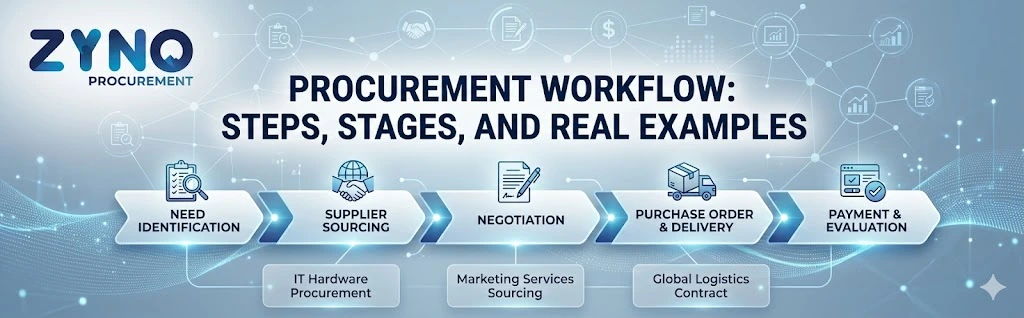
Procurement Workflow: Steps, Stages, and Real Examples
Read More →
Top 10 Zycus Alternatives for Procurement Teams in 2026
Read More →
Best Precoro Alternative for Purchase Requisition and Procurement
Read More →
Top AI Procurement Tools in 2026
Read More →
Best Tools for Supplier Risk Management
Read More →
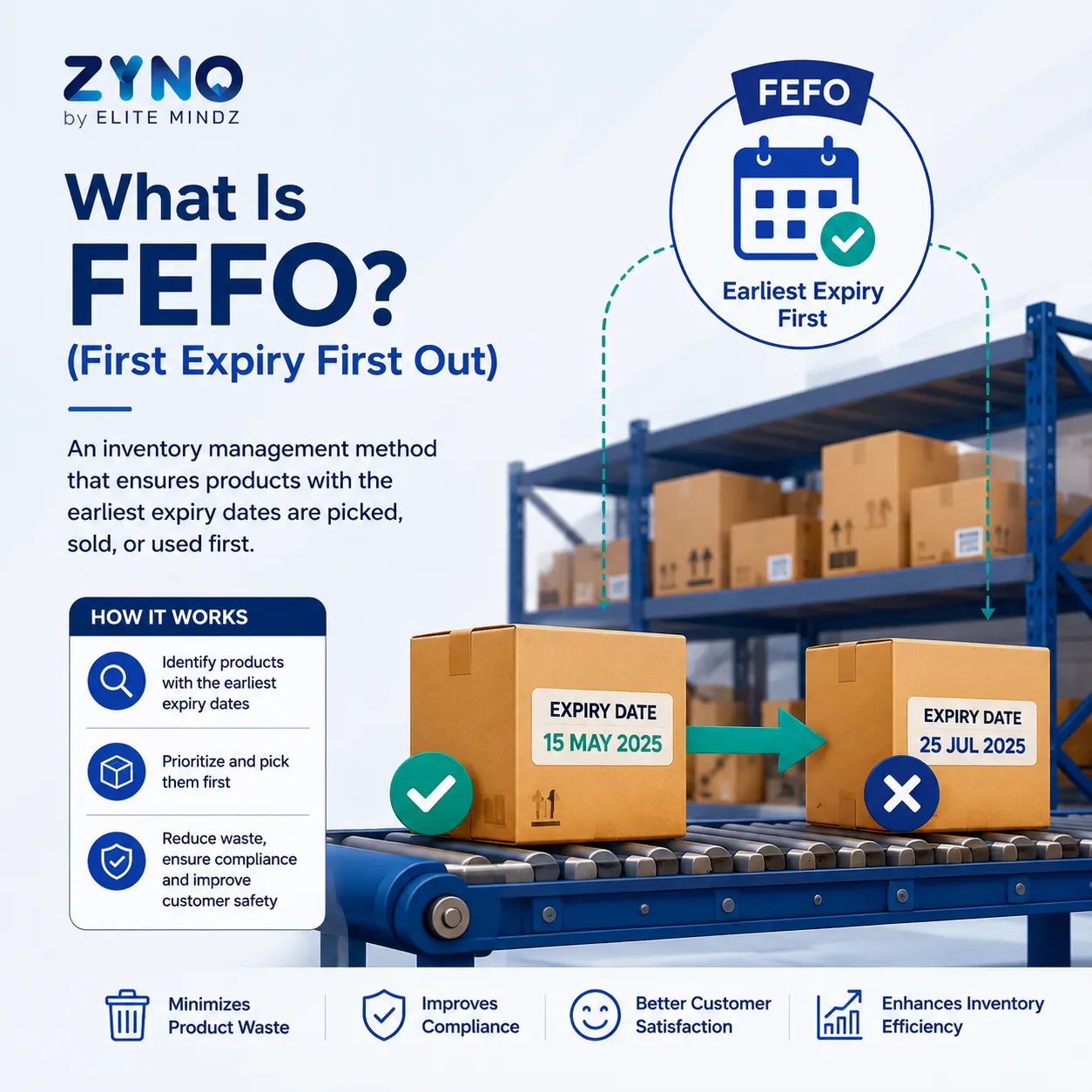
FEFO vs FIFO vs LIFO: Differences, Benefits & Which Inventory Method Is Best?
Read More →
AI Procurement Software: Features, Benefits, Use Cases & How to Choose
Read More →
Best AI Tools for Supply Chain Procurement
Read More →
Procurement Risk Management
Read More →
Still Using Excel for Procurement? Read This Before It's Too Late
Read More →
Best RFP Software in 2026: Top Tools Compared for Faster Proposal Responses
Read More →
What Is Procure-to-Pay (P2P)? A Complete Guide
Read More →
Complete Procurement Workflow Guide for Modern Businesses
Read More →
Complete Guide to E-Procurement Solutions for B2B Organizations
Read More →
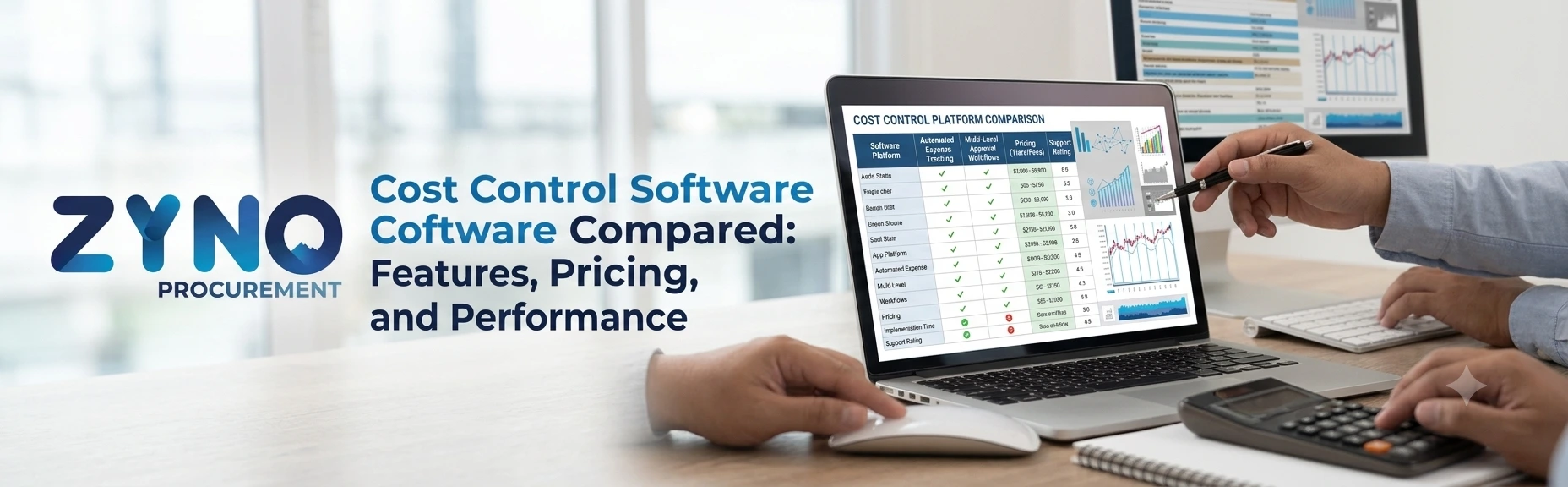
Cost Control Software Comparison Guide: Features, Pricing & Benefits
Read More →
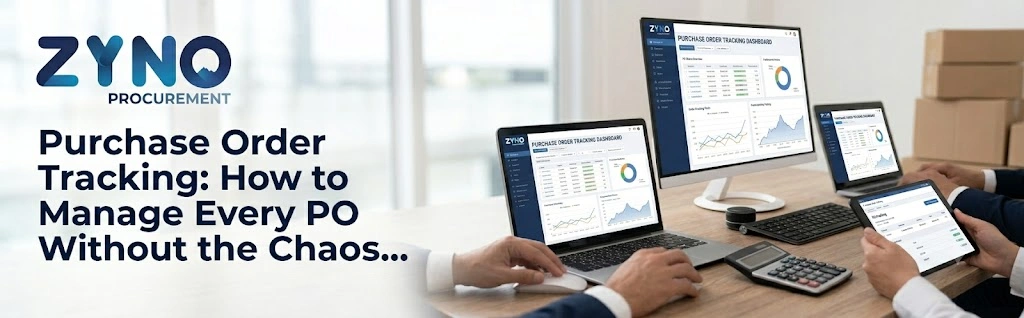
Purchase Order Tracking: How to Manage Every PO Without the Chaos
Read More →
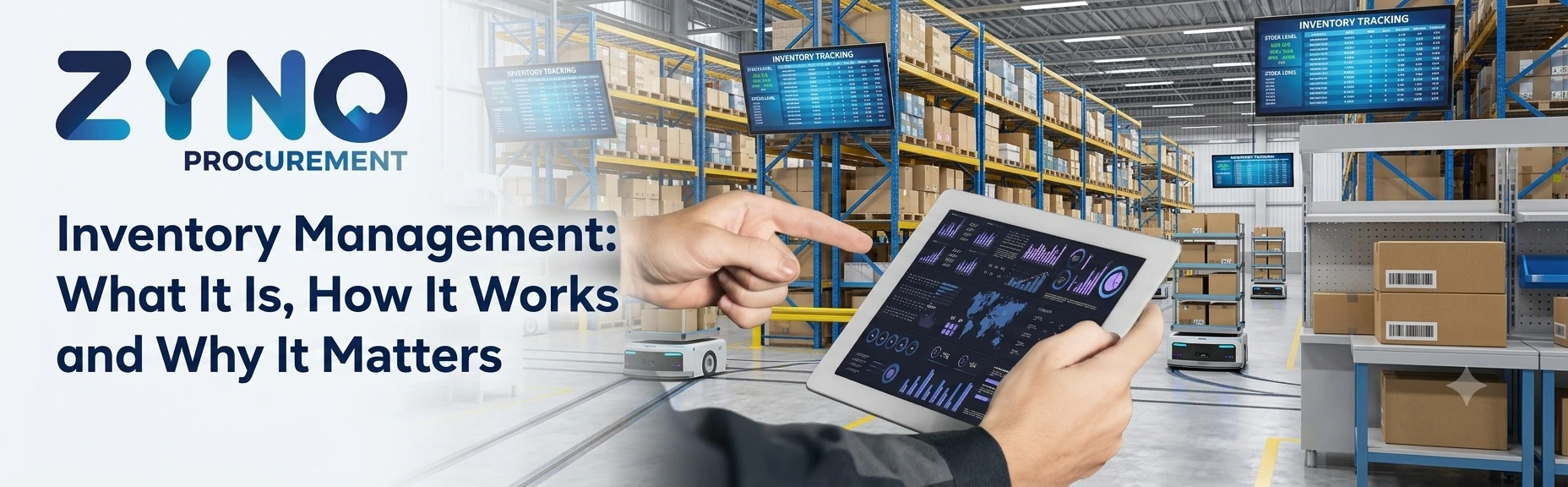
Inventory Management: What It Is, How It Works and Why It Matters
Read More →
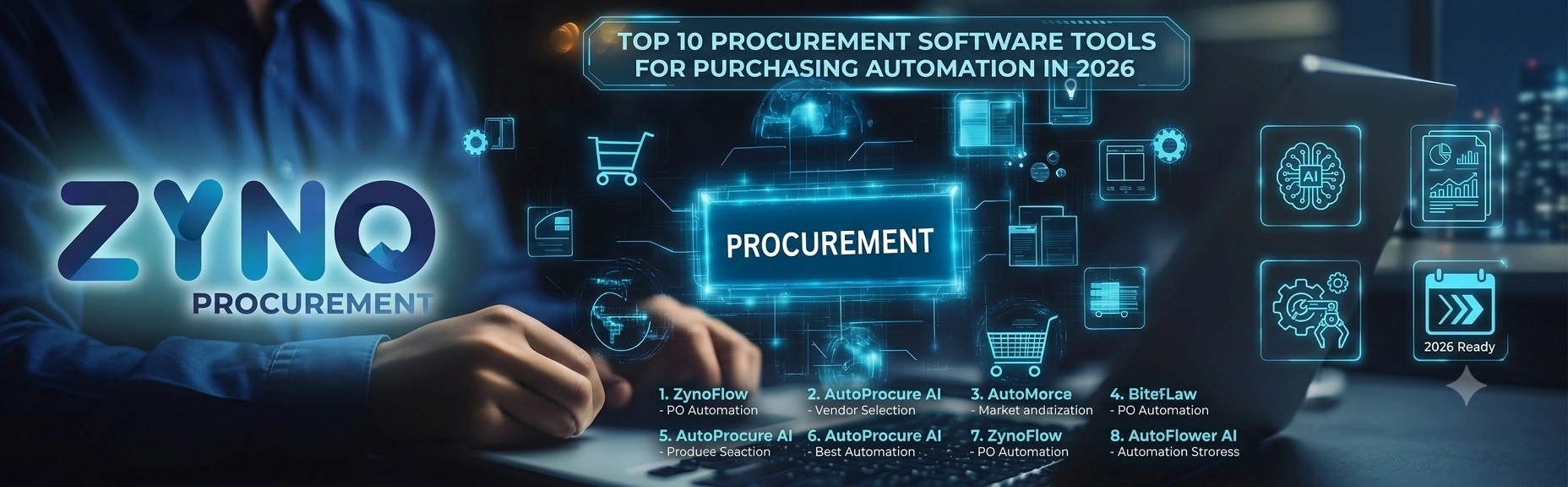
Top 10 Procurement Software Tools for Purchasing Automation in 2026
Read More →
Agentic AI Procurement Platforms and the Future of Strategic Sourcing
Read More →
AI Spend Analytics Software for Procurement Leaders
Read More →
From Prompt to Procurement: How AI Is Transforming Enterprise Purchasing
Read More →
ZYNO Procurement vs IBM Procure-to-Pay Automation
Read More →
ZYNO Procurement vs Infor Nexus: Which Procure-to-Pay Platform Fits Your Team?
Read More →
AI-Powered Procurement Software in 2026: Top 6 Platforms That Actually Deliver ROI
Read More →
Contract Management Software Buyer's Guide: Features, Costs & Top Picks
Read More →
Top 10 Procure to Pay Software Companies in India 2026
Read More →
10 Best Vendor Management Software in India (2026): Features, Benefits & Comparison
Read More →
How Machine Learning and AI Are Transforming Procurement: A Strategic Overview
Read More →
What Is Procurement Software for GP? Features, Benefits and Best Solutions for Businesses
Read More →
What Procurement Software Do Mid-Market Companies Use Instead of SAP Ariba or Coupa?
Read More →
Prompt-Based Procurement Software for Kenyan Businesses
Read More →
Project Management Software: A Complete Guide to Streamline Business Operations and Procurement Processes
Read More →
SAP Ariba vs ZYNO Procurement: Complete Feature Comparison (2026)
Read More →
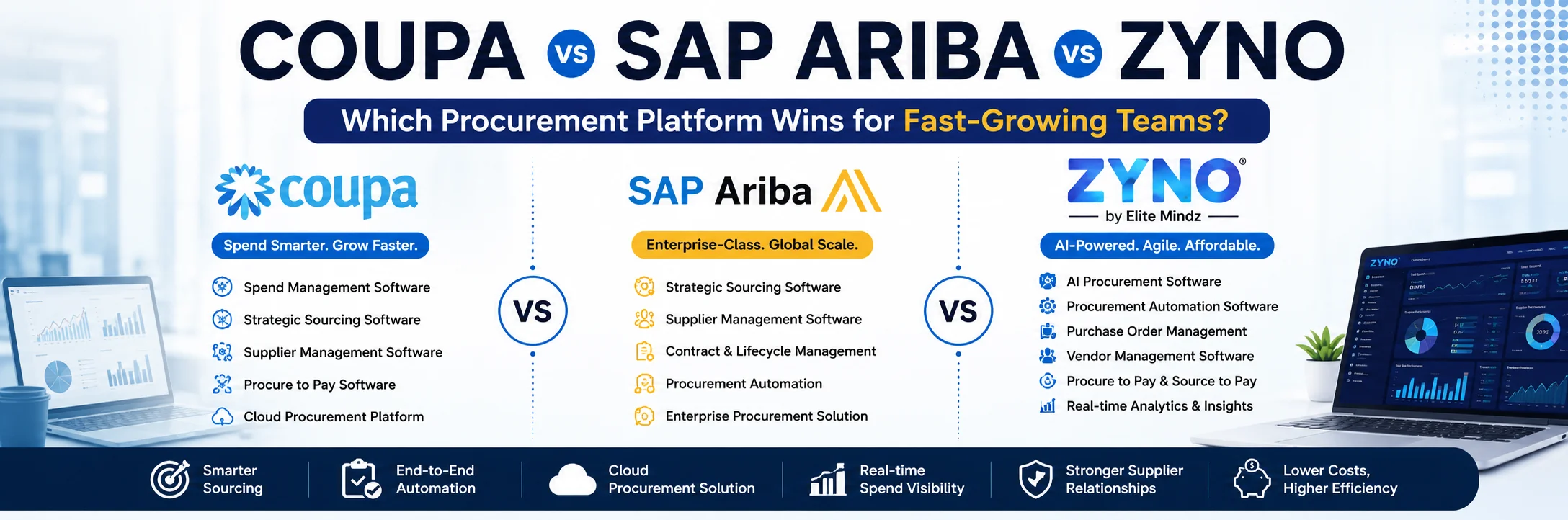
Coupa vs SAP Ariba vs ZYNO: Which Procurement Platform Wins for Fast-Growing Teams?
Read More →
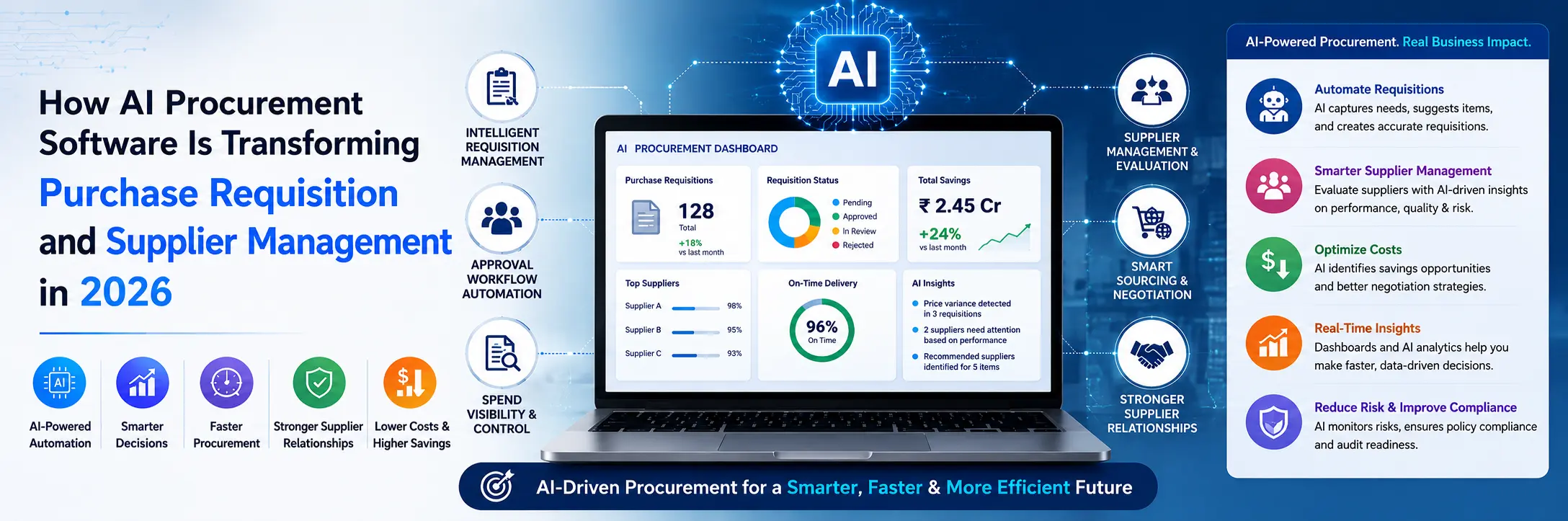
How AI Procurement Software Is Transforming Purchase Requisition and Supplier Management in 2026
Read More →
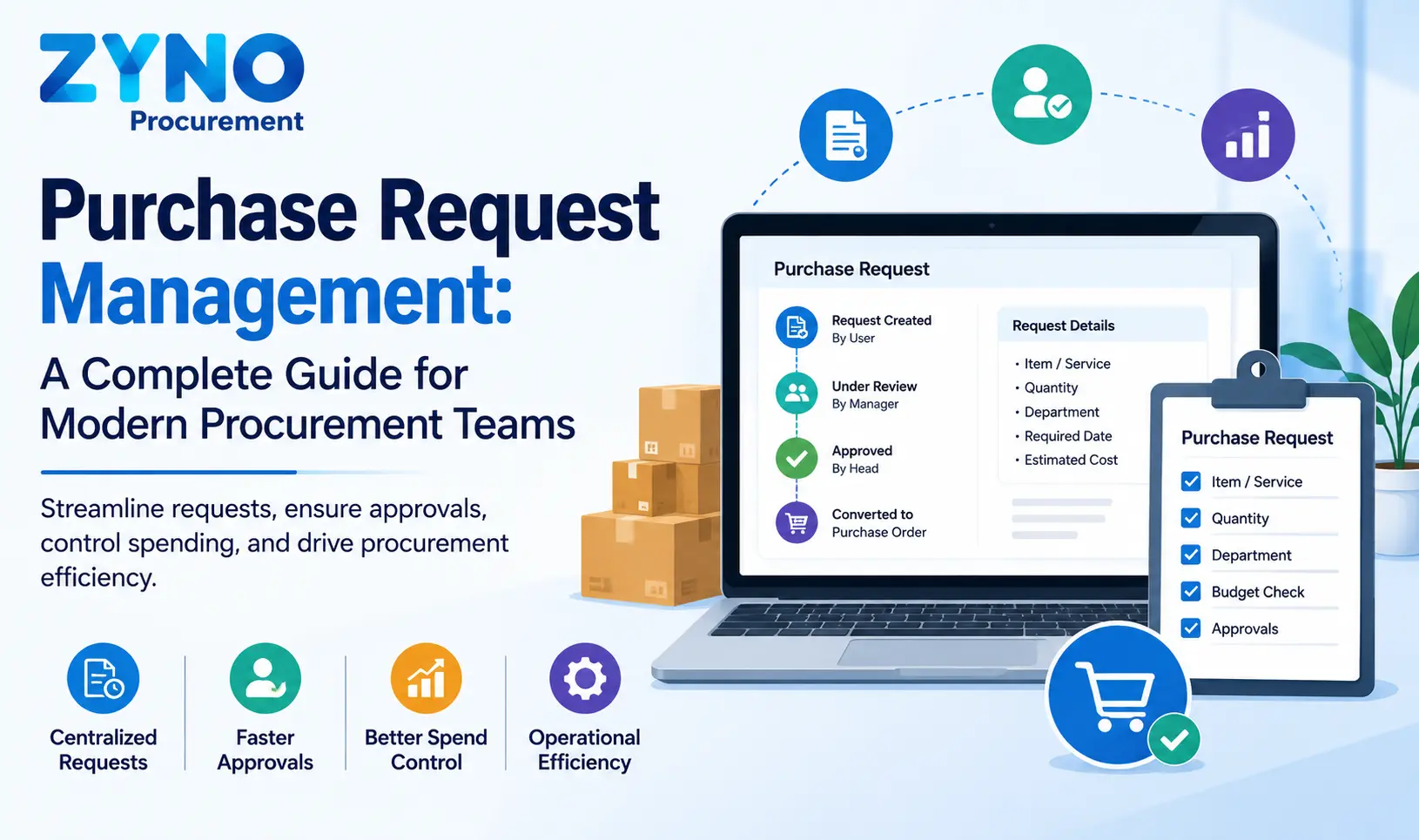
Purchase Request Management: A Complete Guide for Modern Procurement Teams
Read More →
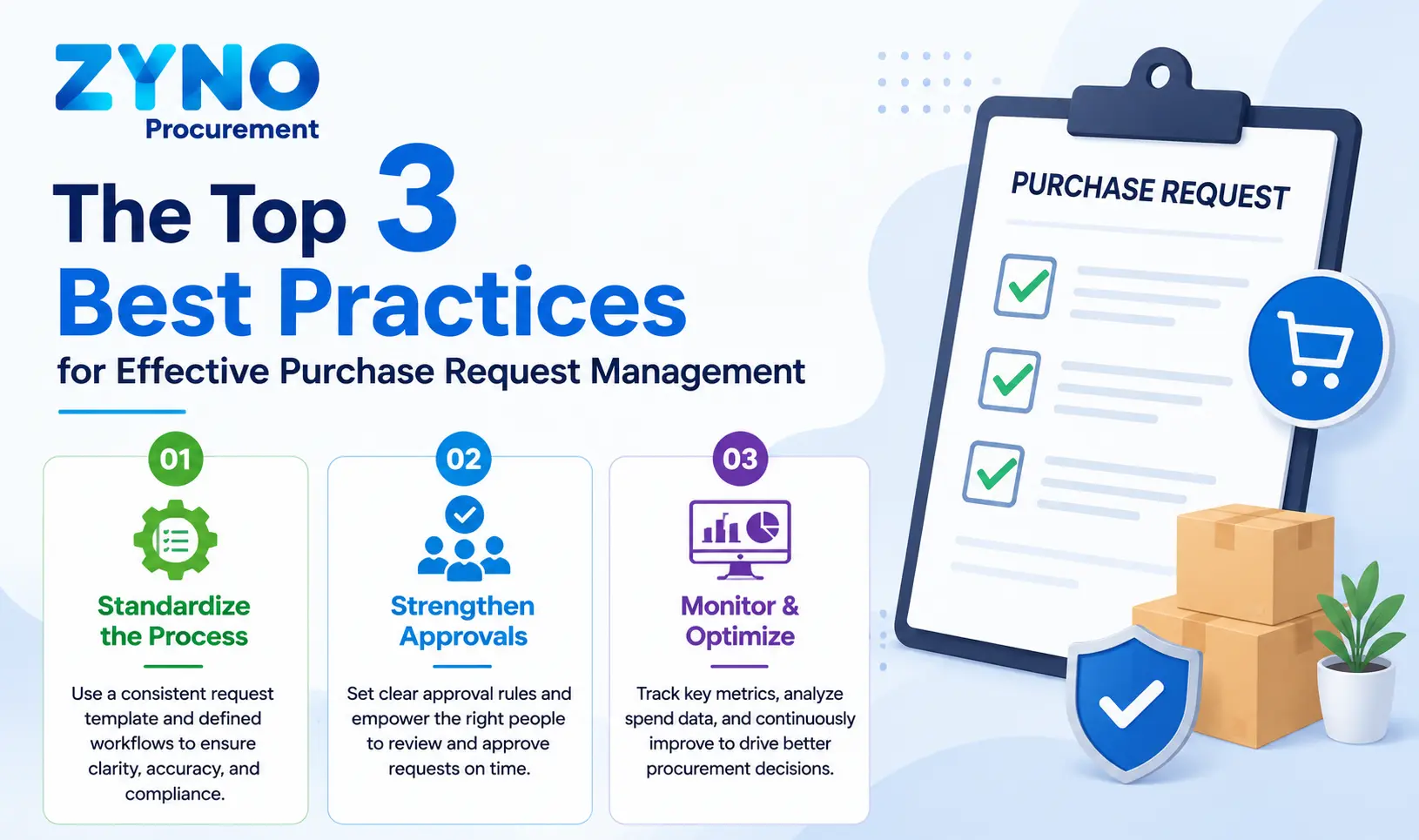
The Top 3 Best Practices for Effective Purchase Request Management
Read More →
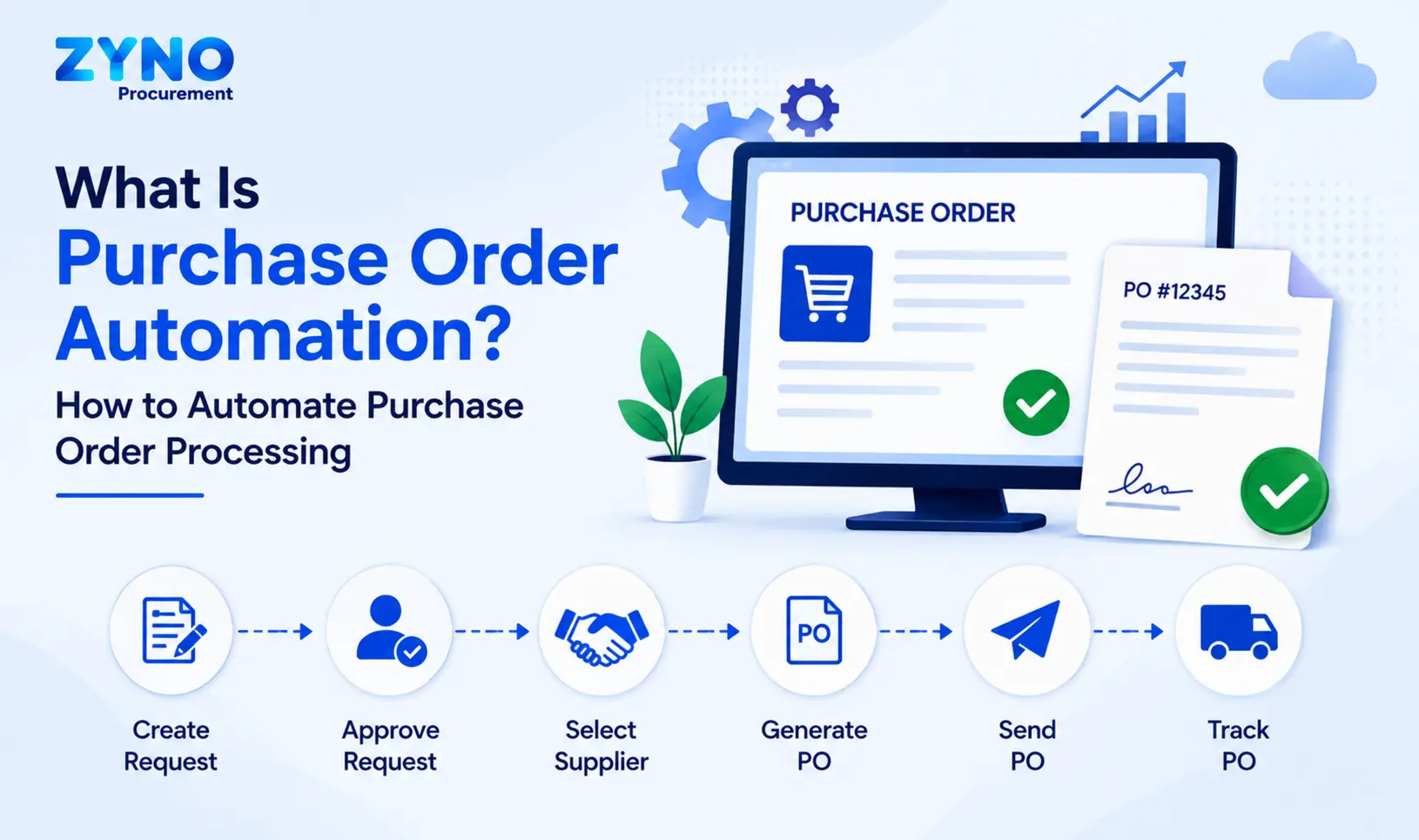
What Is Purchase Order Automation? How to Automate Purchase Order Processing
Read More →
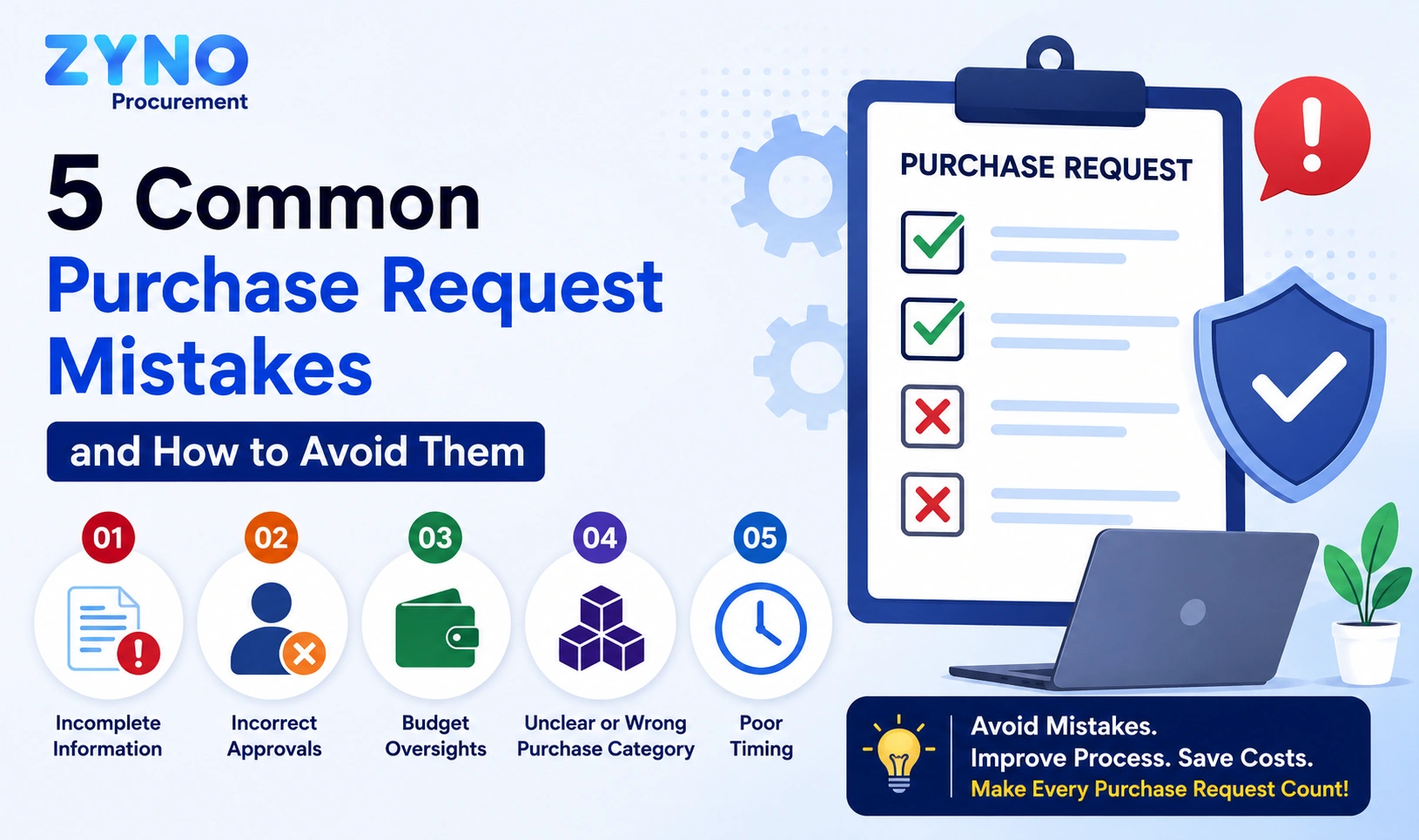
5 Common Purchase Request Mistakes and How to Avoid Them
Read More →
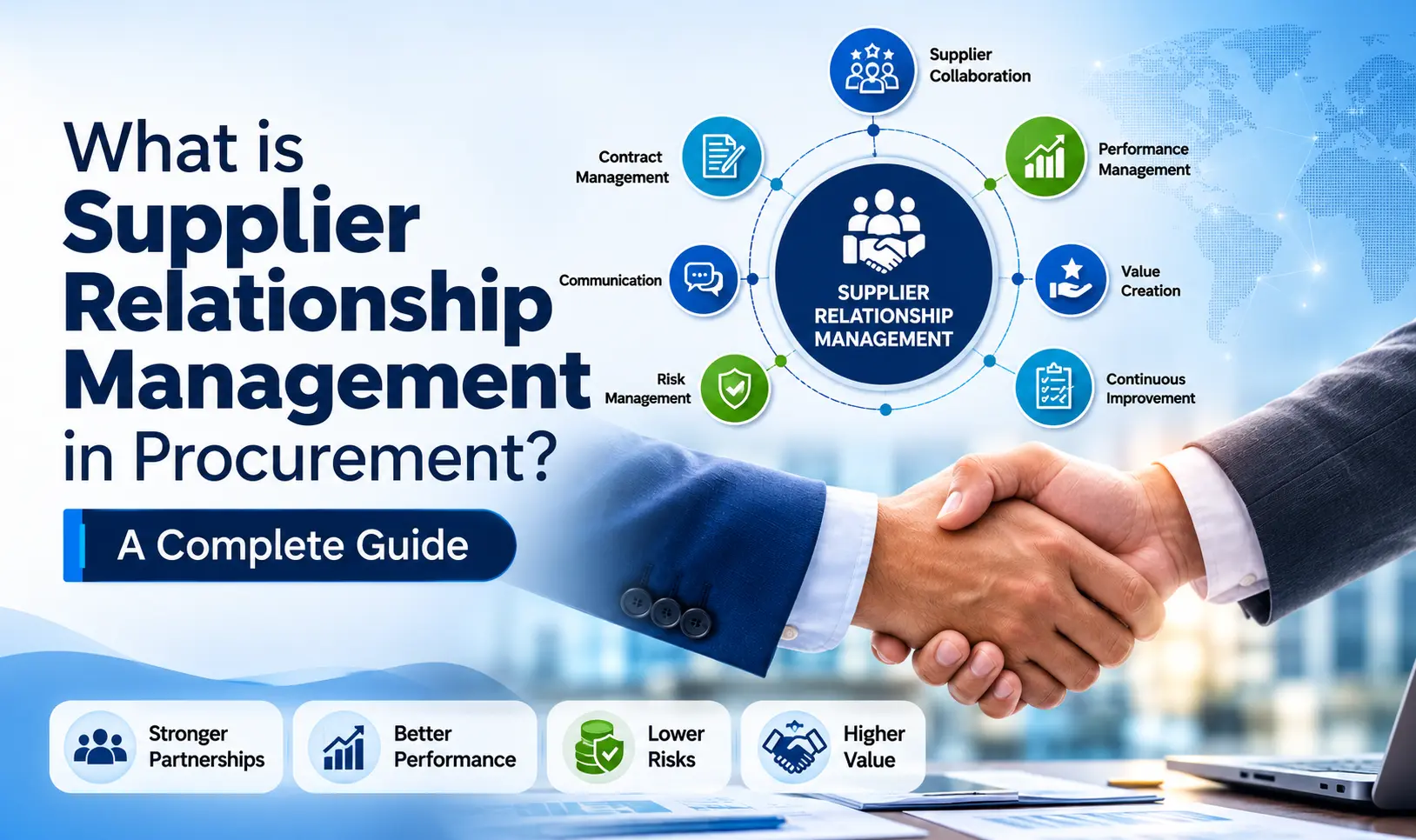
What is Supplier Relationship Management in Procurement? A Complete Guide
Read More →
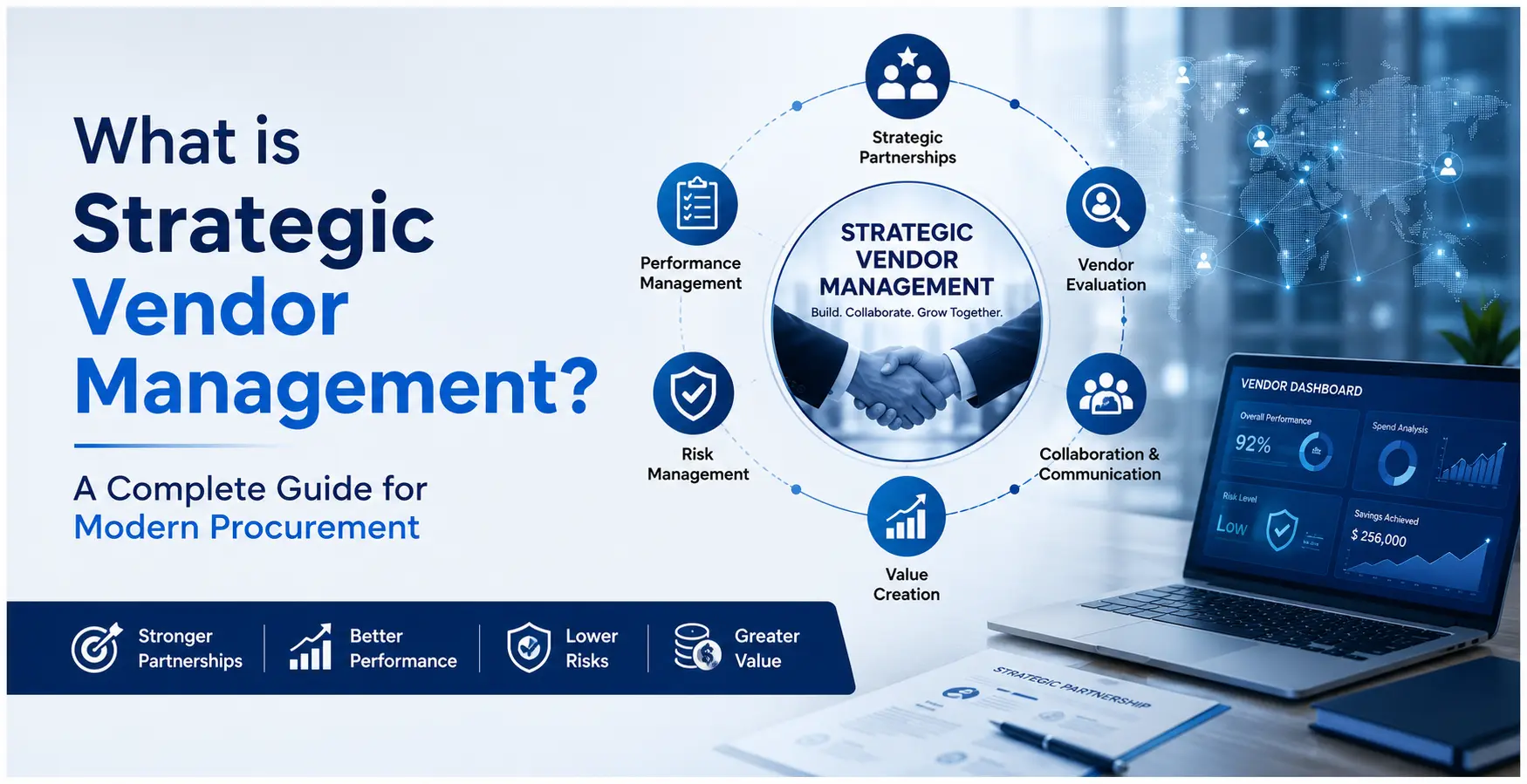
What is Strategic Vendor Management? A Complete Guide for Modern Procurement
Read More →
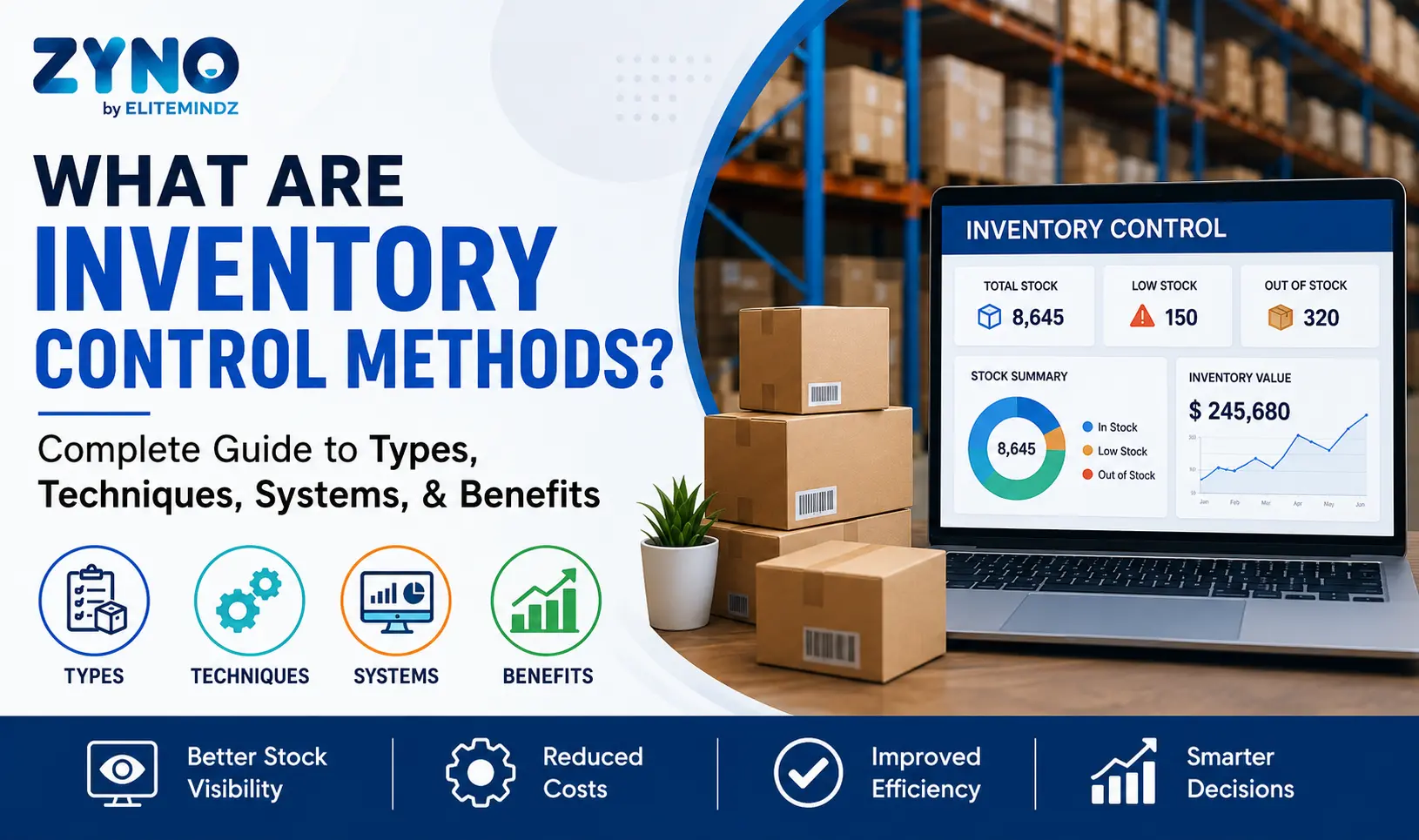
What Are Inventory Control Methods? Complete Guide to Types, Techniques, Systems, & Benefits
Read More →
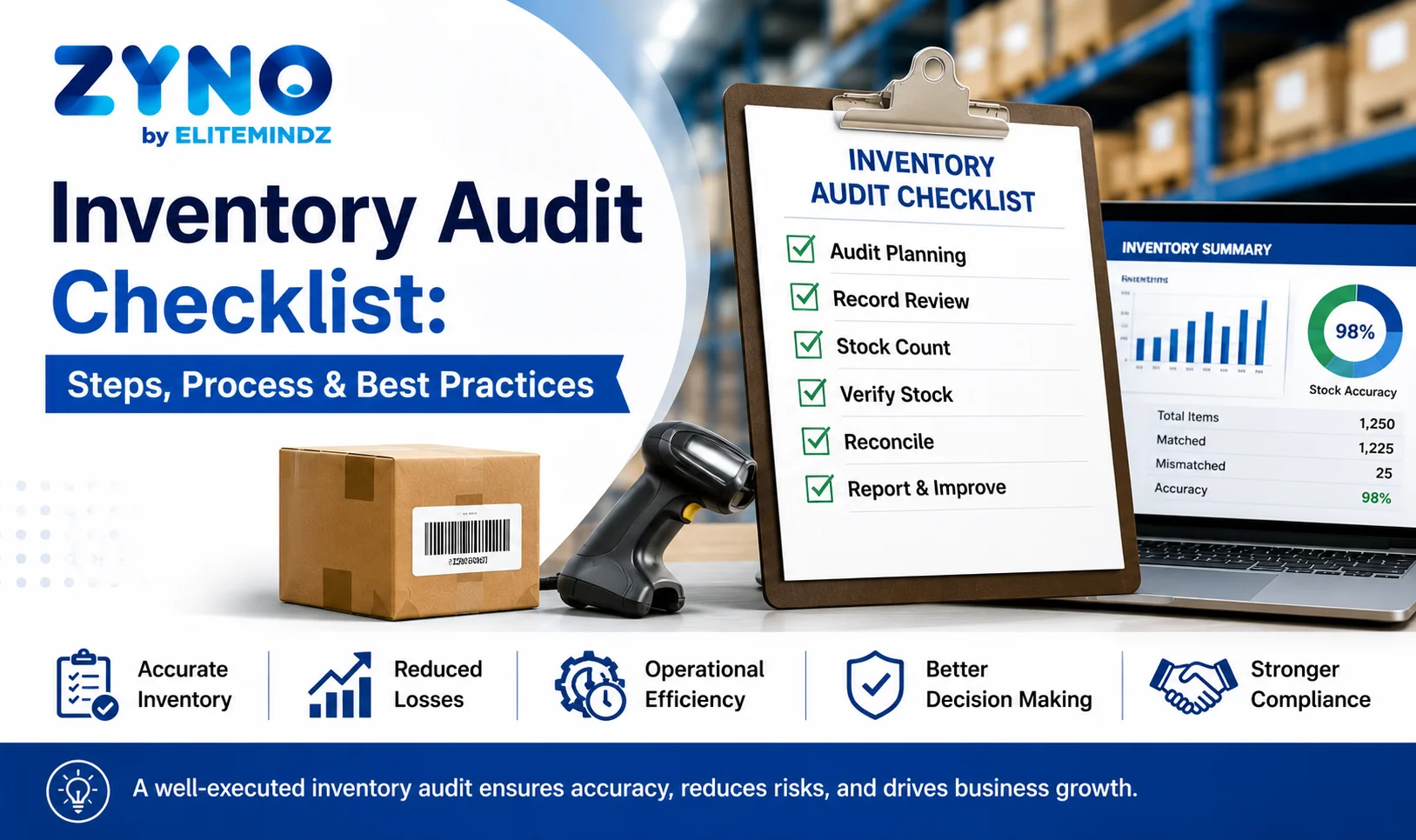
Inventory Audit Checklist: Steps, Process & Best Practices
Read More →
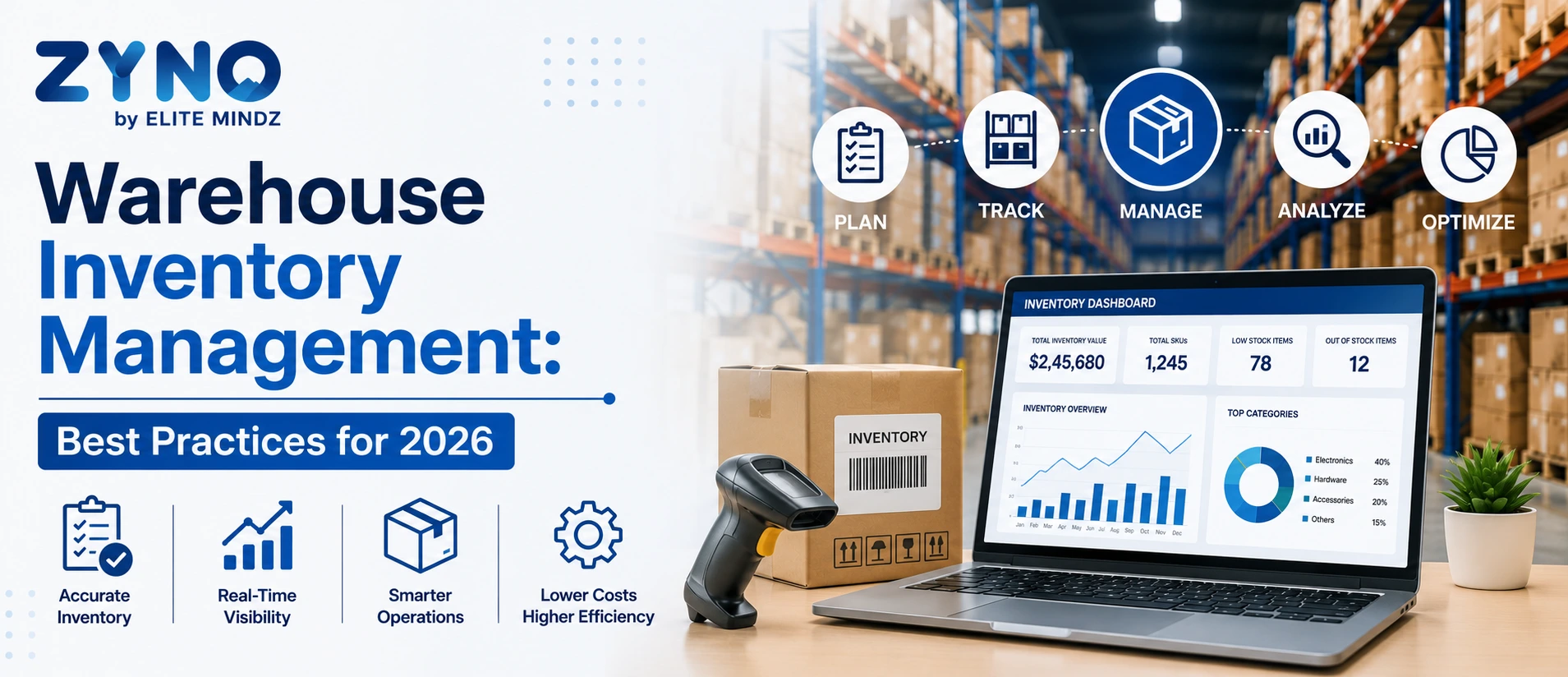
Warehouse Inventory Management: Best Practices for 2026
Read More →
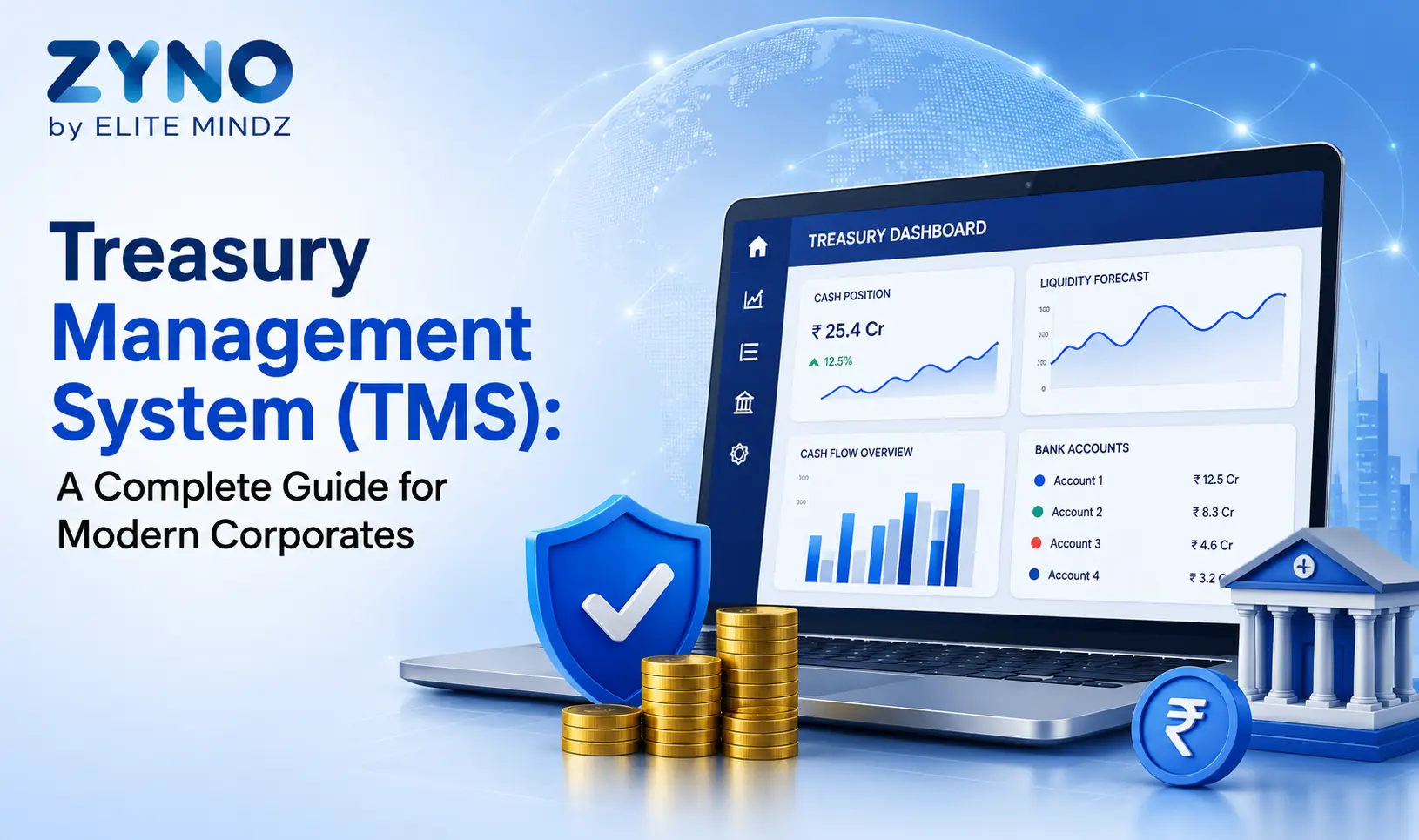
Treasury Management System (TMS): A Complete Guide for Modern Corporates
Read More →
What is Portfolio Management Services (PMS) and What Are Its Benefits?
Read More →
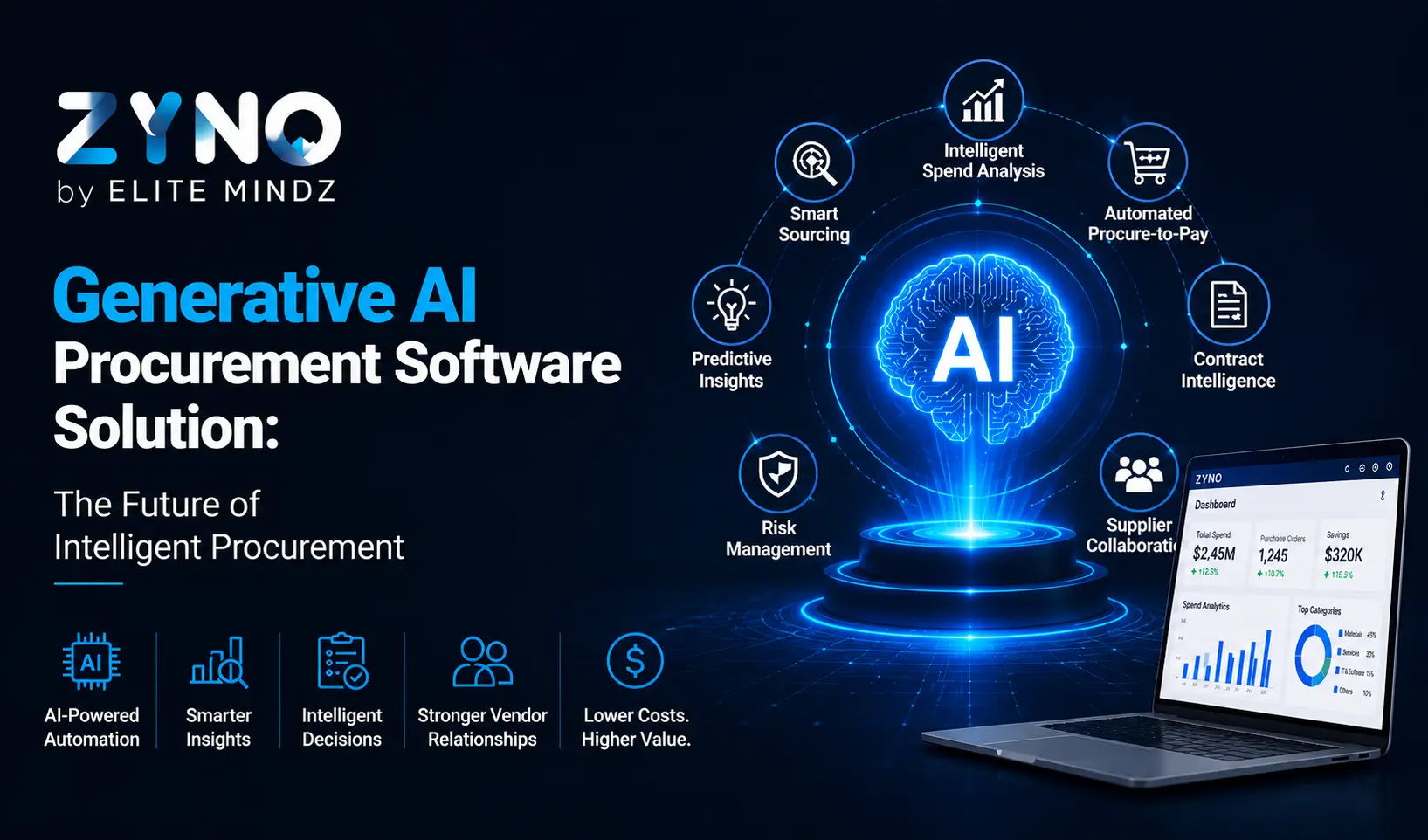
Generative AI Procurement Software Solution: The Future of Intelligent Procurement
Read More →
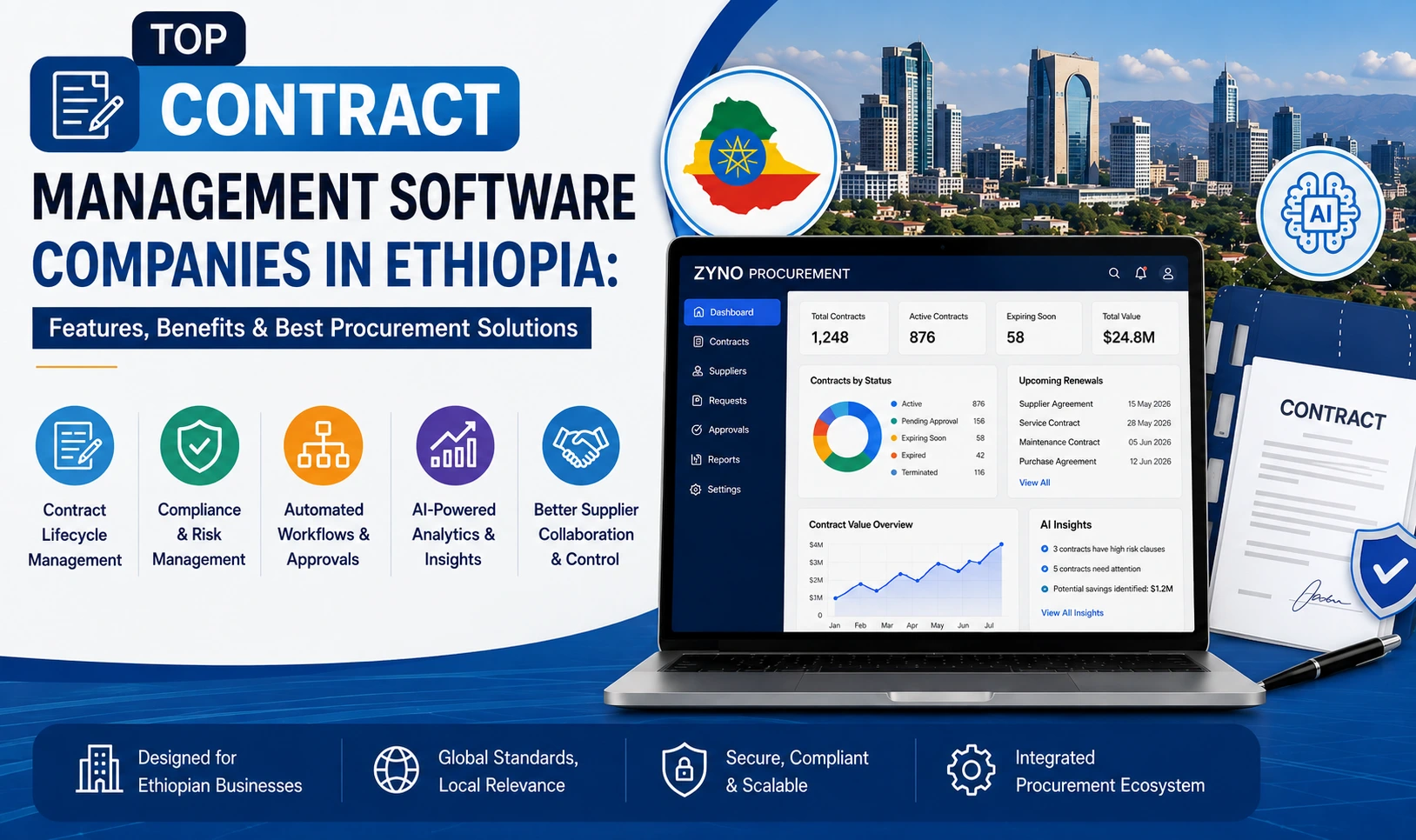
Top Contract Management Software Companies in Ethiopia: Features, Benefits & Best Procurement Solutions
Read More →
AI Procurement Software: Complete Guide to Intelligent, Generative AI & Machine Learning Procurement Solutions
Read More →
Top SAP alternatives for small, midsize, and enterprise businesses
Read More →
Best RFP Software in 2026: Top Solutions for Smarter Procurement and Proposal Management
Read More →
GST on Purchase: Complete Guide to GST on Purchases in India
Read More →
Procurement Software UAE: Complete Guide to Choosing the Best Procurement Solution
Read More →
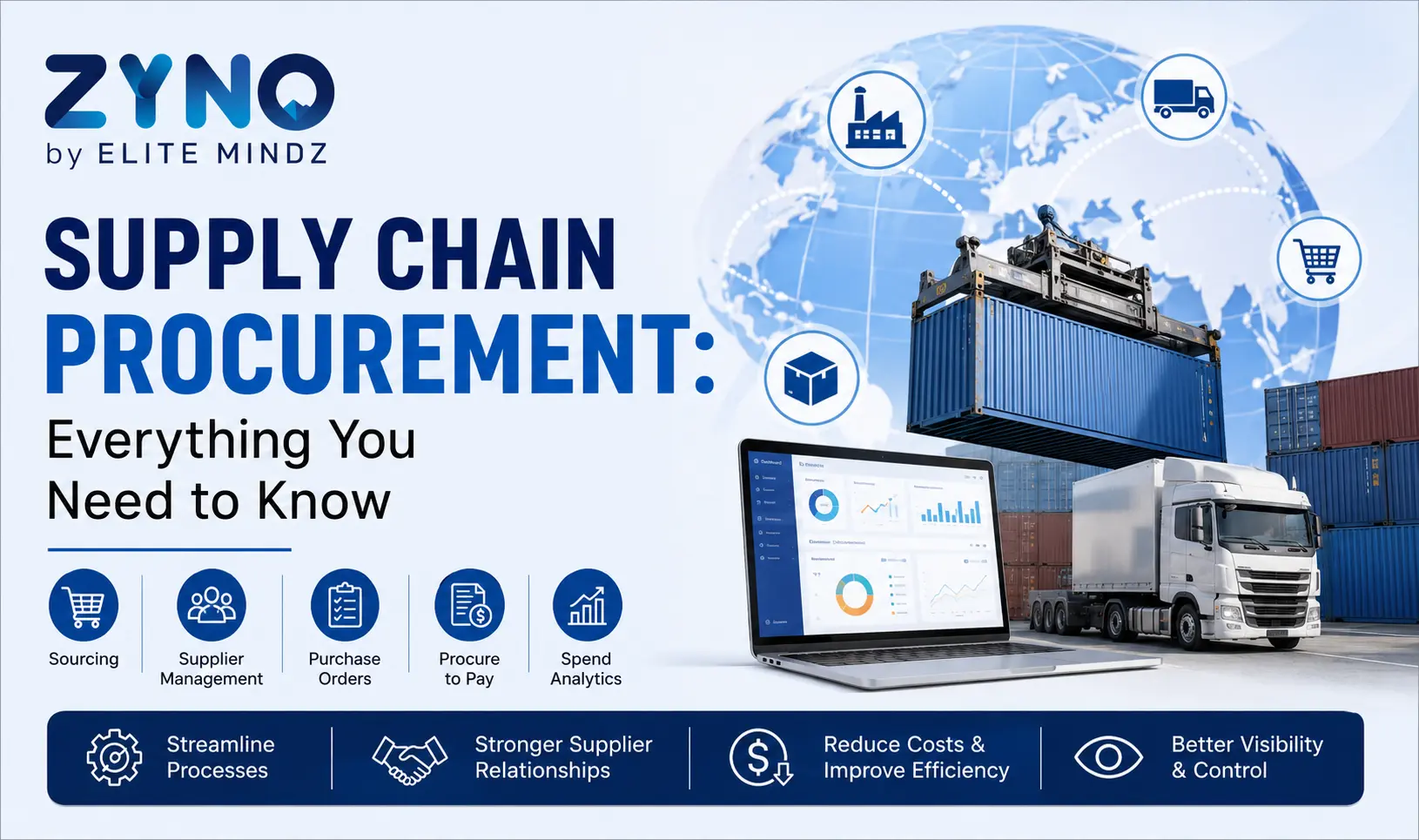
Supply Chain Procurement: Everything You Need to Know
Read More →
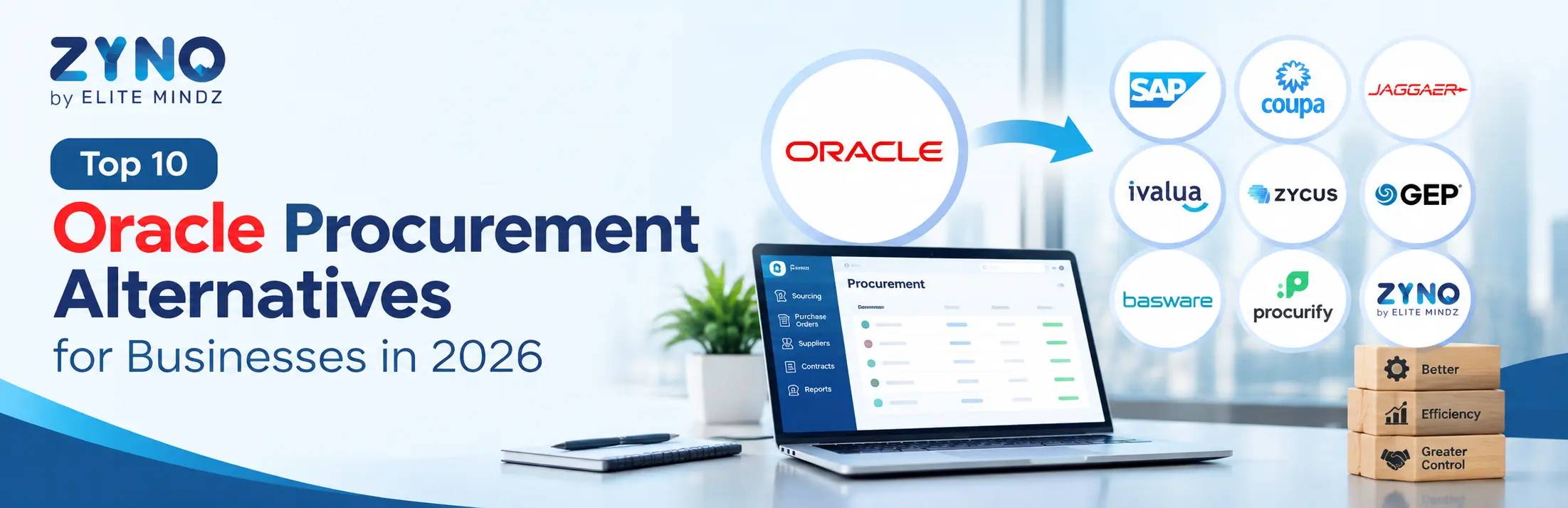
Top 10 Oracle Procurement Alternatives for Businesses in 2026
Read More →
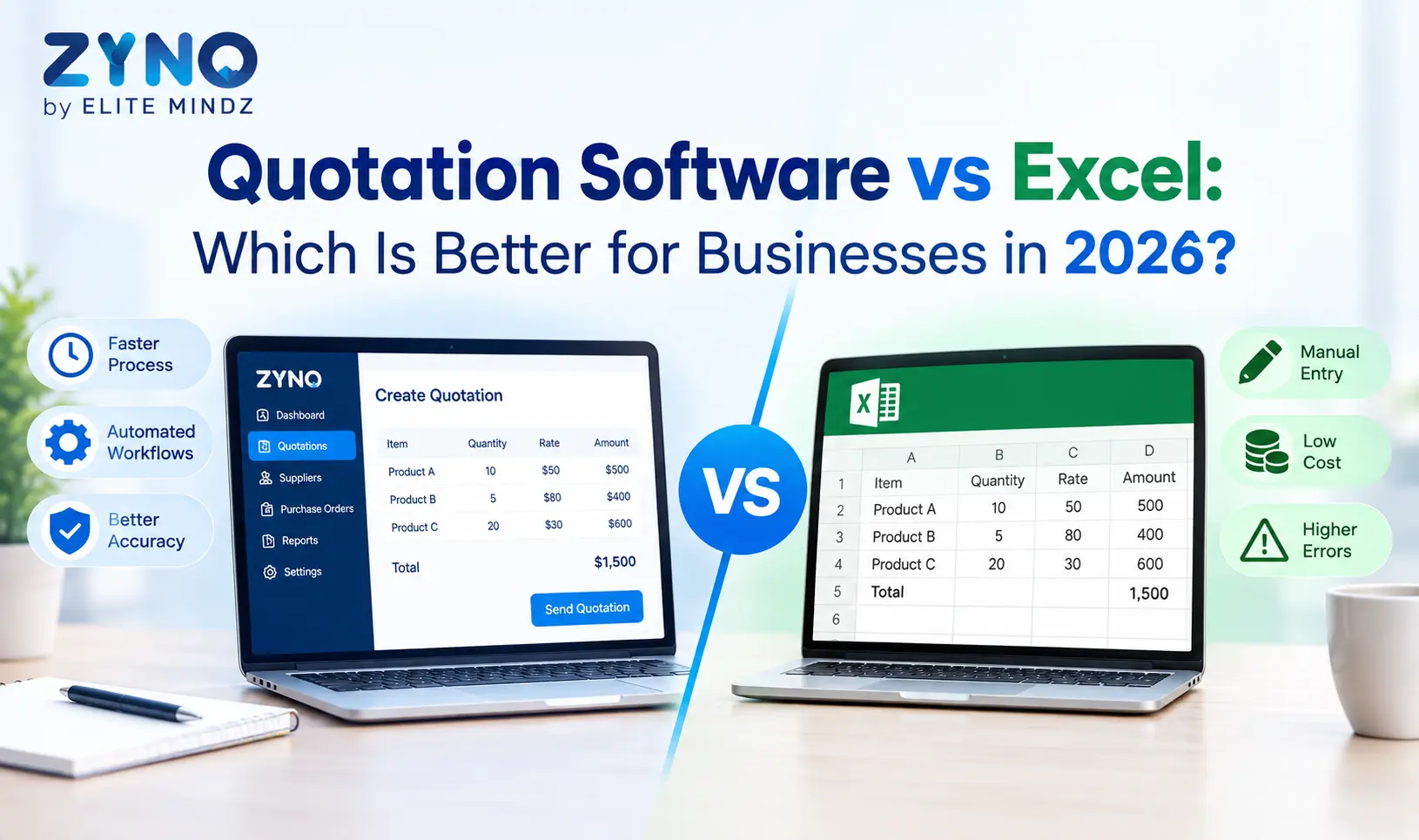
Quotation Software vs Excel: Which Is Better for Businesses in 2026?
Read More →
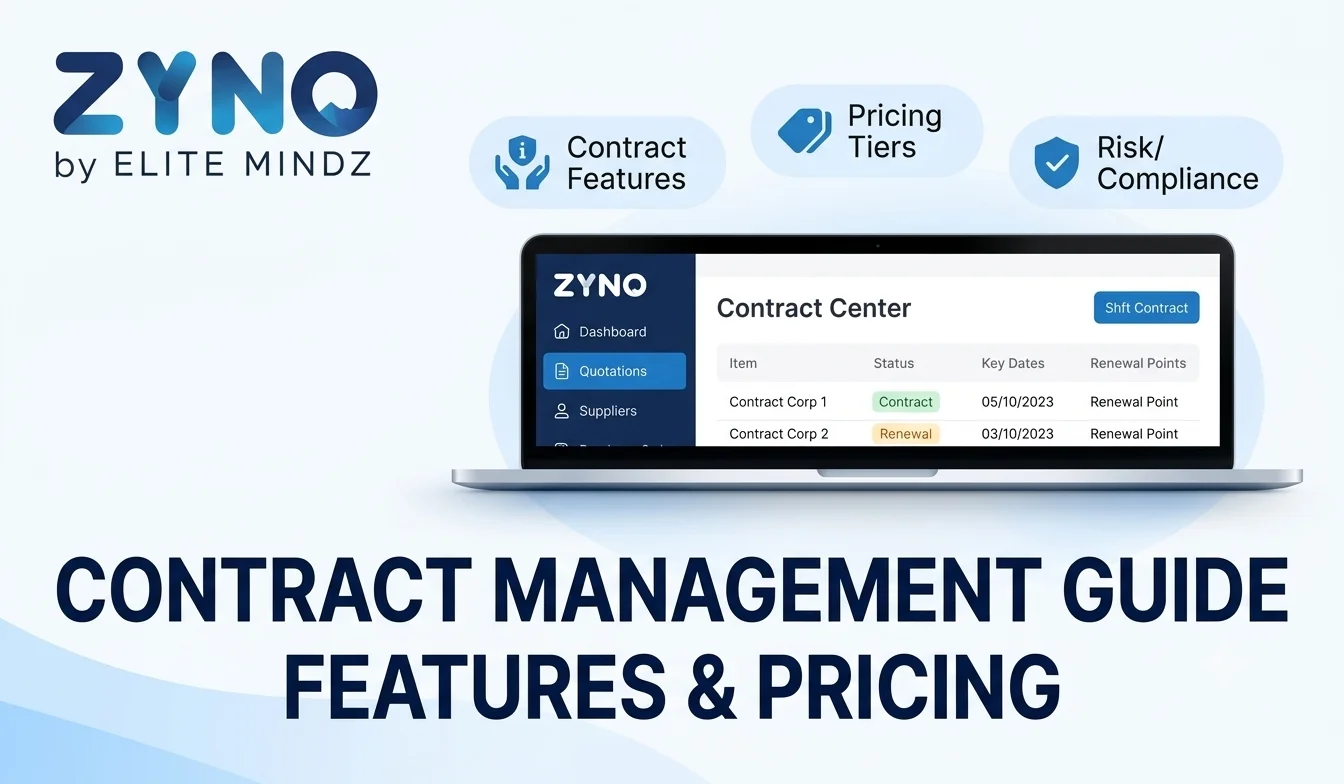
Contract Management Software Buyer's Guide: Features, Pricing & How to Choose
Read More →
How to Identify the Right Vendor: 10 Simple Steps
Read More →
Top 10 Automated PO Generation Tools in 2026: Best Purchase Order Software with AI Capabilities
Read More →
How to Generate a PO Automatically in SAP: Step-by-Step Guide
Read More →
What Is the Best Budget-Friendly Procurement Software With Vendor Onboarding for Indian SMEs?
Read More →
How to Generate a PO Automatically in SAP: Step-by-Step Guide
Read More →
How to Solve Invoice Mismatches: 10 Real Ways to Fix Invoice Discrepancies
Read More →
Top 10 Vendor Onboarding Tools for Businesses in 2026: Features, Process & How to Choose
Read More →
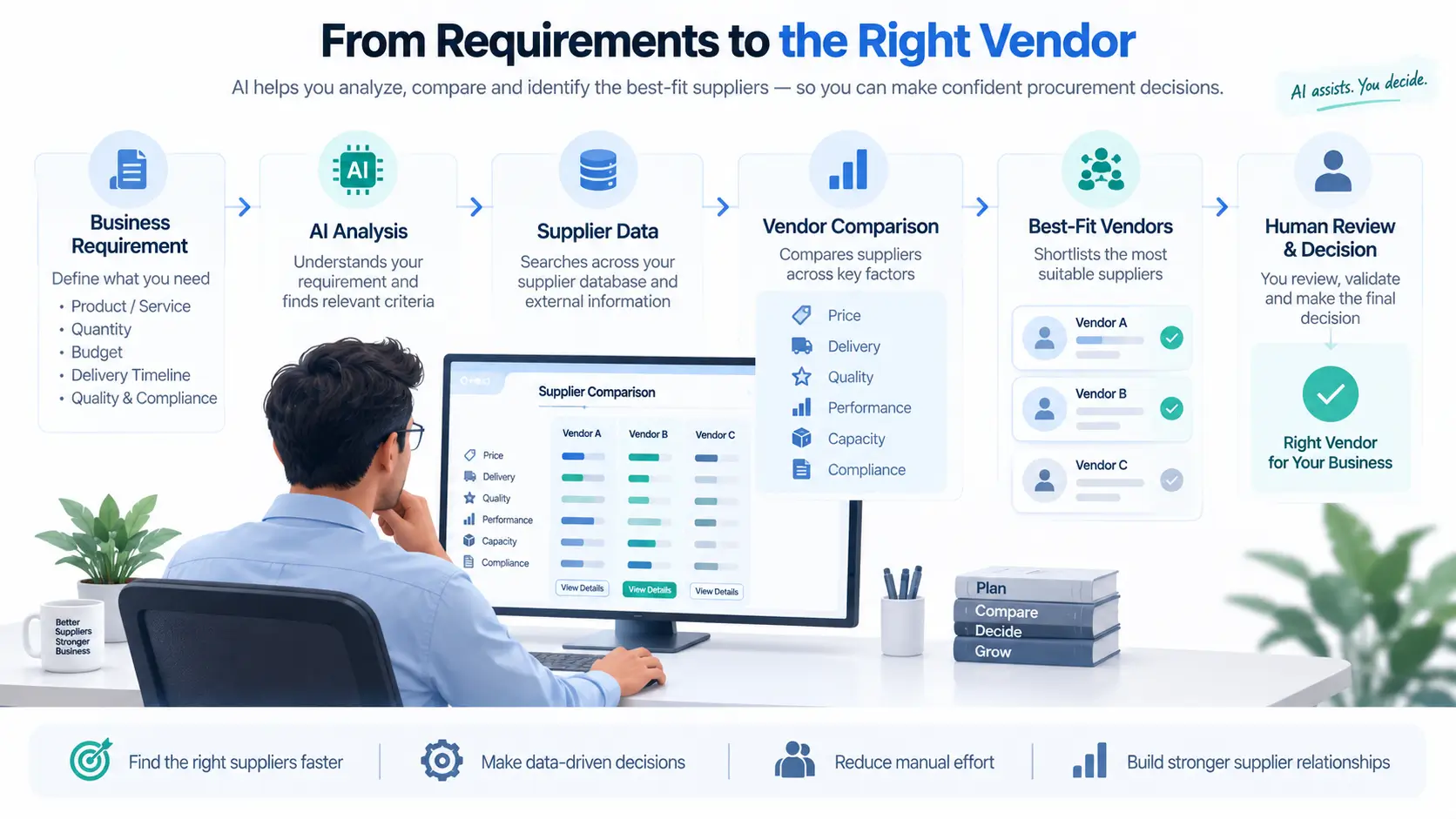
Vendor Comparison & Supplier Intelligence: How AI Helps Businesses Choose the Right Vendor
Read More →
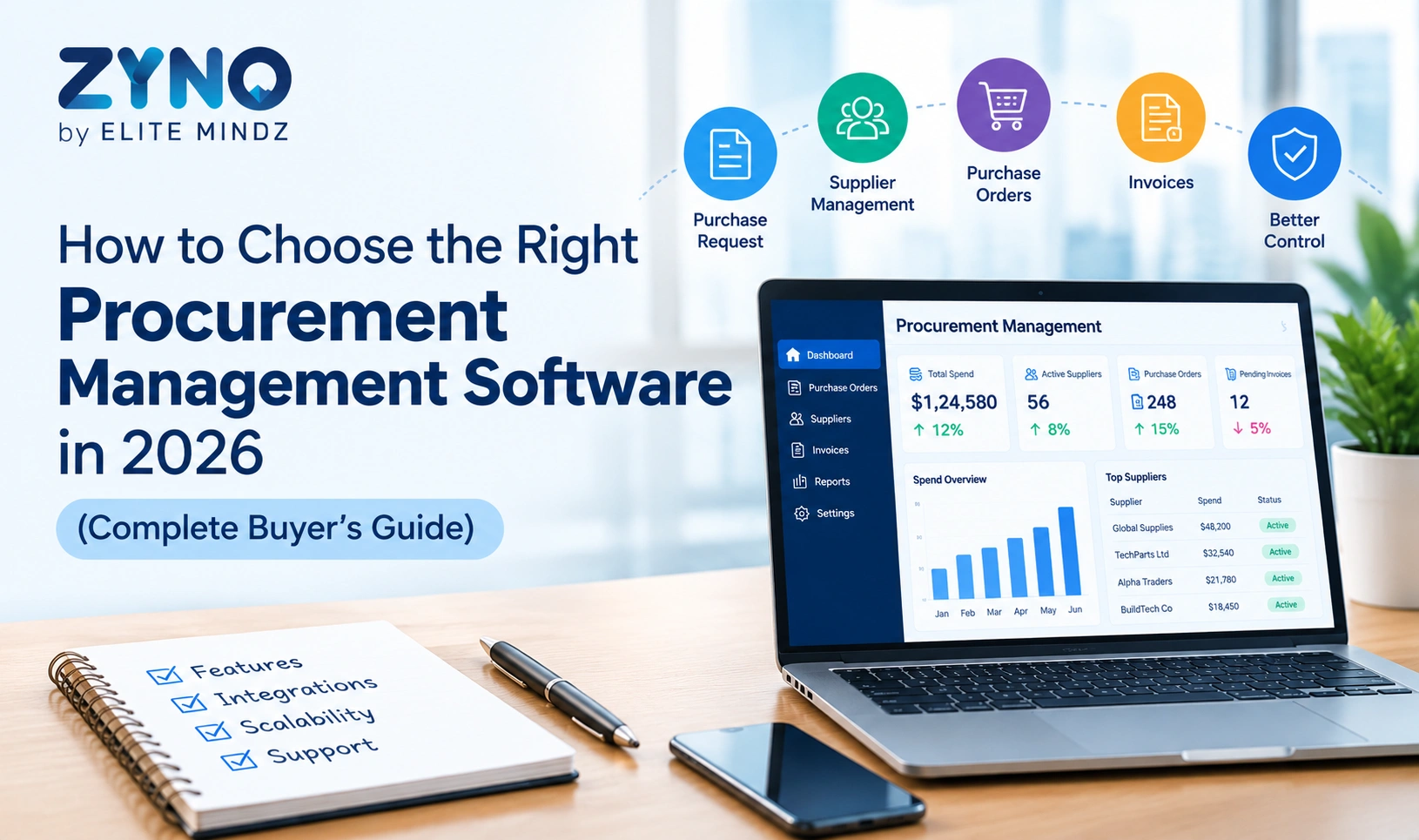
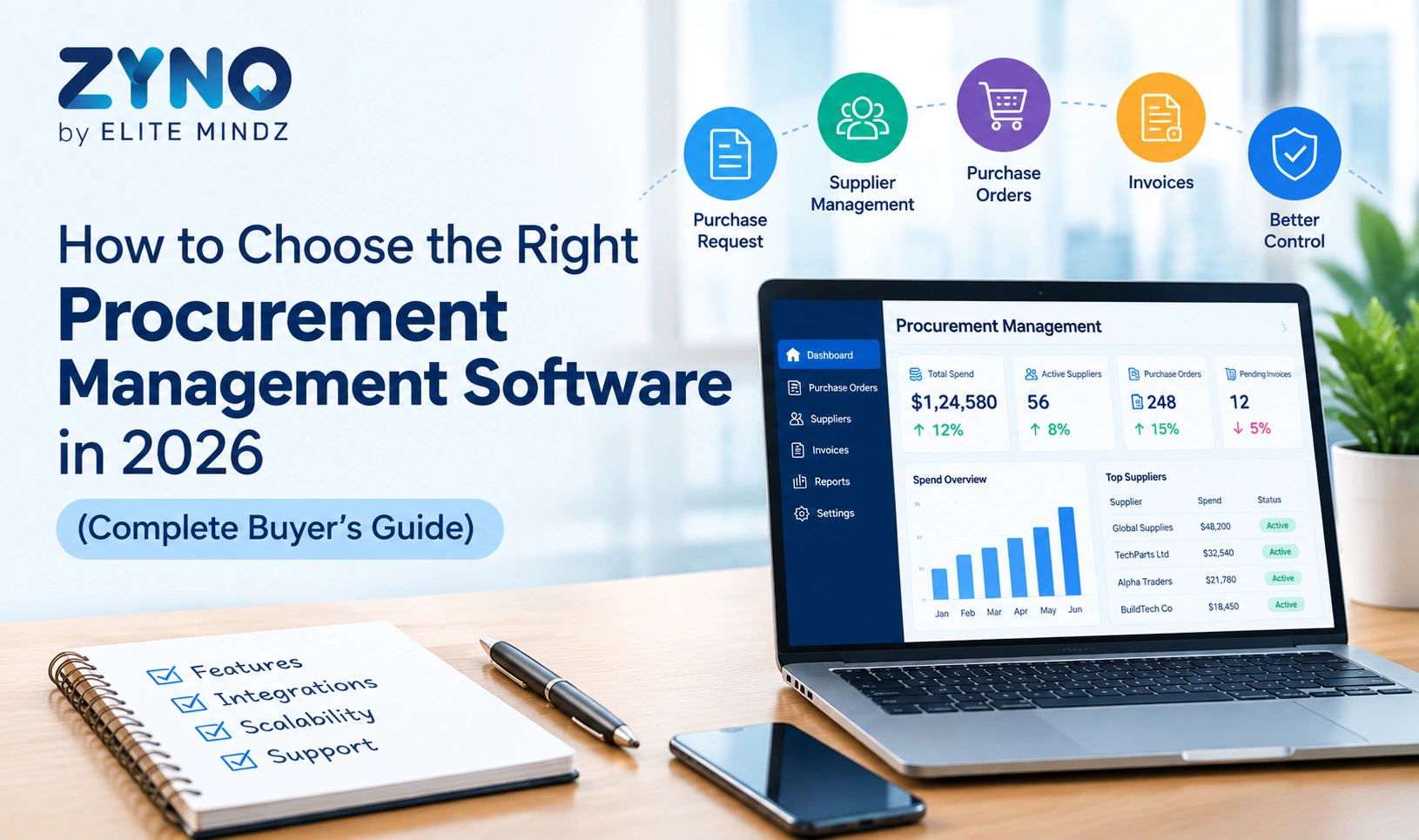
How to Choose the Right Procurement Management Software in 2026 (Complete Buyer's Guide)
Read More →
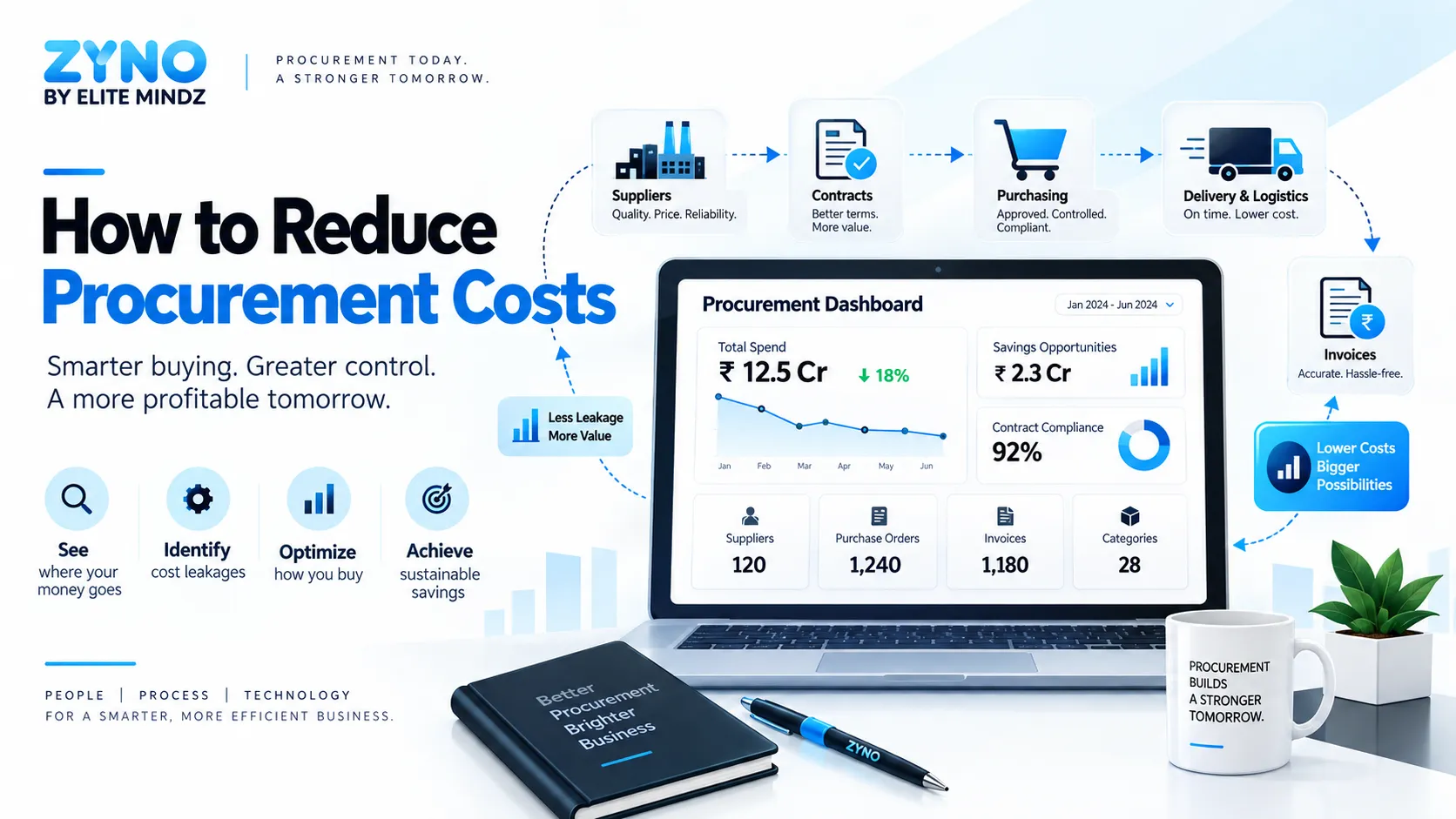
How to Reduce Procurement Costs: 18 Practical Strategies That Actually Work
Read More →
How to Choose the Right Procurement Management Software in 2026 (Complete Buyer's Guide)
Read More →
How to Calculate Procurement Software ROI: Formula, Example & Calculator
Read More →
Procurement Software Evaluation Checklist: 35 Criteria for Choosing the Right Platform
Read More →
How Businesses Can Improve Vendor Performance and Manage Supplier Risk
Read More →
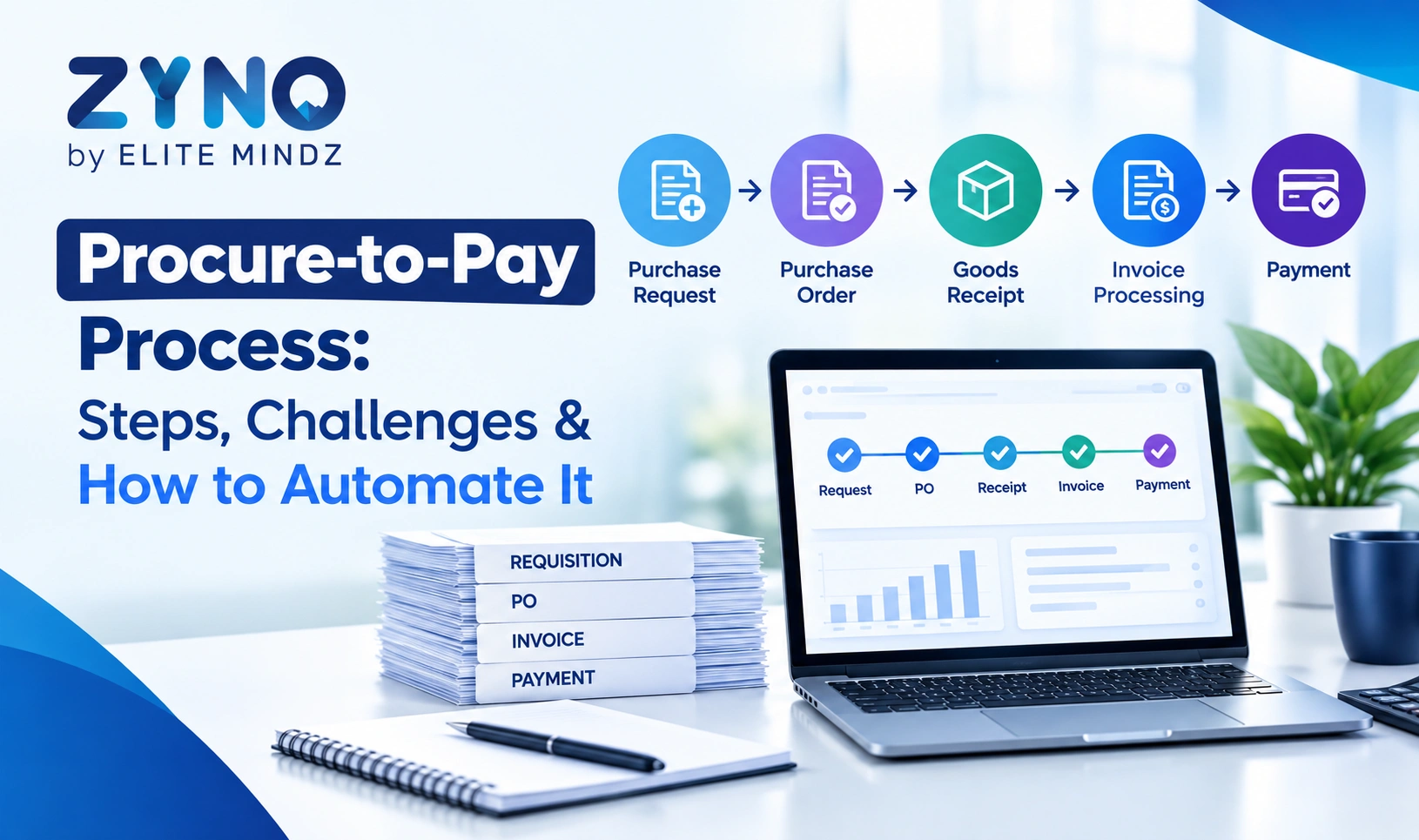
Procure-to-Pay Process: Steps, Challenges & How to Automate It
Read More →
Purchase Requisition vs Purchase Order: What’s the Difference?
Read More →
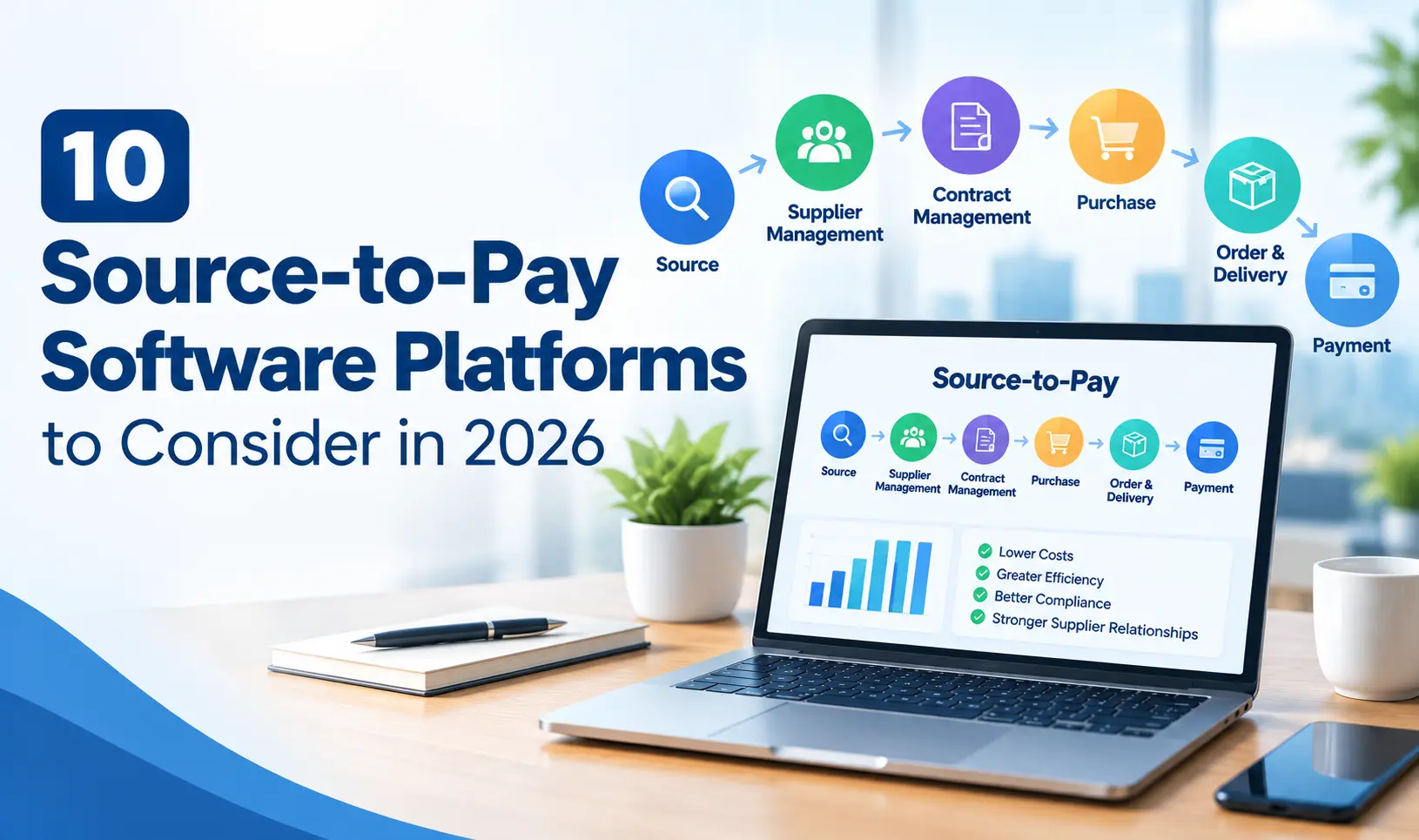
10 Source-to-Pay Software Platforms to Consider in 2026
Read More →
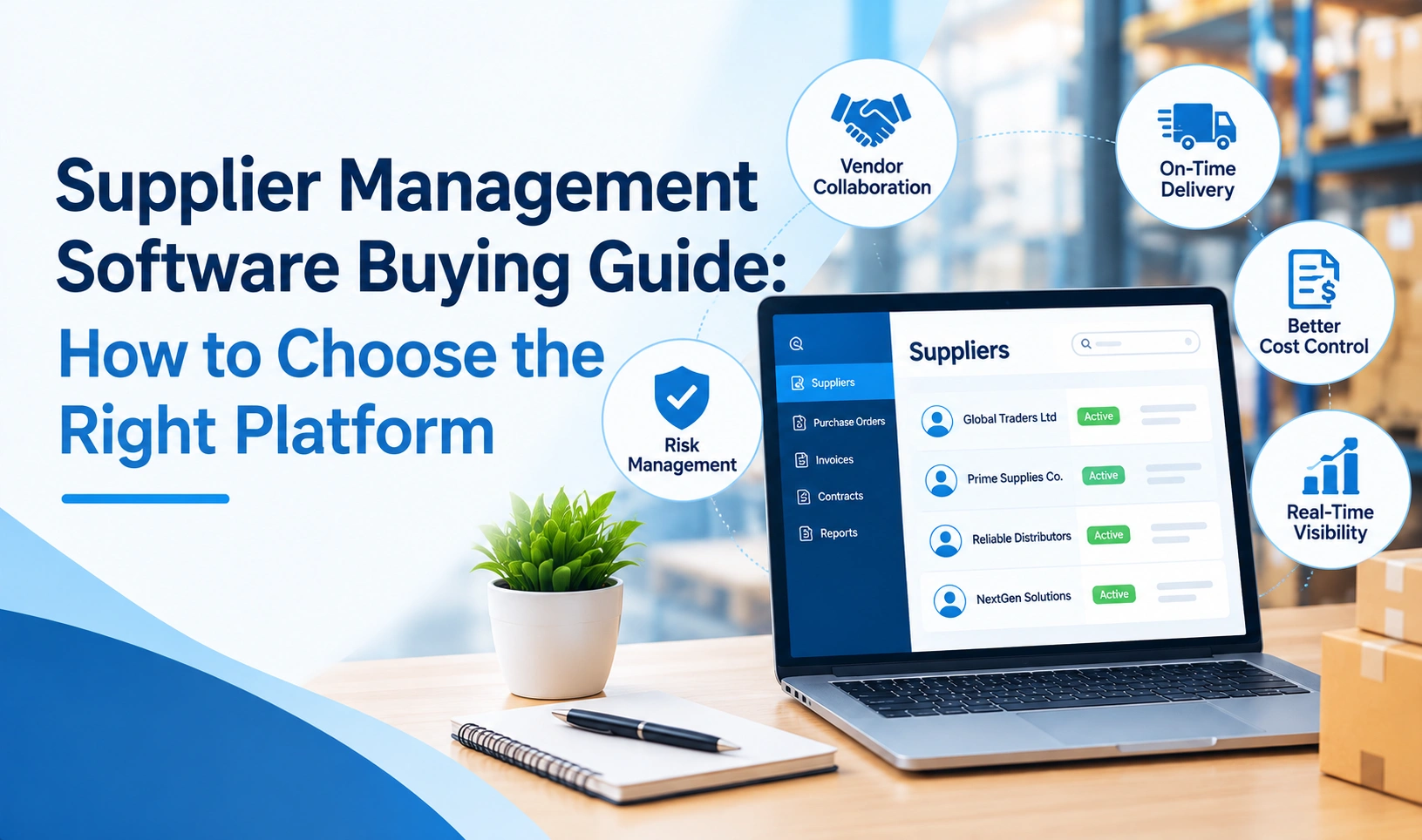
Supplier Management Software Buying Guide: How to Choose the Right Platform
Read More →
Procurement Automation Guide: How It Works, What to Automate & How to Implement It
Read More →
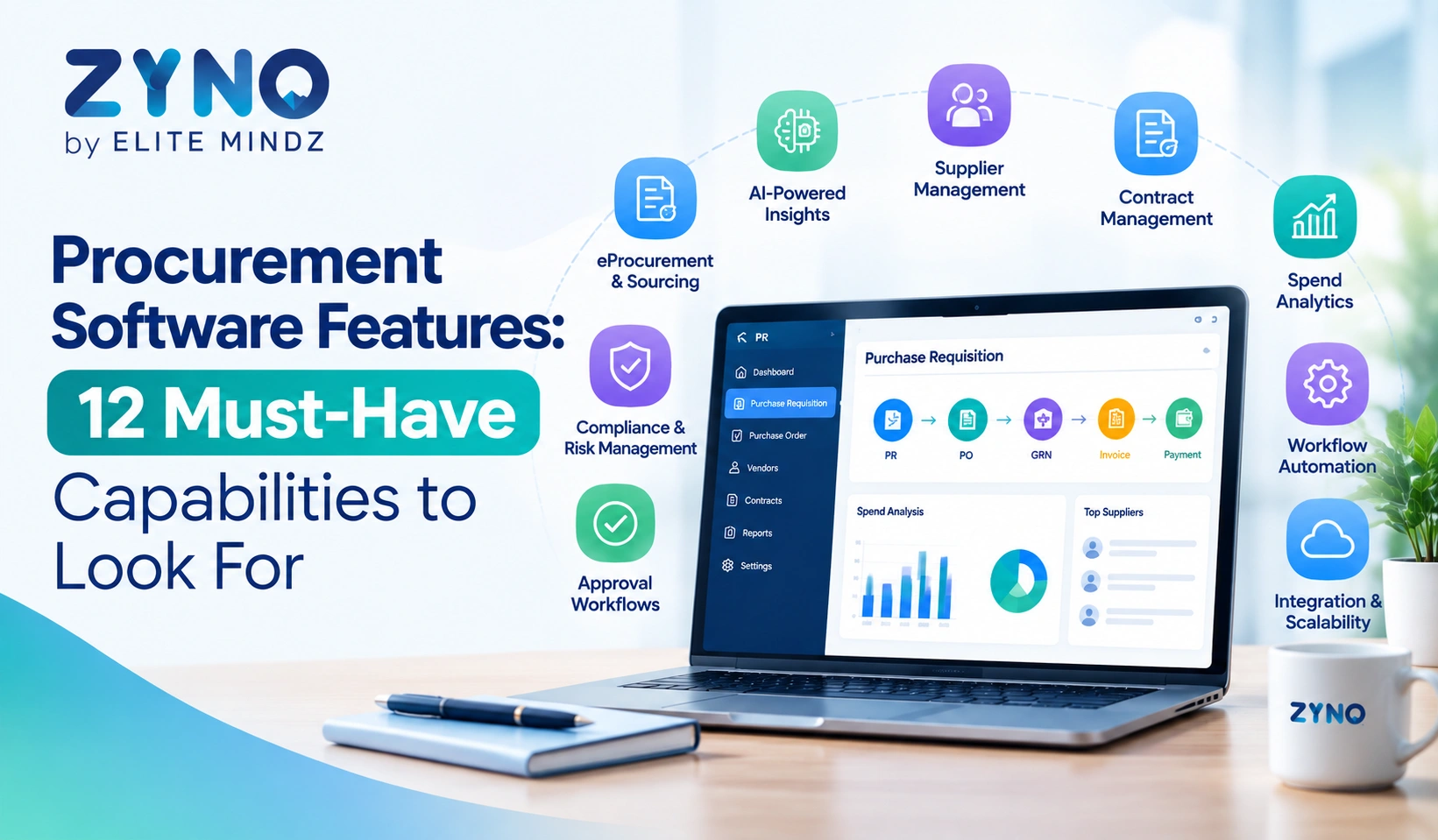
Procurement Software Features: 12 Must-Have Capabilities to Look For
Read More →
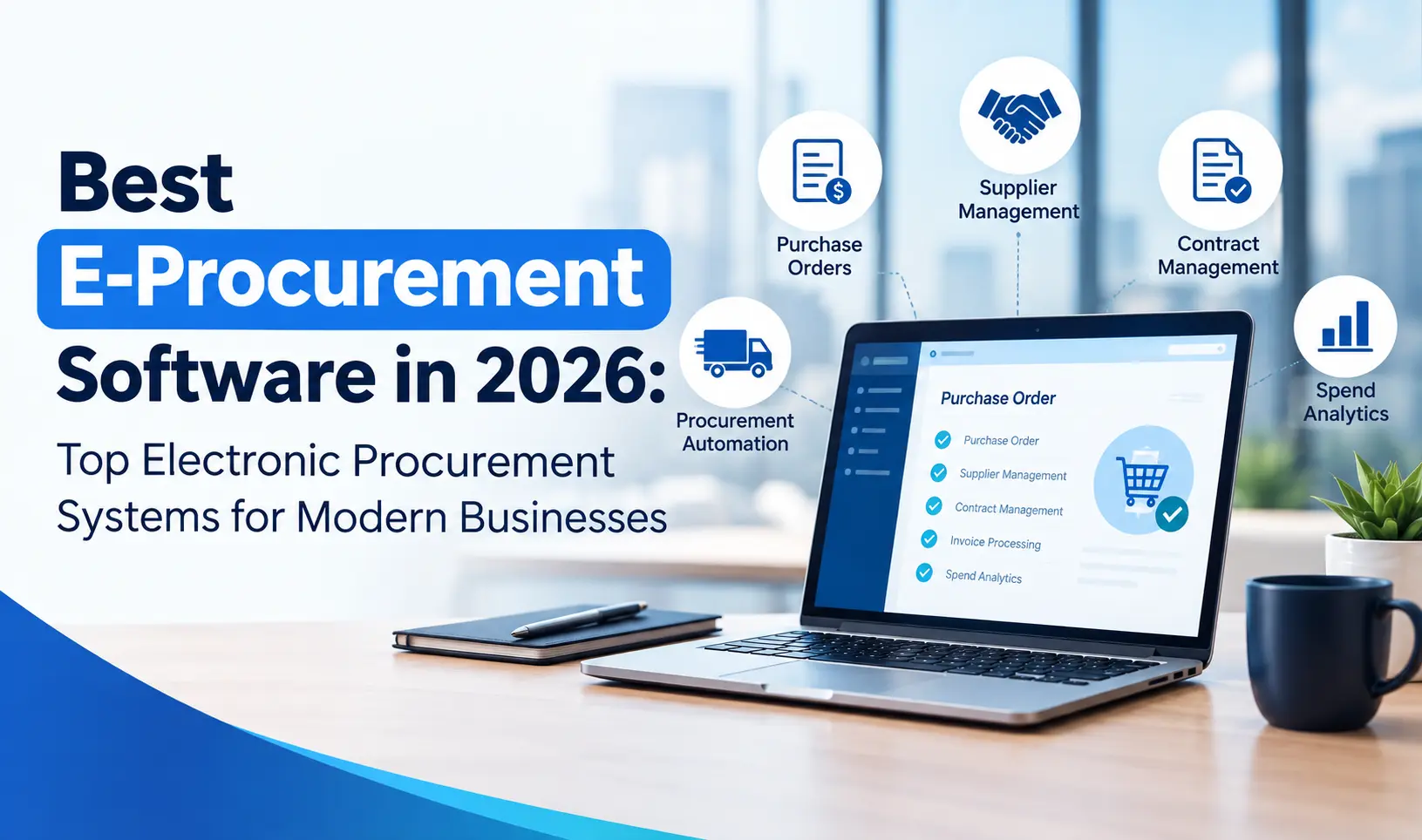
Best E-Procurement Software in 2026: Top Electronic Procurement Systems for Modern Businesses
Read More →
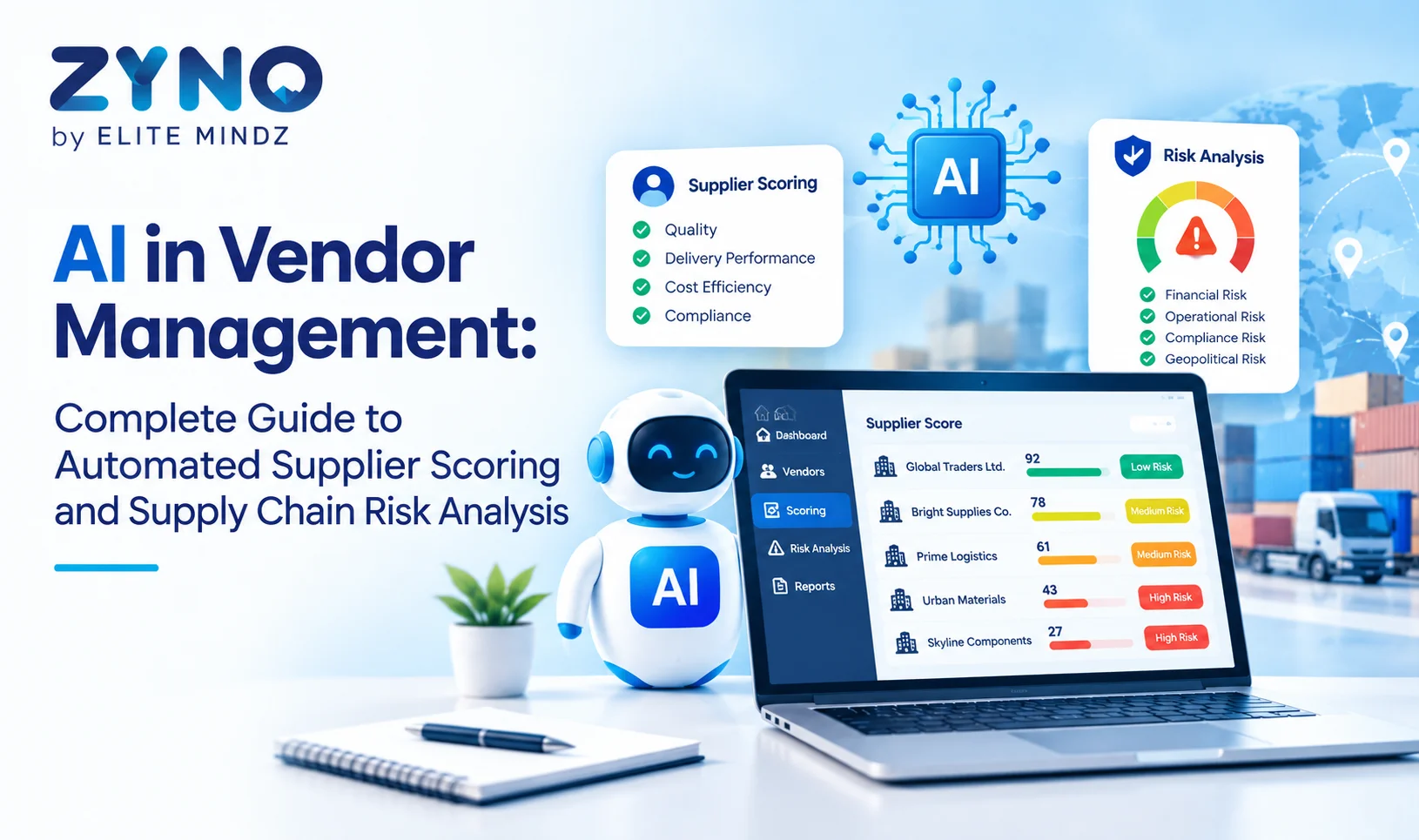
AI in Vendor Management: Complete Guide to Automated Supplier Scoring and Supply Chain Risk Analysis
Read More →
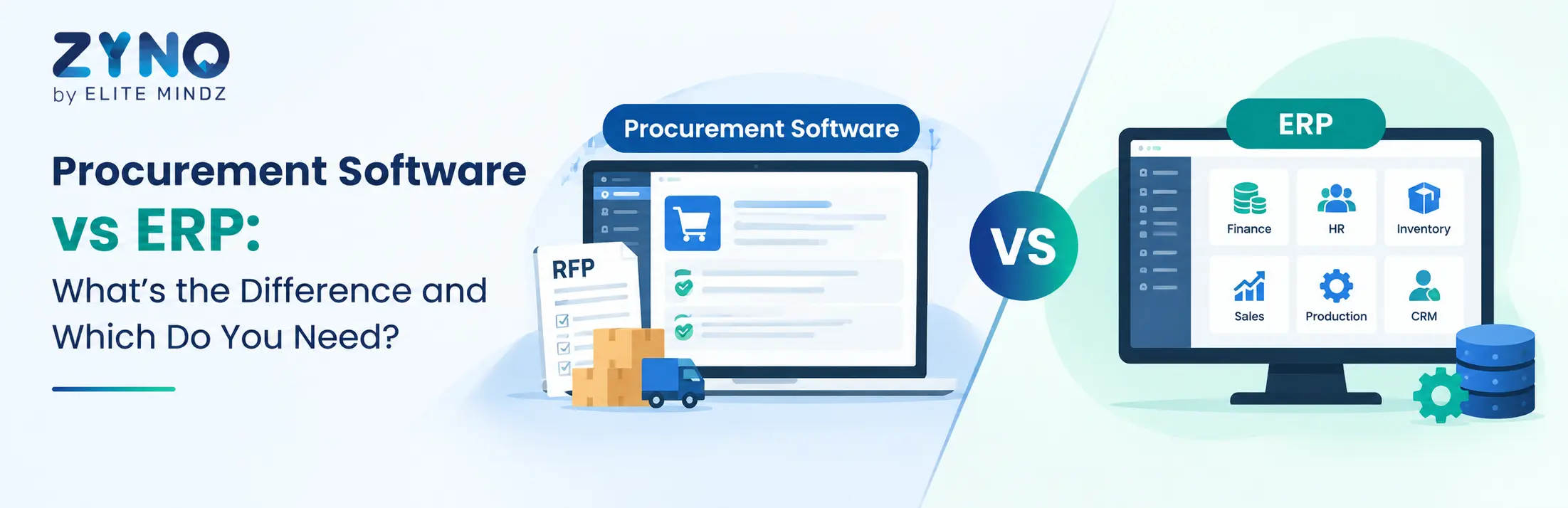
Procurement Software vs ERP: What's the Difference and Which Do You Need?
Read More →
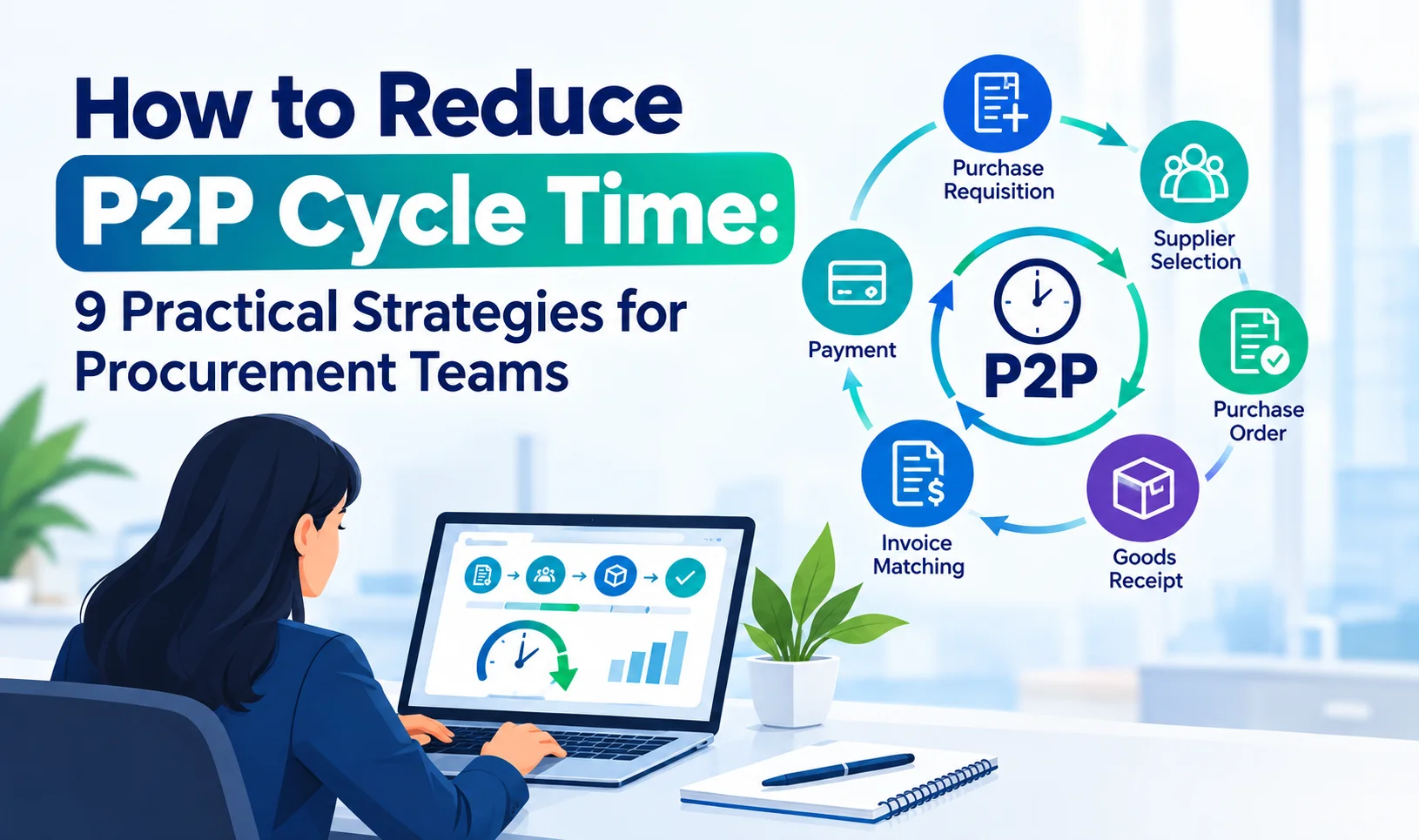
How to Reduce P2P Cycle Time: 9 Practical Strategies for Procurement Teams
Read More →
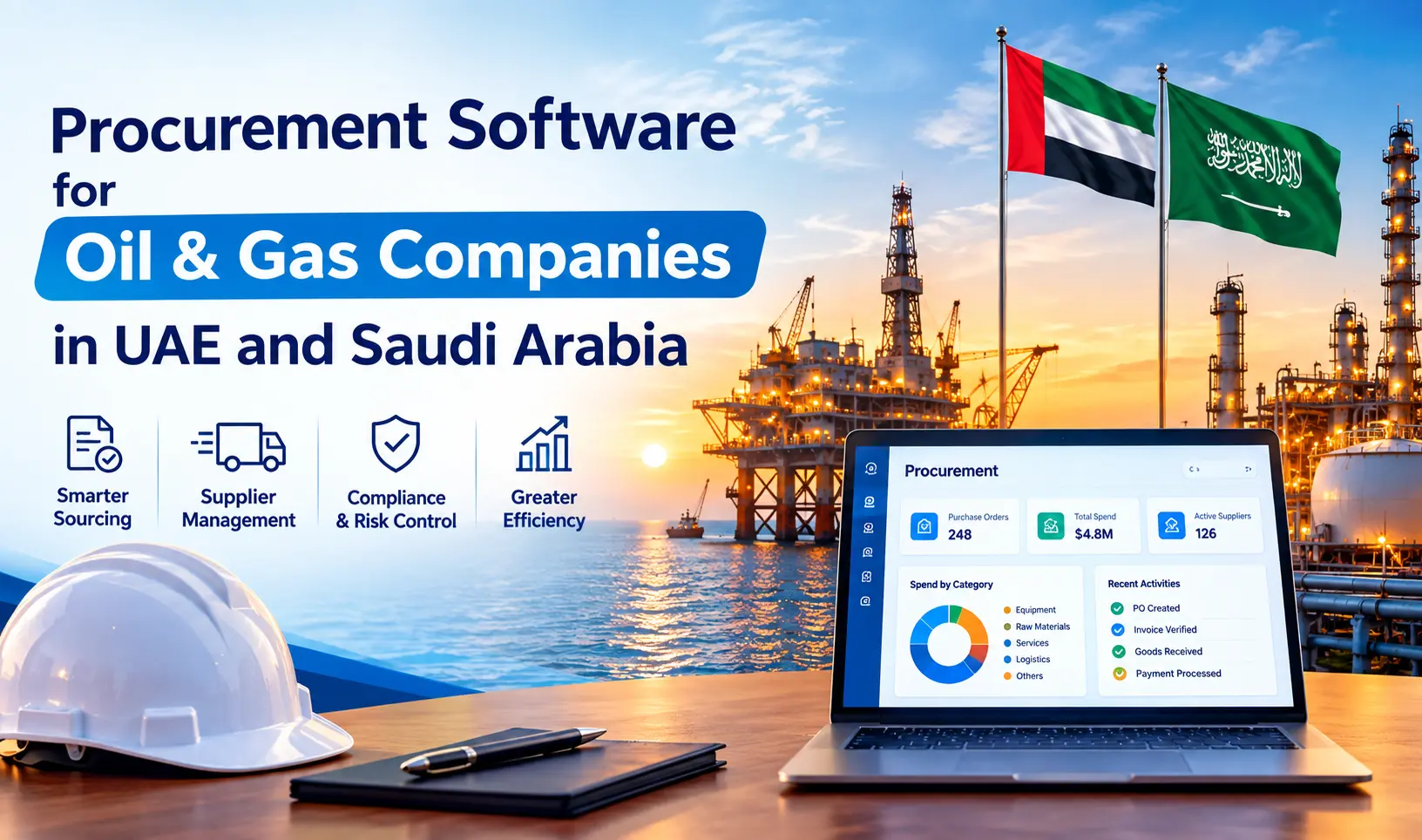
Procurement Software for Oil & Gas Companies in UAE and Saudi Arabia
Read More →
10 Vendor Onboarding Best Practices Every Business Should Follow (2026)
Read More →
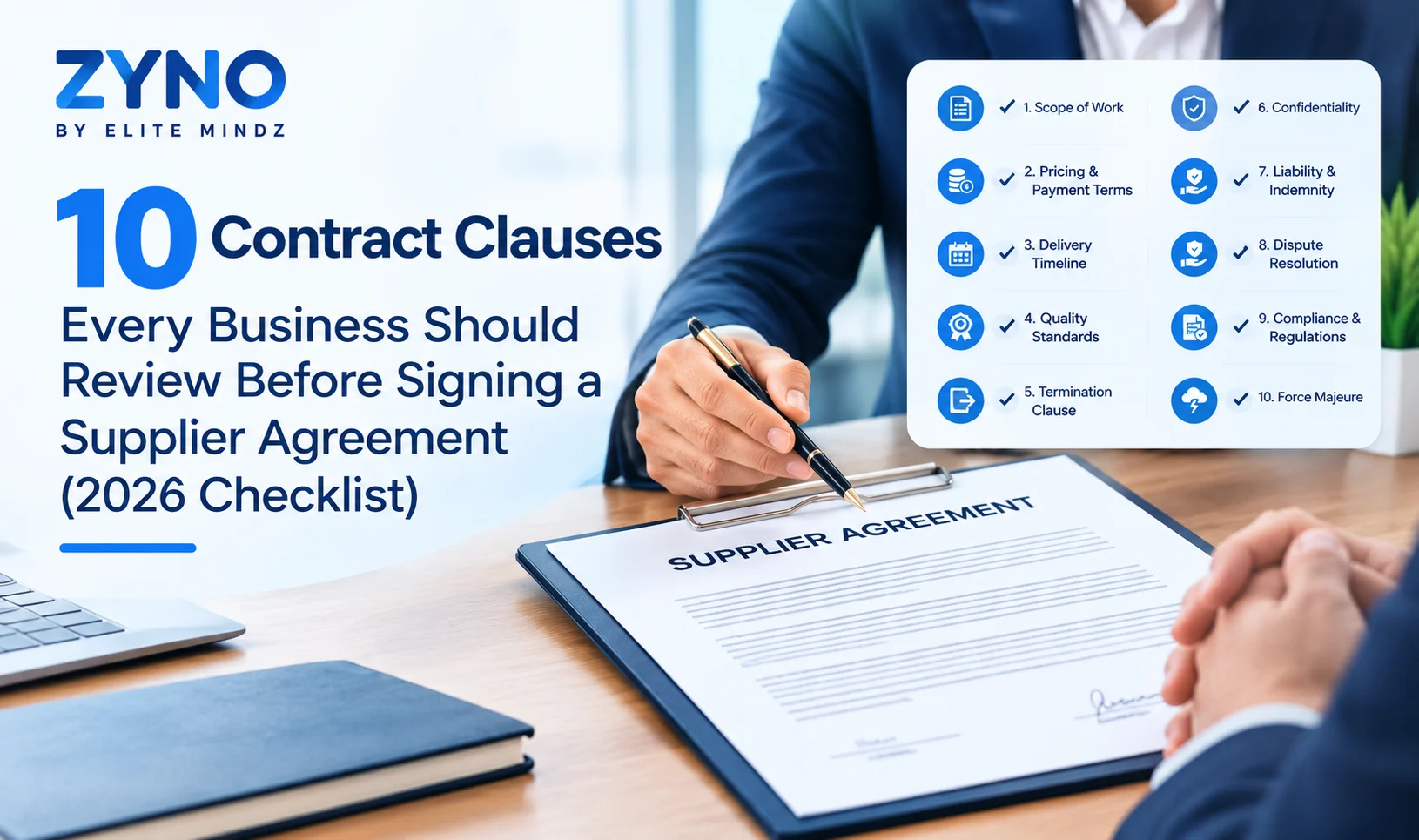
10 Contract Clauses Every Business Should Review Before Signing a Supplier Agreement (2026 Checklist)
Read More →
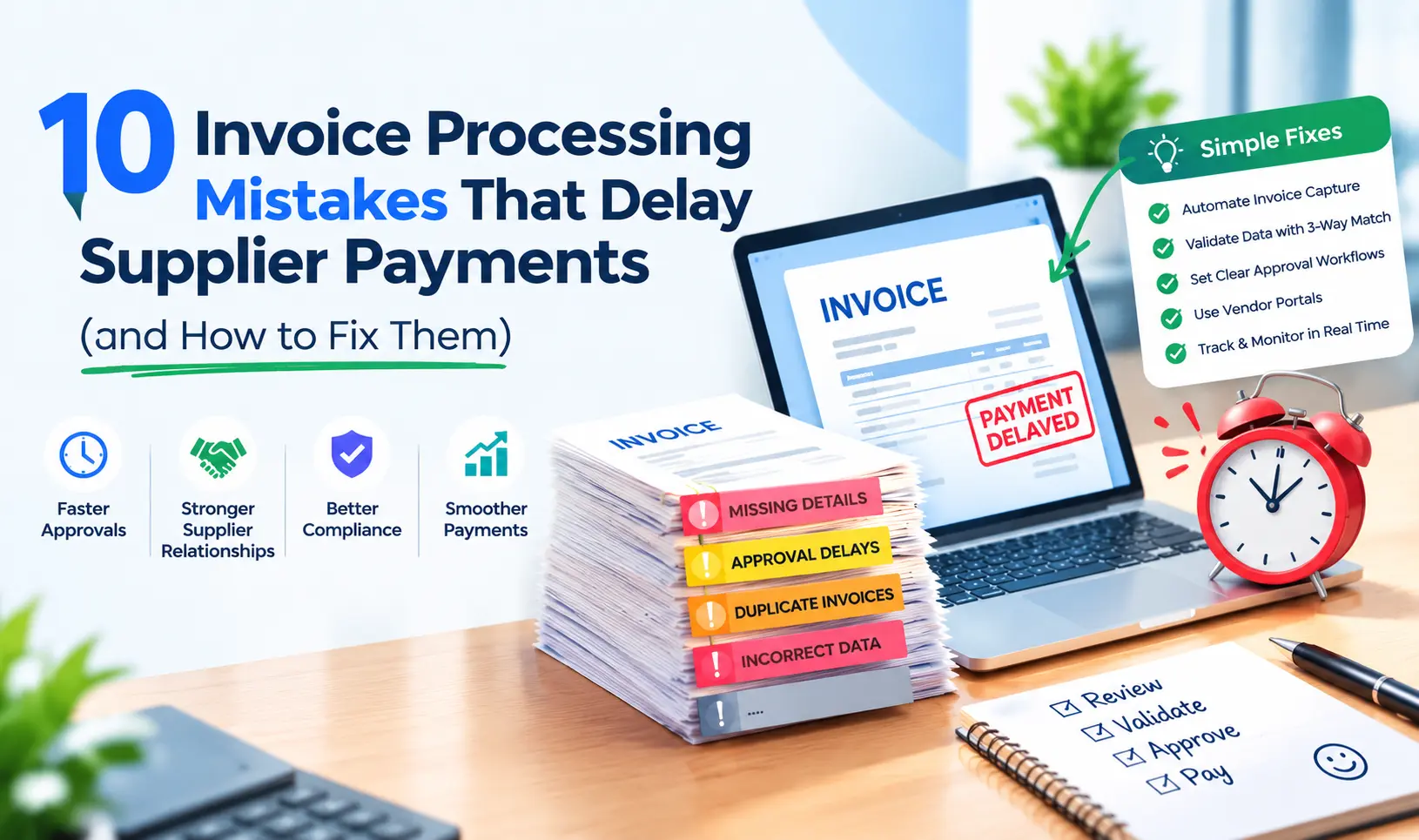
10 Invoice Processing Mistakes That Delay Supplier Payments (and How to Fix Them)
Read More →Partner with ZYNO by Elite Mindz to revolutionize how your business works. Fill out the form, and we’ll reach out with AI-powered solutions made just for you.
We use browser cookies to ensure you get the best experience on our website. Learn more
The form was submitted successfully!