What is ERP? A Beginner's Guide to Enterprise Resource Planning
Read More →

×
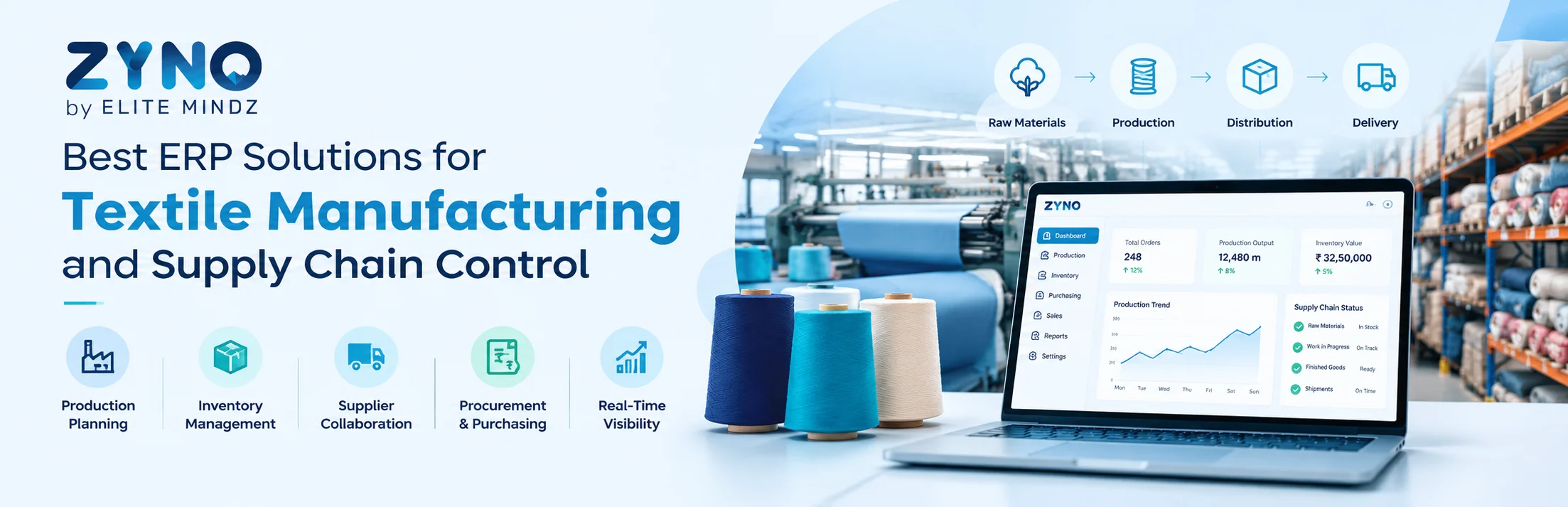
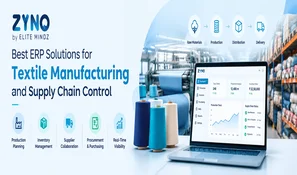
The best ERP solutions for textile manufacturing help businesses manage production, inventory, procurement, quality, costing, and supply chain operations from one platform. ZYNO ERP, SAP S/4HANA, Microsoft Dynamics 365, Oracle NetSuite, Infor CloudSuite, and Odoo are popular options. Businesses should compare features, scalability, customization, integration, implementation, and pricing before selecting the right solution.
Businesses using ZYNO Books cut accounting time by 70% and stay 100% ZATCA-compliant — automatically.
A buyer changes the shade on a 40,000-metre order. The dye house has already started. Yarn for the next lot is stuck with a supplier, and nobody can say how much fabric is actually sitting in WIP. If this sounds familiar, the problem is rarely your team. It is the lack of one connected system.
That is why ERP for textile manufacturing has moved from "nice to have" to a core business tool. This guide explains what a good textile ERP should do, how it improves supply chain control, which platforms are worth shortlisting, and how to choose the right one for your mill, processing unit, or garment factory.
Textile production does not behave like ordinary manufacturing. Material changes form at every stage, from fibre to yarn to greige fabric to dyed and finished goods, and weight, value, and wastage change with it.
Textile manufacturing ERP software is designed around these realities. It replaces scattered files with one live data source that production, stores, purchase, sales, and accounts all share.
Improve Textile Manufacturing with ZYNO ERP
Connect production planning, inventory, procurement, BOM management, costing, and supply chain operations with ZYNO ERP. Gain real-time visibility, reduce operational errors, and manage textile manufacturing processes more efficiently from one integrated ERP platform.
Get a Free Demo Explore ZYNO ERPGood textile production management software gives you control from yarn to finished product. Look for:
Textile inventory is measured in kilograms, metres, rolls, and pieces, often for the same item. Your ERP should handle multiple units of measure, batch, lot, and shade-wise stock, barcode or QR tracking, multi-warehouse visibility, and automatic reorder alerts. Raw material, WIP, and finished goods should stay clearly separated.
Yield and wastage vary by process, so simple costing misleads. Multi-level BOMs, process-wise costing, and actual-versus-standard comparison show which orders and styles actually make money.
Catching a defect at the finishing stage costs far more than catching it at weaving. Built-in inspection checkpoints, fabric roll grading, defect logging, and traceability back to the source batch protect both quality and customer relationships.
Integrated accounting, taxation, and invoicing remove double entry. Dashboards show order status, margins, and cash flow without waiting for month-end reports.
Efficient production means little if yarn arrives late or finished goods miss the shipping window. Textile supply chain management software inside your ERP links suppliers, factory, and customers in one flow.
Smarter procurement. Automate requisitions, compare vendor quotes, and score suppliers on price, quality, and on-time delivery. Over time, this reduces dependence on a handful of vendors and strengthens your negotiating position.
Demand-linked planning. When sales orders feed directly into material requirements and production plans, a buyer's change in quantity or date updates everything automatically instead of triggering a chain of phone calls.
Job-work visibility. Many textile businesses outsource dyeing, printing, or embroidery. Without tracking, material sent out and received back rarely reconciles. ERP records issues, receipts, job-work charges, and process losses, closing one of the biggest sources of hidden leakage.
Order-to-delivery transparency. When sales, production, stores, and dispatch see the same order status, delivery promises become accurate and firefighting reduces.
ERP for garment manufacturing adds another layer of complexity on top of fabric processes. The essentials include:
Because garment units juggle many styles at once, size-wise and colour-wise accuracy is what prevents packing errors and dispatch mismatches.
Not every platform labelled manufacturing ERP software understands textiles. Use these criteria when shortlisting ERP software for the textile industry:
Demo tip: Do not accept a generic demo. Ask the vendor to walk through one of your real scenarios, such as a dye lot rework, a job-work return with process loss, or a buyer's late order change. How they handle it tells you more than any feature list. Also speak to existing textile customers, because their experience reveals more than any brochure.

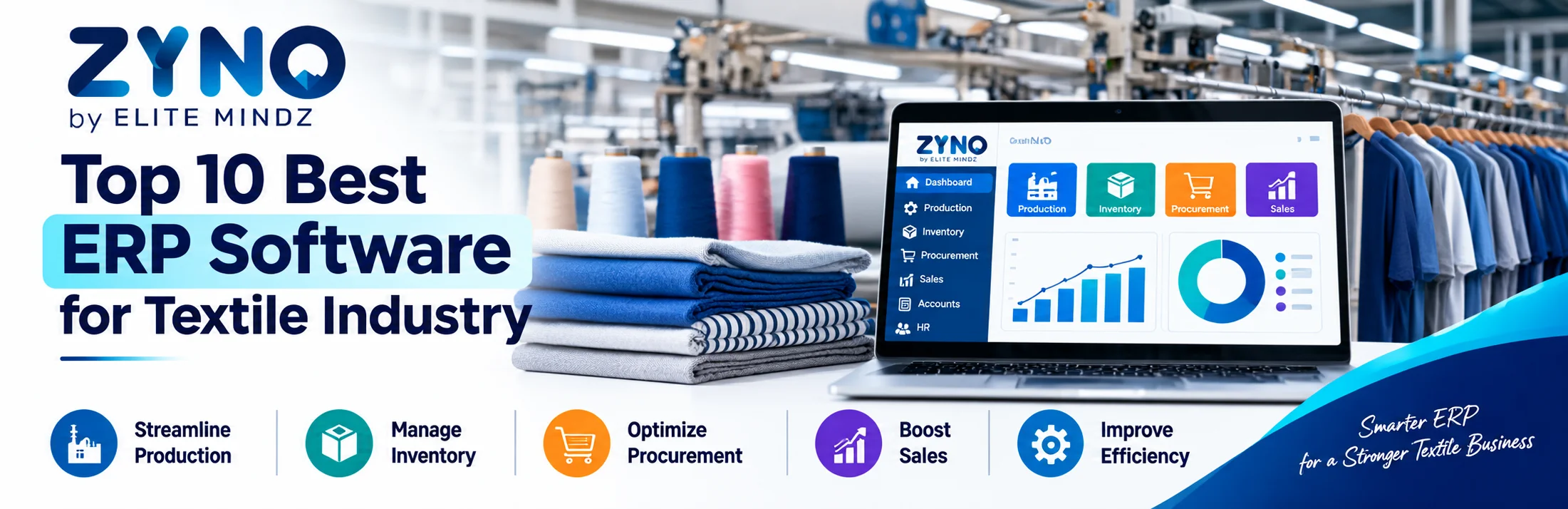
Choosing from dozens of vendors is hard, so we have shortlisted ten options that suit different business sizes, budgets, and production models. Some are global enterprise platforms and some are flexible mid-market or open-source options. Always request a demo against your own workflows before deciding.
ZYNO ERP is a modular business platform that connects production, inventory, procurement, sales, accounts, and HR on a single database. It suits manufacturers who want a system tailored to their processes rather than a one-size-fits-all package.
SAP S/4HANA is a leading enterprise-grade platform for large, multi-plant textile groups and exporters. It offers deep capabilities in production planning, supply chain, finance, and compliance, backed by strong analytics.
NetSuite is a cloud-based ERP known for unified financials, inventory, order management, and supply chain in one platform. Its cloud model reduces the need for on-site infrastructure.
Business Central combines finance, inventory, purchasing, and production in a familiar interface that integrates easily with Microsoft 365 and Power BI.
Infor offers industry-focused ERP, including solutions designed for apparel, footwear, and textile businesses. Its tools handle style, size, and colour matrices along with production and supply chain planning.
Odoo is a modular, open-core ERP with apps for manufacturing, inventory, purchase, sales, and accounting. Its flexibility makes it popular with smaller businesses that want to build up gradually.
Epicor Kinetic is built for manufacturers and offers strong shop-floor control, scheduling, and quality management. It works well for businesses with complex production routings.
Sage X3 is a mid-market ERP that covers finance, manufacturing, inventory, and purchasing, with support for multiple entities and regulatory requirements.
Ramco offers ERP and HR solutions with a strong presence in Asia and the Middle East. Its manufacturing capabilities cover planning, procurement, and shop-floor execution.
ERPNext is an open-source ERP with modules for manufacturing, stock, buying, selling, and accounting. Without licence fees, it appeals to businesses with in-house technical skills or a trusted implementation partner.
Streamline Textile Manufacturing with ZYNO ERP
Manage textile production, inventory, procurement, BOMs, costing, and supply chain operations with ZYNO ERP. Improve production visibility, optimize resources, reduce manual processes, and manage end-to-end manufacturing operations from one integrated ERP platform.
Request a Free Demo Explore ZYNO ERPThe best ERP solutions for textile manufacturing bring production, inventory, quality, and supply chain visibility onto one platform. The result is lower wastage, shorter lead times, accurate costing, and decisions based on live data rather than guesswork. Match the vendor to your size, test it against your real workflows, and roll it out in phases. That is how an ERP becomes a competitive advantage rather than just another software expense.
1. What is ERP for textile manufacturing?
It is integrated software that connects production, inventory, procurement, quality, sales, and finance in one system, built to handle the multi-stage, variant-heavy nature of textile operations.
2. How does ERP improve supply chain control for textile companies?
It gives real-time visibility into supplier performance, material availability, production progress, and delivery status, so teams can plan ahead and respond quickly to changes.
3. Can ERP track batch, lot, and shade?
Yes. Textile-focused ERP tracks items by batch, lot, and shade, allowing any fabric roll or garment to be traced back to its source material and process.
4. Is ERP suitable for small and mid-sized textile manufacturers?
Yes. Modular, cloud-based ERP lets smaller units start with essential modules and add more as they grow, keeping upfront costs manageable.
5. What is the difference between textile ERP and garment ERP?
Textile ERP focuses on spinning, weaving, dyeing, and finishing. Garment ERP adds style management, size-colour matrices, cutting, stitching lines, and buyer-specific shipping needs. Many solutions cover both.
What is ERP? A Beginner's Guide to Enterprise Resource Planning
Read More →
Cloud ERP vs. On-Premise vs. Hybrid: Best ERP Model for 2025
Read More →How To Customize ERP Software Without Breaking The Bank?
Read More →
The Future of Manufacturing ERP in 2026 & Beyond
Read More →Best ERP Software in India: 2026 Edition
Read More →
AI in Manufacturing ERP: The Future of Smart Factories
Read More →
How ERP Transforms Inventory Management and Reduces Costs
Read More →
Inventory Management Software Features: The Complete 2026 Buying Guide
Read More →
Top 5 Ways Asset Management Software Can Save Your Business Money
Read More →
Why Smart Businesses Are Switching to Vendor Management Systems in 2025?
Read More →
Why Manufacturing Companies Need ERP Software
Read More →
Cloud ERP vs. Traditional ERP: Which is Right for You?
Read More →
ERP for Small Business: Is It Worth the Investment?
Read More →
How to Calculate ERP ROI and Why It's Worth the Investment
Read More →
Top 10 ERP Software Companies in India 2026 Updated List (Complete Guide)
Read More →
ERP Implementation Mistakes to Avoid in 2025
Read More →
Cloud ERP vs Edge Computing: What's Right for Modern Manufacturing?
Read More →
The Future of ERP Software and the Role of Generative AI
Read More →
Digital Twin Technology & ERP: Real-Time Insights for Smarter Manufacturing
Read More →
Scalable ERP Solutions Designed for Modern Enterprises
Read More →
ERP and IoT Integration: Smart Factory Vision
Read More →Best ERP Software for Manufacturing Businesses in India
Read More →Top 10 Best Manufacturing ERP Software in India (2026)
Read More →
Best ERP Software for Manufacturing Industries in Ethiopia (2026)
Read More →
Best School ERP Software Providers in UAE (2025 Edition)
Read More →
Best School ERP Software for 2025: Guide for Educational Institutions
Read More →
Top 10 ERP Software Solutions for Nigerian Manufacturers (2025 Edition)
Read More →
Best ERP Systems for Scalable Retail and POS Integration
Read More →
Top 10 Cloud-Based Manufacturing ERP Solutions in Africa (2025 Edition)
Read More →
Top 10 Cloud-Based Manufacturing ERP in UAE
Read More →
Top 10 Cloud-Based Manufacturing ERP Software in Nigeria (2026 Edition)
Read More →
Top 10 School ERP Software Companies in Kenya (2025)
Read More →
Best School ERP Software Providers in Nigeria (2025)
Read More →
Top Cloud-Based Manufacturing ERP in Zimbabwe (2025)
Read More →
Best ERP Software in U.K
Read More →
Top 10 ERP Software Developers in the U.K. (2025)
Read More →
Best ERP Software Providers in France (2025)
Read More →
Best ERP Software Companies in Germany : A Comprehensive Guide
Read More →
Top 10 ERP Software Development Companies in Qatar
Read More →
Best ERP Providers in Germany: 10 ERP Software Options Compared
Read More →
Best ERP Software Firms in Saudi Arabia (2025)
Read More →
Best ERP Service Providers in Indonesia for SMEs and Large Enterprises
Read More →
Top 10 Cloud-Based Manufacturing ERP Systems in Egypt for Modern Factories
Read More →
Top ERP Solutions in the USA 2025: Streamline Your Business with ZYNO ERP
Read More →
Top ERP Solutions in Qatar for Businesses of All Sizes
Read More →Top Manufacturing ERP Software in India 2026 ZYNO Manufacturing ERP
Read More →How Manufacturing Companies Reduce Production Delays Using ERP Automation
Read More →Why Legal Firms Need ERP to Manage Cases, Billing & Compliance
Read More →What Is ERP And How Does It Work
Read More →
How ERP Systems Are Evolving in 2026: What Businesses Need to Know
Read More →
Best ERP Software in India: 2025 Edition
Read More →
Top 10 ERP Software Companies in Delhi NCR
Read More →
How Manufacturing ERP Software Improves Demand Forecasting
Read More →
Top 10 Best School Management Software in India
Read More →Manufacturing & Wholesale ERP in Qatar: Complete Industry Guide 2026
Read More →Cloud ERP Software in Qatar: Why Businesses Are Moving in 2026
Read More →Is ERP a Procurement Software? Key Differences, Benefits & What to Choose
Read More →What Is Production Planning and Control? Definition, Objectives & Functions
Read More →
Garment Inventory Software: Features, Providers & Buying Guide (2026)
Read More →
How ERP Reduces Fabric Wastage in Garment Factories
Read More →
Why the Garment Industry Needs a Specialized ERP
Read More →
Features to Look for in Garment Manufacturing ERP Software
Read More →
Best ERP Software for Small Garment Manufacturing Business in India
Read More →
The Real Problems Holding Back Small Garment Manufacturers in India
Read More →Garment Manufacturing ERP Software in India: Best Options, Features & Complete Guide 2026
Read More →
Which ERP is Best for Manufacturers in 2026?
Read More →
Distributor & Consumer Management System: The Complete Guide for 2026
Read More →
Best Pharma ERP Software in India 2026 – Features, Compliance & Buying Guide
Read More →
SAP Alternative for Manufacturing in India (2026): 6 Options Compared Honestly
Read More →
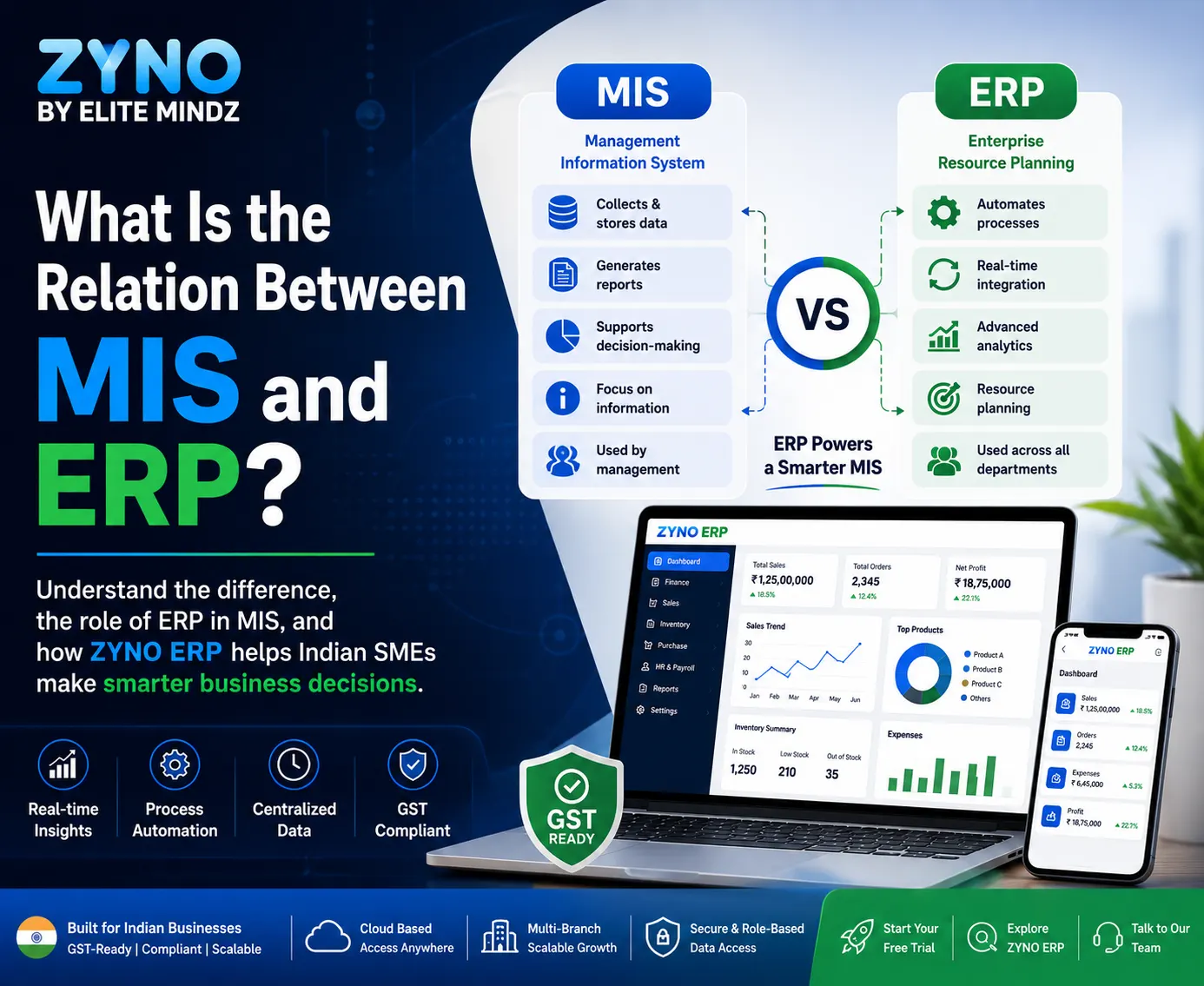
What Is the Relation Between MIS and Enterprise Resource Planning?
Read More →
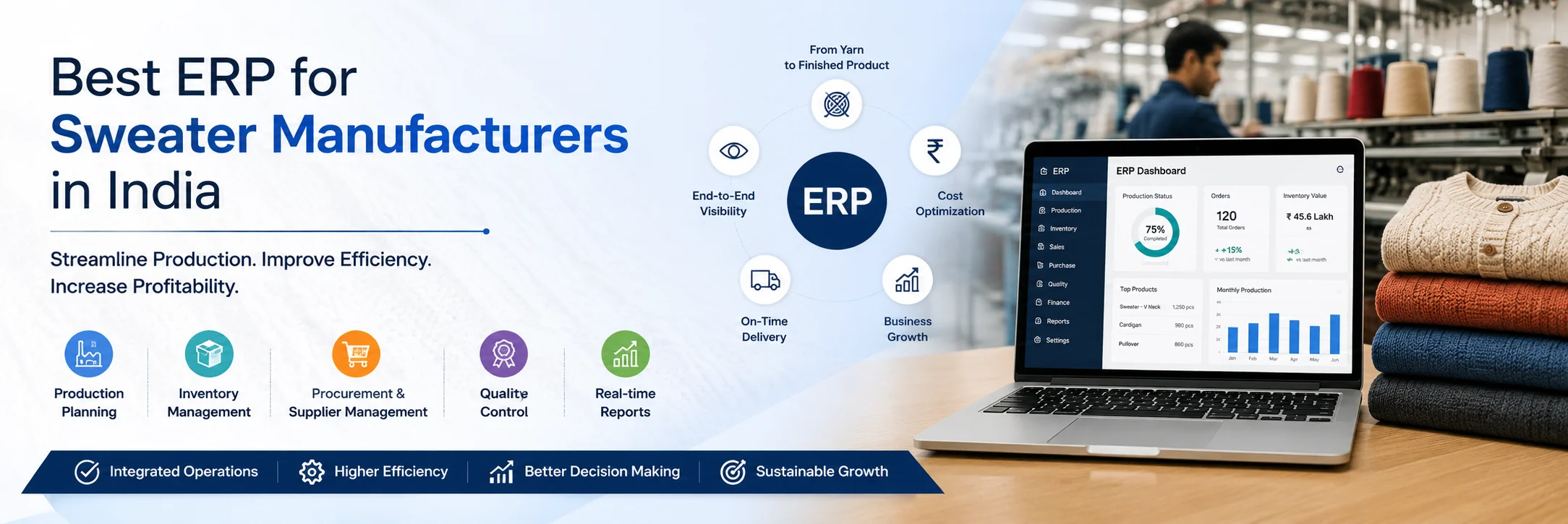
Best ERP for Sweater Manufacturers in India
Read More →
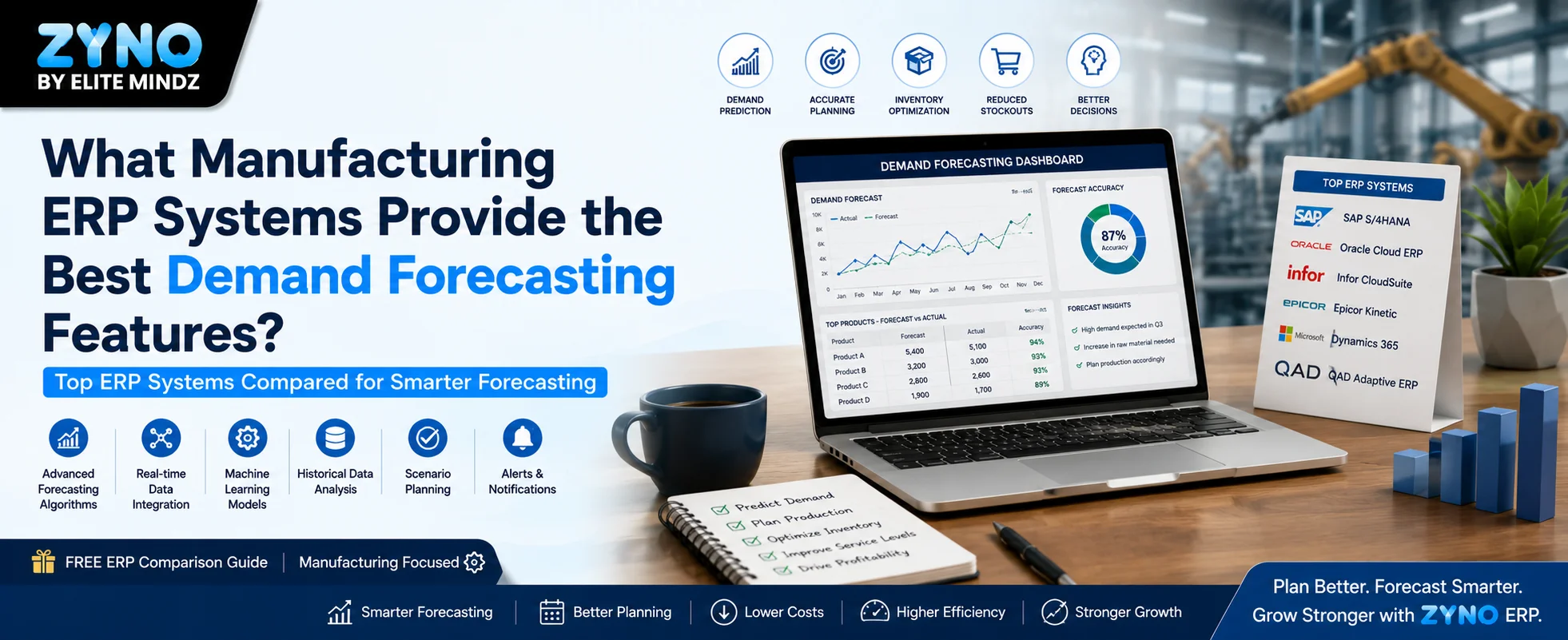
What Manufacturing ERP Systems Provide the Best Demand Forecasting Features?
Read More →
Which ERP Software Provides the Best Demand Forecasting for Manufacturers?
Read More →
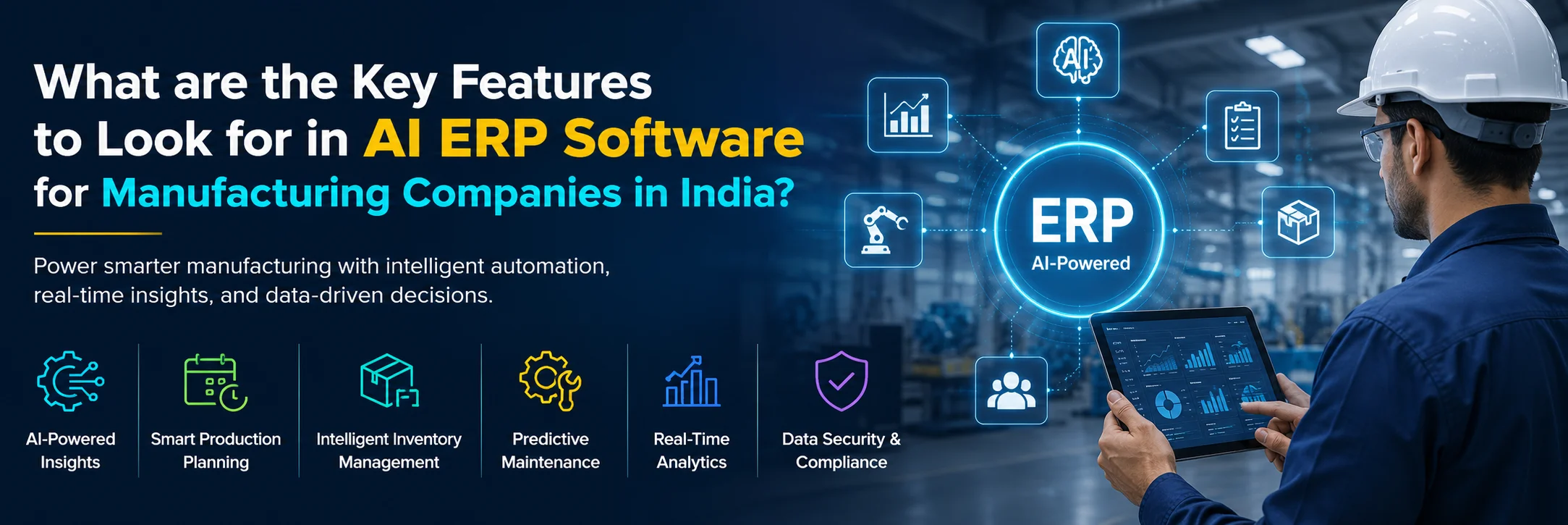
What are the key features to look for in AI ERP software for manufacturing companies in India?
Read More →
How does AI-powered ERP software improve production planning and inventory management in manufacturing?
Read More →
Which AI ERP platforms are best suited for small and mid-sized manufacturing businesses in India?
Read More →
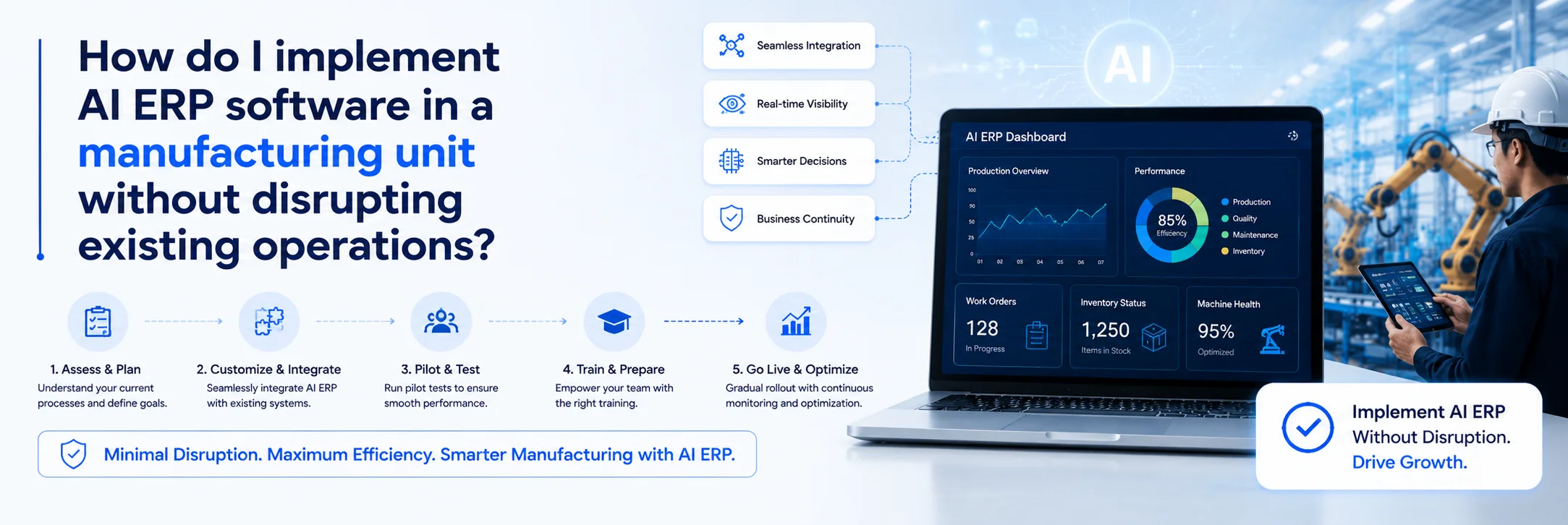
How do I implement AI ERP software in a manufacturing unit without disrupting existing operations?
Read More →
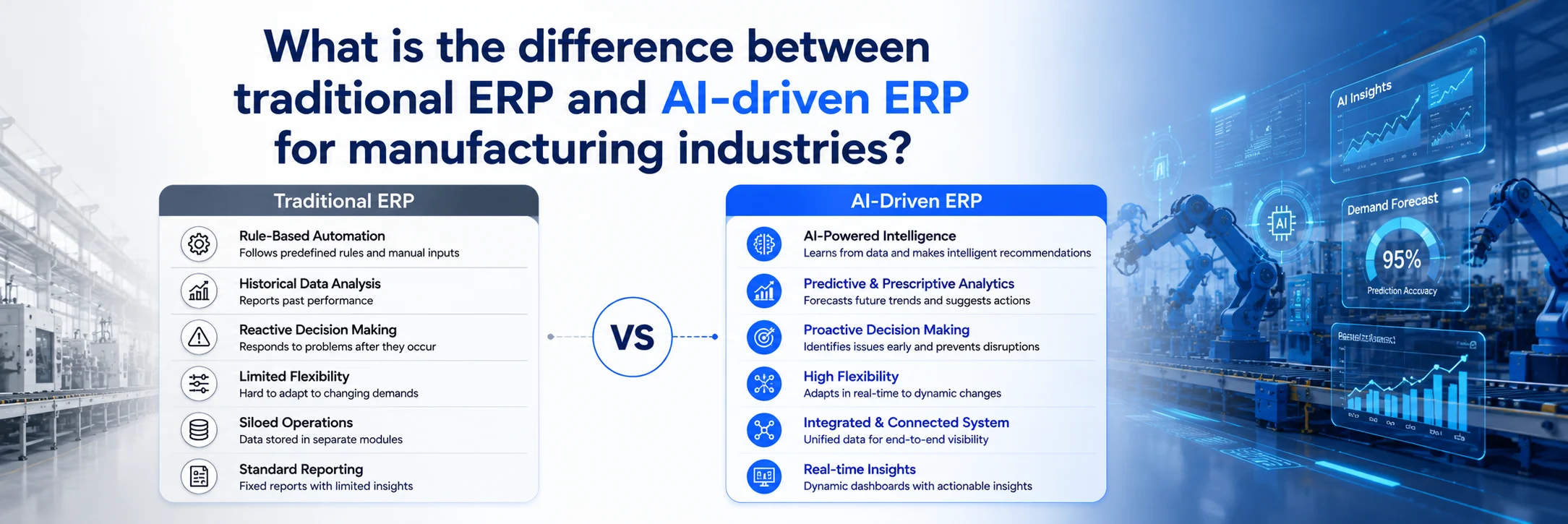
What is the difference between traditional ERP and AI-driven ERP for manufacturing industries?
Read More →
AI-Powered Smart ERP Software: The Complete Guide for Modern Enterprises
Read More →
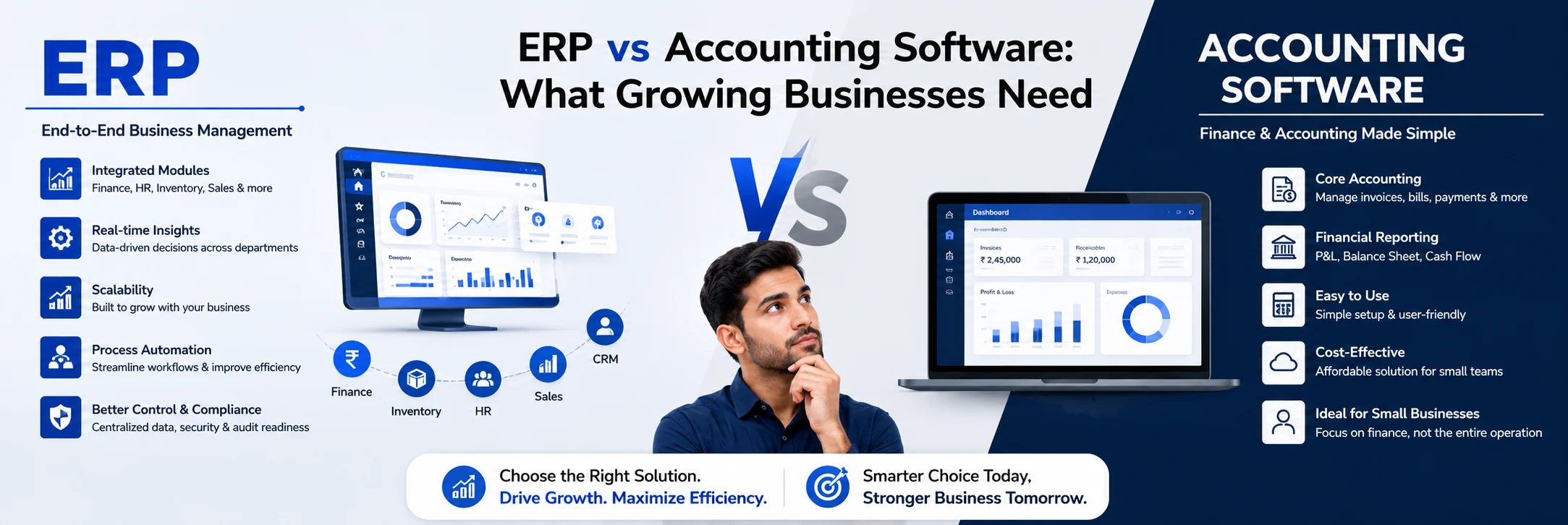
ERP vs Accounting Software: What Growing Businesses Need
Read More →
Signs Your Business Has Outgrown Excel and Needs an ERP
Read More →
How to Index HR Records from an ERP System for a Chatbot?
Read More →
What is the Best Software for Retail Garment Shop?
Read More →
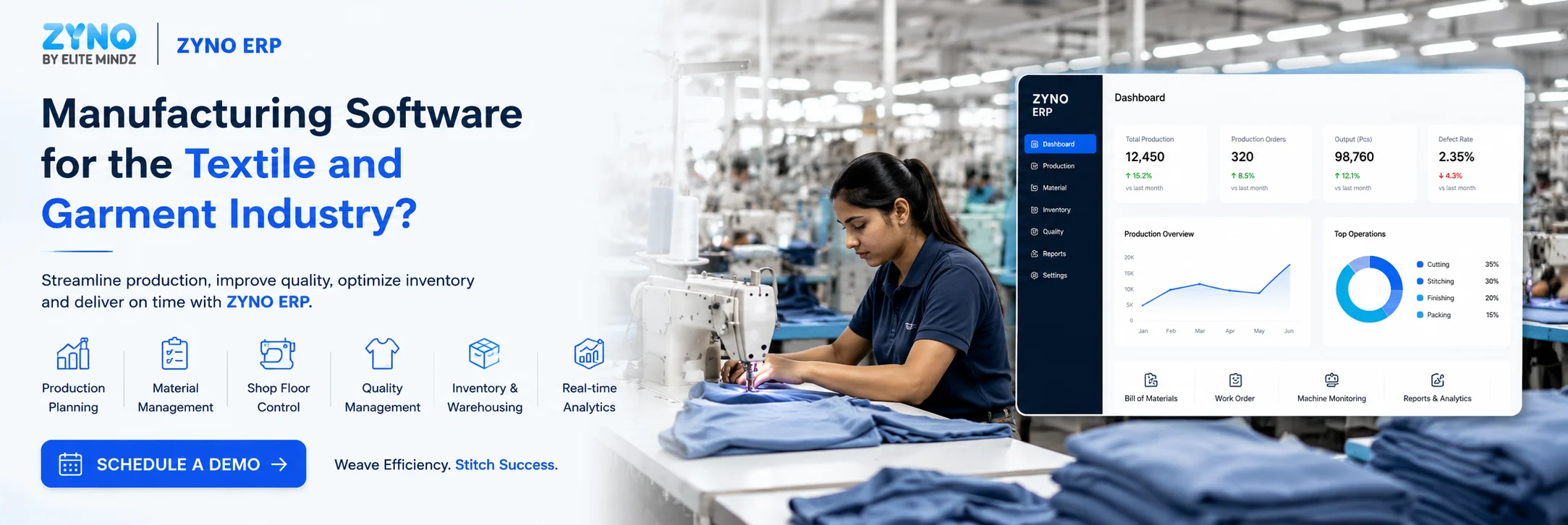
Manufacturing Software for the Textile and Garment Industry?
Read More →
Best ERP Software for Manufacturing Companies in India?
Read More →
How ERP Reduces Production Costs and Improves Profitability?
Read More →
Which ERP Software is Mostly Used in Garment Retail Shop?
Read More →
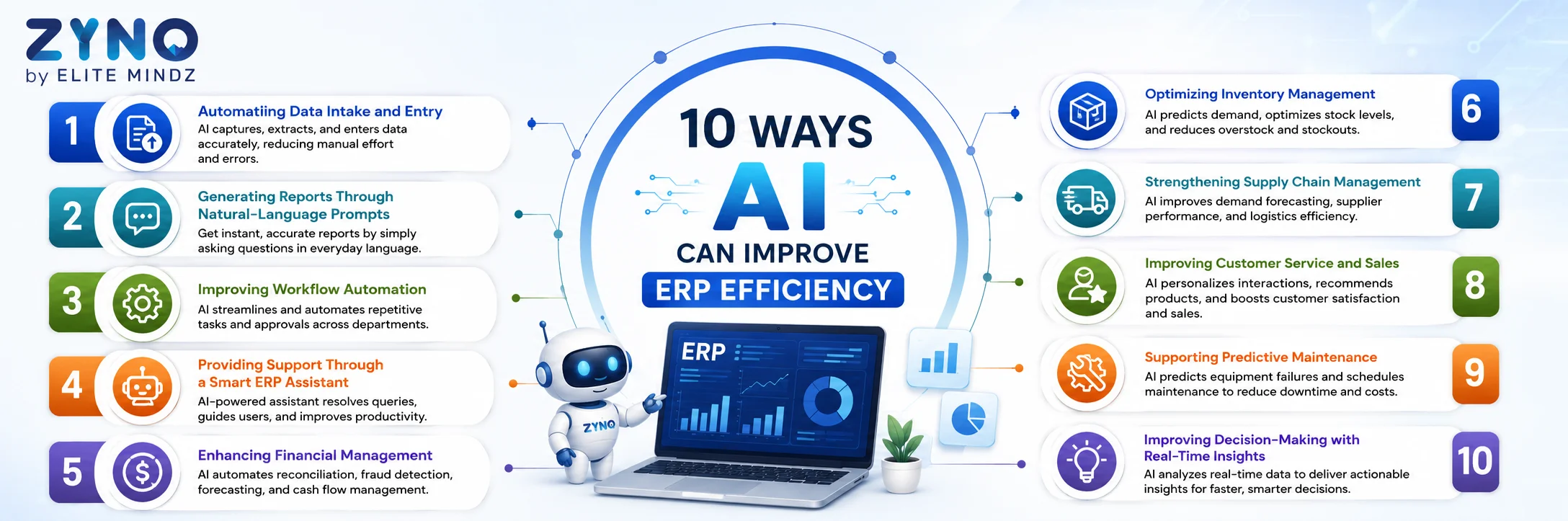
10 Ways AI Can Improve ERP Efficiency
Read More →
Top 8 Odoo Alternatives for Your Business
Read More →
ZYNO vs NetSuite ERP: Which Manufacturing ERP Fits Your Business Needs?
Read More →
Top ERP Software Providers in 2026: Full Comparison
Read More →
ERP Software Reviews: What Buyers Actually Say in 2026
Read More →
ERP Software for Retail Businesses: Complete Guide
Read More →
ERP Software for Healthcare: Beyond Patient Records
Read More →
ERP Software for Logistics Companies: A Complete Guide
Read More →
Best ERP Software for SaaS Companies in 2026
Read More →
Cloud ERP Software Features: The Complete List for 2026
Read More →
Top ERP Software in Kenya (2026): Best Picks for Growing Businesses
Read More →
How eTIMS Affects Manufacturers in Kenya: ERP, Input Tax & Supply Chain Impact
Read More →
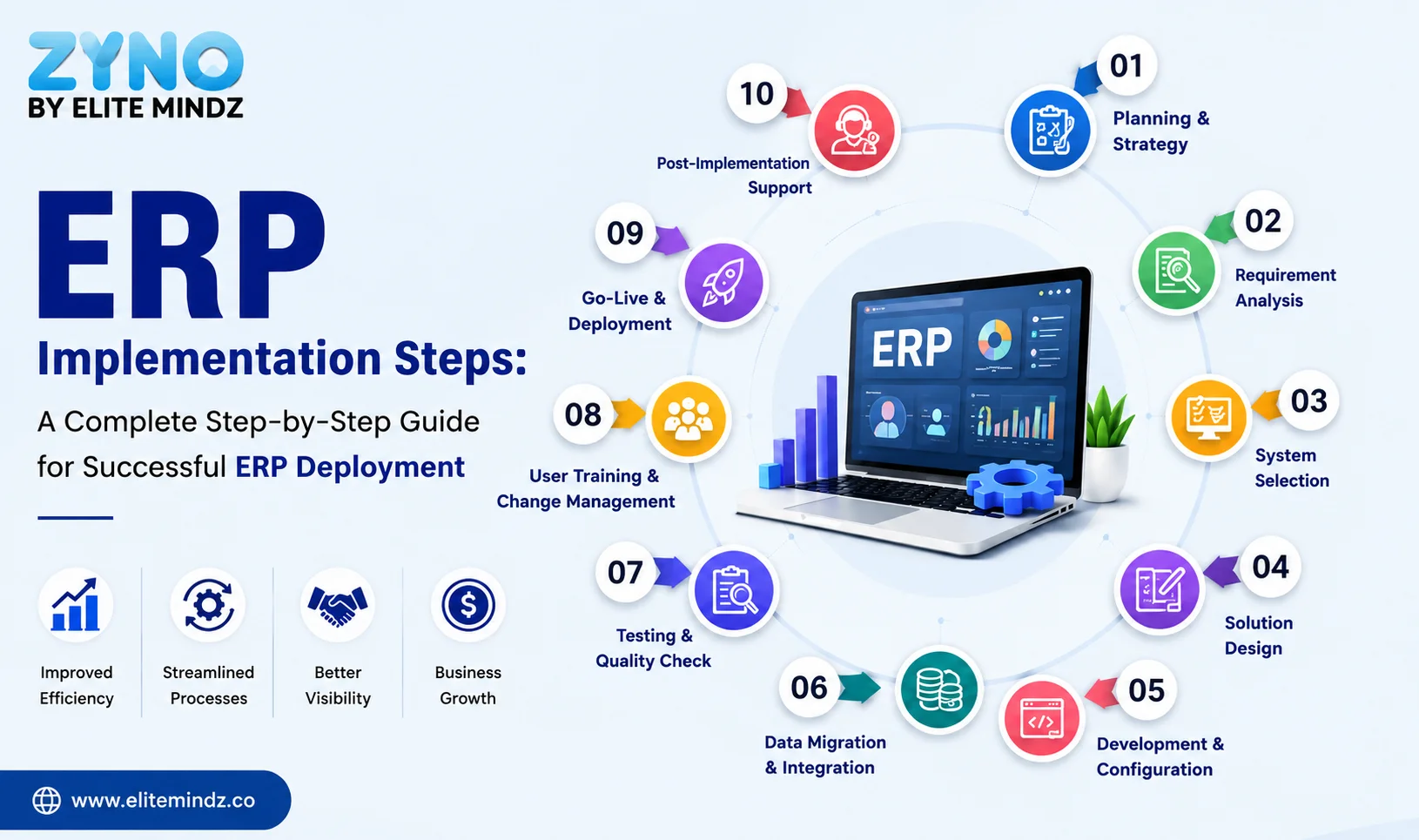
ERP Implementation Steps: A Complete Step-by-Step Guide for Successful ERP Deployment
Read More →
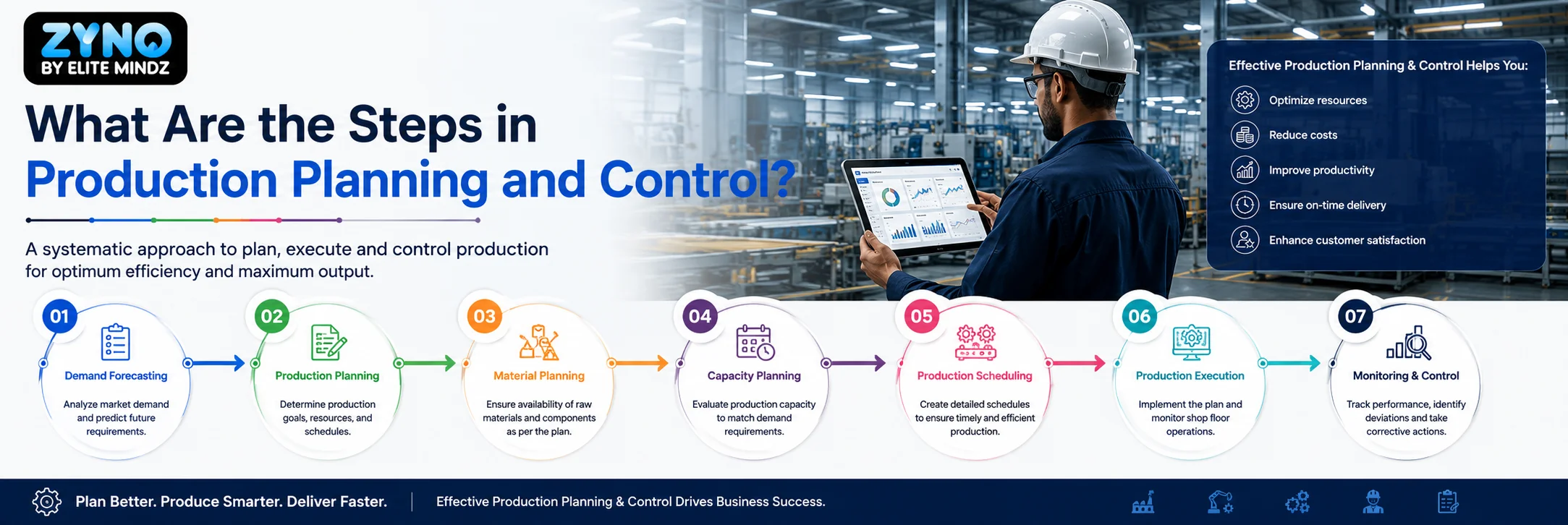
What Are the Steps in Production Planning and Control?
Read More →
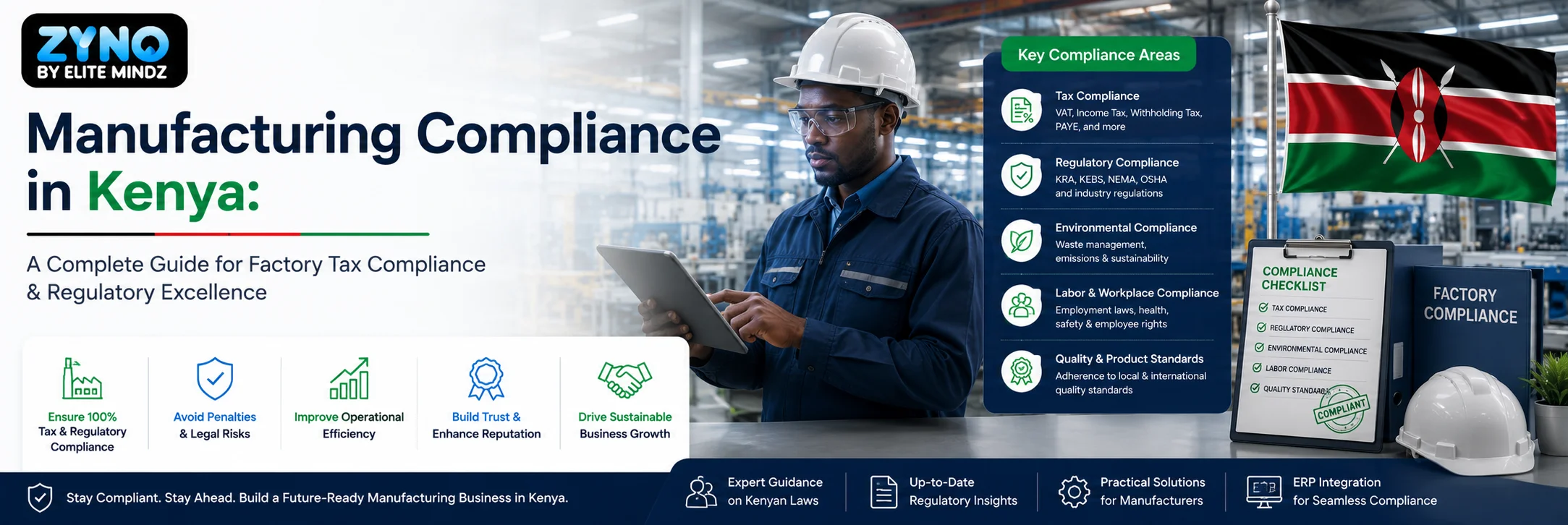
Manufacturing Compliance in Kenya: A Complete Guide for Factory Tax Compliance & Regulatory Excellence
Read More →
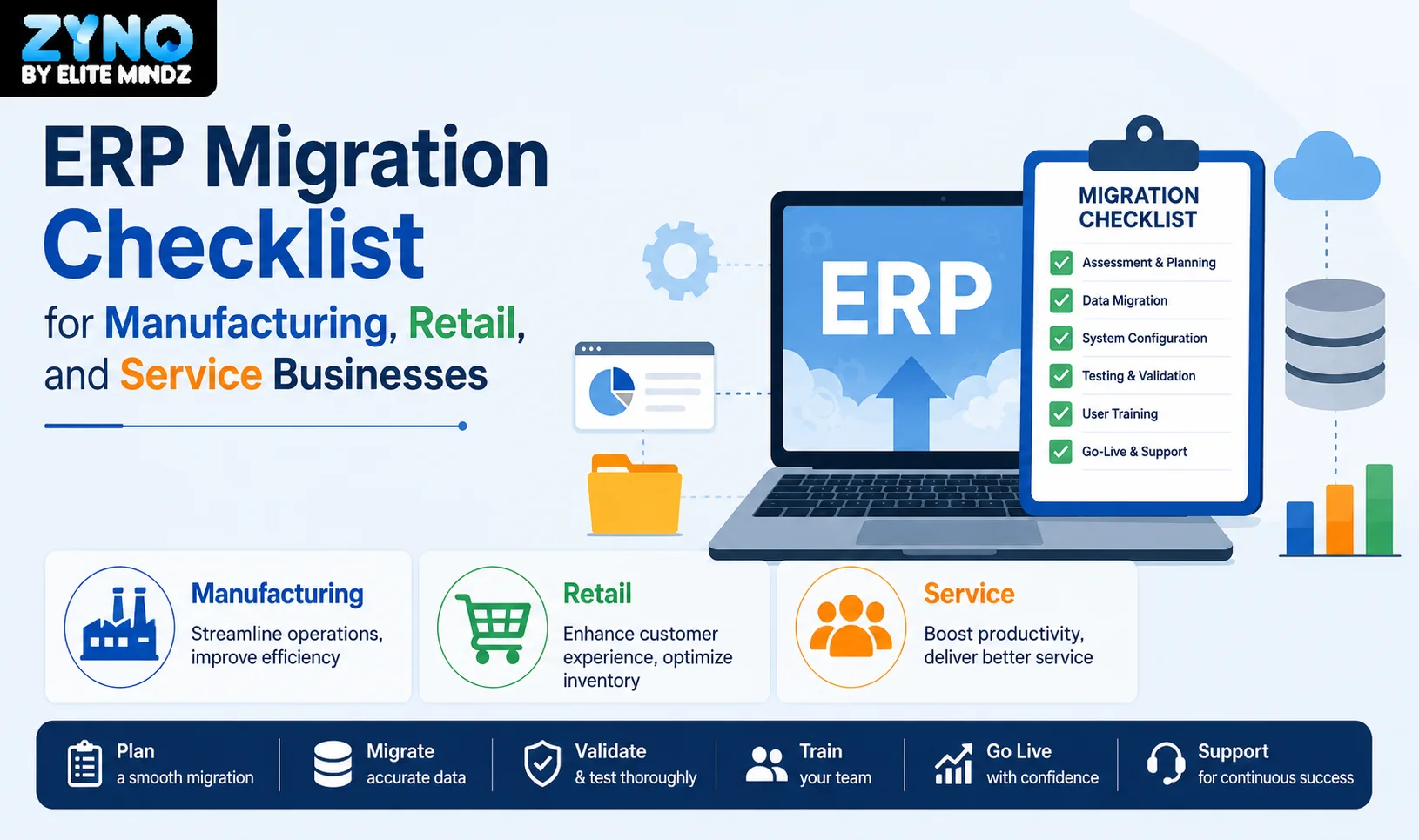
ERP Migration Checklist for Manufacturing, Retail, and Service Businesses
Read More →
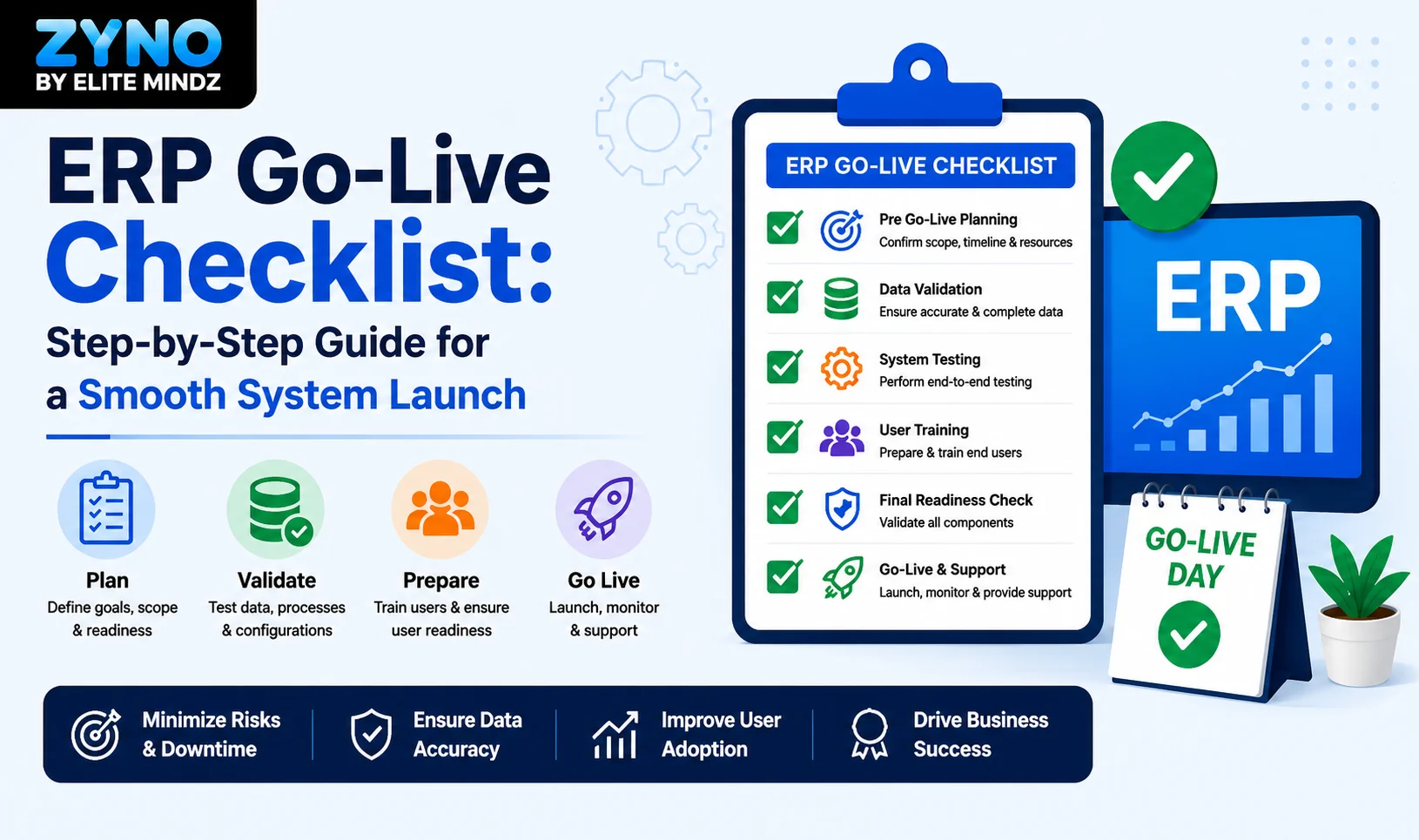
ERP Go-Live Checklist: Step-by-Step Guide for a Smooth System Launch
Read More →
Best ERP Software in the Middle East: What Actually Matters in 2026
Read More →
ERP Training Best Practices: Essential Tips for a Smooth ERP Implementation
Read More →
Traceability in Manufacturing: Cost Effective Solution and Complete Information
Read More →
Manufacturing ERP Software Buying Guide: Features, Checklist & Questions to Ask Before You Invest
Read More →
20 Best ERP Software in Japan (2026): Top AI-Powered & Cloud ERP Platforms Ranked
Read More →
10 Best ERP Software for Metal Manufacturing Companies: Features, Checklist & Buying Guide (2026)
Read More →How Manufacturing ERP Helps Ethiopian Factories Improve Production Planning & Cost Control
Read More →
Top 15 Business Management Software for Growing Businesses in 2026
Read More →
Why These Are the Top 15 Small Business ERP Systems for 2026
Read More →
BOM Management Software: A Complete Guide to Smarter Manufacturing
Read More →
Which Companies Build Affordable Manufacturing ERP Software in India?
Read More →
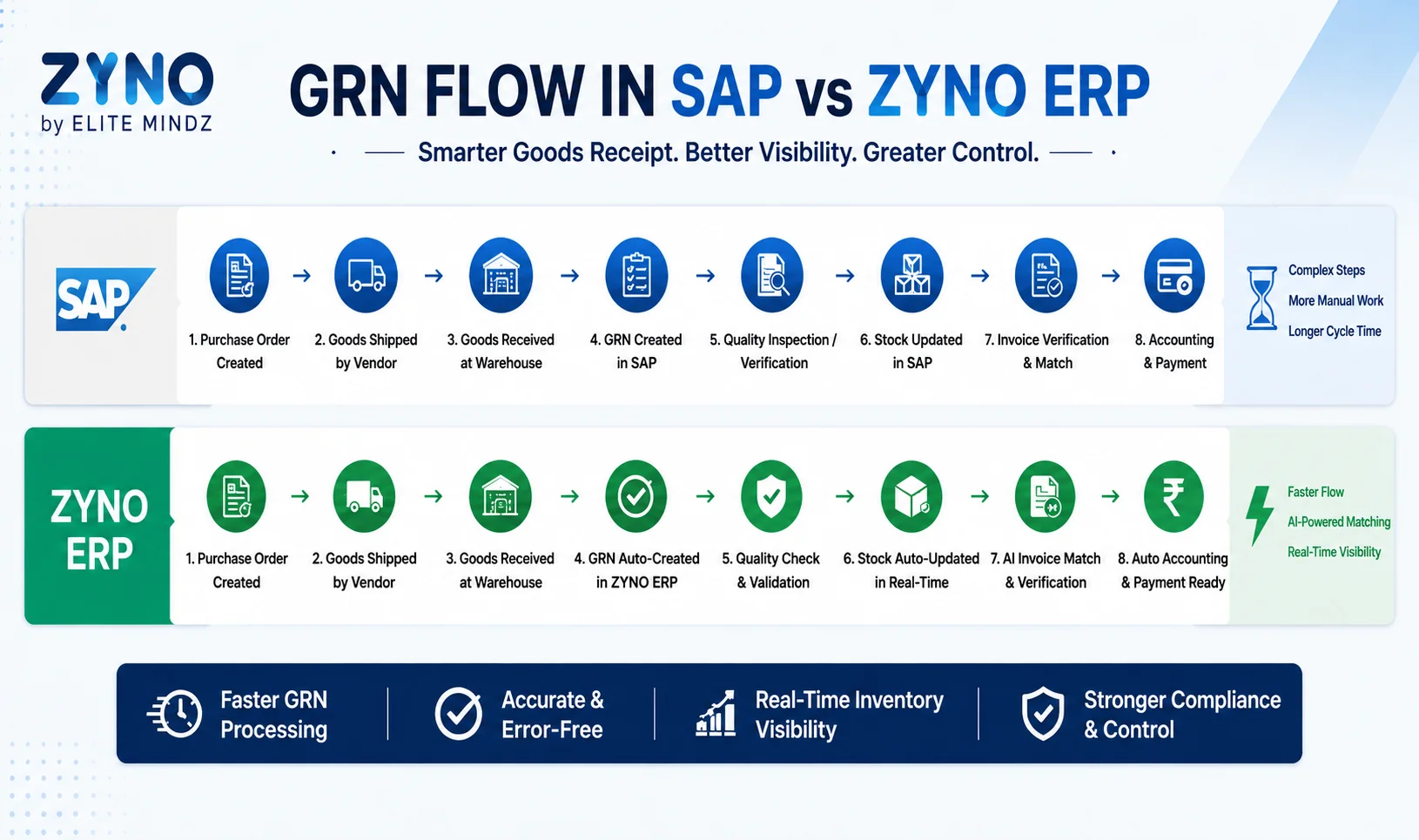
GRN Flow in SAP vs ZYNO ERP
Read More →
Which AI ERP Platform Offers the Best ROI for Retail Businesses Looking to Automate Operations in India?
Read More →
Warehouse Management System (WMS): Complete Guide
Read More →
Best WMS Software in 2026: 10 Warehouse Management Systems Compared
Read More →
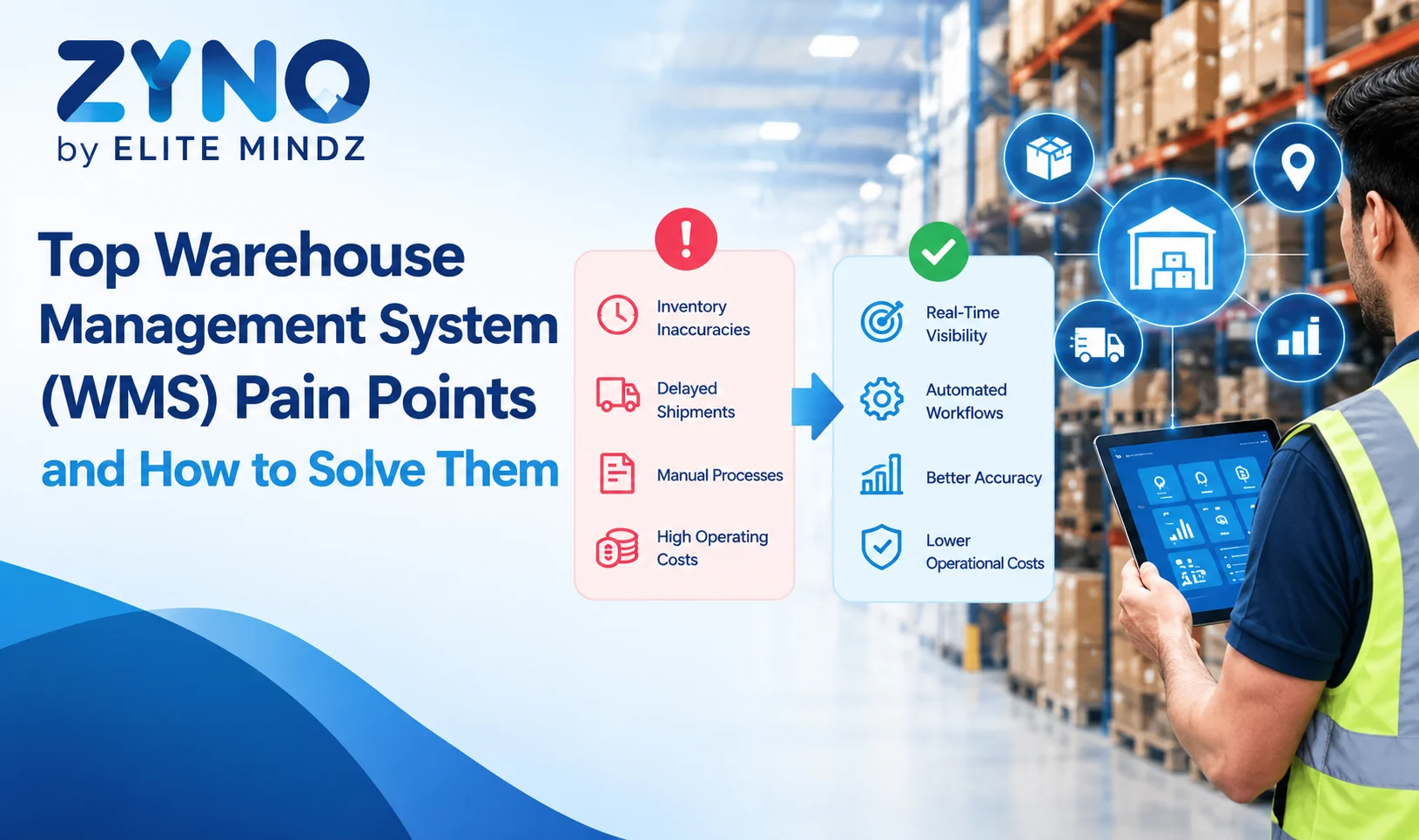
Top Warehouse Management System (WMS) Pain Points and How to Solve Them
Read More →
ERP in Inventory Management: Features, Benefits & Best Practices
Read More →
Best ERP for Inventory Management : Top 10 Software Compared
Read More →
From Clicking Through Screens to Simply Asking: The New ERP Experience
Read More →
Best ERP Solutions for Textile Manufacturing and Supply Chain Control
Read More →
How Automation Software Can Help Middle East Businesses Save Time and Reduce Costs
Read More →
Top ERP Platforms for Food Processing and Manufacturing
Read More →
How to Choose the Right ERP Software for Enterprises in the UAE: Your Must-Know Points
Read More →
Top 10 ERP Solutions for Pharmaceutical Production Management
Read More →
ERP for Chemical Manufacturing: Compare the Best Solutions
Read More →
ERP for Oil and Gas: Compare the Best Solutions for 2026
Read More →
Order Management System: A Complete Buyer’s Guide
Read More →
Best Cloud Warehouse Management System for Businesses: A Complete Guide
Read More →Partner with ZYNO by Elite Mindz to revolutionize how your business works. Fill out the form, and we’ll reach out with AI-powered solutions made just for you.
We use browser cookies to ensure you get the best experience on our website. Learn more
The form was submitted successfully!