




What is ERP? A Beginner's Guide to Enterprise Resource Planning
Read More →

×
SAM (Standard Allowed Minute) and SMV (Standard Minute Value) are time measurements used in garment manufacturing to calculate production targets, labour costs, and sewing line efficiency. To calculate SAM, determine the average observed time, adjust it using the operator performance rating, and add applicable allowances. Calculate total garment SMV by adding the standard times of all required operations. Accurate SAM and SMV help garment manufacturers improve productivity, production planning, and cost control.
Businesses using ZYNO Books cut accounting time by 70% and stay 100% ZATCA-compliant — automatically.
A garment factory can produce thousands of shirts, trousers, dresses, or uniforms every day and still struggle to maintain its profit margins. The reason is often hidden in the production process: inaccurate operation timing, unrealistic production targets, unbalanced sewing lines, and incorrect garment costing.
This is where SAM (Standard Allowed Minute) and SMV (Standard Minute Value) become important. These measurements help garment manufacturers determine how much time an operation should take, how many pieces a production line can make, how efficiently operators are working, and how much labour time goes into producing each garment.
Whether you manage a garment factory, work in industrial engineering (IE), handle production planning, or calculate apparel manufacturing costs, understanding SAM and SMV helps you make decisions based on measurable production standards rather than estimates.
In this guide, you will learn how to calculate SAM and SMV step by step, understand the formulas with practical examples, calculate garment production targets, estimate labour costs, measure line efficiency, and avoid common calculation mistakes.
SAM stands for Standard Allowed Minute. It is the standard time allowed for completing a garment manufacturing operation using a defined working method, including the applicable allowances for personal needs, fatigue, and other recognized production delays.
SAM is generally expressed in minutes.
For example, if the SAM for attaching a shirt collar is 0.80 minutes, the operation has a standard allowed time of 0.80 minutes per garment under the defined working conditions.
SAM helps production managers establish realistic targets, plan manufacturing capacity, balance sewing lines, and measure production performance.
Garment factories may calculate SAM for individual operations, such as stitching a sleeve, attaching a pocket, or joining a shoulder seam. The SAM values of all required operations can then be added to estimate the total standard time for producing a garment.
Take control of production schedules, allocate resources efficiently, reduce delays, and keep your manufacturing operations on track.
Explore Production Planning Request a ConsultationSMV stands for Standard Minute Value. In common garment manufacturing practice, SMV refers to the standard time assigned to a garment or production operation, usually expressed in minutes.
For example, a basic T-shirt may have an SMV of 12 minutes, while a more complex garment may require a higher standard time because it involves additional stitching operations, construction details, and finishing requirements.
SMV is used for:
Important distinction: SMV is not the same as the monetary cost per minute. If a factory's cost per minute is ₹2 and a garment has an SMV of 12 minutes, the standard labour cost calculated using that rate is ₹24 per garment.
SAM and SMV are often used interchangeably in the garment industry because many factories use both terms to describe standard production time. However, individual factories may define them differently in their costing and production systems.
| Parameter | SAM | SMV |
|---|---|---|
| Full Form | Standard Allowed Minute | Standard Minute Value |
| Typical Unit | Minutes per operation or garment | Minutes per operation or garment |
| Main Purpose | Production planning and time allocation | Costing, capacity planning and efficiency measurement |
| Includes Allowances? | Generally includes applicable allowances | Generally includes allowances when used as standard allowed time |
| Usage | Targets, production planning and performance measurement | Cost estimation, style comparison and production planning |
In some organizations, SAM is the preferred term for production planning, while SMV is used for costing. In others, both represent the same standard time.
Before calculating production targets or garment costs, confirm the definition used by your factory. Consistency matters more than the terminology.
Accurate SAM and SMV values help manufacturers connect production planning with actual factory performance.
The standard time required to manufacture a garment helps calculate its labour cost. When combined with the factory's cost per minute, it provides a basis for estimating the labour component of production costs.
Production managers can calculate how many pieces an operator or sewing line should produce within a given period, considering standard time and expected efficiency.
Comparing the standard times of different operations helps identify bottlenecks. Managers can redistribute work, adjust operator allocation, or improve methods to balance the production line.
Factories can estimate the number of operators, working hours, and production lines required to fulfil an order within the buyer's delivery schedule.
SAM and SMV provide a standard against which actual output can be measured. This helps managers understand whether lower productivity is related to working methods, machine performance, material shortages, or other production constraints.
Accurate standard times help merchandisers and production planners estimate delivery feasibility before accepting or committing to order quantities and shipment dates.
The calculation typically involves four stages: measuring the observed cycle time, applying the operator performance rating, calculating the basic time, and adding the applicable allowances.
SAM = Basic Time + Allowances
When all allowances are calculated as percentages of basic time:
SAM = Basic Time × (1 + Total Allowance Percentage)
For example, if the basic time is 0.40 minutes and the total allowance is 20%:
SAM = 0.40 × (1 + 0.20)
SAM = 0.40 × 1.20
SAM = 0.48 minutes per operation
When a factory uses SAM and SMV interchangeably, the calculated SAM may also be recorded as the SMV for that operation.
Cycle time is the actual time an operator takes to complete one defined operation.
Observe the operation using a stopwatch or an appropriate time-study method. Record several cycles under consistent working conditions.
The formula is:
Average Observed Time = Total Observed Cycle Time ÷ Number of Cycles
Consider an operator performing a stitching operation. The recorded cycle times are:
| Cycle | Observed Time |
|---|---|
| 1 | 24 seconds |
| 2 | 23 seconds |
| 3 | 25 seconds |
| 4 | 24 seconds |
| 5 | 25 seconds |
| Total | 121 seconds |
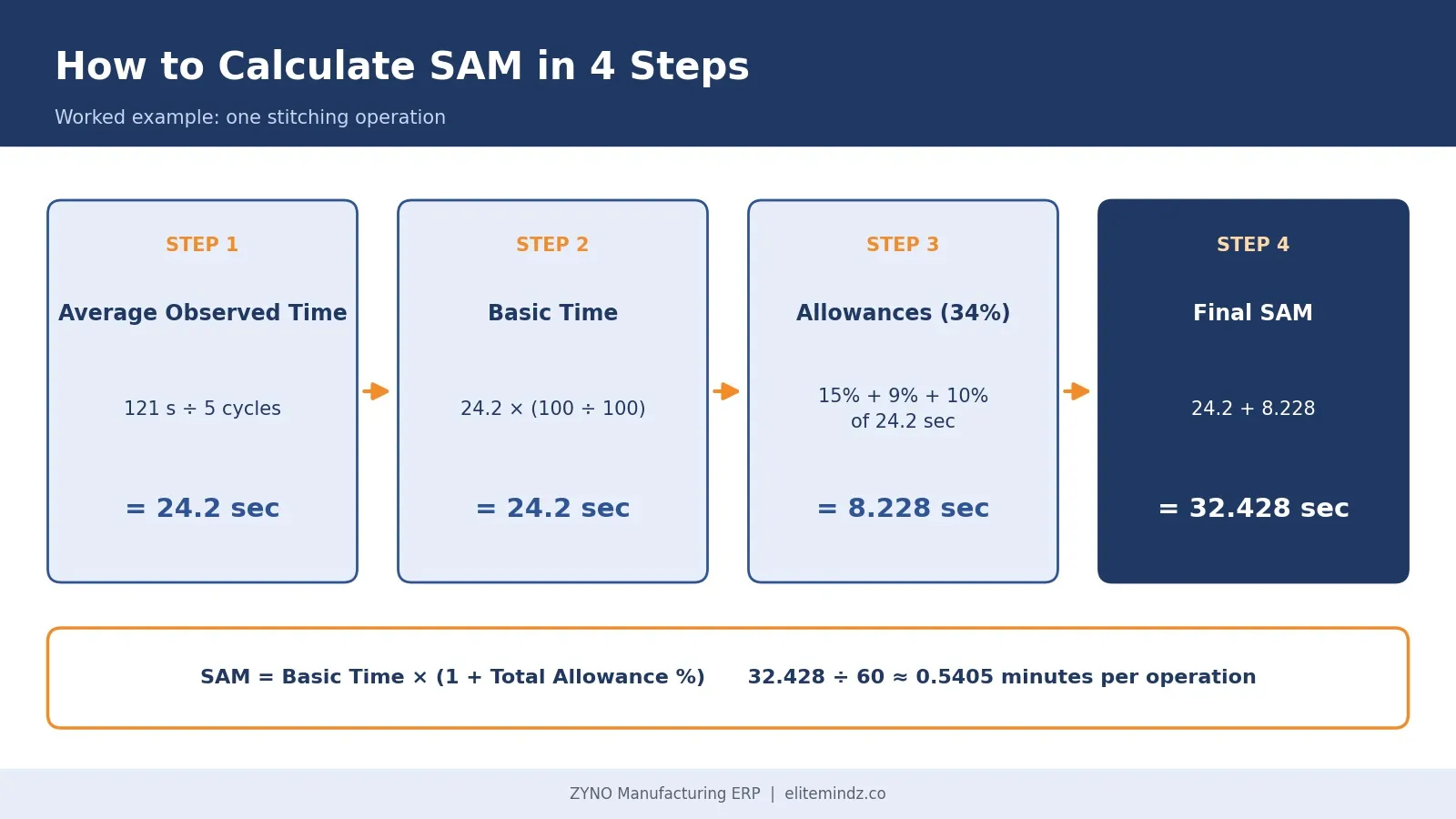
Average observed time = 121 ÷ 5
Average observed time = 24.2 seconds
For a more reliable study, factories commonly record around 10 to 15 or more cycles, depending on the operation's variability. Five cycles are sufficient to demonstrate the calculation, but may not provide a reliable production standard.
The operation method, machine settings, material handling, and working conditions should remain consistent during the study.
Different operators may complete the same operation at different speeds. A performance rating adjusts the observed time to the time associated with standard performance.
Estimate labour cost per garment using standard minutes and labour cost per minute.
The formula is:
Basic Time = Average Observed Time × (Observed Performance Rating ÷ 100)
Suppose:
Basic time = 24.2 × (100 ÷ 100)
Basic time = 24.2 seconds
Now suppose the observed performance rating is 90%.
Basic time = 24.2 × (90 ÷ 100)
Basic time = 21.78 seconds
A rating below 100% reduces the observed time to the equivalent time at standard performance. A rating above 100% increases the calculated basic time.
Performance rating should be assessed by a trained industrial engineering professional using the factory's established work-study method. It should not be assigned arbitrarily.
The basic time is adjusted by adding appropriate allowances. These account for recognized needs and delays that occur during normal production.
Connect production planning, shop-floor monitoring, and resource management with ERP Manufacturing to support better decisions and operational growth.
Discover the Solution Talk to Our ExpertsCommon allowances include:
The percentages depend on the operation, machine type, working conditions, handling method, and factory policy. They should be established through a documented time-study procedure rather than applied as universal industry values.
For the worked example, assume the following illustrative allowances:
| Allowance | Percentage of Basic Time |
|---|---|
| Personal and Fatigue | 15% |
| Machine Delay | 9% |
| Bundle Handling | 10% |
| Total Allowance | 34% |
These percentages are used only to demonstrate the calculation. A real factory should validate the applicable allowances for each operation and avoid counting the same delay more than once.

Using the earlier basic time of 24.2 seconds:
SAM = 24.2 + 8.228
SAM = 32.428 seconds
Convert seconds to minutes:
SAM = 32.428 ÷ 60
SAM ≈ 0.5405 minutes per operation
For practical reporting, this may be rounded to 0.541 minutes, subject to the factory's rounding policy.
This example calculates allowances as percentages of basic time. If your factory defines allowances as a percentage of total allowed time instead, the calculation method will differ. Always use the method specified in your work-study policy.

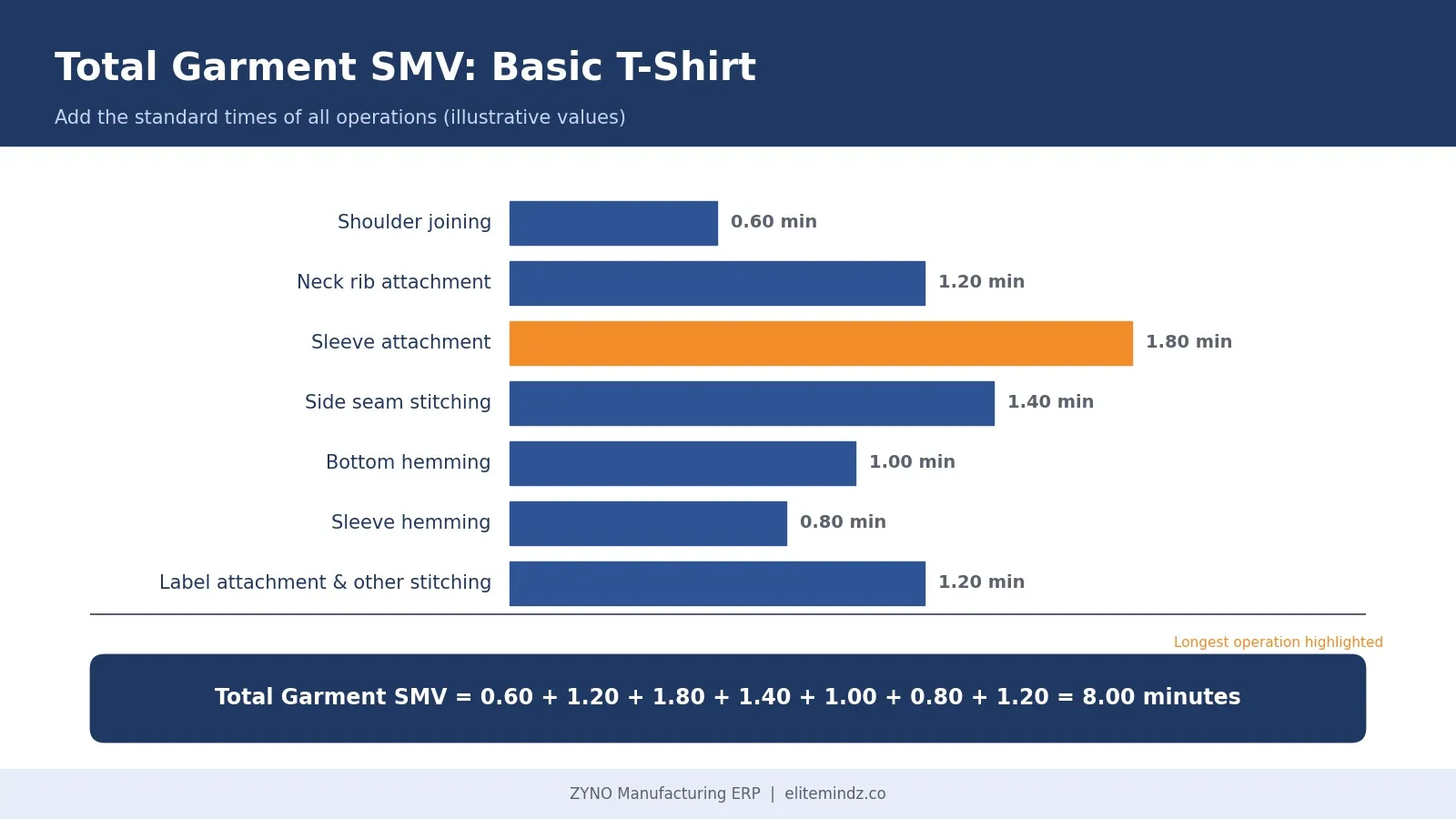
A complete garment consists of multiple operations. To calculate the total garment SMV, add the standard times of all operations required to manufacture the garment, ensuring that each operation is counted once and that all values follow the same standard-time convention.
Total Garment SMV = Sum of Standard Times of All Required Operations
For example, consider an illustrative basic T-shirt:
| Operation | Standard Time |
|---|---|
| Shoulder Joining | 0.60 minutes |
| Neck Rib Attachment | 1.20 minutes |
| Sleeve Attachment | 1.80 minutes |
| Side Seam Stitching | 1.40 minutes |
| Bottom Hemming | 1.00 minute |
| Sleeve Hemming | 0.80 minutes |
| Label Attachment and Other Stitching | 1.20 minutes |
| Total | 8.00 minutes |
Total garment SMV = 0.60 + 1.20 + 1.80 + 1.40 + 1.00 + 0.80 + 1.20
Total garment SMV = 8.00 minutes
This example is illustrative, not a standard SMV for every T-shirt. Actual values depend on garment construction, fabric characteristics, seam specifications, machine type, operation method, and the operations included in the study.

Once the garment SMV is established, production managers can estimate the output possible within a shift.
For one operator:
Hourly Target = (60 ÷ SMV) × Expected Efficiency
For a daily target:
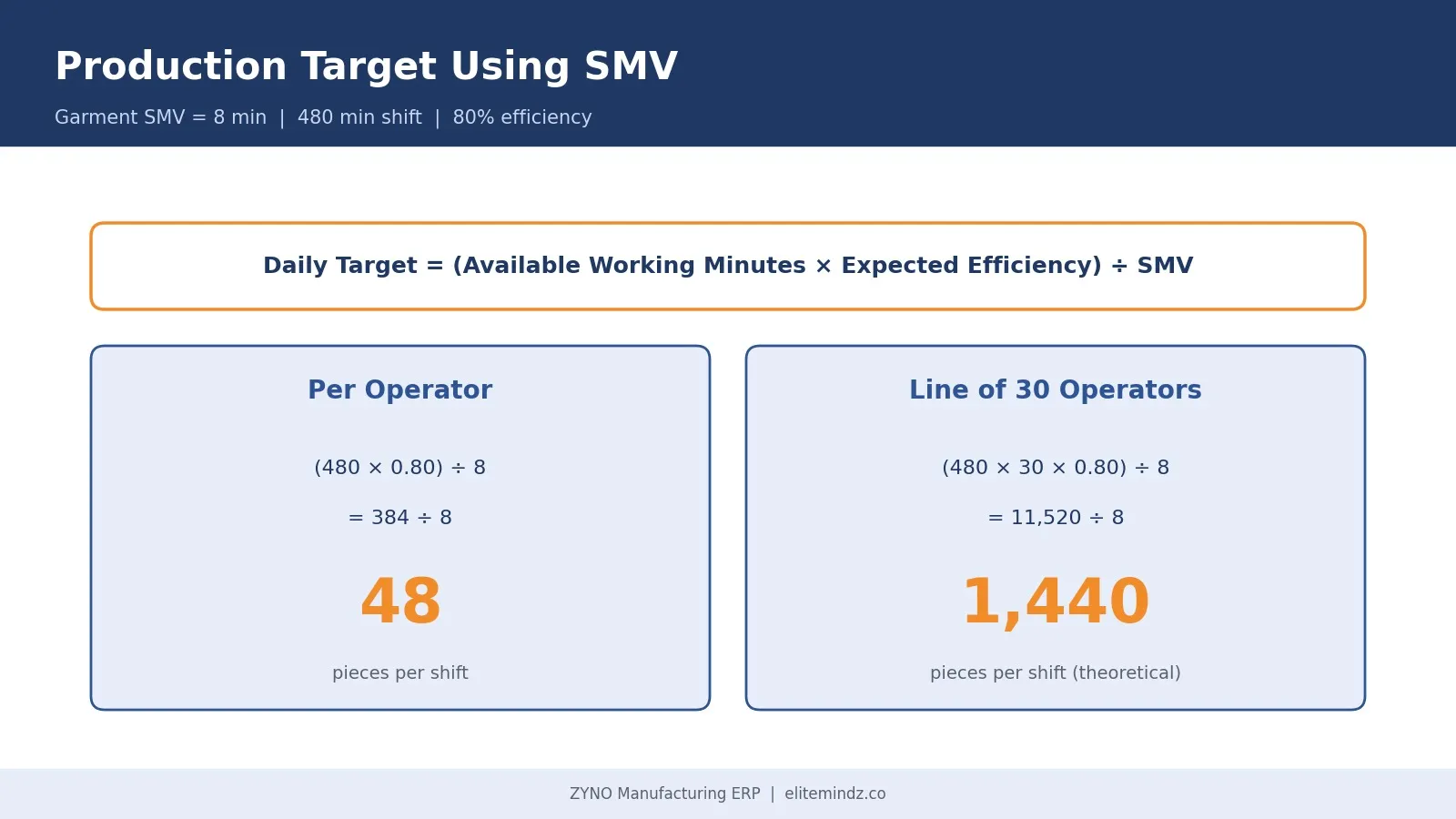
Daily Target = (Available Working Minutes × Expected Efficiency) ÷ SMV
Here, efficiency is expressed as a decimal. For example, 80% efficiency is 0.80.
Suppose:
Daily target = (480 × 0.80) ÷ 8
Daily target = 384 ÷ 8
Daily target = 48 pieces per operator
This is a theoretical planning target for one operator performing the complete standard workload. In a real sewing line, each operator normally handles specific operations, so the production target must be calculated using line capacity, manpower, bottlenecks, and the line's operating conditions.
For a sewing line with 30 operators:
Line target = (480 × 30 × 0.80) ÷ 8
Line target = 11,520 ÷ 8
Theoretical line output = 1,440 pieces per shift
This calculation assumes all 30 operators' working minutes can be applied to the garment's total SMV and that the line achieves the assumed efficiency. Actual output may be lower due to line imbalance, downtime, quality issues, material shortages, and other constraints.

Sewing line efficiency measures how much standard work is produced compared with the available labour time.
The formula is:
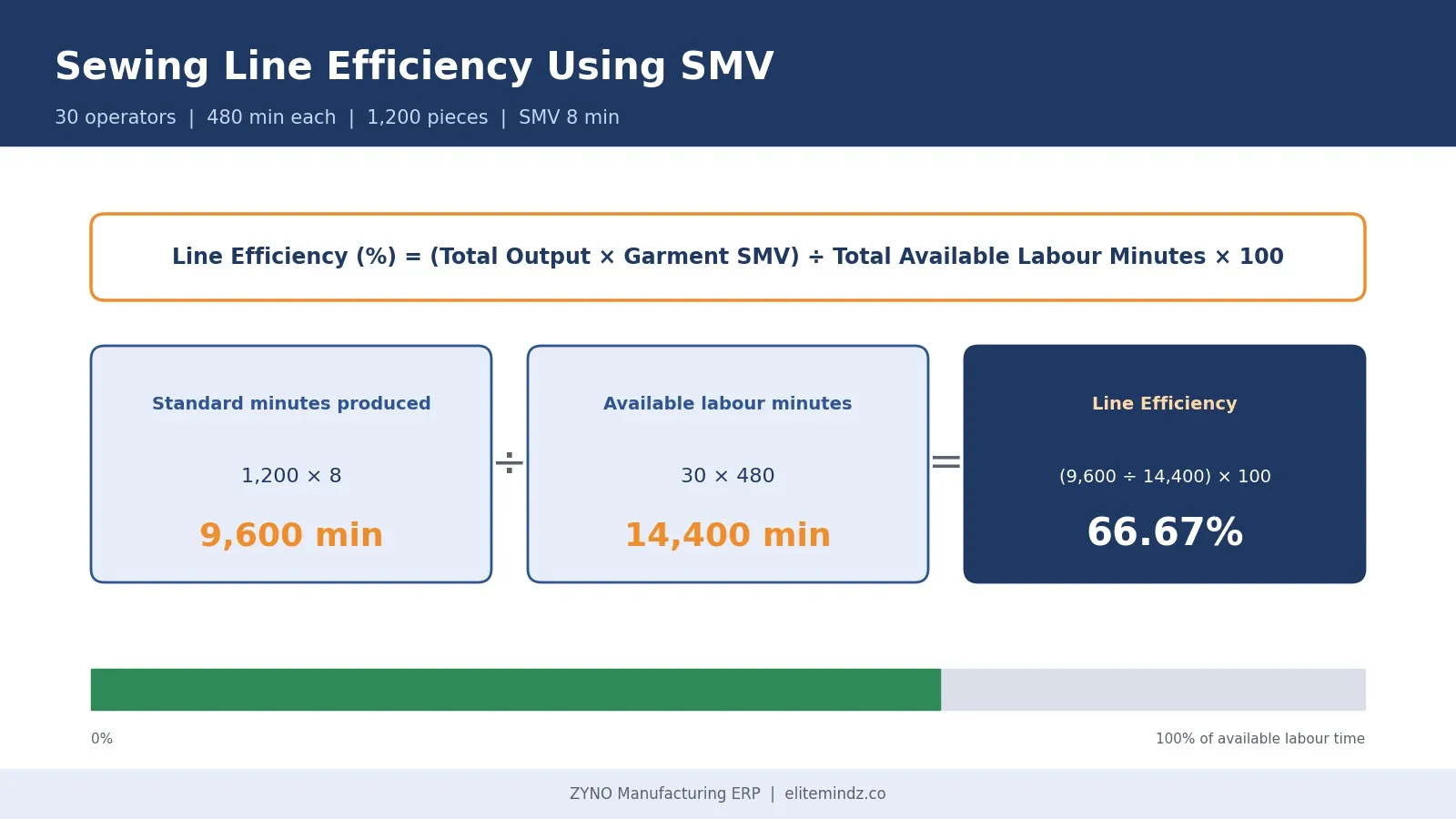
Line Efficiency (%) = (Total Output × Garment SMV) ÷ Total Available Labour Minutes × 100
Suppose a line has:
Total standard minutes produced = 1,200 × 8 = 9,600 minutes.
Total available labour minutes = 30 × 480 = 14,400 minutes.
Line efficiency = (9,600 ÷ 14,400) × 100
Line efficiency = 66.67%
This result indicates that the line produced standard work equivalent to 66.67% of its available labour minutes.
For accurate reporting, use the same definitions for output, working time, attendance, and standard minutes across all measurement periods.
SMV is frequently used to estimate the labour component of garment manufacturing cost.
Labour Cost per Garment = Garment SMV × Cost per Minute
Suppose:
Labour cost per garment = 8 × ₹2.50
Estimated labour cost = ₹20 per garment
The cost per minute should be calculated using a consistent cost base. Depending on the factory's accounting method, it may include direct labour or a broader production cost allocation.
Do not assume that labour cost per minute and total manufacturing cost per minute are identical. Fabric, trims, overheads, finishing, packaging, and other costs may need to be calculated separately.
For example, if fabric costs ₹100, trims cost ₹15, and estimated labour costs ₹20, the subtotal of these three components is ₹135. Other applicable costs and commercial margins must be considered before determining the final selling price.
Line balancing means allocating operations across operators and workstations so that the sewing line can maintain a consistent flow of production.
SMV helps managers compare the workload of each operation and identify bottlenecks.
For example, if sleeve attachment takes 1.80 minutes while another operation takes 0.60 minutes, the sleeve attachment operation may require additional capacity or a different allocation of work to prevent work-in-progress from accumulating.
Production managers can use the operation bulletin, standard times, machine requirements, and operator skills to determine how work should be distributed.
However, comparing individual SMVs alone does not automatically balance a line. Managers must also consider machine availability, operation sequence, skill levels, handling time, quality requirements, and the number of operators assigned to each operation.
SAM and SMV are not necessarily permanent values for every garment style. They may need to be reviewed when the production method or operating conditions change.
Important factors include:
Whenever an important production condition changes, review the relevant time study before using the old standard for costing or target setting.
1. Using only one observed cycle: A single reading may be affected by unusual delays or operator behaviour. Record multiple cycles and assess whether the observations are representative.
2. Applying an incorrect performance rating: The rating should reflect observed performance against the defined standard, not a guess.
3. Adding allowances without a consistent policy: Allowance percentages vary by operation and factory. Unjustified allowances can distort production targets and costing.
4. Confusing minutes with seconds: Always convert seconds into minutes before using a per-minute cost or a garment SMV expressed in minutes.
5. Treating SAM and SMV as monetary values: Standard time is measured in minutes. A monetary rate per minute is a separate value used to calculate cost.
6. Using garment SMV as the target for every individual operator: A sewing line divides the garment's operations among operators. Individual targets should be based on the operation allocated to each operator.
7. Ignoring changes in production conditions: An outdated standard may no longer represent the actual method, machine setup, or garment construction.
Calculating SAM and SMV is only the beginning. Factories also need to apply these values consistently across styles, production orders, sewing lines, costing records, and performance reports.
Garment manufacturing software or an ERP system can help centralize operation standards, maintain garment style information, record production output, and compare planned performance with actual results, depending on the system's available features.
A connected production system can support:
For manufacturers managing multiple buyers, styles, and production lines, a centralized system can reduce dependence on disconnected spreadsheets and make production information easier to review.
The most useful approach is to combine accurate industrial engineering standards with reliable production data. Software can support monitoring and reporting, but the underlying time studies and factory operating procedures must remain accurate.
Track production costs, streamline garment manufacturing workflows, and improve operational efficiency with smart business management solutions from ZYNO.
Explore ZYNO SolutionsSAM stands for Standard Allowed Minute. It represents the standard time allowed to complete a garment manufacturing operation using a defined method, including applicable allowances.
SMV stands for Standard Minute Value. In garment manufacturing, it commonly refers to the standard time required for an operation or garment, measured in minutes.
The basic formula is SAM = Basic Time + Allowances. When allowances are calculated as a percentage of basic time, SAM = Basic Time × (1 + Total Allowance Percentage).
Measure the operation's observed cycle time, calculate its average, adjust it using the performance rating to obtain basic time, and add the applicable allowances. If your factory uses SMV and SAM interchangeably, the resulting standard allowed time can be recorded as the operation's SMV.
Many garment factories use SAM and SMV interchangeably to represent standard operation time. Some companies distinguish between the terms according to their production planning and costing procedures. Always follow the factory's documented definition.
Basic time is the observed time adjusted for the operator's performance rating. SAM includes the applicable allowances added to the basic time.
Common allowances include personal and fatigue allowance, machine delay allowance, and bundle handling allowance where applicable. The actual percentages should be determined through the factory's work-study policy.
The required number depends on the variability and complexity of the operation. Around 10 to 15 cycles is a useful starting point for many operations, but more observations may be necessary to obtain a reliable average.
List the required garment manufacturing operations, calculate or obtain the standard time for each operation, and add the times together. Ensure that the operation list is complete and that all values use the same time-standard convention.
For a single operator performing the complete workload, daily target = Available Working Minutes × Expected Efficiency ÷ Garment SMV. For a production line, include the number of operators and account for actual line constraints.
A simplified capacity formula is: Capacity = Available Working Minutes × Number of Operators × Expected Efficiency ÷ Garment SMV. This estimates output under the stated assumptions. Actual line capacity also depends on bottlenecks, machine availability, and line balance.
Line efficiency = Total Output × Garment SMV ÷ Total Available Labour Minutes × 100. Use consistent definitions for completed output and available labour time.
Multiply the garment's standard time in minutes by the factory's applicable labour cost per minute. For example, an 8-minute garment at ₹2.50 per minute has an estimated labour cost of ₹20.
SMV is a time measurement expressed in minutes. Cost per minute is a monetary rate, such as ₹2.50 per minute. Multiplying them gives an estimated cost for the relevant cost component.
Yes. Changes in garment construction, fabric, machines, operation methods, or applicable allowances may require a new time study. Use the standard that matches the actual production method.
SAM provides a consistent time standard for production planning, target setting, efficiency measurement, line balancing, and identifying operations that need improvement.
Depending on the system's capabilities, ERP software can maintain style and operation standards, support production planning, monitor actual output, and compare planned production with actual performance.
There is no single correct SMV for every T-shirt. The standard depends on the design, fabric, construction, operation list, machine setup, and time-study method. A simple T-shirt will generally require less standard time than a more complex design with additional construction details.
SAM and SMV are essential measurements for understanding the time, labour requirements, and production capacity involved in garment manufacturing. When calculated correctly, they help manufacturers estimate costs, establish realistic production targets, monitor sewing line efficiency, and identify opportunities to improve productivity.
The key is to use a consistent time-study method, measure representative operation cycles, apply justified allowances, and review standards when production conditions change.
For garment factories managing multiple styles, orders, and production lines, combining accurate standard times with structured production planning and reliable reporting can make it easier to control manufacturing costs and meet delivery commitments.
What is ERP? A Beginner's Guide to Enterprise Resource Planning
Read More →
Cloud ERP vs. On-Premise vs. Hybrid: Best ERP Model for 2025
Read More →How To Customize ERP Software Without Breaking The Bank?
Read More →
The Future of Manufacturing ERP in 2026 & Beyond
Read More →Best ERP Software in India: 2026 Edition
Read More →
AI in Manufacturing ERP: The Future of Smart Factories
Read More →
How ERP Transforms Inventory Management and Reduces Costs
Read More →
Inventory Management Software Features: The Complete 2026 Buying Guide
Read More →
Top 5 Ways Asset Management Software Can Save Your Business Money
Read More →
Why Smart Businesses Are Switching to Vendor Management Systems in 2025?
Read More →
Why Manufacturing Companies Need ERP Software
Read More →
Cloud ERP vs. Traditional ERP: Which is Right for You?
Read More →
ERP for Small Business: Is It Worth the Investment?
Read More →
How to Calculate ERP ROI and Why It's Worth the Investment
Read More →
Top 10 ERP Software Companies in India 2026 Updated List (Complete Guide)
Read More →
ERP Implementation Mistakes to Avoid in 2025
Read More →
Cloud ERP vs Edge Computing: What's Right for Modern Manufacturing?
Read More →
The Future of ERP Software and the Role of Generative AI
Read More →
Digital Twin Technology & ERP: Real-Time Insights for Smarter Manufacturing
Read More →
Scalable ERP Solutions Designed for Modern Enterprises
Read More →
ERP and IoT Integration: Smart Factory Vision
Read More →Best ERP Software for Manufacturing Businesses in India
Read More →Top 10 Best Manufacturing ERP Software in India (2026)
Read More →
Best ERP Software for Manufacturing Industries in Ethiopia (2026)
Read More →
Best School ERP Software Providers in UAE (2025 Edition)
Read More →
Best School ERP Software for 2025: Guide for Educational Institutions
Read More →
Top 10 ERP Software Solutions for Nigerian Manufacturers (2025 Edition)
Read More →
Best ERP Systems for Scalable Retail and POS Integration
Read More →
Top 10 Cloud-Based Manufacturing ERP Solutions in Africa (2025 Edition)
Read More →
Top 10 Cloud-Based Manufacturing ERP in UAE
Read More →
Top 10 Cloud-Based Manufacturing ERP Software in Nigeria (2026 Edition)
Read More →
Top 10 School ERP Software Companies in Kenya (2025)
Read More →
Best School ERP Software Providers in Nigeria (2025)
Read More →
Top Cloud-Based Manufacturing ERP in Zimbabwe (2025)
Read More →
Best ERP Software in U.K
Read More →
Top 10 ERP Software Developers in the U.K. (2025)
Read More →
Best ERP Software Providers in France (2025)
Read More →
Best ERP Software Companies in Germany : A Comprehensive Guide
Read More →
Top 10 ERP Software Development Companies in Qatar

Read More →
Best ERP Providers in Germany: 10 ERP Software Options Compared
Read More →
Best ERP Software Firms in Saudi Arabia (2025)
Read More →
Best ERP Service Providers in Indonesia for SMEs and Large Enterprises
Read More →
Top 10 Cloud-Based Manufacturing ERP Systems in Egypt for Modern Factories
Read More →
Top ERP Solutions in the USA 2025: Streamline Your Business with ZYNO ERP
Read More →
Top ERP Solutions in Qatar for Businesses of All Sizes
Read More →Top Manufacturing ERP Software in India 2026 ZYNO Manufacturing ERP
Read More →How Manufacturing Companies Reduce Production Delays Using ERP Automation
Read More →Why Legal Firms Need ERP to Manage Cases, Billing & Compliance
Read More →What Is ERP And How Does It Work
Read More →
How ERP Systems Are Evolving in 2026: What Businesses Need to Know
Read More →
Best ERP Software in India: 2025 Edition
Read More →
Top 10 ERP Software Companies in Delhi NCR
Read More →
How Manufacturing ERP Software Improves Demand Forecasting
Read More →
Top 10 Best School Management Software in India
Read More →Manufacturing & Wholesale ERP in Qatar: Complete Industry Guide 2026
Read More →Cloud ERP Software in Qatar: Why Businesses Are Moving in 2026
Read More →Is ERP a Procurement Software? Key Differences, Benefits & What to Choose
Read More →What Is Production Planning and Control? Definition, Objectives & Functions
Read More →
Garment Inventory Software: Features, Providers & Buying Guide (2026)
Read More →
How ERP Reduces Fabric Wastage in Garment Factories

Read More →
Why the Garment Industry Needs a Specialized ERP

Read More →
Features to Look for in Garment Manufacturing ERP Software

Read More →
Best ERP Software for Small Garment Manufacturing Business in India
Read More →
The Real Problems Holding Back Small Garment Manufacturers in India
Read More →Garment Manufacturing ERP Software in India: Best Options, Features & Complete Guide 2026
Read More →
Which ERP is Best for Manufacturers in 2026?
Read More →
Distributor & Consumer Management System: The Complete Guide for 2026
Read More →
Best Pharma ERP Software in India 2026 – Features, Compliance & Buying Guide
Read More →
SAP Alternative for Manufacturing in India (2026): 6 Options Compared Honestly
Read More →
What Is the Relation Between MIS and Enterprise Resource Planning?
Read More →
Best ERP for Sweater Manufacturers in India
Read More →
What Manufacturing ERP Systems Provide the Best Demand Forecasting Features?
Read More →
Which ERP Software Provides the Best Demand Forecasting for Manufacturers?
Read More →
What are the key features to look for in AI ERP software for manufacturing companies in India?
Read More →
How does AI-powered ERP software improve production planning and inventory management in manufacturing?
Read More →
Which AI ERP platforms are best suited for small and mid-sized manufacturing businesses in India?
Read More →
How do I implement AI ERP software in a manufacturing unit without disrupting existing operations?
Read More →
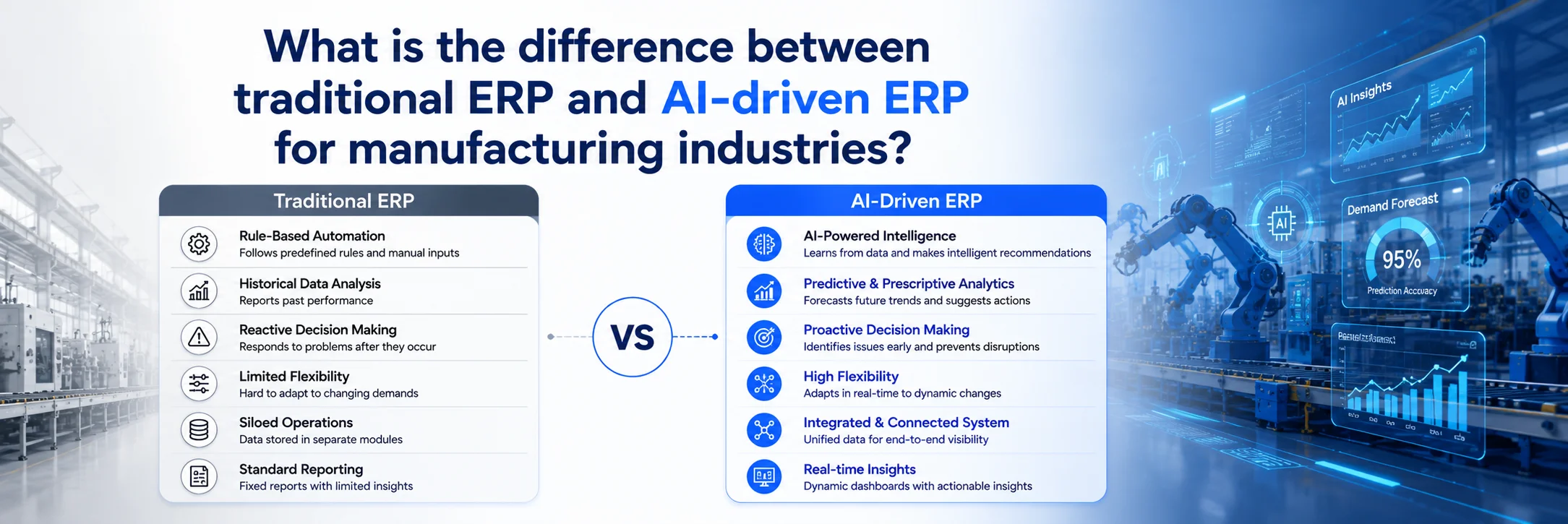
What is the difference between traditional ERP and AI-driven ERP for manufacturing industries?
Read More →
AI-Powered Smart ERP Software: The Complete Guide for Modern Enterprises
Read More →
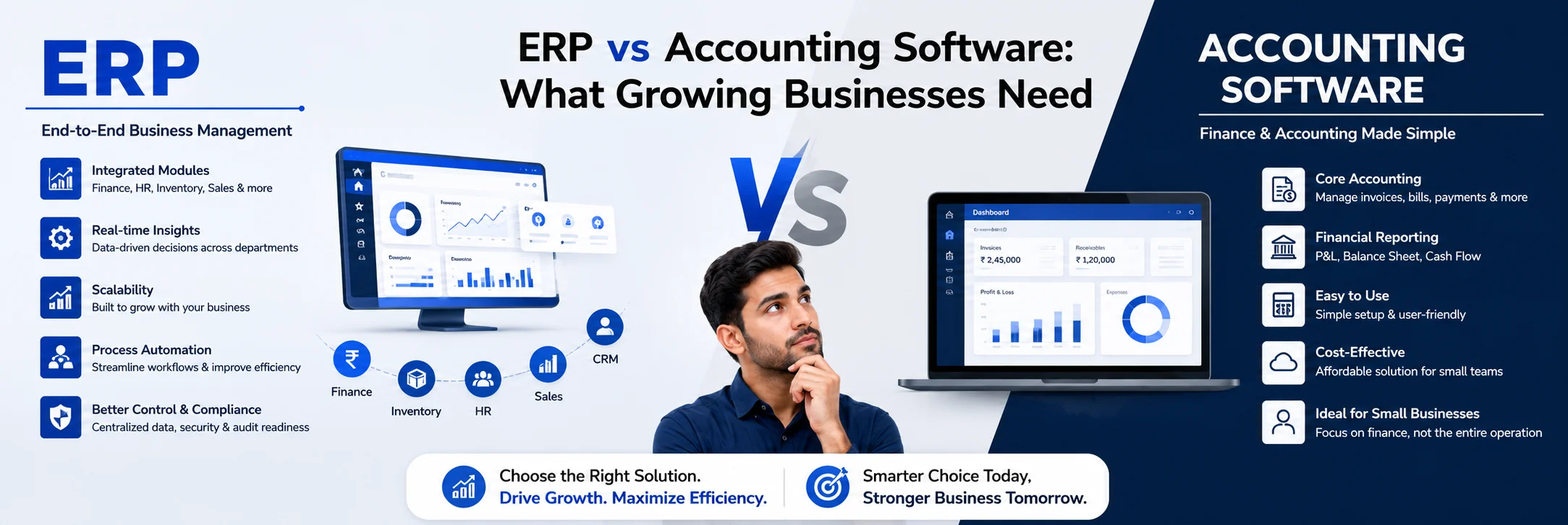
ERP vs Accounting Software: What Growing Businesses Need
Read More →
Signs Your Business Has Outgrown Excel and Needs an ERP
Read More →
How to Index HR Records from an ERP System for a Chatbot?
Read More →
What is the Best Software for Retail Garment Shop?
Read More →
Manufacturing Software for the Textile and Garment Industry?
Read More →
Best ERP Software for Manufacturing Companies in India?
Read More →
How ERP Reduces Production Costs and Improves Profitability?
Read More →
Which ERP Software is Mostly Used in Garment Retail Shop?
Read More →
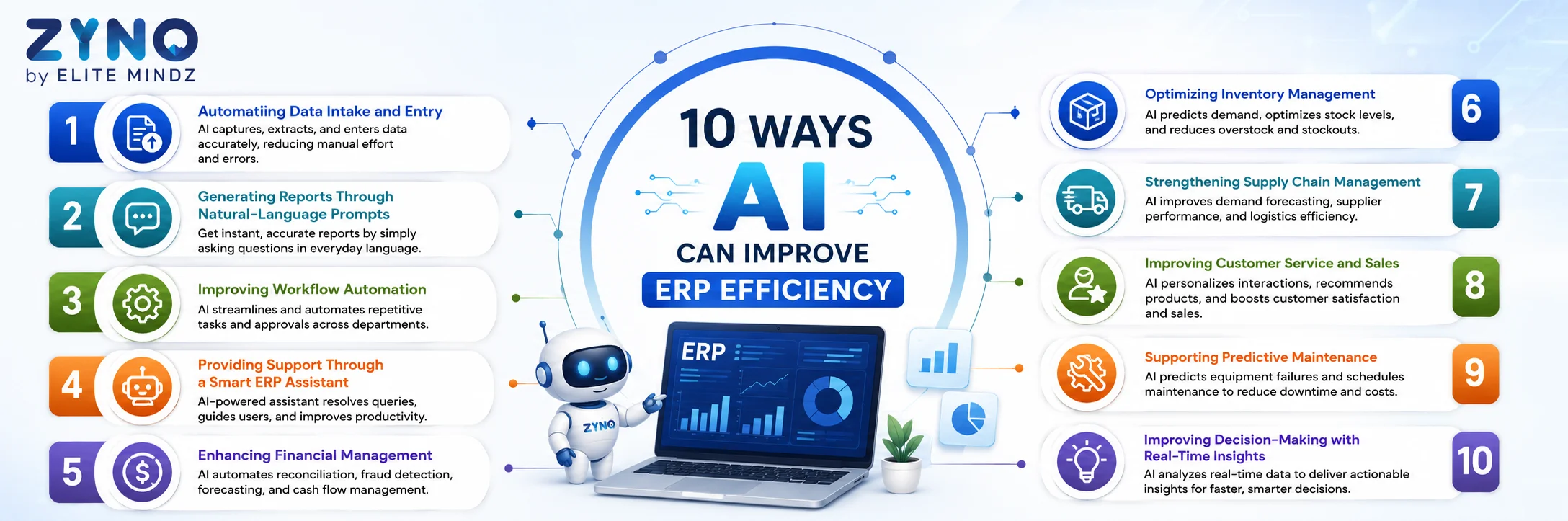
10 Ways AI Can Improve ERP Efficiency
Read More →
Top 8 Odoo Alternatives for Your Business
Read More →
ZYNO vs NetSuite ERP: Which Manufacturing ERP Fits Your Business Needs?
Read More →
Top ERP Software Providers in 2026: Full Comparison
Read More →
ERP Software Reviews: What Buyers Actually Say in 2026
Read More →
ERP Software for Retail Businesses: Complete Guide
Read More →
ERP Software for Healthcare: Beyond Patient Records
Read More →
ERP Software for Logistics Companies: A Complete Guide
Read More →
Best ERP Software for SaaS Companies in 2026
Read More →
Cloud ERP Software Features: The Complete List for 2026
Read More →
Top ERP Software in Kenya (2026): Best Picks for Growing Businesses
Read More →
How eTIMS Affects Manufacturers in Kenya: ERP, Input Tax & Supply Chain Impact
Read More →
ERP Implementation Steps: A Complete Step-by-Step Guide for Successful ERP Deployment
Read More →
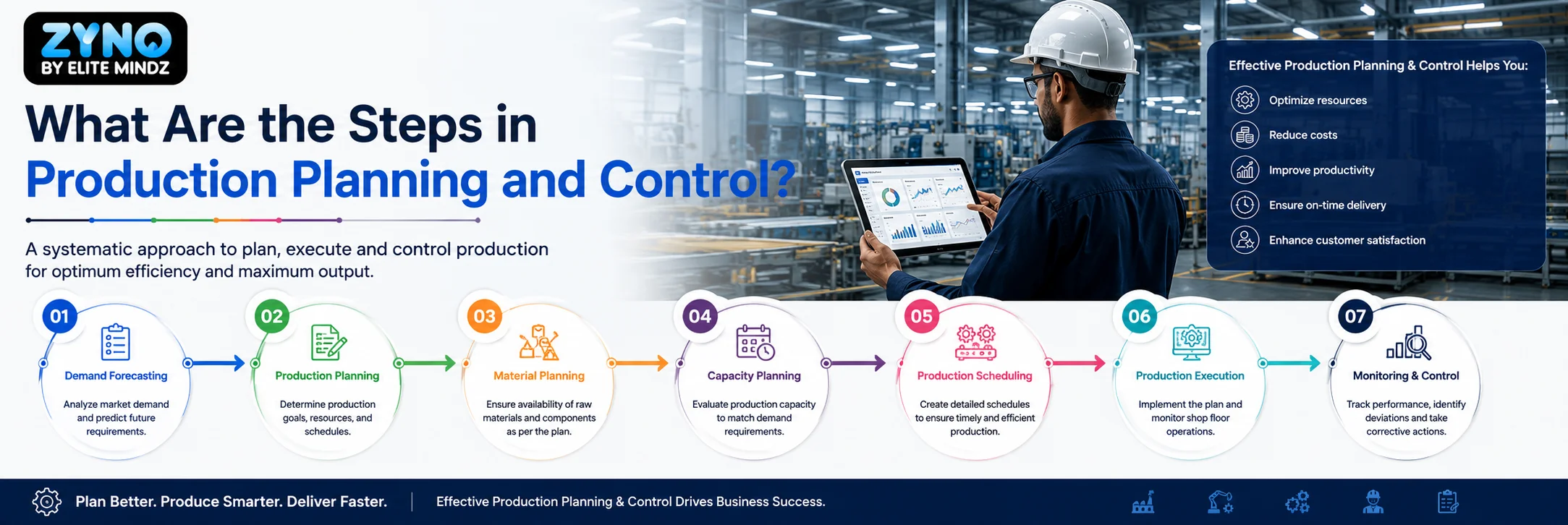
What Are the Steps in Production Planning and Control?
Read More →
Manufacturing Compliance in Kenya: A Complete Guide for Factory Tax Compliance & Regulatory Excellence
Read More →
ERP Migration Checklist for Manufacturing, Retail, and Service Businesses
Read More →
ERP Go-Live Checklist: Step-by-Step Guide for a Smooth System Launch
Read More →
Best ERP Software in the Middle East: What Actually Matters in 2026
Read More →
ERP Training Best Practices: Essential Tips for a Smooth ERP Implementation
Read More →
Traceability in Manufacturing: Cost Effective Solution and Complete Information
Read More →
Manufacturing ERP Software Buying Guide: Features, Checklist & Questions to Ask Before You Invest
Read More →
20 Best ERP Software in Japan (2026): Top AI-Powered & Cloud ERP Platforms Ranked
Read More →
10 Best ERP Software for Metal Manufacturing Companies: Features, Checklist & Buying Guide (2026)
Read More →How Manufacturing ERP Helps Ethiopian Factories Improve Production Planning & Cost Control
Read More →
Top 15 Business Management Software for Growing Businesses in 2026
Read More →
Why These Are the Top 15 Small Business ERP Systems for 2026
Read More →
BOM Management Software: A Complete Guide to Smarter Manufacturing
Read More →
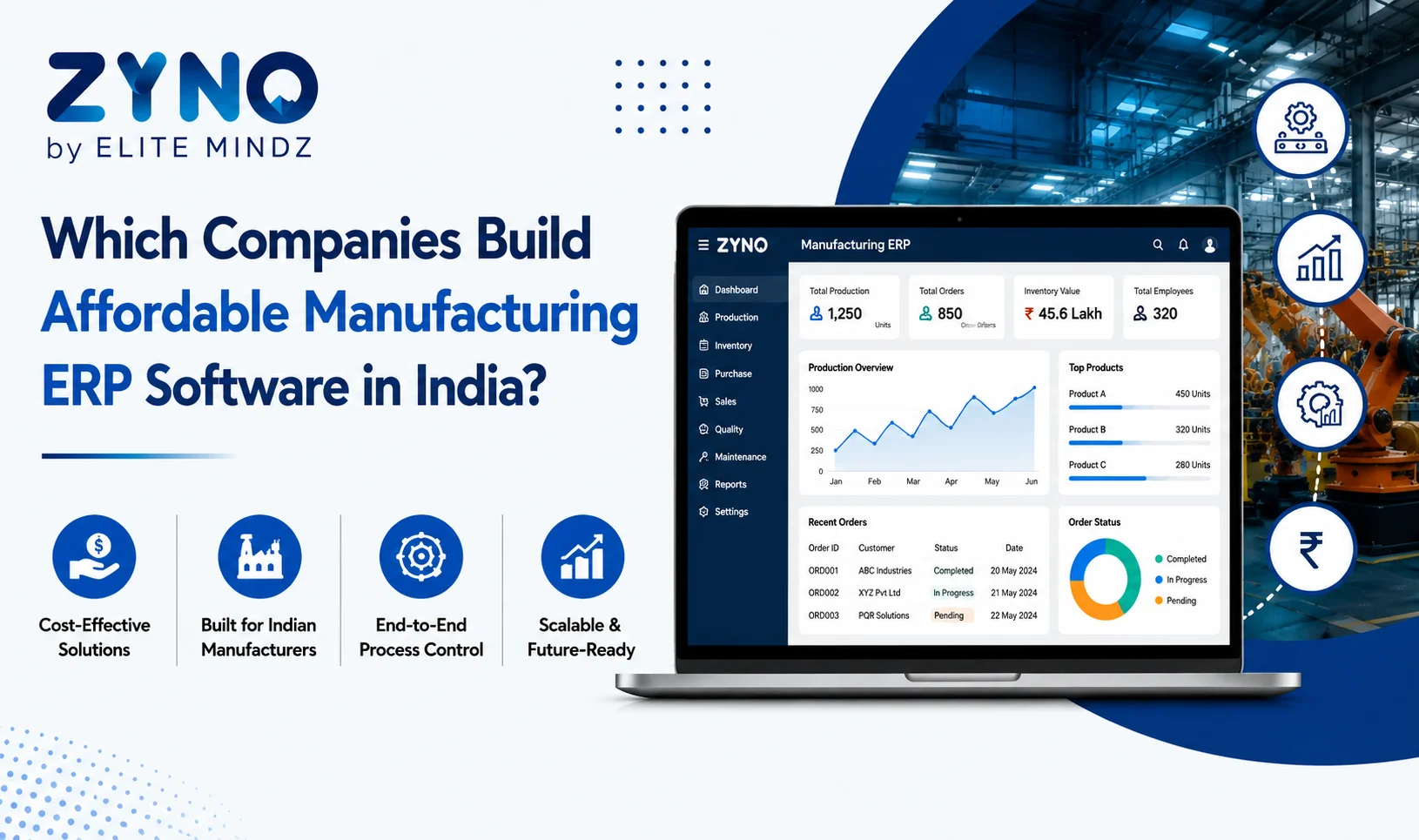
Which Companies Build Affordable Manufacturing ERP Software in India?
Read More →
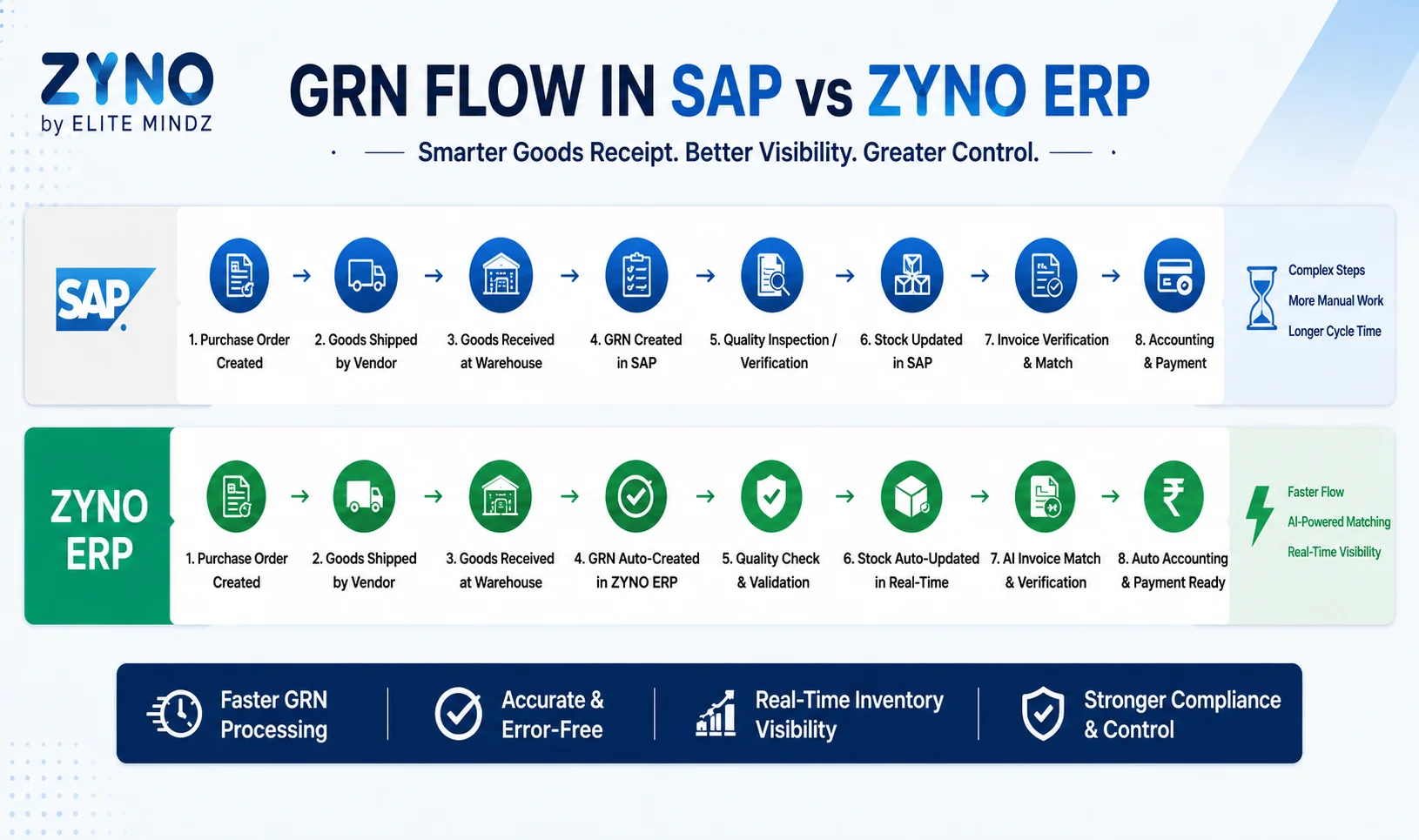
GRN Flow in SAP vs ZYNO ERP
Read More →
Which AI ERP Platform Offers the Best ROI for Retail Businesses Looking to Automate Operations in India?
Read More →
Warehouse Management System (WMS): Complete Guide
Read More →
Best WMS Software in 2026: 10 Warehouse Management Systems Compared
Read More →
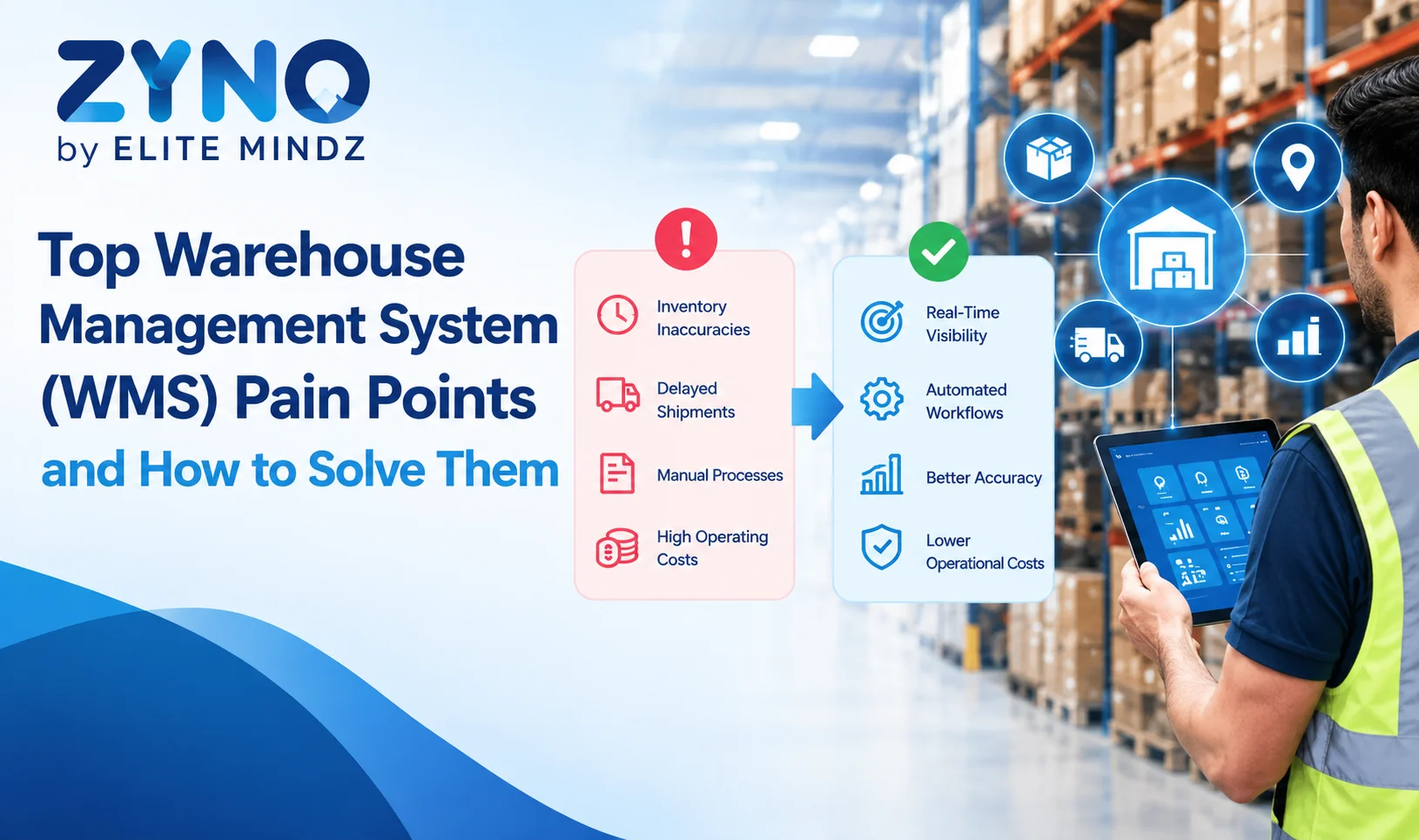
Top Warehouse Management System (WMS) Pain Points and How to Solve Them
Read More →
ERP in Inventory Management: Features, Benefits & Best Practices
Read More →
Best ERP for Inventory Management : Top 10 Software Compared
Read More →
From Clicking Through Screens to Simply Asking: The New ERP Experience
Read More →
Best ERP Solutions for Textile Manufacturing and Supply Chain Control
Read More →
How Automation Software Can Help Middle East Businesses Save Time and Reduce Costs
Read More →
Top ERP Platforms for Food Processing and Manufacturing
Read More →
How to Choose the Right ERP Software for Enterprises in the UAE: Your Must-Know Points
Read More →
Top 10 ERP Solutions for Pharmaceutical Production Management
Read More →
ERP for Chemical Manufacturing: Compare the Best Solutions
Read More →
ERP for Oil and Gas: Compare the Best Solutions for 2026
Read More →
Order Management System: A Complete Buyer’s Guide
Read More →
Best Cloud Warehouse Management System for Businesses: A Complete Guide
Read More →
How Do Prompt-Based ERPs Reduce Manual Workflow Steps?
Read More →
Top 10 ERP Features Your Business Should Not Compromise On
Read More →
What Are the Best AI-Native Enterprise ERP Platforms?
Read More →
7 Best ERP Software for FMCG Manufacturers
Read More →
How to Manage Vendor, Supplier and Purchase Orders in Apparel Manufacturing
Read More →
Apparel Supply Chain Management: A Complete Guide (Stages, Strategies and Software)
Read More →
How to Calculate SAM and SMV in Garment Manufacturing: Formula, Examples and Complete Guide
Read More →
NetSuite Alternatives: 10 Best ERP Picks for Growing Manufacturers in 2027
Read More →Partner with ZYNO by Elite Mindz to revolutionize how your business works. Fill out the form, and we’ll reach out with AI-powered solutions made just for you.
We use browser cookies to ensure you get the best experience on our website. Learn more
The form was submitted successfully!