 Contact Us




.webp)




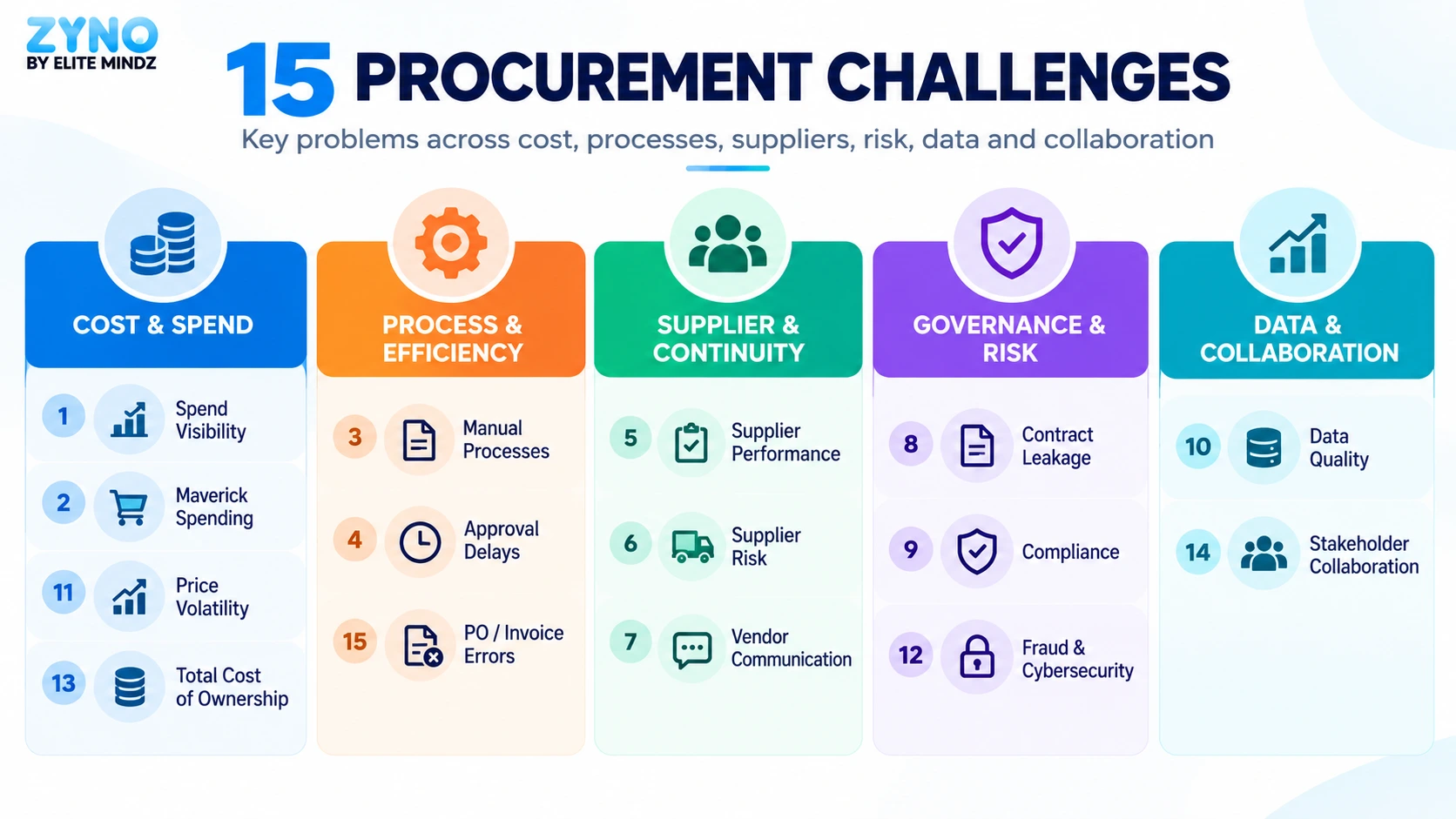
Quick Answer: What Are the 15 Common Procurement Challenges?
| # | Procurement Challenge | What It Looks Like | How to Solve It |
|---|---|---|---|
| 1 | Lack of Spend Visibility | Spending is scattered across suppliers, departments, and systems | Centralize procurement data and use spend analytics |
| 2 | Maverick Spending | Employees purchase outside approved suppliers or processes | Make approved purchasing easier and strengthen purchasing controls |
| 3 | Manual Procurement Processes | Spreadsheets, emails, and manual entry slow down purchasing | Standardize workflows and automate repetitive activities |
| 4 | Lengthy Procurement Cycles & Approval Delays | Requests remain pending and purchases take too long | Simplify approval rules and automate routing |
| 5 | Poor Supplier Performance & Quality | Late deliveries, quality issues, or missed SLAs | Define supplier KPIs and conduct regular reviews |
| 6 | Supplier Risk & Supply Chain Disruptions | Disruptions affect supply, delivery, or costs | Assess supplier risk and develop alternatives |
| 7 | Ineffective Vendor Communication | Supplier information is scattered across communication channels | Centralize supplier collaboration |
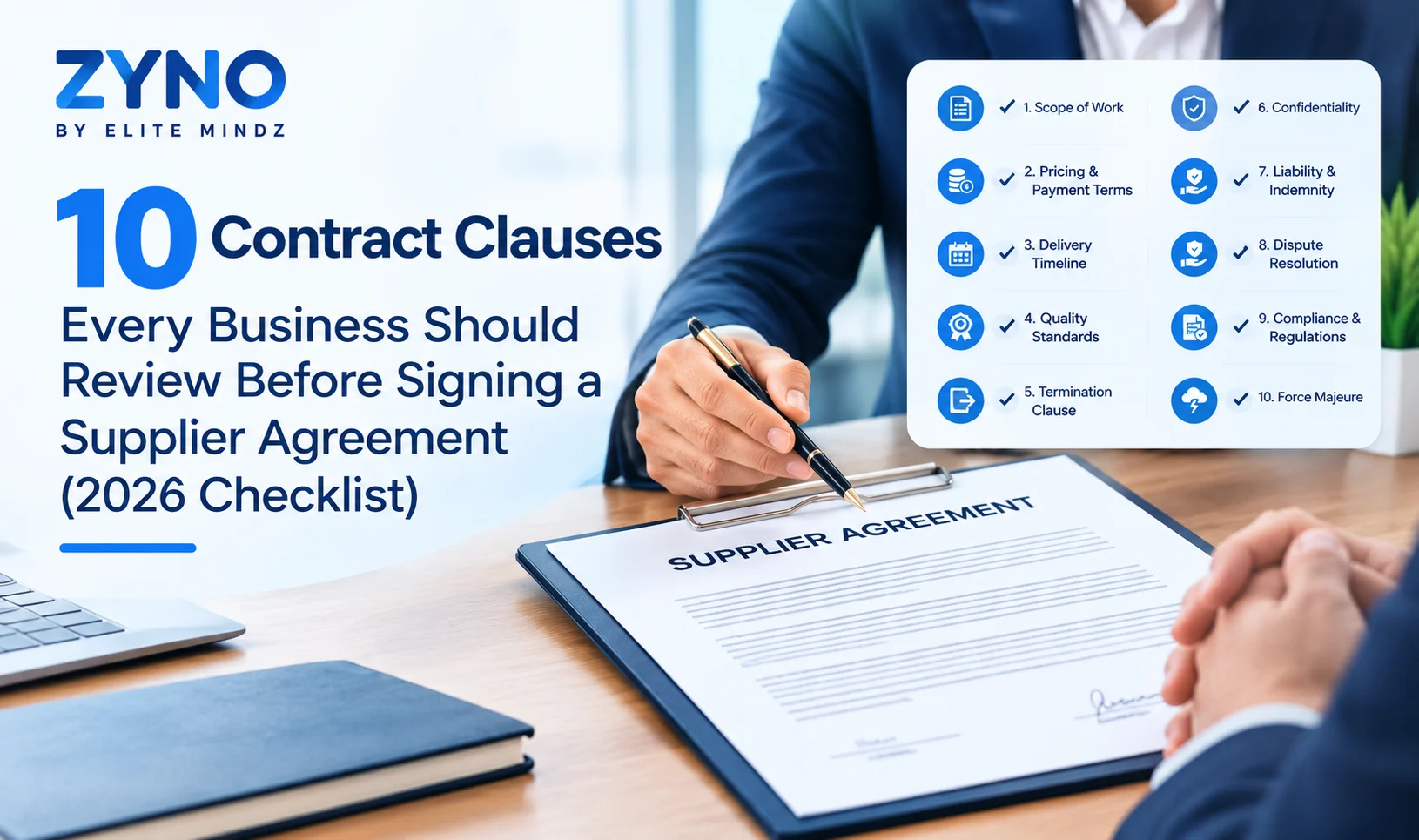
| 8 | Poor Contract Management & Contract Leakage | Renewals, obligations, or negotiated terms are missed | Centralize contracts and track key obligations |
| 9 | Procurement Compliance & Regulatory Challenges | Policies, approvals, and documentation are inconsistent | Build controls into procurement workflows |
| 10 | Inaccurate Procurement Data & Poor Forecasting | Unreliable data affects reporting and decisions | Standardize and connect procurement data |
| 11 | Inflation, Price Volatility & Cost Pressure | Supplier and market prices change unexpectedly | Monitor costs, compare suppliers, and evaluate total cost |
| 12 | Procurement Fraud & Cybersecurity Risks | Fake suppliers, invoices, unauthorized access, or fraud create risk | Strengthen verification, permissions, and audit controls |
| 13 | Focusing Only on Purchase Price | The cheapest option creates higher costs later | Evaluate total cost of ownership |
| 14 | Poor Stakeholder Collaboration | Procurement and business teams work with different information | Involve stakeholders earlier and use shared workflows |
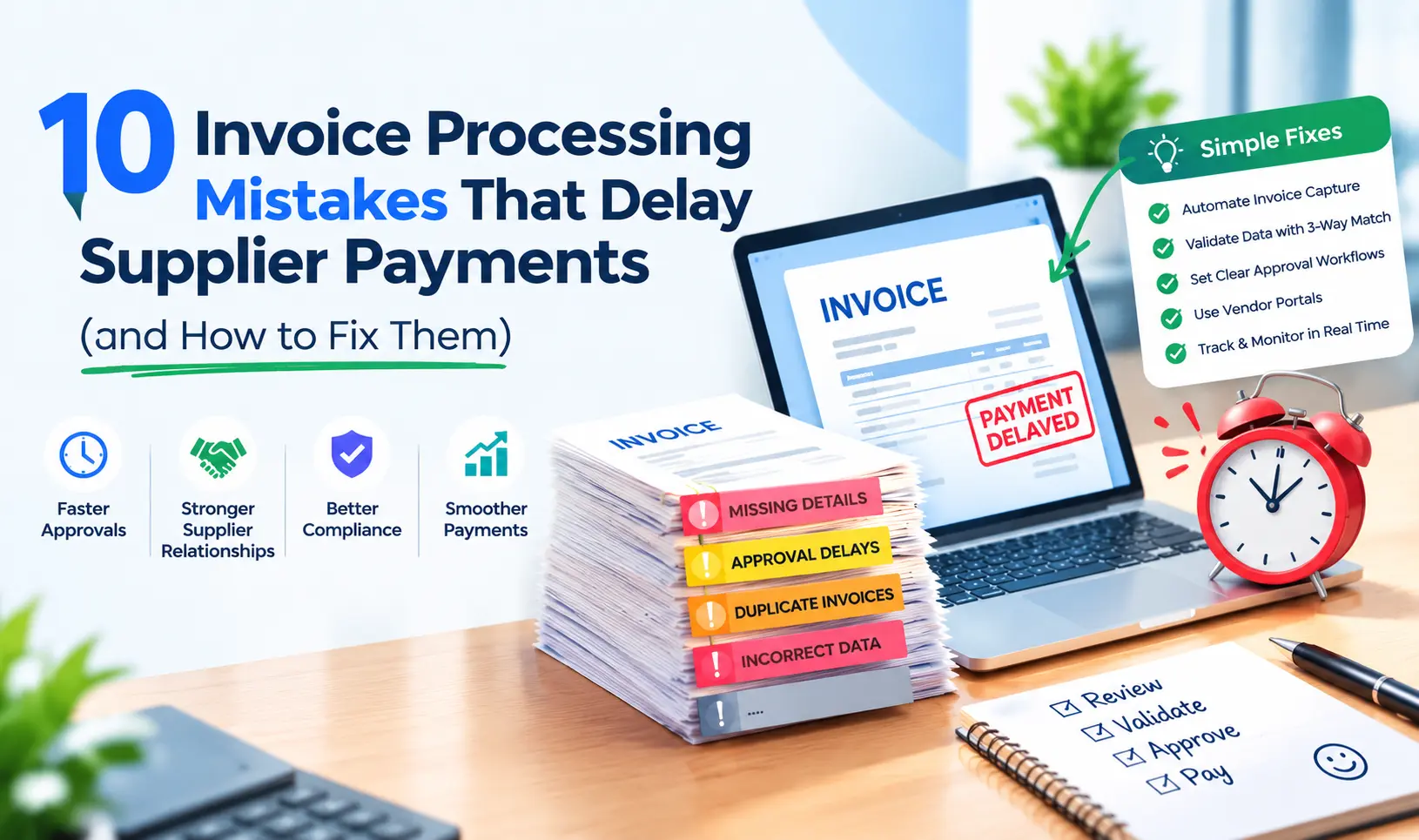
| 15 | Purchase Order, Invoice & Payment Errors | POs, receipts, and invoices do not match | Connect procure-to-pay processes and automate matching |
Procurement Lifecycle: Where Do These Challenges Occur?
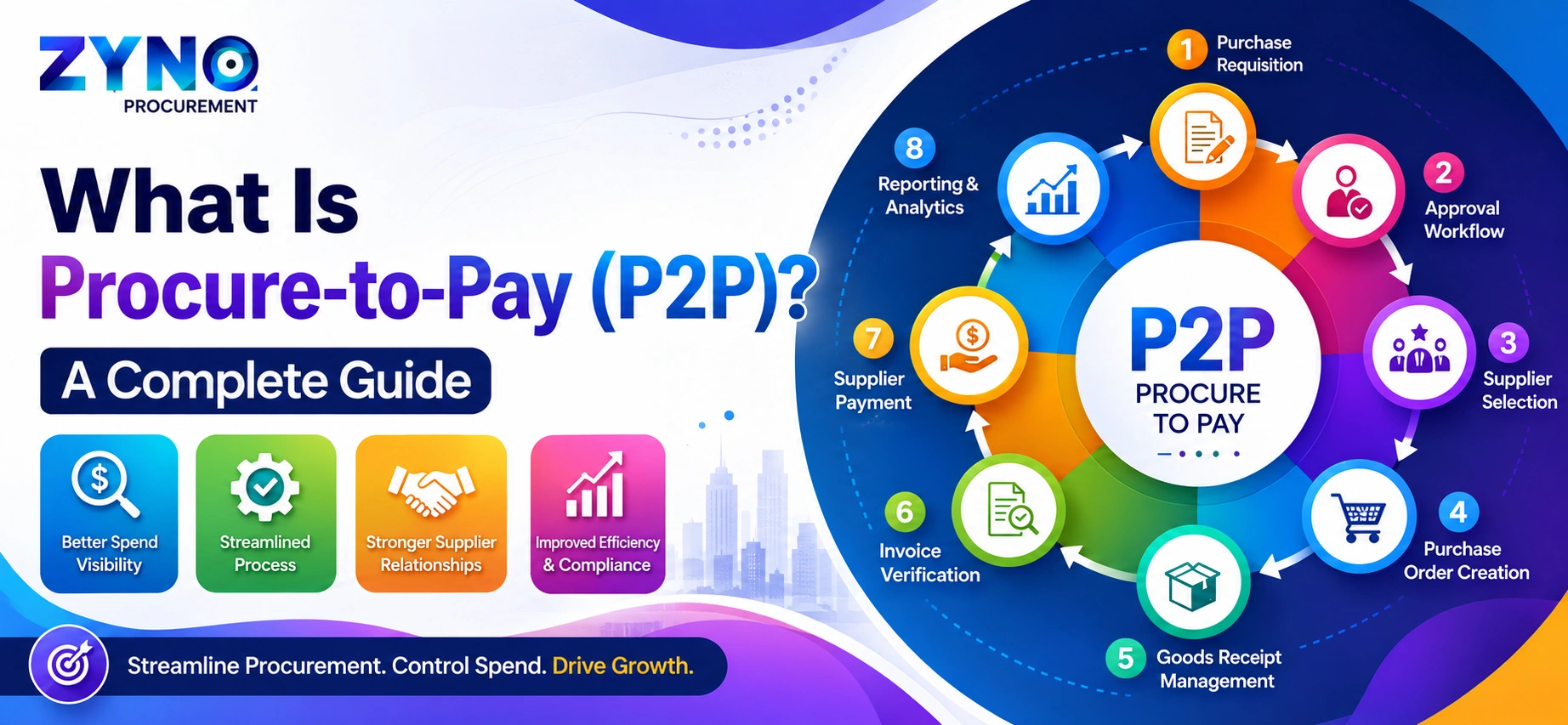
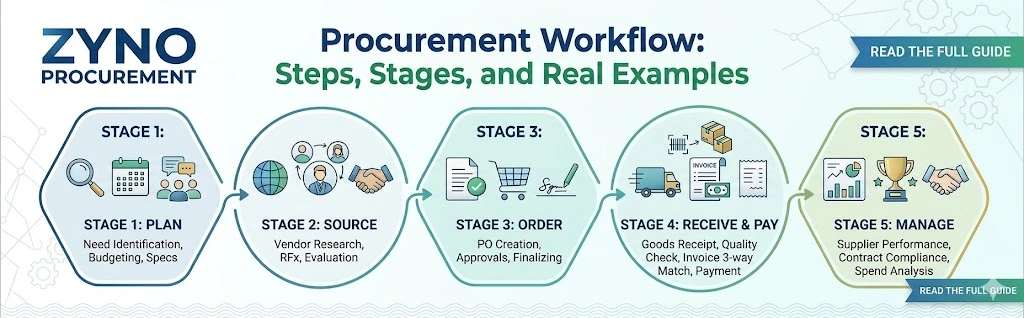
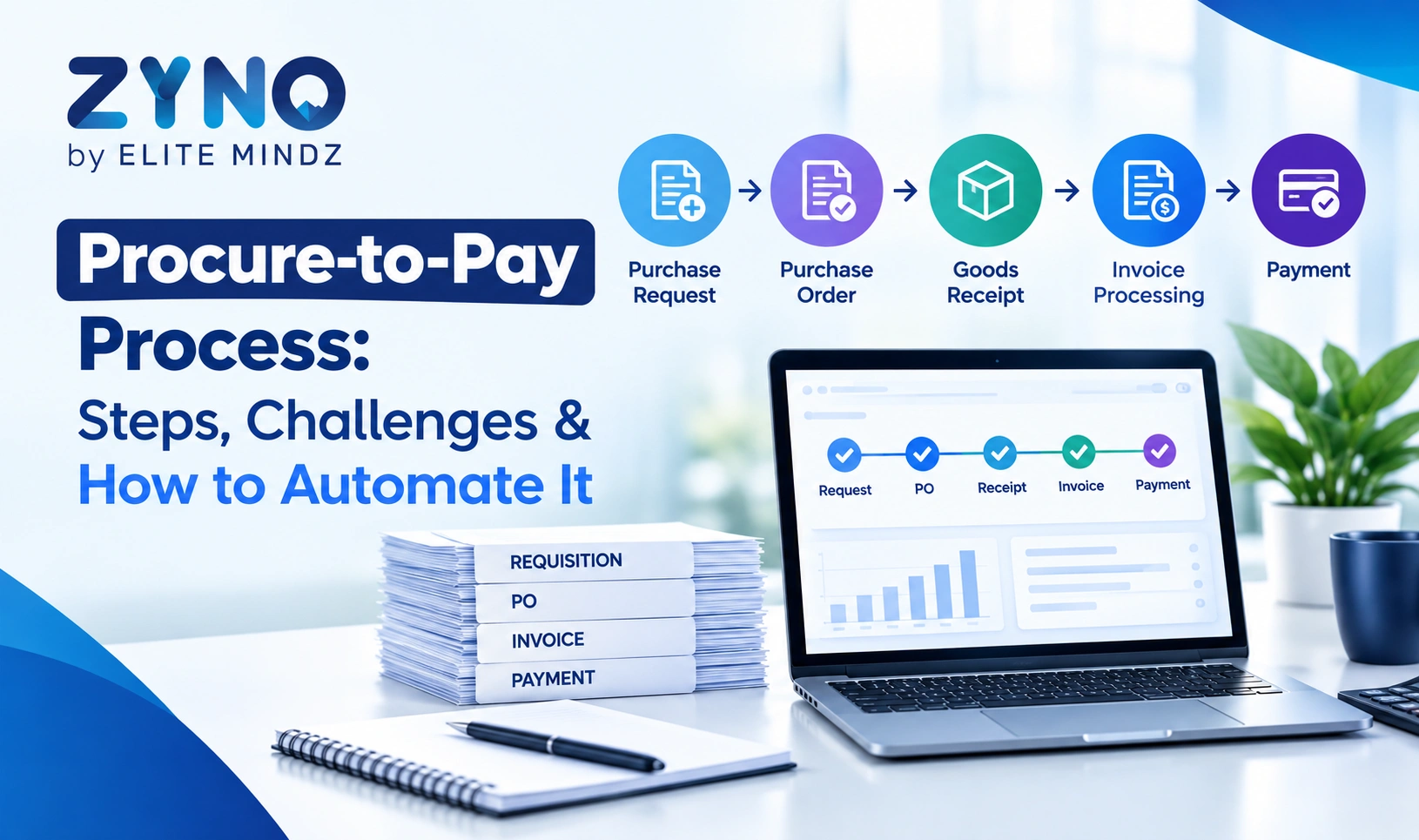
Procurement challenges can appear at almost every stage of the purchasing lifecycle. A connected procurement management software platform can help teams manage these stages in a more connected workflow. The procure-to-pay process connects several of these activities.
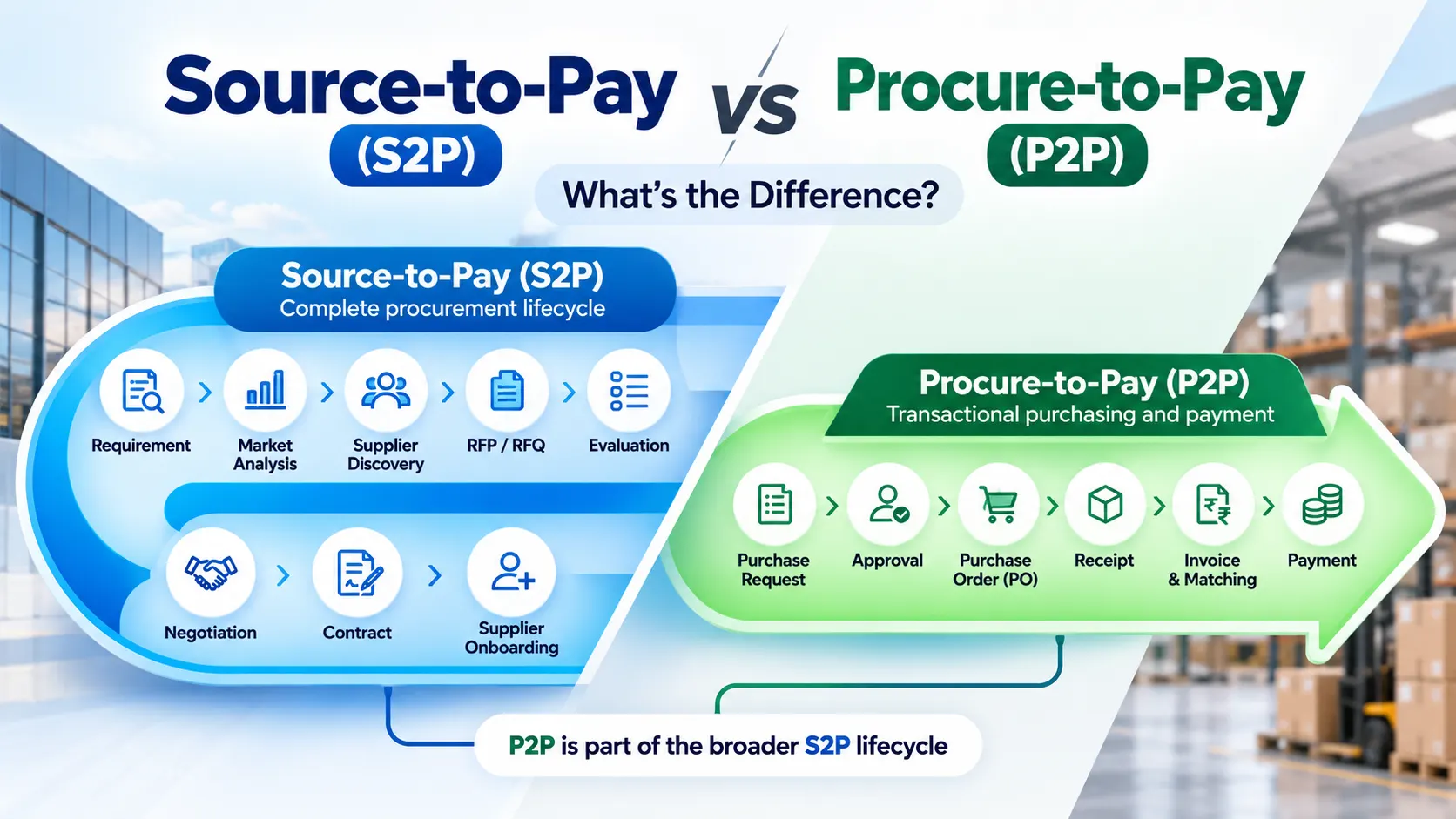
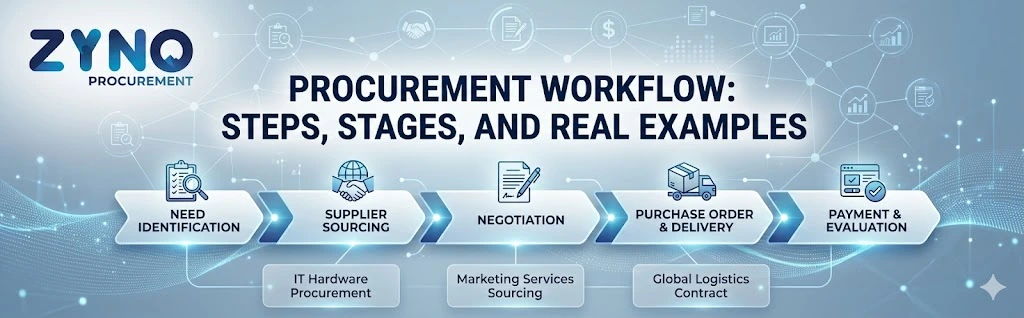
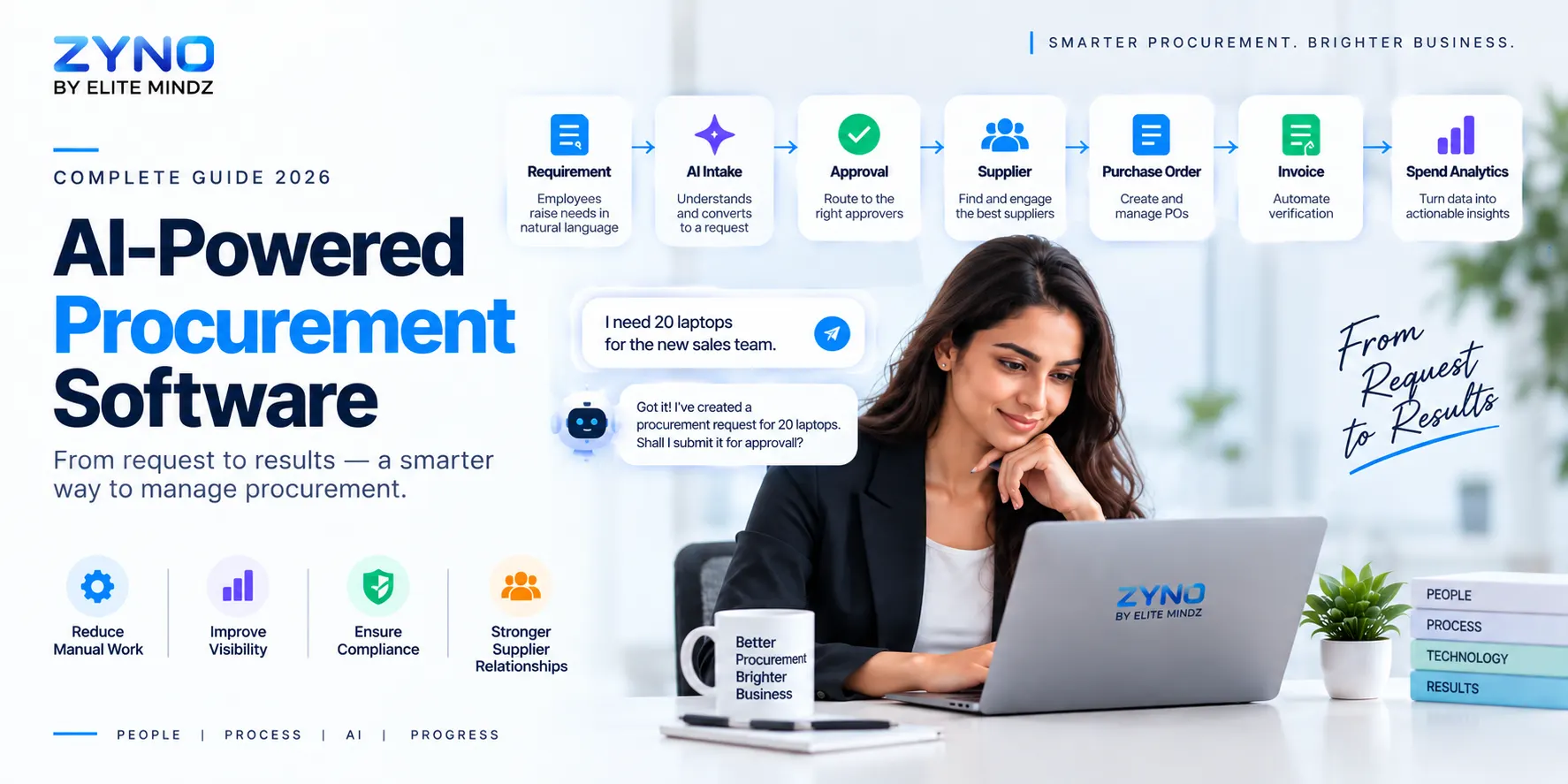
Need → Purchase Request → Approval → Sourcing → Supplier Selection → Purchase Order → Goods Receipt → Invoice → 3-Way Match → Payment → Supplier & Contract Review
| Procurement Stage | Common Challenges |
|---|---|
| Need & Request | Maverick spending, unclear requirements |
| Approval | Approval delays, compliance issues |
| Sourcing | Price pressure, poor supplier selection |
| Supplier Management | Performance, risk, communication |
| Contract Management | Contract leakage, missed renewals |
| Purchase Order | PO errors, unauthorized purchases |
| Receiving | Quantity and quality discrepancies |
| Invoice | Invoice mismatches, duplicate invoices |
| Payment | Payment delays, disputes |
| Analytics & Review | Spend visibility, data accuracy, forecasting |
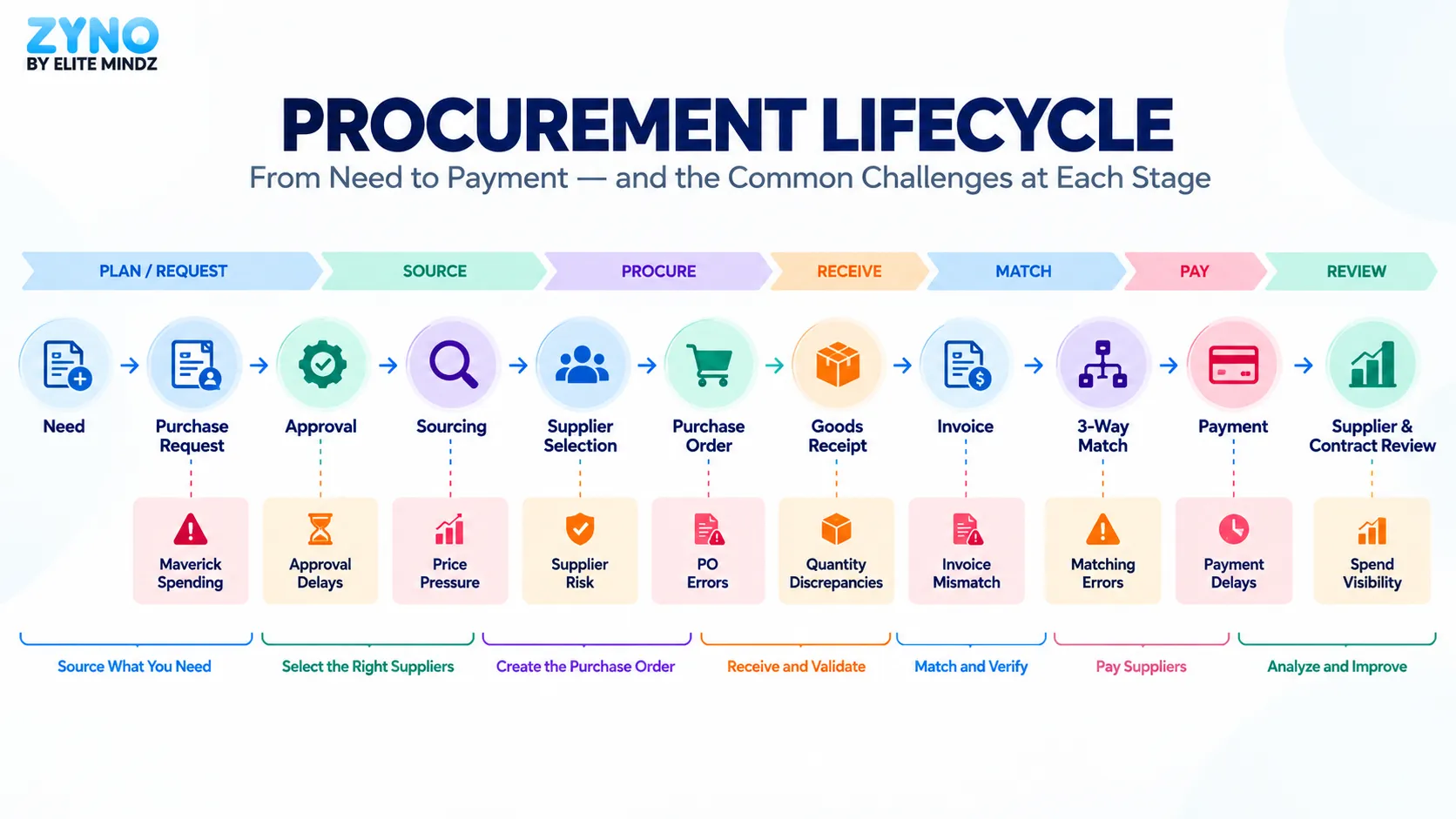
Understanding this lifecycle matters because one problem can create another.
For example, an unclear purchase request can delay approval. A delayed approval can result in an urgent purchase. An urgent purchase may bypass procurement controls. That purchase may then occur outside a negotiated supplier agreement, making the spend harder to track.
Procurement improvement is therefore most effective when teams look at the connections between problems, not just the individual transaction where an issue becomes visible.
What Are Procurement Challenges?
Procurement challenges are problems that make it difficult for an organization to purchase the right goods or services at the right cost, from the right suppliers, while maintaining quality, compliance, and operational efficiency. These challenges in the procurement process can occur across purchasing, sourcing, supplier management, contracts, and payment activities.
Some problems are operational, such as manual data entry, slow approvals, or invoice mismatches.
Others are strategic, such as limited spend visibility, supplier risk, poor contract management, or choosing suppliers based only on initial purchase price.
The impact can extend far beyond procurement.
A delayed approval can postpone an order. A postponed order can affect operations. A supplier quality issue can create rework or customer complaints. An invoice mismatch can delay payment and increase finance workload.
That is why solving procurement challenges requires a combination of:
- Process standardization
- Spend visibility
- Supplier management
- Data quality
- Procurement controls
- Stakeholder collaboration
- Appropriate automation
- Continuous performance measurement
How We Selected These 15 Procurement Challenges
These 15 challenges represent recurring problems across the procurement lifecycle, from purchasing requests and approvals to sourcing, supplier management, contracts, receiving, invoicing, and payment. Together, they represent key procurement challenges that can affect cost, control, efficiency, supplier performance, and business continuity.
The list focuses on problems that directly affect five areas:
1. Visibility
- Spend visibility
- Procurement data
- Contract visibility
2. Control
- Maverick spending
- Compliance
- Fraud and cybersecurity
3. Efficiency
- Manual processes
- Approval delays
- PO, invoice, and payment errors
4. Supplier Performance and Continuity
- Supplier performance
- Supplier risk
- Vendor communication
5. Commercial and Business Alignment
- Price volatility
- Total cost of ownership
- Stakeholder collaboration
These areas overlap, which is why solving one procurement problem can often help reduce several others.
15 Common Procurement Challenges and How to Solve Them
1. Lack of Spend Visibility
What Is the Problem?
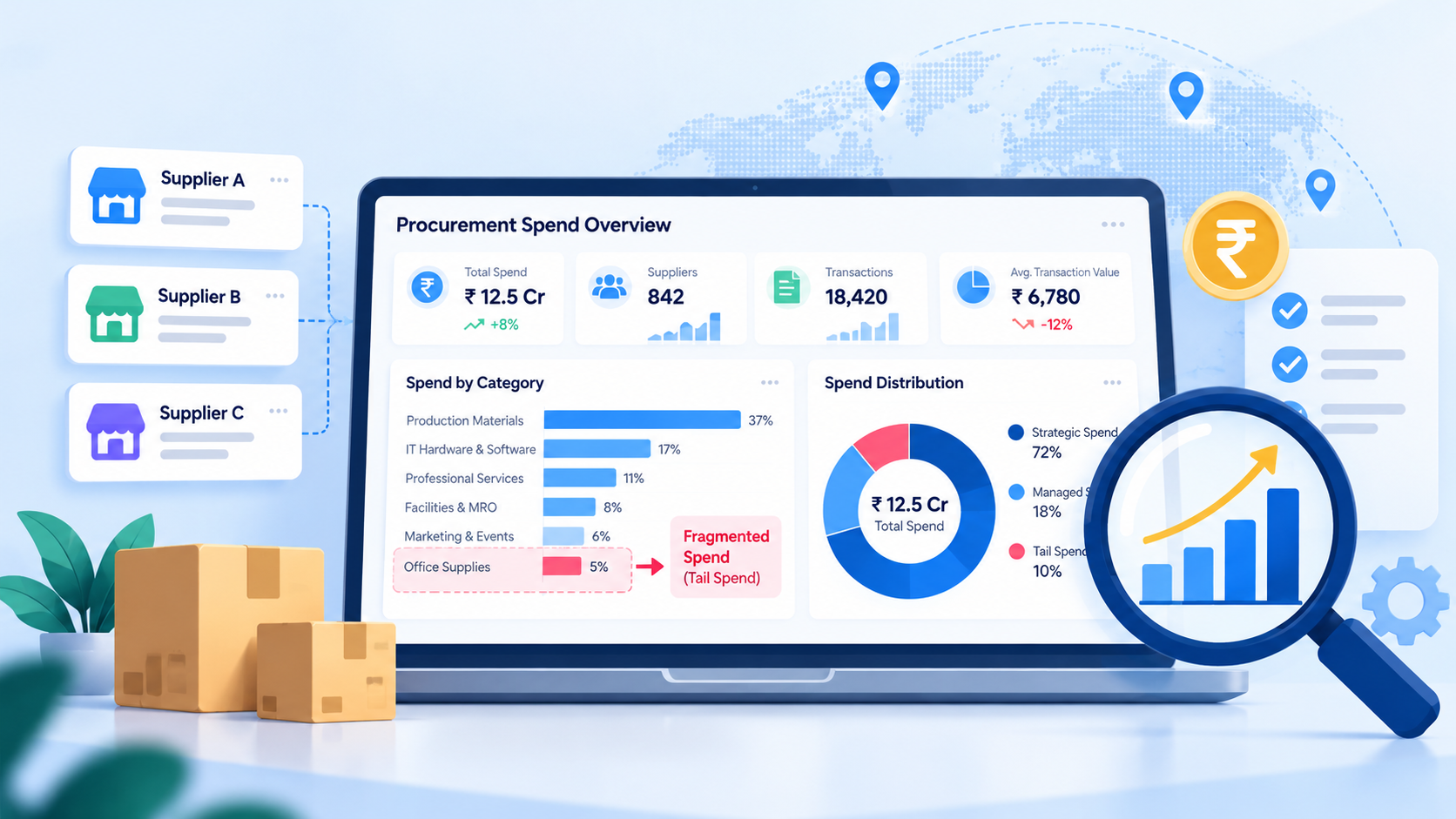
Spend visibility means having a reliable view of where, how, and with whom an organization is spending its money.
A lack of spend visibility occurs when purchasing information is scattered across departments, suppliers, locations, spreadsheets, purchase cards, ERP systems, or other disconnected sources.
A procurement team may know the organization's overall expenditure but still struggle to answer basic questions:
- Which suppliers receive the most spend?
- Which departments are purchasing the most?
- How much is being spent within each category?
- Are similar products being purchased at different prices?
- How much spending occurs outside negotiated agreements?
- Where are the biggest savings opportunities?
Without these answers, procurement has limited visibility into its own purchasing behavior.
Why Does It Happen?
Spend visibility problems usually develop because procurement data is not captured or organized consistently.
Common causes include:
- Procurement data stored in multiple systems
- Independent departmental purchasing
- Inconsistent supplier names
- Duplicate supplier records
- Poor spend categorization
- Spreadsheet-based reporting
- Purchases made outside procurement channels
- Limited integration between procurement and finance systems
When the same supplier appears under different names or transactions use inconsistent categories, simply adding more reports does not solve the underlying problem.
How Do You Know You Have a Spend Visibility Problem?
Ask:
- Can procurement calculate total annual spend with a supplier without manually combining reports?
- Can you identify all suppliers within a category?
- Can you compare contracted spend with actual purchases?
- Do different systems report different supplier totals?
- Can procurement identify purchases made outside approved agreements?
- Can buyers identify meaningful price differences for similar purchases?
If answering these questions requires significant manual work, spend visibility may be a structural problem rather than simply a reporting inconvenience.
How Does It Affect the Business?
Poor spend visibility weakens procurement's ability to negotiate and control costs.
It can make it harder to:
- Consolidate suitable supplier spend
- Identify duplicate suppliers
- Detect unnecessary purchases
- Negotiate based on total category volume
- Identify contract leakage
- Reduce maverick spending
- Build effective category strategies
- Measure procurement performance
It also makes it difficult to establish a reliable baseline for measuring savings.
How Can It Be Solved?
Start by centralizing relevant procurement and supplier data.
Then standardize:
- Supplier names
- Supplier records
- Categories
- Products
- Departments
- Locations
- Contract references
- Purchasing records
Create a consistent spend classification structure so similar purchases can be analyzed together.
Then prioritize the categories and suppliers where visibility can have the greatest business impact.
Procurement Insight
Do not start by trying to clean every transaction manually.
Start with the categories and suppliers representing the greatest spend, business importance, or risk. Improving visibility in high-impact areas first can produce more useful procurement insight than spending weeks cleaning low-value records.
How Can Technology Help?
spend analytics can consolidate purchasing information, categorize expenditure, identify patterns, and help procurement teams identify areas requiring attention.
Technology becomes more valuable when procurement data connects with relevant finance, ERP, and purchasing information.
Where ZYNO fits: ZYNO Procurement provides centralized procurement visibility and spend analytics to help teams understand purchasing activity and identify areas requiring attention.
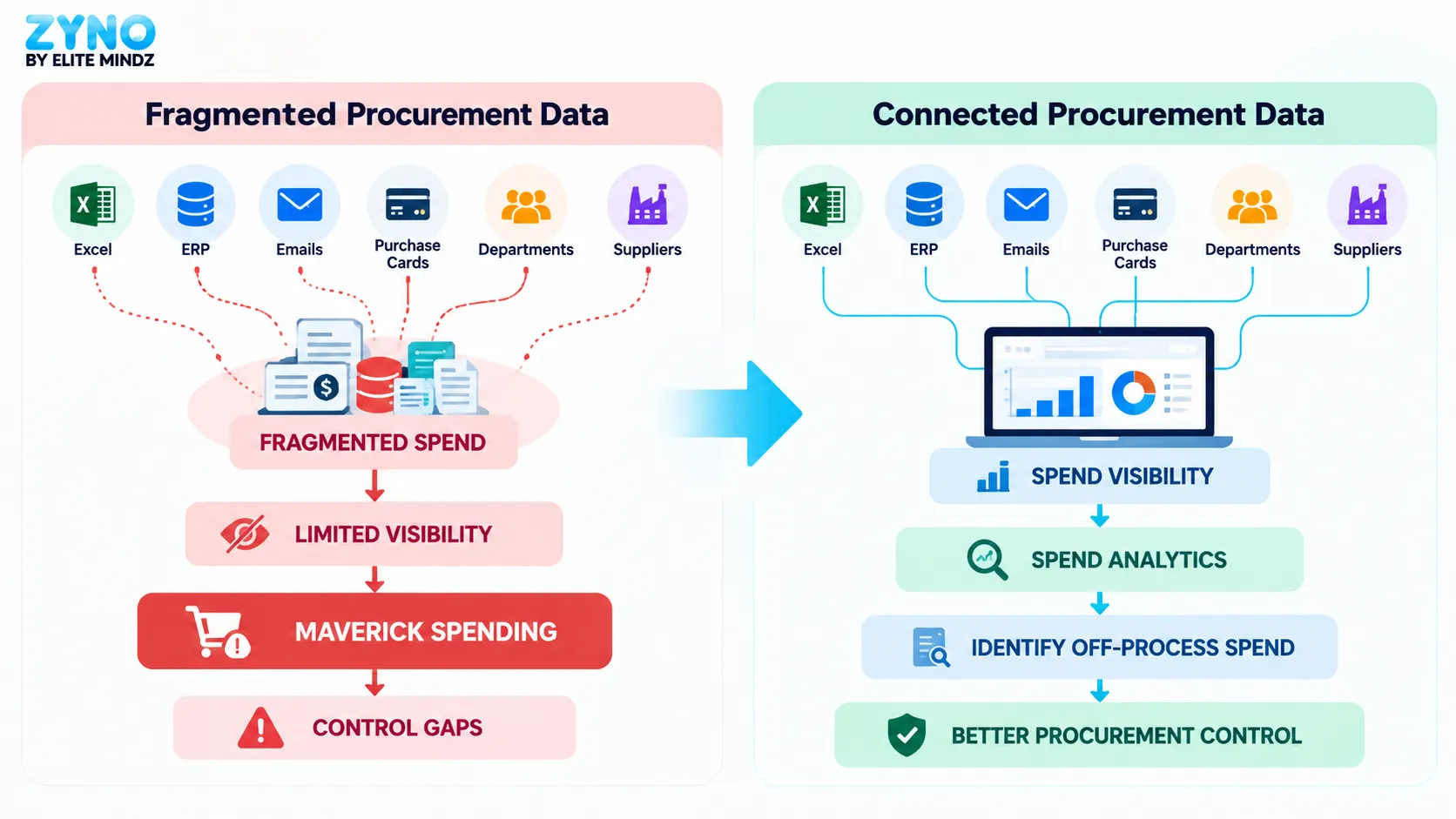
2. Maverick Spending and Unauthorized Purchases
What Is the Problem?
Maverick spending is purchasing made outside an organization's approved procurement process.
This can include buying from an unapproved supplier, bypassing procurement, purchasing without required approval, or buying outside an existing contract.
Maverick spending is not always caused by employees intentionally ignoring policy. Sometimes the approved purchasing process is simply slower, harder, or less convenient than the alternative.
Why Does It Happen?
Common causes include:
- Complicated procurement procedures
- Too many approval levels
- Limited approved supplier options
- Poor catalog availability
- Employees not understanding procurement policies
- Slow purchasing processes
- Lack of purchasing controls
- Difficulty finding approved products or suppliers
When the compliant purchasing route creates unnecessary friction, employees may find their own way to get what they need.
How Do You Know You Have a Maverick Spending Problem?
Look for:
- Purchases made without purchase orders
- Employees buying directly from suppliers
- Purchases outside negotiated contracts
- Unapproved suppliers appearing in transaction records
- Frequent urgent purchases
- Department-level purchasing outside procurement
- Similar products being purchased at different prices
A particularly important question is:
Why are employees bypassing the process?
The answer may reveal a process problem rather than simply a compliance problem.
How Does It Affect the Business?
Maverick spending reduces procurement visibility and weakens control over organizational purchasing.
It can result in:
- Inconsistent pricing
- Missed negotiated discounts
- Duplicate suppliers
- Contract leakage
- Compliance problems
- Difficulty calculating total category spend
- Weaker supplier negotiating power
It also makes negotiated savings difficult to measure because procurement cannot clearly distinguish contracted spend from purchases occurring outside approved channels.
How Can It Be Solved?
Do not rely only on stricter restrictions.
Make approved purchasing easier.
Useful approaches include:
- Preferred suppliers
- Approved catalogs
- Pre-approved products
- Digital purchase requests
- Clear purchasing policies
- Spending limits
- Approval thresholds
- Guided purchasing workflows
Then investigate the reasons behind repeated non-compliance.
Procurement Insight
If employees repeatedly bypass procurement, adding more restrictions may not solve the problem.
First determine whether the approved process is too slow, difficult, or poorly designed. Compliance improves when the correct process is also the easiest practical route.
How Can Technology Help?
Procurement software can provide guided purchasing, approved supplier options, digital purchase requests, approval workflows, spending controls, and visibility into purchasing activity.
Where ZYNO fits: ZYNO Purchase Request and approval workflows can help route purchasing requests through defined controls before they move forward.
3. Manual Procurement Processes
What Is the Problem?
Manual procurement occurs when purchasing activities depend heavily on spreadsheets, emails, paper documents, phone calls, and repeated data entry.
A single transaction may involve:
Purchase Request → Approval → Supplier Communication → Quotation → Purchase Order → Goods Receipt → Invoice → Payment
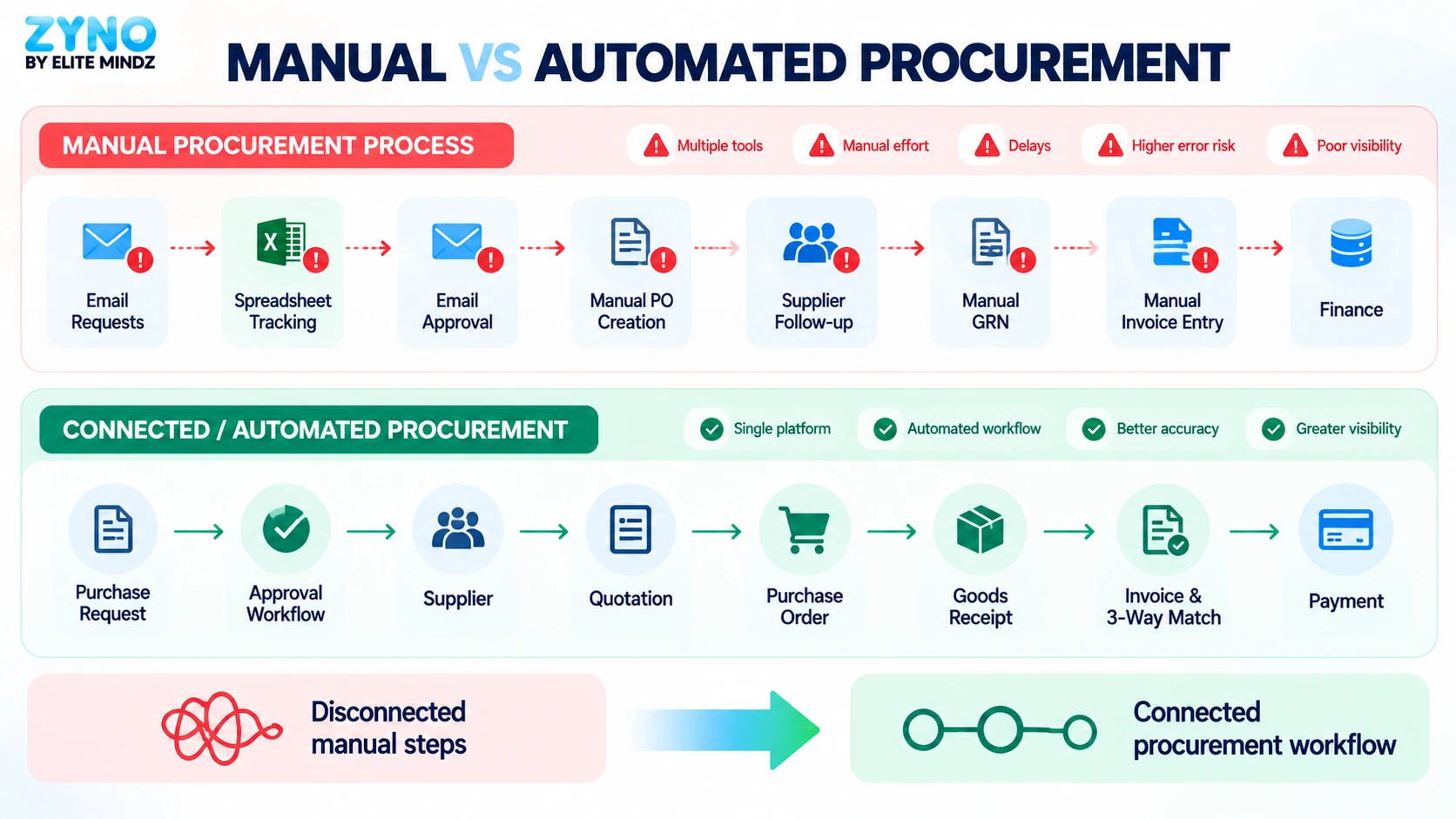
When each stage is handled manually, every handoff introduces another opportunity for delay, duplicate work, or missing information.
Why Does It Happen?
Manual procurement often develops when purchasing processes grow around individual workarounds instead of standardized workflows.
Common causes include:
- Legacy processes
- Spreadsheet-based purchasing
- Email approvals
- Paper documentation
- Disconnected systems
- Lack of workflow automation
- Repeated data entry
- Poorly designed processes
Organizations can also make the mistake of automating a poorly designed process without simplifying it first.
How Do You Know You Have a Manual Procurement Problem?
Look for:
- Purchase requests submitted by email
- Approvals handled through email chains
- Purchase orders manually prepared
- Supplier information repeatedly entered
- Buyers chasing approvers
- Documents stored in different locations
- Manual invoice data entry
- Procurement reports prepared manually
- Employees maintaining their own tracking spreadsheets
How Does It Affect the Business?
Manual processes increase administrative workload and make procurement more dependent on individual employees.
They can lead to:
- Longer procurement cycle times
- Data-entry errors
- Duplicate work
- Poor visibility
- Delayed purchases
- Difficult reporting
- Lost documents or information
- Higher administrative effort
They can also prevent procurement professionals from spending enough time on strategic activities such as sourcing, negotiation, supplier development, and risk management.
How Can It Be Solved?
First map the current procurement process.
Identify:
- Unnecessary approvals
- Duplicate data entry
- Repeated communication
- Manual document handling
- Unclear handoffs
- Activities that do not add control or value
Then standardize the process and automate suitable activities such as:
- Purchase requests
- Approval routing
- Notifications
- Purchase orders
- Supplier communication
- Contract reminders
- Invoice matching
- Exception routing
Procurement Insight
Automation should follow process simplification, not replace it.
Automating a badly designed workflow can make an inefficient process faster without making it better. Remove unnecessary steps before deciding which activities should be automated.
How Can Technology Help?
procurement automation can connect multiple procurement stages and reduce repetitive administrative work.
Where ZYNO fits: ZYNO connects purchase requests, approvals, supplier activities, purchase orders, receiving, invoices, and payment workflows.
4. Lengthy Procurement Cycles and Approval Delays
What Is the Problem?
A procurement process can have the right controls and still be inefficient if requests take too long to move from one stage to another.
A purchase request may remain pending with an approver. A buyer may wait for supplier quotations. A purchase order may be delayed because information is incomplete.
The result is a procurement cycle that takes longer than the business can comfortably support.
Why Does It Happen?
Common causes include:
- Too many approval levels
- Unclear approval responsibilities
- Manual request routing
- Missing information
- Slow supplier responses
- No approval escalation
- Poor request-status visibility
- Duplicate review steps
How Do You Know You Have an Approval Delay Problem?
Ask:
- How long do requests typically remain pending?
- Which approval stage causes the most waiting?
- Do employees regularly follow up with approvers?
- Are urgent purchases becoming common?
- Are requests returned because information is missing?
- Do employees bypass procurement because they cannot wait?
The objective is to find where the process is actually spending time.
How Does It Affect the Business?
Long procurement cycles can cause:
- Delayed operations
- Stock shortages
- Production delays
- Missed business deadlines
- Employee frustration
- Emergency purchasing
- Maverick spending
- Supplier delays
Slow approvals can also damage procurement adoption. If employees repeatedly experience delays, they may begin looking for alternative purchasing methods.
How Can It Be Solved?
Map the complete workflow and identify where requests spend the most time.
Then simplify approval rules based on factors such as:
- Purchase value
- Category
- Department
- Risk
- Budget ownership
Set clear approval responsibilities and escalation rules.
Automated reminders can prevent requests from becoming invisible in someone's inbox.
The objective is not to eliminate necessary controls. It is to eliminate unnecessary waiting.
Procurement Insight
A good approval workflow should balance control and speed.
Not every purchase requires the same level of scrutiny. Low-risk routine purchases can often follow simpler rules, while high-value or high-risk purchases may require additional review.
How Can Technology Help?
Automated workflows can route requests to the appropriate approver, send reminders, escalate overdue approvals, and provide visibility into request status.
Where ZYNO fits: ZYNO Purchase Request supports structured procurement requests and approval workflows.
5. Poor Supplier Performance and Quality
What Is the Problem?
Supplier selection is only the beginning of supplier management.
A supplier may initially appear suitable but later experience late deliveries, quality problems, missed service levels, slow response times, or inconsistent order fulfillment.
Without structured supplier performance management, procurement teams may rely on individual experiences instead of measurable information.
Why Does It Happen?
Supplier performance problems can result from:
- Unclear supplier expectations
- Weak contracts or SLAs
- Poor supplier evaluation
- Capacity constraints
- Communication problems
- Quality-control issues
- Lack of supplier monitoring
- No regular performance reviews
How Do You Know You Have a Supplier Performance Problem?
Look for:
- Repeated late deliveries
- High defect or rejection rates
- Inconsistent product quality
- Missed service levels
- Slow responses
- Incorrect quantities
- Frequent order corrections
- Repeated customer complaints
Also ask:
Are supplier KPIs defined before performance is evaluated?
Without clear expectations, supplier reviews can become subjective.
How Does It Affect the Business?
Poor supplier performance may lead to:
- Production disruption
- Rework
- Returns
- Customer complaints
- Higher operating costs
- Missed deadlines
- Inventory problems
- Poor supplier relationships
Procurement may also spend more time expediting orders, resolving quality disputes, finding replacement suppliers, and managing corrective actions.
For critical suppliers, performance issues can become supply continuity risks.
How Can It Be Solved?
Define clear supplier expectations before the relationship begins.
Track relevant KPIs such as:
- On-time delivery
- Defect rate
- Lead time
- Fill rate
- SLA compliance
- Response time
- Order accuracy
- Price variance
Conduct regular supplier reviews and document corrective actions.
Depending on performance, procurement may need to renegotiate terms, develop the supplier, increase monitoring, or identify alternatives.
Procurement Insight
Supplier performance should be measured according to what matters for the category.
On-time delivery may be critical for one supplier, while defect rate, response time, SLA compliance, or order accuracy may matter more for another.
How Can Technology Help?
Supplier management systems and vendor management platforms can centralize supplier information, performance data, documents, reviews, and procurement records.
Where ZYNO fits: ZYNO Vendor Management supports centralized supplier management and performance visibility.
6. Supplier Risk and Supply Chain Disruptions
What Is the Problem?
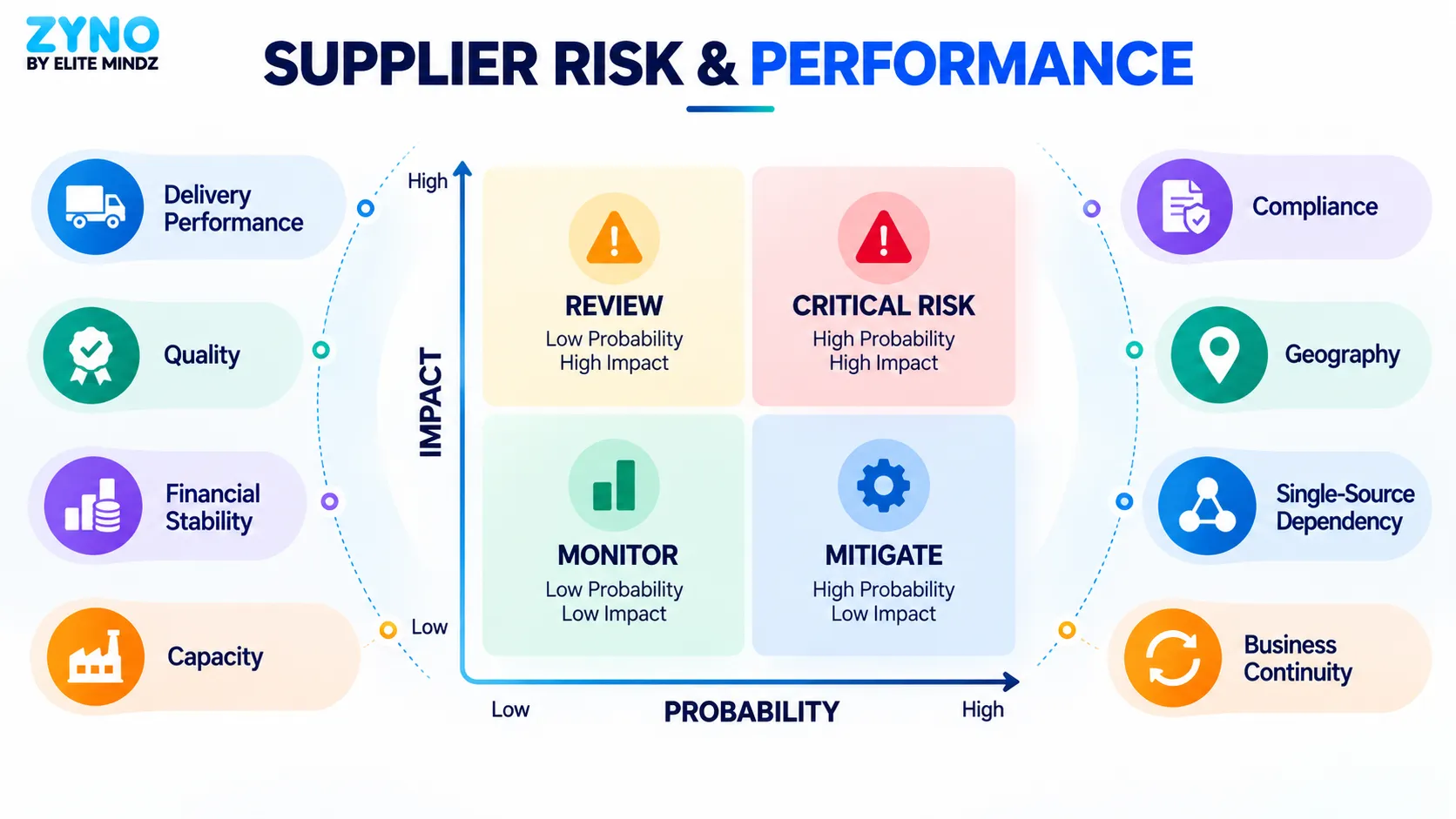
Supplier risk is the possibility that a supplier may fail to meet organizational requirements or that an external event may disrupt supply.
Risk can come from financial instability, capacity constraints, geographic concentration, logistics problems, regulatory changes, geopolitical events, natural disasters, or dependence on a single supplier.
Why Does It Happen?
Supplier risk increases when organizations:
- Depend heavily on one supplier
- Lack alternative sources
- Do not regularly assess suppliers
- Focus only on price
- Have limited visibility into supplier operations
- Do not monitor supplier performance
- Do not maintain contingency plans
How Do You Know You Have a Supplier Risk Problem?
Ask:
- Does one supplier provide a business-critical product?
- Is there a realistic alternative supplier?
- Are supplier lead times increasing?
- Has supplier performance deteriorated?
- Are critical materials concentrated in one geography?
- Would switching suppliers be difficult or expensive?
- Is there a contingency plan if the supplier fails?
How Does It Affect the Business?
Supply disruptions can result in:
- Stockouts
- Production delays
- Higher purchasing costs
- Customer delivery problems
- Emergency sourcing
- Revenue impact
- Operational downtime
The impact is especially significant when the affected supplier provides a critical product or service with limited alternatives.
How Can It Be Solved?
Assess suppliers according to the risks relevant to the category.
Consider:
- Financial stability
- Geographic exposure
- Capacity
- Delivery performance
- Quality
- Compliance
- Business continuity
- Single-source dependency
- Availability of alternatives
For critical categories, consider alternative suppliers or dual sourcing where commercially and operationally appropriate.
Maintain contingency plans and periodically test whether they remain practical.
Procurement Insight
Not every supplier needs the same level of risk assessment.
Prioritize suppliers based on business criticality, switching difficulty, spend exposure, supply alternatives, and the consequences of failure. This allows procurement teams to focus deeper procurement risk management effort where it matters most.
How Can Technology Help?
Supplier-management technology can centralize supplier information, performance records, compliance documents, and risk-related information.
Where ZYNO fits: ZYNO Vendor Management provides centralized supplier information and supplier-management workflows that support structured supplier oversight.
7. Ineffective Vendor Communication and Collaboration
What Is the Problem?
Supplier communication becomes a procurement challenge when important information is spread across emails, phone calls, messaging applications, spreadsheets, and individual employee records.
Different people may then have different versions of the same information.
Why Does It Happen?
Common causes include:
- Heavy dependence on email
- No supplier portal
- Multiple supplier contacts
- No central communication record
- Poor order-status visibility
- Separate systems for different procurement activities
How Do You Know You Have a Vendor Communication Problem?
Look for:
- Suppliers repeatedly asking for order updates
- Procurement teams chasing suppliers for information
- Documents being exchanged through email
- Different employees receiving different updates
- Suppliers not knowing request or invoice status
- Repeated requests for the same information
How Does It Affect the Business?
Poor supplier communication can cause:
- Delays
- Incorrect orders
- Repeated work
- Missed updates
- Supplier frustration
- Poor relationships
- Difficulty resolving issues quickly
It can also make supplier performance harder to evaluate because relevant information is scattered across individual conversations.
How Can It Be Solved?
Create a structured process for supplier collaboration.
Centralize important procurement information and establish clear communication channels.
A supplier portal can allow suppliers to access relevant requests, purchase orders, documents, invoices, and updates without depending entirely on individual email exchanges.
Procurement Insight
The objective is not to eliminate human communication.
It is to make sure important procurement information does not depend on one employee's inbox or memory.
How Can Technology Help?
A vendor portal and supplier collaboration systems provide a shared environment for procurement interactions.
Where ZYNO fits: ZYNO Vendor Portal provides a structured point of interaction for relevant supplier activities and procurement collaboration.
8. Poor Contract Management and Contract Leakage
What Is the Problem?
Contract management is more than storing signed agreements.
Procurement contracts can contain pricing, payment terms, service levels, renewal dates, supplier obligations, volume commitments, and other conditions that need to be monitored throughout the relationship.
When these details are difficult to access or track, organizations can lose the value they negotiated.
Why Does It Happen?
Common causes include:
- Contracts stored in different locations
- No centralized contract repository
- Unclear contract ownership
- Missed renewal dates
- Poor visibility into obligations
- Procurement and legal working separately
- Purchasing not aligned with contract terms
How Do You Know You Have a Contract Management Problem?
Look for:
- Missed renewal deadlines
- Automatic renewals that were not reviewed
- Purchases outside contracted pricing
- Difficulty locating agreements
- Supplier obligations not being tracked
- Negotiated discounts not being used
- Contract terms not being visible to buyers
How Does It Affect the Business?
Poor contract management can result in:
- Lost savings
- Unnecessary renewals
- Supplier disputes
- Compliance problems
- Contract leakage
- Missed obligations
- Reduced procurement control
A negotiated price is only valuable if buyers actually purchase under that price.
When contract terms are disconnected from purchasing activity, negotiated savings can remain theoretical rather than realized.
How Can It Be Solved?
Maintain a centralized contract repository.
Track:
- Contract owner
- Expiry date
- Renewal date
- Pricing terms
- Supplier obligations
- Service levels
- Key milestones
- Relevant compliance requirements
Set reminders for important dates and regularly review contracts against actual purchasing activity.
Procurement Insight
A contract repository alone does not prevent contract leakage.
Procurement also needs to connect negotiated terms with actual purchasing behavior. Otherwise, the organization may know what it agreed to without knowing whether employees are actually purchasing according to those terms.
How Can Technology Help?
Contract-management technology can provide contract management workflows, centralized storage, search, alerts, obligation tracking, and renewal management.
Where ZYNO fits: ZYNO Contract Management helps organize procurement-related contracts, important dates, obligations, and workflows.
9. Procurement Compliance and Regulatory Challenges
What Is the Problem?
Procurement compliance means ensuring purchasing activities follow applicable internal policies, contractual requirements, and relevant legal or regulatory obligations.
The challenge is maintaining the necessary controls without making every procurement activity unnecessarily slow or complicated.
Why Does It Happen?
Compliance problems can arise because of:
- Unclear procurement policies
- Manual processes
- Missing documentation
- Unauthorized purchases
- Weak approval controls
- Incomplete supplier information
- Poor audit trails
- Unclear responsibilities
How Do You Know You Have a Compliance Problem?
Common warning signs include:
- Purchases made without required approval
- Missing procurement documents
- Incomplete supplier records
- Purchases outside defined thresholds
- Poor documentation of procurement decisions
- Difficulty producing records during an audit
- Employees bypassing procurement procedures
How Does It Affect the Business?
Compliance failures can create:
- Audit problems
- Financial risk
- Legal or regulatory exposure
- Fraud risk
- Supplier disputes
- Reputational damage
Exact compliance requirements depend on the organization, industry, geography, contracts, and applicable regulations.
How Can It Be Solved?
Create clear procurement policies and define approval authority.
Then build important controls into the workflow.
Examples include:
- Approval thresholds
- Required supplier information
- Mandatory documentation
- Authorized purchasing channels
- Audit trails
- Supplier verification
- Segregation of responsibilities where appropriate
Regular reviews can identify gaps before they become larger problems.
Procurement Insight
Good compliance design does not mean adding controls everywhere.
The better approach is to place the right control at the right point in the process, based on transaction value, risk, category, and organizational requirements.
How Can Technology Help?
Procurement software can enforce approval workflows, capture required information, maintain audit trails, and make procurement records easier to retrieve.
Technology should support governance rather than replace legal, regulatory, or internal compliance judgment.
Where ZYNO fits: ZYNO supports approval workflows, supplier information management, purchasing controls, and procurement visibility.
10. Inaccurate Procurement Data and Poor Forecasting
What Is the Problem?
Procurement decisions depend on reliable data.
When supplier records, product information, prices, categories, purchase transactions, or historical data are inaccurate or incomplete, procurement teams may make decisions using an unreliable picture of purchasing activity.
Poor data can also affect forecasting and planning.
Why Does It Happen?
Common causes include:
- Duplicate supplier records
- Inconsistent supplier names
- Outdated information
- Manual data entry
- Different category structures
- Incomplete transaction records
- Disconnected procurement systems
- Poor master-data governance
How Do You Know You Have a Data Quality Problem?
Look for:
- Different reports showing different spend totals
- Duplicate suppliers
- Incorrect supplier classifications
- Outdated pricing
- Inconsistent product names
- Missing purchasing information
- Unreliable procurement forecasts
A useful diagnostic question is:
Can two teams using different reports reach the same procurement conclusion?
If not, data quality or data governance may be part of the problem.
How Does It Affect the Business?
Poor procurement data can affect:
- Spend analysis
- Supplier negotiations
- Budgeting
- Demand planning
- Inventory decisions
- Supplier evaluation
- Procurement reporting
If procurement teams cannot trust their data, even sophisticated analytics may produce unreliable conclusions.
How Can It Be Solved?
Start with data quality.
Standardize:
- Supplier names
- Product information
- Categories
- Departments
- Locations
- Purchasing records
- Contract information
Create clear ownership for important procurement data and review it regularly.
Where appropriate, integrate procurement with finance, ERP, inventory, accounts payable, and other relevant systems.
Procurement Insight
Better technology cannot compensate for fundamentally poor data.
Before building sophisticated dashboards, determine which procurement data is critical, who owns it, how it is maintained, and which systems should be treated as the source of truth.
How Can Technology Help?
Centralized procurement systems and integrations can reduce duplicate data entry and create a more consistent source of procurement information.
Where ZYNO fits: ZYNO provides centralized procurement visibility and connects relevant purchasing activities to support a more connected view of procurement information.
11. Inflation, Price Volatility and Cost Pressure
What Is the Problem?
Procurement teams operate in markets where supplier prices and input costs can change.
Inflation, commodity prices, currency movements, transportation costs, shortages, capacity constraints, and supplier cost changes can all affect procurement budgets.
The challenge is deciding how to respond without simply passing every price increase directly into purchasing costs.
Why Does It Happen?
Price pressure may be driven by:
- Inflation
- Commodity costs
- Currency changes
- Transportation costs
- Supply shortages
- Capacity constraints
- Supplier cost increases
- Changes in market demand
How Do You Know You Have a Cost Pressure Problem?
Procurement teams may notice:
- Frequent supplier price increases
- Shorter quotation validity periods
- Higher transportation costs
- Reduced supplier discounts
- Contract price adjustments
- Increased sourcing competition
- Pressure on procurement budgets
How Does It Affect the Business?
Price volatility can create:
- Higher procurement costs
- Budget pressure
- Margin pressure
- Forecasting uncertainty
- Difficulty maintaining contract pricing
- Pressure to increase customer prices
Procurement teams need to determine whether a price increase reflects genuine market conditions or whether sourcing, specification, negotiation, or supplier competition can address it.
How Can It Be Solved?
Depending on the category, procurement teams can:
- Monitor important price movements
- Compare suppliers
- Understand supplier cost drivers
- Negotiate volume where appropriate
- Review contract structures
- Consolidate suitable demand
- Evaluate alternative suppliers
- Consider alternative specifications
- Assess total cost of ownership
There is no single strategy that works for every category.
Procurement Insight
Price pressure should not automatically trigger a supplier switch.
Before changing suppliers, consider switching costs, quality, reliability, logistics, contractual commitments, operational disruption, and total cost.
How Can Technology Help?
quotation management and procurement analytics can make supplier comparisons easier and provide historical purchasing information for better decisions.
Where ZYNO fits: ZYNO Quotation Management supports structured quotation collection and supplier comparison.
12. Procurement Fraud and Cybersecurity Risks
What Is the Problem?
Procurement involves suppliers, financial information, contracts, invoices, purchase orders, and payments.
That creates exposure to both procurement fraud and cybersecurity risks.
These are related but not identical problems.
Procurement Fraud
Potential examples include:
- Fake suppliers
- Duplicate invoices
- False invoices
- Unauthorized purchasing
- Supplier bank-detail manipulation
- Collusive or improper purchasing activity
Cybersecurity Risk
Potential examples include:
- Compromised credentials
- Phishing
- Excessive permissions
- Unauthorized system access
- Exposure of sensitive procurement information
Why Does It Happen?
Common contributing factors include:
- Weak supplier verification
- Excessive system permissions
- Poor approval controls
- Manual processes
- Inadequate invoice validation
- Weak supplier master-data controls
- Lack of segregation of responsibilities
- Poor audit visibility
How Do You Know You Have a Risk Problem?
Warning signs may include:
- Unexpected supplier changes
- Duplicate invoices
- Purchases without appropriate approval
- Unusual purchasing activity
- Suppliers with incomplete information
- Unexplained payment changes
- Users with unnecessary access
These signs do not automatically mean fraud has occurred. They indicate areas that may require investigation or stronger controls.
How Does It Affect the Business?
Fraud and cybersecurity failures can lead to:
- Financial losses
- Unauthorized payments
- Sensitive-data exposure
- Operational disruption
- Compliance problems
- Supplier disputes
- Reputational damage
How Can It Be Solved?
Strengthen controls around:
- Supplier verification
- Supplier onboarding
- User permissions
- Approval authority
- Supplier-information changes
- Invoice validation
- Duplicate detection
- Audit trails
Use appropriate segregation of duties and additional review for higher-risk transactions.
Procurement Insight
Do not treat every unusual transaction as fraud.
The better approach is to build controls that make unusual activity visible, establish clear escalation procedures, and ensure sensitive changes receive appropriate verification.
How Can Technology Help?
Procurement technology can support permissions, approvals, supplier workflows, invoice controls, duplicate detection, and audit trails.
Technology should complement strong governance and human oversight rather than replace them.
Where ZYNO fits: ZYNO supports supplier onboarding, approval workflows, invoice verification, procurement controls, and procurement visibility.
13. Focusing Only on Purchase Price
What Is the Problem?
A common procurement mistake is selecting the supplier with the lowest quoted price without evaluating the complete cost of the purchase.
The lowest initial price does not necessarily represent the lowest overall cost.
A cheaper product may have higher transportation, maintenance, storage, repair, replacement, or operational costs.
Why Does It Happen?
This problem can occur when:
- Procurement KPIs focus heavily on price savings
- Supplier quotations are compared only on price
- Total cost of ownership is not calculated
- Short-term savings receive more attention than lifecycle value
- Quality and delivery risks are not considered
How Do You Know You Are Over-Focusing on Purchase Price?
Look for decisions where:
- The cheapest supplier consistently wins despite poor delivery
- Lower-quality products require frequent replacement
- Transportation costs are ignored
- Maintenance requirements are excluded
- Contract terms are not evaluated
- Supplier risk is treated as secondary to unit price
How Does It Affect the Business?
A purchase that looks cheaper initially can ultimately result in:
- Higher lifecycle costs
- More maintenance
- More returns
- Poor quality
- Operational disruption
- Higher supplier-management effort
- Increased replacement costs
The procurement decision should therefore focus on best overall value, not simply the lowest initial quote.
Purchase Price vs Total Cost of Ownership
| Purchase Price | Total Cost of Ownership |
|---|---|
| Initial supplier quote | Full relevant lifecycle cost |
| Unit price | Unit price plus relevant operating costs |
| Short-term view | Lifecycle view |
| Easy to compare | Requires broader evaluation |
| May overlook quality and service | Can include relevant quality, maintenance, logistics, and operating effects |
How Can It Be Solved?
Use Total Cost of Ownership (TCO) when the category justifies deeper analysis.
Depending on the purchase, consider:
- Purchase price
- Transportation
- Installation
- Maintenance
- Storage
- Training
- Repairs
- Returns
- Disposal
- Operational costs
- Quality-related costs
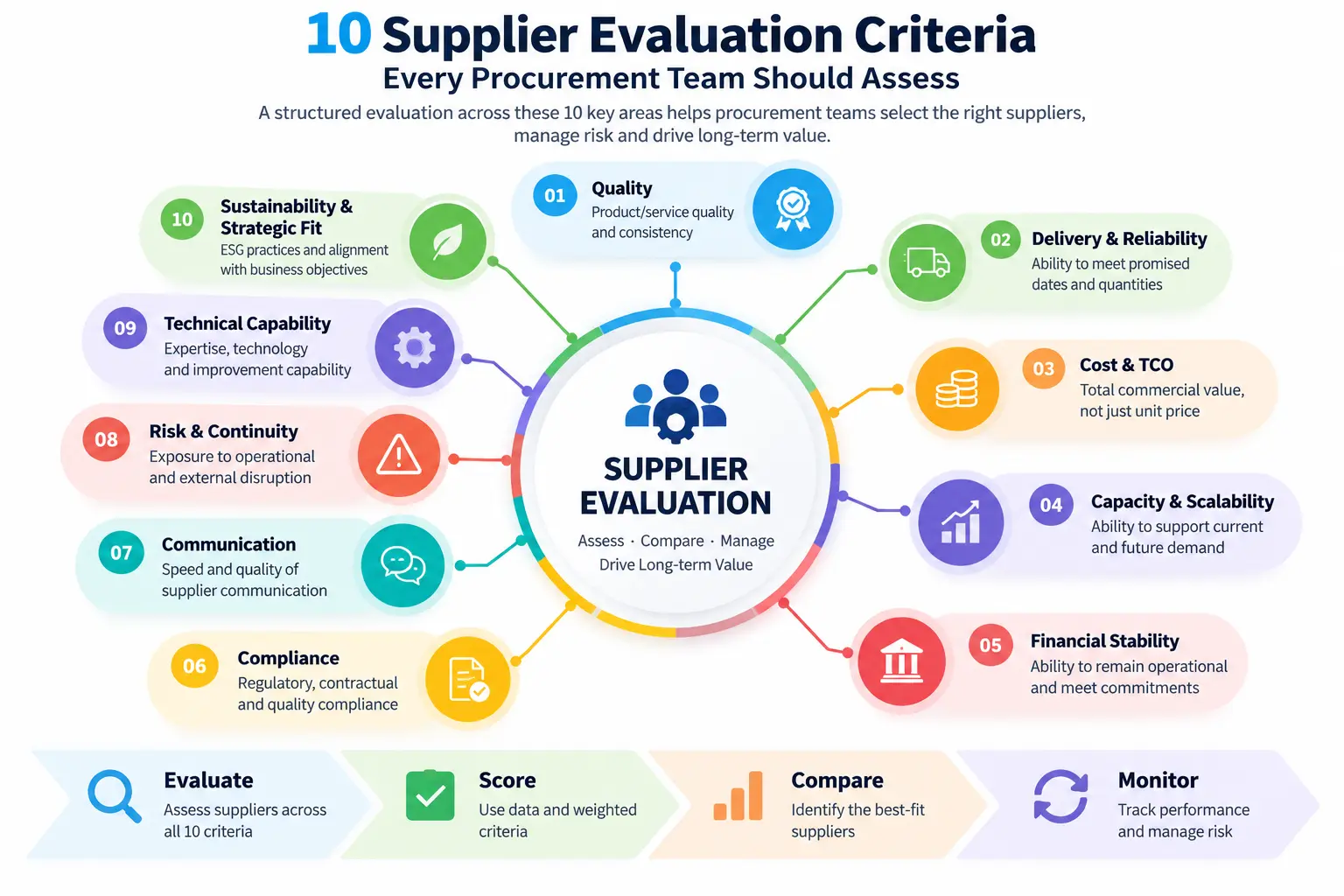
Supplier evaluation should also consider quality, reliability, service, delivery, risk, and contract terms.
Procurement Insight
TCO does not mean calculating every possible cost for every purchase.
Use deeper lifecycle-cost analysis where maintenance, logistics, quality, reliability, replacement, or operational costs could materially change the supplier decision.
How Can Technology Help?
Procurement software can support structured quotation comparison and provide supplier and purchasing information for broader supplier evaluation.
Where ZYNO fits: ZYNO provides quotation management, supplier comparison, and procurement analytics that can support more informed supplier evaluation.
14. Poor Stakeholder Collaboration
What Is the Problem?
Procurement is a cross-functional business function.
Finance focuses on budgets and payments. Operations focuses on availability and delivery. IT may focus on security and integration. Legal may focus on contractual risk. Business teams focus on receiving what they need.
Problems arise when these stakeholders work from different information or procurement becomes involved too late.
Why Does It Happen?
Common causes include:
- Procurement involvement at the end of the process
- Unclear responsibilities
- Incomplete requirements
- Different departmental priorities
- Fragmented information
- Poor communication
- No shared procurement workflow
How Do You Know You Have a Collaboration Problem?
Look for:
- Incomplete purchase specifications
- Repeated clarification requests
- Procurement receiving requirements too late
- Disagreements over supplier selection
- Budget surprises
- Contract requirements discovered late
- Rework after supplier selection
How Does It Affect the Business?
Poor stakeholder collaboration can cause:
- Incorrect purchases
- Procurement delays
- Rework
- Poor supplier selection
- Budget problems
- Contract issues
- Operational disruption
It can also create the perception that procurement is slowing the business when the underlying issue is that requirements were not aligned early enough.
How Can It Be Solved?
Involve relevant stakeholders early.
For important purchases, agree on:
- Business requirements
- Timing
- Quality requirements
- Budget
- Technical requirements
- Supplier criteria
- Contract requirements
- Risk considerations
Clearly define who requests, approves, evaluates, purchases, receives, and pays.
Procurement Insight
Procurement should not be brought in only when someone is ready to issue a purchase order.
Early procurement involvement can help clarify requirements, supplier criteria, commercial considerations, and risk before a purchasing decision becomes difficult to change.
How Can Technology Help?
Shared procurement workflows can give procurement, finance, operations, and business teams visibility into the same request.
Where ZYNO fits: ZYNO connects requests, approvals, supplier activities, purchasing, receiving, invoices, and payment workflows.
15. Purchase Order, Invoice and Payment Process Errors
What Is the Problem?
Procurement problems can continue even after a purchase order has been issued.
The purchase order, goods receipt, supplier invoice, and payment process need consistent information.
For example:
Purchase Order: 100 units → Goods Receipt: 90 units → Supplier Invoice: 100 units
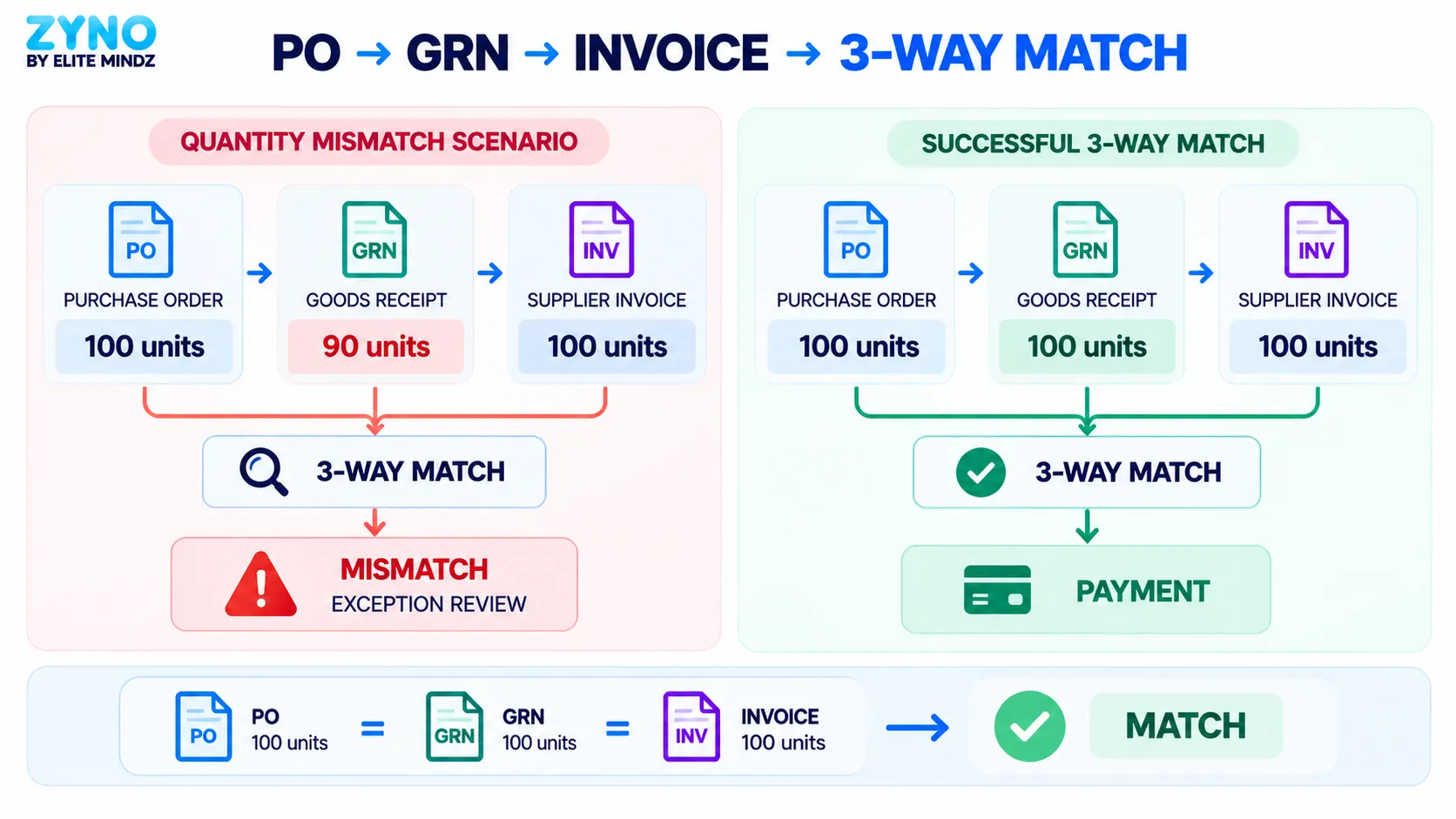
Someone then needs to investigate the discrepancy before the transaction can be completed according to the organization's controls.
Why Does It Happen?
Common causes include:
- Manual data entry
- Incorrect purchase orders
- Incorrect quantities
- Price differences
- Missing goods receipts
- Duplicate invoices
- Invoices without purchase orders
- Disconnected procurement and finance systems
How Do You Know You Have a P2P Error Problem?
Common warning signs include:
- PO and invoice mismatches
- Quantity mismatches
- Price mismatches
- Duplicate invoices
- Missing POs
- Delayed invoice approvals
- Payment disputes
- Manual invoice entry
- Finance teams repeatedly asking procurement to investigate transactions
How Does It Affect the Business?
These errors can create:
- Delayed supplier payments
- Supplier frustration
- Duplicate payment risk
- Increased finance workload
- Increased procurement workload
- Payment disputes
- Poor visibility into outstanding liabilities
For suppliers, repeated payment delays can also affect the commercial relationship.
How Can It Be Solved?
Connect purchasing, receiving, invoicing, and accounts payable processes.
A three-way match can compare:
Purchase Request → Approval → Purchase Order → Goods Receipt → Supplier Invoice → 3-Way Match → Exception/Approval → Payment
The core three-way matching process compares:
- Purchase Order → Goods Receipt → Supplier Invoice
If the information matches according to the organization's rules, the transaction can proceed.
If there is a discrepancy, it should be routed to the appropriate person for review.
Other useful controls include:
- Standardized PO creation
- Digital goods receipts
- Invoice validation
- Duplicate invoice detection
- Exception workflows
- Clear invoice approval rules
Procurement Insight
The goal of invoice automation is not to remove human review completely.
The better objective is to automatically clear routine transactions and direct exceptions to the right person, so finance and procurement teams spend their time investigating actual problems instead of manually checking every transaction.
How Can Technology Help?
procure-to-pay software can connect purchasing, receiving, invoice processing, and payment workflows.
Invoice automation can extract invoice information, compare relevant records, and route exceptions for review.
Where ZYNO fits: ZYNO connects purchase orders, goods receipt, invoice processing, and payment workflows. Its AI-assisted invoice verification can help extract invoice information, compare it with purchasing records, and flag discrepancies for review.
Which Procurement Challenges Should You Solve First?
Not every procurement problem needs to be solved at the same time.
A useful starting point is to prioritize the problem that is creating the greatest operational, financial, compliance, or supplier risk.
| If You Are Experiencing... | Start With | Why It Matters |
|---|---|---|
| Spending is unclear | Spend visibility | You cannot manage what you cannot reliably see |
| Employees regularly bypass procurement | Maverick spending | Off-process purchasing weakens control and visibility |
| Critical suppliers are unreliable | Supplier risk | Supply continuity may be at risk |
| Approvals are delaying operations | Procurement cycle time | Delays can create urgent and off-process purchases |
| Finance constantly resolves invoice issues | P2P and invoice errors | Repeated exceptions consume procurement and finance capacity |
| Negotiated savings are not appearing in actual purchases | Contract management | Contract terms may not be translating into purchasing behavior |
| Supplier quality varies | Supplier performance | Quality problems can create rework, returns, and operational disruption |
| Procurement reports cannot be trusted | Data quality | Poor data weakens analysis and decision-making |
| Procurement staff spend too much time on repetitive work | Manual processes | Automation can reduce administrative workload |
| Business teams and procurement disagree on requirements | Stakeholder collaboration | Early alignment reduces rework and poor purchasing decisions |
A Practical Prioritization Rule
Prioritize problems using four questions:
- How much business impact does this problem create?
- How frequently does it occur?
- How difficult is it to control manually?
- What other procurement problems does it create?
A problem that scores high across all four areas is usually a stronger starting point for improvement.
Procurement Challenges by Category
Grouping the 15 challenges makes it easier to see how they relate.
Cost and Spend Challenges
- Lack of spend visibility
- Maverick spending
- Inflation and price volatility
- Focusing only on purchase price
These challenges affect how effectively procurement understands, controls, and optimizes organizational expenditure.
Process and Efficiency Challenges
- Manual procurement processes
- Lengthy procurement cycles
- PO, invoice, and payment errors
These problems increase administrative effort and slow purchasing activity.
Supplier Challenges
- Poor supplier performance
- Supplier risk and supply chain disruptions
- Ineffective vendor communication
These challenges affect supplier reliability, collaboration, quality, and continuity.
Governance and Risk Challenges
- Contract management
- Procurement compliance
- Procurement fraud and cybersecurity
These problems affect organizational control, accountability, contractual value, and risk exposure.
Data and Collaboration Challenges
- Inaccurate procurement data
- Poor stakeholder collaboration
These challenges affect the quality of procurement decisions and the ability of teams to work from shared information.
How to Overcome Procurement Challenges
The 15 problems above may look different, but many have the same underlying causes:
fragmented information + manual processes + unclear workflows + weak controls + supplier-management gaps + poor data.
A practical procurement improvement strategy should therefore address the underlying process rather than treating every issue as an isolated problem.
1. Improve Procurement Visibility
Start by understanding where money is going and how procurement activities move through the organization.
Centralize relevant:
- Spend data
- Supplier information
- Purchase requests
- Purchase orders
- Contracts
- Goods receipts
- Invoice information
Better visibility makes it easier to identify problems, prioritize improvements, and measure results.
2. Standardize Procurement Workflows
Define how common procurement activities should happen.
This may include:
- Purchase requests
- Supplier onboarding
- RFQs
- Quotations
- Approvals
- Purchase orders
- Goods receipts
- Invoice processing
- Contract management
Standardization reduces confusion and creates a stronger foundation for automation.
3. Strengthen Supplier Management
Supplier management should continue throughout the supplier relationship.
Track relevant information about:
- Supplier performance
- Quality
- Delivery
- Risk
- Compliance
- Contracts
- Pricing
- Supplier communication
Regular supplier reviews can help identify problems before they become larger operational issues.
4. Automate Repetitive Procurement Activities
Not every procurement activity should be automated.
However, repetitive and rules-based activities are often suitable for procurement automation.
Examples include:
- Request routing
- Approval notifications
- Purchase order creation
- Supplier communication
- Contract reminders
- Invoice matching
- Exception routing
Automation should reduce administrative effort while preserving appropriate controls and human decision-making.
5. Improve Procurement Skills and Process Ownership
Technology cannot compensate for unclear responsibilities or weak procurement practices.
Teams need appropriate skills in areas such as:
- Strategic sourcing
- Supplier negotiation
- Spend analysis
- Supplier risk
- Contract management
- Data analysis
- Procurement technology
- Stakeholder management
Each stage of the procurement process should also have clear ownership.
6. Make Procurement Easy to Adopt
Even a well-designed procurement process will struggle if employees find it difficult to use.
When introducing new procurement workflows:
- Explain why the change is needed
- Keep the process simple
- Train users on real scenarios
- Make approved purchasing easy
- Provide support
- Monitor adoption
- Collect feedback
The goal is to make compliant procurement the easiest practical way to purchase.
7. Plan Procurement System Integration
Procurement usually needs to interact with finance, ERP, inventory, accounts payable, HR, and other systems.
Before implementing procurement software, determine:
- Which systems need to connect
- Which system owns each type of data
- What information needs to be synchronized
- How supplier master data will be managed
- How product and category data will be maintained
- Which processes should remain unchanged
- Where integrations or APIs are required
Good integration planning prevents procurement software from becoming another isolated system.
8. Measure Procurement Performance
Procurement improvement should be measurable.
Relevant procurement KPIs may include:
- Procurement cycle time
- Cost savings
- Spend under management
- Maverick spending
- Supplier on-time delivery
- Supplier quality
- Contract compliance
- Purchase order accuracy
- Invoice exception rate
- Approval turnaround time
The right KPIs depend on the organization's goals.
The important point is to measure outcomes that reflect the problems procurement is trying to solve.
What Should You Look for in Procurement Software?
If your organization is experiencing several of these procurement challenges, procurement software may help.
But the platform should be evaluated against the actual problems you need to solve.
Instead of asking only:
“Do we need procurement software?”
ask:
“Can this procurement software solve the problems slowing down our procurement process?”
Depending on your requirements, look for capabilities such as:
- Purchase request management
- Approval workflows
- supplier management
- Vendor onboarding
- RFQ management
- quotation management
- RFP management
- Purchase order management
- Goods receipt management
- Procure-to-pay
- Accounts payable
- Invoice verification
- spend analytics
- contract management
- Vendor portal
- Procurement reporting
- ERP integrations
- AI-assisted procurement workflows
The most important consideration is how these capabilities work together.
Buying separate tools for every procurement problem can create another fragmented technology environment.
A connected procurement platform can instead link activities across the purchasing lifecycle.
How to Match Procurement Problems With the Right Solution
A procurement software decision should start with the problem, not the feature list.
| Your Main Procurement Problem | Capability to Evaluate |
|---|---|
| Poor spend visibility | Spend analytics |
| Maverick spending | Purchase requests and approval workflows |
| Manual procurement | Workflow automation |
| Approval delays | Configurable approval workflows |
| Supplier performance | Vendor management |
| Supplier communication | Vendor portal |
| Sourcing and quotation problems | RFP, RFQ, and quotation management |
| Contract leakage | Contract management |
| Procurement control gaps | Approval workflows and audit visibility |
| Data fragmentation | Centralized procurement platform |
| Price pressure | Quotation comparison and procurement analytics |
| Supplier and invoice risks | Supplier controls and invoice verification |
| Stakeholder disconnect | Connected procurement workflows |
| PO and invoice errors | Procure-to-pay and invoice verification |
| End-to-end visibility | Connected request-to-payment lifecycle |
This problem-first approach helps procurement leaders prioritize technology based on business need instead of purchasing features simply because they are available.
How ZYNO Procurement Can Help
ZYNO Procurement is designed around a connected procurement lifecycle, helping organizations manage activities across:
Purchase Requests → Approvals → Suppliers → RFPs/RFQs → Quotations → Purchase Orders → Goods Receipt → Invoices → Payments → Contracts → Spend Analytics
The relevant capability depends on the procurement problem.
If Your Problem Is Spend Visibility
ZYNO Spend Analytics can provide a more centralized view of purchasing activity and help procurement teams identify spending patterns and areas requiring attention.
If Your Problem Is Maverick Spending
Purchase Requests and approval workflows can help route purchases through defined procurement controls before they move forward.
If Your Problem Is Manual Procurement
Connected procurement workflows can reduce repeated manual handoffs across requests, approvals, suppliers, purchasing, receiving, and invoicing.
If Your Problem Is Supplier Performance
Vendor Management can centralize supplier information and support structured supplier oversight.
If Your Problem Is Supplier Communication
Vendor Portal capabilities can provide a structured environment for relevant supplier interactions.
If Your Problem Is Contract Leakage
Contract Management can help organize contracts, important dates, obligations, and workflows.
If Your Problem Is Price Comparison
Quotation Management can help structure supplier quotations and make comparisons easier.
If Your Problem Is PO and Invoice Errors
Procure-to-Pay and invoice verification can connect purchasing, receiving, invoicing, and payment processes while helping identify discrepancies.
The goal is not necessarily to transform every procurement process at once.
A practical approach is to start with the problem causing the greatest operational or financial impact, establish a baseline, improve the workflow, and then expand into adjacent procurement processes.
Frequently Asked Questions About Procurement Challenges
What are procurement challenges?
Procurement challenges are problems that make it difficult for organizations to purchase goods and services efficiently while controlling costs, managing suppliers, maintaining compliance, and meeting business requirements.
Common procurement challenges include poor spend visibility, maverick spending, manual processes, approval delays, supplier performance problems, supply chain risk, contract management gaps, inaccurate data, price volatility, procurement fraud, stakeholder collaboration problems, and invoice errors.
What are the major challenges in procurement?
The major challenges in procurement include lack of spend visibility, maverick spending, manual procurement processes, lengthy approval cycles, poor supplier performance, supply chain disruptions, ineffective vendor communication, contract management problems, compliance challenges, inaccurate procurement data, price volatility, procurement fraud, focusing only on purchase price, poor stakeholder collaboration, and PO and invoice errors.
What are the common procurement problems?
Common procurement problems include unauthorized purchases, delayed approvals, manual data entry, supplier quality issues, poor vendor communication, purchase order errors, invoice mismatches, inaccurate procurement data, limited spend visibility, contract leakage, compliance gaps, and supplier risk.
What are the challenges faced in procurement?
The challenges faced in procurement include poor spend visibility, maverick spending, manual processes, approval delays, supplier performance and risk, contract management gaps, compliance issues, inaccurate data, price volatility, fraud risks, stakeholder collaboration problems, and purchase order and invoice errors.
What are the challenges in the procurement process?
Procurement challenges can occur throughout the procurement process, from identifying a requirement and obtaining approval to selecting suppliers, requesting quotations, creating purchase orders, receiving goods, managing contracts, processing invoices, and making payments.
What are the major problems in the procurement process?
The major problems in the procurement process include limited spend visibility, unauthorized purchasing, manual workflows, slow approvals, supplier performance issues, supply disruptions, contract leakage, compliance gaps, poor procurement data, and purchase order and invoice errors.
Manual processes, disconnected systems, poor data, unclear responsibilities, weak controls, and supplier problems are common causes.
What causes procurement problems?
Procurement problems can be caused by fragmented data, manual processes, unclear workflows, excessive approvals, poor supplier management, inadequate procurement controls, inaccurate information, weak stakeholder collaboration, and disconnected business systems.
In many organizations, several of these factors contribute to the same procurement problem.
How can procurement challenges be overcome?
Procurement challenges can be overcome by improving spend visibility, simplifying and standardizing procurement workflows, reducing unnecessary approval delays, strengthening supplier and contract management, improving procurement data, reducing maverick spending, automating repetitive activities, and measuring procurement performance.
How can procurement be improved?
Procurement can be improved by making purchasing processes easier to follow, increasing spend visibility, improving supplier performance management, strengthening procurement controls, improving data quality, reducing manual work, and using appropriate technology to automate repetitive procurement activities.
How can businesses reduce procurement costs?
Businesses can reduce procurement costs by improving spend visibility, consolidating suitable purchases, negotiating with suppliers, reducing maverick spending, improving contract compliance, evaluating total cost of ownership, comparing suppliers effectively, and eliminating inefficient procurement processes.
The lowest purchase price should not automatically be treated as the lowest total cost.
How can procurement teams improve supplier performance?
Procurement teams can improve supplier performance by setting clear expectations, defining relevant supplier KPIs, monitoring delivery and quality, conducting supplier reviews, addressing recurring issues, documenting supplier performance, and taking corrective action when suppliers consistently fail to meet requirements.
How can procurement teams reduce maverick spending?
Procurement teams can reduce maverick spending by making approved purchasing easier.
Useful approaches include preferred suppliers, approved catalogs, digital purchase requests, clear procurement policies, automated approval workflows, spending limits, and appropriate purchasing controls.
How can procurement software help solve procurement challenges?
Procurement software can centralize purchasing information and automate workflows such as purchase requests, approvals, supplier management, purchase orders, contract tracking, spend analysis, invoice processing, and matching.
The value of procurement software depends on whether it addresses the organization's actual procurement problems and integrates effectively with existing business processes and systems.
Building a More Efficient Procurement Process
Procurement challenges rarely exist independently.
Poor spend visibility can contribute to maverick spending.
Manual processes can create approval delays and data errors.
Weak supplier management can increase supply risk.
Poor contract visibility can lead to missed savings and compliance problems.
Disconnected purchasing and finance processes can create invoice and payment issues.
That is why procurement improvement should focus on the entire procurement process rather than isolated transactions.
A stronger procurement environment gives teams:
- Better spend visibility
- Clear purchasing workflows
- Reliable supplier information
- Better supplier performance management
- Stronger contract control
- Accurate procurement data
- Appropriate compliance controls
- Faster approval processes
- More efficient invoice processing
- Better stakeholder collaboration
- Automation where it creates genuine value
The objective is not simply to make procurement more digital.
The objective is to make procurement more visible, controlled, efficient, collaborative, and capable of supporting better business decisions.
If your procurement team is dealing with disconnected purchase requests, slow approvals, supplier communication gaps, poor spend visibility, manual invoice checks, contract management problems, or limited control over purchasing, a connected procurement platform can help address those issues systematically.
Ready to Address Your Procurement Challenges?
See how ZYNO Procurement can connect purchase requests, approvals, suppliers, quotations, purchase orders, receiving, invoices, payments, contracts, and spend visibility in one procurement environment.
Book a Free Demo







.webp)


.webp)
.webp)
.webp)



.webp)
.webp)
.webp)
.webp)
.webp)
.webp)
.webp)
.webp)
.webp)
.webp)

.webp)
_converted.webp)

_converted.webp)
.webp)
.webp)
.webp)
.webp)

(1).webp)