




Procurement Software Trends in 2026: What to Expect
Read More →

×
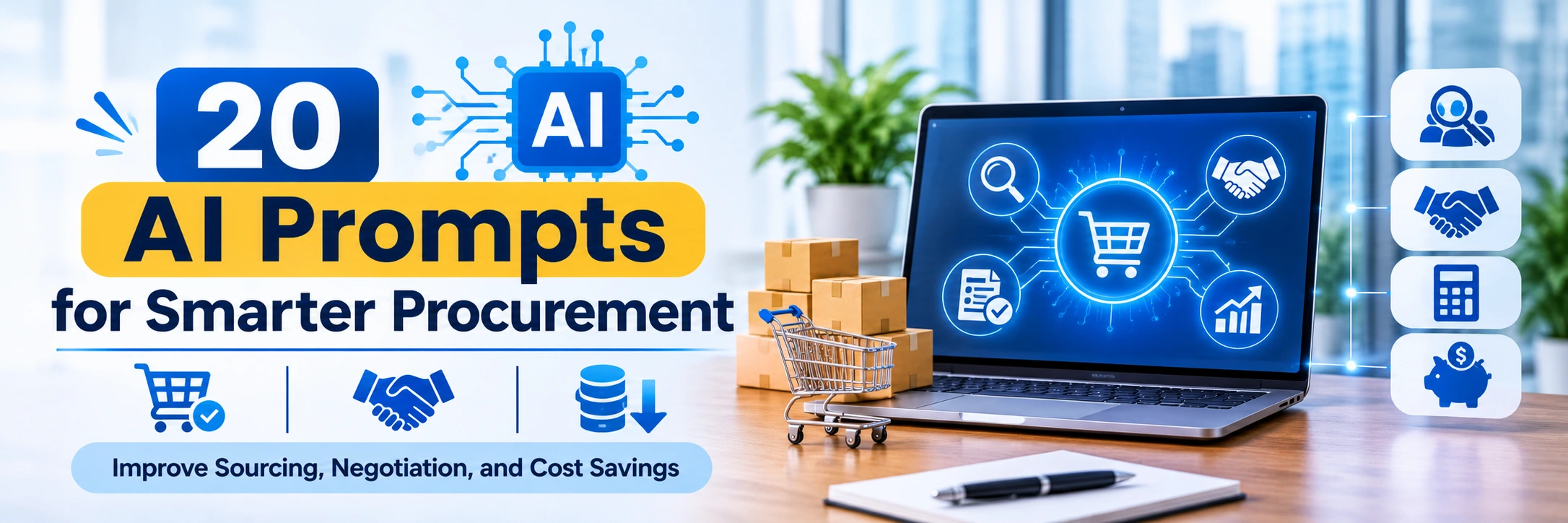
AI prompts for procurement help businesses improve supplier sourcing, negotiate better prices, analyze spending, forecast budgets, assess supplier risks, and automate purchasing tasks. The 20 prompts in this guide cover procurement spend analysis, RFQ preparation, supplier comparison, purchase order accuracy, cost savings, contract reviews, invoice matching, and procurement process improvement.
Businesses using ZYNO Books cut accounting time by 70% and stay 100% ZATCA-compliant — automatically.
AI prompts for procurement are helping purchasing teams analyze spending, compare suppliers, negotiate better prices, manage procurement risks, and make data-driven purchasing decisions. Instead of manually reviewing large volumes of purchase orders, supplier quotations, and invoices, procurement professionals can use AI to organize information and identify areas that need attention.
From procurement cost optimization to supplier performance analysis, well-structured AI prompts can make routine purchasing tasks faster and more consistent. However, reliable results depend on accurate data, clear instructions, and human verification.
In this guide, we explore the 20 best AI prompts for procurement that procurement managers, purchasing teams, finance professionals, and supply chain leaders can use to improve sourcing decisions, control spending, and streamline purchasing workflows.
AI prompts for procurement are specific instructions given to an AI assistant to perform purchasing-related tasks, such as spend analysis, supplier evaluation, RFQ preparation, contract review, demand forecasting, and invoice verification.
For example, instead of asking AI to find cheaper suppliers, a procurement manager can ask it to compare suppliers using unit prices, total cost of ownership, quality standards, delivery timelines, and payment terms. This creates a structured starting point for supplier evaluation.
When combined with reliable business data and procurement management software, AI prompts can help teams improve visibility, reduce repetitive work, and make purchasing decisions more consistently.
Read More: Top Procurement Software Tools for Purchasing Automation
The following prompts are designed for practical business use. Replace the information in square brackets with your company's data before using them in an AI tool approved by your organization.
Analyse the procurement spend data I am authorised to access for the selected period. Group spending by supplier, category, and department. For each category, report: - Total recorded spend - Highest-spend suppliers - Unusual spending increases - Potential duplicate suppliers - Opportunities for cost savings Identify potential cost-saving opportunities using the available data. Clearly state any missing information. Do not invent figures or unsupported conclusions. Present the results as a concise management summary.
Objective: Identify spending patterns, unnecessary expenses, and cost-saving opportunities.
Expected benefit: Helps procurement teams identify where money is being spent and which purchasing categories require closer attention.
2. AI Prompt for Supplier Price Negotiation
Help me prepare for a price negotiation with [supplier] for [product or service]. Our current price is [amount], the proposed price is [amount], and our annual purchase volume is [quantity]. Compare the proposal with historical prices and verified market benchmarks. Calculate the potential annual cost impact, suggest negotiation points and draft five professional questions for the supplier. Clearly distinguish verified facts from assumptions.
Objective: Prepare for supplier negotiations using available purchasing data.
Expected benefit: Supports more structured supplier price negotiation and helps teams understand the financial impact of proposed price changes.
Review our procurement budget of [amount] for [period] using historical spending, current contracts, expected demand and available price assumptions. Create low, base and high-cost scenarios. Calculate potential budget variance, identify the categories contributing most to overspending and recommend corrective actions. Show all assumptions and calculations.
Objective: Estimate future purchasing expenses and identify possible budget overruns.
Expected benefit: Helps finance and procurement teams plan budgets and prepare for potential cost fluctuations.
Assess the risks associated with [supplier or supplier list] using available delivery records, quality reports, financial information, compliance documents and dependency data. Evaluate delivery, quality, financial, regulatory and supply continuity risks. Explain the evidence behind each risk rating, identify missing information and recommend mitigation actions. Do not assume unverified information is correct.
Objective: Identify supplier-related risks that could affect operations.
Expected benefit: Supports supplier risk management by highlighting areas that need further investigation before they disrupt purchasing or production.
Compare quotations from [Supplier A], [Supplier B] and [Supplier C] for [product or service]. Evaluate unit price, total landed cost, quality, lead time, payment terms, warranty, service and delivery reliability. Apply these evaluation weights: [insert criteria and weights]. Calculate the weighted scores, identify missing information and explain the advantages and disadvantages of each supplier.
Objective: Compare supplier quotations using consistent evaluation criteria.
Expected benefit: Helps purchasing teams evaluate suppliers based on overall value rather than selecting the lowest quoted price automatically.
Draft a Request for Quotation (RFQ) for [product or service]. Include technical specifications, required quantities, delivery locations, delivery deadlines, quality standards, warranty, payment terms, quotation validity and required supplier documents. Add a supplier evaluation matrix and a list of clarification questions. Highlight requirements that need internal approval before the RFQ is issued.
Objective: Create clear and comprehensive requests for quotations or proposals.
Expected benefit: Improves procurement sourcing by making supplier requests more consistent and easier to evaluate.
Review this purchase requisition against our purchasing policy, budget limits and approval rules. Check the business justification, item description, quantity, specifications, requested delivery date, budget code and supporting documents. Identify missing information, possible duplicate requests and policy exceptions. Provide a correction checklist for the authorized employee.
Objective: Check whether purchase requests contain the required information.
Expected benefit: Reduces avoidable delays caused by incomplete purchase requisitions and missing approvals.
Compare this draft purchase order with its approved requisition and supplier quotation. Check product descriptions, quantities, unit prices, taxes, delivery dates, payment terms, shipping costs and total amounts. List every discrepancy, show the source values and suggest corrections. Flag any changes requiring approval before the purchase order is issued.
Objective: Identify purchase order errors before an order is sent to a supplier.
Prompt:
"Compare this draft purchase order with its approved requisition and supplier quotation. Check product descriptions, quantities, unit prices, taxes, delivery dates, payment terms, shipping costs and total amounts. List every discrepancy, show the source values and suggest corrections. Flag any changes requiring approval before the purchase order is issued."
Expected benefit: Supports accurate purchase order management and helps reduce ordering errors and costly discrepancies.
Calculate the total cost of ownership for [product or service] over [period]. Include purchase price, transportation, duties, installation, maintenance, consumables, training, operating costs and disposal costs where applicable. Compare [Option A] with [Option B], show the calculations and identify the break-even point. Clearly state any missing costs or assumptions.
Objective: Understand the full cost of purchasing a product or service.
Expected benefit: Helps procurement managers assess long-term value instead of focusing only on the initial purchase price.
Analyze historical consumption, current inventory, open purchase orders, supplier lead times and expected demand for [item or category]. Estimate purchase requirements for the next [period] under low, base and high-demand scenarios. Highlight potential shortages, excess inventory and urgent purchasing priorities. Explain the assumptions behind your recommendations.
Objective: Align purchasing decisions with expected demand and inventory requirements.
Prompt:
"Analyze historical consumption, current inventory, open purchase orders, supplier lead times and expected demand for [item or category]. Estimate purchase requirements for the next [period] under low, base and high-demand scenarios. Highlight potential shortages, excess inventory and urgent purchasing priorities. Explain the assumptions behind your recommendations."
Expected benefit: Supports procurement planning and helps businesses balance material availability with inventory costs.
Objective: Identify purchases that may bypass approved procurement procedures.
Prompt:
"Review our purchase transactions against the approved supplier list, purchasing contracts, spending thresholds and approval policy. Identify possible off-contract purchases, duplicate orders, split transactions and purchases outside approved channels. Rank the exceptions by transaction value and policy risk. Show the evidence and distinguish confirmed exceptions from items requiring investigation."
Expected benefit: Helps businesses improve purchasing compliance and strengthen control over unauthorized spending.
Objective: Identify important supplier contract terms and upcoming renewal requirements.
Prompt:
"Review this supplier contract and summarize its pricing structure, renewal date, notice period, service levels, payment terms, price adjustment clauses, termination provisions and key obligations. Highlight ambiguous terms, unusual commercial conditions and clauses requiring legal review. Prepare a renewal calendar and a list of questions for the supplier."
Expected benefit: Helps procurement teams prepare for renewals, monitor contractual obligations and avoid missing important deadlines.
Objective: Measure supplier performance against defined business expectations.
Prompt:
"Create a supplier performance scorecard using the supplied data for on-time delivery, defect rates, order accuracy, responsiveness, cost competitiveness and compliance. Apply the agreed scoring weights and calculate each supplier's score. Identify performance trends, missing data and improvement areas. Recommend corrective actions and review dates."
Expected benefit: Makes supplier performance management more consistent and helps identify suppliers that may require corrective action.
Objective: Reduce dependency on a single supplier or sourcing region.
Prompt:
"Develop an alternative sourcing strategy for [product or material] currently purchased from [supplier or region]. Compare potential alternatives using technical suitability, total cost, production capacity, delivery time, logistics, compliance and supply continuity. Identify qualification requirements, transition costs and risks. Recommend a phased sourcing plan with backup options. Clearly mark suppliers and information that have not been independently verified."
Expected benefit: Helps businesses prepare for supplier disruptions and improve sourcing flexibility.
Objective: Understand price movements that may influence procurement costs.
Prompt:
"Analyze historical price data for [commodity or raw material] in [region] over [period]. Summarize price changes and identify documented factors affecting supply, demand, transportation, currency and production costs. If reliable forecast data is available, prepare low, base and high-price scenarios for [future period]. Include dated sources, explain assumptions and identify market indicators to monitor."
Expected benefit: Supports procurement cost forecasting and helps teams prepare for changes in raw material or commodity prices.
Objective: Build a practical plan to identify and measure purchasing savings.
Prompt:
"Analyze our procurement categories, supplier contracts, purchase volumes and historical prices. Identify opportunities through volume consolidation, contract compliance, competitive bidding, specification standardization and supplier negotiations. Estimate savings only where the data supports a calculation. Separate validated savings from potential opportunities and provide an action owner, implementation step, risk and measurement method for each initiative."
Expected benefit: Helps procurement leaders develop a measurable procurement cost optimization plan instead of relying on unverified savings estimates.
Objective: Identify discrepancies between invoices, purchase orders and goods receipts.
Prompt:
"Compare the supplied supplier invoice with its purchase order and goods receipt records. Check supplier details, invoice number, item descriptions, quantities, unit prices, taxes, freight charges and totals. Flag duplicate invoice numbers, price differences, quantity mismatches and missing receipt records. Show the supporting values and route unresolved discrepancies for authorized review."
Expected benefit: Supports invoice verification, reduces manual checking and helps identify payment discrepancies before processing.
Objective: Prepare procurement records for internal reviews and compliance checks.
Prompt:
"Review the supplied procurement transactions against our purchasing policy and approval matrix. Check approvals, competitive quotations, supplier documentation, purchase orders, receipt records and invoice evidence. Create an exception register with the transaction reference, requirement, available evidence, risk level and recommended follow-up. Distinguish confirmed non-compliance from incomplete documentation."
Expected benefit: Helps improve procurement governance, documentation quality and audit readiness.
Objective: Identify bottlenecks in purchasing and approval workflows.
Prompt:
"Map our procurement process from purchase requisition to supplier payment using the supplied workflow and process data. Identify approval delays, repeated data entry, manual handoffs, missing information and avoidable rework. Rank improvement opportunities by business impact, implementation effort and control risk. Recommend a future-state workflow, measurable KPIs and a 30-60-90-day improvement roadmap."
Expected benefit: Helps teams identify practical opportunities to improve procurement process automation and purchasing efficiency.
Objective: Turn procurement data into a concise management report.
Prompt:
"Prepare an executive procurement report for [period] using the supplied business data. Summarize total spend, budget variance, validated savings, supplier performance, purchase cycle time, contract compliance, outstanding risks and upcoming renewals. Compare performance with the previous period and agreed targets. Highlight five important findings, recommended management decisions and accountable owners. Reference the source for each metric and flag unavailable data."
Expected benefit: Gives management a structured view of procurement performance, purchasing risks and improvement priorities
The quality of an AI response depends heavily on the information and instructions provided. To get more useful results from AI procurement tools, follow these practices:
These practices make AI in procurement more useful while reducing the risk of unsupported recommendations.
AI prompts can help procurement professionals analyze information and prepare recommendations. However, prompts alone cannot provide a complete purchasing control system. Businesses also need organized supplier records, approval workflows, purchase orders, goods receipt tracking, invoice verification, and spend visibility.
Procurement management software helps connect these activities within structured purchasing workflows. Depending on the platform, teams can manage requisitions, supplier quotations, approvals, purchase orders, supplier performance, and invoice processing with greater consistency.
ZYNO Procurement helps businesses manage core purchasing activities through connected procurement workflows. Organizations evaluating procurement software can explore how supplier management, purchasing controls, approvals, and spend visibility fit their existing processes.
Explore ZYNO Procurement Software to learn more about managing procurement activities through a connected platform.
Move beyond AI prompts with ZYNO Procurement. Improve purchasing visibility, streamline supplier sourcing, manage approvals, and strengthen procurement cost control.
Explore ZYNO ProcurementBefore applying AI-generated recommendations to real purchasing decisions, consider the following safeguards:
Responsible use of AI is essential for maintaining purchasing accuracy, data security, and accountability.
The best AI prompts for procurement address spend analysis, supplier negotiation, budget forecasting, sourcing, supplier risk assessment, contract review, purchase order checking and invoice matching. Choose prompts according to your business objective and available data.
AI can help identify spending patterns, compare supplier quotations, detect price discrepancies, evaluate supplier performance and organize cost-saving opportunities. Actual savings depend on validated findings, negotiation outcomes and successful implementation.
Yes. An approved AI assistant such as ChatGPT can help with procurement research, document summarization, RFQ drafting, quotation analysis and report preparation. Businesses should follow their data security policies and verify important outputs before using them.
AI can compare suppliers against predefined criteria, summarize available evidence and flag potential risks. Final supplier selection should consider verified information, technical suitability, commercial terms, compliance requirements and authorized human approval.
Procurement software organizes purchasing data and workflows, including requisitions, approvals, supplier management, purchase orders and invoice processing. Depending on the platform, AI can support selected activities within these workflows.
Useful data includes historical spend, supplier quotations, purchase orders, contracts, invoices, delivery records, inventory information and approved procurement policies. Complete, accurate and current data generally supports more reliable analysis.
No. AI may misinterpret incomplete records, produce unsupported statements or rely on outdated information. Procurement professionals should verify facts, calculations and source documents before applying recommendations to supplier or purchasing decisions.
Discuss your procurement challenges, purchasing requirements, and automation goals with our team to explore the right solution for your business.
Contact Us TodayThe right AI prompts for procurement can help businesses analyze spending, prepare supplier negotiations, improve sourcing decisions, identify risks, and streamline purchasing-related analysis. By using clear instructions, reliable data, and structured evaluation criteria, procurement teams can turn AI outputs into practical recommendations.
For sustainable results, combine AI assistance with strong procurement controls, measurable performance indicators, and connected purchasing workflows. Solutions such as ZYNO Procurement can help organizations build a more structured approach to supplier management, purchasing approvals, and procurement visibility.
Explore more procurement guides from ZYNO:
AI Procurement Software: Features, Benefits & Use Cases
Procurement Automation Guide: Process, Benefits & Steps
How Procurement Software Works: Complete Guide
Smart Procurement Strategies for Cost Optimization & Risk Management
Procurement Software Trends in 2026: What to Expect
Read More →
Why E-Procurement Outperforms Traditional ERP in Modern Procurement
Read More →
Top Procurement Software in India: 12 Options Compared for 2026
Read More →
Best Procurement Software Companies in Kuwait (2025)
Read More →
5 Best Procurement Software in Africa for Enterprises & SMEs (2026 Guide)
Read More →
Best Procurement Software in Nigeria 2026 | Top 5 Picks
Read More →
Best Procurement Software Providers in USA (2025): How AI is Transforming the Future
Read More →
10 Best Procurement Software Providers in Thailand for Streamlined Supply Chain Management
Read More →
Top 10 Cloud-Based Procurement Solutions in Portugal for Businesses in 2025
Read More →
Top 10 Procurement Software Providers in Switzerland 2026: Streamlining Sourcing and Supplier Management
Read More →
What Makes ZYNO Procurement Different from Other Oil & Gas Procurement Software
Read More →
The Digital Transformation of Logistics Procurement in the Middle East
Read More →
A Step by Step Guide to Procurement Management Software for Modern Enterprises
Read More →
Sourcing and Procurement: What is the Difference and Why It Matters
Read More →Difference Between Procurement and Supply Chain Management
Read More →
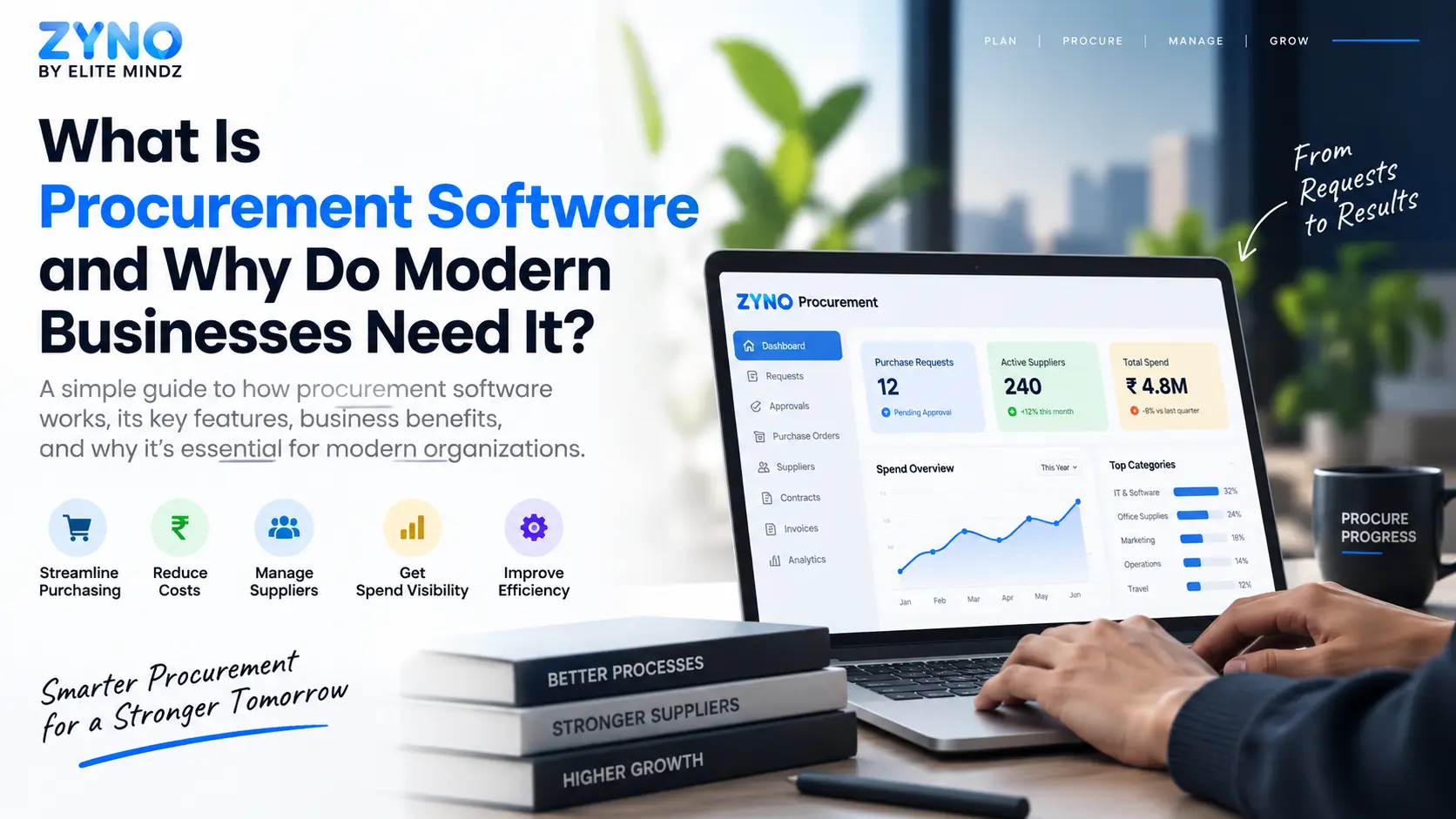
What Is Procurement Software and Why Do Modern Businesses Need It?
Read More →
Best Procurement Management Software to Automate ERP Process
Read More →
Direct vs Indirect Procurement: Key Differences, Examples & Uses (2026)
Read More →
Smart procurement strategies for cost optimization & risk management
Read More →
What Is Procurement? Everything You Need to Know (Types, Process & SAP)
Read More →Beyond Cost-Cutting: How Procurement Drives Margin Expansion in 2026
Read More →
Direct Procurement: Process, Examples, and When to Use It
Read More →
What Are the 5 Types of E-Procurement? A Complete Guide for Businesses
Read More →
Which Procurement Management Software Is Best? Top Tools Compared for 2026
Read More →
Top 8 Coupa Alternatives to Explore in 2026
Read More →
Looking to Replace Coupa? Discover the Best Alternatives Like ZYNO Procurement
Read More →
How Does Procurement Software Work? A Complete Guide
Read More →
ZYNO Procurement vs Coupa: Best Procurement Software Comparison for Mid-Market Teams
Read More →
10 Best SAP Ariba Alternatives and Competitors in 2026
Read More →
ZYNO Procurement vs SAP Ariba: Which Solution Is More User-Friendly?
Read More →
AI-Powered Procurement Management Software for Fast, Connected, and Visible Workflows in Dubai
Read More →
What is Vendor Management? Complete Guide to Vendor Management Software, Systems, and Processes
Read More →
Best Procurement Management Software In Kenya
Read More →
6 SAP Ariba Alternatives for Mid-Market Businesses in 2026
Read More →
Top E-Procurement Solutions for B2B Organizations (2026)
Read More →
Quotation Format: Free Templates + Complete Guide (2026)
Read More →
Cost Control Software: Features, Benefits & Performance Guide for 2026
Read More →
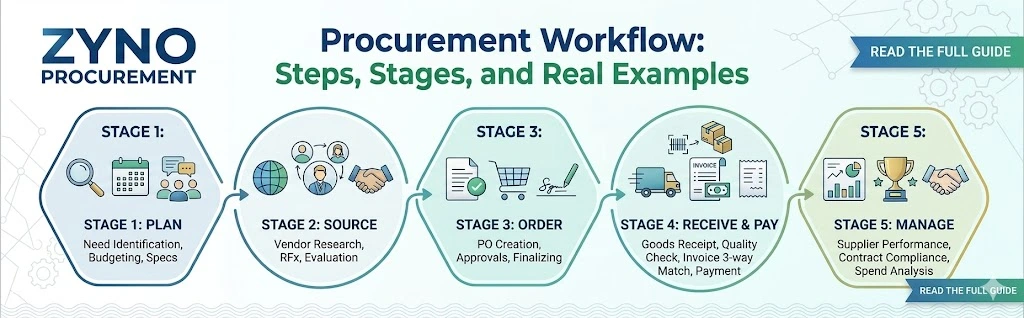
Procurement Workflow: Steps, Stages, and Real Examples
Read More →
Top 10 Zycus Alternatives for Procurement Teams in 2026
Read More →
Best Precoro Alternative for Purchase Requisition and Procurement
Read More →
Top AI Procurement Tools in 2026
Read More →
Best Tools for Supplier Risk Management
Read More →
FEFO vs FIFO vs LIFO: Differences, Benefits & Which Inventory Method Is Best?
Read More →
AI Procurement Software: Features, Benefits, Use Cases & How to Choose
Read More →
Best AI Tools for Supply Chain Procurement
Read More →
Procurement Risk Management
Read More →
Still Using Excel for Procurement? Read This Before It's Too Late
Read More →
Best RFP Software in 2026: Top Tools Compared for Faster Proposal Responses
Read More →
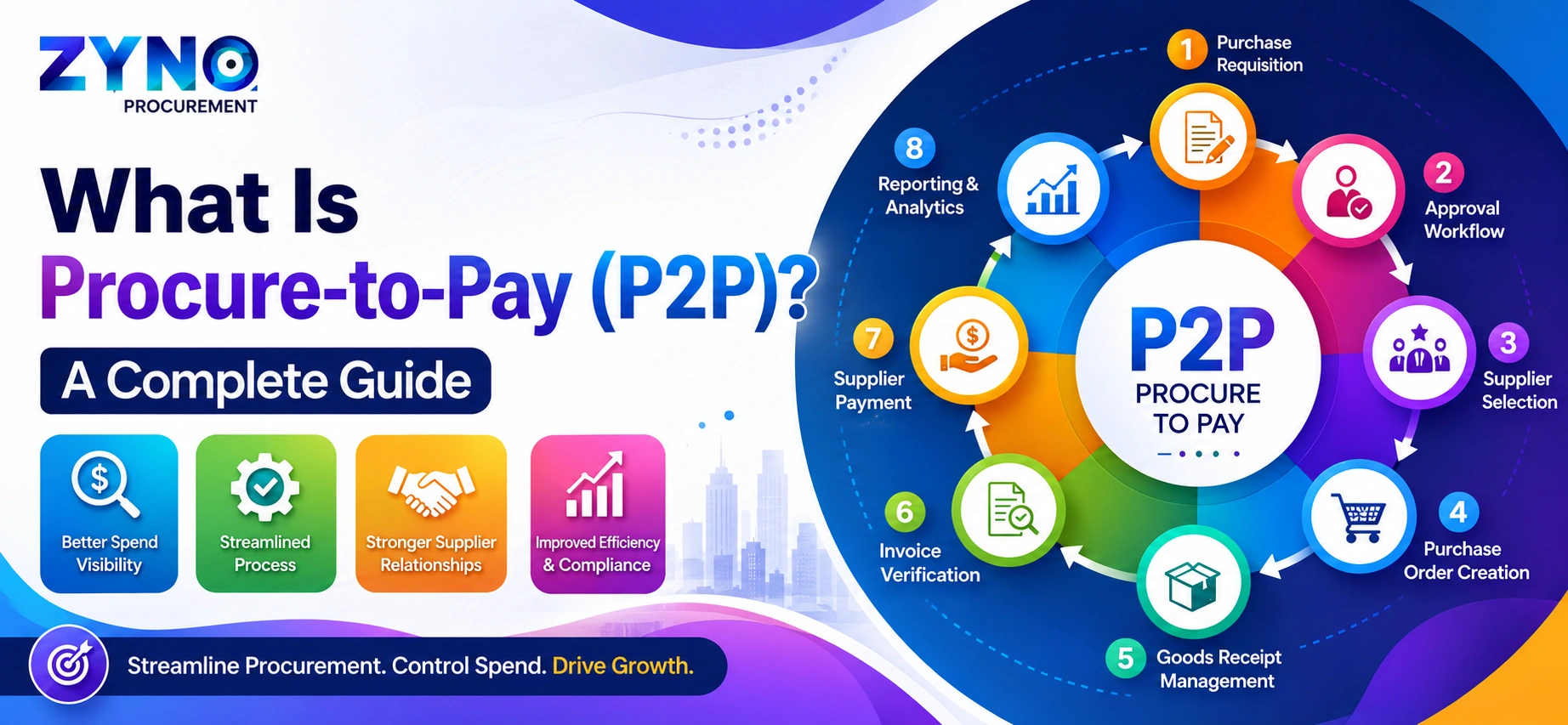
What Is Procure-to-Pay (P2P)? A Complete Guide
Read More →
Complete Procurement Workflow Guide for Modern Businesses
Read More →
Complete Guide to E-Procurement Solutions for B2B Organizations
Read More →
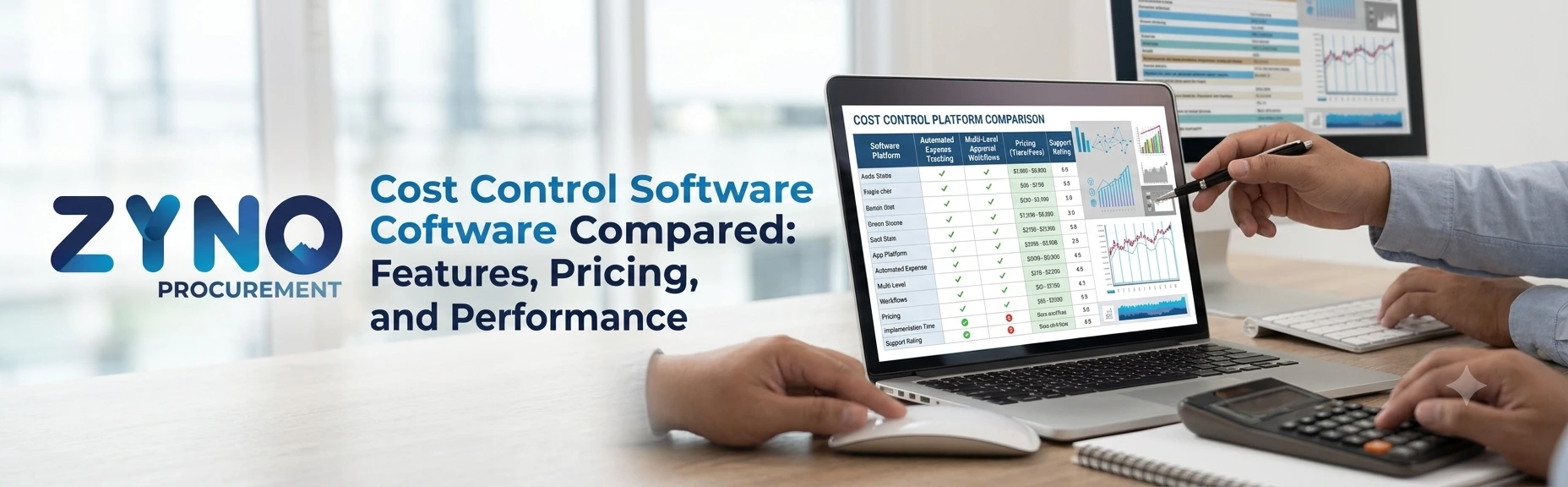
Cost Control Software Comparison Guide: Features, Pricing & Benefits
Read More →
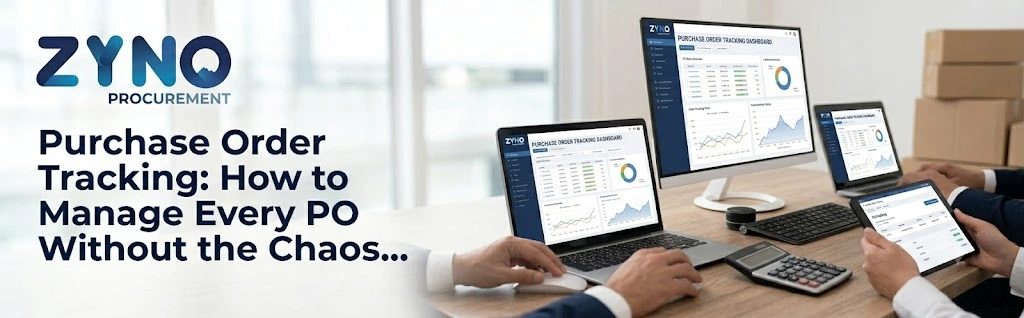
Purchase Order Tracking: How to Manage Every PO Without the Chaos
Read More →
Inventory Management: What It Is, How It Works and Why It Matters
Read More →
Top 10 Procurement Software Tools for Purchasing Automation in 2026
Read More →
Agentic AI Procurement Platforms and the Future of Strategic Sourcing
Read More →
AI Spend Analytics Software for Procurement Leaders
Read More →
From Prompt to Procurement: How AI Is Transforming Enterprise Purchasing
Read More →
ZYNO Procurement vs IBM Procure-to-Pay Automation
Read More →
ZYNO Procurement vs Infor Nexus: Which Procure-to-Pay Platform Fits Your Team?
Read More →
AI-Powered Procurement Software in 2026: Top 6 Platforms That Actually Deliver ROI
Read More →
Contract Management Software Buyer's Guide: Features, Costs & Top Picks
Read More →
Top 10 Procure to Pay Software Companies in India 2026
Read More →
10 Best Vendor Management Software in India (2026): Features, Benefits & Comparison
Read More →
How Machine Learning and AI Are Transforming Procurement: A Strategic Overview
Read More →
What Is Procurement Software for GP? Features, Benefits and Best Solutions for Businesses
Read More →
What Procurement Software Do Mid-Market Companies Use Instead of SAP Ariba or Coupa?
Read More →
Prompt-Based Procurement Software for Kenyan Businesses
Read More →
Project Management Software: A Complete Guide to Streamline Business Operations and Procurement Processes
Read More →
SAP Ariba vs ZYNO Procurement: Complete Feature Comparison (2026)
Read More →
Coupa vs SAP Ariba vs ZYNO: Which Procurement Platform Wins for Fast-Growing Teams?
Read More →
How AI Procurement Software Is Transforming Purchase Requisition and Supplier Management in 2026
Read More →
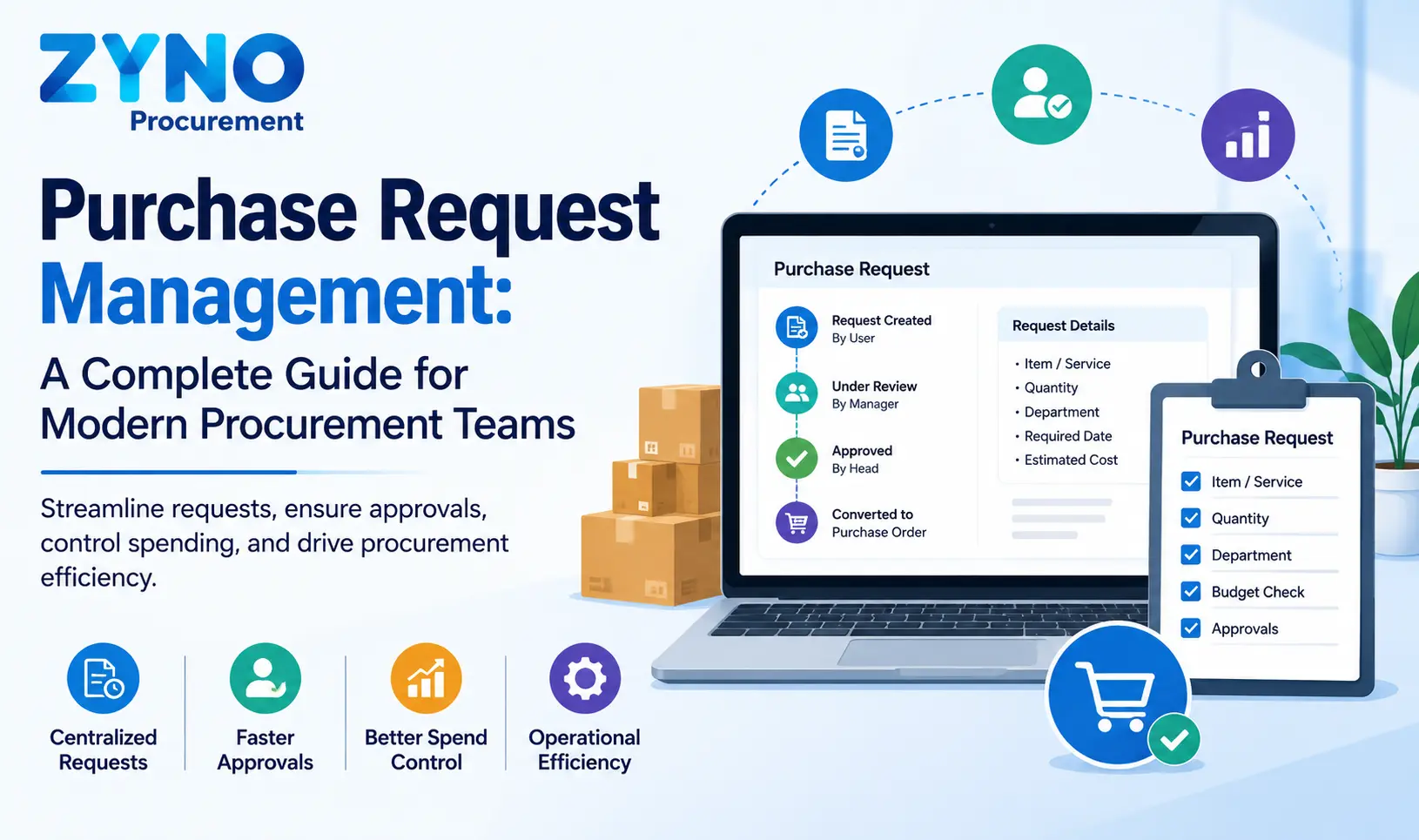
Purchase Request Management: A Complete Guide for Modern Procurement Teams
Read More →
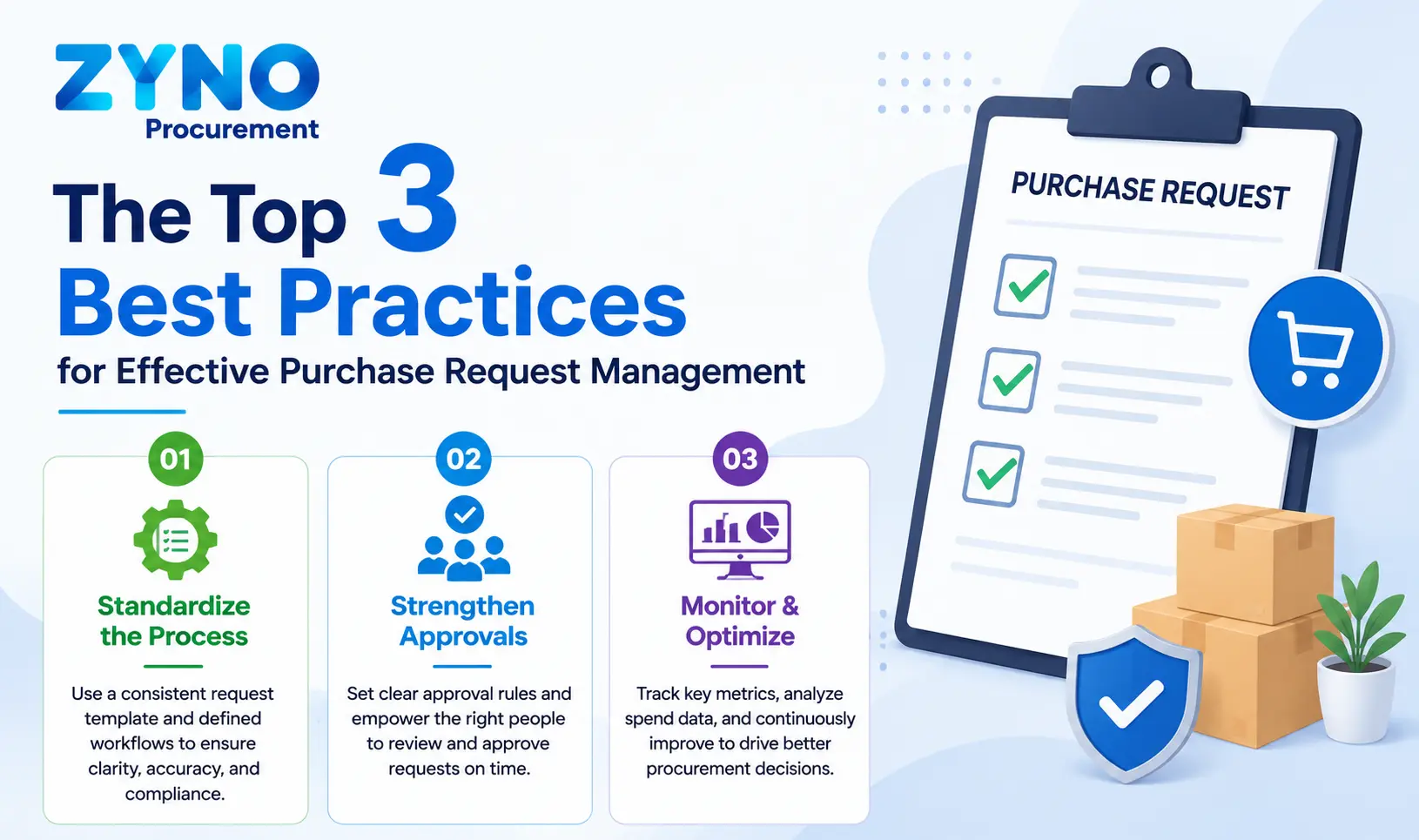
The Top 3 Best Practices for Effective Purchase Request Management
Read More →
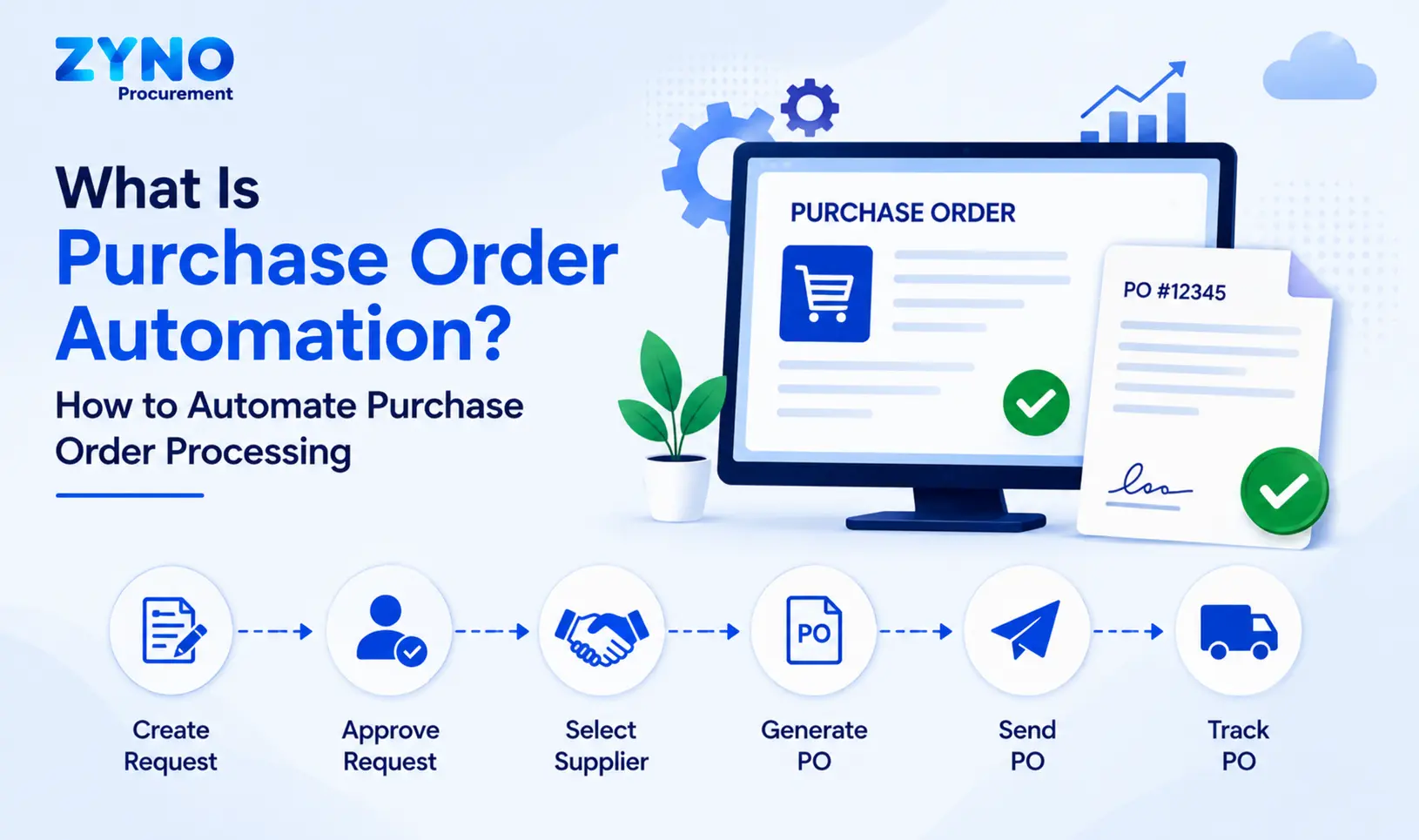
What Is Purchase Order Automation? How to Automate Purchase Order Processing
Read More →
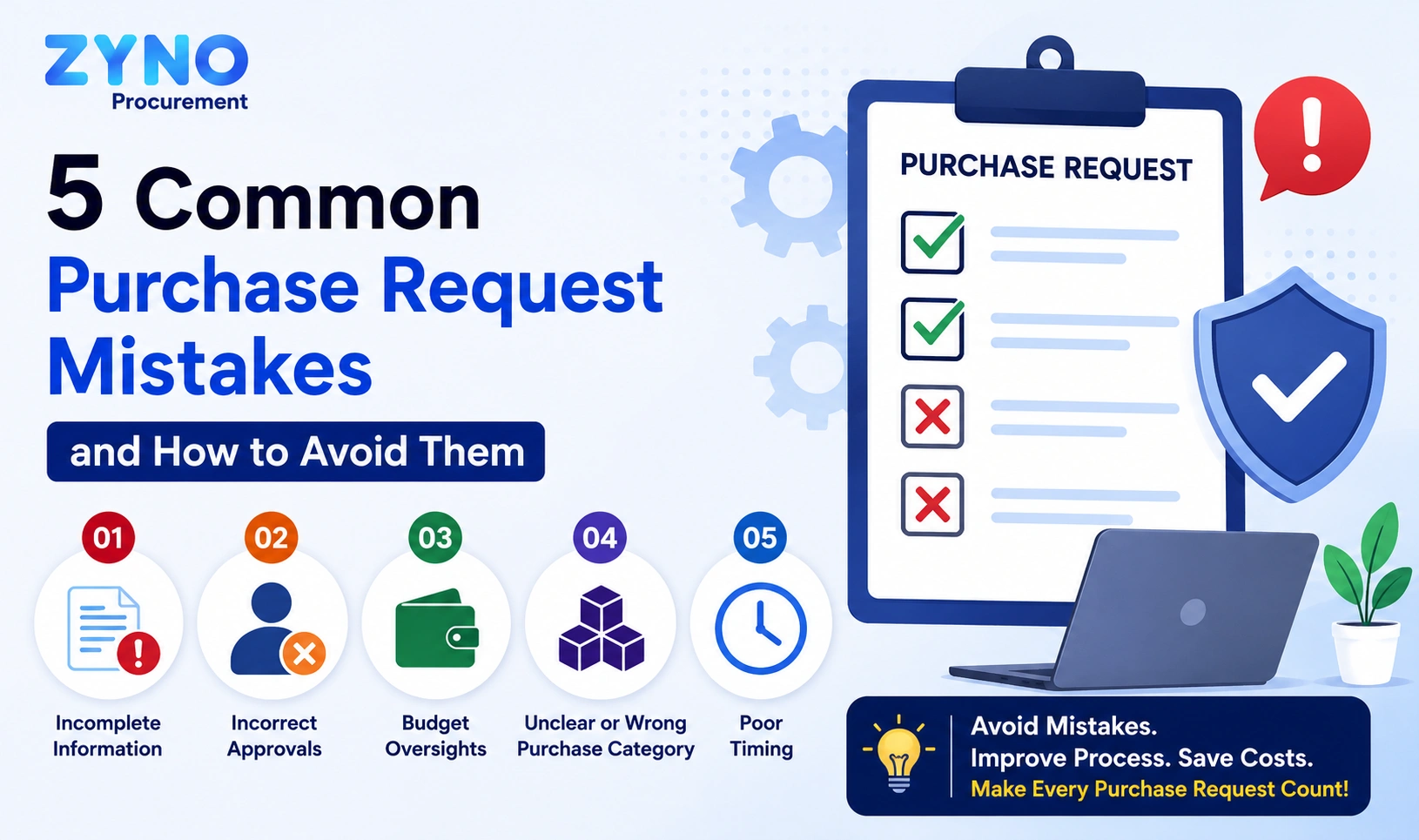
5 Common Purchase Request Mistakes and How to Avoid Them
Read More →
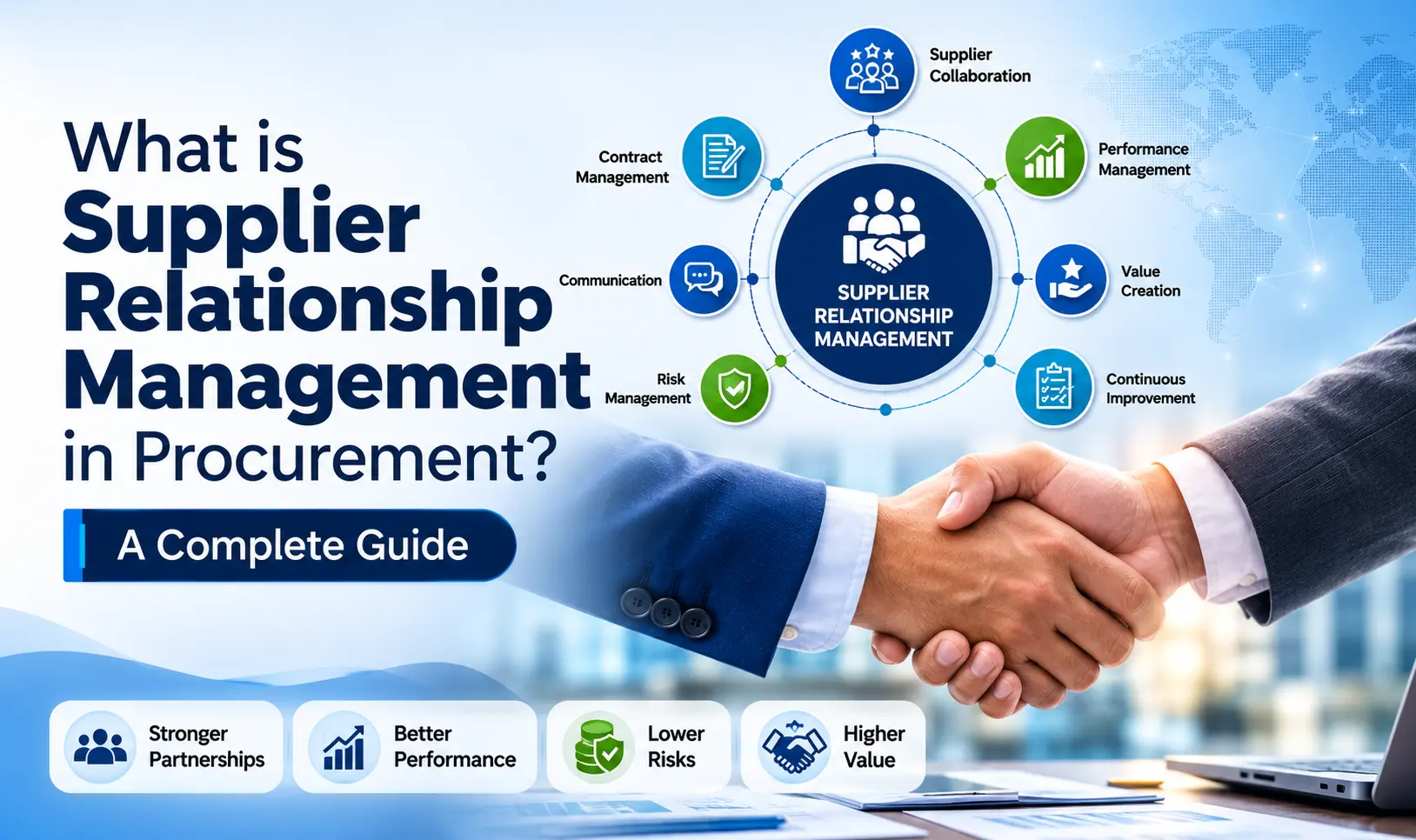
What is Supplier Relationship Management in Procurement? A Complete Guide
Read More →
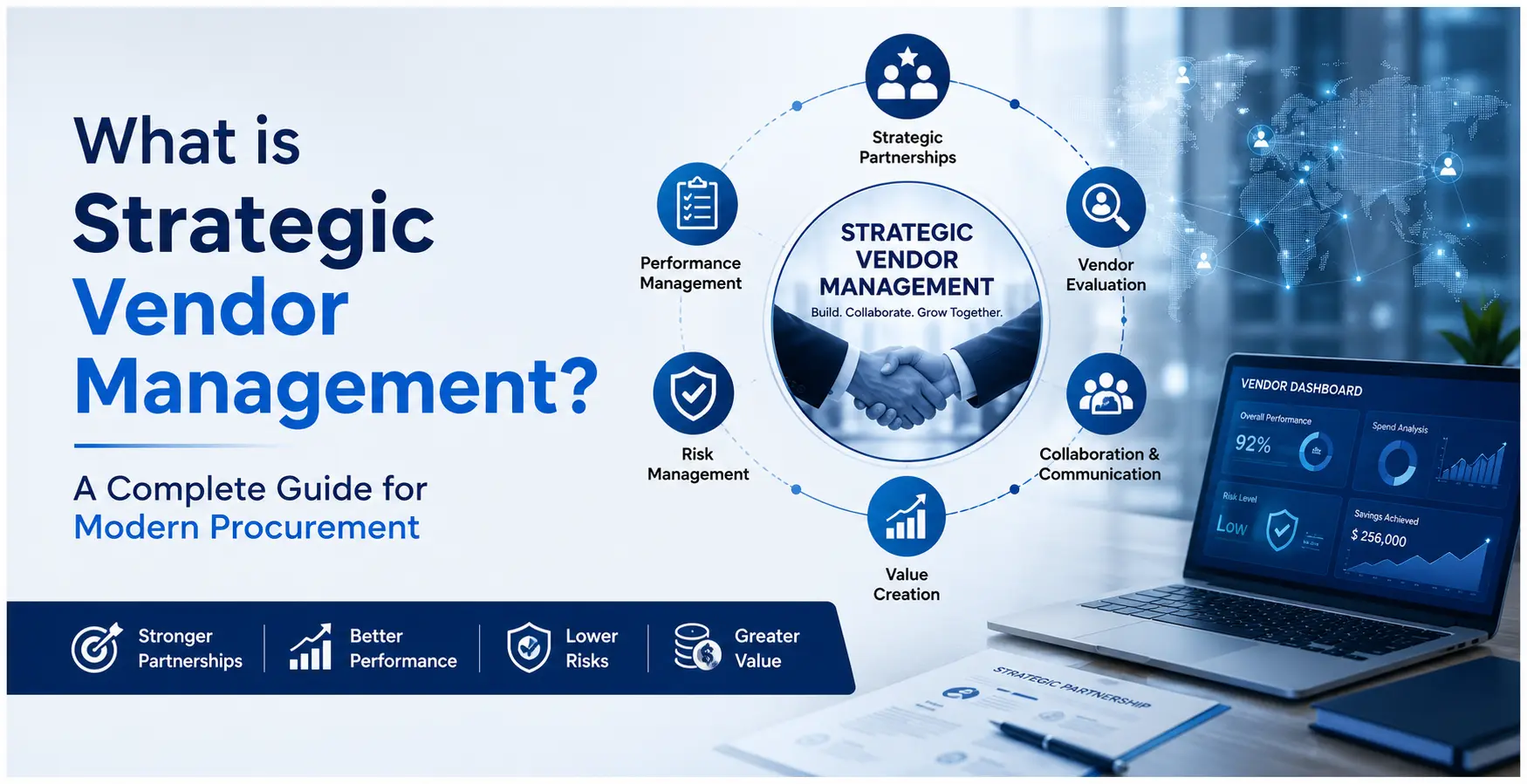
What is Strategic Vendor Management? A Complete Guide for Modern Procurement
Read More →
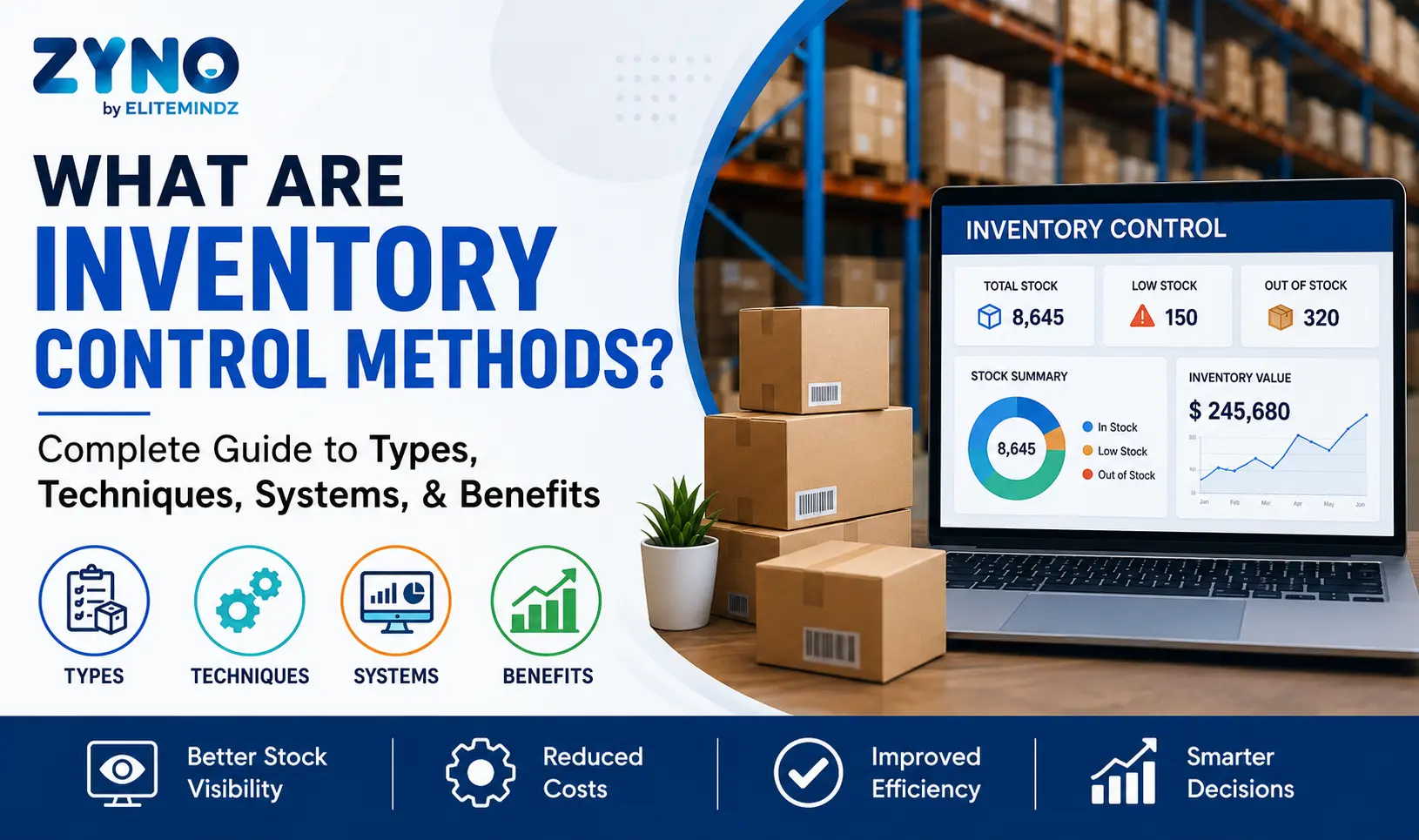
What Are Inventory Control Methods? Complete Guide to Types, Techniques, Systems, & Benefits
Read More →
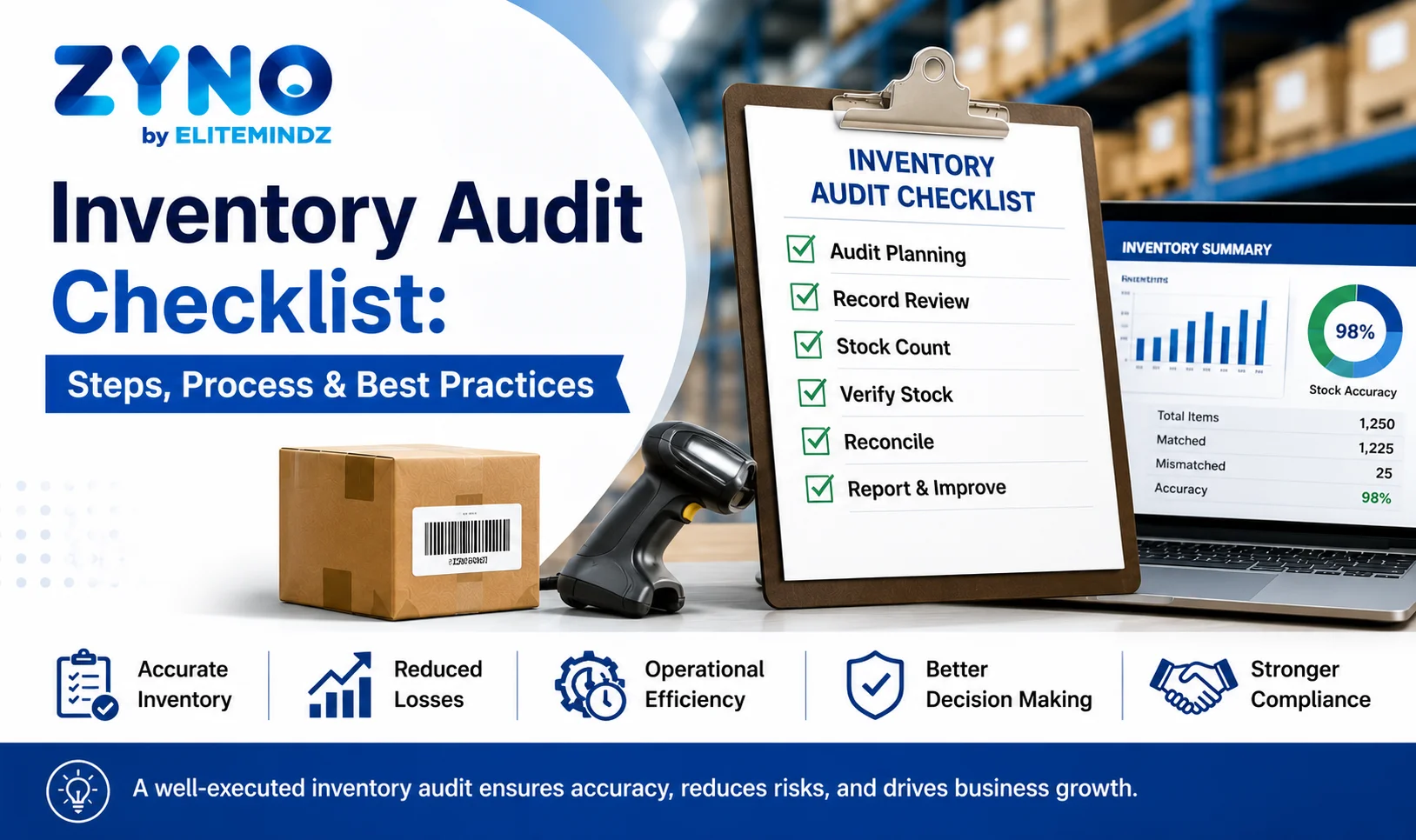
Inventory Audit Checklist: Steps, Process & Best Practices
Read More →
Warehouse Inventory Management: Best Practices for 2026
Read More →
Treasury Management System (TMS): A Complete Guide for Modern Corporates
Read More →
What is Portfolio Management Services (PMS) and What Are Its Benefits?
Read More →
Generative AI Procurement Software Solution: The Future of Intelligent Procurement
Read More →
Top Contract Management Software Companies in Ethiopia: Features, Benefits & Best Procurement Solutions
Read More →
AI Procurement Software: Complete Guide to Intelligent, Generative AI & Machine Learning Procurement Solutions
Read More →
Top SAP alternatives for small, midsize, and enterprise businesses
Read More →
Best RFP Software in 2026: Top Solutions for Smarter Procurement and Proposal Management
Read More →
GST on Purchase: Complete Guide to GST on Purchases in India
Read More →
Procurement Software in the UAE: How to Choose the Right Solution
Read More →
Supply Chain Procurement: Everything You Need to Know
Read More →
Top 10 Oracle Procurement Alternatives for Businesses in 2026
Read More →
Quotation Software vs Excel: Which Is Better for Businesses in 2026?
Read More →
Contract Management Software Buyer's Guide: Features, Pricing & How to Choose
Read More →
How to Identify the Right Vendor: 10 Simple Steps
Read More →
Top 10 Automated PO Generation Tools in 2026: Best Purchase Order Software with AI Capabilities
Read More →
How to Generate a PO Automatically in SAP: Step-by-Step Guide
Read More →
What Is the Best Budget-Friendly Procurement Software With Vendor Onboarding for Indian SMEs?
Read More →
How to Generate a PO Automatically in SAP: Step-by-Step Guide
Read More →
How to Solve Invoice Mismatches: 10 Real Ways to Fix Invoice Discrepancies
Read More →
Top 10 Vendor Onboarding Tools for Businesses in 2026: Features, Process & How to Choose
Read More →
Vendor Comparison & Supplier Intelligence: How AI Helps Businesses Choose the Right Vendor
Read More →
How to Choose the Right Procurement Management Software in 2026 (Complete Buyer's Guide)
Read More →
How to Reduce Procurement Costs: 18 Practical Strategies That Actually Work
Read More →
How to Choose the Right Procurement Management Software in 2026 (Complete Buyer's Guide)
Read More →
How to Calculate Procurement Software ROI: Formula, Example & Calculator
Read More →
Procurement Software Evaluation Checklist: 35 Criteria for Choosing the Right Platform
Read More →
How Businesses Can Improve Vendor Performance and Manage Supplier Risk
Read More →
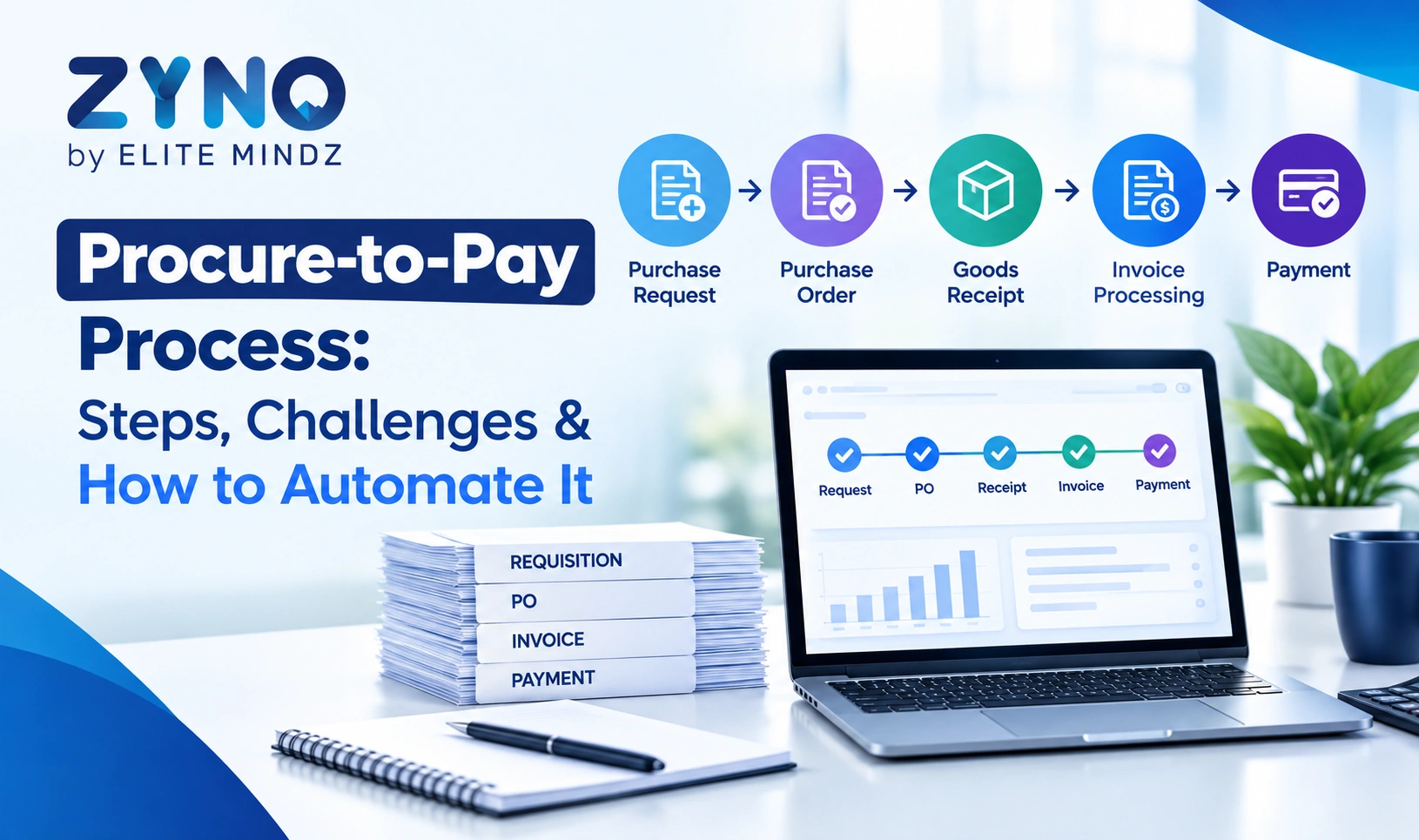
Procure-to-Pay Process: Steps, Challenges & How to Automate It
Read More →
Purchase Requisition vs Purchase Order: What’s the Difference?
Read More →
10 Source-to-Pay Software Platforms to Consider in 2026
Read More →
Supplier Management Software Buying Guide: How to Choose the Right Platform
Read More →
Procurement Automation Guide: How It Works, What to Automate & How to Implement It
Read More →
Procurement Software Features: 12 Must-Have Capabilities to Look For
Read More →
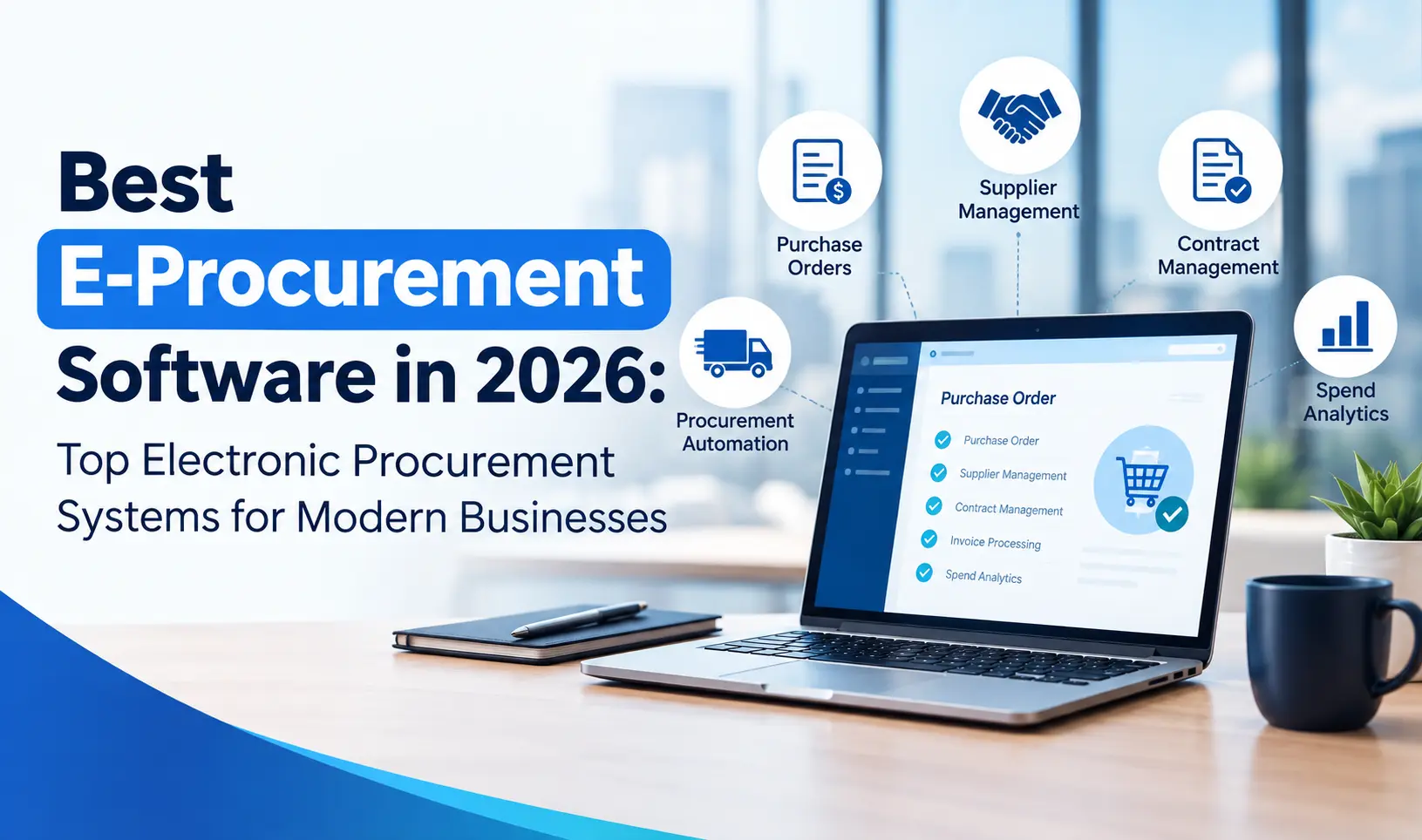
Best E-Procurement Software in 2026: Top Electronic Procurement Systems for Modern Businesses
Read More →
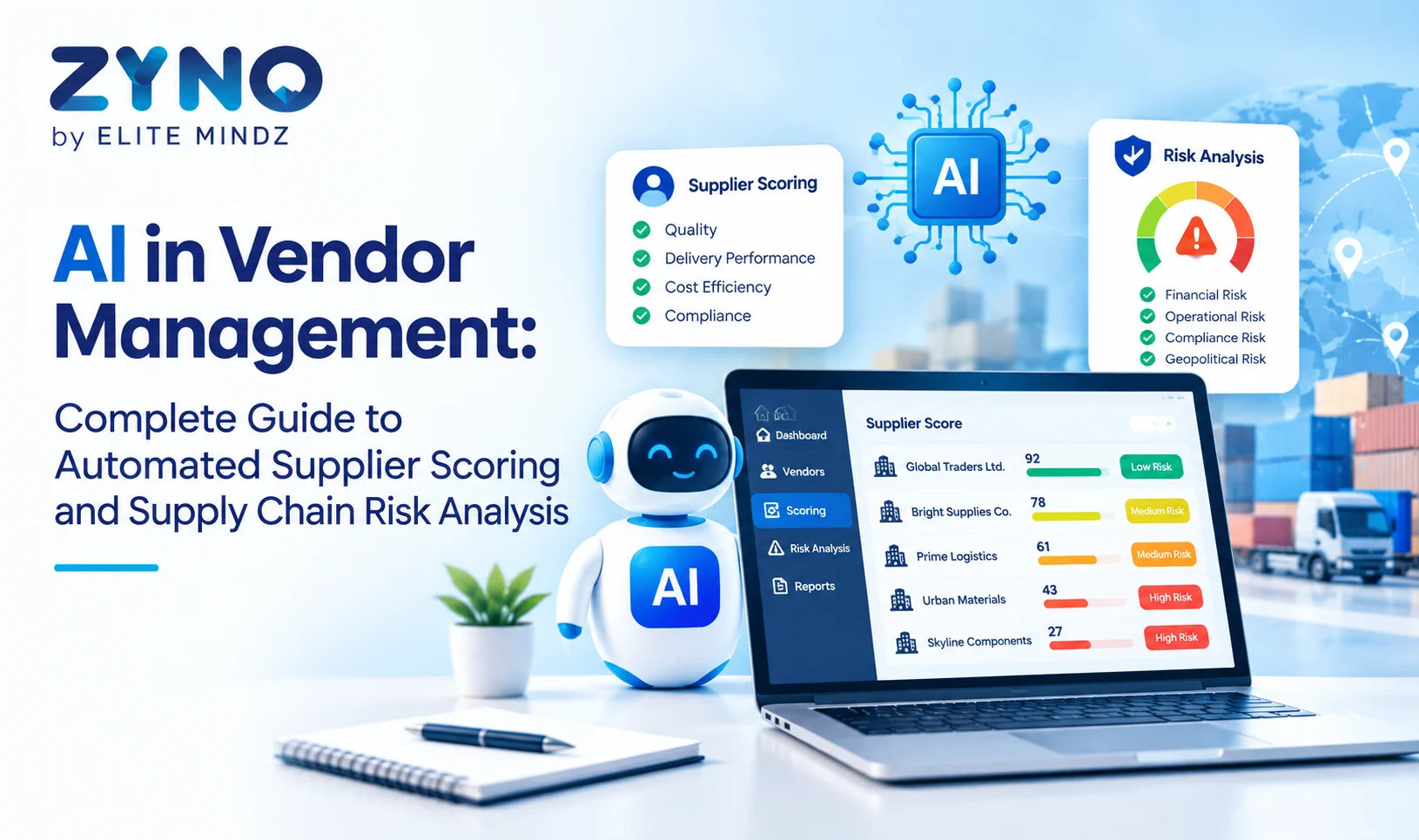
AI in Vendor Management: Complete Guide to Automated Supplier Scoring and Supply Chain Risk Analysis
Read More →
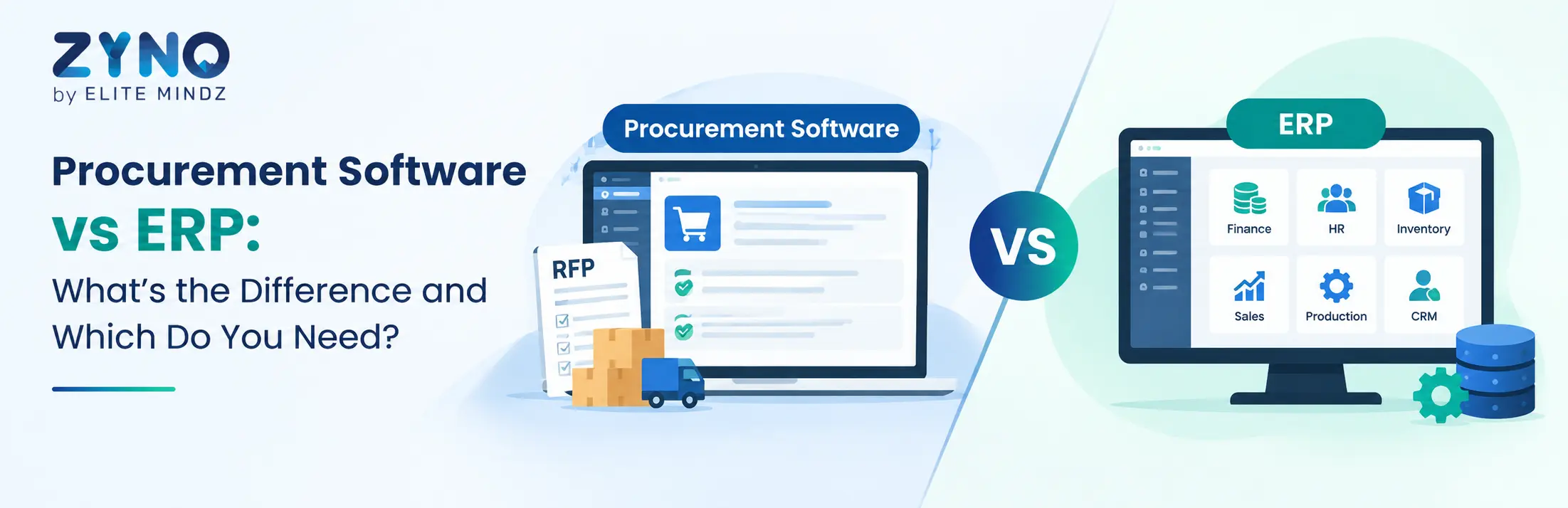
Procurement Software vs ERP: What's the Difference and Which Do You Need?
Read More →
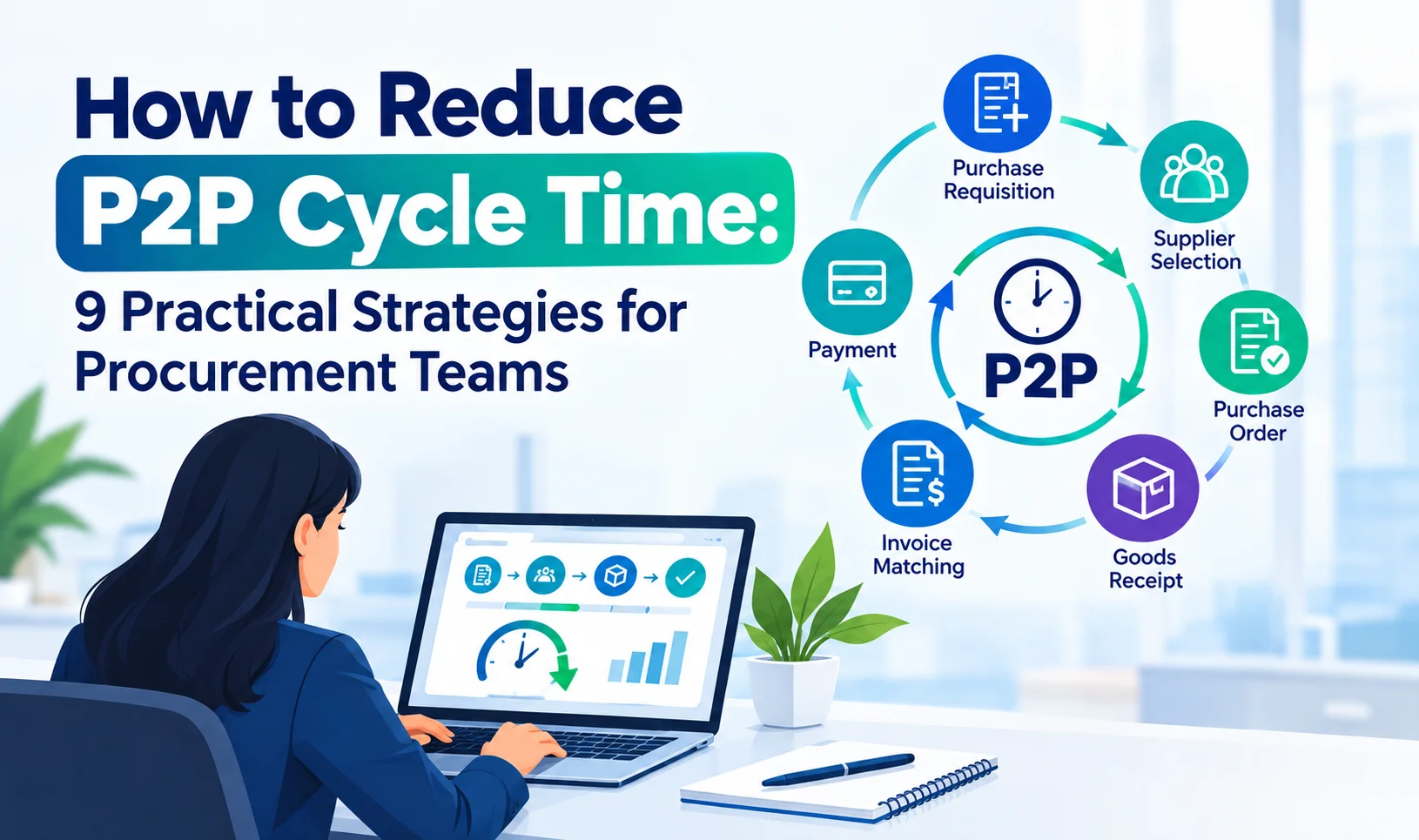
How to Reduce P2P Cycle Time: 9 Practical Strategies for Procurement Teams
Read More →
Procurement Software for Oil & Gas Companies in UAE and Saudi Arabia
Read More →
10 Vendor Onboarding Best Practices Every Business Should Follow (2026)
Read More →
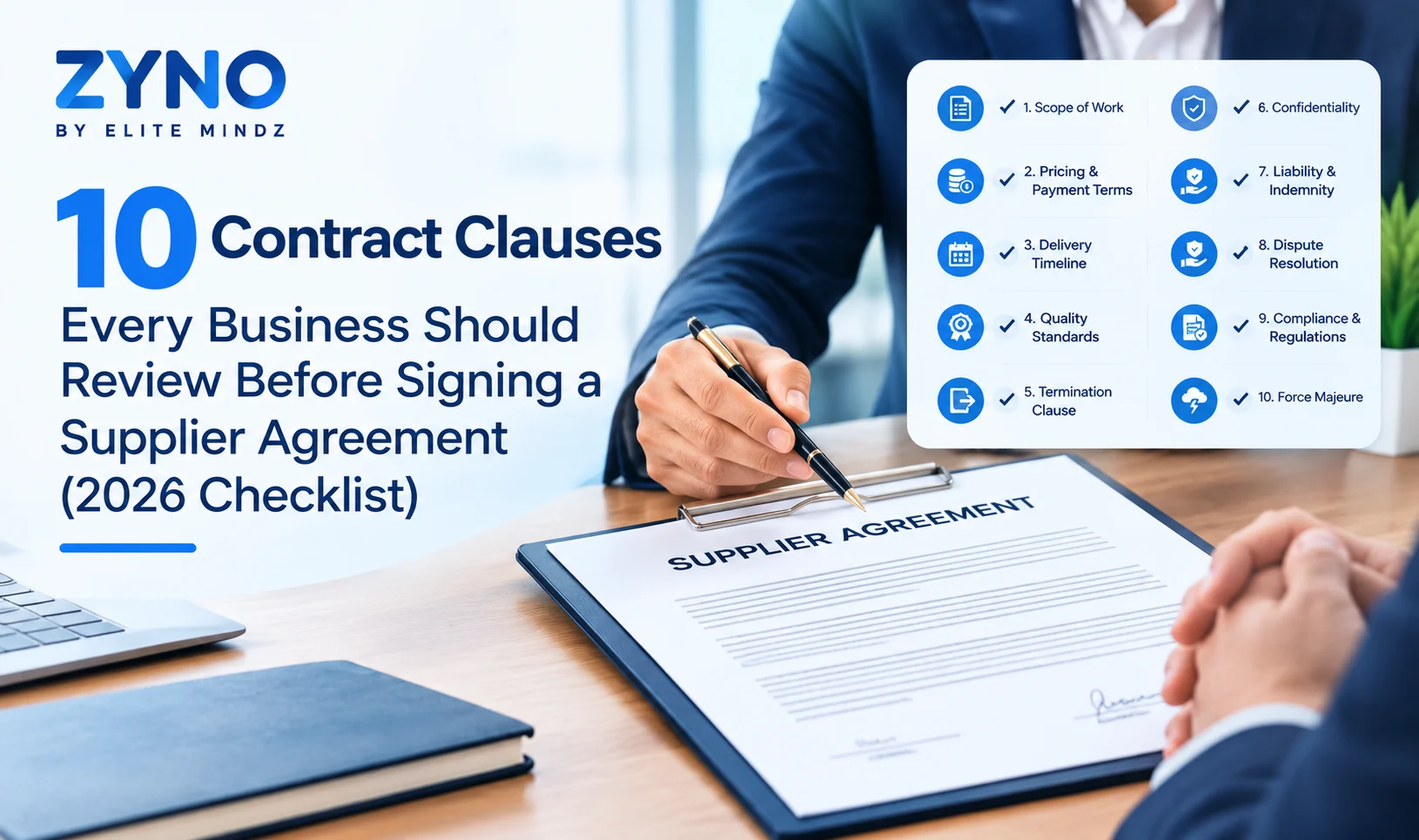
10 Contract Clauses Every Business Should Review Before Signing a Supplier Agreement (2026 Checklist)
Read More →
10 Invoice Processing Mistakes That Delay Supplier Payments (and How to Fix Them)
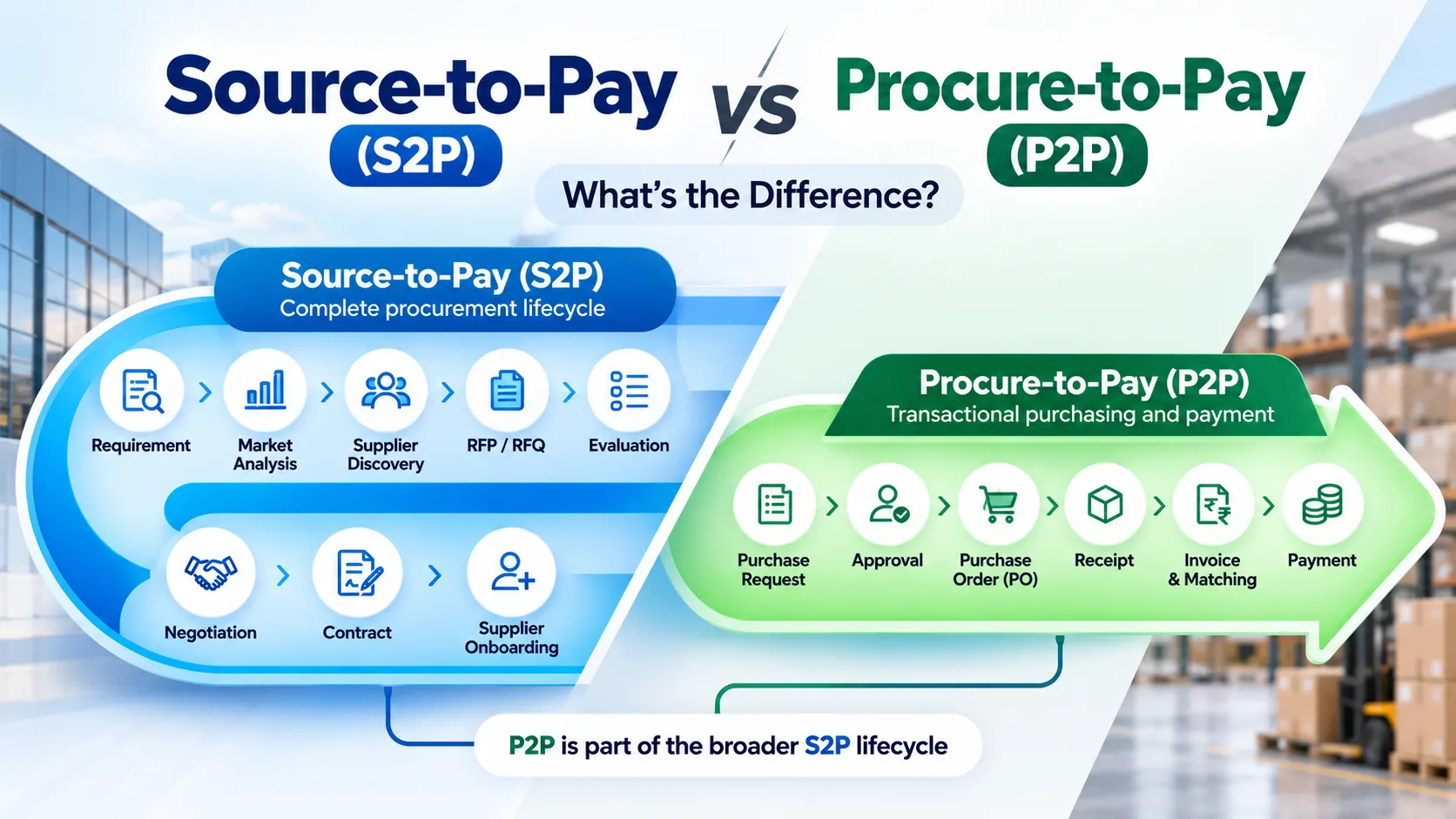
Read More →Source-to-Pay vs Procure-to-Pay: Key Differences, Processes & Software Guide
Read More →
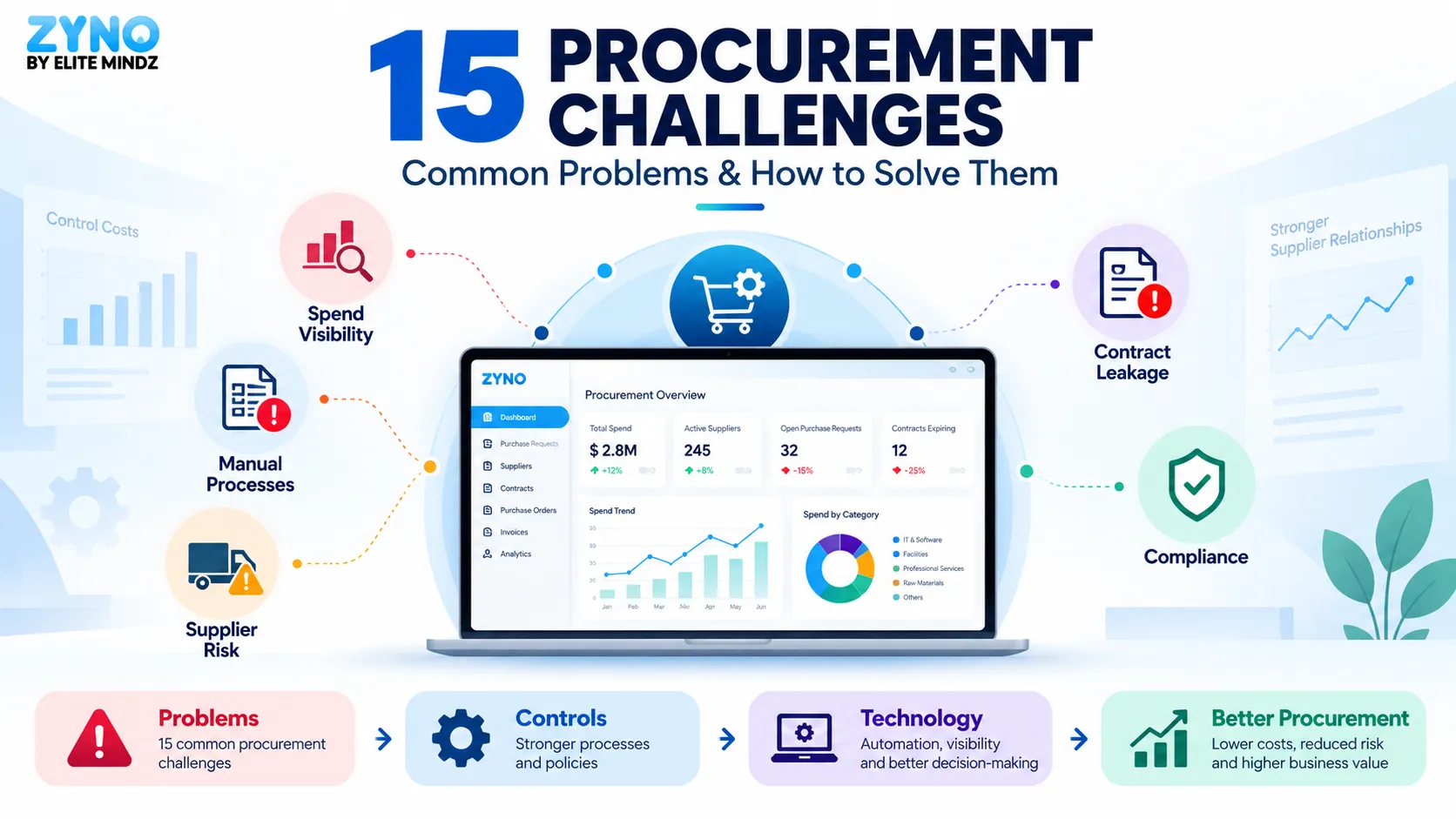
Procurement Challenges: 15 Common Problems & How to Solve Them
Read More →
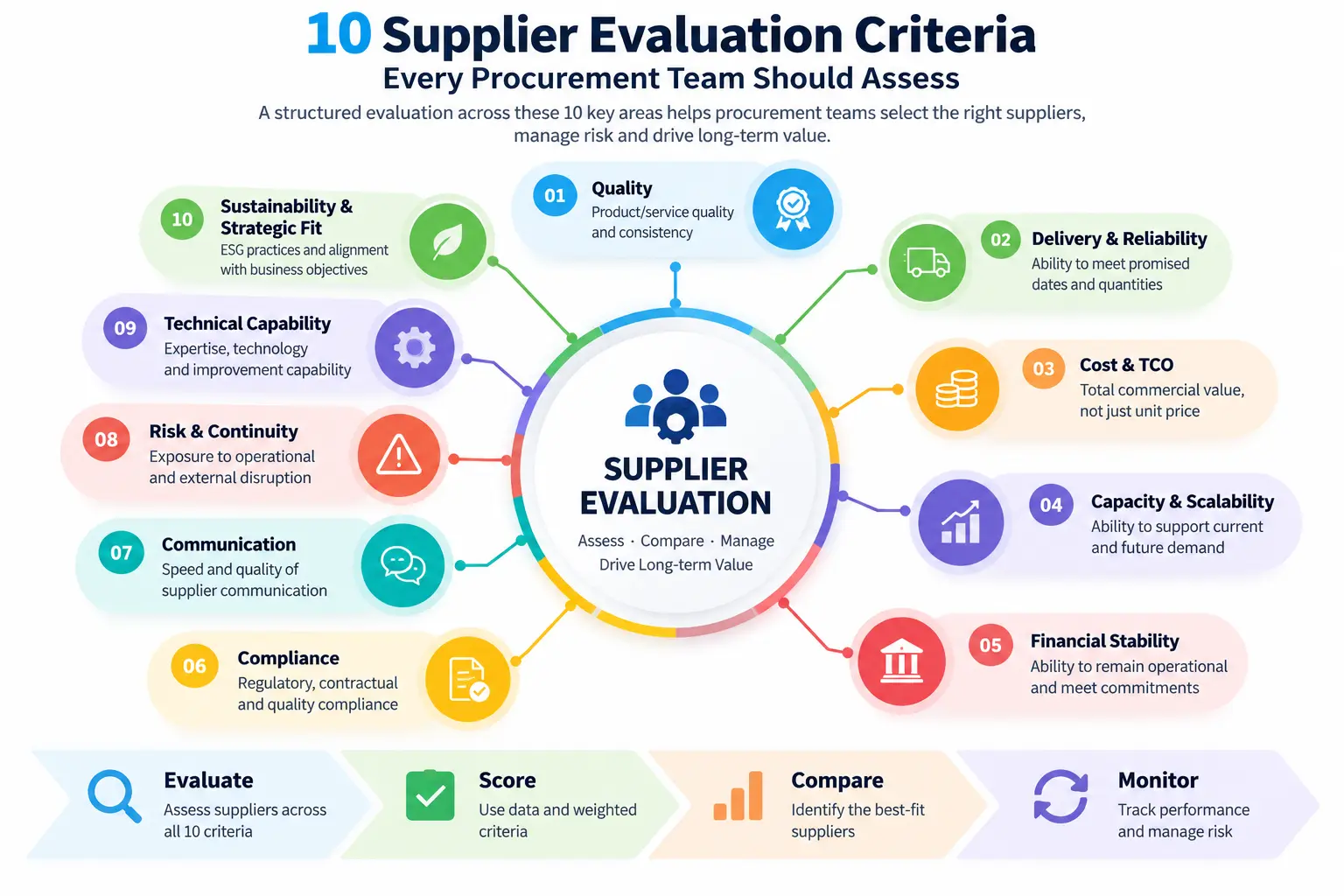
Supplier Evaluation Criteria: 10 Factors Every Procurement Team Should Assess
Read More →
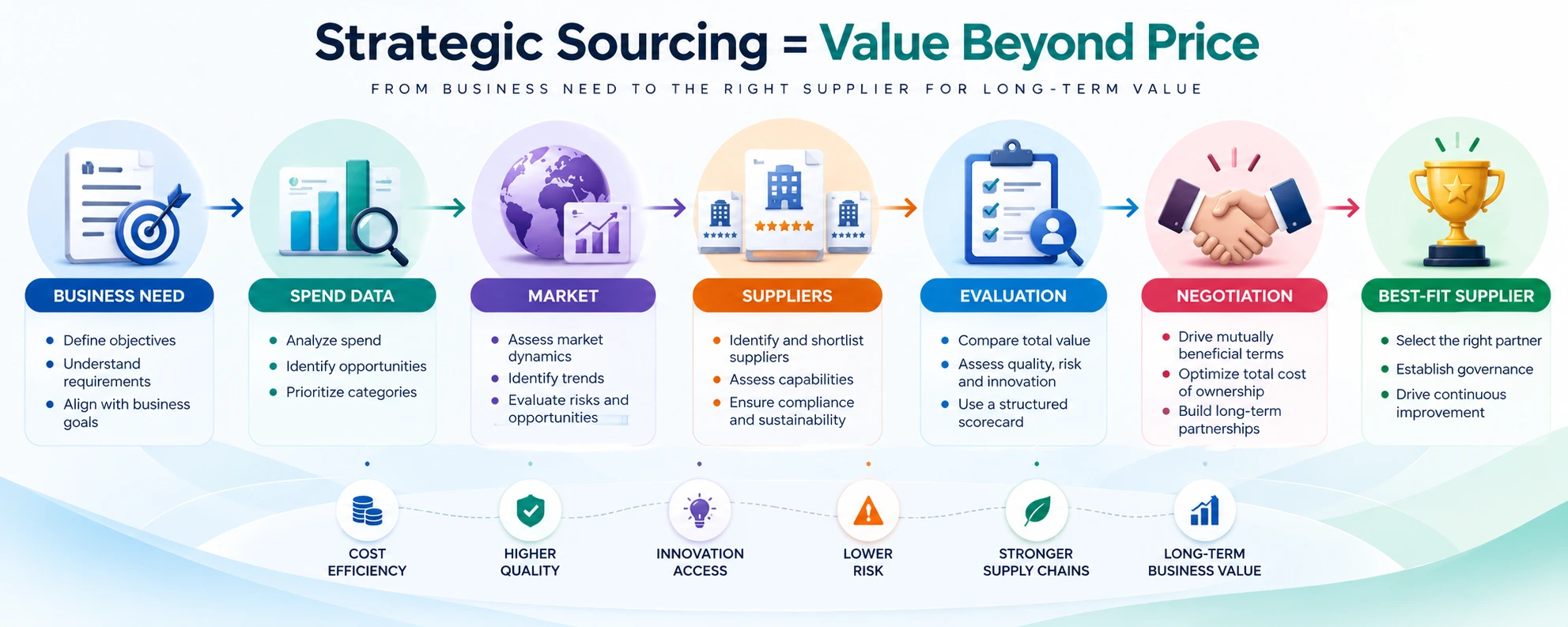
What Is Strategic Sourcing? Process, Benefits & Best Practices
Read More →
Tail Spend Analysis: How to Identify, Measure and Optimize Fragmented Spend
Read More →
Which Prompt-Based ERP Supports Procurement Automation and Analytics?
Read More →
How to Stop Employees from Making Purchases Without Approval in the UAE
Read More →
How to Build a Purchase Approval Workflow for Manufacturing Companies
Read More →
Best Procurement Software for Sheet Metal Fabrication Companies
Read More →
10 Best Procurement Software for Manufacturing Companies in 2026
Read More →
How to Compare Supplier Quotations and Choose the Right Supplier
Read More →
10 Best Contract Automation Software Tools for 2026
Read More →
Best Procurement Software for CNC Machining Companies: 8 Options Compared
Read More →
Best Purchase Order Management Software for Steel Service Centres (2026): ZYNO Procurement vs 12 Alternatives
Read More →
Procurement Software for Jewellery Businesses in India: Gold, Diamond & Karigar Purchase Control (2026)
Read More →
Best Procurement Software for Garment Manufacturers: Fabric, Trims & Supplier Management
Read More →
Fabric Procurement Software for Garment Manufacturers: Control Quotes, POs and Landed Cost
Read More →
Top 10 Procurement Software Companies in Saudi Arabia (2026)
Read More →
Top Cloud Procurement Solutions for Abu Dhabi Government & Enterprises
Read More →
10 Best UAE E-Invoicing and Accounts Payable Software Solutions (2026)
Read More →Best Section 43B(h) MSME Payment Tracking Software in India (2026): 7 Tools Compared
Read More →
9 Best Procurement Software for NGOs in Kenya (2026)
Read More →
10 Best Procurement Approval Workflow Tools in 2026
Read More →
10 Best Spend Analysis Software for Procurement Teams in 2026
Read More →
How AI Can Automate SAP S/4HANA Procurement Without Replacing Your Existing ERP
Read More →
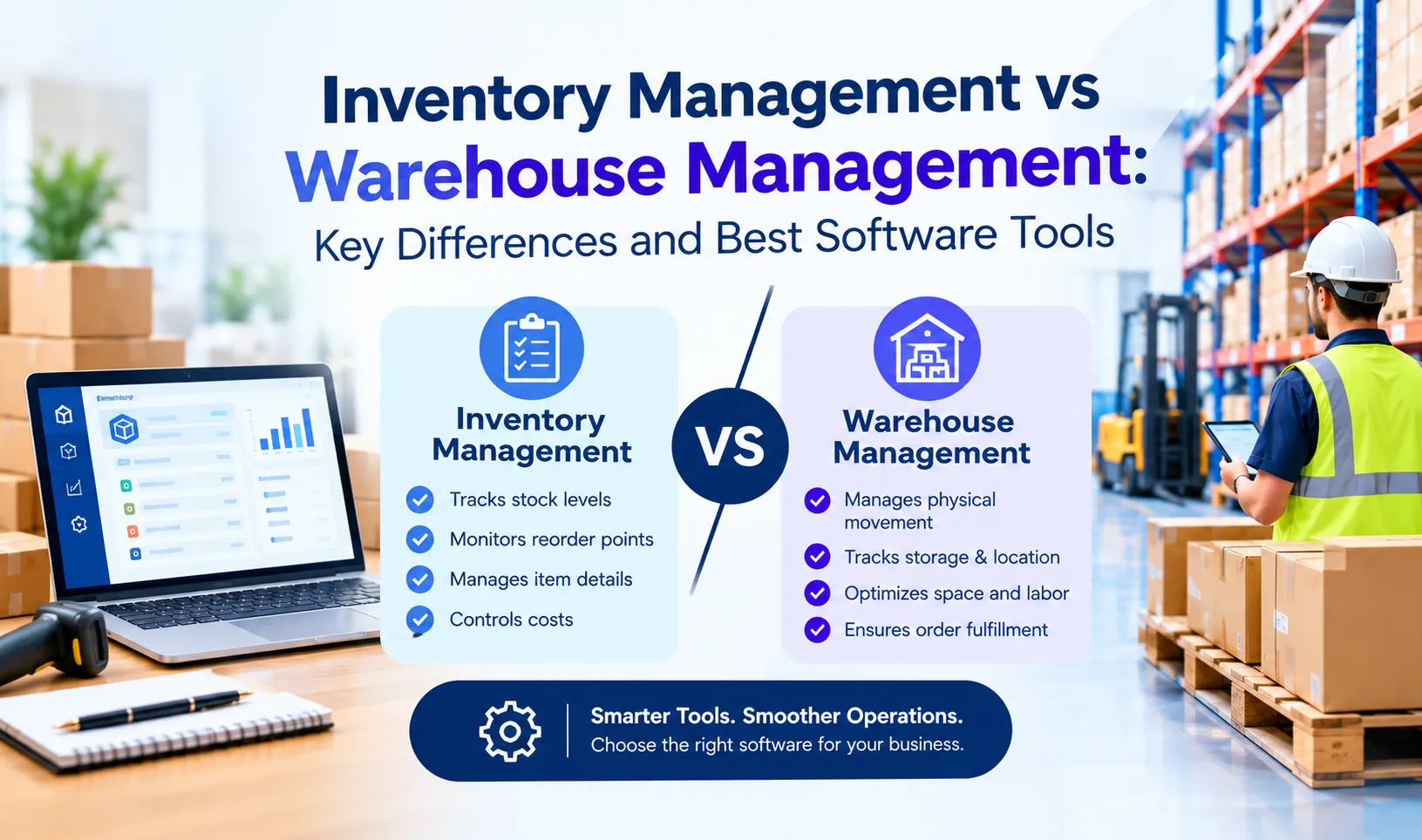
Inventory Management vs Warehouse Management: Key Differences and Best Software Tools
Read More →
10 Best Procurement Management Software for Businesses in 2027
Read More →
10 Best Procurement Software in 2027: Features, Pricing & How to Choose
Read More →
20 AI Prompts for Smarter Procurement: Improve Sourcing, Negotiation, and Cost Savings
Read More →Partner with ZYNO by Elite Mindz to revolutionize how your business works. Fill out the form, and we’ll reach out with AI-powered solutions made just for you.
We use browser cookies to ensure you get the best experience on our website. Learn more
The form was submitted successfully!