
 Contact Us




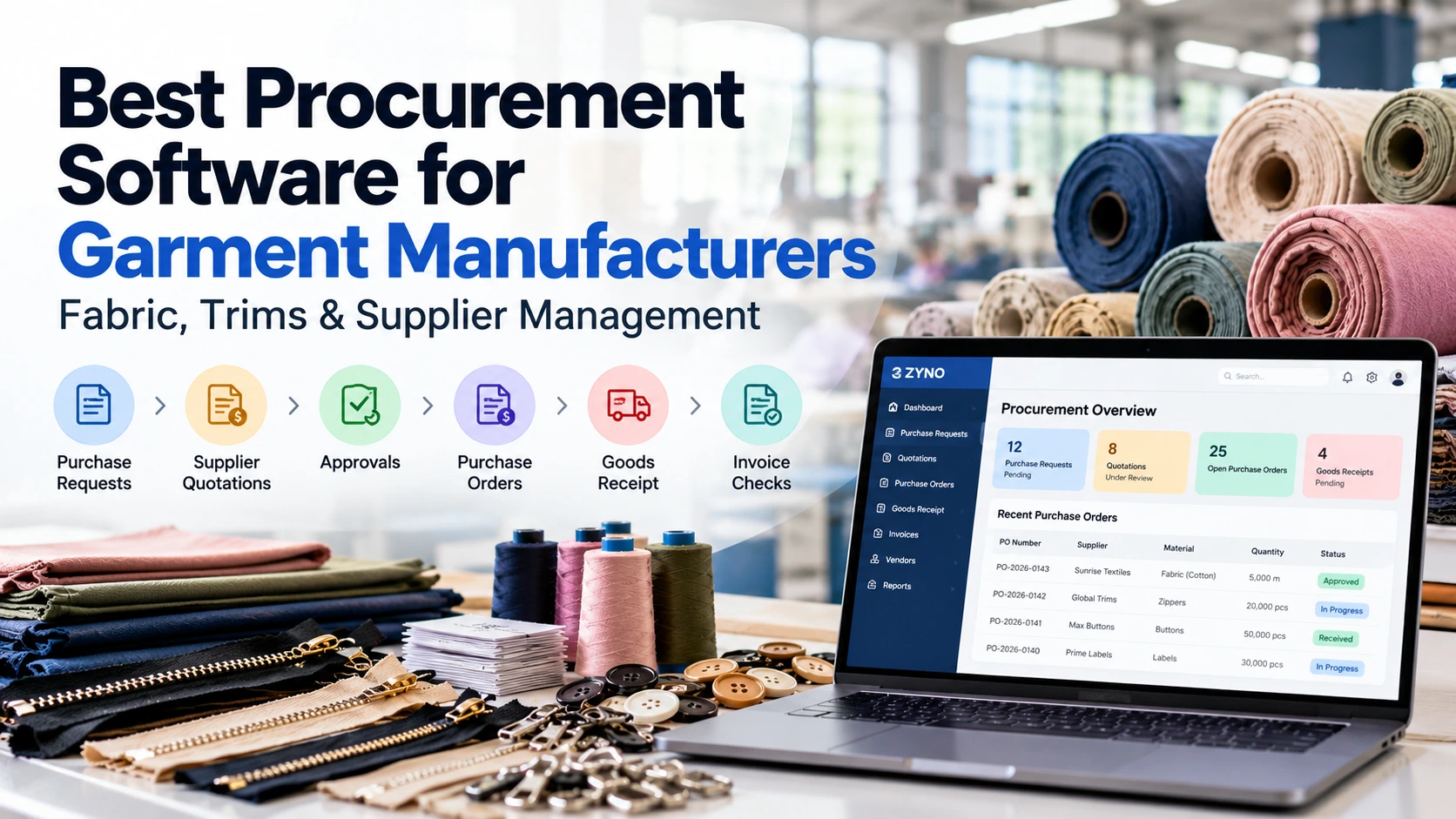




Quick Answer: Which Software Should a Garment Factory Choose?
| If your biggest problem is… | What to look for | How ZYNO Procurement helps |
|---|---|---|
| Quotes and prices spread across email and WhatsApp | Quotation comparison | Quotation Management |
| Slow, unclear approvals | A purchase request workflow | Purchase Request |
| Late or short deliveries | Goods receipt and supplier updates | GRN and Vendor Portal |
| Bills that do not match what arrived | Invoice matching | Procure to Pay |
| No view of spend by supplier | Spend reports | Spend Analytics |
| Also need shade, lot, or BOM planning | A production system to run alongside | Ask the team about integration |
Bring Your Garment Factory’s Buying Process into One Clear Workflow
Compare fabric and trims quotations, manage purchase approvals, track purchase orders and receipts, and connect invoice checks to what was ordered and received. Bring a real fabric or trims purchase scenario and discuss how ZYNO Procurement can fit alongside your existing production or ERP system.
Book a Personalised ZYNO Procurement DemoExplore ZYNO ProcurementAt a glance
- What it is: Software that manages how a garment factory requests, approves, buys, and receives fabric, trims, and packaging.
- Who needs it: Garment makers and exporters with many suppliers, many requesters, or too many open POs to track in Excel.
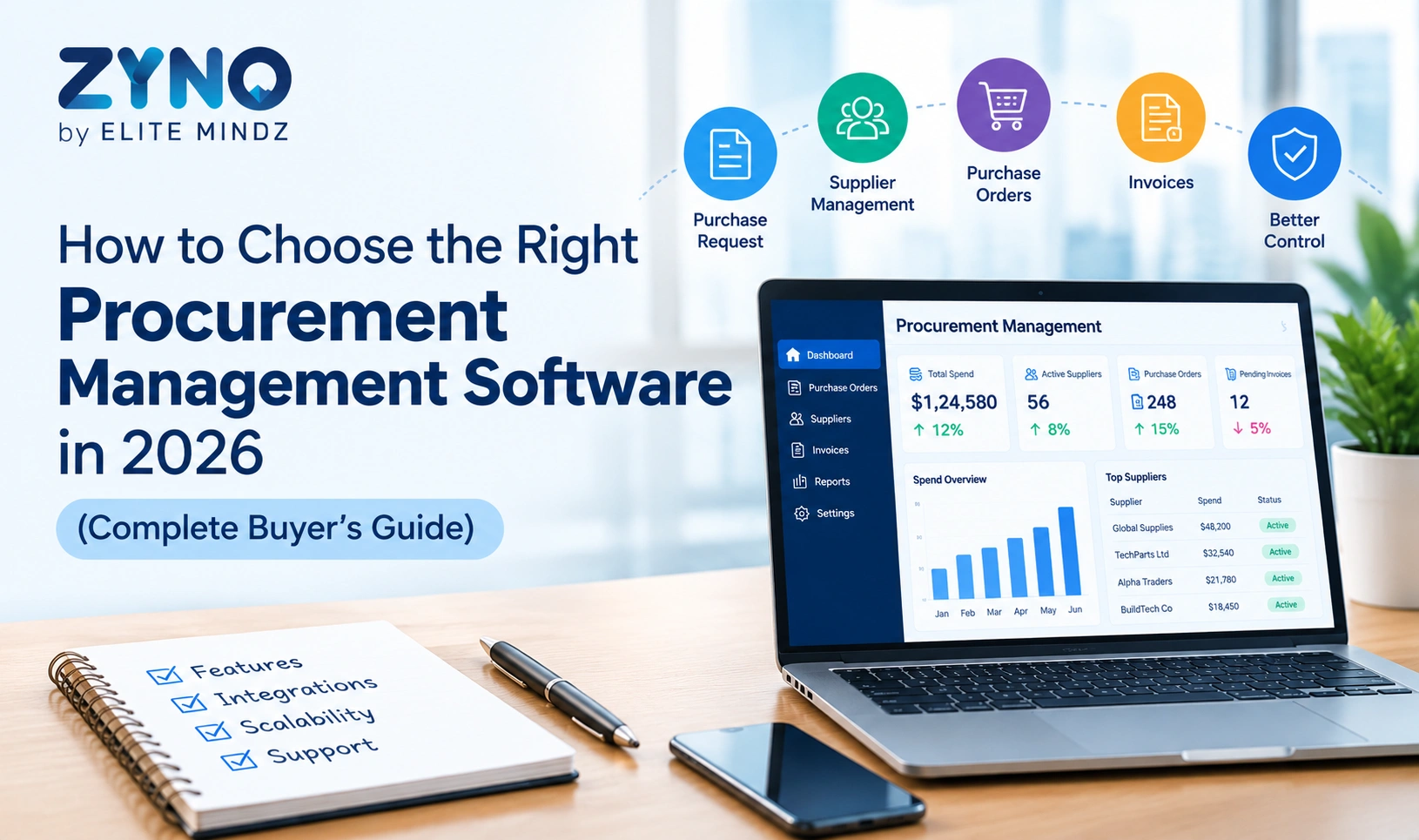
- Core modules: Purchase Request, Quotation Management, Vendor Management, GRN, Procure to Pay.
- Focus on purchasing first: Improve requests, quotations, approvals, POs, receiving, and invoice checks while discussing the integrations you need with your existing systems.
What Is Procurement Software for Garment Manufacturers?
Procurement software is a system that manages how your factory asks for, buys, and receives materials. In a garment factory, that means fabric, buttons, zippers, labels, thread, elastic, hangtags, cartons, and polybags. For apparel manufacturers, apparel procurement software helps connect these purchasing steps so buyers can manage supplier quotes, approvals, purchase orders, and deliveries in one workflow.
Instead of chasing quotes on email, approvals on paper, and PO status on Excel, you keep everything in one system.
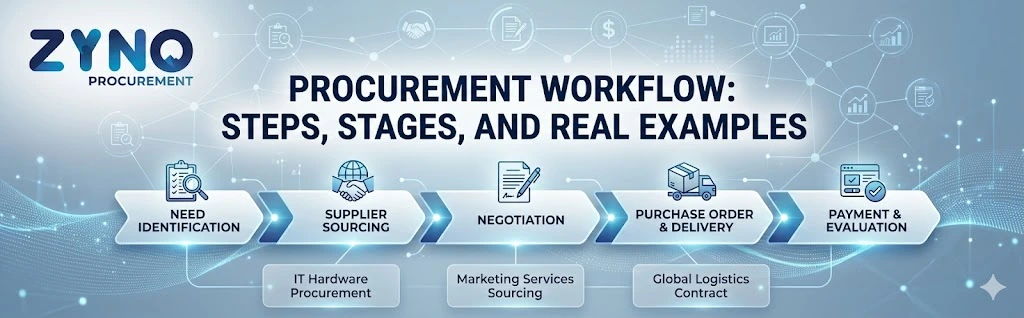
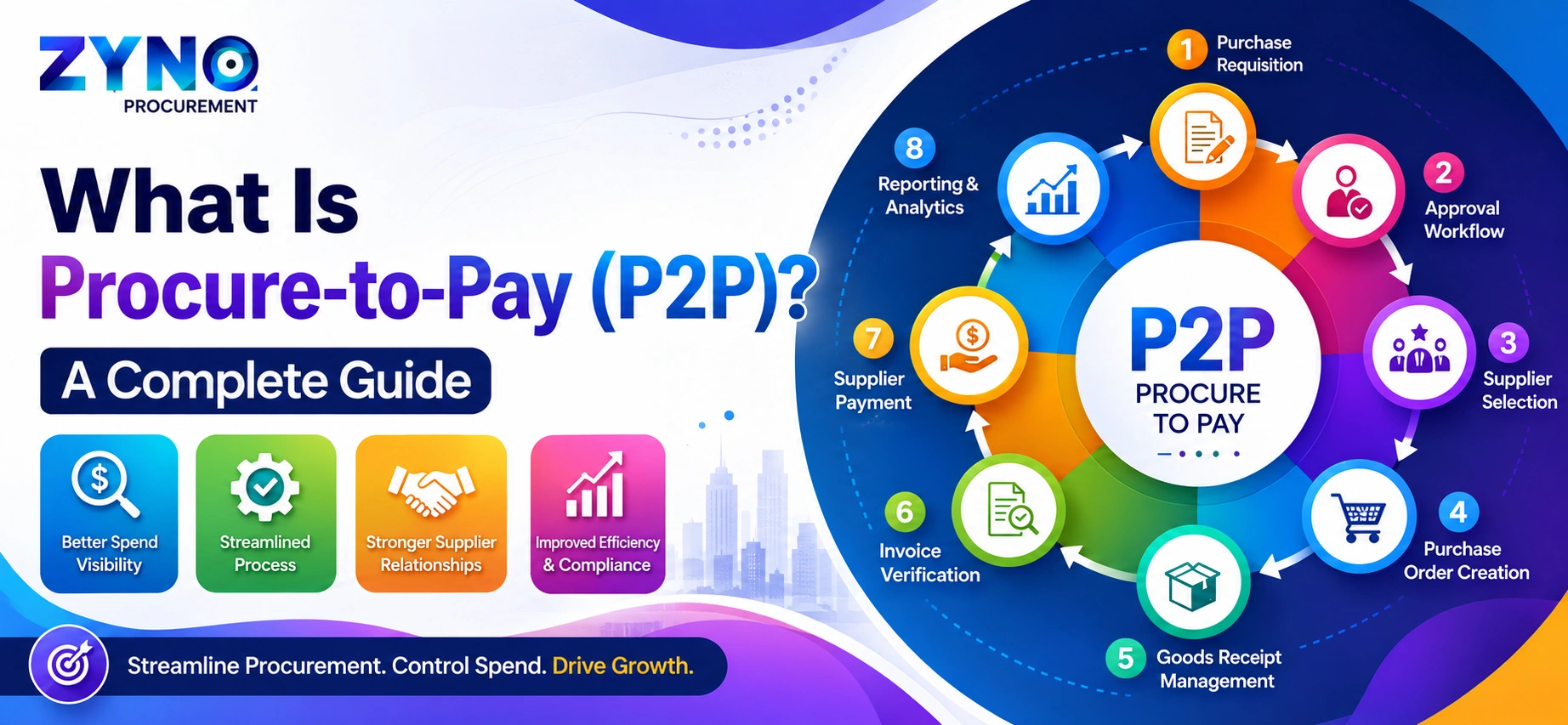
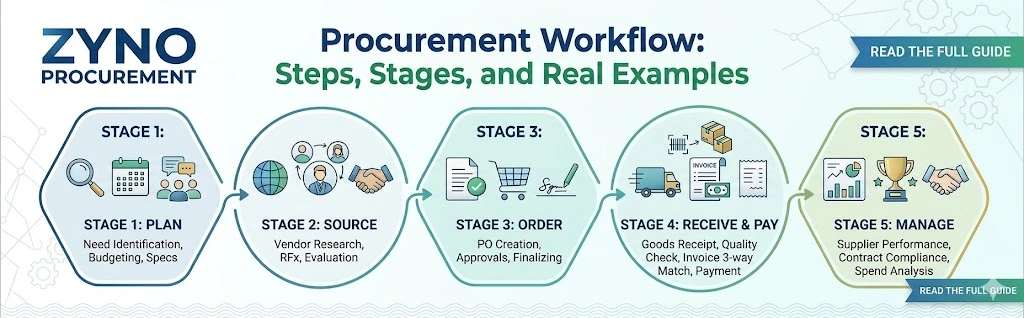
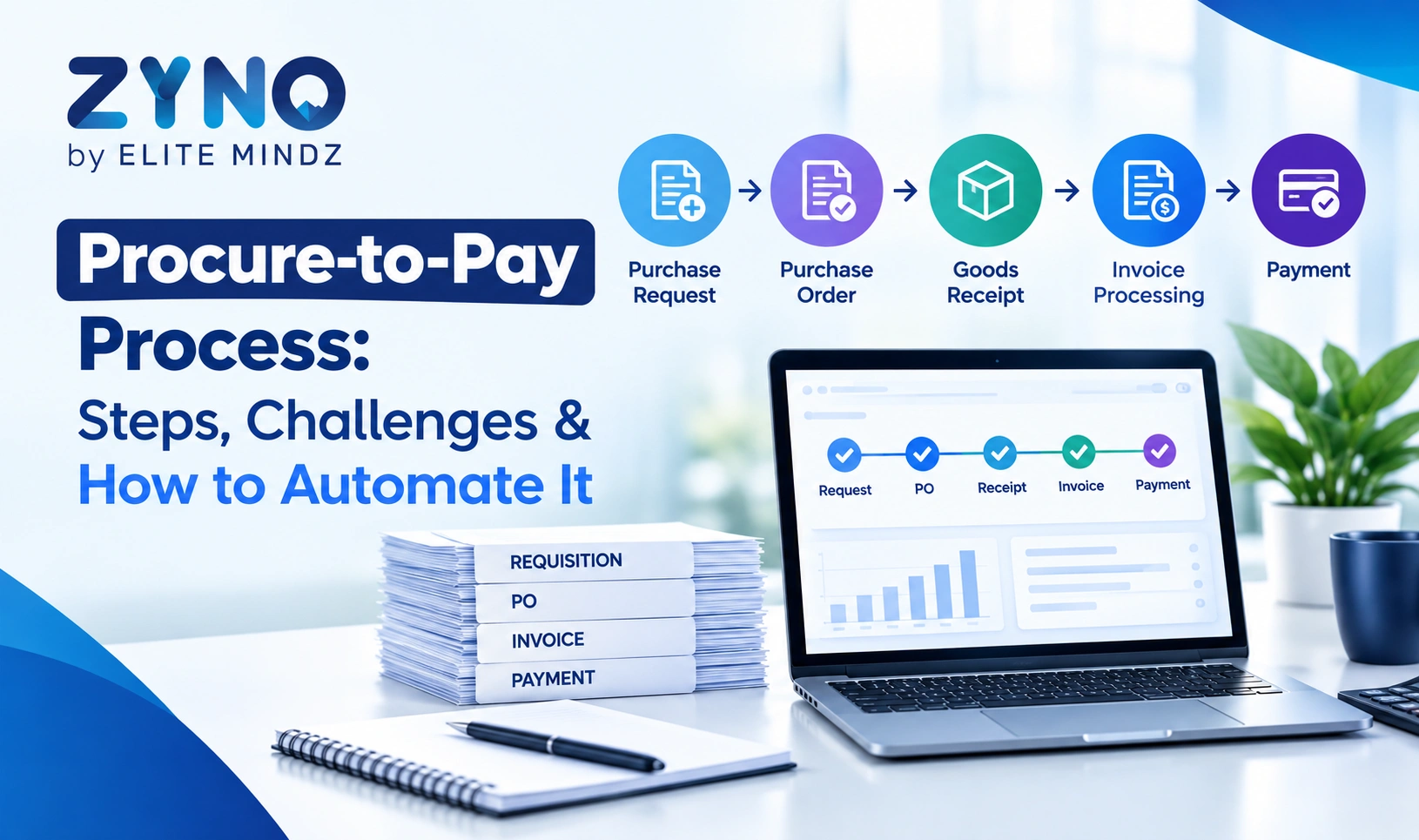
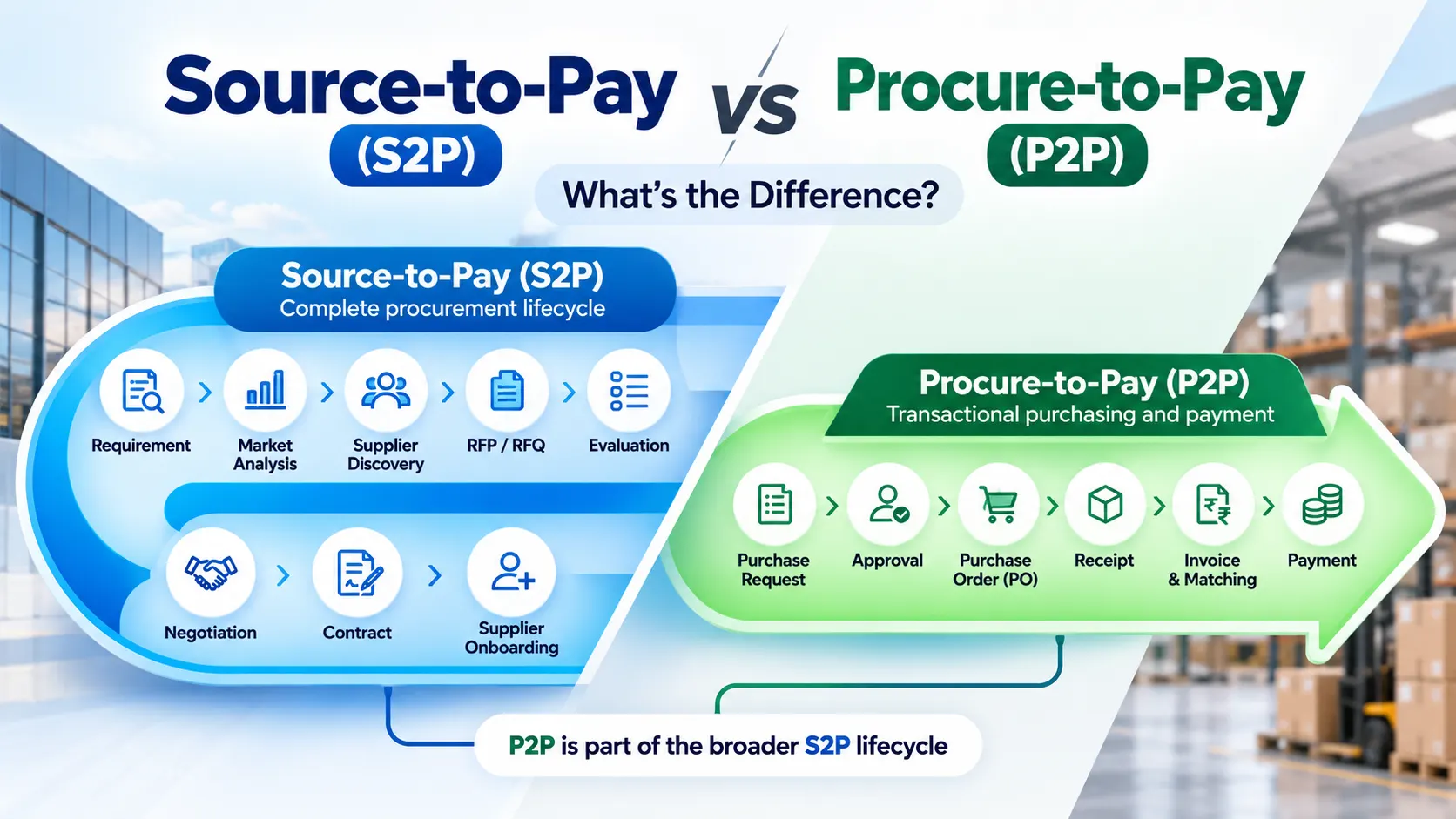
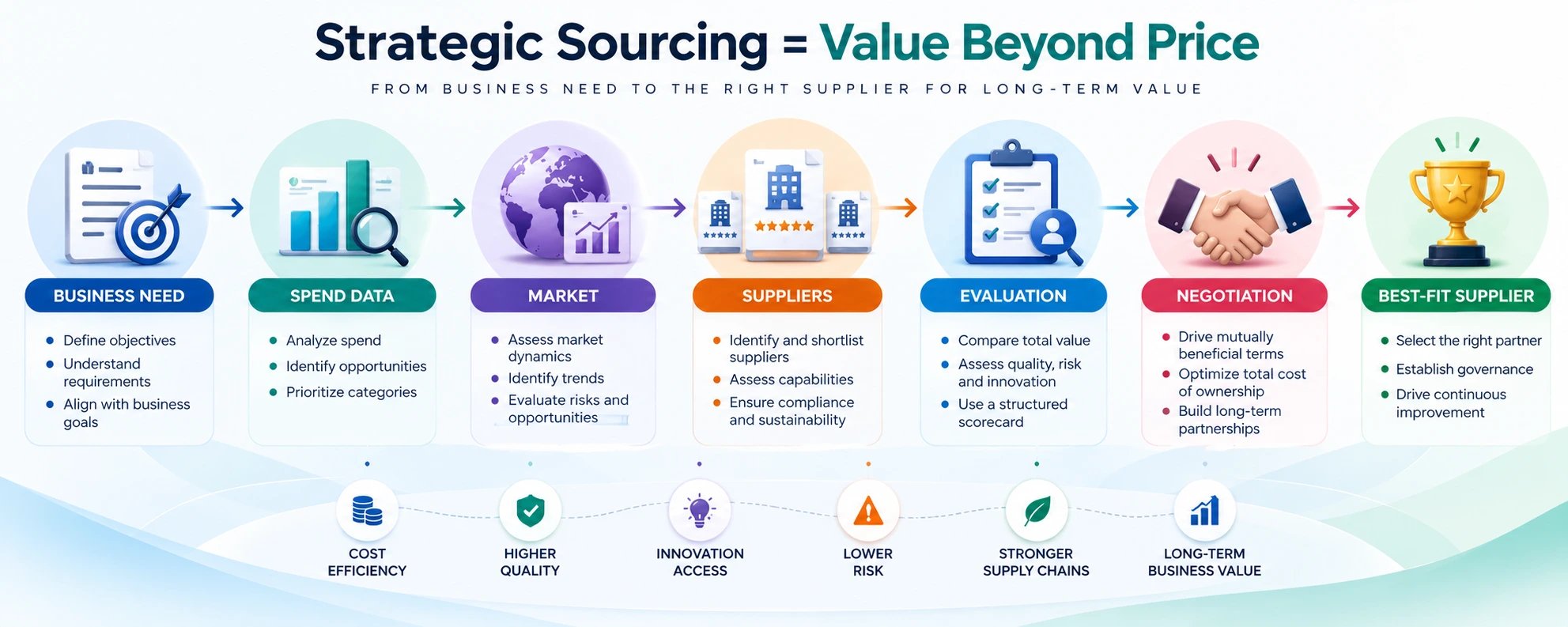
The basic flow looks like this:
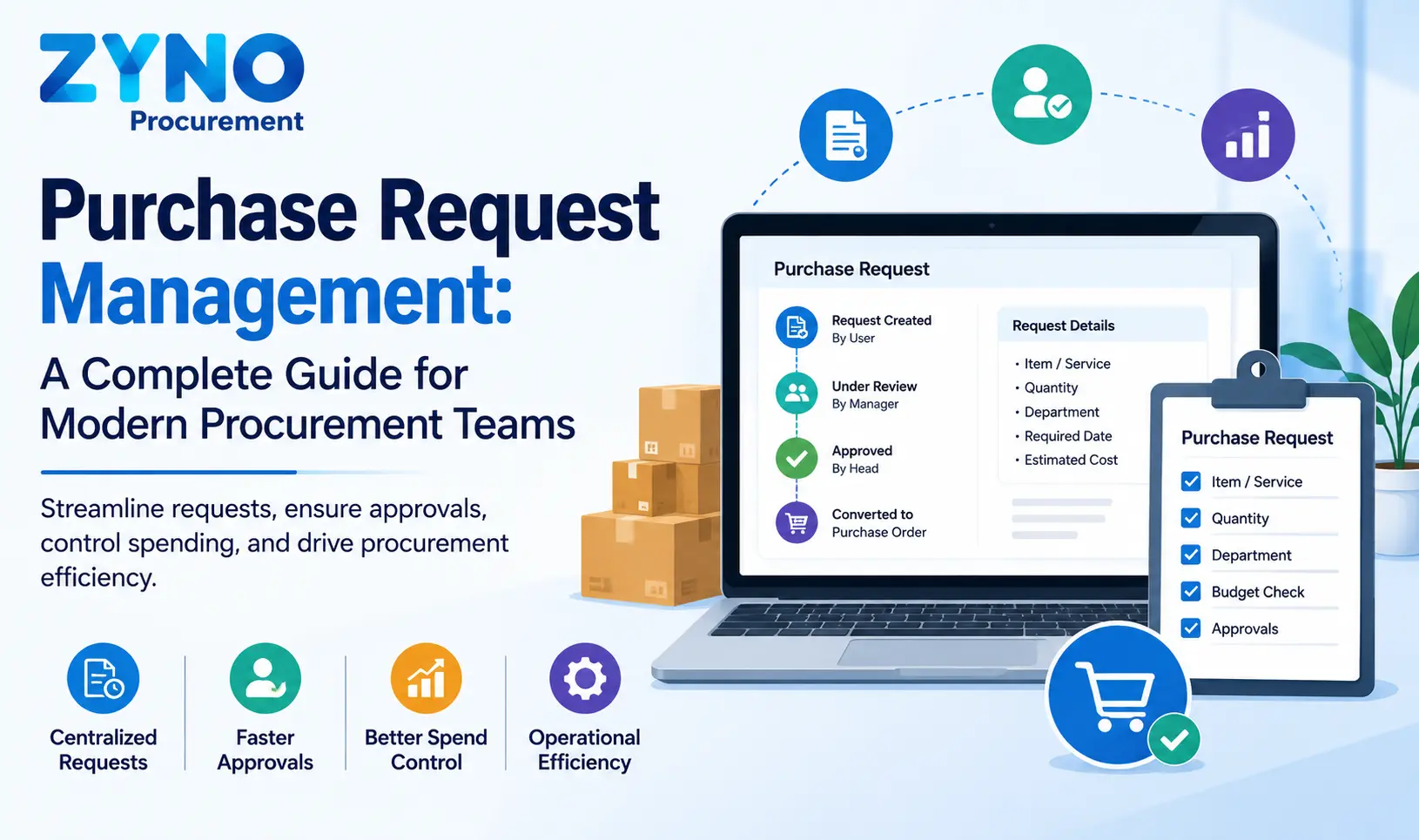
- Purchase request: Production or stores asks for material.
- Approval: The right manager approves it.
- Quotation: Buyers collect prices from suppliers.
- Comparison: The team compares price, delivery date, and terms.
- Purchase order (PO): The chosen supplier gets an official order.
- Goods receipt (GRN): Stores records what arrived.
- Invoice check: Finance matches the bill with the PO and the receipt.
- Reports: Management sees where the money is going.
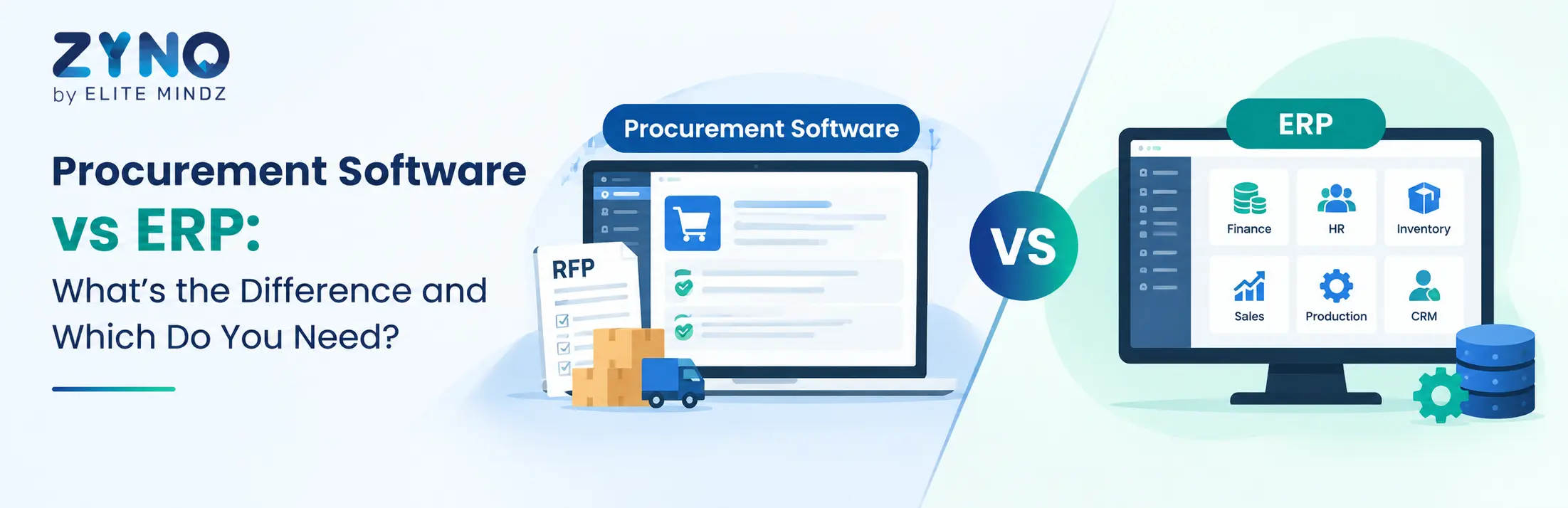
Procurement software manages the buying workflow: purchase requests, approvals, supplier quotations, purchase orders, receiving, invoice checks, and spend visibility. A garment ERP may also cover production planning, costing, BOM, and inventory. This article focuses on procurement software for factories whose immediate priority is stronger purchasing control. Confirm any accounting, inventory, or ERP integrations required for your existing setup.
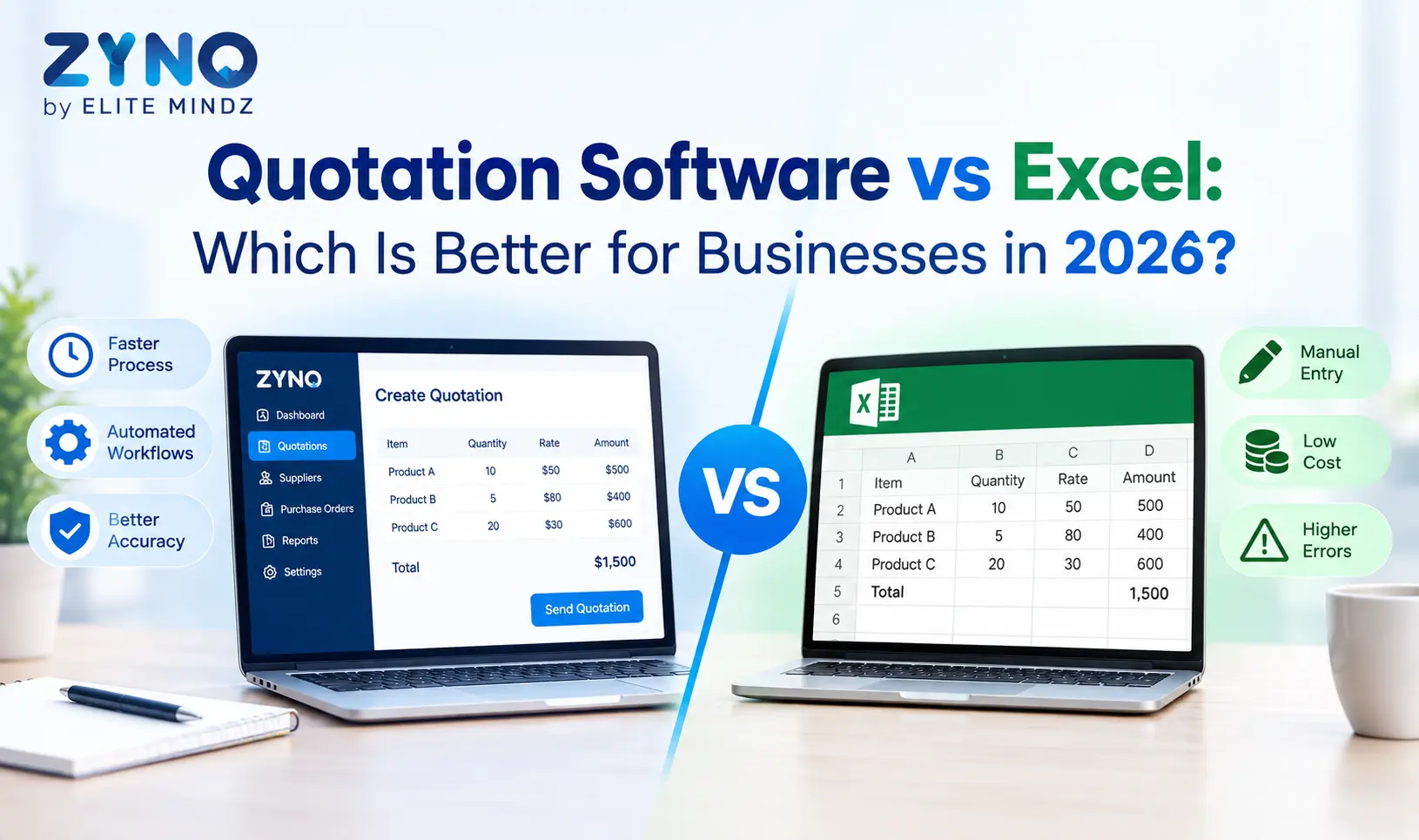
Procurement Software vs Excel vs ERP: What Changes in the Buying Process?
| Comparison | Excel and email | Procurement software | Garment ERP |
|---|---|---|---|
| Built to fix buying problems (quotes, approvals, POs) | No, manual work | Yes, this is its main job | One module among many |
| Live view of open POs and deliveries | Only if someone updates it | Yes | Yes, if the purchasing module is set up |
| Usual project size | None, but time-consuming | Usually lighter, can start with one department | Usually a larger project covering production, costing, and inventory |
| Best when | Very few suppliers and orders | Your pain is quotes, approvals, POs, and late deliveries | You want to replace several systems at once |
Do I need an ERP before I buy procurement software?
No. If your immediate problem is supplier quotations, approvals, purchase orders, or late and short deliveries, you can evaluate procurement software first. Ask vendors how it will connect with your accounting, inventory, or production systems, rather than assuming you need to replace those systems.
Why Does Fabric and Trims Buying Get Out of Control?
Material purchasing deserves close attention because fabric and trims decisions can materially affect a garment factory’s cost base. The International Labour Organization’s 2020 guide for garment factories notes that materials can account for about two-thirds of total costs in factories that procure their own fabric. In a separate example, Cambodia Investment Review’s report on Grand Twins International states that materials accounted for 74% of cost of sales in Q1 2021; the company’s pre-tax profit fell 49.77% year over year as raw-material prices increased. These figures describe a specific cost guide and one company’s reported quarter, not a universal percentage for every garment factory.
These figures are not a forecast for your factory. They show why purchasing decisions deserve discipline: comparing supplier quotations, recording approval decisions, tracking open purchase orders, checking received quantities, and reviewing spend can help buyers identify where costs and delivery risks need attention. Procurement software supports that control by keeping purchasing information connected and auditable.
1. Fabric quotes spread across many suppliers
Each mill or trader gives different prices, minimum order quantities (MOQ), payment terms, and delivery dates. When the quotes sit in email and WhatsApp, nobody is sure which price was approved.
2. Trims and packaging bought in small, urgent lots
Buttons, zippers, labels, thread, cartons, and polybags come from many vendors. One missing trim can stop a whole line, so buyers often rush and pay more.
3. Lowest price is not always the best price
A supplier with the lowest rate may have a high MOQ or a late delivery date. Late fabric means late shipments. Comparing quotes side by side shows the real cost.
4. Approvals that get stuck
Requests wait on someone's desk or phone. Buyers cannot see which POs are open, approved, or still pending.
5. Ordered quantity does not match received quantity
You order 5,000 buttons and 4,800 arrive. Without a goods receipt linked to the PO, short supply and invoice mismatches are easy to miss.
These problems become harder to control when buying information is scattered. Procurement software gives the team a more consistent record of requests, supplier offers, approvals, orders, receipts, and purchasing spend.
Real Buying Problems and How Procurement Software Fixes Them
Here is how common garment-buying problems map to ZYNO Procurement workflows, from supplier quotations and approvals to purchase orders, goods receipt, and spend visibility.
| Problem on the floor | What it costs you | Fix |
|---|---|---|
| Fabric quotes live in email and WhatsApp | You cannot prove which price was approved | Quotation Management |
| Trims requested by phone, no record | Wrong or duplicate orders, rush buying at higher prices | Purchase Request with approvals |
| Supplier says "it was dispatched" but nobody can check | Line stops waiting for zippers or labels | Vendor Portal for delivery updates |
| Ordered 5,000, received 4,800, bill for 5,000 | You pay for goods you did not receive | GRN plus Procure to Pay |
| Prices for repeat items keep changing | Margins shrink with no warning | Spend Analytics and Contract Management |
Still Chasing Fabric and Trims Suppliers?
See how ZYNO Procurement can bring supplier quotations, purchase approvals, PO tracking, and goods receipt into one connected buying workflow for your garment factory.
Book a Garment Procurement Demo Explore Quotation ManagementA day without procurement software (illustrative example)
This is a hypothetical example, not a customer result.
A shirt factory gets a 10,000-piece repeat order. The merchandiser messages two fabric mills on WhatsApp and emails a trims supplier. One mill replies tomorrow, the other quotes by voice note. The approver is travelling and says "go ahead" by phone. Three days later, nobody can say which quote was accepted. The zippers arrive 800 short and the buyer finds out on the cutting floor.
Now picture the same order in one system: one request, one approval record, three quotes side by side, one PO, one goods receipt that flags the 800 shortfall the same day it arrives. That is the gap procurement software closes.
7 Features to Look For in Garment Procurement Software
Use this as your checklist when you compare vendors for garment or apparel procurement software. Focus on the buying tasks your team needs to control, from fabric and trims sourcing to approvals, purchase orders, and goods receipt.
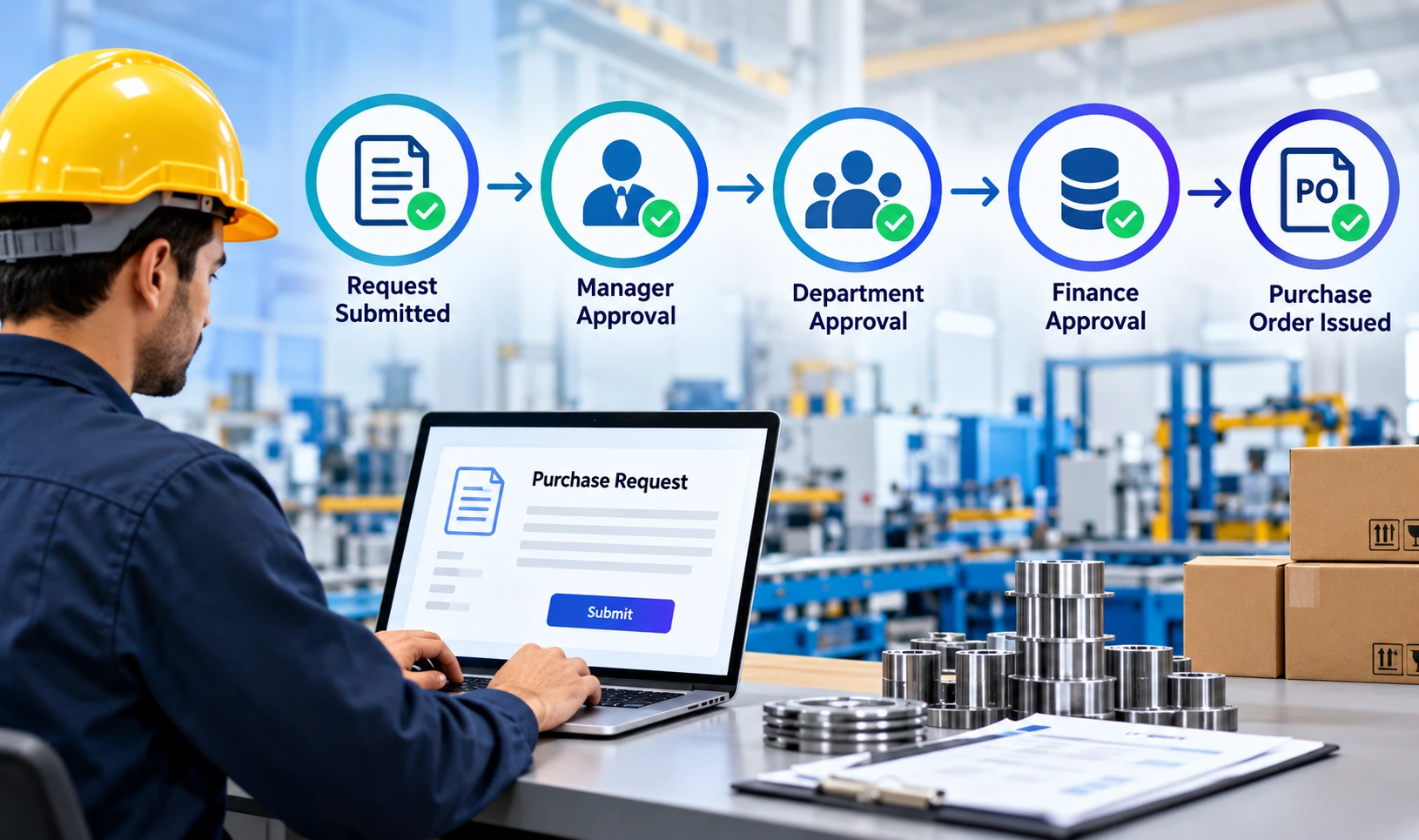
1. Purchase requests and approval workflow
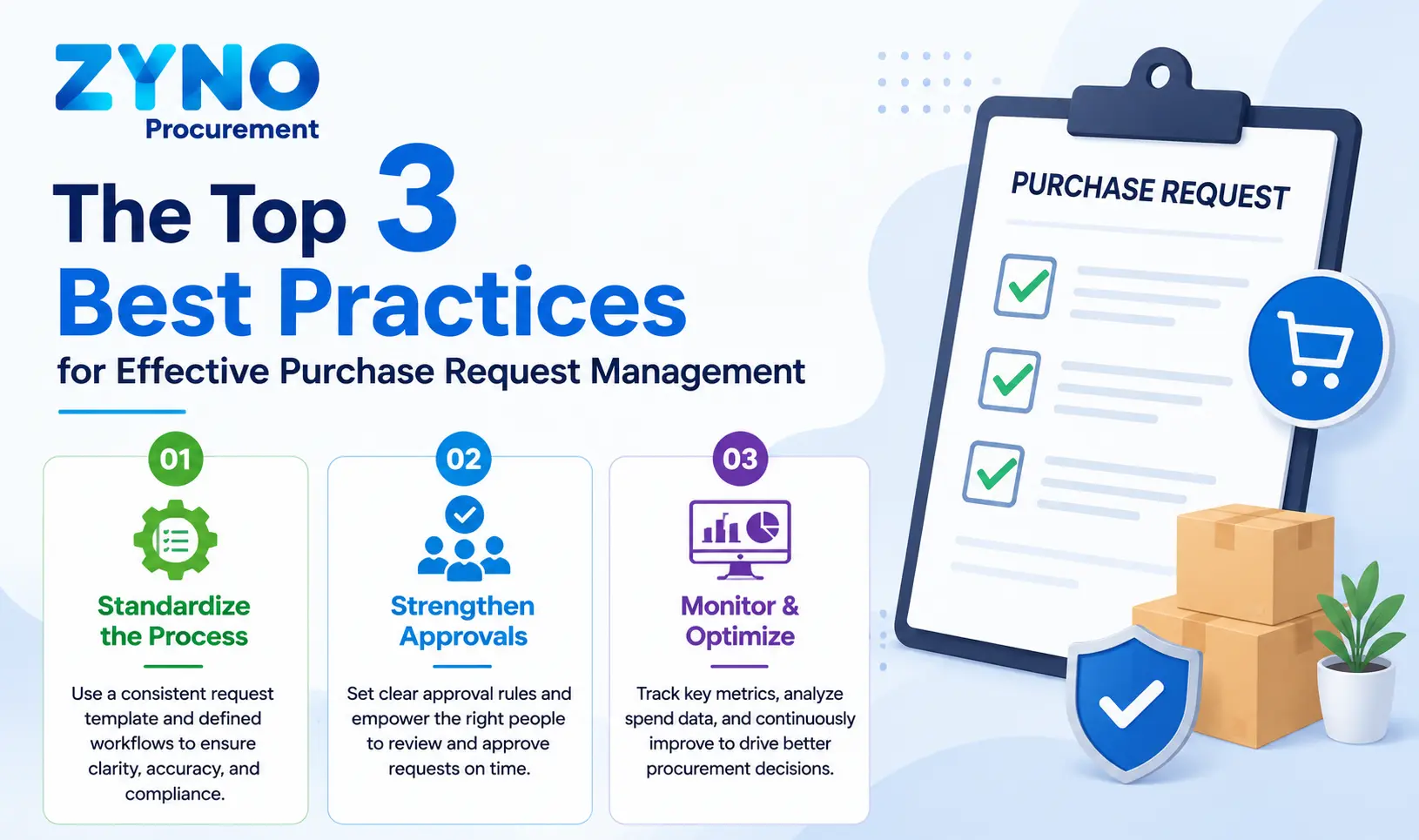
Every material request is raised in the system, with item, quantity, specification, and required date. It goes to the right approver based on your rules. You can see what is pending, approved, or rejected.
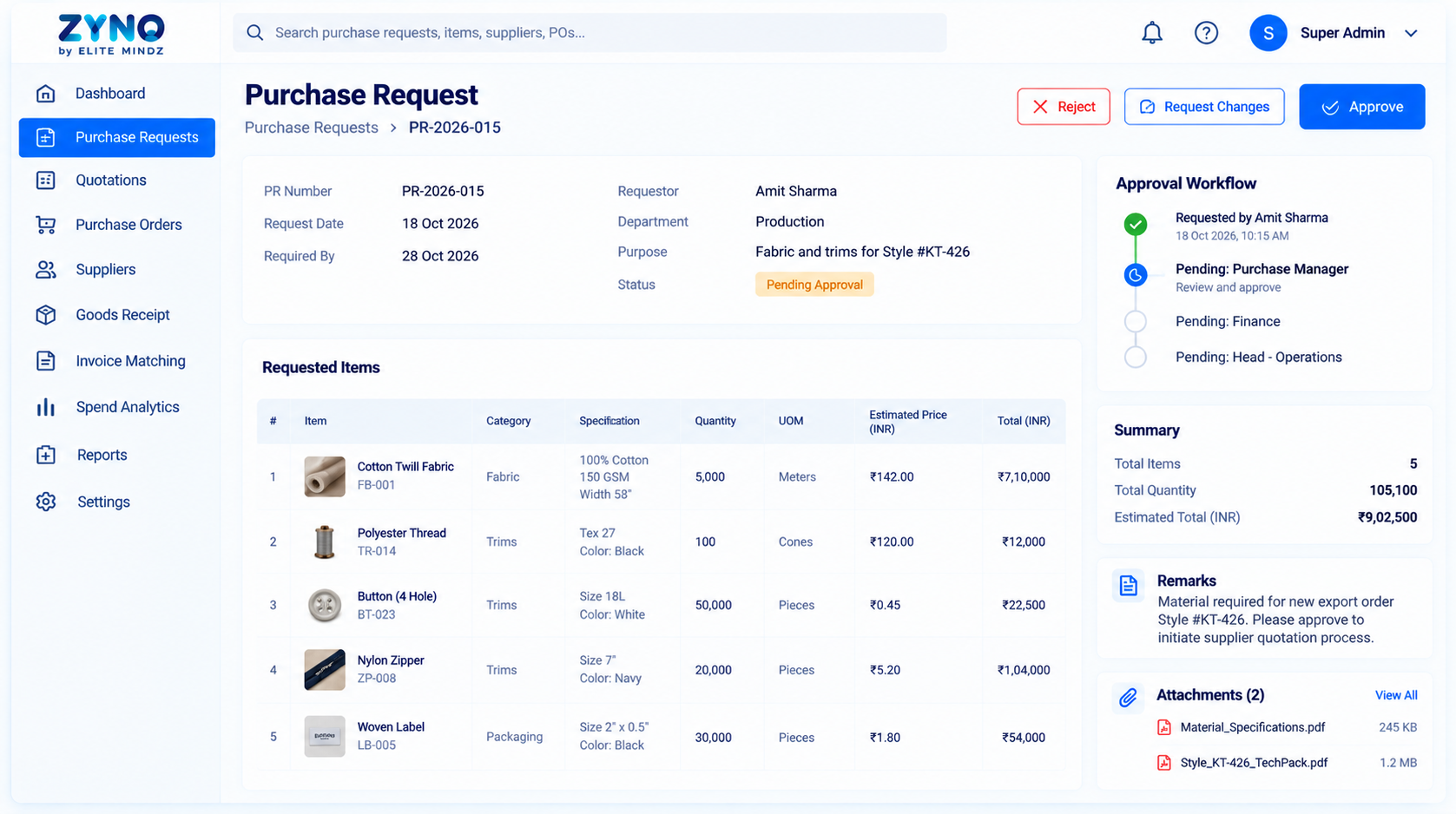
See it in action: ZYNO Purchase Request software
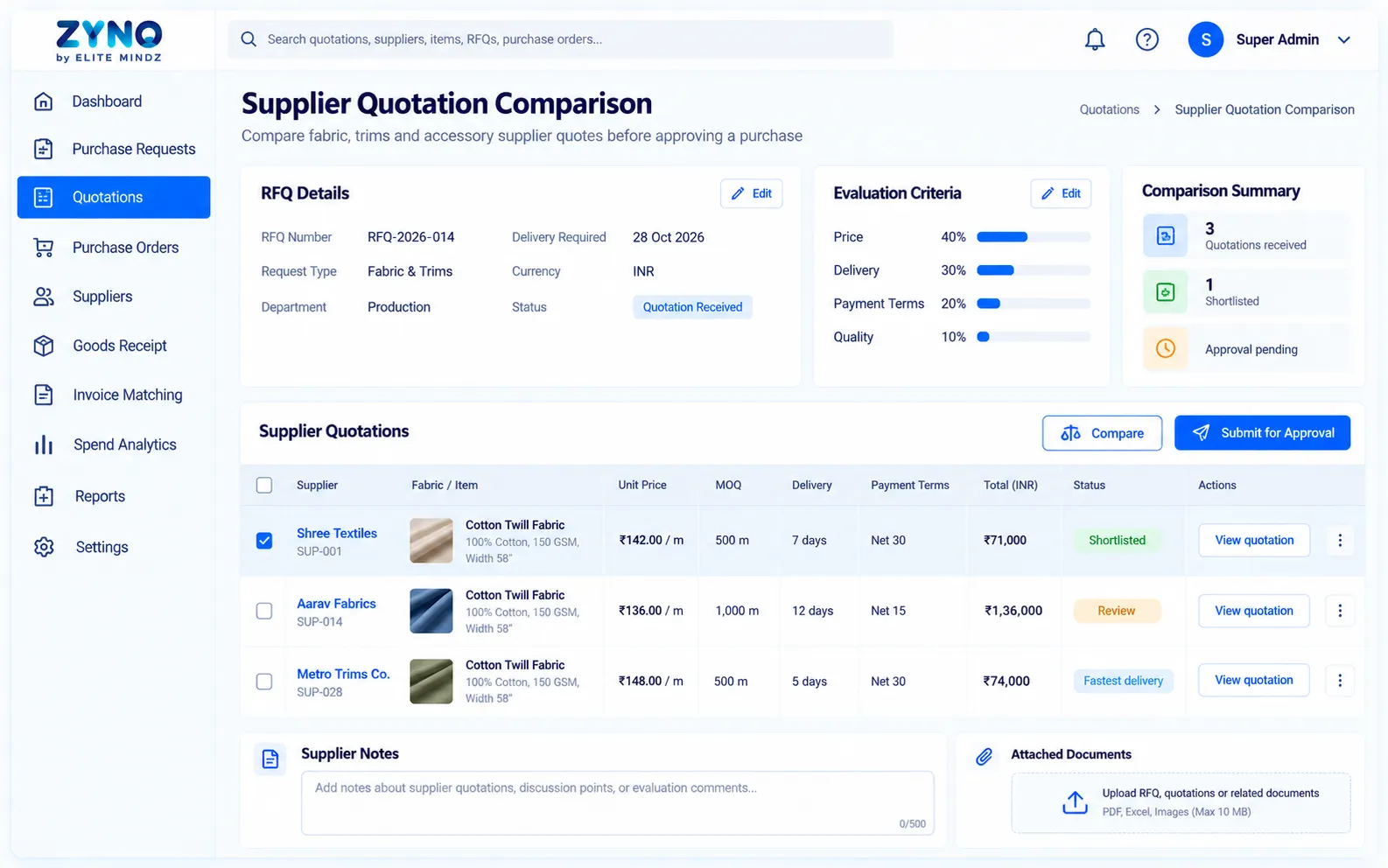
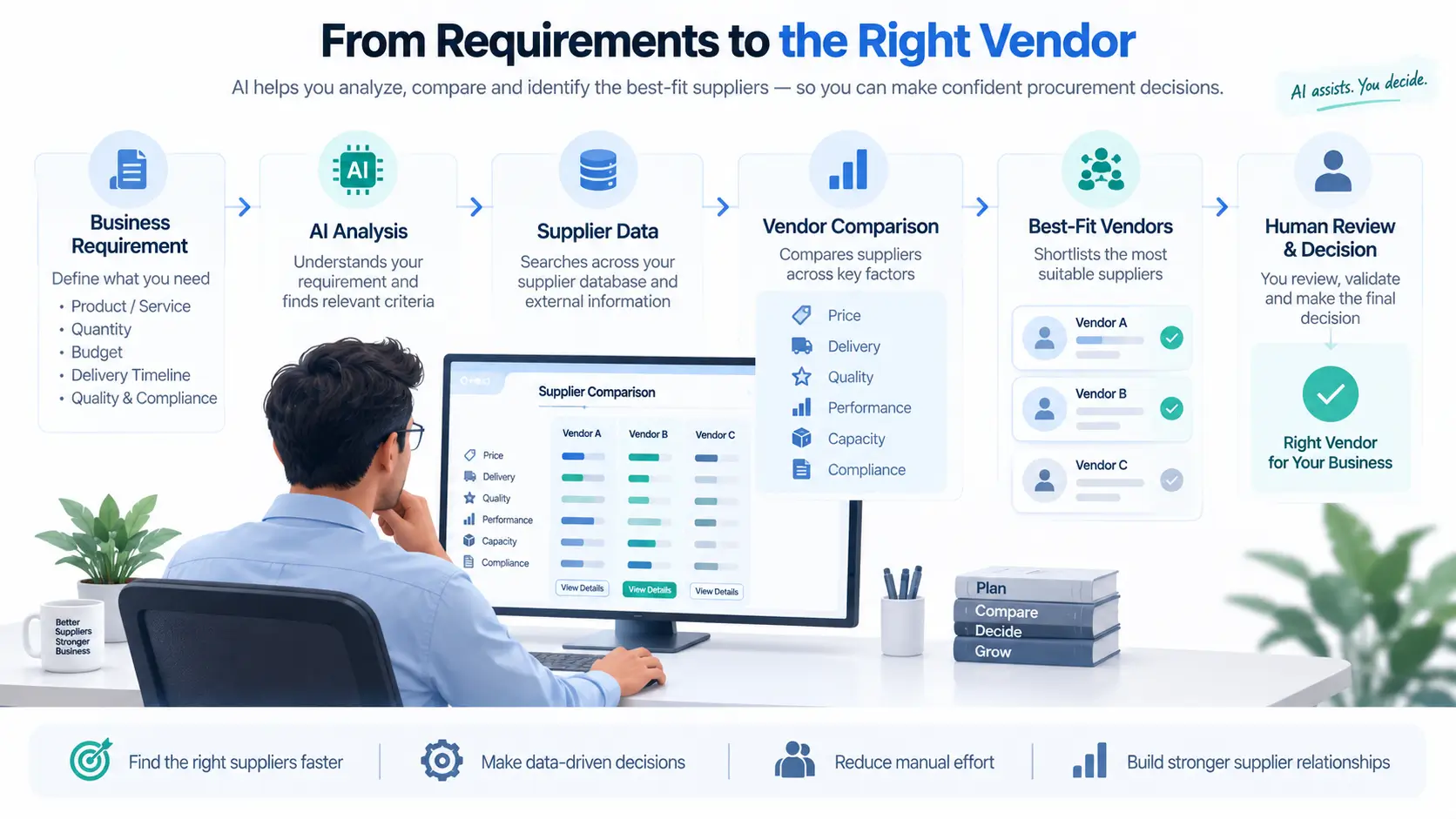
2. Supplier quotation comparison (RFQ)
Send a request for quotation to several suppliers. Compare price, quantity, delivery date, and terms in one view. Keep a record of why you picked a supplier.
See it in action: ZYNO Quotation Management
3. Purchase order creation and tracking
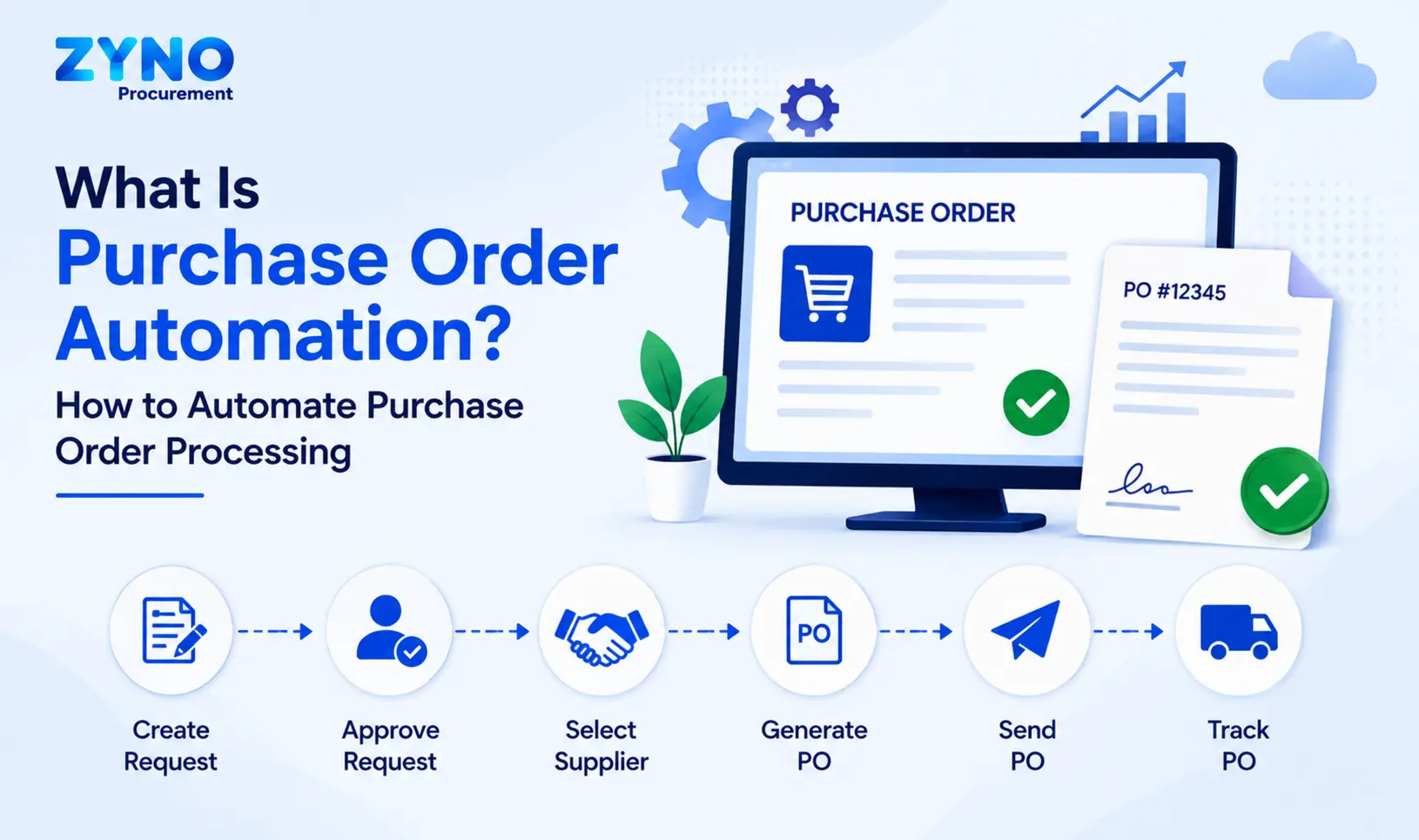
Create POs from approved requests. Track status: sent, confirmed, partly received, closed. Keep revision history when quantities or prices change.
4. Supplier records
Keep contacts, past quotes, prices, and order history in one place, so repeat orders are faster and fairer.
See it in action: ZYNO Vendor Management
5. Goods receipt note (GRN)
Record every delivery against its PO. Spot short supply, extra supply, and partial deliveries right away.
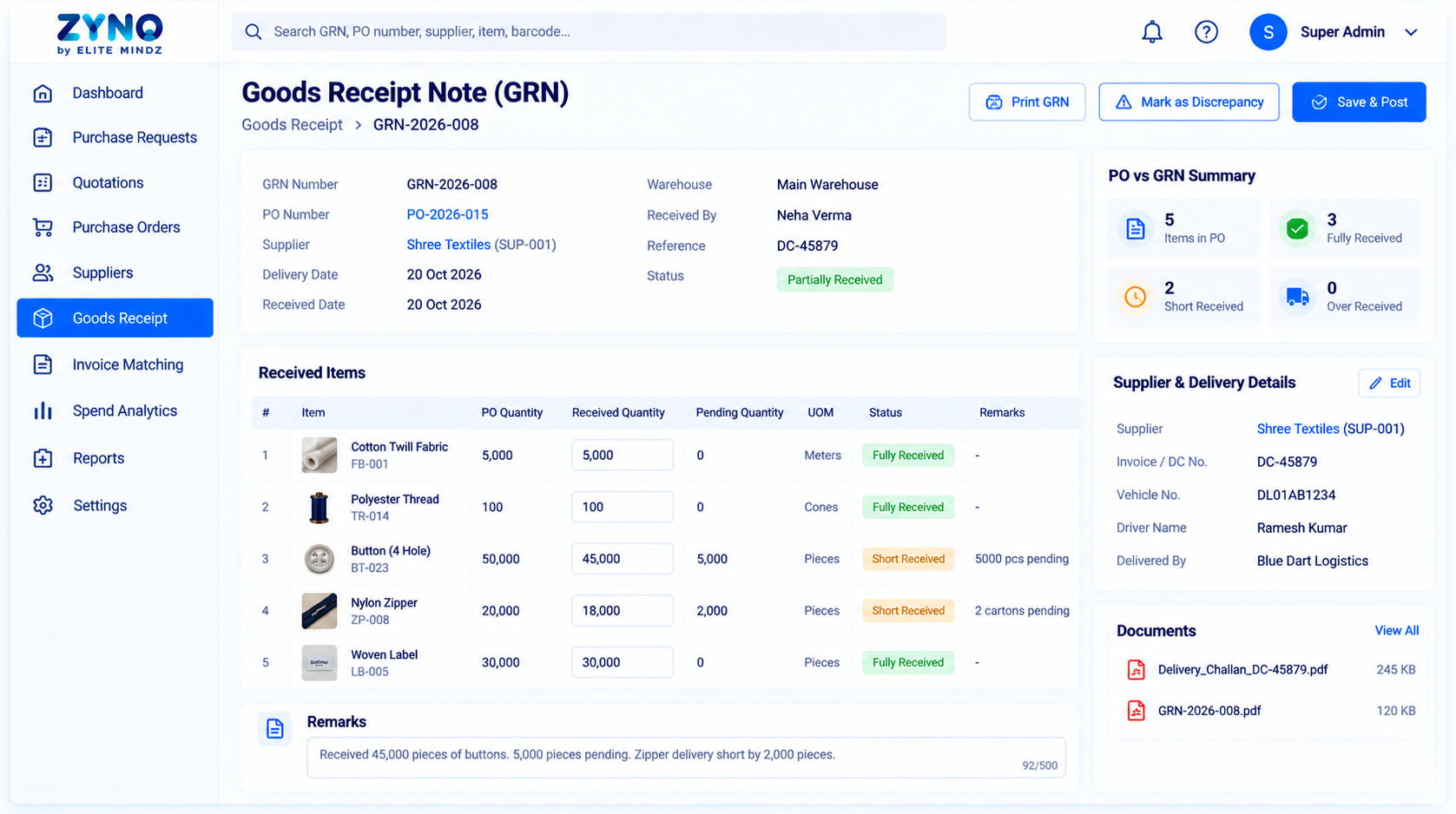
See it in action: ZYNO Goods Receipt Note (GRN)
Once goods are received, stock moves into your store. ZYNO Inventory Management keeps live stock visible, and our garment inventory management software guide explains how to manage fabric and trims stock after purchase.
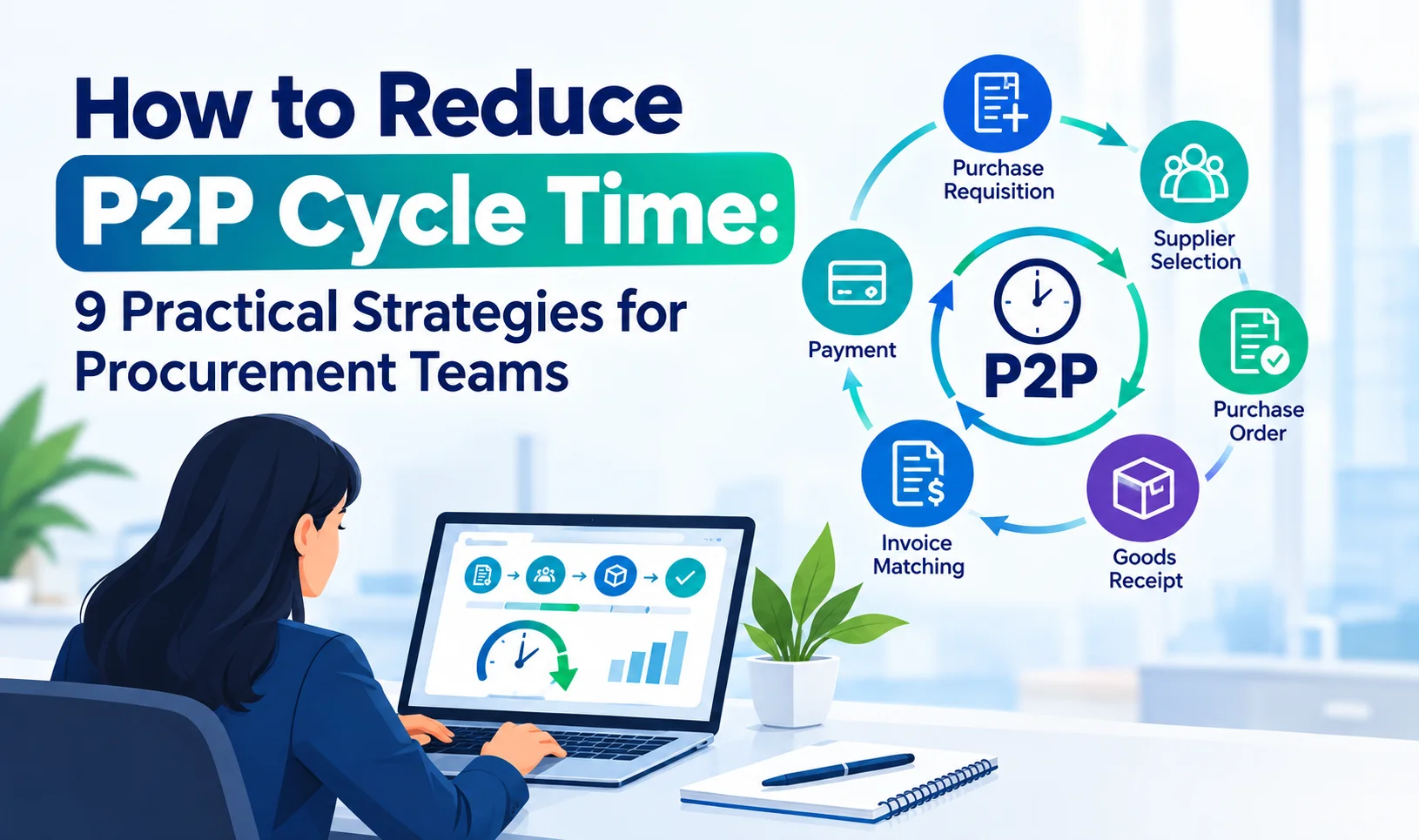
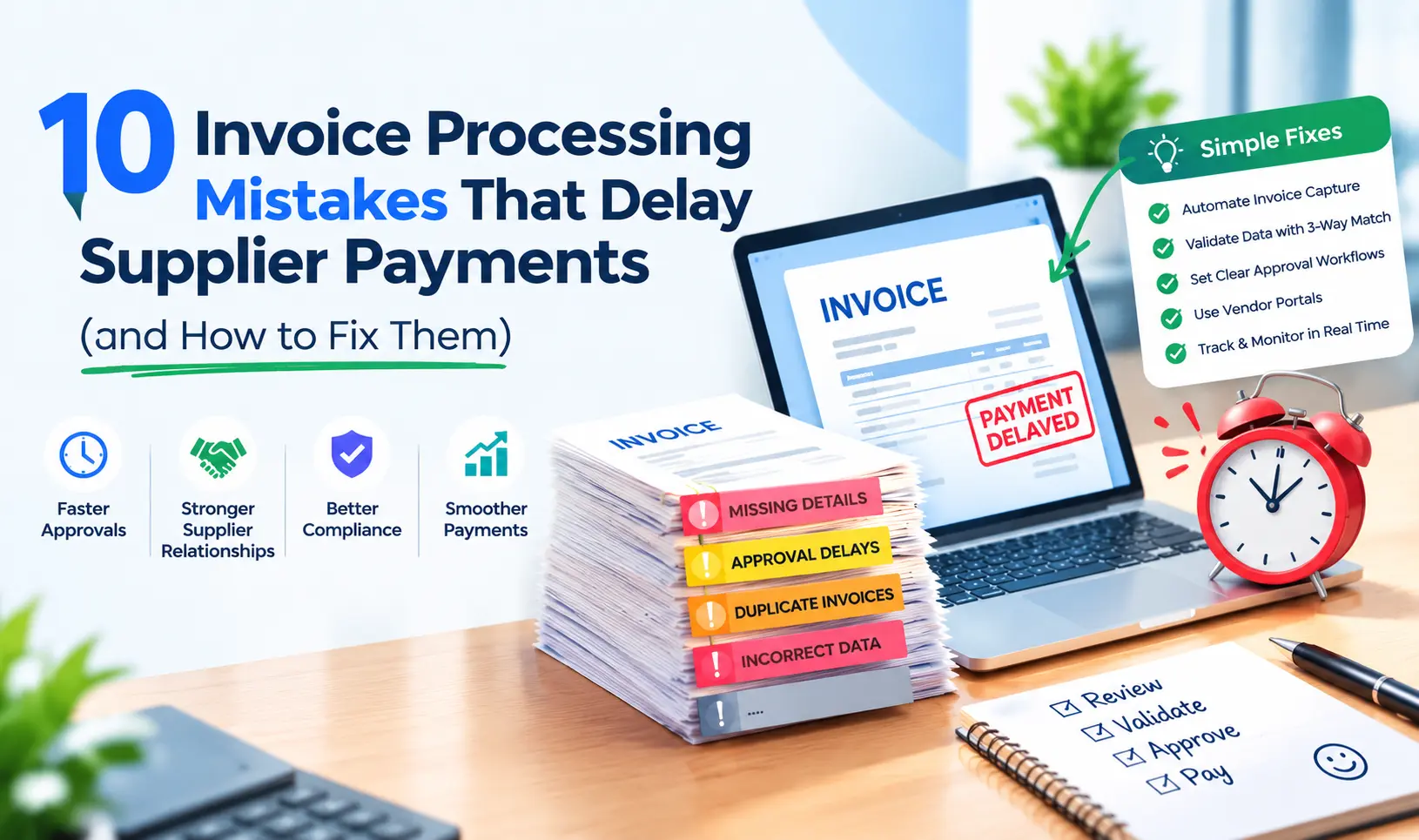
6. Invoice matching and procure-to-pay
Finance checks the supplier invoice against the PO and the receipt before payment. This can help reduce disputes and duplicate payments.
See it in action: ZYNO Procure to Pay
Supplier bills are paid through ZYNO Account Payable, which speeds up invoice processing.
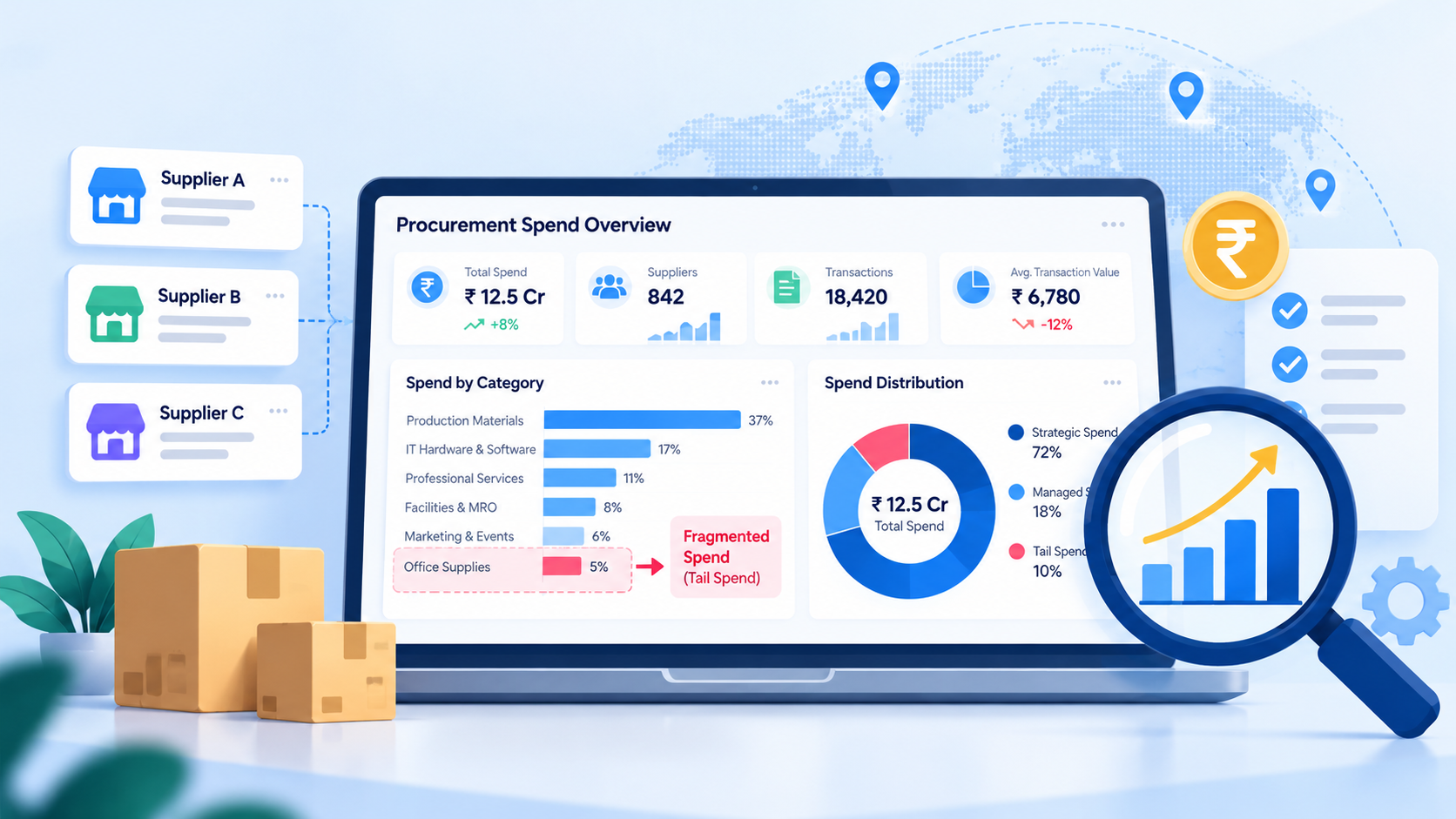
7. Spend reports
See spend by supplier, by material category, and by period. Know which POs are still open and which purchases went over budget.
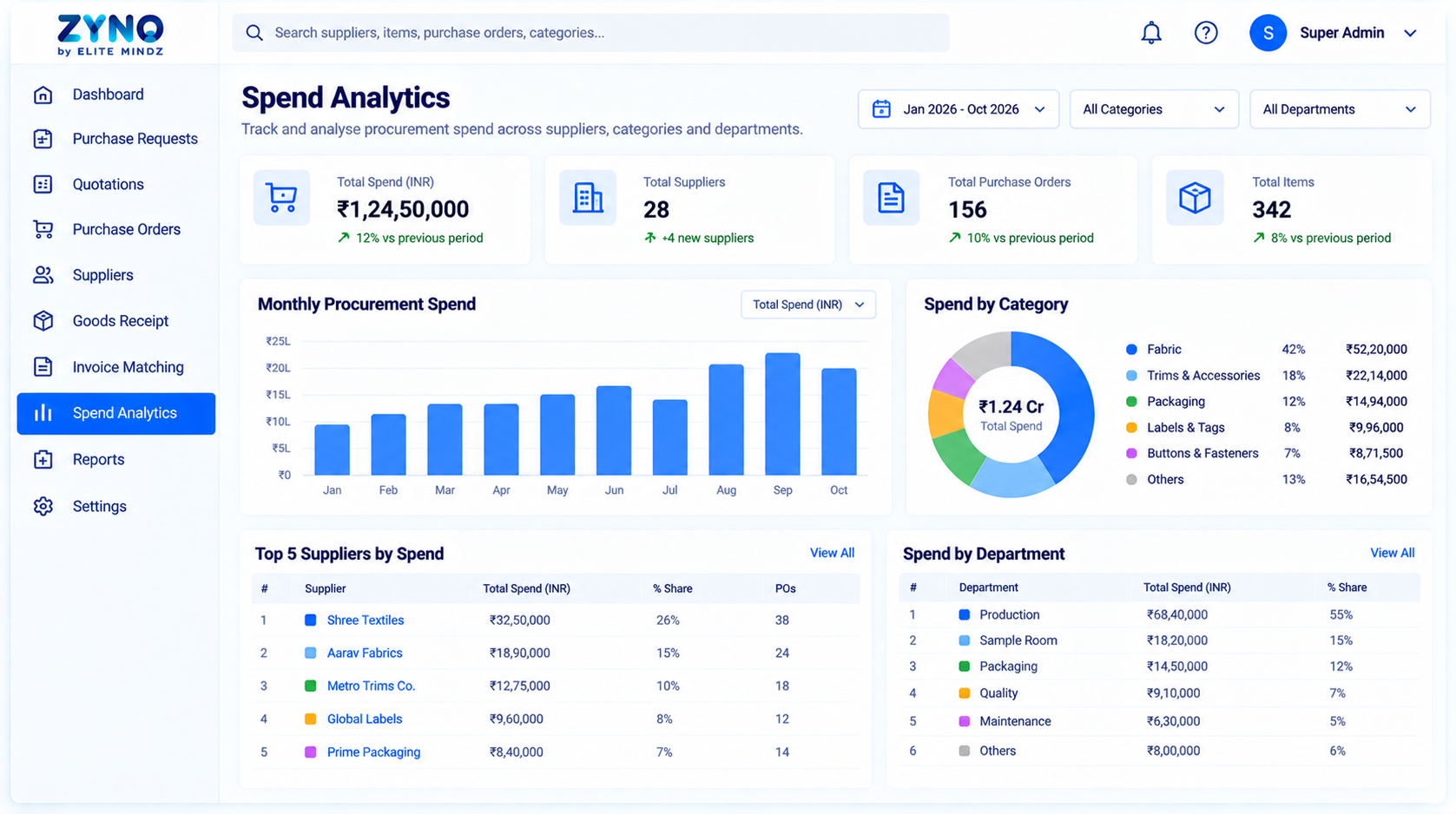
See it in action: ZYNO Spend Analytics
See the Complete Purchase-to-Payment Workflow
Walk through a real fabric or trims purchase, from request and supplier quotation comparison to purchase order, goods receipt, and invoice checks. Evaluate the workflow against your factory’s current process.
Request a Personalised Demo Explore ZYNO ProcurementBeyond the Basics: Features Strong Procurement Software Adds
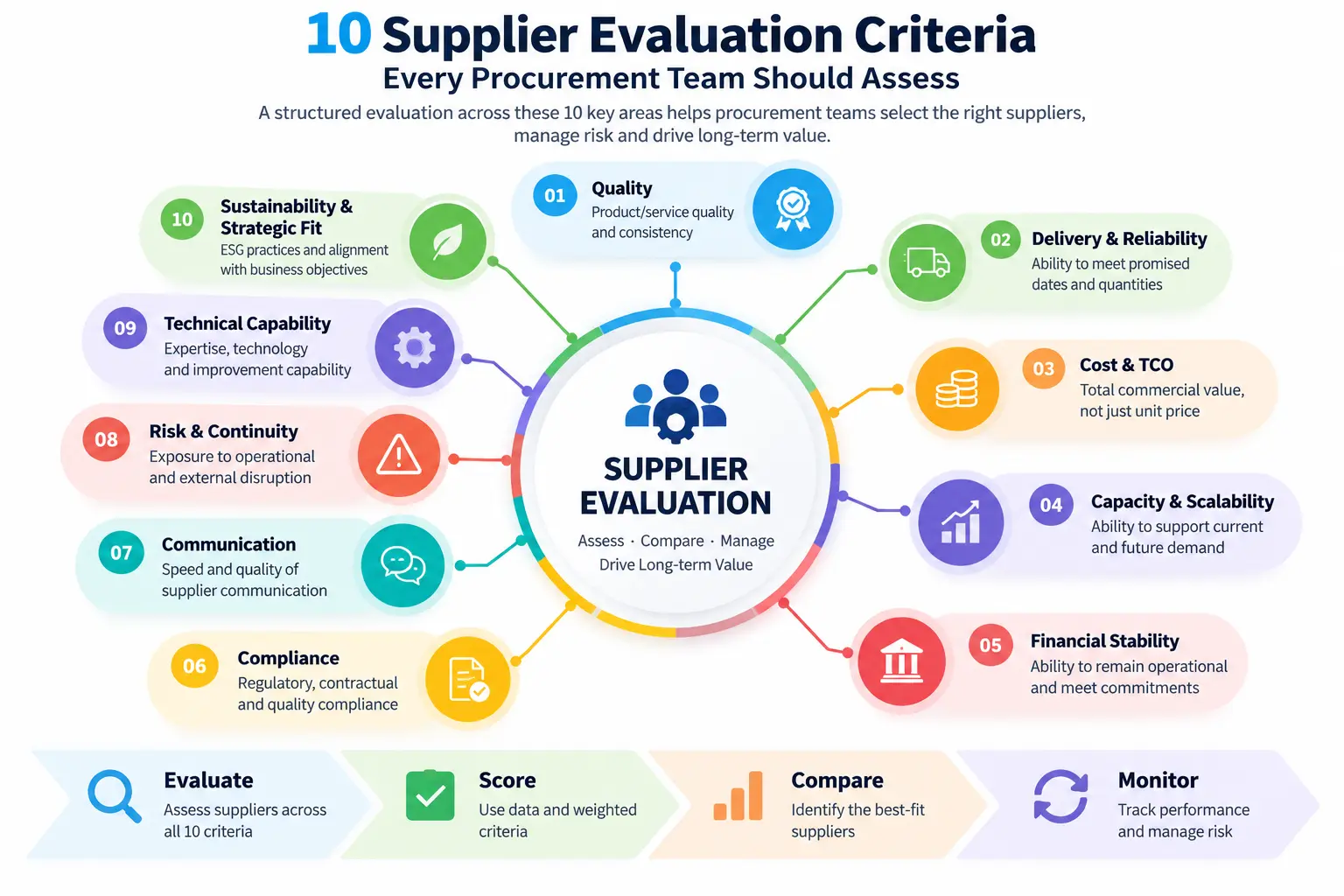
Purchase orders are only one part of procurement control. Supplier communication, sourcing events, contract terms, and spend analysis also affect how consistently a factory buys.
Vendor portal: stop chasing suppliers on WhatsApp
A vendor portal lets suppliers confirm POs, share delivery dates, and send documents themselves. Your buyers spend less time on follow-up calls. See ZYNO Vendor Portal.
RFQ vs RFP: use the right one
An RFQ (request for quotation) asks suppliers for a price on an item you already know, such as 5,000 metres of a specific fabric. An RFP (request for proposal) is for bigger or more complex buys, such as choosing a new packaging partner or a yearly trims supplier. See ZYNO RFP for the formal route and Quotation Management for everyday quotes.
Contract management for rate agreements
Many factories agree yearly rates with mills and trim suppliers. Keeping those contracts, prices, and renewal dates in one place helps buyers avoid paying above the agreed rate. See ZYNO Contract Management.
Machine spares and factory assets
Sewing machine parts, needles, and maintenance items are also purchases. If you want to track these assets together with buying, look at ZYNO Asset Management.
Tasks and timelines for sourcing projects
Onboarding a new buyer's trims or sourcing for a new season involves many steps and people. ZYNO Project Management helps track tasks, timelines, and resources.
How It Works: A Garment Factory Example
This is an illustrative example, not a customer result.
A factory gets a new export order and needs fabric and zippers.
| Step | What happens | What you get |
|---|---|---|
| 1. Request | Production raises a request for 8,000 metres of fabric and 6,000 zippers | One record with quantity, spec, and date |
| 2. Approval | The purchase head approves it in the system | A clear approval trail |
| 3. Quotes | Three fabric suppliers and two zipper suppliers send quotes | All offers stored in one place |
| 4. Compare | Buyer checks price, MOQ, and delivery date side by side | A decision you can explain later |
| 5. PO | The selected supplier gets the PO | Status is visible to everyone |
| 6. Receive | Stores records the delivery against the PO | Short or extra supply is flagged |
| 7. Pay | Finance matches invoice, PO, and receipt | Fewer billing disputes |
Want to see this exact flow on a live screen? Book a ZYNO Procurement demo and ask us to walk through your own purchase.
Best Procurement Software for Garment Manufacturers Compared
Garment factories usually look at four options. ZYNO Procurement is a procurement platform built around buying. WFX, TRIMIT, and Matiyas are garment ERPs, where purchasing is one module inside a bigger system. This list is based on what each vendor publishes. Prices, setup effort, and fit differ for every factory, so check details with each vendor.
1. ZYNO Procurement by Elitemindz
Best for: Garment factories and exporters that want to control purchasing without replacing their whole ERP.
ZYNO Procurement covers purchase requests, quotation management, vendor management, purchase orders, goods receipt notes, procure-to-pay, accounts payable, and spend analytics.
Why teams choose it: One connected buying flow, from request to payment, that you can show to your purchase team, stores, and finance in a single demo.
Good to know: ZYNO Procurement focuses on buying. If you also need production-side tools such as shade and lot control, style-size-colour matrices, or BOM-based planning, ask the team how ZYNO would work alongside your current production system.
2. WFX Apparel ERP
Best for: Apparel businesses that want purchasing built into an apparel ERP.
WFX publishes an apparel procurement module with supplier price lists, material booking, budget control, cost comparison, and purchase order emails.
Check before buying: Modules needed, implementation scope, total cost, and integrations. WFX Apparel Procurement
3. TRIMIT Fashion & Apparel ERP
Best for: Fashion and apparel companies using, or open to, Microsoft Dynamics 365 Business Central.
TRIMIT adds fashion and apparel features to Business Central, including purchasing, supplier pricing, demand planning, and variants.
Check before buying: Licence and implementation cost, Business Central requirements, and local support. TRIMIT Fashion and Apparel ERP
4. Matiyas Garment Manufacturing ERP
Best for: Garment makers that want procurement inside a manufacturing-focused ERP.
Matiyas describes supplier records, purchase requisitions, purchase orders, price comparison, quotation analysis, supplier delivery performance, and trim procurement planning.
Check before buying: Which modules are included and how they fit your garment categories. Matiyas Garment ERP
Side-by-side summary
| Comparison | ZYNO Procurement | WFX | TRIMIT | Matiyas |
|---|---|---|---|---|
| Type | Procurement platform (focus: buying) | Apparel ERP | Apparel ERP on Business Central | Garment ERP |
| Modules listed separately for buying tasks | Yes, on the product site | Confirm in demo | Confirm in demo | Confirm in demo |
| Purchase requests and approvals | Yes, published module | Confirm in demo | Confirm in demo | Requisitions published |
| Quotation comparison | Yes, published module | Cost comparison published | Supplier pricing published | Quotation analysis published |
| Purchase orders | Yes | Yes | Yes | Yes |
| Goods receipt (GRN) | Yes, published module | Confirm in demo | Confirm in demo | Confirm in demo |
| Vendor portal | Yes, published module | Confirm in demo | Confirm in demo | Confirm in demo |
| Procure-to-pay and spend reports | Yes, published | Budget control published | Purchasing analytics published | Confirm in demo |
| Production planning, BOM, shade and lot | Not the focus; pair with your production system | Apparel-focused | Apparel-focused | Garment-focused |
Based on each vendor's public information, not hands-on testing. "Confirm in demo" means we could not verify it from published pages.
Comparing vendors right now? Request a ZYNO Procurement demo and bring your toughest purchase scenario.
How to Choose the Right Software for Your Factory
Small factory or many suppliers?
If you have a few suppliers and simple orders, Excel plus accounting software may still work. Look at dedicated software when you have many requesters, approval levels, suppliers, or repeat orders.
Domestic or export orders?
Export orders usually mean tighter delivery dates and more coordination. Ask each vendor to demo your real export purchase, not a generic one.
Procurement software or full ERP?
Choose procurement software if your pain is buying: quotes, approvals, POs, deliveries, and supplier bills. You can start with one department, see the results, and add more later. Choose a garment ERP only if you also want to replace production planning, BOM, costing, and inventory systems in one project. Fixing buying first makes sense when materials are your biggest cost.
Questions to ask every vendor
- Can it connect to our accounting or ERP software?
- Can we set approval rules by amount and department?
- Can we see all open POs and pending deliveries?
- Can we import our supplier and item lists?
- How long is setup, what training is included, and what does support cost?
- Which features need extra modules?
How much does procurement software cost, and how long does setup take?
Prices differ by vendor, so ask for a written quote. Cost usually depends on:
- Number of users
- Modules you choose (for example, purchase requests only, or the full procure-to-pay flow)
- Cloud or on-premise hosting
- Integrations with your accounting or ERP system
- Training and support
A simple rollout has six steps: list your suppliers and items, set approval rules, import data, train users, pilot with one department, then go live. Ask every vendor for a timeline in writing, and ask what is included in the price.
For factories whose main issue is purchasing control, a procurement platform can be a focused first step. Start with the workflows causing the most friction—such as quotation comparison, approvals, open POs, or receipt discrepancies—and confirm integration needs before rollout.
Why Garment Manufacturers Choose ZYNO Procurement
- Built around the real buying cycle: request, approval, quotation, PO, GRN, invoice, and report in one flow.
- Easy to see and prove: Every module has its own page, so you can check what it does before you talk to anyone.
- Start with buying: Modules are listed separately on the product site, so you can focus on your biggest buying problem first.
- Demo on your own scenario: Bring one real purchase, your approval rules, and the reports you need.
What to bring to your demo
- One real purchase (for example, fabric for a recent order)
- Your current approval steps
- Your supplier list format
- The reports your management asks for
Book a ZYNO Procurement demo and bring one real fabric or trims purchase. Ask the team to walk through the request, supplier quotations, approval, purchase order, goods receipt, and invoice-check workflow using your buying scenario.
Common Worries Before Buying Procurement Software
"My team will not use it."
Start small. Begin with purchase requests and approvals for one department, then add quotations and goods receipt once the team is comfortable. Learn how approvals work in our guide to the manufacturing purchase approval workflow.
"We already have accounting software."
Procurement software covers the buying steps before a bill reaches your accounts team. Ask the vendor how it connects with your accounting system, so approved POs and invoices do not need to be typed twice.
"It will take months to set up."
A pilot with one department keeps the first rollout small. Ask for a written timeline before you sign.
"Our suppliers will not log in."
You do not have to switch every supplier at once. Ask how suppliers receive POs and how the vendor portal can be introduced step by step.
"Is our data safe?"
Ask about hosting, user roles, who can approve what, and backups. A good vendor answers these clearly in the demo.
How to Estimate What Procurement Software Could Save You
Skip generic savings claims. Use your own numbers from the last 20 purchases:
- Price gap: Yearly material spend × the percentage you could save by comparing three quotes instead of one or two. Our guide on how to compare supplier quotations shows the method.
- Rush buying: Urgent orders per month × the extra cost of each rush order.
- Billing errors: Invoices paid for goods that were short or not received.
- Staff time: Hours per week spent chasing quotes and approvals × the hourly cost.
Hypothetical example, not a customer result: if a factory spends ₹10 crore a year on materials and better quote comparison trims 1% off prices, that is ₹10 lakh a year. Your own gap may be smaller or larger, so measure it before you decide.
Want to run this check on your own purchases? Book a ZYNO Procurement demo and bring your last 20 purchases.
Frequently Asked Questions
Final Takeaway
The right procurement software gives you one clear record from purchase request to invoice check. You can compare quotes faster, approve faster, and see which orders are open and what has arrived.
Ready to Simplify Garment Procurement?
Bring one real fabric or trims purchase and see how ZYNO Procurement can help your team manage requests, compare supplier quotations, route approvals, track purchase orders and record goods received.
Book a ZYNO Procurement DemoExplore ZYNO ProcurementRelated reading
Industry cost sources: ILO / Asia Garment Hub, “Reducing costs: Types of costs in the garment sector”; Cambodia Investment Review, “Grand Twins International Q1 2021 results”. The figures are contextual examples, not universal industry averages.


.webp)







.webp)


.webp)
.webp)
.webp)



.webp)
.webp)
.webp)
.webp)
.webp)


.webp)
.webp)
.webp)
.webp)


.webp)

.webp)
_converted.webp)

_converted.webp)
.webp)
.webp)
.webp)
.webp)

(1).webp)
.webp)
.webp)
(2).webp)
.webp)
.webp)
.webp)