




Procurement Software Trends in 2026: What to Expect
Read More →

×
Inventory management tracks stock levels, availability, and replenishment, while warehouse management focuses on storage locations, picking, packing, and dispatch. Businesses can use inventory management software to monitor stock across locations and warehouse management systems (WMS) to improve fulfilment accuracy and efficiency. Integrating both systems with procurement software helps ensure timely purchasing, better stock visibility, and smoother operations. ZYNO Procurement supports structured purchase requests, approvals, and purchase order management to improve replenishment workflows.
Businesses using ZYNO Books cut accounting time by 70% and stay 100% ZATCA-compliant — automatically.
Your inventory management system shows that you have 500 units in stock, and a customer places an order expecting quick delivery. However, the real challenges begin when your team starts processing the order. Which warehouse or shelf contains the required items? Are all 500 units actually available, or has some stock already been reserved for other customer orders? Is the inventory record up to date, or are there discrepancies between the system and the physical stock? How long will it take your warehouse team to locate the products, pick the correct quantities, pack them securely, and dispatch the shipment on time? Without real-time inventory visibility and a well-organized warehouse process, even a business with sufficient stock can experience order delays, picking errors, and dissatisfied customers.
This is where the difference between inventory management and warehouse management matters.
The two overlap, but they solve different problems. The right software depends on your product range, warehouse complexity, order volume, and the automation you need.
In this guide, we compare inventory management vs warehouse management, explain how they work together, and share software tools worth evaluating.
Inventory management is the process of tracking, controlling, and optimizing the stock a business buys, stores, produces, or sells. The goal is to hold enough stock to meet demand without locking up capital in excess inventory.
An inventory management system gives you visibility into stock levels, stock movements, purchase needs, and availability across one or more locations.

Inventory management software helps businesses maintain accurate stock records, track inventory across multiple locations, and prevent stock shortages.Automated reorder alerts and demand forecasting support timely replenishment and reduce excess inventory.Integrated purchasing and sales workflows improve coordination between suppliers, inventory teams, and customer orders.
Gain better control over purchasing, stock replenishment, and business operations with smarter procurement workflows.
Manufacturers, wholesalers, distributors, retailers, and e-commerce businesses, especially those managing stock in more than one location. For example, a distributor with five warehouses needs to know which location can fulfil an order before accepting it. Inventory management provides that visibility and supports stock transfer and replenishment decisions.
Warehouse management coordinates the physical movement, storage, and handling of goods inside a warehouse or distribution centre. A Warehouse Management System (WMS) helps teams run daily operations accurately and efficiently.
Inventory management looks at stock across the business. A WMS looks at what happens inside the four walls: which bin, which zone, which picker, which shipment.
Businesses with high order volumes, many storage locations, multiple warehouse zones, or frequent stock movements. An e-commerce warehouse shipping hundreds of orders a day typically needs barcode-led picking, bin-level tracking, and dispatch coordination. Basic inventory software often can’t provide that level of detail.
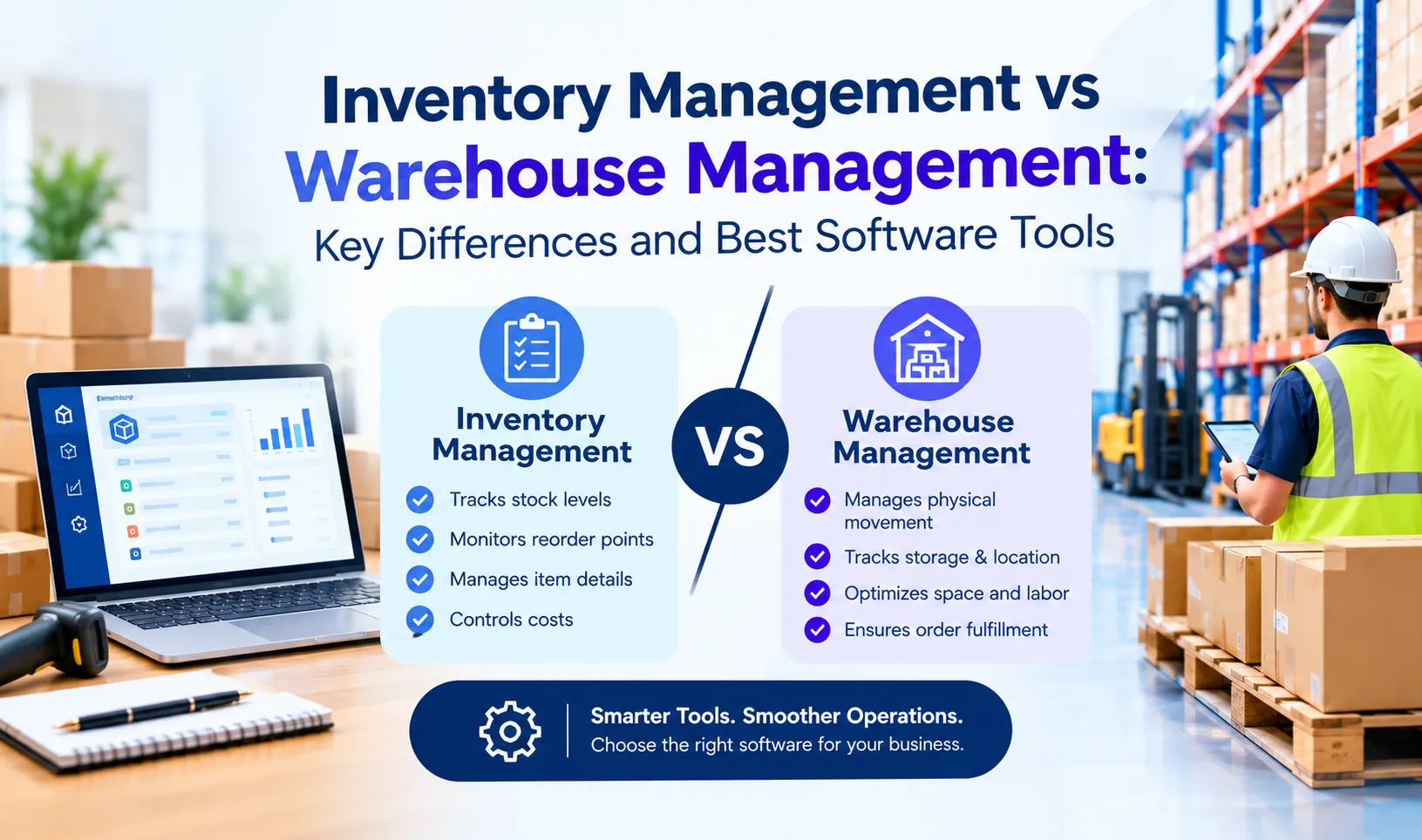
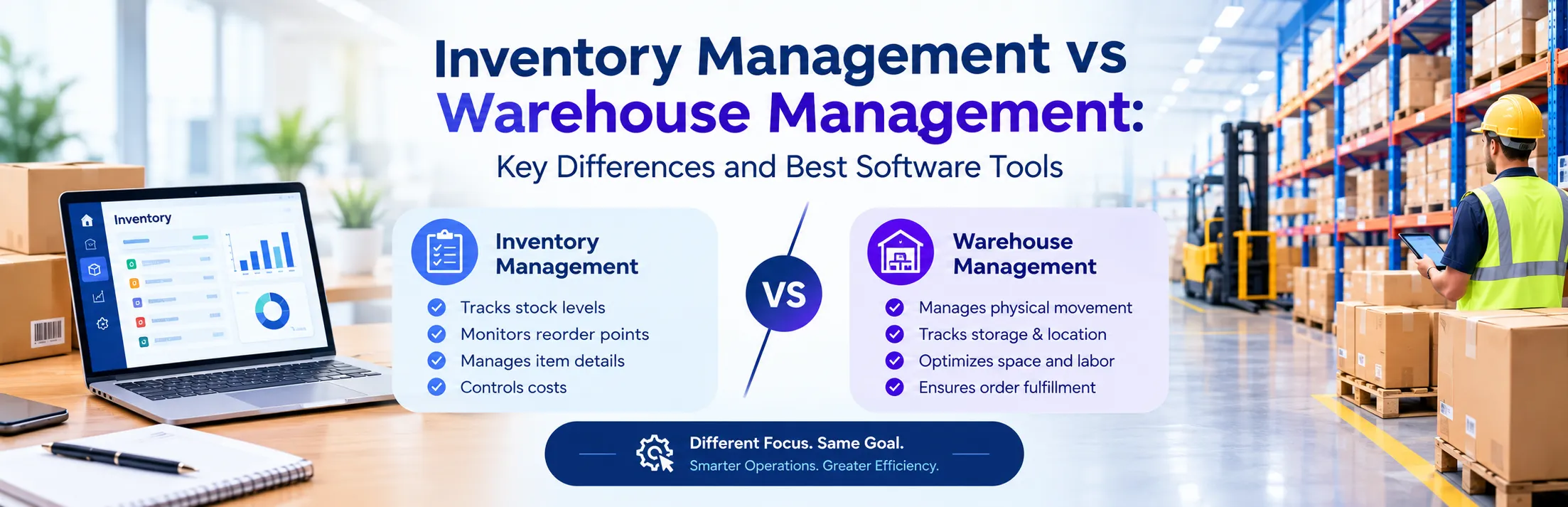
In short, inventory management controls what you have and when you need more. Warehouse management controls where it is and how it moves.
| Comparison Factor | Inventory Management | Warehouse Management |
|---|---|---|
| Primary Objective | Accurate stock levels and availability | Efficient warehouse operations and fulfilment |
| Main Focus | Stock availability and replenishment | Storage locations and stock movement |
| Stock Visibility | Tracks stock across multiple locations | Tracks stock by bins, shelves, and zones |
| Receiving | Records incoming inventory | Manages goods receiving and verification |
| Storage | Tracks stock by location | Manages shelves, racks, bins, and put-away |
| Replenishment | Supports reorder planning and purchasing | Manages internal stock movement and replenishment |
| Order Fulfilment | Tracks stock allocation and availability | Coordinates picking, packing, and dispatch |
| Demand Planning | Supports forecasting and reorder rules | Focuses on warehouse execution and operations |
| Common Users | Inventory controllers, planners, and purchasing teams | Warehouse managers, supervisors, and floor staff |
| Key Metrics | Stockout rate, inventory turnover, and days of inventory | Picking accuracy, order cycle time, and space utilization |
| Typical Software | Inventory management systems and ERP platforms | Warehouse Management Systems (WMS) |
Capabilities vary by product. Some inventory tools include basic warehouse workflows, and many modern WMS platforms include strong inventory controls. For a third-party comparison of the two categories, see Capterra’s guide to inventory management vs warehouse management.
Yes, and in most growing businesses they should. They are complementary, not competing.
Take a distributor receiving 500 units from a supplier:
When the two are integrated, stock records and warehouse transactions stay in sync, depending on how the integration is designed and configured. Businesses with simple storage can run both functions in one application. Larger operations often pair a dedicated WMS with an ERP or inventory platform.
Inventory and warehouse systems tell you what you have and where it is. But stock only exists if it was bought in time, at the right price, in the right quantity. That is why procurement is the third piece of the puzzle.
When purchasing runs on emails and spreadsheets, even the best inventory system suffers: reorder alerts don’t turn into purchase orders quickly, approvals stall, and supplier delays surface too late. Connecting procurement software with inventory closes that gap.
ZYNO Procurement by EliteMindz is built for this side of the process. It helps businesses manage purchasing workflows, from requisitions and approvals to supplier coordination and purchase orders, so the stock your inventory system asks for actually arrives when needed. You can explore the full range of business solutions on the EliteMindz website.
There is no single best system for every business. This is a use-case-based shortlist, not a universal ranking.

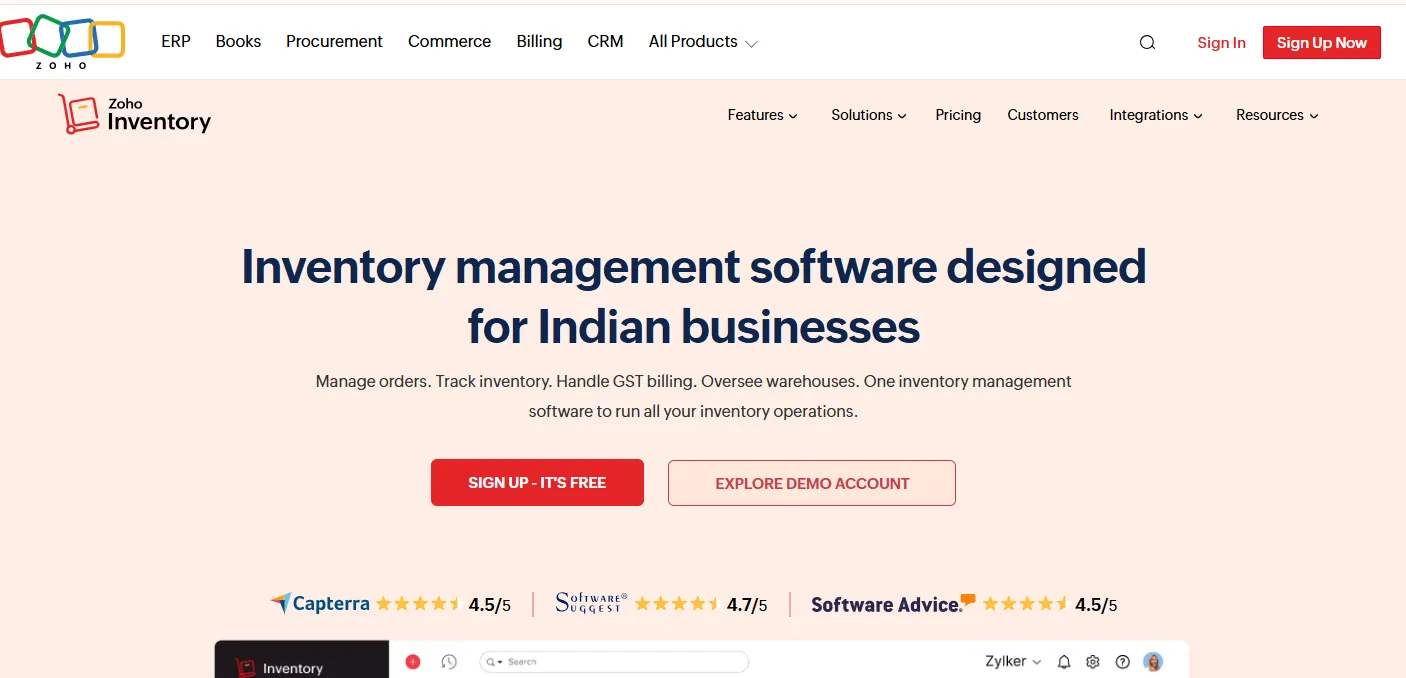
Zoho Inventory is a cloud-based stock and order platform from Zoho, a software company known for its wide suite of business applications. It is designed for small and mid-sized businesses that sell products through retail, wholesale, and online channels.
Zoho Inventory is approachable. Teams without a dedicated IT department can usually get started without a long implementation. Its biggest advantage is the ecosystem: if you already use Zoho for accounting or customer management, data flows between applications with little extra setup.
Businesses with complex bin structures, wave picking, or very high daily volumes may outgrow its native workflows and need a dedicated WMS alongside it.
Small and mid-sized businesses, wholesalers, and online sellers who want clear stock visibility without a heavy enterprise rollout.
Official website: https://www.zoho.com/inventory/

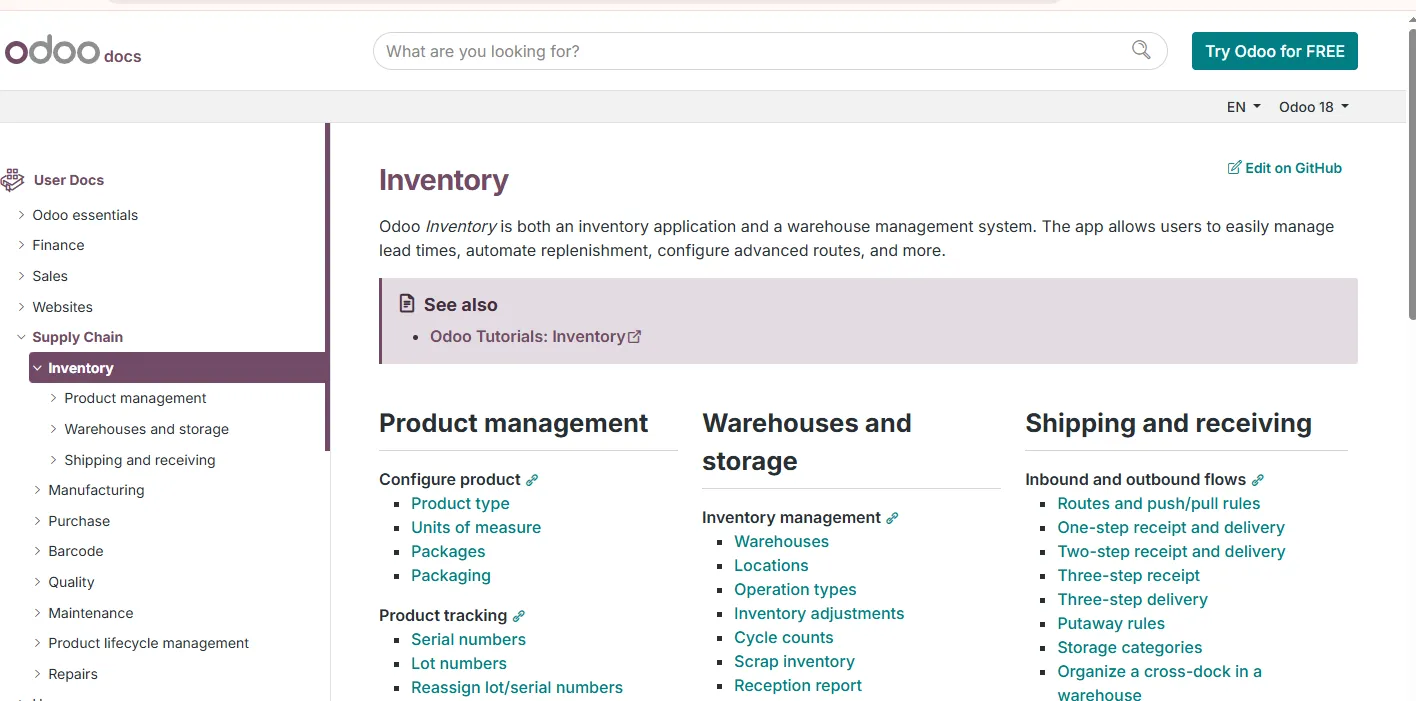
Odoo is a modular business suite available in open-source community and paid enterprise editions. Its stock module sits alongside applications for sales, purchasing, manufacturing, accounting, and e-commerce.
Flexibility is Odoo’s defining quality. Businesses can start with one or two modules and add others as they grow, keeping everything on a single data set. The configurable route logic allows teams to model multi-step receiving, quality checks, and delivery processes.
Flexibility cuts both ways. Poorly planned configuration can lead to inconsistent processes, and many businesses rely on an implementation partner. Costs should include customisation, hosting (for self-hosted setups), and ongoing support.
Businesses that want stock, purchasing, sales, and production connected in one suite and are ready to invest in proper configuration.
Official documentation: https://www.odoo.com/documentation/18.0/applications/inventory_and_mrp/inventory.html

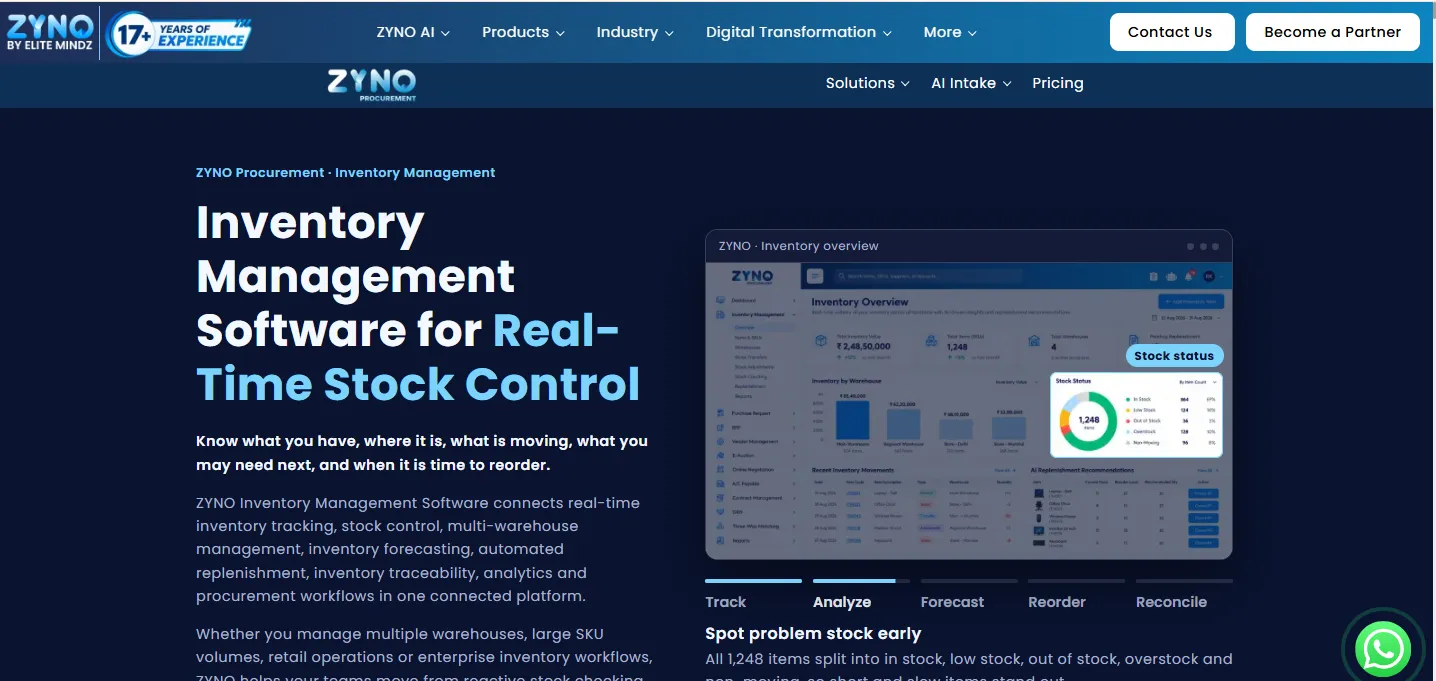
Every stock control tool depends on one thing happening upstream: the right goods being ordered at the right time, from the right supplier, at the right price. ZYNO Procurement by EliteMindz is built for that stage of the supply chain.
Procurement is where cost, delay, and risk often begin. When requests live in email threads and approvals depend on who is available, replenishment slows down and spending becomes difficult to track. ZYNO Procurement replaces that with a clear, auditable process. It complements, rather than replaces, your stock control platform or WMS: reorder signals from those systems become timely purchase orders instead of stalled requests.
ZYNO Procurement focuses on the purchasing side of operations. Businesses needing bin-level facility control should pair it with a dedicated WMS and confirm the integrations or data exchange methods that suit their setup.
Businesses that want to bring structure, speed, and visibility to purchasing so replenishment connects smoothly with stock and operations.
Explore EliteMindz:https://elitemindz.co/products/eliteproc/inventory-management

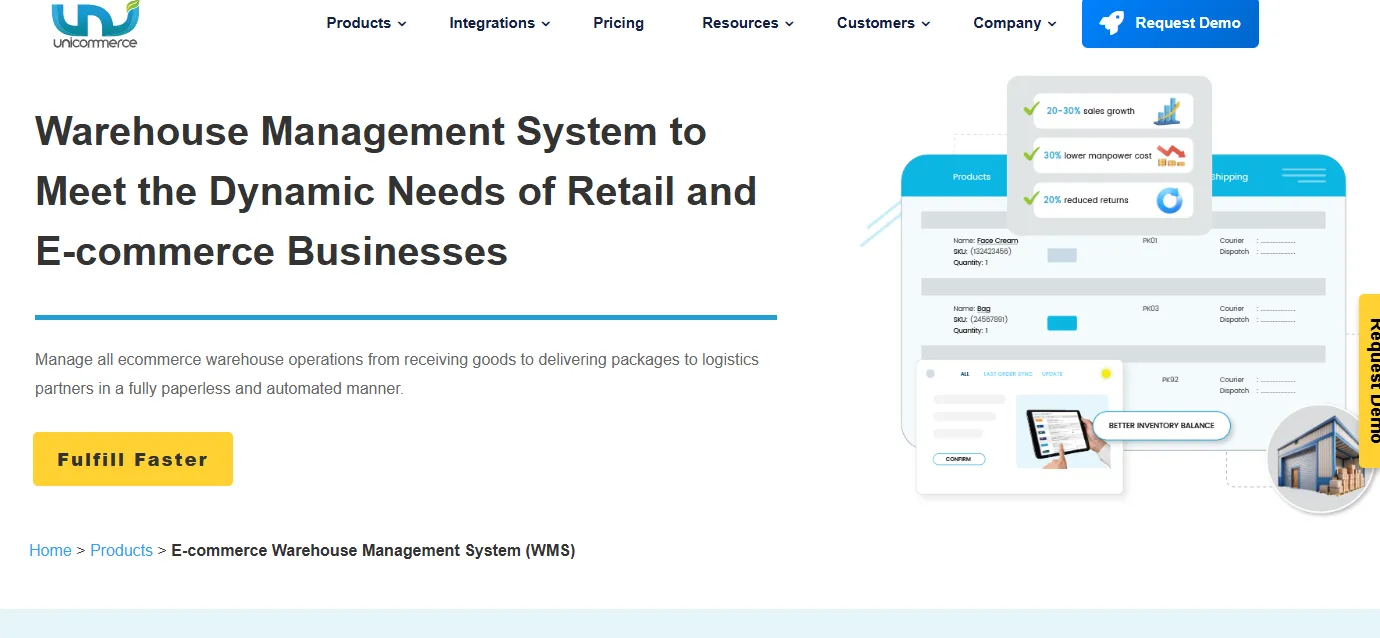
Unicommerce is an India-founded e-commerce operations platform. Its WMS product helps sellers coordinate what happens between the moment an online order arrives and the moment a parcel leaves the facility.
The platform understands the realities of selling online in India and similar markets: multiple marketplaces, many courier options, high return rates, and tight dispatch deadlines. For brands selling across several channels, centralising order flow and stock allocation reduces overselling and manual work.
It is built around e-commerce fulfilment. Businesses focused on heavy B2B distribution, manufacturing, or deep ERP integration should check that its workflows match their model.
E-commerce brands, omnichannel retailers, and fulfilment-heavy businesses.
Official website: https://unicommerce.com/products/warehouse-management-system/

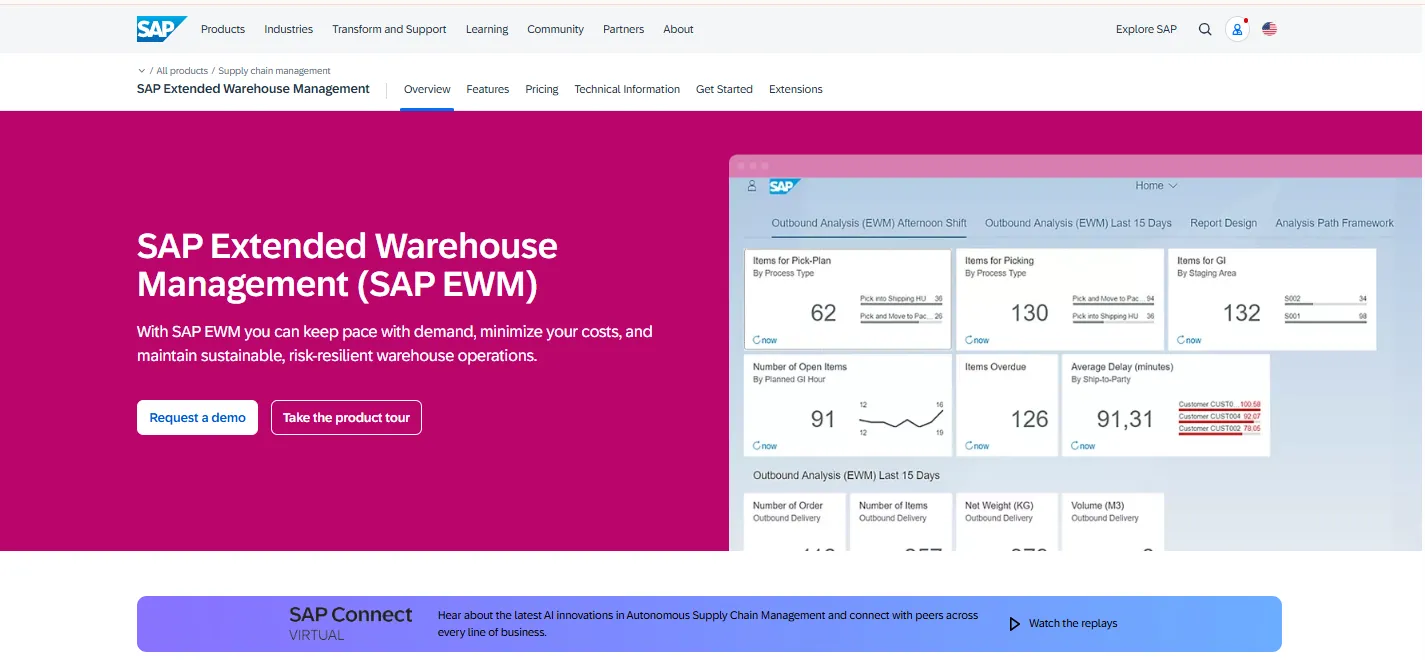
SAP EWM is SAP’s enterprise-grade solution for directing activity inside distribution centres and large storage facilities. It is available in configurations embedded within SAP S/4HANA or as a more advanced option for complex networks.
EWM offers depth that few products can match. For companies already running SAP, the integration with core business processes is a major advantage, and the platform can scale across many facilities and countries.
It is a significant investment. Implementation typically requires experienced consultants, careful process design, and substantial training. Smaller businesses rarely need this level of control.
Large enterprises with complex facilities and an existing SAP environment.
Official website: https://www.sap.com/products/scm/extended-warehouse-management.html

Oracle’s cloud supply chain suite includes a stock control module designed to give large organisations visibility across locations, business units, and supply networks.
Oracle suits organisations that want stock control embedded in a broad, unified cloud suite. Its strength lies in enterprise-scale consistency: one platform, common data, and shared reporting from procurement through finance.
Deep facility-level workflows depend on the specific modules and configuration you license. Ask Oracle or your implementation partner exactly which capabilities are included in your proposed setup. As with other enterprise platforms, implementation is a project, not a quick installation.
Large and mid-to-large organisations needing stock visibility across many locations within a single enterprise suite.
Official website: https://www.oracle.com/in/scm/inventory-management/

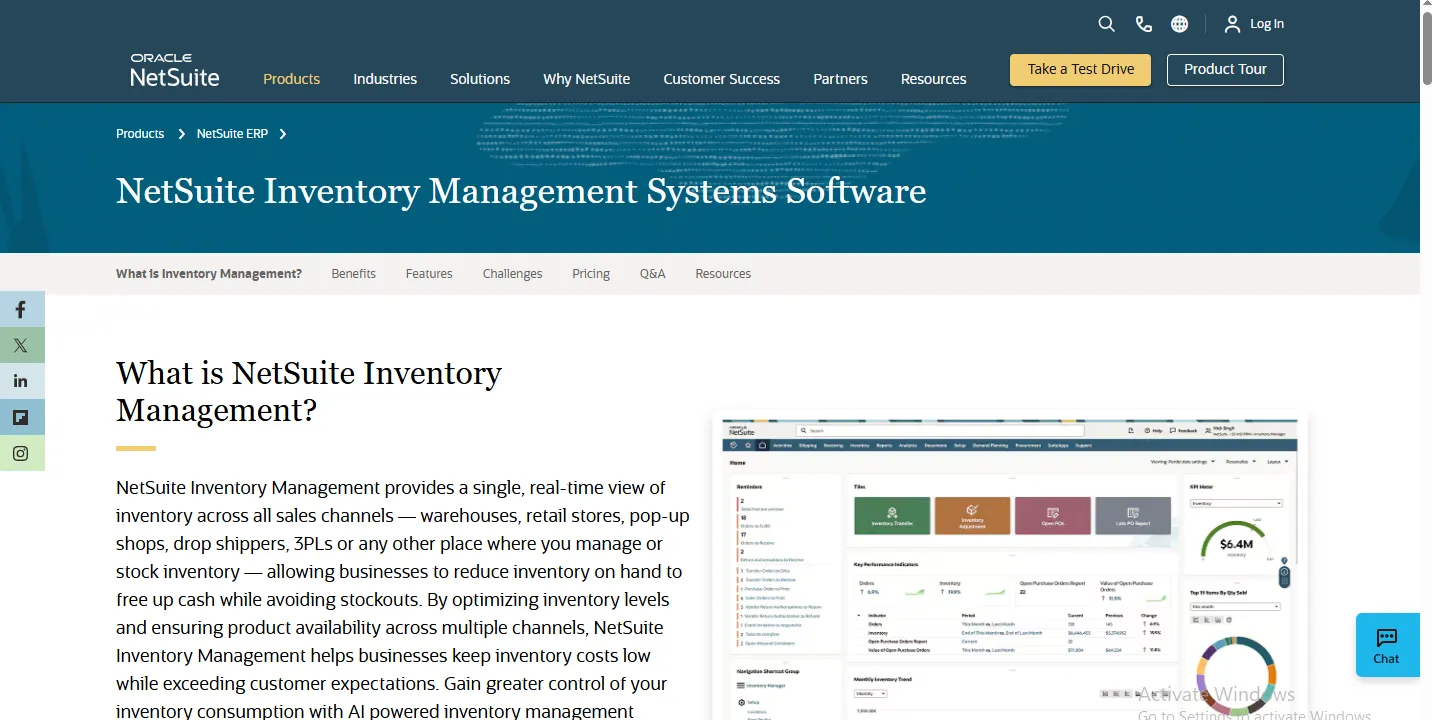
NetSuite is a cloud ERP platform, now part of Oracle, serving mid-market and fast-growing companies. It unifies financials, orders, purchasing, stock, and customer data in one system.
Because everything lives in a single system, finance leaders gain real-time visibility into stock value, purchase commitments, and margins. Businesses that have outgrown spreadsheets and entry-level accounting software often move to NetSuite to consolidate operations.
Facility-level depth often depends on add-ons, and licence and implementation costs can be substantial for smaller firms. Define your requirements clearly before the demo.
Growing mid-market companies that want ERP, finance, and stock control on one cloud platform.
Official website:https://www.netsuite.com/portal/products/erp/warehouse-fulfillment/inventory-management.shtml

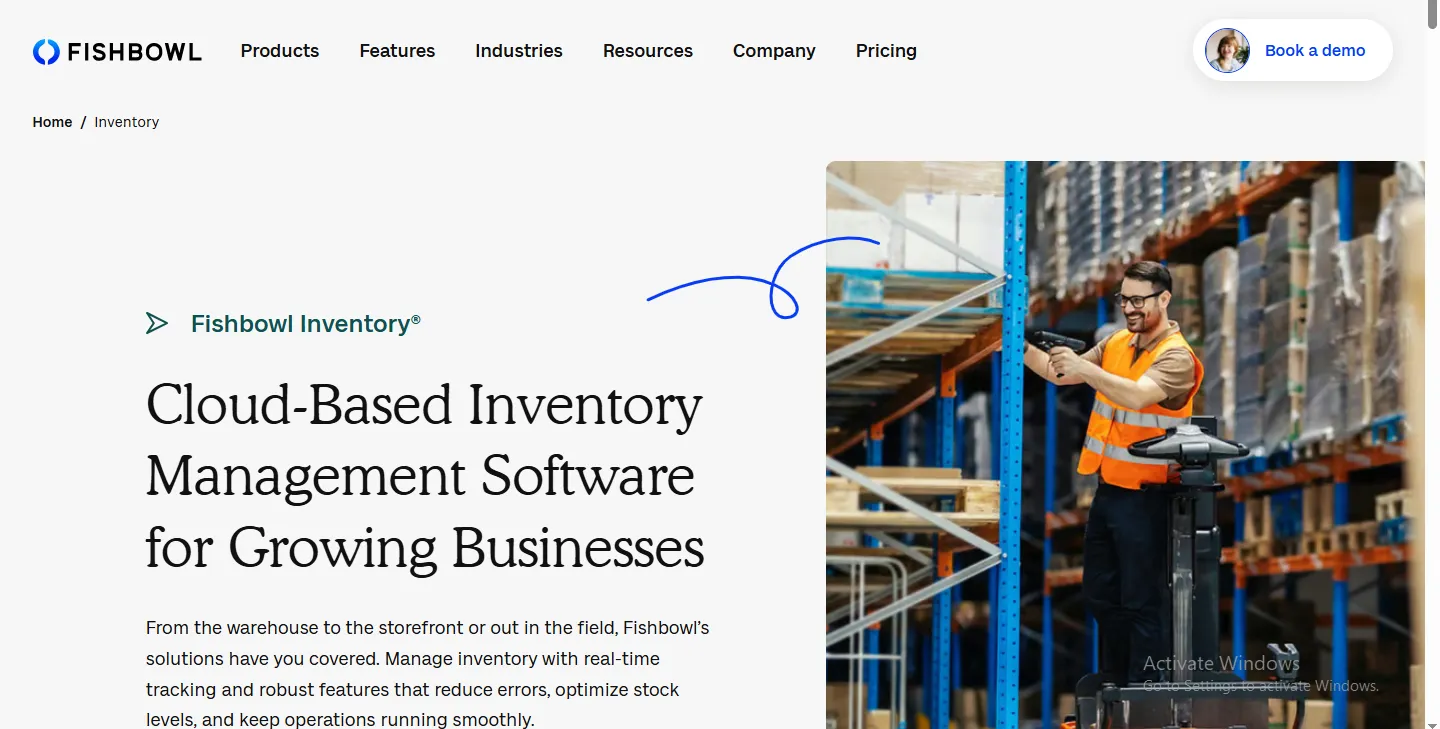
Fishbowl is a stock and manufacturing platform popular among small and mid-sized businesses, particularly those using QuickBooks for accounting.
Fishbowl gives small manufacturers and distributors structure without the cost and complexity of a full ERP. Barcode scanning and manufacturing tools help teams move beyond spreadsheets quickly.
Its sweet spot is the small to mid-sized segment. Large multi-site operations or highly customised workflows may need a more scalable platform. Check regional availability and support for your market.
Small manufacturers and distributors with straightforward production and storage needs.
Official website:https://www.fishbowlinventory.com/inventory
Manhattan Associates is a long-standing name in supply chain technology. Manhattan Active WMS is its cloud-native platform for running high-volume fulfilment networks.
This is a platform built for scale and complexity. Large retailers, third-party logistics providers, and consumer goods companies use tools like this to coordinate thousands of daily tasks across multiple sites while supporting automation.
Expect an enterprise-level budget and implementation timeline. Smaller operations will likely find it more than they need.
Large retailers, 3PLs, and distribution networks with demanding fulfilment requirements.
Official website:https://www.manh.com/en-in/our-solutions/supply-chain-management-software/warehouse-management-system

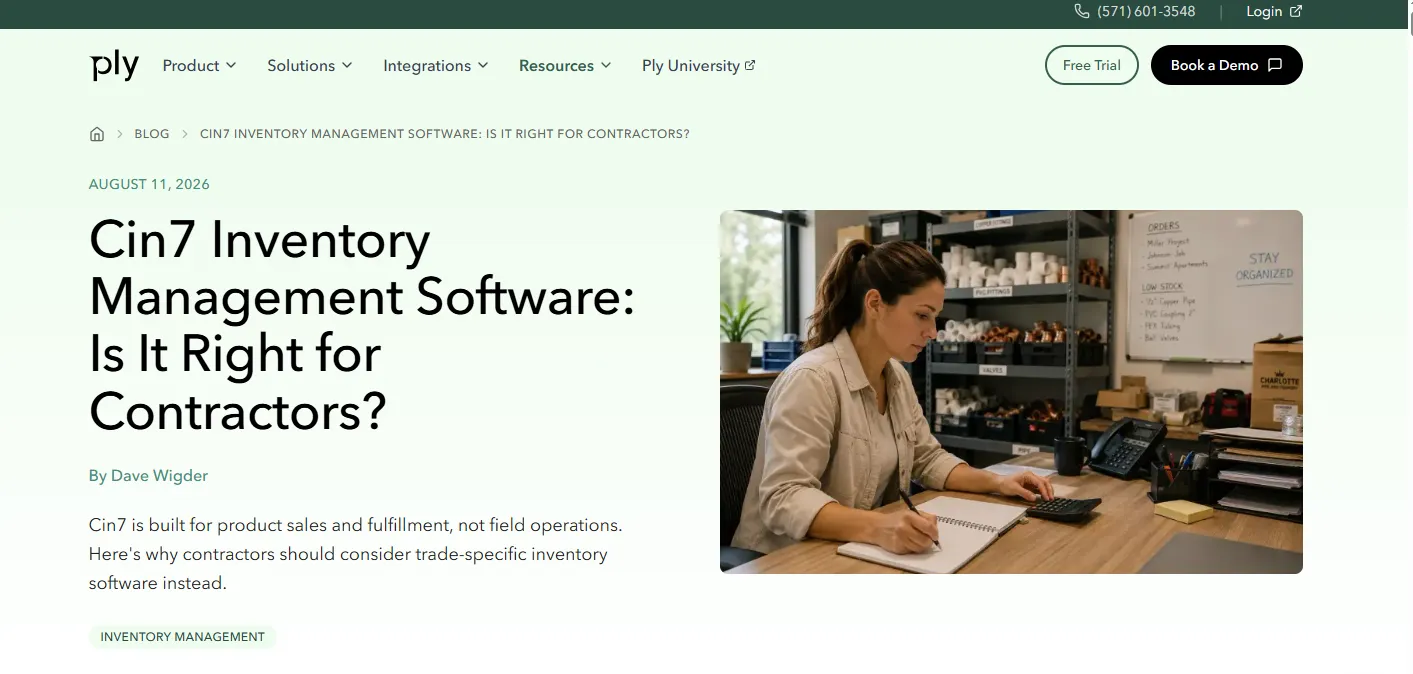
Cin7 is a cloud platform for product-based businesses that sell through multiple channels. It offers solutions for stock, order syncing, and B2B and retail sales.
Cin7 suits brands that sell in many places at once: their own website, marketplaces, wholesale buyers, and physical stores. Keeping stock numbers consistent across all of them is where the platform earns its value.
Operations needing very detailed bin-level or task-driven workflows may require a dedicated WMS. Review plan structures carefully, as features vary by edition.
Product-based businesses selling across retail, wholesale, and online channels.
Official website:https://www.getply.com/blog/cin7-inventory-management-software/
Managing stock across multiple locations can become challenging when inventory records, purchasing activities, and warehouse operations are disconnected. Businesses need better visibility into stock availability, purchase requirements, and replenishment timelines to avoid unnecessary delays.
Start with your operational problem, not the product category.
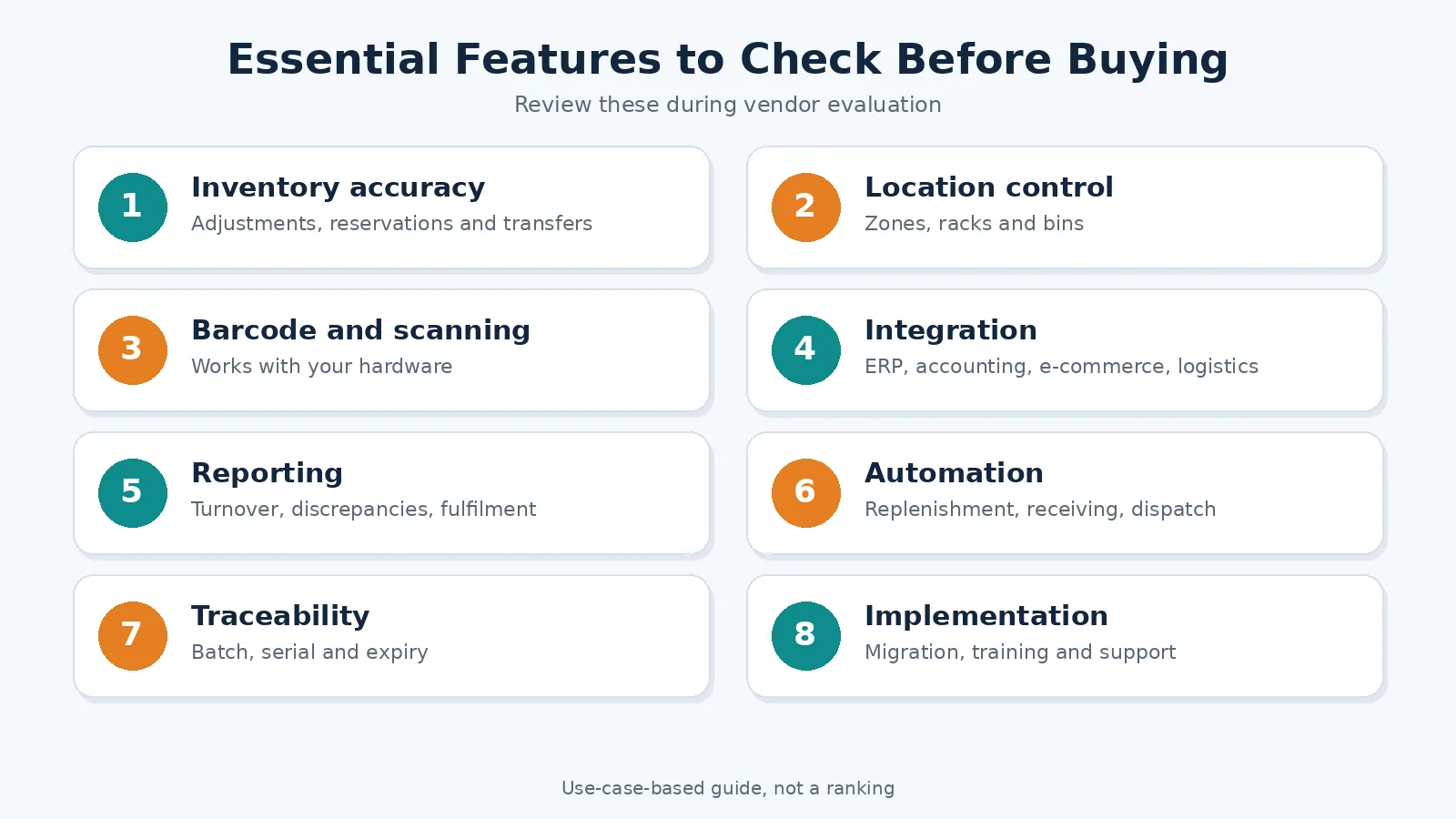
Before deciding, compare implementation cost, integration needs, reporting, training, support, scalability, and total cost of ownership.
No. Inventory management focuses on stock quantity, availability, movement, and replenishment. Warehouse management focuses on physical storage, location control, picking, packing, and dispatch. They overlap and can run on one integrated platform.
For simple storage and fulfilment needs, yes. For bin-level tracking, advanced picking workflows, or complex fulfilment, a dedicated WMS is usually the better fit.
Most manufacturers need both. Inventory management tracks raw materials, work-in-progress, and finished goods, while warehouse management handles receiving, storage, material movement, and dispatch.
Some ERP platforms include warehouse management; others integrate with a separate WMS. The depth varies by product and edition.
WMS is a Warehouse Management System, which gives detailed control of warehouse activities. IMS usually means an Inventory Management System, which controls stock across the business.
Procurement software manages how stock is requested, approved, and bought. It feeds your inventory system with timely purchases, so replenishment actually happens when your reorder rules say it should. Learn more about ZYNO Procurement.
Managing warehouse operations involves more than storing products on shelves. Businesses need to track stock movements, organize storage locations, coordinate order fulfilment, and maintain accurate inventory records to avoid picking errors and delivery delays. Without proper coordination, even available stock can become difficult to locate and dispatch on time.
Inventory management keeps your stock accurate and available. Warehouse management makes sure that stock is received, stored, picked, and shipped efficiently. Procurement makes sure it gets replenished on time. Strong operations connect all three.
Smaller businesses with simple operations may manage with a single inventory application. Businesses with complex warehouses or high fulfilment volumes will benefit from a dedicated WMS integrated with their inventory or ERP platform, and from a structured procurement process behind it.
The best choice is the one that fits your operations, connects with your existing processes, and scales with your growth.
Ready to bring more control to your purchasing and supply chain? Explore ZYNO Procurement by EliteMindz and see how it can fit alongside your inventory and warehouse operations.
Procurement Software Trends in 2026: What to Expect
Read More →
Why E-Procurement Outperforms Traditional ERP in Modern Procurement
Read More →
Top Procurement Software in India: 12 Options Compared for 2026
Read More →
Best Procurement Software Companies in Kuwait (2025)
Read More →
5 Best Procurement Software in Africa for Enterprises & SMEs (2026 Guide)
Read More →
Best Procurement Software in Nigeria 2026 | Top 5 Picks
Read More →
Best Procurement Software Providers in USA (2025): How AI is Transforming the Future
Read More →
10 Best Procurement Software Providers in Thailand for Streamlined Supply Chain Management
Read More →
Top 10 Cloud-Based Procurement Solutions in Portugal for Businesses in 2025
Read More →
Top 10 Procurement Software Providers in Switzerland 2026: Streamlining Sourcing and Supplier Management
Read More →
What Makes ZYNO Procurement Different from Other Oil & Gas Procurement Software
Read More →
The Digital Transformation of Logistics Procurement in the Middle East
Read More →
A Step by Step Guide to Procurement Management Software for Modern Enterprises
Read More →
Sourcing and Procurement: What is the Difference and Why It Matters
Read More →Difference Between Procurement and Supply Chain Management
Read More →
What Is Procurement Software and Why Do Modern Businesses Need It?
Read More →
Best Procurement Management Software to Automate ERP Process
Read More →
Direct vs Indirect Procurement: Key Differences, Examples & Uses (2026)
Read More →
Smart procurement strategies for cost optimization & risk management
Read More →
What Is Procurement? Everything You Need to Know (Types, Process & SAP)
Read More →Beyond Cost-Cutting: How Procurement Drives Margin Expansion in 2026
Read More →
Direct Procurement: Process, Examples, and When to Use It
Read More →
What Are the 5 Types of E-Procurement? A Complete Guide for Businesses
Read More →
Which Procurement Management Software Is Best? Top Tools Compared for 2026
Read More →
Top 8 Coupa Alternatives to Explore in 2026
Read More →
Looking to Replace Coupa? Discover the Best Alternatives Like ZYNO Procurement
Read More →
How Does Procurement Software Work? A Complete Guide
Read More →
ZYNO Procurement vs Coupa: Best Procurement Software Comparison for Mid-Market Teams
Read More →
10 Best SAP Ariba Alternatives and Competitors in 2026
Read More →
ZYNO Procurement vs SAP Ariba: Which Solution Is More User-Friendly?
Read More →
AI-Powered Procurement Management Software for Fast, Connected, and Visible Workflows in Dubai
Read More →
What is Vendor Management? Complete Guide to Vendor Management Software, Systems, and Processes
Read More →
Best Procurement Management Software In Kenya
Read More →
6 SAP Ariba Alternatives for Mid-Market Businesses in 2026
Read More →
Top E-Procurement Solutions for B2B Organizations (2026)
Read More →
Quotation Format: Free Templates + Complete Guide (2026)
Read More →
Cost Control Software: Features, Benefits & Performance Guide for 2026
Read More →
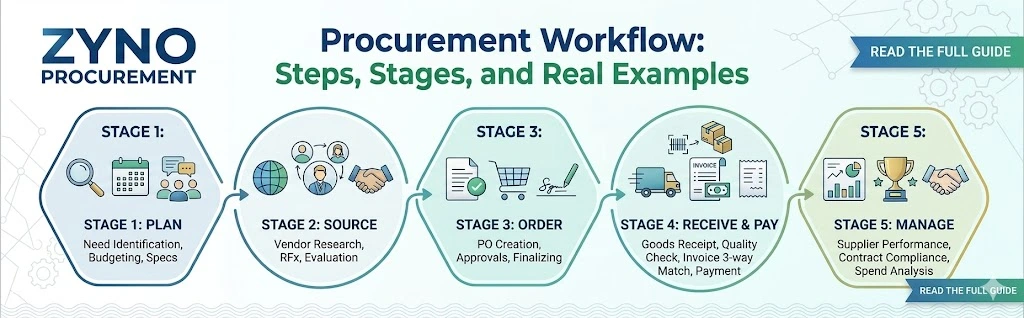
Procurement Workflow: Steps, Stages, and Real Examples
Read More →
Top 10 Zycus Alternatives for Procurement Teams in 2026
Read More →
Best Precoro Alternative for Purchase Requisition and Procurement
Read More →
Top AI Procurement Tools in 2026
Read More →
Best Tools for Supplier Risk Management
Read More →
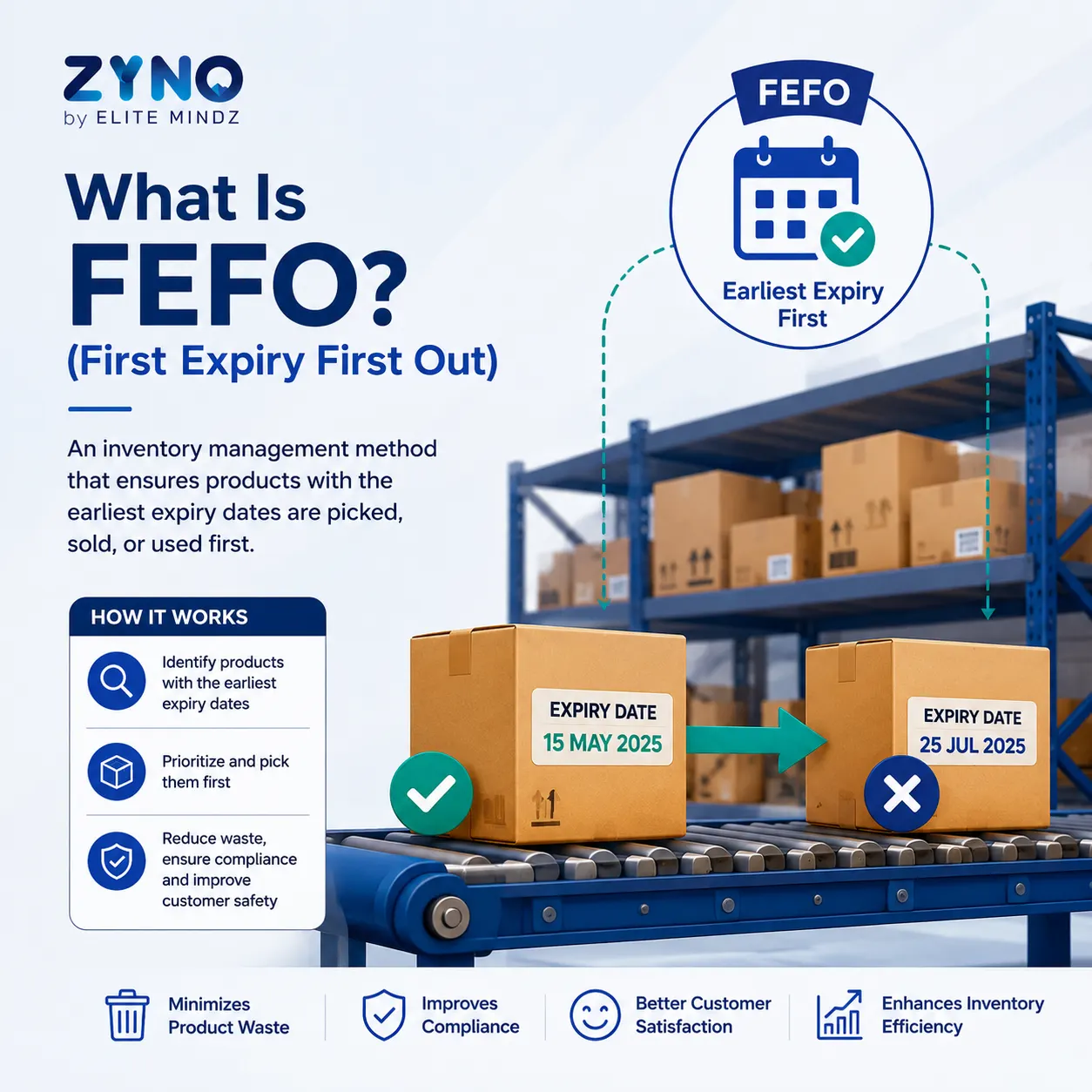
FEFO vs FIFO vs LIFO: Differences, Benefits & Which Inventory Method Is Best?
Read More →
AI Procurement Software: Features, Benefits, Use Cases & How to Choose
Read More →
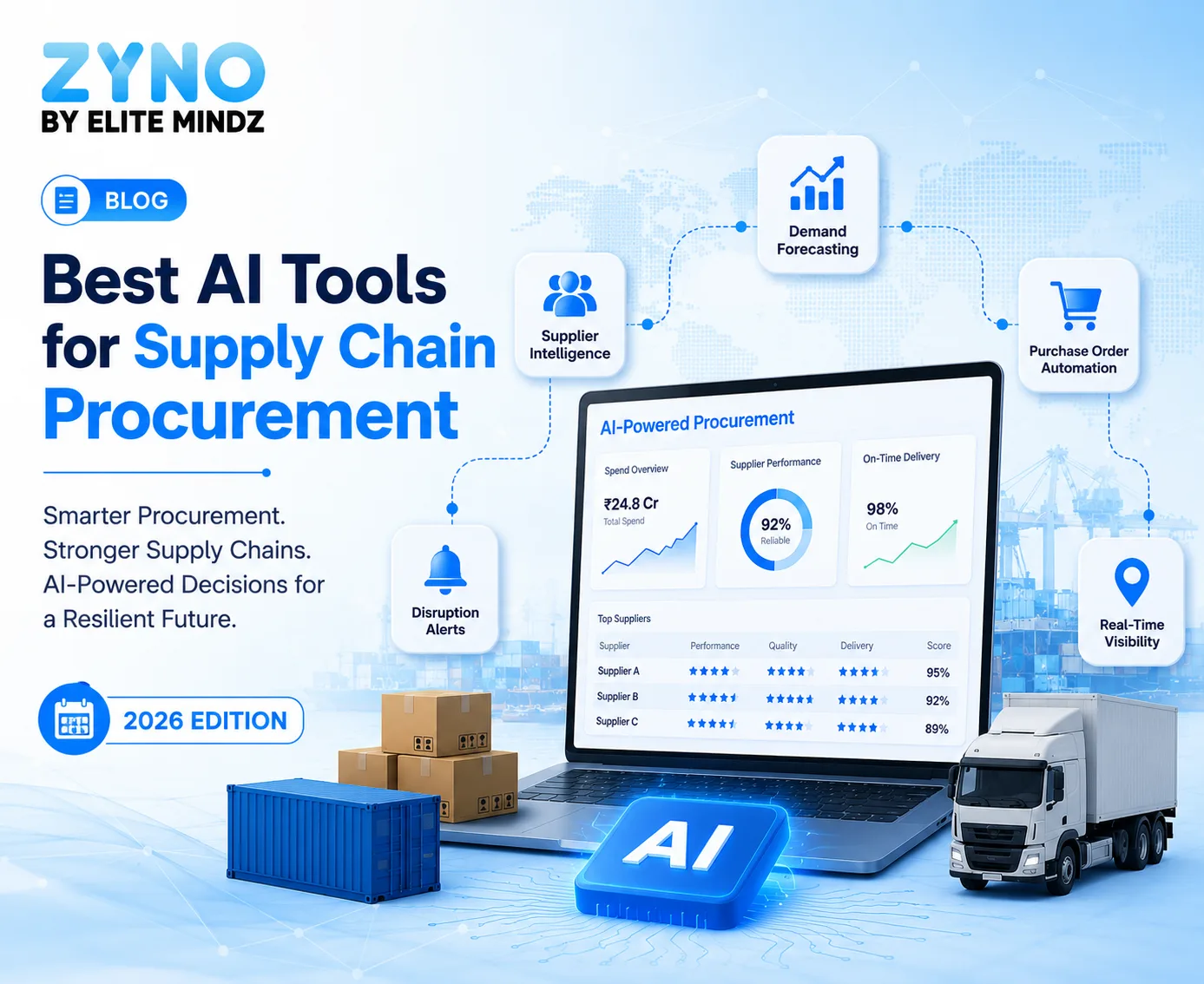
Best AI Tools for Supply Chain Procurement
Read More →
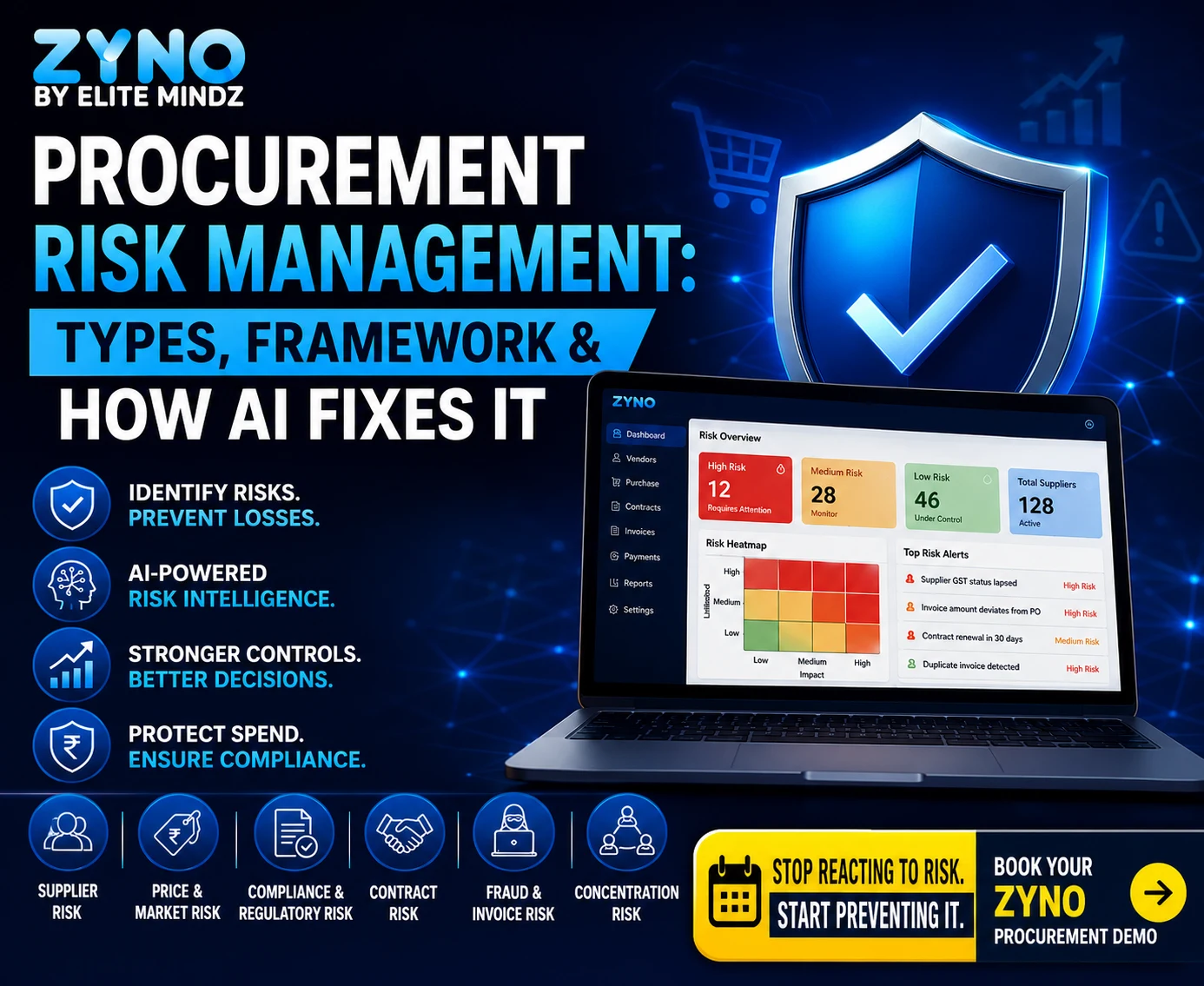
Procurement Risk Management
Read More →
Still Using Excel for Procurement? Read This Before It's Too Late
Read More →
Best RFP Software in 2026: Top Tools Compared for Faster Proposal Responses
Read More →
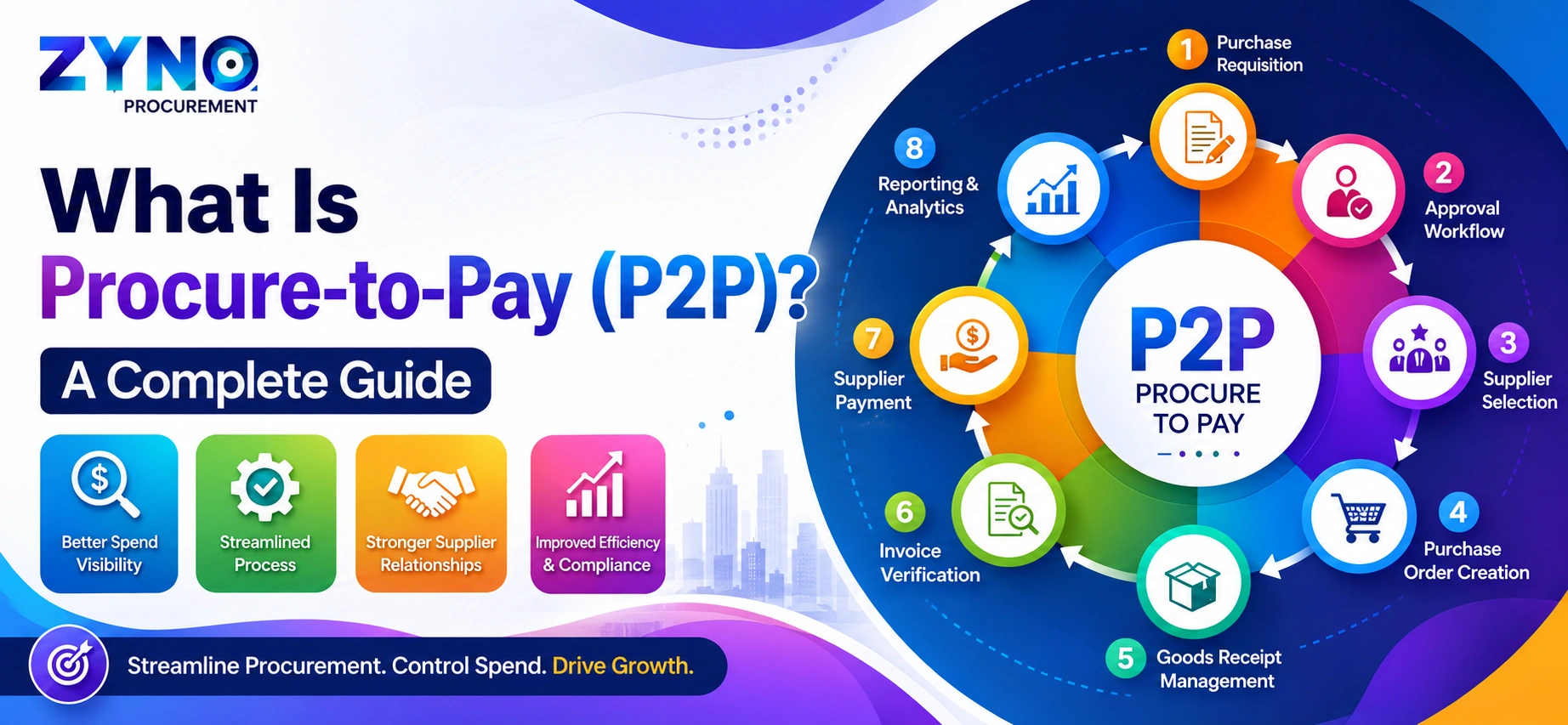
What Is Procure-to-Pay (P2P)? A Complete Guide
Read More →
Complete Procurement Workflow Guide for Modern Businesses
Read More →
Complete Guide to E-Procurement Solutions for B2B Organizations
Read More →
Cost Control Software Comparison Guide: Features, Pricing & Benefits
Read More →
Purchase Order Tracking: How to Manage Every PO Without the Chaos
Read More →
Inventory Management: What It Is, How It Works and Why It Matters
Read More →
Top 10 Procurement Software Tools for Purchasing Automation in 2026
Read More →
Agentic AI Procurement Platforms and the Future of Strategic Sourcing
Read More →
AI Spend Analytics Software for Procurement Leaders
Read More →
From Prompt to Procurement: How AI Is Transforming Enterprise Purchasing
Read More →
ZYNO Procurement vs IBM Procure-to-Pay Automation
Read More →
ZYNO Procurement vs Infor Nexus: Which Procure-to-Pay Platform Fits Your Team?
Read More →
AI-Powered Procurement Software in 2026: Top 6 Platforms That Actually Deliver ROI
Read More →
Contract Management Software Buyer's Guide: Features, Costs & Top Picks
Read More →
Top 10 Procure to Pay Software Companies in India 2026
Read More →
10 Best Vendor Management Software in India (2026): Features, Benefits & Comparison
Read More →
How Machine Learning and AI Are Transforming Procurement: A Strategic Overview
Read More →
What Is Procurement Software for GP? Features, Benefits and Best Solutions for Businesses
Read More →
What Procurement Software Do Mid-Market Companies Use Instead of SAP Ariba or Coupa?
Read More →
Prompt-Based Procurement Software for Kenyan Businesses
Read More →
Project Management Software: A Complete Guide to Streamline Business Operations and Procurement Processes
Read More →
SAP Ariba vs ZYNO Procurement: Complete Feature Comparison (2026)
Read More →
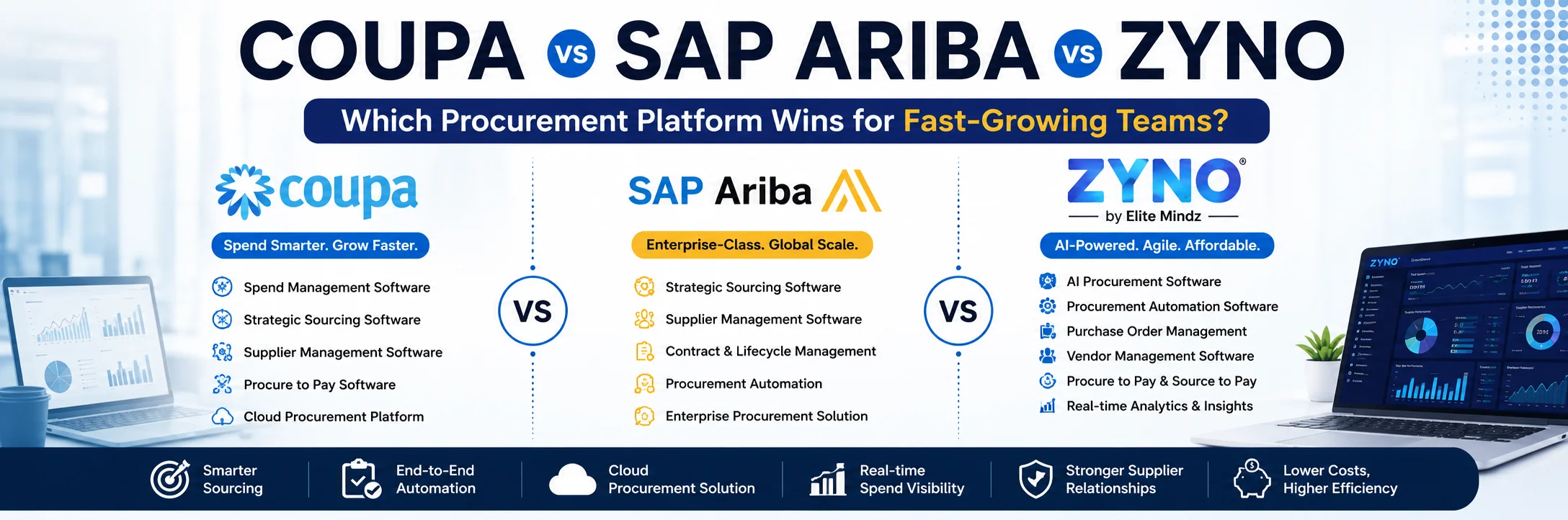
Coupa vs SAP Ariba vs ZYNO: Which Procurement Platform Wins for Fast-Growing Teams?
Read More →
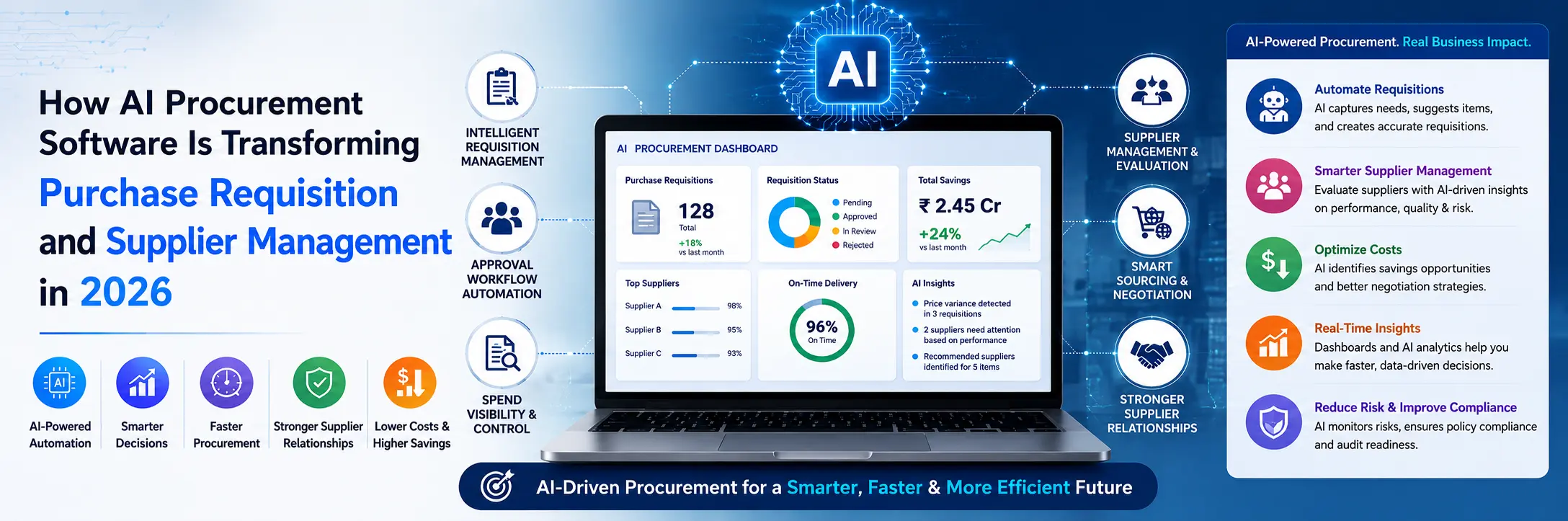
How AI Procurement Software Is Transforming Purchase Requisition and Supplier Management in 2026
Read More →
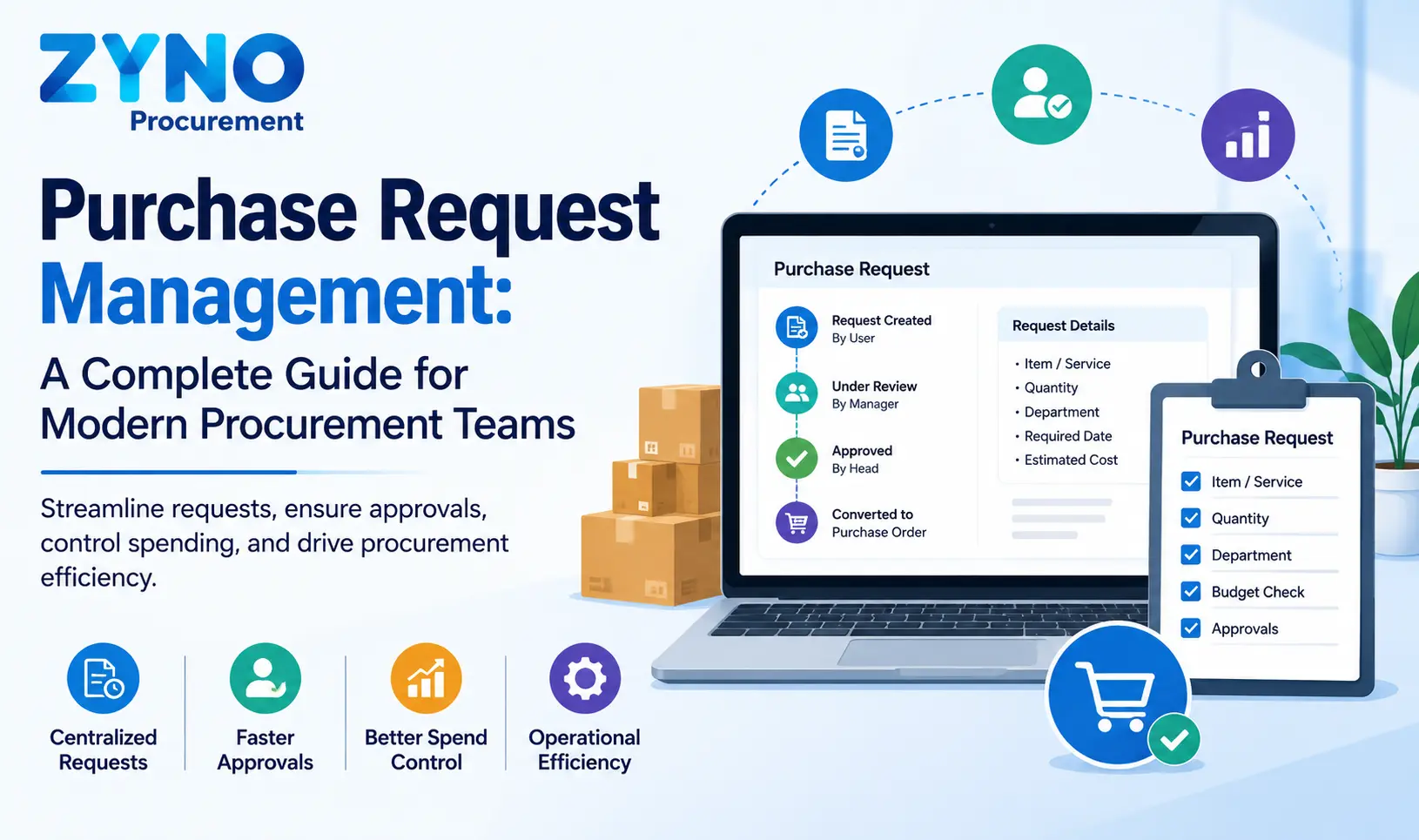
Purchase Request Management: A Complete Guide for Modern Procurement Teams
Read More →
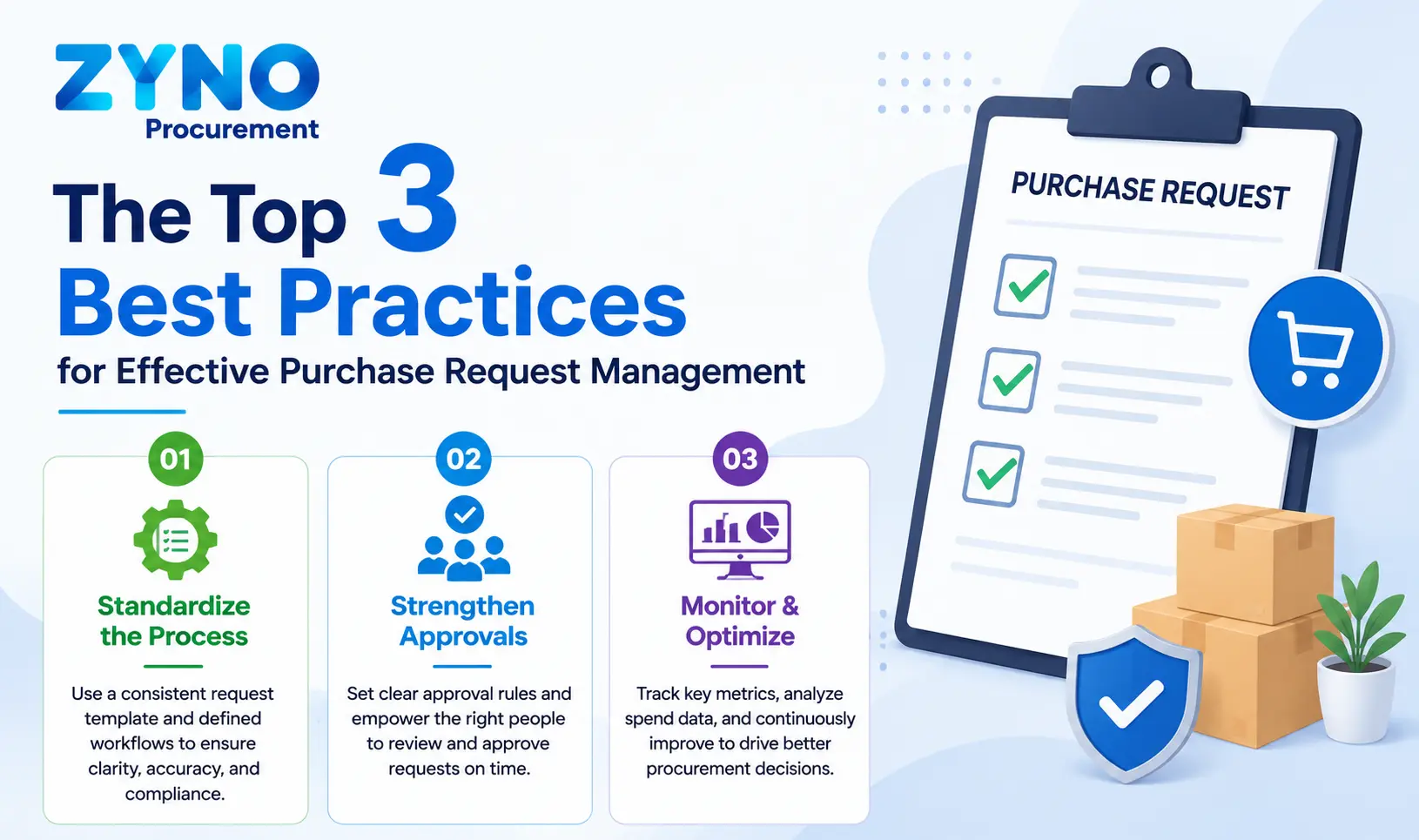
The Top 3 Best Practices for Effective Purchase Request Management
Read More →
What Is Purchase Order Automation? How to Automate Purchase Order Processing
Read More →
5 Common Purchase Request Mistakes and How to Avoid Them
Read More →
What is Supplier Relationship Management in Procurement? A Complete Guide
Read More →
What is Strategic Vendor Management? A Complete Guide for Modern Procurement
Read More →
What Are Inventory Control Methods? Complete Guide to Types, Techniques, Systems, & Benefits
Read More →
Inventory Audit Checklist: Steps, Process & Best Practices
Read More →
Warehouse Inventory Management: Best Practices for 2026
Read More →
Treasury Management System (TMS): A Complete Guide for Modern Corporates
Read More →
What is Portfolio Management Services (PMS) and What Are Its Benefits?
Read More →
Generative AI Procurement Software Solution: The Future of Intelligent Procurement
Read More →
Top Contract Management Software Companies in Ethiopia: Features, Benefits & Best Procurement Solutions
Read More →
AI Procurement Software: Complete Guide to Intelligent, Generative AI & Machine Learning Procurement Solutions
Read More →
Top SAP alternatives for small, midsize, and enterprise businesses
Read More →
Best RFP Software in 2026: Top Solutions for Smarter Procurement and Proposal Management
Read More →
GST on Purchase: Complete Guide to GST on Purchases in India
Read More →
Procurement Software in the UAE: How to Choose the Right Solution
Read More →
Supply Chain Procurement: Everything You Need to Know
Read More →
Top 10 Oracle Procurement Alternatives for Businesses in 2026
Read More →
Quotation Software vs Excel: Which Is Better for Businesses in 2026?
Read More →
Contract Management Software Buyer's Guide: Features, Pricing & How to Choose
Read More →
How to Identify the Right Vendor: 10 Simple Steps
Read More →
Top 10 Automated PO Generation Tools in 2026: Best Purchase Order Software with AI Capabilities
Read More →
How to Generate a PO Automatically in SAP: Step-by-Step Guide
Read More →
What Is the Best Budget-Friendly Procurement Software With Vendor Onboarding for Indian SMEs?
Read More →
How to Generate a PO Automatically in SAP: Step-by-Step Guide
Read More →
How to Solve Invoice Mismatches: 10 Real Ways to Fix Invoice Discrepancies
Read More →
Top 10 Vendor Onboarding Tools for Businesses in 2026: Features, Process & How to Choose
Read More →
Vendor Comparison & Supplier Intelligence: How AI Helps Businesses Choose the Right Vendor
Read More →
How to Choose the Right Procurement Management Software in 2026 (Complete Buyer's Guide)
Read More →
How to Reduce Procurement Costs: 18 Practical Strategies That Actually Work
Read More →
How to Choose the Right Procurement Management Software in 2026 (Complete Buyer's Guide)
Read More →
How to Calculate Procurement Software ROI: Formula, Example & Calculator
Read More →
Procurement Software Evaluation Checklist: 35 Criteria for Choosing the Right Platform
Read More →
How Businesses Can Improve Vendor Performance and Manage Supplier Risk
Read More →
Procure-to-Pay Process: Steps, Challenges & How to Automate It
Read More →
Purchase Requisition vs Purchase Order: What’s the Difference?
Read More →
10 Source-to-Pay Software Platforms to Consider in 2026
Read More →
Supplier Management Software Buying Guide: How to Choose the Right Platform
Read More →
Procurement Automation Guide: How It Works, What to Automate & How to Implement It
Read More →
Procurement Software Features: 12 Must-Have Capabilities to Look For
Read More →
Best E-Procurement Software in 2026: Top Electronic Procurement Systems for Modern Businesses
Read More →
AI in Vendor Management: Complete Guide to Automated Supplier Scoring and Supply Chain Risk Analysis
Read More →
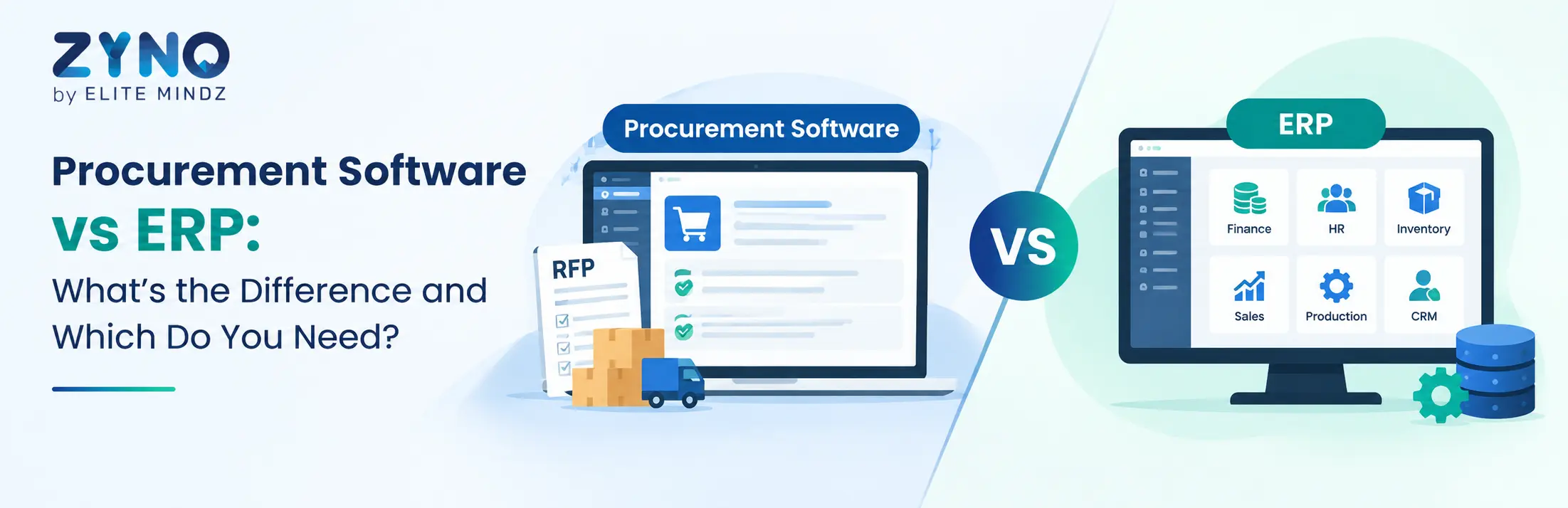
Procurement Software vs ERP: What's the Difference and Which Do You Need?
Read More →
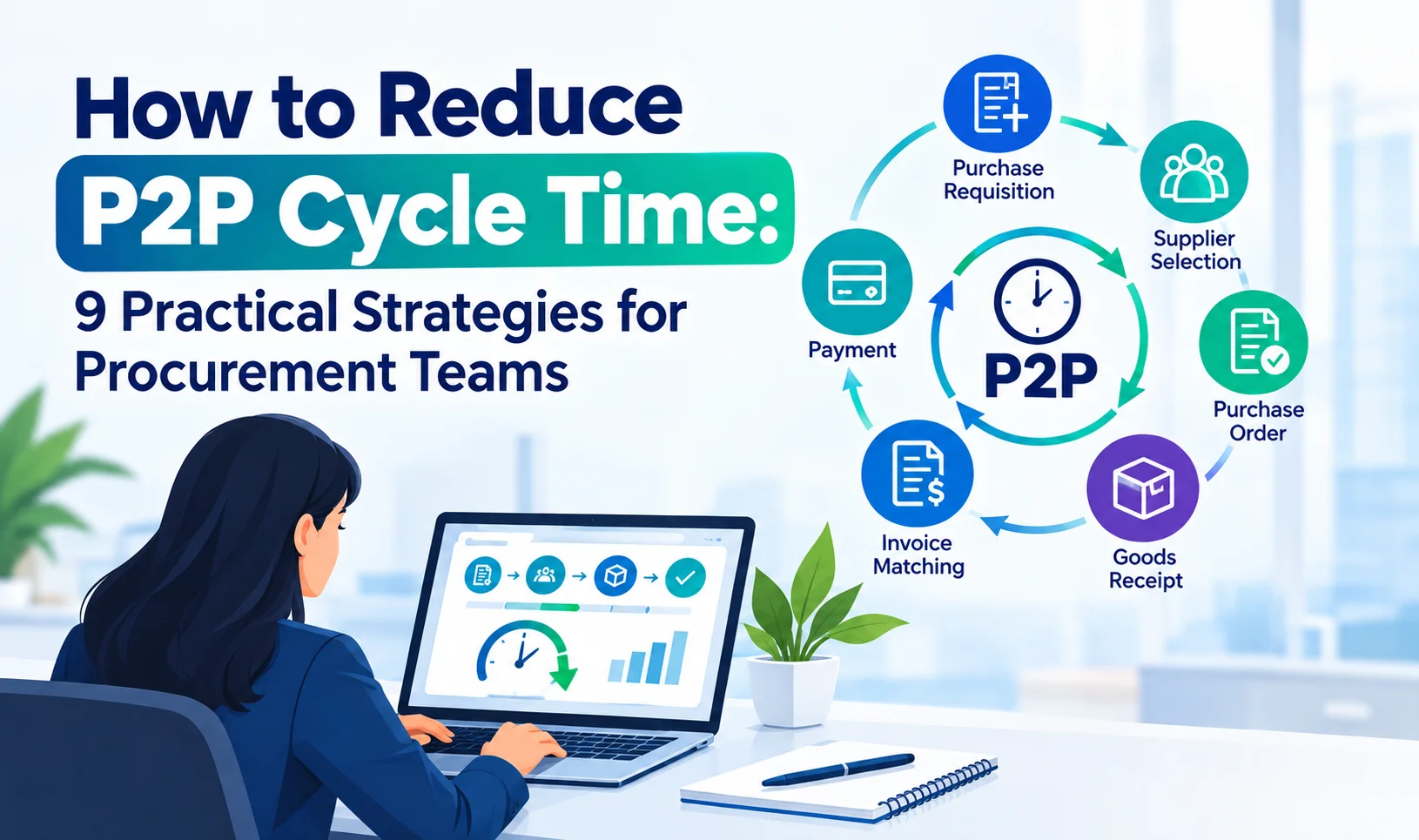
How to Reduce P2P Cycle Time: 9 Practical Strategies for Procurement Teams
Read More →
Procurement Software for Oil & Gas Companies in UAE and Saudi Arabia
Read More →
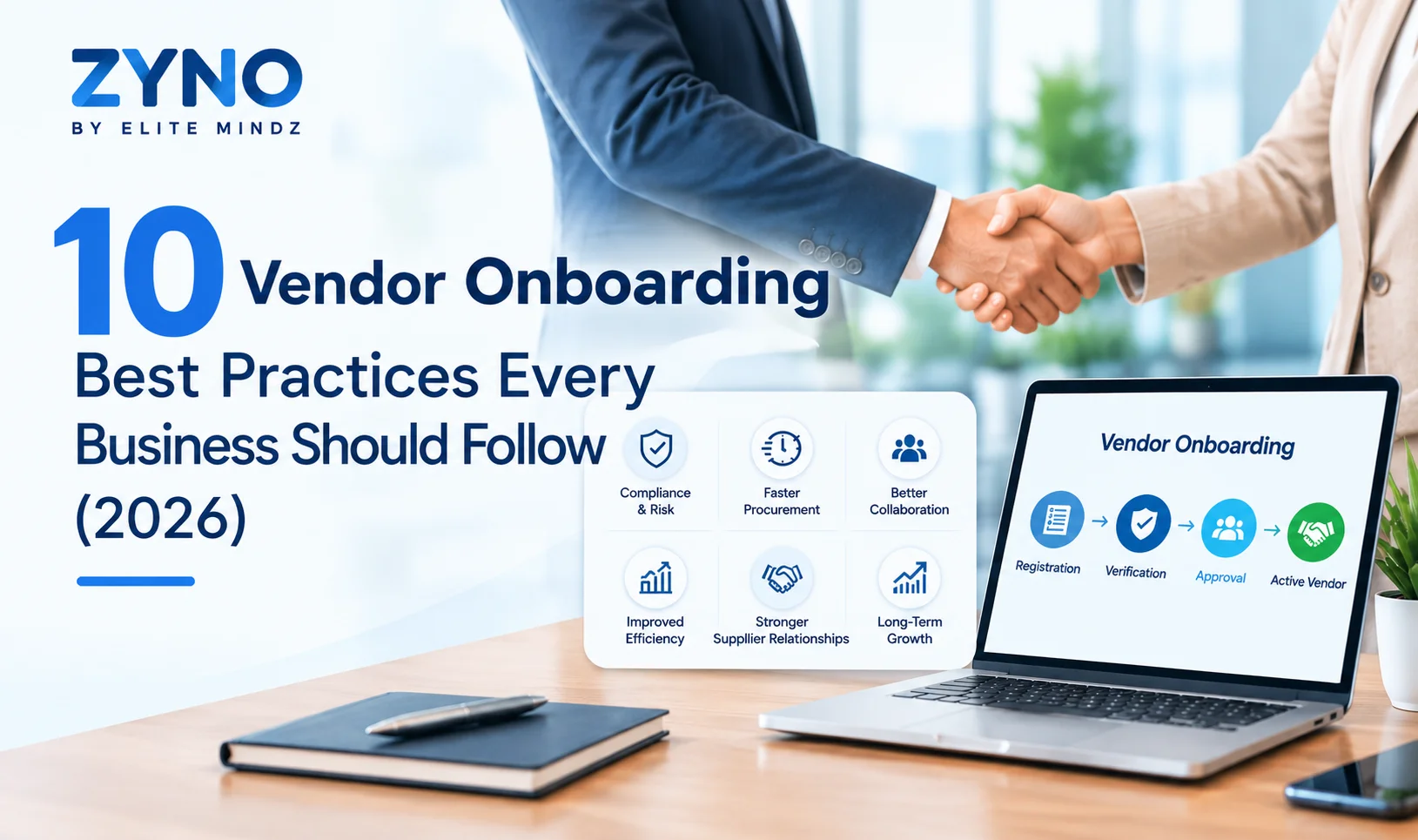
10 Vendor Onboarding Best Practices Every Business Should Follow (2026)
Read More →
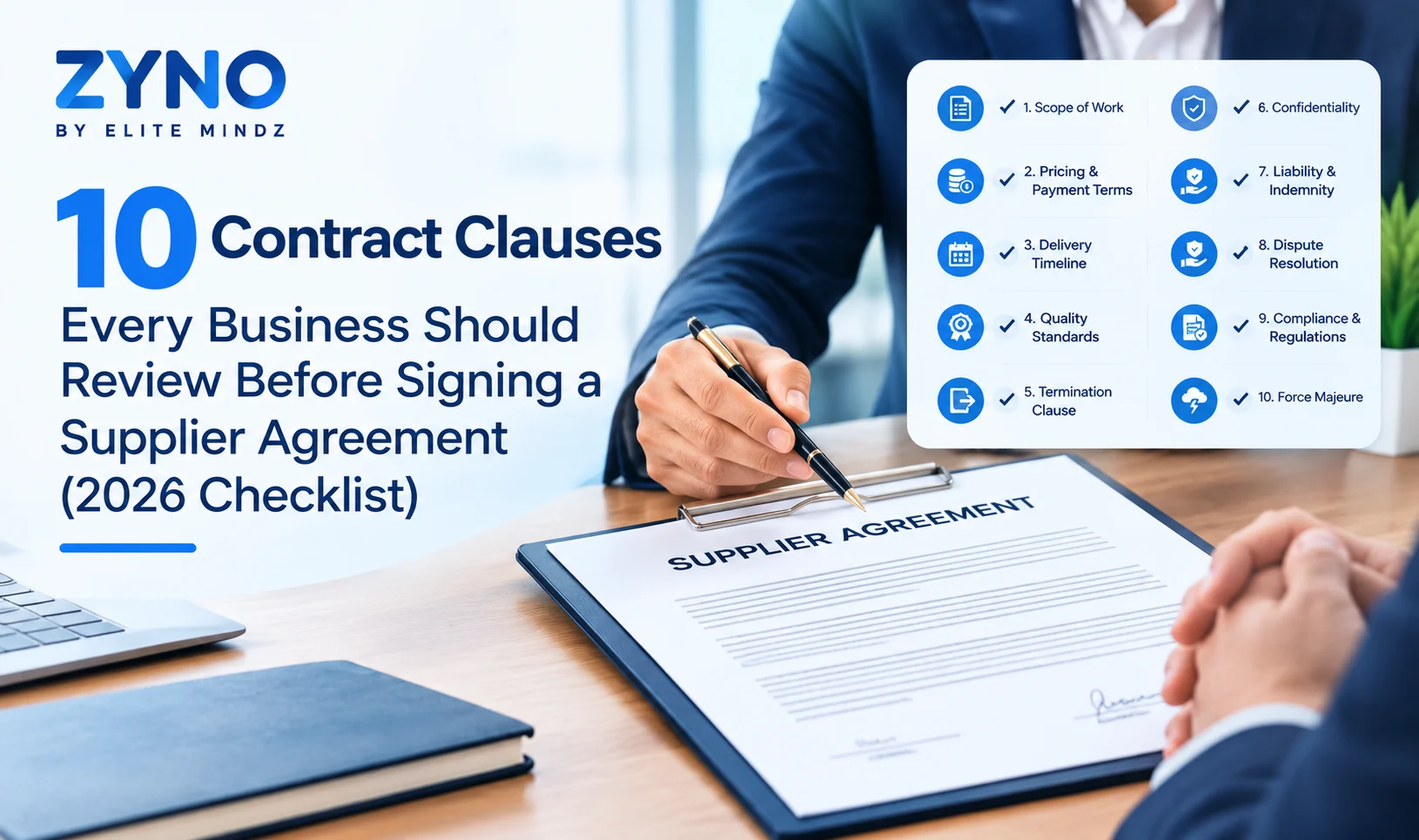
10 Contract Clauses Every Business Should Review Before Signing a Supplier Agreement (2026 Checklist)
Read More →
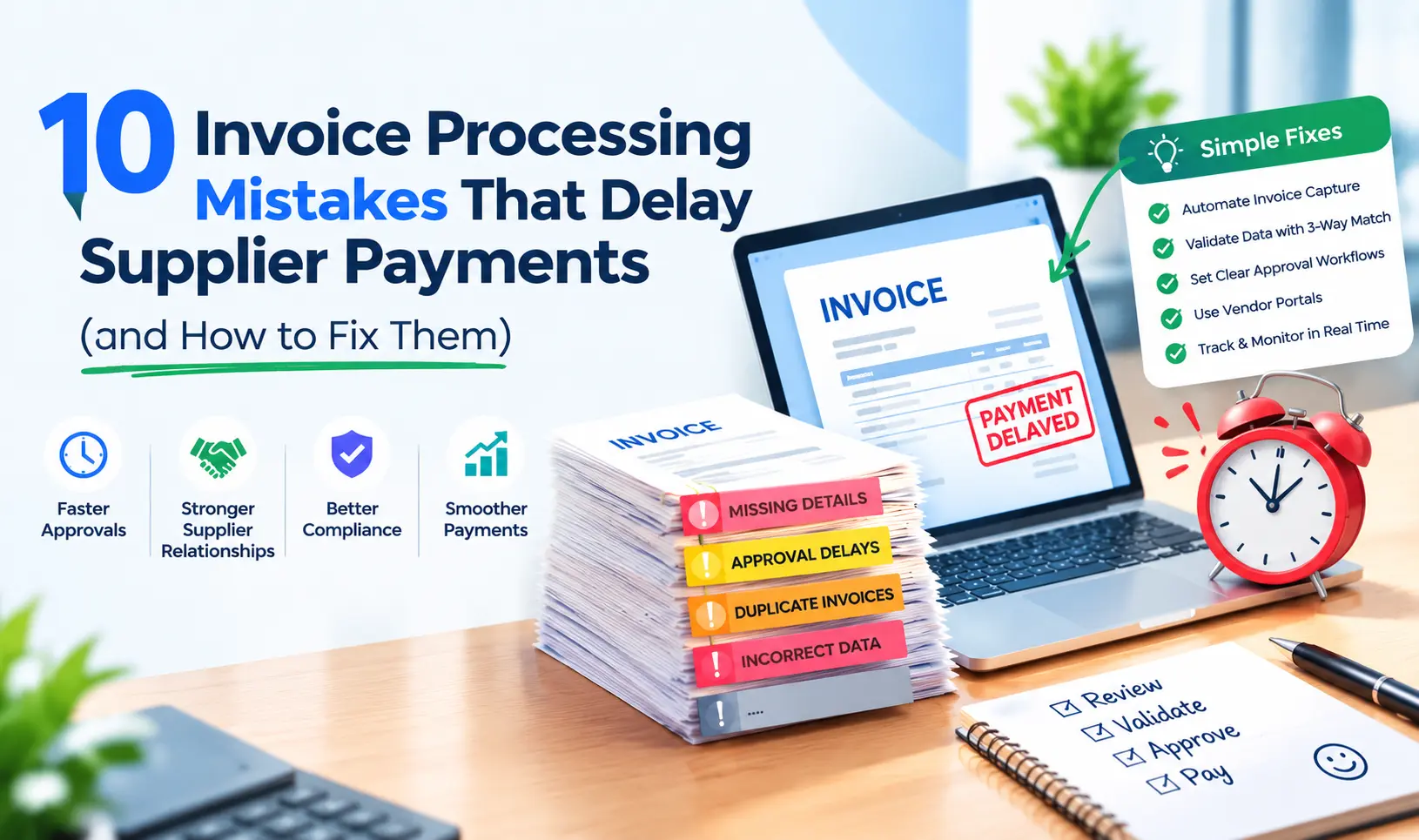
10 Invoice Processing Mistakes That Delay Supplier Payments (and How to Fix Them)
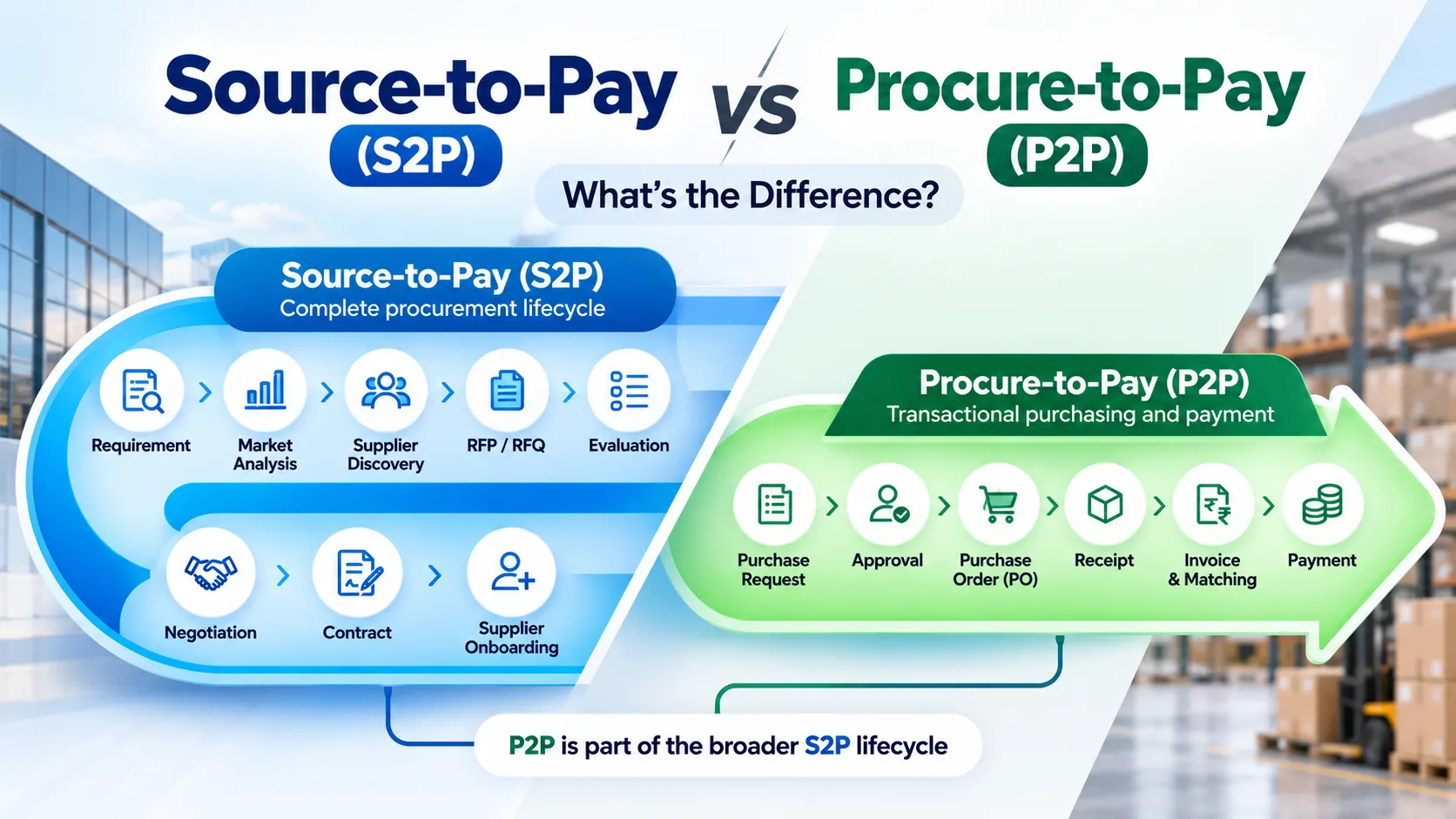
Read More →Source-to-Pay vs Procure-to-Pay: Key Differences, Processes & Software Guide
Read More →
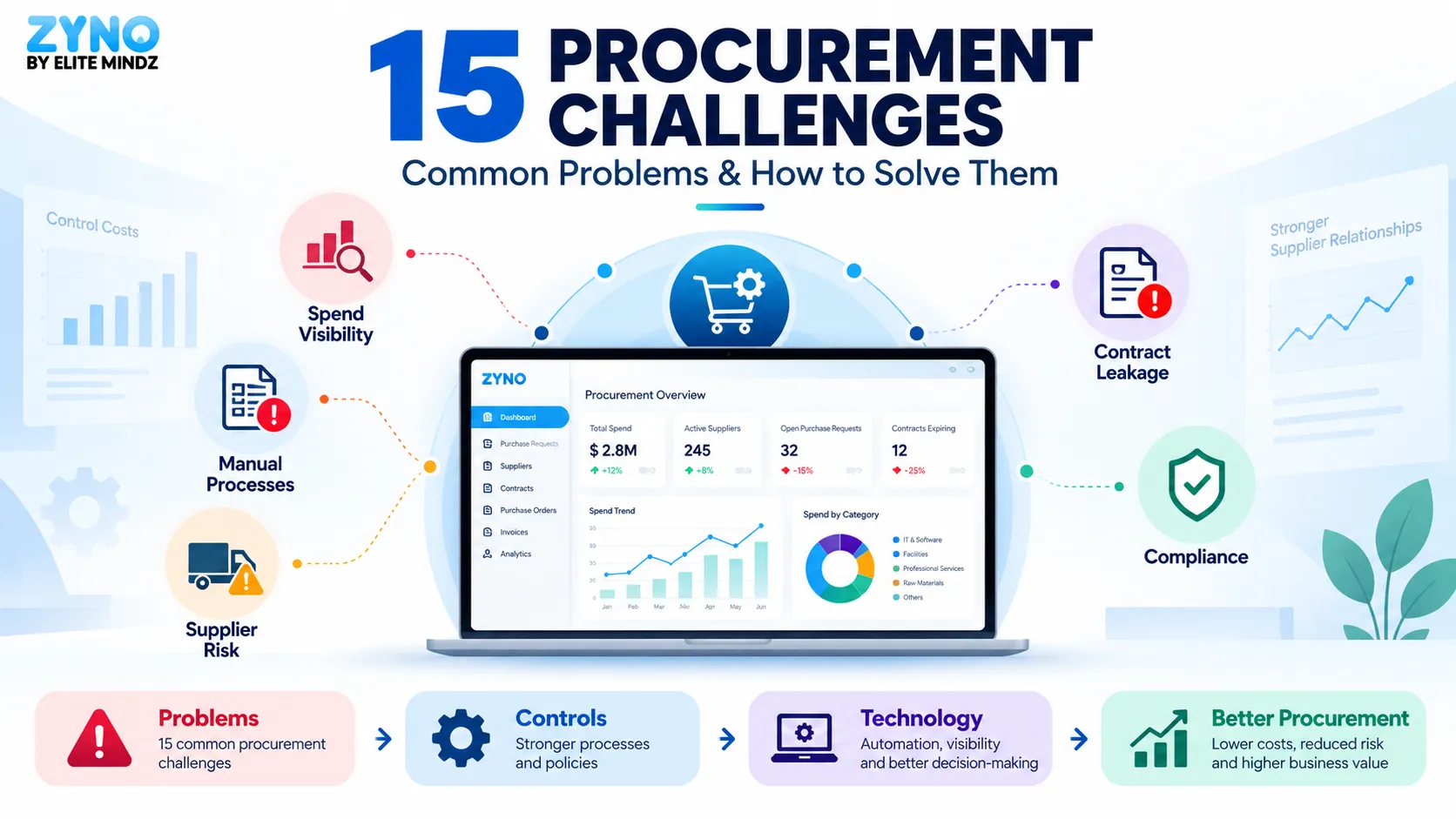
Procurement Challenges: 15 Common Problems & How to Solve Them
Read More →
Supplier Evaluation Criteria: 10 Factors Every Procurement Team Should Assess
Read More →
What Is Strategic Sourcing? Process, Benefits & Best Practices
Read More →
Tail Spend Analysis: How to Identify, Measure and Optimize Fragmented Spend
Read More →
Which Prompt-Based ERP Supports Procurement Automation and Analytics?
Read More →
How to Stop Employees from Making Purchases Without Approval in the UAE
Read More →
How to Build a Purchase Approval Workflow for Manufacturing Companies
Read More →
Best Procurement Software for Sheet Metal Fabrication Companies
Read More →
10 Best Procurement Software for Manufacturing Companies in 2026
Read More →
How to Compare Supplier Quotations and Choose the Right Supplier
Read More →
10 Best Contract Automation Software Tools for 2026
Read More →
Best Procurement Software for CNC Machining Companies: 8 Options Compared
Read More →
Best Purchase Order Management Software for Steel Service Centres (2026): ZYNO Procurement vs 12 Alternatives
Read More →
Procurement Software for Jewellery Businesses in India: Gold, Diamond & Karigar Purchase Control (2026)
Read More →
Best Procurement Software for Garment Manufacturers: Fabric, Trims & Supplier Management
Read More →
Fabric Procurement Software for Garment Manufacturers: Control Quotes, POs and Landed Cost
Read More →
Top 10 Procurement Software Companies in Saudi Arabia (2026)
Read More →
Top Cloud Procurement Solutions for Abu Dhabi Government & Enterprises
Read More →
10 Best UAE E-Invoicing and Accounts Payable Software Solutions (2026)
Read More →Best Section 43B(h) MSME Payment Tracking Software in India (2026): 7 Tools Compared
Read More →
9 Best Procurement Software for NGOs in Kenya (2026)
Read More →
10 Best Procurement Approval Workflow Tools in 2026
Read More →
10 Best Spend Analysis Software for Procurement Teams in 2026
Read More →
How AI Can Automate SAP S/4HANA Procurement Without Replacing Your Existing ERP
Read More →
Inventory Management vs Warehouse Management: Key Differences and Best Software Tools
Read More →Partner with ZYNO by Elite Mindz to revolutionize how your business works. Fill out the form, and we’ll reach out with AI-powered solutions made just for you.
We use browser cookies to ensure you get the best experience on our website. Learn more
The form was submitted successfully!